Key Takeaways
-
Crushed Miscellaneous Base (CMB) is the top choice for most residential and commercial turf projects, offering excellent drainage, durability, and affordability with 2-4 inches recommended depth based on use intensity.
-
A geotextile weed barrier fabric must be installed first directly on soil before any aggregate base, preventing weeds from penetrating and protecting drainage by separating native soil from the base material.
-
Proper base depth is critical: use minimum 2 inches for light residential use, 3 inches for homes with kids/pets, and 3-4 inches for commercial high-traffic areas to handle Chicago’s freeze-thaw cycles.
-
Sharp sand (coarse/bedding sand) must be used as the 0.5-1 inch top layer—never soft builder’s sand—as its angular particles lock together, resist shifting, and provide superior drainage for a smooth final surface.
-
Thorough compaction using a plate compactor in multiple passes is essential to achieve stability and prevent wrinkles, following the ICPI recommended 70:30 ratio of solid mass to fines.
-
For specialized applications: use Decomposed Granite for putting greens and premium projects, Class II Road Base for high-traffic commercial spaces, and existing concrete/hard surfaces for rooftops and decks without traditional sub-base installation.
Planning to install artificial turf in your yard or commercial space? The secret to a long-lasting, beautiful lawn isn’t just the turf itself — it’s what goes underneath it. The best base material for turf installation is the unsung hero of any great artificial grass project. Get it right, and your turf will look amazing and drain perfectly for years. Get it wrong, and you’ll deal with shifting, pooling water, and an uneven surface that nobody wants.
Whether you’re a Chicago suburban homeowner looking to ditch the muddy mess, a commercial property manager wanting low-maintenance curb appeal, or a new home builder delivering turnkey outdoor spaces, this guide breaks down exactly what goes under artificial turf — and why it matters so much. We’ve compiled the top seven base material options so you can make a smart, confident decision for your specific project. Let’s dig in (pun intended)!
Why the Base Layer Matters So Much
Think of your turf base like the foundation of a house. Even the most premium artificial grass will fail if it sits on a poorly prepared sub-base. A proper base layer does three critical jobs:
- Provides a firm, stable surface so the turf doesn’t shift or wrinkle over time
- Promotes effective water drainage so puddles don’t form after rain
- Prevents weeds from pushing up through the turf
- Extends the lifespan of your turf investment significantly
- Creates a level, comfortable surface for walking, playing, and entertaining
According to the Landscape Illinois professional community, proper sub-base preparation is one of the most important steps in any synthetic turf installation. Skipping or rushing this step is the number-one reason turf installations fail prematurely. Now, let’s look at the best options available.
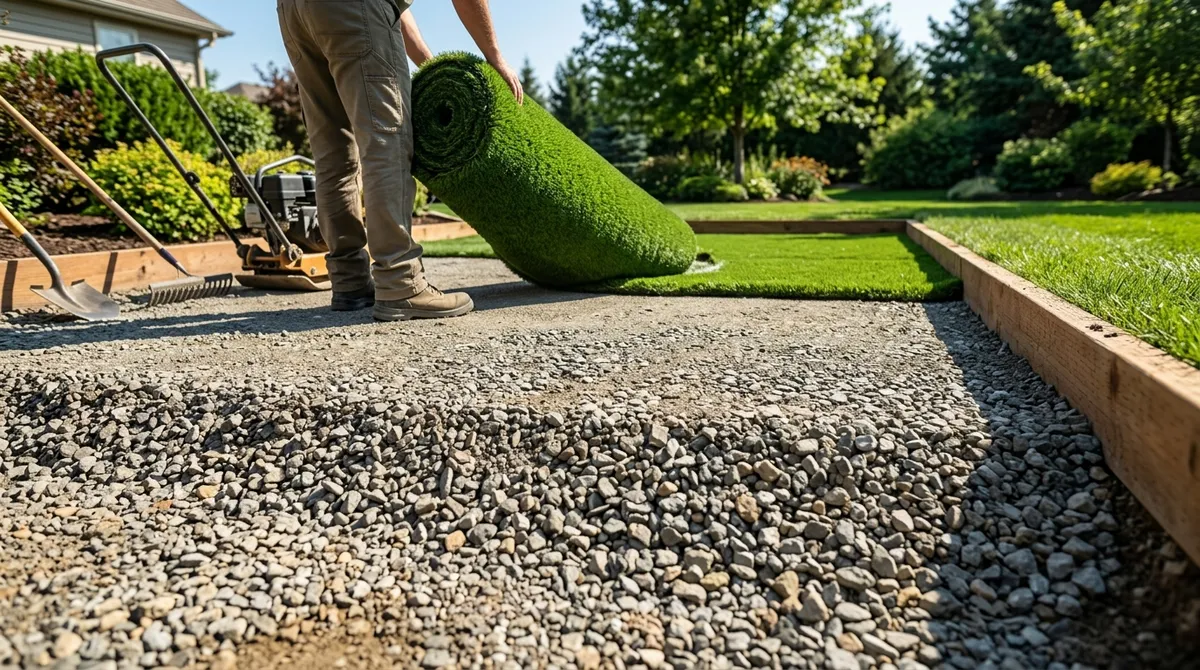
The 7 Best Base Materials for Turf Installation
1. Crushed Miscellaneous Base (CMB) — The Top Choice for Most Projects
Crushed Miscellaneous Base, commonly called CMB, is the most widely recommended base material for residential artificial turf. It’s a blend of sand, gravel, and recycled materials that offers an excellent balance of durability, drainage, and affordability.
CMB compacts tightly when installed correctly, creating a rock-solid foundation. It handles Chicago’s freeze-thaw cycles better than many alternatives, which is a huge plus for local homeowners. For most suburban yards and commercial lawns, CMB is the go-to starting point.
- Best for: Residential yards, commercial lawns, general-purpose installations
- Recommended depth: 2–3 inches for residential, 3–4 inches for commercial
- Cost: Budget-friendly and widely available
- Drainage: Excellent when properly compacted
2. Decomposed Granite (DG) — Premium Choice for Putting Greens
Decomposed Granite is a naturally occurring material that breaks down from solid granite over time. It creates an incredibly smooth, permeable surface that’s ideal for putting greens and high-drainage applications.
DG costs more than CMB, but the payoff in surface quality is noticeable. If you’re building a backyard putting green or a space where precision surface smoothness matters, DG is worth the investment. It also compacts beautifully and resists erosion well.
- Best for: Putting greens, decorative turf areas, premium residential projects
- Recommended depth: 2–3 inches
- Cost: Moderate to high
- Drainage: Superior permeability
3. Class II Road Base — Best for High-Traffic Commercial Spaces
Class II Road Base is a tested, certified aggregate material that offers superior consistency. It undergoes quality testing to meet specific standards, making it the top pick for demanding commercial installations like sports fields, retail spaces, and office properties.
Commercial property managers dealing with heavy foot traffic will appreciate how well Class II Road Base holds up over time. It doesn’t shift or compress unevenly, even under constant use. The higher cost is offset by its long-term performance and reduced maintenance needs. You can learn more about how we approach commercial projects on our commercial lawn maintenance page.
- Best for: Sports fields, commercial properties, high-traffic retail spaces
- Recommended depth: 3–4 inches minimum
- Cost: Higher than CMB
- Drainage: Very good with proper grading
4. Crushed Rock (3/4-Inch to 1/4-Inch Graded) — Reliable and Versatile
Graded crushed rock, typically ranging from 3/4-inch down to 1/4-inch pieces, is a classic base material that works well across many installation types. The varied sizing allows the material to compact tightly while still maintaining good drainage channels between particles.
A typical crushed rock layer runs about 2 to 2.5 inches when compacted. This material is often used in combination with a sand topping layer for extra surface smoothness. It’s a reliable workhorse that landscapers across the Chicago area trust.
5. Sharp Sand (Bedding Sand) — The Essential Top Layer
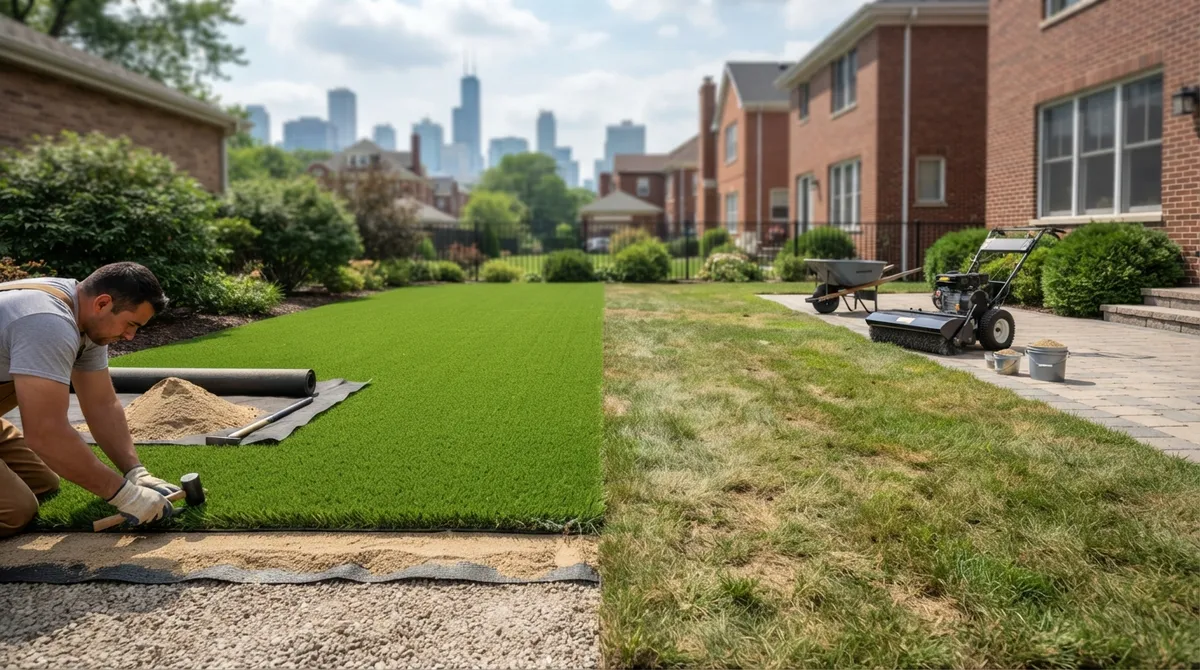
Sharp sand — also called coarse or bedding sand — isn’t typically used as the primary sub-base. Instead, it serves as the critical top layer that sits between the crushed rock and the turf itself. This thin sand layer (usually about 1/2 to 1 inch) creates a perfectly level surface for the turf to lay flat and smooth.
Don’t use soft builder’s sand for this step. Sharp sand has angular particles that lock together and resist shifting. It also drains water more efficiently than fine-grained alternatives. This detail makes a big difference in how your finished turf looks and feels underfoot.
6. Geotextile Weed Barrier Fabric — Not a Base, But Non-Negotiable
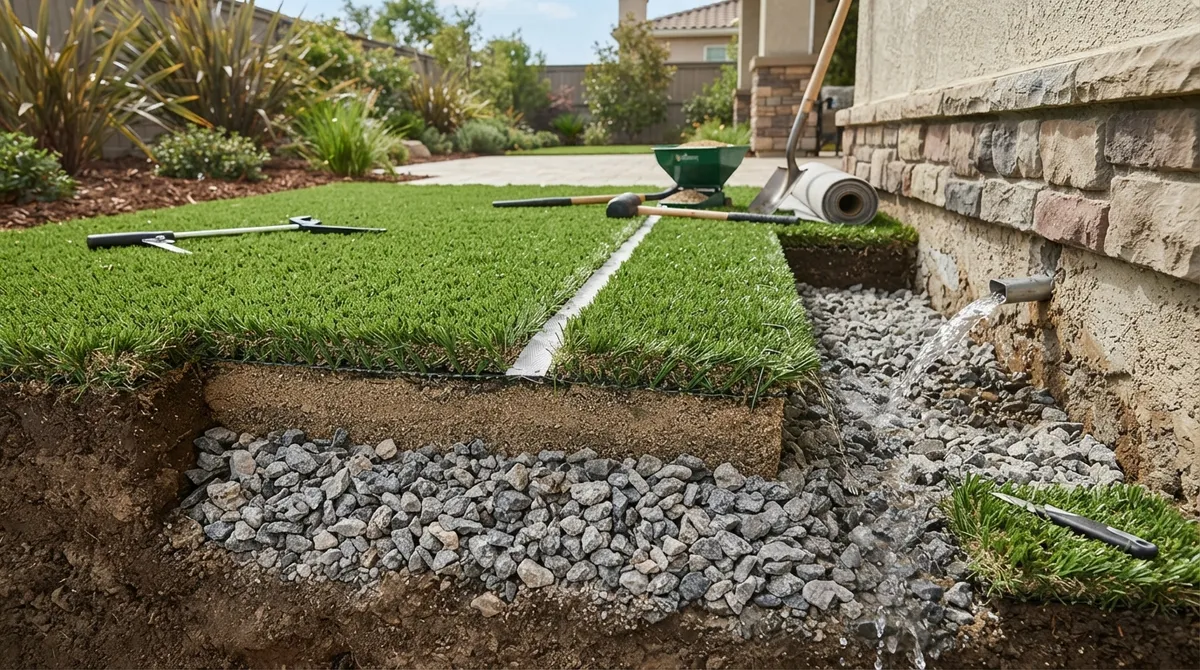
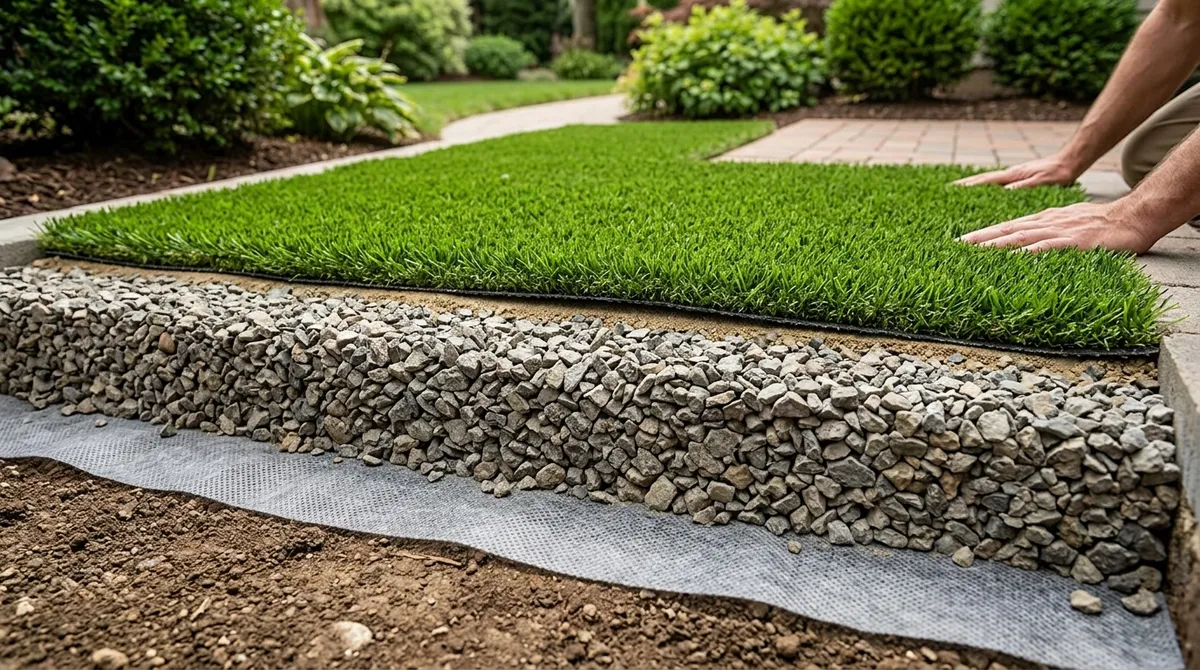
While technically not a base material itself, geotextile weed membrane fabric is an essential component of any proper turf installation. It goes down first, directly on the prepared soil, before any aggregate base is added.
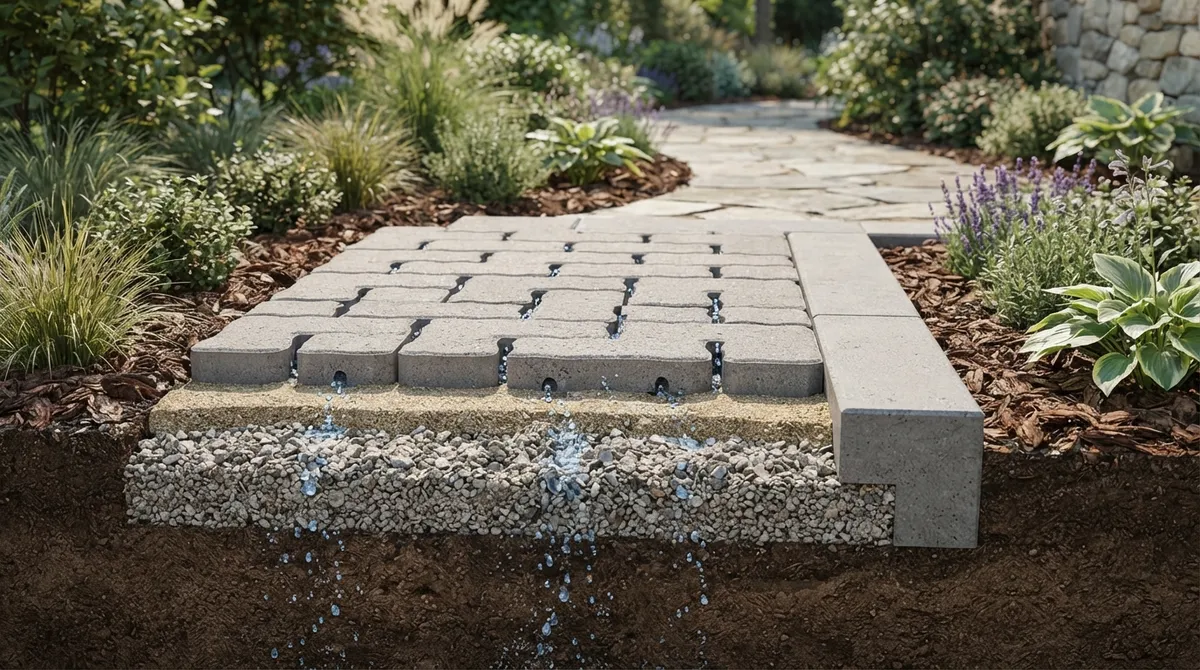
This perforated fabric serves two key purposes: it prevents weed growth from pushing up through your turf, and it acts as a separator between the native soil and your aggregate base. Without it, fine soil particles migrate upward over time and compromise your drainage. Always insist on a quality geotextile layer — it’s cheap insurance for a long-lasting result. Our team at artificial turf installation always includes this essential step.
7. Concrete or Hard Surface Base — For Rooftops and Decks
For urban condo owners with rooftop terraces or homeowners with existing patios and decks, great news: you don’t always need to dig and install a traditional sub-base. Existing concrete slabs, wood decks, and flat roofs can serve as stable bases for artificial turf installation without additional aggregate layers.
The key requirements are that the surface must be flat, stable, and have adequate drainage (or drainage can be engineered into the installation). This approach is popular for Chicago condo balconies and commercial rooftop spaces where a traditional sub-base installation simply isn’t possible.
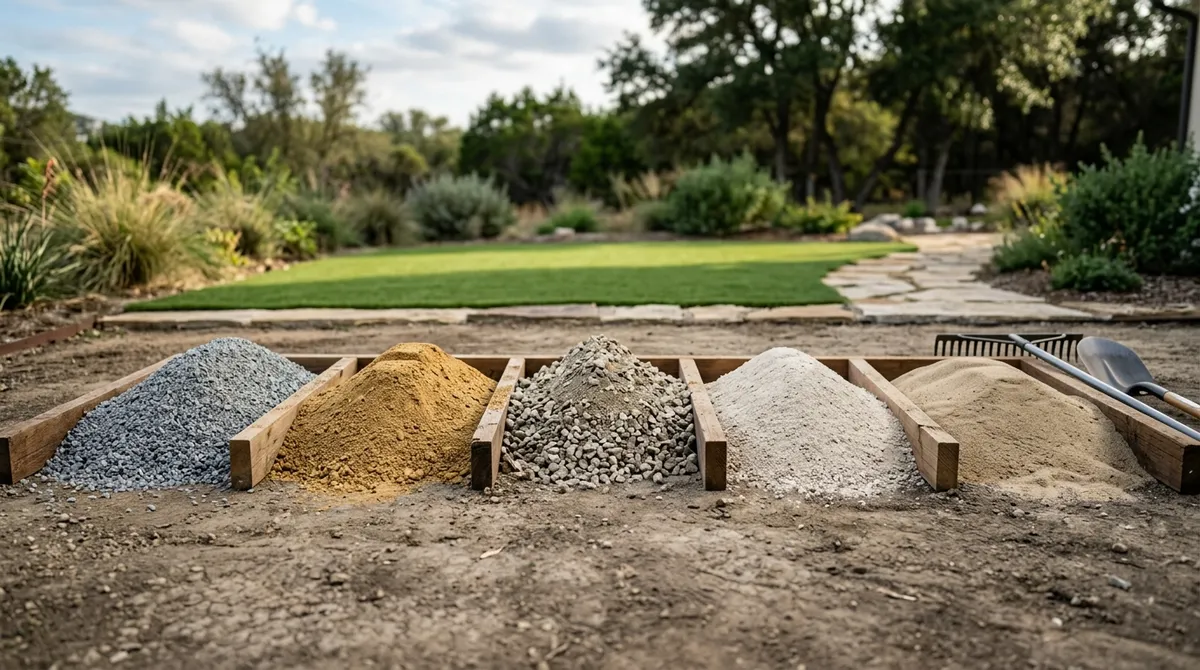
Base Material Comparison at a Glance
| Base Material | Best Application | Recommended Depth | Cost Level | Drainage Quality |
|---|---|---|---|---|
| Crushed Miscellaneous Base (CMB) | Residential yards, general use | 2–4 inches | Low | Excellent |
| Decomposed Granite (DG) | Putting greens, premium projects | 2–3 inches | Medium-High | Superior |
| Class II Road Base | Commercial, high-traffic areas | 3–4 inches | High | Very Good |
| Graded Crushed Rock | Versatile residential/commercial | 2–2.5 inches | Low-Medium | Good |
| Sharp Sand (top layer) | Finishing layer over rock base | 0.5–1 inch | Low | Good |
| Geotextile Fabric | All installations (foundation layer) | N/A | Low | N/A (barrier) |
| Concrete/Hard Surface | Rooftops, decks, patios | N/A (existing) | N/A (existing) | Depends on design |
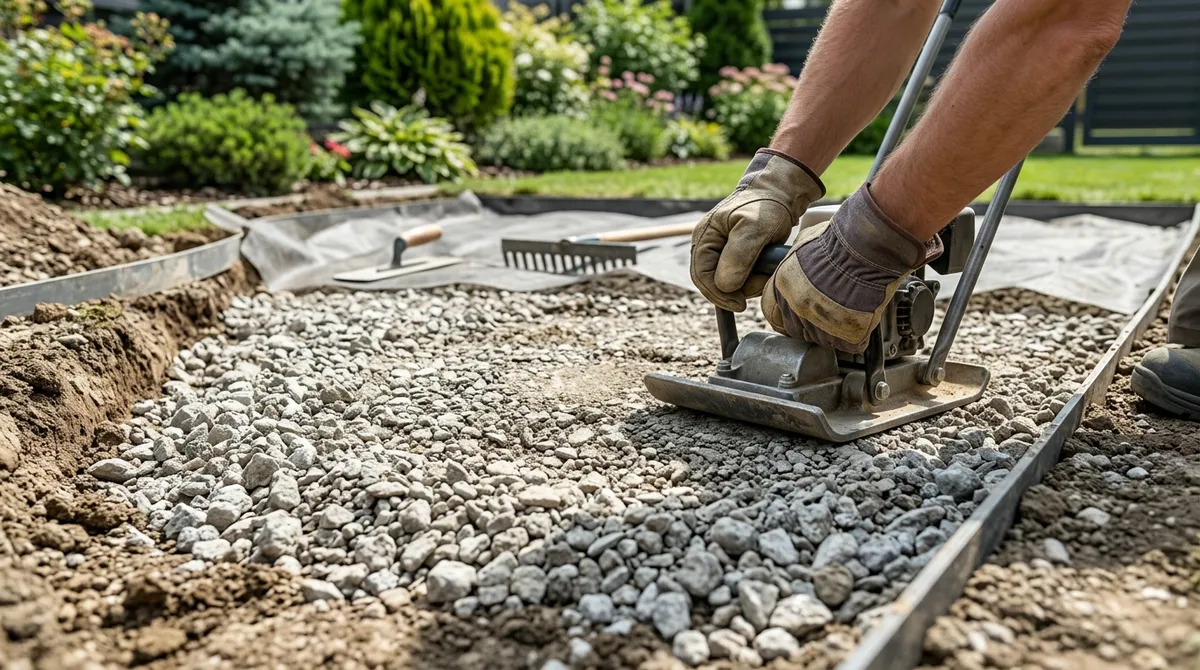
How to Prepare Your Turf Base: Step-by-Step
Understanding the base materials is only half the battle. Proper installation technique matters just as much. Here’s the standard process our team follows for ground-level turf installations:
- Excavate the area — Remove existing grass, weeds, and topsoil to a depth of 3–4 inches (more for commercial projects)
- Grade and slope the soil — Ensure a slight slope (about 1–2%) away from structures to promote drainage
- Lay geotextile weed barrier fabric — Cover the entire area, overlapping edges by at least 6 inches
- Add your primary base material — Pour and spread CMB, crushed rock, or your chosen aggregate to the recommended depth
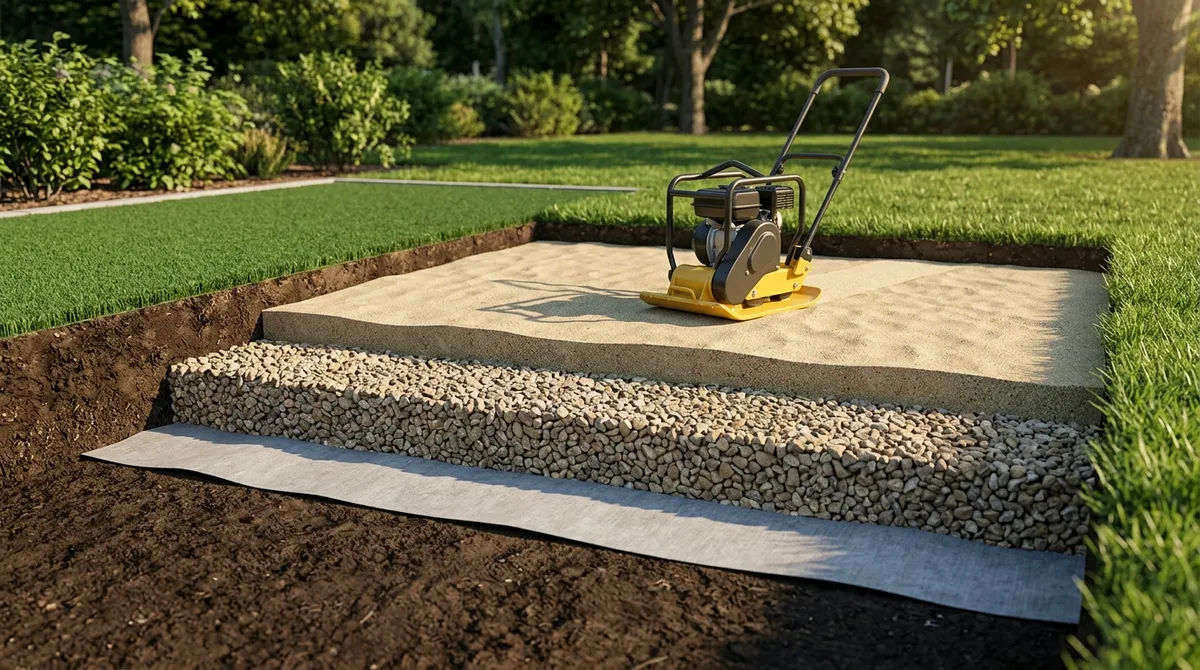
- Compact thoroughly — Use a plate compactor to achieve a firm, stable surface (this step is critical!)
- Add sharp sand top layer — Spread a thin, even layer and level it carefully
- Install the artificial turf — Unroll, cut, and secure the turf over the prepared base
One key ratio to remember: the ICPI Certified Installer guidelines and the Association of Synthetic Grass Installers both recommend a 70:30 ratio of solid mass (rocks and larger pieces) to fines (sand or substitute material). This balance prevents the base from becoming too dense or too loose, which keeps your turf wrinkle-free and stable long-term.
Tips for Chicago-Area Turf Installations
Installing turf in the greater Chicago area comes with some unique considerations. The freeze-thaw cycles here can be tough on outdoor installations, and our clay-heavy soils don’t drain naturally as well as sandier soils in other regions. Here are a few tips specific to Chicago homeowners and property managers:
- Always use a minimum of 3 inches of base material to account for soil movement during freeze-thaw cycles
- Consider adding a layer of drainage aggregate or perforated pipe in areas with especially poor natural drainage
- Test your soil drainage before installation — clay-heavy soil may need additional amendments
- Compact the base in multiple passes rather than one heavy pass for better long-term stability
- Work with a licensed installer familiar with local soil and climate conditions
If you’re also exploring other ways to transform your outdoor space alongside turf, check out our inspiration for pavers, softscapes, and even fire pits that pair beautifully with artificial turf areas.
Common Mistakes to Avoid
Even with the right materials, a few common mistakes can undermine your turf installation. Keep these pitfalls in mind:
- Skipping the weed barrier: Weeds are relentless — don’t give them a chance
- Insufficient compaction: A loose base leads to uneven surfaces and turf wrinkles
- Wrong depth: Too shallow a base won’t handle traffic or weather; too deep wastes materials
- Using builder’s sand as the top layer: Fine sand shifts and creates drainage problems
- Ignoring drainage direction: Poor grading causes water pooling under and on top of turf
Need help planning your project from start to finish? Take a look at our installation process to see how Serenity Landscape Group handles every project step-by-step with care and precision. You can also browse our gallery of our work to see real results from Chicago-area projects just like yours.
Residential vs. Commercial Base Depth Guide
| Project Type | Minimum Base Depth | Recommended Material | Compaction Required |
|---|---|---|---|
| Residential backyard (light use) | 2 inches | CMB or Crushed Rock | Yes — plate compactor |
| Residential backyard (kids/pets) | 3 inches | CMB with sharp sand topping | Yes — multiple passes |
| Putting green | 2–3 inches | Decomposed Granite | Yes — smooth finish |
| Commercial low-traffic | 3 inches | CMB or Class II Road Base | Yes — plate compactor |
| Commercial high-traffic | 4 inches | Class II Road Base | Yes — heavy compaction |
| Rooftop / deck installation | N/A | Existing hard surface | N/A |
Ready to Install? Here’s Your Action Plan
Choosing the best base material for turf installation doesn’t have to be complicated. For most Chicago-area residential projects, Crushed Miscellaneous Base topped with sharp sand is the perfect combination — cost-effective, durable, and excellent for drainage. For putting greens, go with Decomposed Granite. For commercial spaces with heavy foot traffic, invest in Class II Road Base for maximum longevity.
No matter which material you choose, remember these three non-negotiables: always lay a geotextile weed barrier first, compact your base thoroughly, and ensure proper slope for drainage. Follow these principles and your artificial turf will look and perform beautifully through Chicago’s seasons for many years to come.
At Serenity Landscape Group, we’ve been helping Chicago-area homeowners and property managers install beautiful, long-lasting outdoor spaces for over two decades. From turf base preparation to full landscape transformations, we handle every detail so you don’t have to. Request your free estimate today and let’s build something beautiful together — your dream outdoor space is closer than you think!
FAQs
Q: What is the ideal depth for artificial turf base material?
A: Great question! For residential yards with light use, a minimum of 2 inches of compacted base material is sufficient. For homes with kids or pets, aim for 3 inches, and for commercial high-traffic areas, go with 3–4 inches. More depth means more stability and better long-term performance.
Q: Do I really need a weed barrier under artificial turf?
A: Absolutely — and we can’t stress this enough! A geotextile weed barrier fabric goes down first, before any base material is added. It stops weeds from pushing up through your turf and also keeps your base aggregate separated from the native soil, which protects drainage quality over time. It’s inexpensive and totally worth it!
Q: What is the difference between Crushed Miscellaneous Base and Decomposed Granite?
A: CMB is your budget-friendly, all-purpose workhorse — great for most residential and commercial turf projects. Decomposed Granite (DG) is a premium option that creates an ultra-smooth, highly permeable surface, making it the top choice for putting greens or premium decorative turf areas. If budget allows and surface smoothness matters, go with DG for those special applications.
Q: Can artificial turf be installed over concrete or an existing hard surface?
A: Yes, it can! Existing concrete slabs, wood decks, and flat rooftops can all serve as a stable base for artificial turf without needing a traditional sub-base layer. This is a popular option for Chicago condo owners with balconies or rooftop spaces. The key is making sure the surface is flat, stable, and has proper drainage either built in or engineered into the installation.
Q: What sand type is best for the top layer of a turf base?
A: Always use sharp sand (also called coarse or bedding sand) — not soft builder’s sand. Sharp sand has angular particles that lock together tightly and resist shifting, which helps keep your turf smooth and level. It also drains water much more efficiently than fine sand. Even a thin 1/2-inch layer of quality sharp sand makes a noticeable difference in the final finish of your turf.