Key Takeaways
-
Quality synthetic turf systems drain at rates exceeding 300 inches per hour through layered engineering with vertical and horizontal water flow, compared to natural soil’s 2-4 inches per hour, preventing costly failures that plague 40% of DIY installations.
-
Professional installations require a complete subsurface ecosystem including 3-4 inches of compacted crushed stone (3/8 to 3/4 inch diameter), permeable geotextile fabric, and fully permeable backing with at least 10% drainage hole coverage.
-
Chicago’s clay soil requires deeper excavation (5-6 inches) and often benefits from French drain integration beneath the sub-base to handle the soil’s slow percolation and expansion/contraction cycles that cause long-term instability.
-
Proper site grading with a 1-2% slope (1/8 to 1/4 inch drop per linear foot) is essential to prevent low spots and water pooling; without it, even quality materials cannot function effectively.
-
Pet areas need edge-to-edge drainage hole patterns, antimicrobial infill options like zeolite-based materials, and regular enzyme treatments applied bi-weekly to manage odors and prevent bacterial buildup in the drainage system.
-
Common installation failures include using non-permeable plastic weed barriers, installing turf directly over concrete without drainage modifications, and skipping geotextile fabric placement between native soil and aggregate layers.
When torrential Chicago thunderstorms dump three inches of rain in an hour, properly installed synthetic grass can drain 100 times faster than your neighbor’s soggy natural lawn. That’s not a marketing claim—it’s physics backed by real drainage engineering. Quality synthetic turf systems achieve drainage rates exceeding 300 inches per hour, while even healthy natural soil rarely surpasses 2–4 inches per hour. But here’s what most people miss: synthetic grass drainage isn’t just about water flow rates. It’s about creating a complete subsurface ecosystem that outperforms natural grass while preventing the costly failures that plague 40% of DIY installations. Whether you’re a suburban homeowner tired of muddy footprints, a commercial property manager dealing with standing water, or a builder looking to add value to new homes, understanding this guide will transform how you think about artificial turf. Let’s dig into the science, the systems, and the smart decisions that separate a beautiful, long-lasting lawn from a waterlogged headache.
The Science Behind Synthetic Turf Drainage Systems
Synthetic grass drainage works through a layered, engineered approach. Unlike natural soil, which relies on biological activity and pore spaces to absorb water, artificial turf systems use a deliberate stack of materials designed specifically for speed and volume. Understanding this difference helps you appreciate why professional installation matters so much.
How 300+ Inches Per Hour Drainage Rates Work
The Synthetic Turf Council sets a minimum drainage standard of 14 inches per hour. That’s already impressive compared to natural grass. But quality installations far exceed this benchmark—many systems drain over 300 inches per hour. This happens because water moves through multiple permeable layers simultaneously, not just vertically but horizontally too.
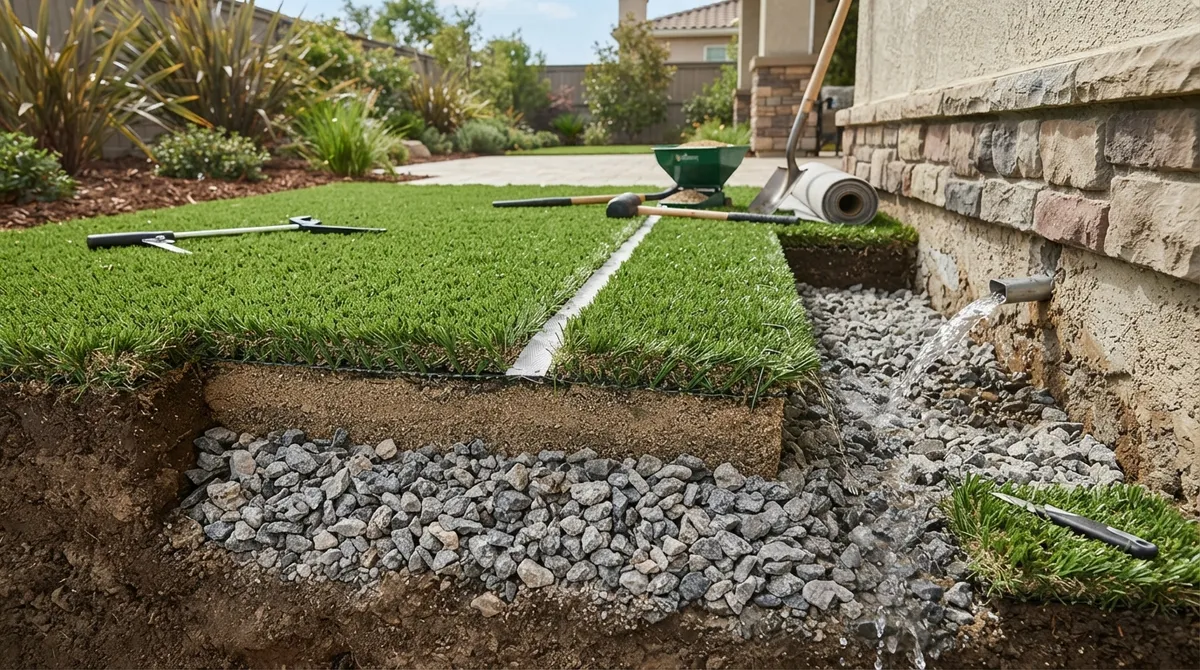
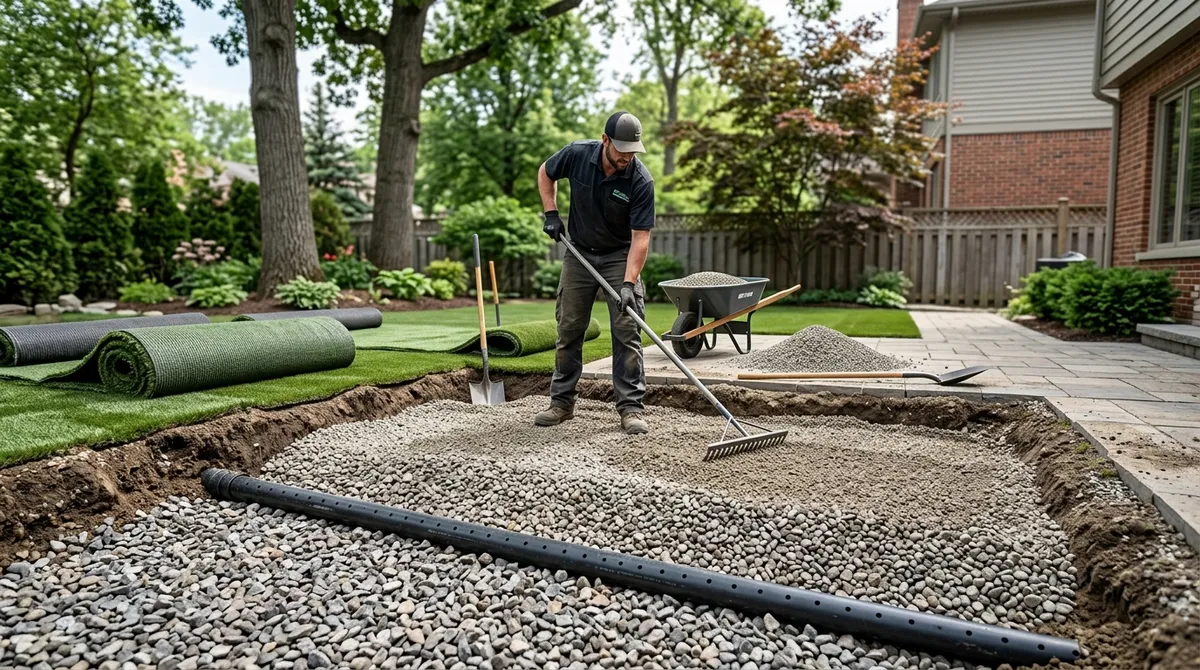
Vertical flow carries water straight down through the turf backing, through infill material, and into the sub-base below. Horizontal flow then spreads water laterally across the crushed stone layer, directing it toward drainage channels or the surrounding soil. This two-directional movement is why synthetic systems handle heavy downpours without pooling.
Permeability Differences Between Backing Materials
Not all turf backings are created equal. Standard perforated backings feature evenly spaced drainage holes, while fully permeable backings allow water to pass through virtually any point across the surface. For Chicago’s variable rainfall patterns, fully permeable backings offer a clear advantage. The backing material’s open area percentage directly impacts how quickly water exits the turf surface and enters the drainage layers beneath.
Natural soil in the Chicago area—particularly the heavy clay common across many suburbs—can hold water for hours or even days after rain. A well-designed artificial turf installation bypasses this limitation entirely by routing water away before it ever contacts the native soil in meaningful quantities.
Essential Components of Professional Drainage Installation
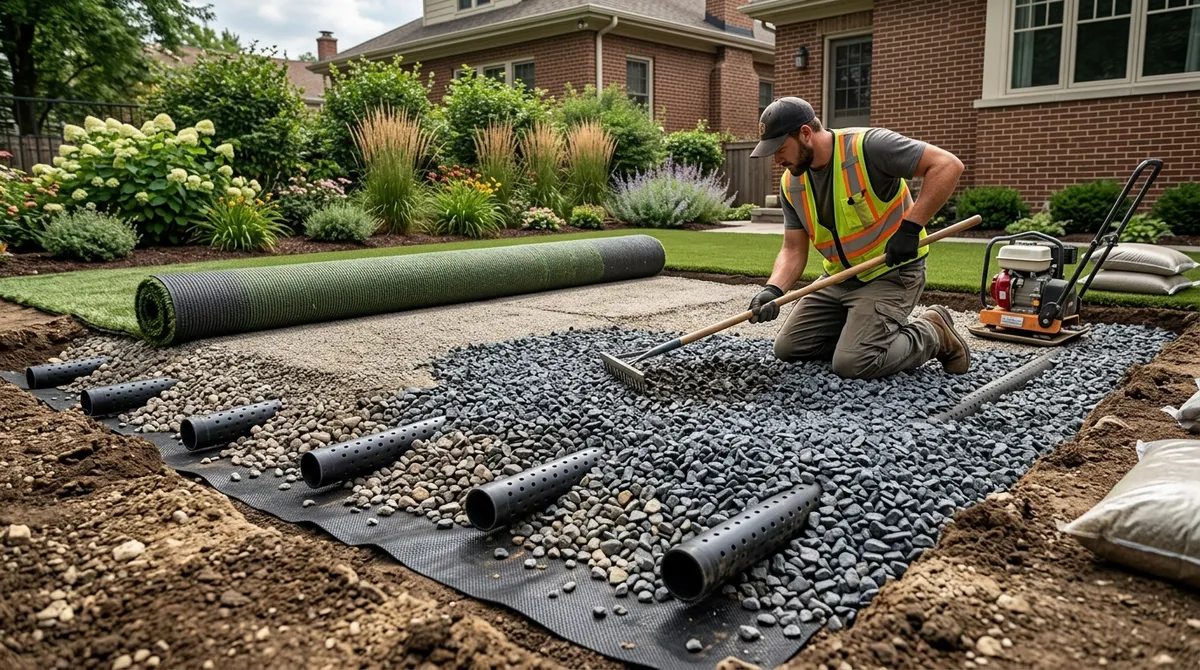
A professional synthetic grass drainage guide always starts with the layers beneath the turf. Each component plays a specific role, and skipping or shortcutting any of them creates problems down the road. Here’s what every quality installation requires.
Crushed Stone Sub-Base Specifications and Depths
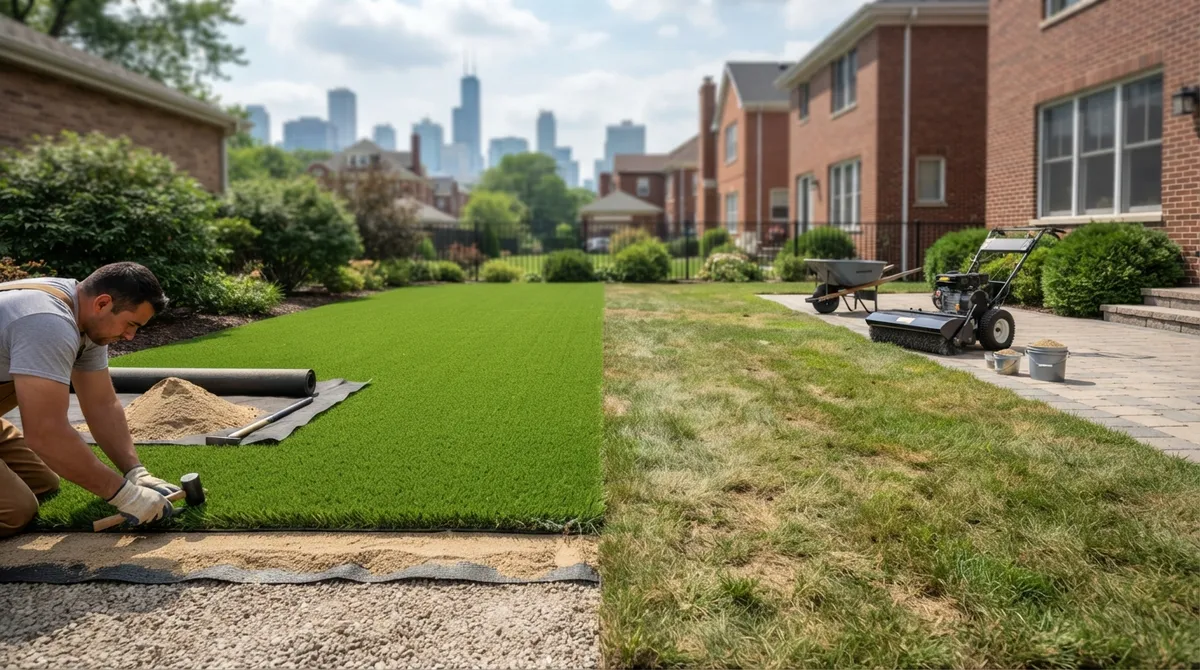
The crushed stone sub-base is the workhorse of your drainage system. A standard installation uses 3–4 inches of compacted crushed stone or decomposed granite. This layer does two jobs at once: it provides structural support so the turf stays firm underfoot, and it creates the porous matrix through which water drains rapidly.
The stone size matters too. Crushed stone between 3/8 and 3/4 inch in diameter creates the ideal void space for water movement while still compacting firmly enough to prevent surface instability. Decomposed granite works well in areas where a slightly firmer surface is preferred, such as putting greens or bocce courts.
Geotextile Fabric Placement and Function
Geotextile fabric is placed between the native soil and the crushed stone sub-base. Its job is to prevent soil migration into the aggregate layer without restricting water flow. Over time, without this barrier, fine soil particles travel upward into the sub-base, clogging drainage pathways and causing surface instability. A quality woven or non-woven geotextile solves this problem permanently.
Permeable Backing Selection Criteria
When choosing turf for drainage-sensitive areas, look for these features:
- Open drainage hole percentage of at least 10% across the backing surface
- UV-stabilized backing material that resists degradation
- Fully permeable options for pet areas or high-rain zones
- Backing weight and thickness appropriate for the intended use
Edge Restraint and Water Channeling Systems
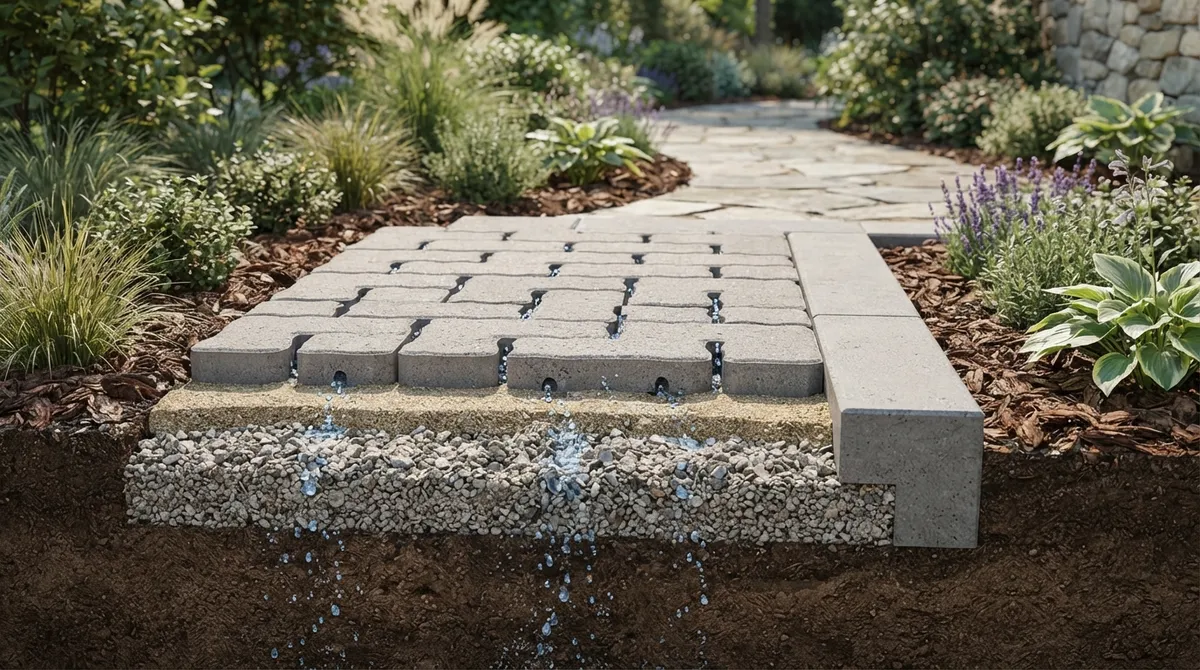
Edge restraints serve double duty. They hold the turf perimeter securely in place and help direct runoff toward intended drainage points. Bender board, aluminum edging, or concrete borders all work well depending on your landscape design. Pairing turf edges with complementary paver systems creates both a clean aesthetic and a natural water-channeling pathway around the turf area.
Site Preparation and Grading Techniques
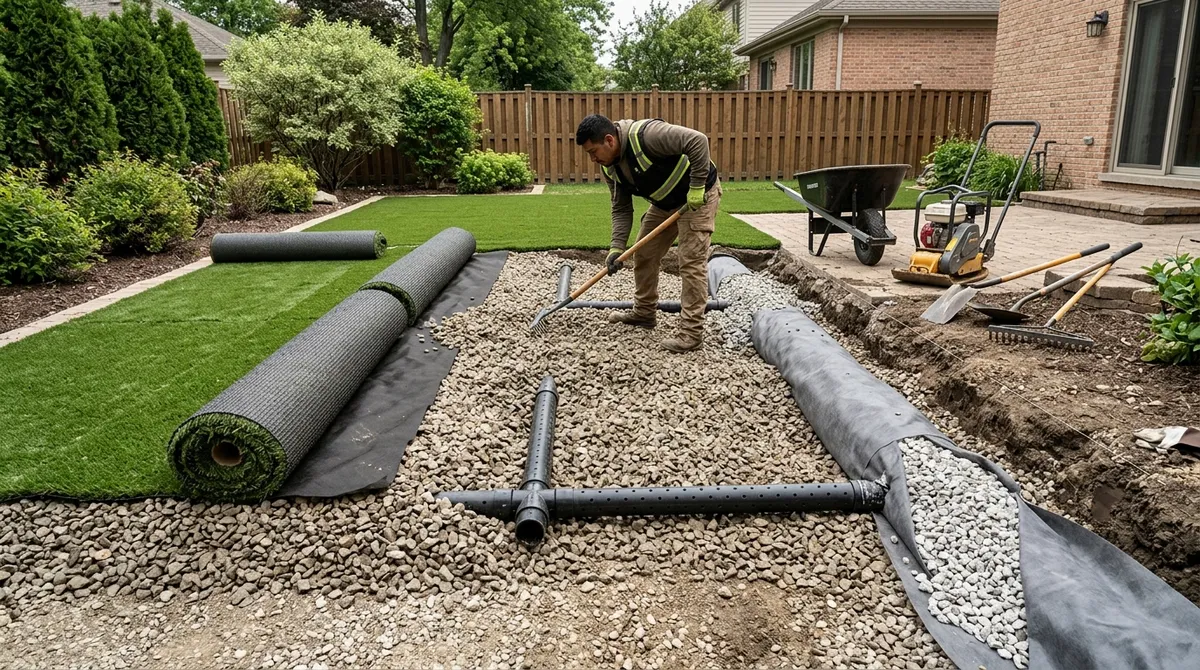
Even the best drainage components fail without proper site preparation. This is where many DIY projects go wrong—and where professional landscapers earn their fee. Good preparation takes into account your specific soil, your existing landscape, and Chicago’s unique climate challenges.
Calculating Optimal 1-2% Slope Requirements
Every synthetic turf installation needs a slight slope to encourage runoff and prevent low spots where water might collect. The ideal slope is 1–2%, which translates to roughly 1/8 to 1/4 inch of drop per linear foot. This is gentle enough that the surface looks and feels perfectly flat but aggressive enough to move water efficiently.
Calculating your slope before excavation saves significant rework. Use a level and measuring tape to map out existing grades, then plan your grading work accordingly.
Excavation Depths for Different Soil Types
Standard excavation removes 3–4 inches of existing material plus any topsoil. In areas with particularly soft or expansive soils, going deeper—up to 6 inches—provides better long-term stability. The goal is to reach a firm, stable base before adding your aggregate layer. Here’s a quick reference:
| Soil Type | Recommended Excavation Depth | Additional Notes |
|---|---|---|
| Sandy Loam | 3–4 inches | Excellent natural drainage; minimal modification needed |
| Clay (common in Chicago suburbs) | 5–6 inches | May require French drain integration |
| Mixed / Fill Soil | 4–5 inches | Test compaction before finalizing depth |
| Rocky / Hardpan | 3 inches minimum | May need additional leveling material |
Sprinkler System Capping Procedures
Synthetic turf doesn’t need irrigation, so existing sprinkler heads in the project area must be capped properly. Uncapped heads create weak spots in the sub-base and allow water intrusion at unpredictable points. A licensed irrigation professional can cap heads cleanly while preserving surrounding zones if needed.
Addressing Chicago’s Clay Soil Challenges
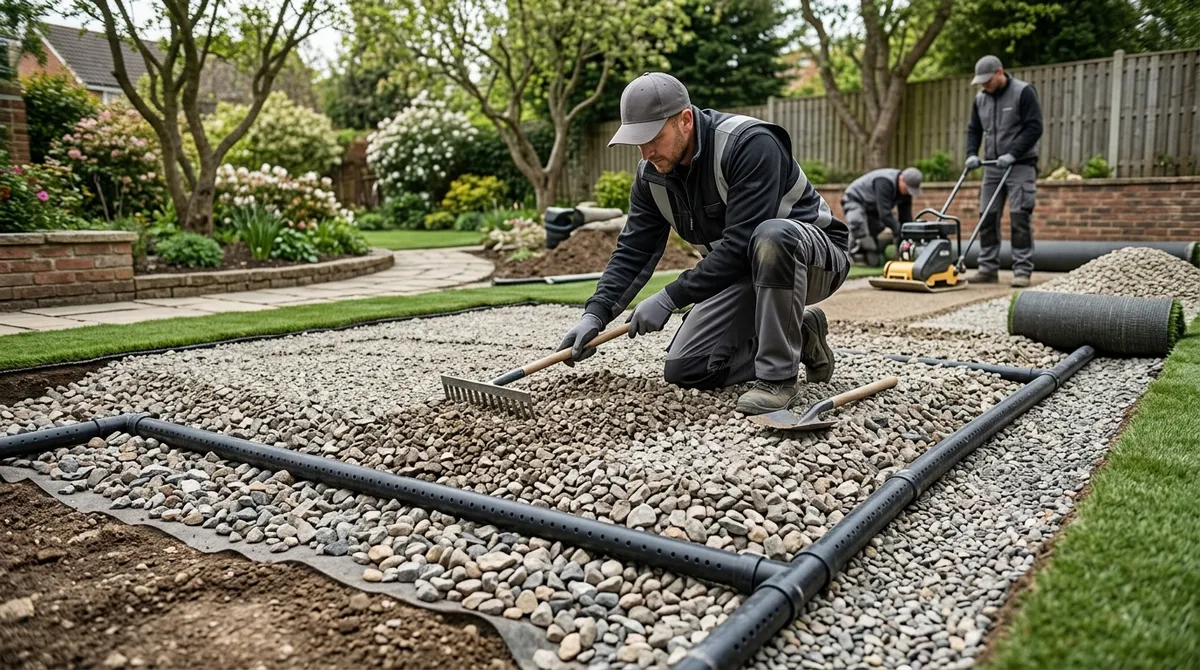
Chicago-area clay soil is notoriously slow to drain. It expands when wet and contracts when dry, creating heaving and surface movement over time. Professionals address this by installing a deeper aggregate base and, in severe cases, integrating a perforated pipe drain beneath the sub-base to carry excess water away from the site. This extra step makes a dramatic difference in turf longevity across Chicagoland properties. For a look at how thoughtful landscape design accounts for local soil conditions, it’s worth exploring the full planning process before starting any installation.
Advanced Drainage Solutions for Problem Areas
Some installations face drainage challenges that go beyond what a standard sub-base can handle. Whether it’s a zero-slope rooftop, a low-lying backyard, or a commercial property with heavy foot traffic, advanced solutions exist for every scenario.
French Drain Integration Techniques
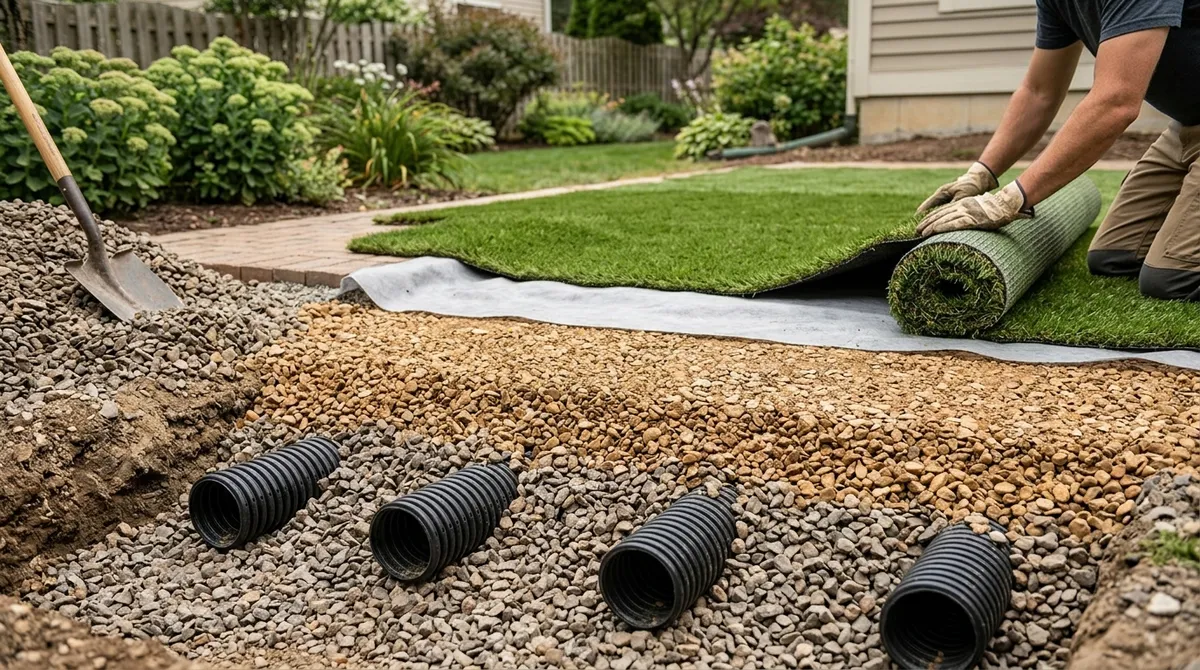
A French drain is a perforated pipe wrapped in geotextile fabric and surrounded by gravel, installed beneath the turf area. It collects water that moves through the sub-base and channels it away to a safe discharge point. French drains work exceptionally well in Chicago’s clay-heavy soil where natural percolation is slow. According to industry guidelines from Landscape Illinois, integrating French drains during initial installation is far more cost-effective than retrofitting them later.
AirDrain and Grid System Applications
Subsurface grid systems like AirDrain create an air gap between the turf and the underlying surface. These systems achieve drainage rates of up to 171 inches per hour and work well in areas with minimal slope. They’re particularly popular for:
- Rooftop and balcony installations where slope modification isn’t possible
- Sports fields and high-traffic commercial areas
- Installations over existing concrete or compacted surfaces
- Areas requiring faster drainage than aggregate alone can provide
Catch Basin Placement Strategies
Catch basins collect surface water at low points and channel it into underground pipes. Placing catch basins at the lowest corner of a turf installation—or at regular intervals across larger commercial areas—prevents any residual ponding after heavy rain. They’re a smart addition for any property where the surrounding landscape naturally directs water toward the turf area.
Solutions for Zero-Slope Installations
Flat rooftops and concrete patios present unique challenges. Without natural slope, grid drainage systems combined with perimeter drains or catch basins handle water removal effectively. Adding even a minimal 1% slope through strategic leveling compound application under the grid layer improves performance significantly.
Pet Area Drainage Specifications
Pet areas require special attention in any synthetic grass drainage guide. Between waste, odors, and heavy use, these zones face unique challenges that standard drainage setups don’t fully address. Getting this right keeps your yard fresh, clean, and genuinely enjoyable.
Antimicrobial Infill Options
Standard silica sand infill works fine for general turf areas, but pet zones benefit from antimicrobial infill materials. Options include zeolite-based infills that neutralize ammonia odors naturally and coated sand products with built-in antimicrobial properties. These materials reduce bacterial buildup and keep odors manageable between cleanings.
Edge-to-Edge Drainage Hole Patterns
For pet areas, choose turf with fully permeable backings featuring edge-to-edge drainage holes. This pattern ensures liquid waste moves through the turf surface immediately rather than pooling on the backing. A fully permeable backing combined with the right sub-base creates a self-flushing system that handles pet use gracefully. Learn more about comprehensive softscape solutions that complement pet-friendly turf areas.
Enzyme Treatment Systems
Enzyme treatments break down organic waste at a molecular level, eliminating odors rather than masking them. These products are applied directly to the turf surface and work their way through the drainage system. Regular enzyme treatments are one of the most effective tools for maintaining fresh-smelling pet areas year-round.
Flushing and Maintenance Schedules
Follow this simple maintenance schedule for pet turf areas:
- Remove solid waste daily using a bag or rake
- Rinse the area with clean water weekly to flush the sub-base
- Apply enzyme treatment bi-weekly during warm months
- Deep-clean with a diluted enzyme solution monthly
- Inspect drainage performance quarterly and address any slow spots promptly
Common Drainage Failures and Prevention
Even well-intentioned installations can develop drainage problems. Knowing the warning signs early saves you from costly repairs and keeps your turf looking and performing its best for years to come.
Warning Signs of Inadequate Drainage
Watch for these red flags after heavy rain or irrigation:
- Puddles or standing water that persist more than 30 minutes after rain stops
- Spongy or soft spots when walking across the turf surface
- Visible mold, algae growth, or discoloration in low areas
- Unpleasant odors that worsen after rain events
- Turf surface lifting or shifting near edges
Concrete Base Modification Requirements
Installing turf directly over solid concrete without drainage modifications is one of the most common mistakes. Concrete is non-permeable, so water has nowhere to go except the edges. Solutions include drilling drainage holes through the concrete every 2–4 square feet, installing a grid drainage layer on top, or cutting channels into the concrete surface to direct water toward drains. An ICPI Certified Installer can assess your existing concrete and recommend the most effective modification approach.
Weed Barrier Mistakes to Avoid
Using non-permeable plastic sheeting as a weed barrier is a drainage disaster. Water has no path through it, creating a reservoir beneath the turf. Always use a permeable geotextile fabric specifically rated for turf applications. This allows water to pass freely while blocking weed germination.
Matting and Compression Issues
Over time, heavy use compresses the infill material, reducing drainage efficiency. Regular grooming with a stiff brush or power broom keeps infill distributed evenly and maintains drainage pathways. For high-traffic commercial areas, professional grooming services every 6–12 months keep the system performing optimally.
Cost Analysis and ROI Calculations
Understanding the cost of a proper synthetic grass drainage system helps you make smart investment decisions. The good news: proper drainage pays for itself many times over through reduced maintenance and extended turf life.
Base Material Cost Breakdowns
| Drainage Component | Cost Range (Per Sq Ft) | Notes |
|---|---|---|
| Crushed Stone Sub-Base | $0.50–$1.25 | Most cost-effective drainage layer |
| Geotextile Fabric | $0.10–$0.30 | Essential for sub-base longevity |
| Grid/Panel Drainage System | $2.00–$5.00 | Ideal for flat or problem areas |
| French Drain Pipe System | $2.00–$5.00 | Best for clay-heavy soils |
| Catch Basin Installation | $200–$600 each | Fixed cost per unit |
Grid System vs Traditional Drainage Pricing
Traditional crushed stone drainage is the most affordable option and works well for most residential installations. Grid systems cost $2–$5 more per square foot but deliver superior performance in flat or problem areas. For a 500-square-foot installation, that difference amounts to $1,000–$2,500. On commercial projects or rooftop installations, that premium is almost always worth it given the performance gains and reduced maintenance calls.
Long-Term Maintenance Savings
Compare the ongoing costs side by side:
- Natural lawn irrigation in Chicago averages $500–$1,200 per season
- Lawn fertilization and treatment adds another $300–$600 annually
- Mowing, edging, and seasonal cleanup runs $1,500–$3,000 per year for average suburban lots
- Synthetic turf with proper drainage requires minimal water, no fertilizer, and basic grooming only
Most homeowners recoup their drainage investment within 3–5 years through eliminated lawn care costs alone.
Property Value Impact Studies
Industry data consistently shows that well-installed, professionally maintained artificial turf increases curb appeal and perceived property value. Buyers in water-restricted regions and suburban markets respond positively to low-maintenance outdoor spaces. Pair your turf installation with complementary hardscape elements—like the retaining walls or elegant paver pathways that Serenity Landscape Group specializes in—and your outdoor space becomes a genuine selling point.
The commercial lawn maintenance side of the equation is equally compelling. Property managers who switch high-traffic areas to properly drained synthetic turf report dramatic reductions in repair costs, slip-and-fall incidents from wet grass, and irrigation-related expenses—all while maintaining a polished, professional appearance 365 days a year.
Make the Smart Move for Your Property
A synthetic grass drainage guide ultimately tells one clear story: the difference between a beautiful, long-lasting turf installation and a soggy, problematic one comes down to what happens beneath the surface. The right sub-base, proper slope, quality backing, and advanced drainage solutions where needed create a system that genuinely outperforms natural grass in every wet-weather scenario Chicago throws at it.
Whether you’re managing a commercial property, building new homes in the suburbs, or simply dreaming of a mud-free backyard, the investment in proper drainage pays dividends for decades. Understanding these systems gives you the knowledge to ask the right questions and choose the right partners for your project. For more inspiration on what a complete outdoor transformation looks like, browse the gallery of our work to see drainage-smart turf installations alongside stunning hardscape designs throughout Chicagoland.
Ready to create an outdoor space that looks great and performs even better through every Chicago season? Request your free estimate from Serenity Landscape Group today, and let our team of experienced professionals design a drainage system built to last—and a landscape you’ll love year after year.
FAQs
Q: How long does a properly installed synthetic grass drainage system last?
A: A well-built synthetic grass drainage system typically lasts 15–20 years when installed with quality materials and proper compaction. The crushed stone sub-base and geotextile fabric are especially durable and rarely need replacement. Regular surface maintenance, like grooming and flushing, keeps the whole system performing beautifully for the long haul!
Q: Can existing concrete patios be retrofitted with drainage for artificial turf?
A: Absolutely—concrete patios can be retrofitted for synthetic turf drainage with a couple of smart approaches. You can drill drainage holes through the slab every 2–4 square feet, or install a permeable grid drainage layer on top that creates airflow and channels water to the perimeter. Either way, a professional assessment makes sure you pick the right solution for your specific slab and slope situation.
Q: What maintenance is required to keep synthetic grass drainage working?
A: Keeping your synthetic grass drainage in top shape is wonderfully simple compared to natural lawn care! Brush or groom the turf regularly to prevent infill compaction, rinse the surface periodically to flush the sub-base, and remove any debris that might block drainage holes. For pet areas, a bi-weekly enzyme treatment and weekly rinse keeps things fresh and the drainage system flowing freely.
Q: How does snow and ice affect artificial turf drainage in Chicago winters?
A: Chicago winters are no match for a properly installed synthetic turf drainage system! Snow can be removed with a plastic shovel or leaf blower without damaging the turf fibers, and as temperatures rise, meltwater drains through the system just as effectively as rain. The key is avoiding metal snow shovels and de-icing salts that can damage backing materials—a light brushing usually does the trick just fine.
Q: What drainage rate is needed for commercial properties vs residential?
A: Residential installations typically perform well at drainage rates of 30–100 inches per hour, which easily handles normal Chicago rainfall events. Commercial properties with high foot traffic, large surface areas, or athletic use benefit from systems rated at 100–300+ inches per hour, often incorporating grid drainage layers, catch basins, or French drains to handle concentrated flow. Getting the right spec from the start saves costly upgrades down the road!