Key Takeaways
-
A dry well is an underground chamber that collects rainwater and allows it to seep slowly into soil, preventing foundation damage and lawn flooding without visible landscape changes.
-
Average dry well installation costs around $3,126, ranging from $200-$10,300 depending on soil type, well size, and piping complexity; dense clay soil common in Chicago may increase costs.
-
Professional installation with soil percolation testing and proper sizing is critical because poor placement, wrong sizing, or inadequate soil assessment can worsen flooding instead of solving it.
-
Regular maintenance including gutter cleaning, annual inspections of connection points, and professional checks every few years can extend dry well lifespan to 20-30+ years.
-
Dry wells work best for yards with no natural slope, homes where downspouts dump water near foundations, or properties without storm sewer access; French drains can complement them for linear drainage needs.
-
Warning signs you need a dry well include standing water lasting 24+ hours after rain, soggy grass, foundation pooling, erosion along walkways, or mosquito breeding in wet areas.
Does your yard turn into a swamp every time it rains? You’re not alone. Across Chicago’s suburbs, heavy clay soil and flat lots make water pooling a common headache for homeowners and business owners alike. The good news? A dry well installation can solve this problem quietly, efficiently, and without turning your yard into an eyesore.
At Serenity Landscape Group, we’ve spent over two decades helping Chicago-area properties manage water the smart way. Dry wells are one of our favorite drainage solutions because they work with nature instead of against it. In this guide, we’ll walk you through exactly what a dry well is, how it works, what it costs, and how to know if your property needs one. Let’s get your yard back on dry ground.
What Is a Dry Well in Landscaping?
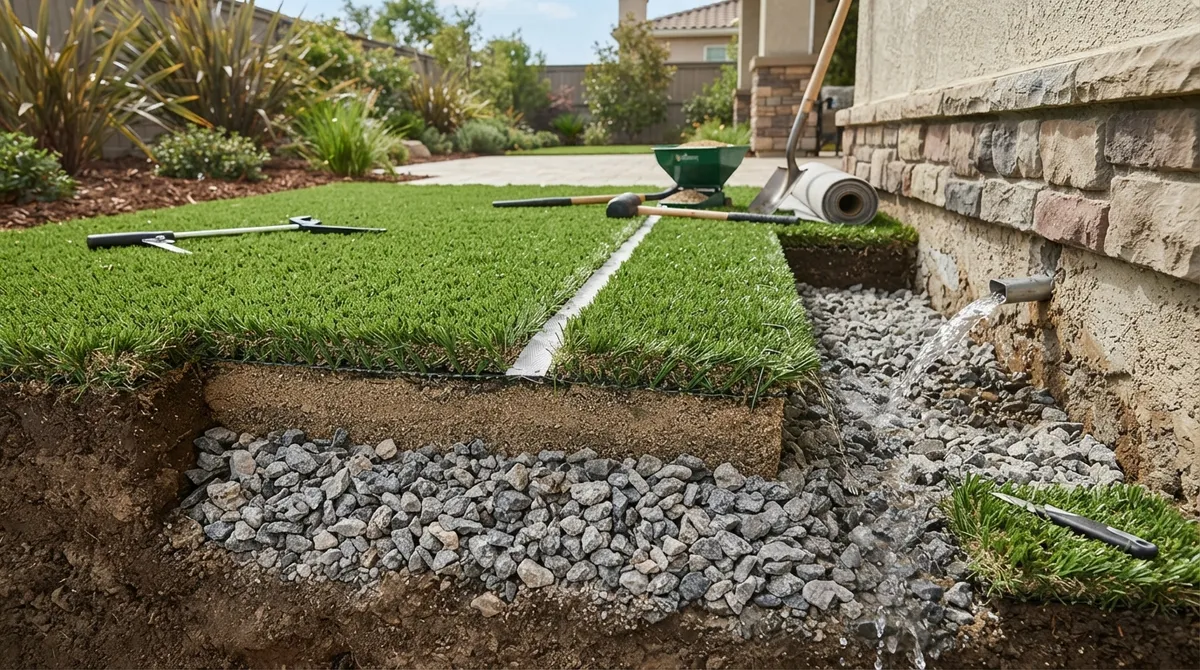
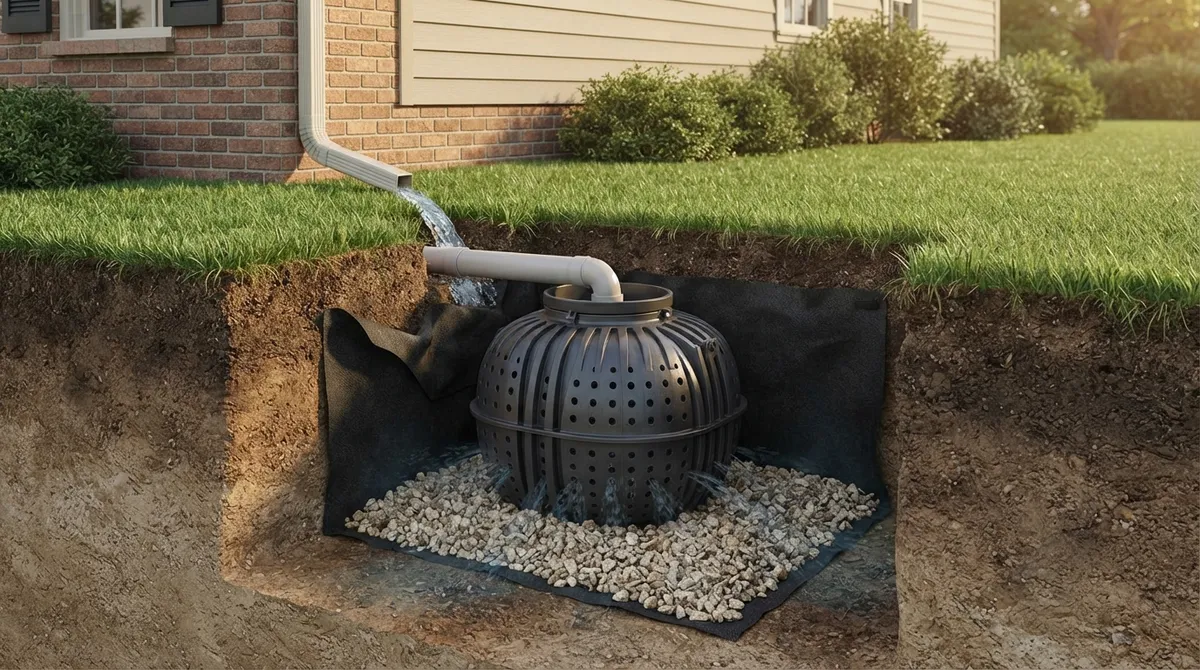
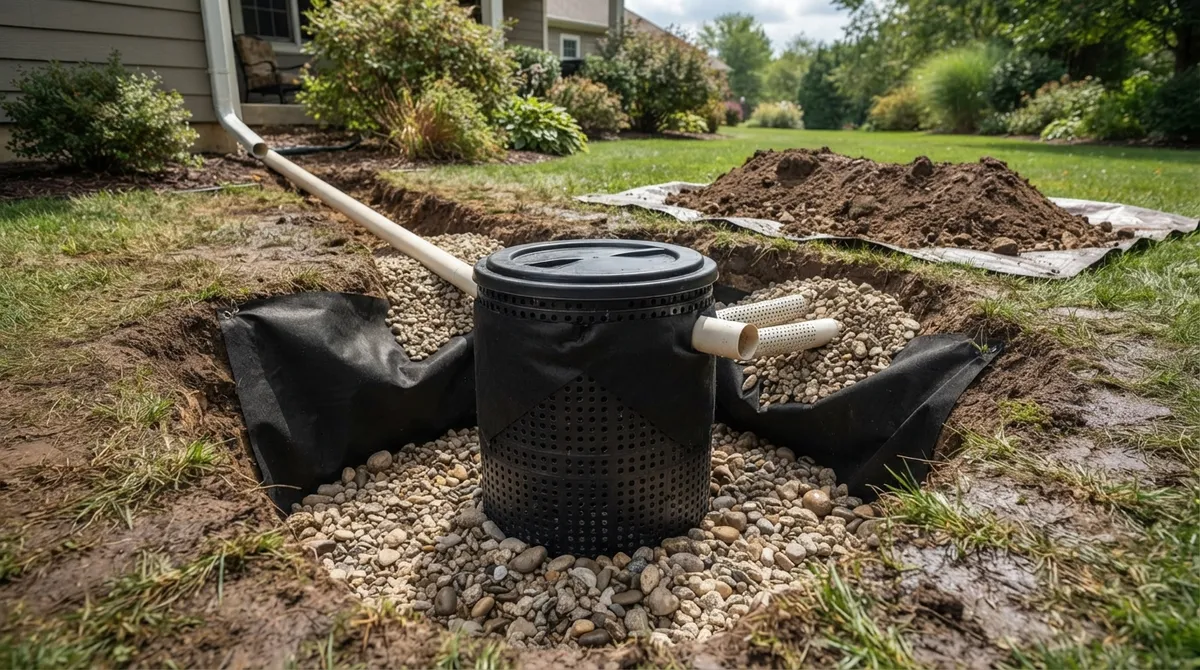
A dry well is an underground structure that collects extra rainwater and lets it soak slowly into the soil. Think of it as a hidden storage tank made of gravel, stone, or a plastic chamber buried below your lawn. Water flows in from downspouts, yard drains, or low spots, then seeps out gradually instead of flooding your yard all at once.
Unlike a pond or rain barrel, you’ll never see a dry well once it’s installed. It sits quietly underground doing its job. This makes it a popular choice for homeowners who want function without sacrificing curb appeal.
Dry wells are sometimes called flow wells or seepage pits, depending on your contractor or region. No matter the name, the goal stays the same: give stormwater somewhere useful to go.
How Does a Dry Well Installation Work?
The process is more straightforward than most people expect. A well-designed dry well relies on gravity and your soil’s natural ability to absorb water over time.
Here’s a simple breakdown of what happens underground:
- Rainwater runs off your roof, driveway, or lawn during a storm.
- It travels through underground pipes connected to downspouts or drain inlets.
- The water reaches the dry well chamber, which is usually surrounded by gravel or crushed stone.
- The well holds the water temporarily, like a sponge storing extra moisture.
- Water slowly seeps out through the sides and bottom into the surrounding soil.
This slow-release process prevents sudden flooding and reduces pressure on your foundation, lawn, and hardscaping. It’s a quiet hero working beneath your feet.
Where Dry Wells Work Best
Not every yard needs a dry well, but many do benefit from one. Properties with these conditions are great candidates:
- Yards with no natural slope to carry water away
- Homes where downspouts dump water right next to the foundation
- Properties without access to a storm sewer or daylight drainage outlet
- Lawns that stay soggy for days after rainfall
- Commercial sites needing to manage stormwater runoff responsibly
Signs Your Property Needs a Dry Well
Wondering if this drainage solution is right for you? Here are common warning signs we see across Chicagoland properties:
- Standing water in your lawn 24 hours or more after rain
- Water pooling near your home’s foundation
- Soggy, mushy grass that never seems to dry out
- Erosion along walkways, patios, or garden beds
- Basement dampness or minor flooding during storms
- Mosquitoes breeding in low, wet areas of your yard
If any of these sound familiar, it might be time to have a professional take a look. Poor drainage doesn’t just hurt your lawn. It can also damage pavers, retaining walls, and other hardscape features over time.
The Dry Well Installation Process, Step by Step
Every yard is different, so a good landscape contractor customizes the design based on your soil, slope, and water volume. Still, most installations follow a similar path.
- Site evaluation. A contractor checks your soil type, slope, and drainage patterns to find the best location.
- Sizing the well. The size depends on how much water your roof or yard produces during a storm.
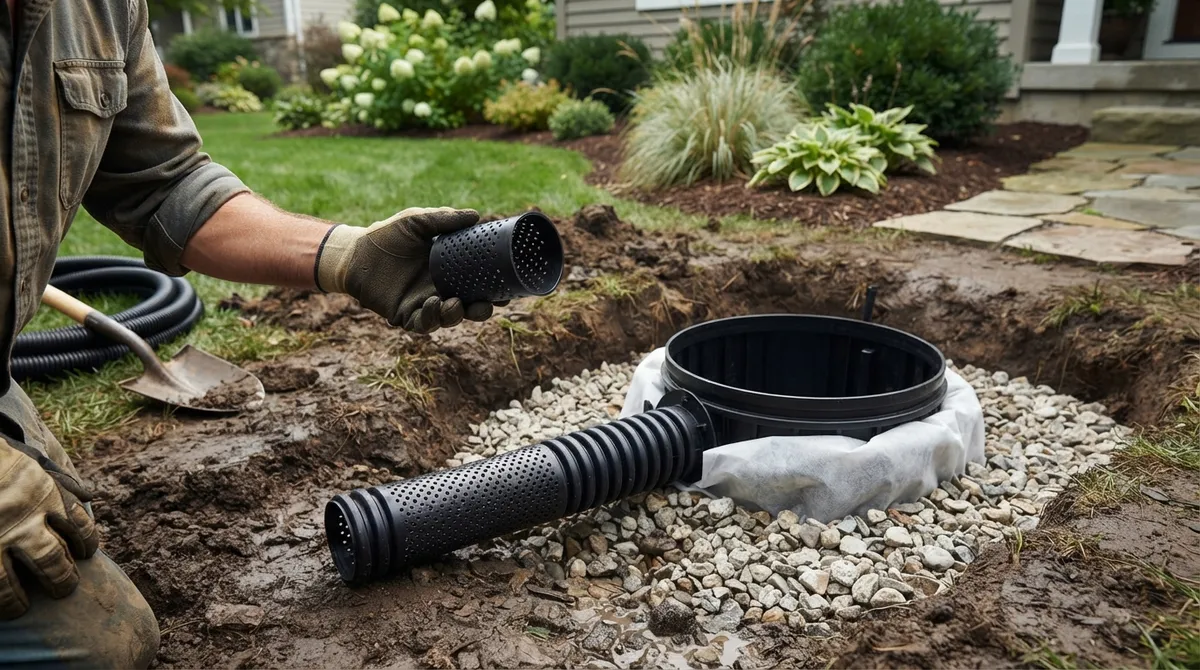
- Excavation. Crews dig a hole, often several feet deep, to house the dry well structure.
- Placing the structure. The dry well chamber or gravel pit is set into the hole.
- Connecting drainage lines. Underground pipes link the well to downspouts or yard drains.
- Backfilling. Gravel or crushed stone surrounds the well, then soil covers the area so your lawn looks untouched.
Many prefabricated dry well units require a hole at least 32 inches deep, though this varies by product and site conditions. Your contractor will recommend the right depth and size based on real data, not guesswork.
Dry Well Installation Cost
Cost is often the first question homeowners ask, and it’s a fair one. Pricing depends on the size of the well, soil conditions, and how much piping is needed to connect it to your drainage system.
| Project Size | Typical Cost Range | Best For |
|---|---|---|
| Small/Simple | $200 – $1,344 | Single downspout, small yard |
| Average Project | $1,344 – $5,167 | Most residential homes |
| Large/Complex | $5,167 – $10,300 | Commercial sites, large lots, heavy runoff |
According to HomeAdvisor’s 2025 data, the average dry well installation costs around $3,126. Factors that affect price include soil type, well size, number of connection points, and site accessibility. A property with rocky or dense clay soil, common throughout parts of Chicago, may require extra excavation work, which can raise costs slightly.
Dry Well vs. French Drain: What’s the Difference?
These two drainage solutions often get confused, but they solve problems in different ways. Understanding the difference helps you choose the right fix for your yard.
| Feature | Dry Well | French Drain |
|---|---|---|
| Function | Collects and stores water, then releases it into soil | Redirects water away to another location |
| Best For | Spot flooding, downspout runoff | Linear drainage along a slope or foundation |
| Outlet Needed | No daylight outlet required | Usually needs a downhill outlet |
| Visibility | Completely underground | May include visible gravel trench or grate |
Sometimes the best solution combines both systems. A French drain can carry water to a dry well, giving you the benefits of redirection and absorption in one design. This is where working with an experienced team really pays off, since they can evaluate your yard and recommend the right combination.
Maintenance: Keeping Your Dry Well Working
Dry wells are low-maintenance, but they’re not maintenance-free. Over time, debris, leaves, and sediment can clog the system and slow down drainage performance.
Here’s how to keep your dry well working like new:
- Clean gutters and downspouts regularly so debris doesn’t wash into the well
- Inspect connection points once or twice a year for blockages
- Watch for slow drainage or pooling near the well’s location
- Schedule a professional inspection every few years
- Avoid planting trees with aggressive roots too close to the system
With proper care, a well-built dry well can last for decades. Neglect, on the other hand, can shorten its lifespan and lead to costly repairs down the road.
Why Professional Installation Matters
It might be tempting to try a DIY dry well kit from a hardware store. But drainage systems are trickier than they look. Poor placement, wrong sizing, or bad soil assessment can actually make flooding worse instead of better.
Professional landscape contractors bring tools and experience that make a real difference:
- Soil percolation testing to confirm the ground can actually absorb water
- Proper sizing based on roof area, rainfall data, and yard slope
- Correct depth and placement away from foundations and property lines
- Integration with existing features like retaining walls or paver patios
- Compliance with local Chicago-area drainage codes
Organizations like Landscape Illinois support ongoing education for landscape professionals, helping ensure installations meet current industry standards. Working with a certified team, including those recognized by the ICPI Certified Installer program, gives you extra peace of mind that the work is done right the first time.
Dry Wells for Different Property Types
Every property has unique drainage needs. Here’s how dry wells serve different situations across Chicagoland.
Suburban Homes
Larger lots often have more room for a properly sized dry well, especially near patios or driveways. This keeps water away from foundations while preserving the look of manicured lawns and gardens.
Urban Condos and Small Lots
Space is tight in the city, but compact prefabricated dry well units can still fit into small yards or courtyards. These systems handle runoff from rooftops and small paved areas without taking up visible space.
Commercial Properties
Office parks, retail centers, and mixed-use developments often deal with large paved areas that generate significant runoff. Dry wells help commercial property managers meet stormwater regulations while protecting parking lots and building foundations. Pairing this with commercial lawn maintenance keeps the whole property looking sharp year-round.
New Home Construction
Builders in Aurora and surrounding suburbs increasingly include dry wells as part of turnkey landscape packages. Addressing drainage before sod or plants go in saves future homeowners from dealing with soggy yards down the road.
Combining Dry Wells with Other Landscape Features
A dry well doesn’t have to work alone. It pairs beautifully with other outdoor features when planned correctly from the start.
- Route water away from fire pits and seating areas to prevent erosion
- Protect pergolas and pavilions from standing water damage
- Keep pathways and paver installations from shifting due to saturated soil
- Support healthy softscapes by preventing root rot from overwatering
- Complement outdoor lighting and sound systems by keeping electrical components dry
When drainage is handled early in the design process, every other feature you add lasts longer and looks better. That’s why our design process always starts with understanding how water moves across your property.
Ready to Solve Your Drainage Problems?
A soggy yard doesn’t have to be your normal. With the right dry well installation, you can protect your foundation, save your lawn, and finally enjoy your outdoor space without worrying about the next big storm. Our team at Serenity Landscape Group has helped countless Chicago-area homeowners and business owners turn problem yards into peaceful, functional spaces.
Curious what a dry well could do for your property? Get a free estimate today, or feel free to call us at (630) 359-5139 to talk through your drainage concerns with a friendly member of our team. Let’s turn your wet yard worries into a thing of the past, together.
FAQs
Q: What is a dry well in landscaping?
A: A dry well is an underground chamber, usually surrounded by gravel or stone, that collects extra rainwater and lets it slowly soak into the soil. It’s a hidden helper that keeps your yard from flooding after a big storm, all without changing how your landscape looks above ground.
Q: How much does it cost to install a dry well?
A: On average, homeowners spend around $3,126 on a dry well installation, though costs can range from as little as $200 for small projects to over $10,000 for larger, more complex systems. Your final price depends on soil conditions, well size, and how much piping is needed to connect everything.
Q: How long does a dry well last?
A: A well-built and properly maintained dry well can last for decades, sometimes 20 to 30 years or more. Regular gutter cleaning and occasional inspections go a long way toward keeping your system working great for the long haul.
Q: What is the difference between a dry well and a French drain?
A: A dry well collects and stores water before letting it soak into the ground, while a French drain redirects water to a different location using a sloped trench. Many properties actually benefit from combining both systems for the best drainage results.
Q: Do dry wells need maintenance or cleaning?
A: Yes, though it’s pretty minimal compared to other drainage systems. Keeping gutters clear of debris and scheduling an occasional professional inspection helps prevent clogs and keeps your dry well performing at its best for years to come.