Key Takeaways
-
Never cover a fire pit until it has cooled completely, since covering a hot or warm unit is a fire risk and can damage the cover; wait until the next day if unsure.
-
Choose a fitted cover that is water-resistant but vented or breathable, because a fully sealed cover can trap condensation and cause rust or mildew.
-
Build the fire pit on a stable, noncombustible, level surface like pavers or concrete with a slight slope away from the unit so water drains instead of pooling.
-
Clear the bowl of leaves and debris, keep drain holes and ventilation openings open, and dry everything before covering to prevent rust and clogged burners.
-
Check your manufacturer's manual first for cover type, storage advice, and clearances, since manual guidance overrides general best practices.
-
For gas fire pits, have a qualified technician handle any control replacement or repairs if components get wet, rather than attempting fixes yourself.
Picture this: it’s a crisp November morning in Chicagoland, and you walk out to your backyard with a cup of coffee. Your fire pit, the star of so many summer nights, is sitting there with a puddle in the bowl and a pile of soggy leaves on top. Sound familiar? You are definitely not alone.
Rain, snow, and our famous freeze-and-thaw cycles can be tough on any fire feature. The good news is that protecting an outdoor fire pit from snow and rain is not hard once you know the basics. A little planning, the right cover, and smart drainage can help your fire pit stay ready for cozy nights year after year.
In this friendly guide, we’ll walk through simple steps to keep your fire pit dry, safe, and looking great in 2026 and beyond. We’ll also talk about the landscaping choices, like a stable base and good drainage, that make protection so much easier. Let’s get started!
Why Does Weather Matter So Much for a Fire Pit?
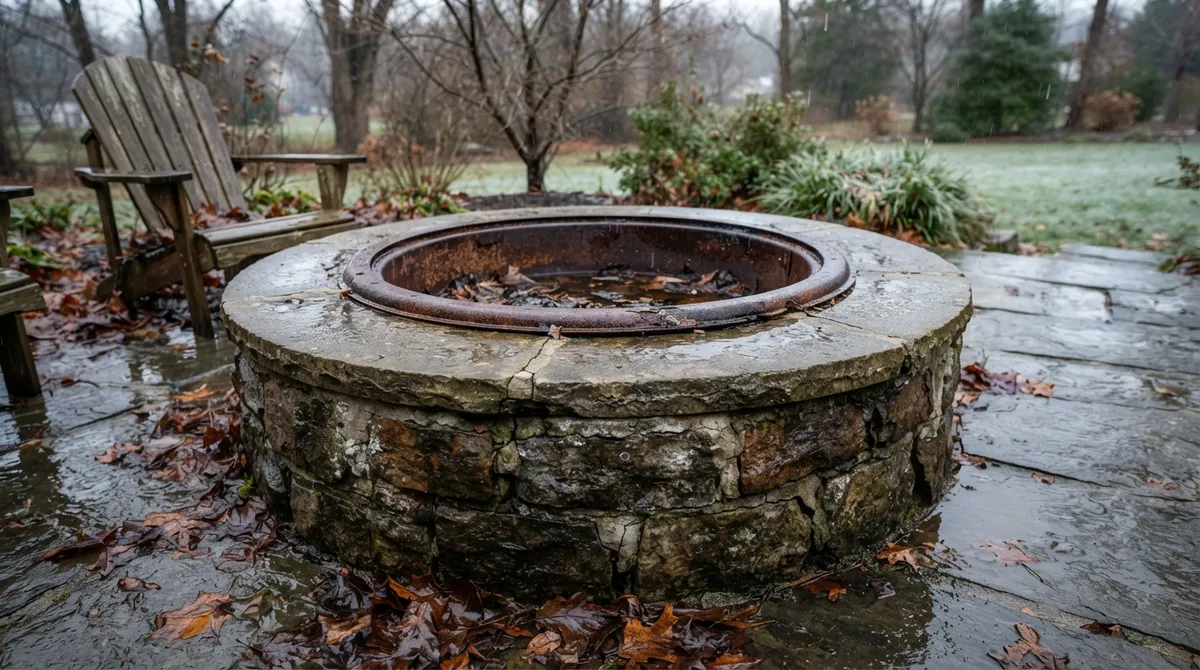
Water is the number one enemy of most outdoor fire features. When rain and snow sit in a fire pit bowl, they can cause rust, stains, and even damage to parts you can’t easily see. Leaves and debris make things worse because they hold moisture against the surface.
Here is what can go wrong when a fire pit is left unprotected:
- Rust and corrosion: Standing water and wet ash can eat away at steel bowls and fittings.
- Clogged air passages: Debris can block burner openings on gas fire pits.
- Ignition trouble: Wet components may not light well, and soaked gas controls may need replacement.
- Freeze damage: Water that freezes in cracks can make them bigger over time.
- Stains and mildew: Wet leaves and ash can leave marks and odors.
Because every fire pit is built a little differently, always check the manufacturer’s instructions first. The manual will tell you what cover to use, how to store the unit, and which parts need extra care. We’ll share general best practices here, but your manual has the final word.

Start With the Right Location and Base
The best way to protect a fire pit from the weather begins before the first fire is ever lit. Where you put it, and what it sits on, makes a huge difference. This is where good landscape design really pays off.
Choose a Stable, Noncombustible Surface
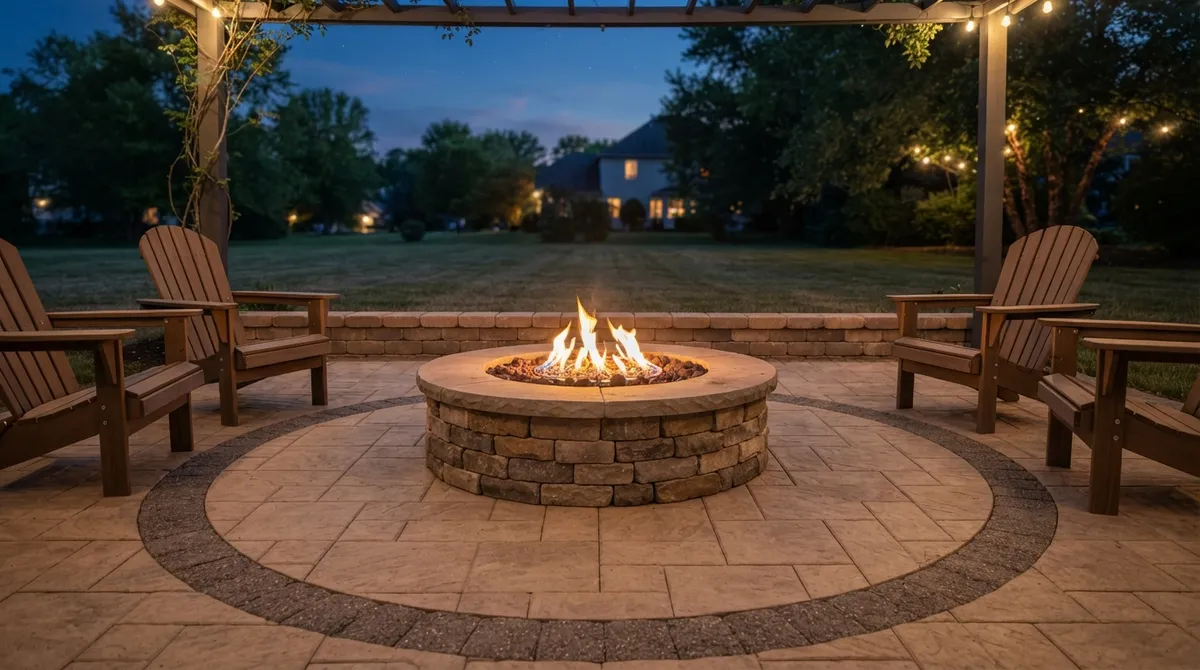
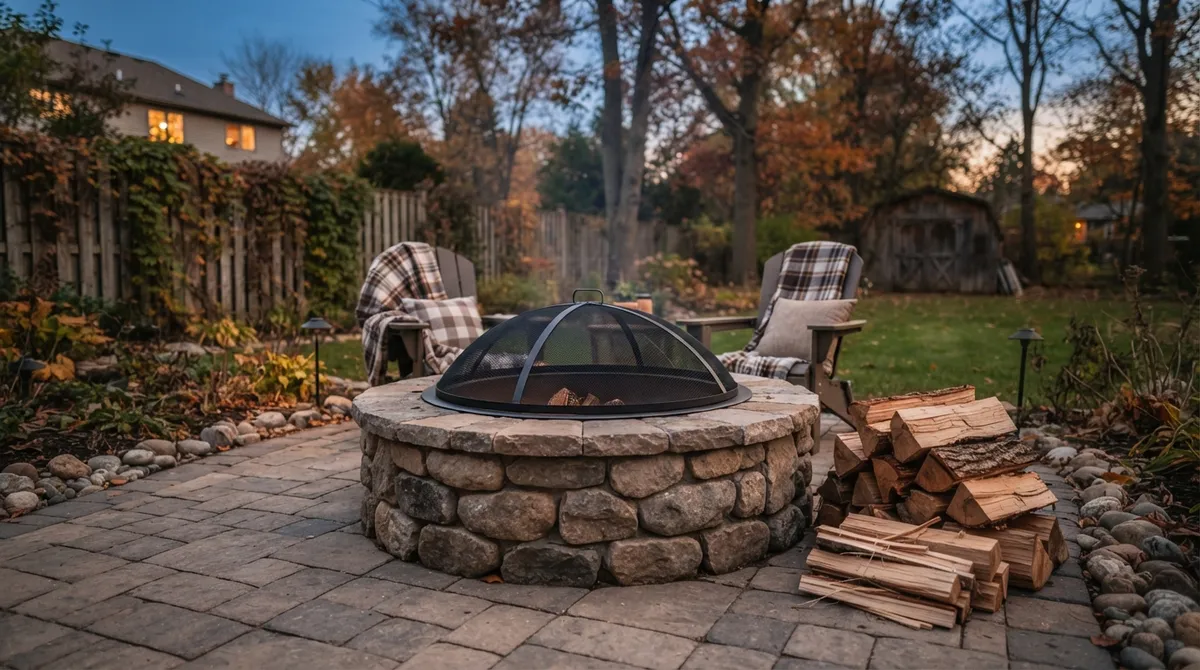
A fire pit should sit on a solid, level, noncombustible surface. Pavers, stone, and concrete are popular choices because they stay stable and handle water well. A well-built paver patio also helps water move away from the fire pit instead of toward it. If you’re curious about this approach, take a look at our fire pit paver patio ideas for inspiration.
Plan for Drainage From Day One
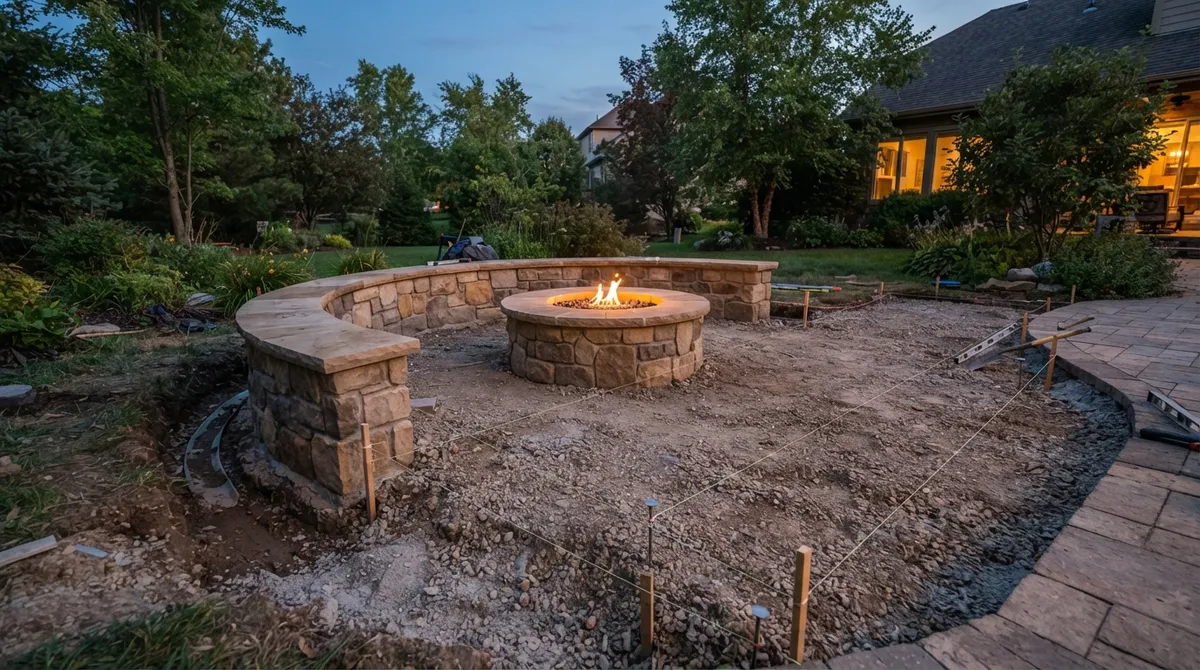
A good patio slopes slightly away from the fire pit so water doesn’t pool around it. Proper base layers underneath also let water drain through instead of turning your patio into a pond. Our guide on choosing professional paver installation explains why the foundation matters so much for long-term performance.
If your yard tends to flood after storms, you may need more than a sloped patio. A dry well or other drainage solution can keep water from collecting near your outdoor living area. You can learn more in our article on dry well installation.
Keep Clearances and Ventilation Clear
Smart siting also means leaving the right amount of space around your fire pit. Follow your manual for distances from the house, fences, and overhanging branches. Branches directly above a fire pit also drop leaves and twigs that end up in the bowl. Keep ventilation openings and weep holes clear so air and water can do what they are designed to do.
Which Fire Pit Cover Works Best?
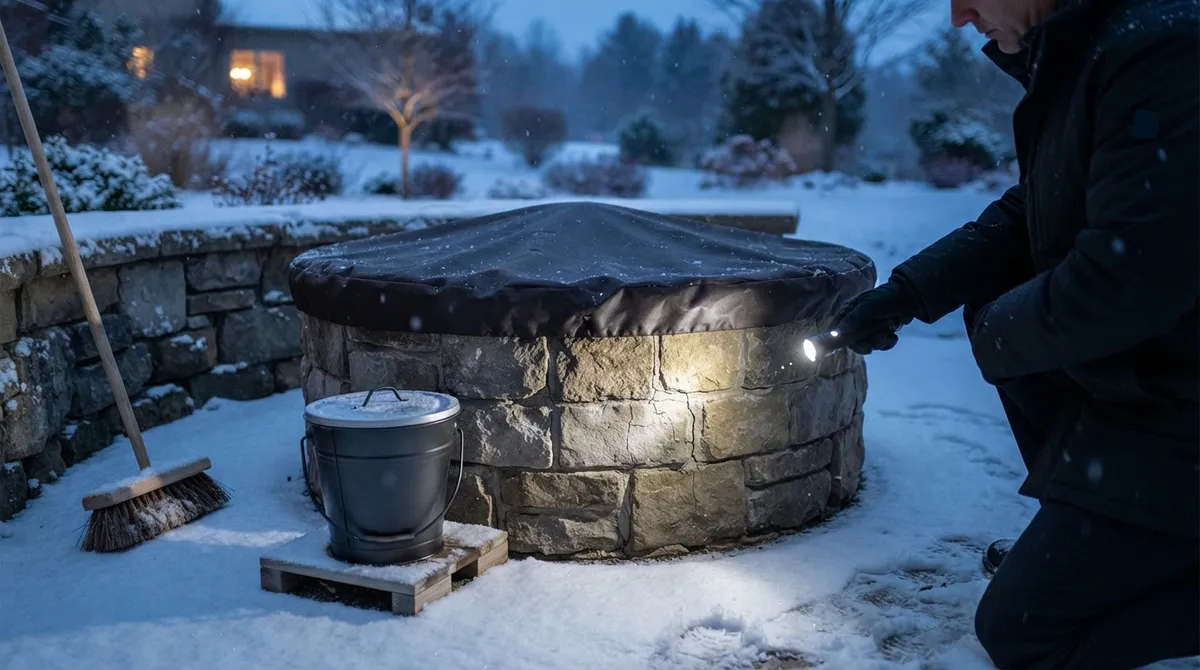
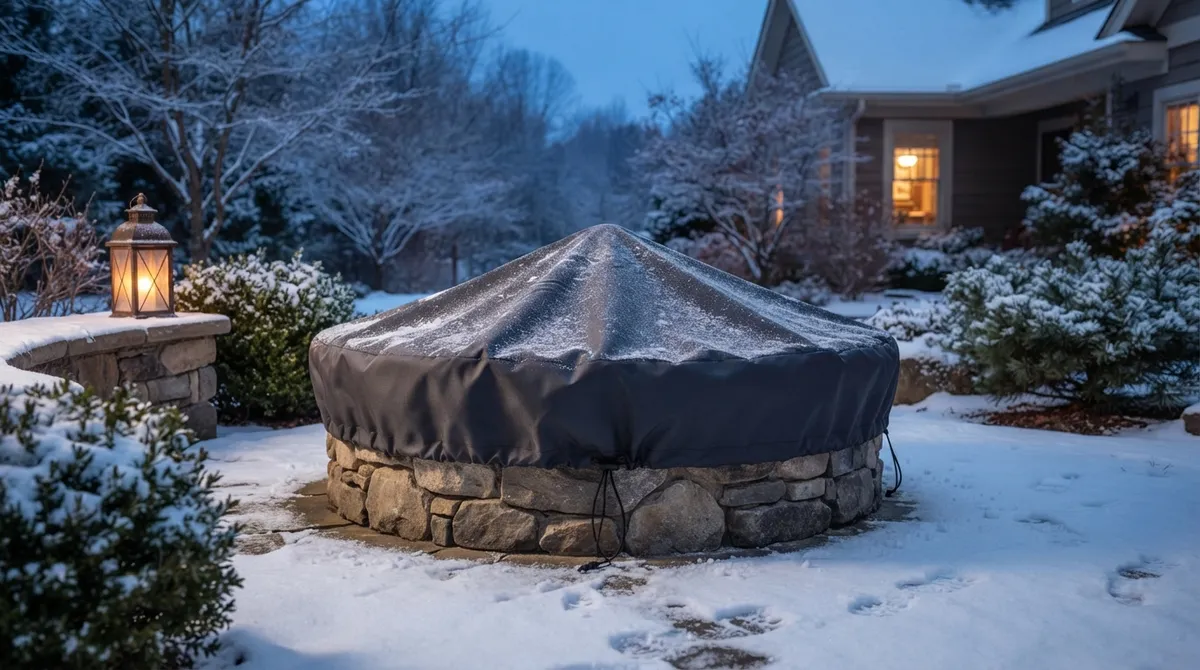
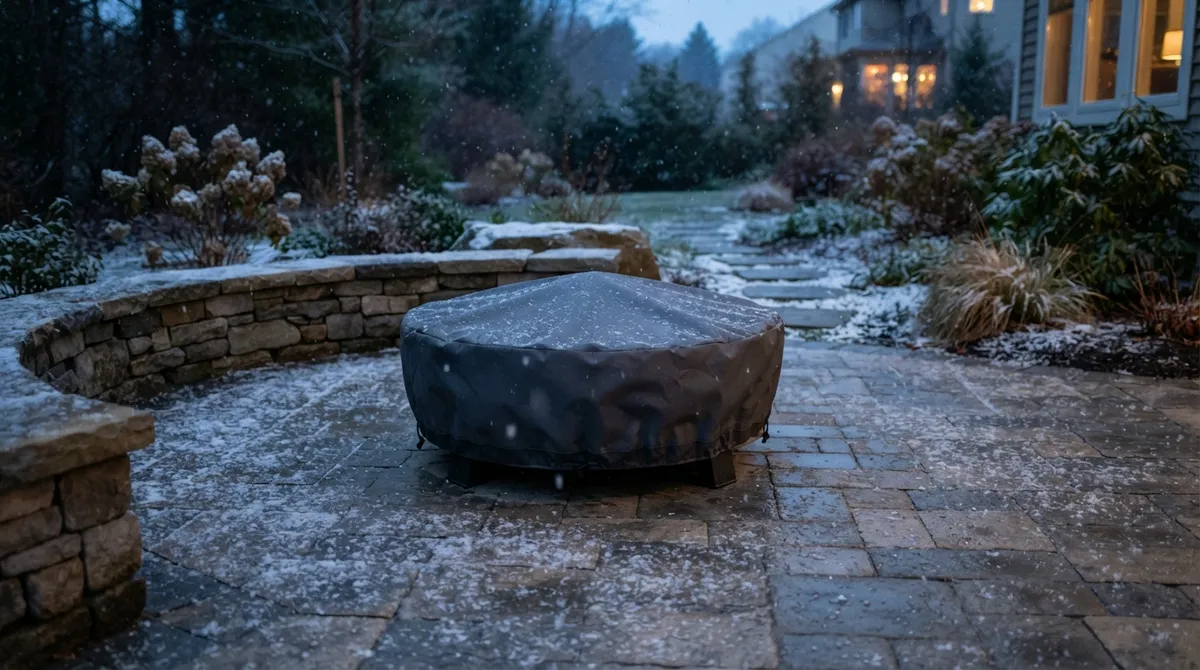
A fitted, weather-resistant cover is the simplest and most effective protection you can buy. It keeps rain, snow, leaves, and debris out of the bowl and reduces the exposure that leads to rust. For more on choosing one, check out our guide on how to choose fire pit covers for winter protection.
Here is a quick look at common cover features and what they mean for you:
| Cover Feature | Why It Helps | Things to Watch |
|---|---|---|
| Water-resistant fabric | Sheds rain and melting snow | Can trap moisture if it has no vents |
| Breathable or vented design | Lets condensation escape | May let in a little moisture in heavy storms |
| Snug, fitted size | Resists wind and stays in place | Measure your fire pit carefully |
| Straps or drawcords | Keeps the cover secure in gusts | Check them after big storms |
| Rigid or hard-shell cover | Handles heavy snow loads well | Must match your fire pit’s shape and size |
Should a Cover Be Waterproof or Breathable?
This is one of the most common questions we hear. The best answer is usually a cover that blocks rain and snow but also has vents or breathable fabric. A fully sealed cover can trap condensation inside, which can lead to rust or mildew. A vented cover lets that moisture escape while still keeping the weather out.
Always Cover a Cool Fire Pit
Safety first, friends! Never put a cover on a hot or even warm fire pit. Let it cool completely before you cover, clean, or move it. Some gas fire pit manuals specifically warn against covering the unit while it’s hot. A good rule is to wait until the next day if you aren’t sure.
Step-by-Step: How to Cover Your Fire Pit Before a Storm
Ready to put your fire pit to bed for the season, or just for a stormy week? Follow these simple steps.
- Let it cool completely. Wait until every part is cool to the touch before you do anything else.
- Clean out debris. Remove leaves, twigs, and trash from the bowl and around the base.
- Check for standing water. Make sure drainage openings and weep holes are clear, and dry the bowl or burner pan with a towel if needed.
- Handle the fuel properly. For gas models, turn the controls off and follow your manual for disconnecting or storing the fuel supply. For wood models, take care of the ash (see below).
- Dry everything. Make sure the unit is dry before covering it to avoid trapping moisture.
- Fit the cover. Pull it snugly over the fire pit and secure the straps or drawcords against wind.
- Check it often. After heavy snow or wind, peek under the cover and clear off any buildup on top.
Special Tips for Wood-Burning Fire Pits
Wood-burning fire pits have their own care needs. Ash is the big one. It can hold moisture like a sponge, and wet ash is hard on metal and stone.
- Wait for fully cold ash. Only remove ash when it’s completely cold, and follow your manual for safe disposal.
- Keep the bowl clean and dry. A clean bowl is much less likely to rust or stain.
- Mind the drain holes. Many wood fire pits have small drainage holes. Keep them open so rainwater can escape.
- Store firewood nearby but away. Keep logs dry and covered, but not touching the fire pit or the cover.
- Expect some weathering. Certain steel fire pits are designed to develop a natural rust-colored finish. Check your manufacturer’s guidance so you know what’s normal for your unit.
Special Tips for Gas and Propane Fire Pits
Gas fire pits need a bit more care because water can affect burners and controls. The good news is that a few smart habits go a long way.
First, turn the controls off and follow your manual for the fuel supply. Many manufacturers ask you to disconnect or store propane tanks in a safe place as directed. Second, keep all ventilation openings clear so the unit can breathe. Third, make sure everything is dry before you try to light it again.
If a gas control has been submerged in water, manufacturer guidance may require replacing it. Please don’t try to fix gas parts yourself. Have a qualified service person handle any gas-system repairs. Some manuals also recommend an inspection before use and once a year by a qualified technician, so check yours for the right schedule.
Planning a new gas or custom feature? Our custom fire pit installation cost factors guide can help you think through your options before you build.
Can You Leave a Fire Pit Outside All Winter?
In many cases, yes, as long as the manufacturer says it’s okay and you take good care of it. A well-fitted cover, a dry bowl, and good drainage are the keys. Fire pits made from weather-ready materials like stone, concrete, or certain steels often handle Chicago winters well when they’re protected.
That said, in areas with heavy snow or severe weather, a sheltered, dry storage spot may be the better choice for portable fire pits, as long as your manual allows it. A garage or shed works nicely. Here is a simple comparison to help you decide:
| Option | Best For | Pros | Cons |
|---|---|---|---|
| Covered outdoors | Built-in stone or paver fire pits | Always ready, no lifting | Needs checking after storms |
| Stored in garage or shed | Portable steel or gas fire pits | Best protection from freeze and moisture | Takes space and effort to move |
| Under a roofed structure | Fire pits near a pavilion or pergola | Natural shelter from the weather | Needs proper clearances and ventilation |
A word of caution on that last option: never place a fire pit under a roof or low structure unless the manufacturer and local codes clearly allow it. Fire safety rules matter more than convenience.
Landscaping Ideas That Give Your Fire Pit Extra Protection
Your yard design can do a lot of the heavy lifting for you. Thoughtful landscaping keeps water moving away and makes seasonal care much easier. Here are a few ideas worth considering.
- A sloped, well-drained patio: Pavers laid over a proper base shed water quickly. See how patio pavers transform a Chicago backyard.
- Retaining walls and grading: If your yard slopes toward your patio, a retaining wall and smart grading can redirect runoff. Learn more about what a retaining wall is and whether you need one.
- Nearby shelter: A pergola or pavilion can shield your seating area, even when the fire pit itself stays in the open. Our post on pergola vs pavilion in Chicago weather breaks down the differences.
- Tree trimming: Cutting back overhead branches means fewer leaves and twigs in your fire pit bowl.
- Good lighting: Landscape lighting makes it safer to check on your fire pit after a winter storm. Get ideas from our cozy winter lighting guide.
If water buildup is already a problem, you might be making one of a few common mistakes. We cover them in 12 mistakes that cause water buildup in a fire pit.
A Simple Seasonal Care Calendar
Keeping up with fire pit care is easier when you break it into small seasonal tasks. Here is an easy rhythm to follow.
- Fall: Clean out debris, dry the bowl, and give everything a good look. Our fall fire pit inspection checklist makes this a breeze.
- Early winter: Install the cover, secure it against wind, and store fuel as your manual directs.
- Mid-winter: After big storms, brush heavy snow off the cover and make sure water isn’t pooling anywhere.
- Early spring: Remove the cover, check for rust or damage, and make sure drain holes and vents are clear.
- Before first use: Confirm everything is bone dry, and have a qualified technician inspect gas models if your manual calls for it.
Thinking about adding a new fire feature? Our friendly guide to planning a fire pit project for spring is a great place to begin. You can also explore our fire pit services to see what’s possible for your yard.
Extra Resources for Chicago-Area Homeowners
It’s always smart to learn from trusted industry groups. The ICPI Certified Installer program is a helpful resource for understanding quality paver installation, which is the foundation of a well-drained fire pit area. You can also find regional guidance through Landscape Illinois. For fire safety rules, be sure to check your local municipality, since fire pit regulations vary from town to town. Many suburbs and Chicago itself have their own codes, so a quick call to your village hall can save you headaches.
Ready to Enjoy a Fire Pit That Lasts?
Protecting your fire pit from snow and rain really comes down to a handful of good habits: choose a smart location, build on a stable and well-drained base, use a properly fitted cover, keep things clean and dry, and follow your manufacturer’s instructions. Do those things, and your fire pit will be ready whenever the mood strikes, whether that’s a golden fall evening or a snowy winter night.
At Serenity Landscape Group, we’ve spent over two decades helping Chicagoland homeowners and businesses create outdoor spaces they truly love. From paver patios with great drainage to custom fire pits built for our tough climate, we’d be happy to help. Get a Free Estimate today, or call us at (630) 359-5139 to start planning a fire pit area that stands up to every season.
FAQs
Q: How do you protect an outdoor fire pit from rain and snow?
A: Start with a fitted, weather-resistant cover, and make sure the fire pit is cool, clean, and dry before you put it on. Keep drainage holes clear, avoid letting water pool in the bowl, and build on a sloped, well-drained surface like pavers. Always check your manufacturer’s manual for model-specific advice.
Q: Should a fire pit cover be waterproof or breathable?
A: The best covers keep rain and snow out but also have vents or breathable fabric so condensation can escape. A fully sealed cover can trap moisture, which may lead to rust or mildew. Look for a snug fit with secure straps so wind can’t pull it off.
Q: Can you leave an outdoor fire pit outside all winter?
A: Often you can, especially built-in stone or paver fire pits, as long as your manufacturer allows it and you keep the unit covered, clean, and drained. Portable steel or gas fire pits may do better stored in a dry garage or shed during harsh Chicago winters. When in doubt, follow your manual.
Q: When is it safe to cover a fire pit after using it?
A: Only cover a fire pit once it has cooled completely, which can take several hours or even overnight. Putting a cover on a hot unit can be a fire risk and can damage the cover. If you aren’t sure, wait until the next day.
Q: How do you keep water from collecting in a gas fire pit?
A: Use a properly fitted cover, keep drain holes and weep openings clear, and make sure the patio slopes slightly away from the unit. Dry the burner pan before covering and before relighting. If a gas control has gotten wet or submerged, have a qualified service person check it rather than fixing it yourself.