Key Takeaways
-
Retaining walls prevent soil erosion and stabilize slopes by resisting gravity’s downward pull, which is especially critical in areas with heavy rains and freeze-thaw cycles like Chicago.
-
Proper drainage design is essential for retaining wall longevity; without gravel backfill, perforated drain pipes, and weep holes, water pressure buildup can cause cracking, buckling, or failure.
-
Retaining walls transform unusable sloped yards into functional spaces like terraced gardens, patios, and raised flower beds, significantly increasing property usability and curb appeal.
-
Most residential and commercial properties in the Chicago area use gravity walls (under 3 feet) or segmental retaining walls, which balance strength, aesthetics, and affordability better than other types.
-
Building permits are required for retaining walls over 3-4 feet in most Chicago-area municipalities; working with professionals ensures compliance and prevents costly fines or removal.
-
Well-built retaining walls using quality materials like natural stone or concrete blocks last 50+ years, making them valuable long-term investments that enhance property value and buyer appeal.
If your yard has a slope, you’ve probably noticed how rain can wash away soil, leaving bare patches and uneven ground. Or maybe your hillside feels more like a liability than an asset. This is where a retaining wall comes in — and it might just be the landscape upgrade that changes everything about your outdoor space.
A retaining wall is a sturdy structure built to hold back soil on a slope or hillside. It keeps earth in place, prevents erosion, and creates level, usable ground where there wasn’t any before. Whether you’re a homeowner in the Chicago suburbs trying to tame a sloped backyard, or a commercial property manager looking to add polished curb appeal, understanding retaining walls is a great place to start.
In this guide, we’ll walk you through everything you need to know — from what a retaining wall actually does, to what materials are used, and how to know if your property needs one. Let’s dig in!
What Does a Retaining Wall Actually Do?
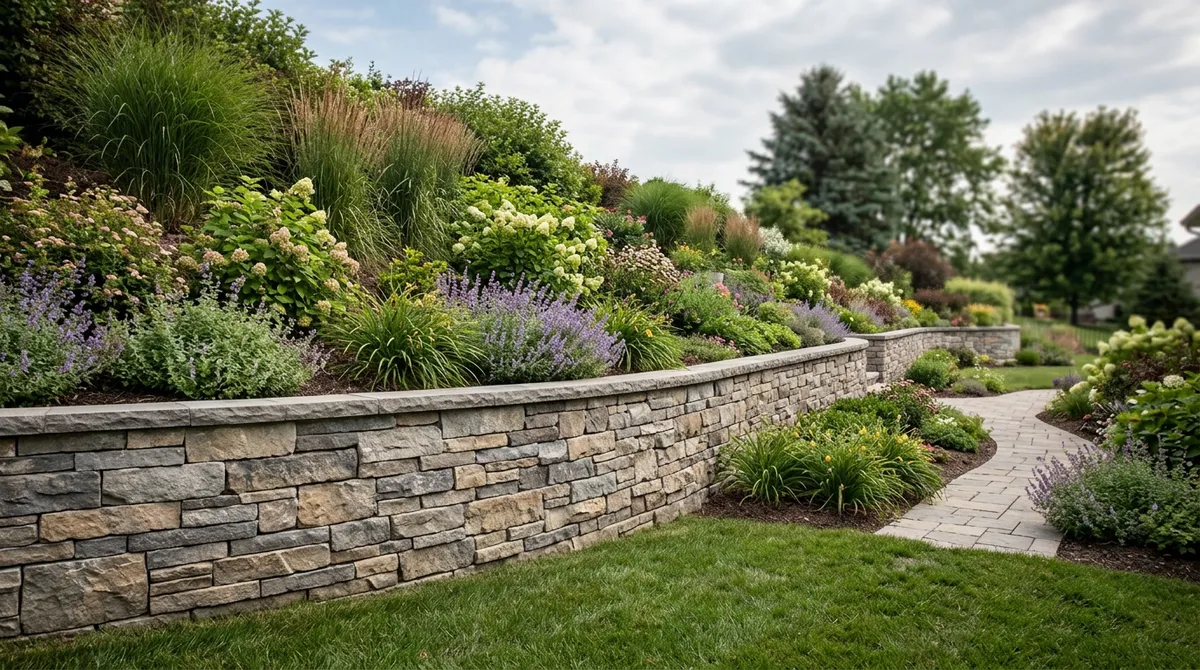
At its core, a retaining wall resists the pressure of soil pushing against it from one side. When soil is stacked on a slope, gravity wants to pull it downhill. A retaining wall stops that from happening. It holds the soil at a higher elevation than it would naturally rest on its own.
This is especially important in the greater Chicago area, where heavy rains and freeze-thaw cycles can wreak havoc on sloped terrain. Without a wall, soil erodes, gardens get washed out, and your property can suffer real structural damage over time.
Here’s a quick look at the main jobs a retaining wall performs:
- Erosion control: Stops rain from washing topsoil away
- Slope stabilization: Holds back soil on steep or unstable hillsides
- Space creation: Turns unusable slopes into flat, functional areas
- Water management: Redirects runoff away from your home or building
- Aesthetic appeal: Adds structure, depth, and visual interest to a landscape
- Property value boost: Maximizes usable yard space and improves curb appeal
Simply put, a well-built retaining wall solves real problems while making your property look beautiful. It’s one of the most practical investments in hardscaping you can make. You can see stunning examples in our gallery of our work to get a sense of what’s possible.
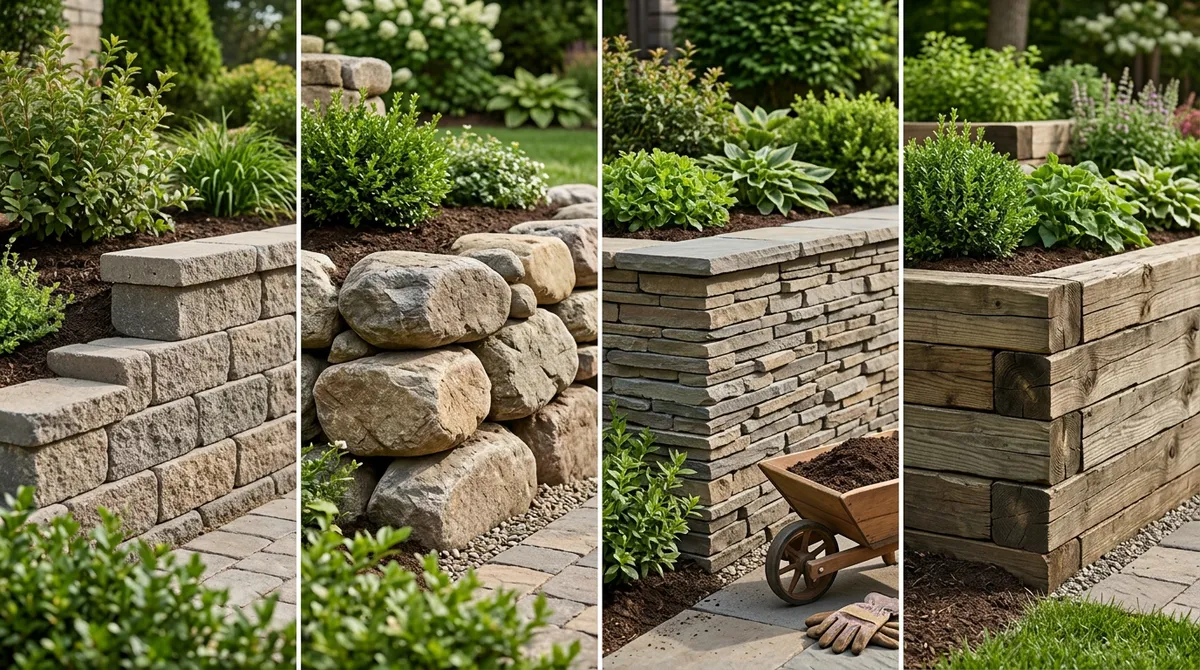
Common Materials Used for Retaining Walls
One of the fun parts of planning a retaining wall is choosing the right material. The best choice depends on your budget, the look you want, and the specific conditions of your site. Here’s a breakdown of the most popular options:
| Material | Durability | Aesthetic | Best For |
|---|---|---|---|
| Natural Stone | Very High | Classic, rustic | Garden walls, tiered landscapes |
| Concrete Blocks | Very High | Modern, clean | Large retaining projects, commercial sites |
| Brick | High | Traditional, elegant | Formal gardens, entry walls |
| Timber/Landscape Ties | Moderate | Natural, warm | Low walls, garden beds |
| Gabion (Wire & Rock) | High | Industrial, earthy | Eco-friendly, drainage-heavy areas |
Each material has its strengths. Natural stone and concrete blocks are among the most durable choices and are commonly used for taller or more demanding walls. Timber walls work well for smaller garden features but may need replacement over time. For professional guidance on which material suits your property, organizations like ICPI Certified Installers can help you connect with qualified hardscape professionals.
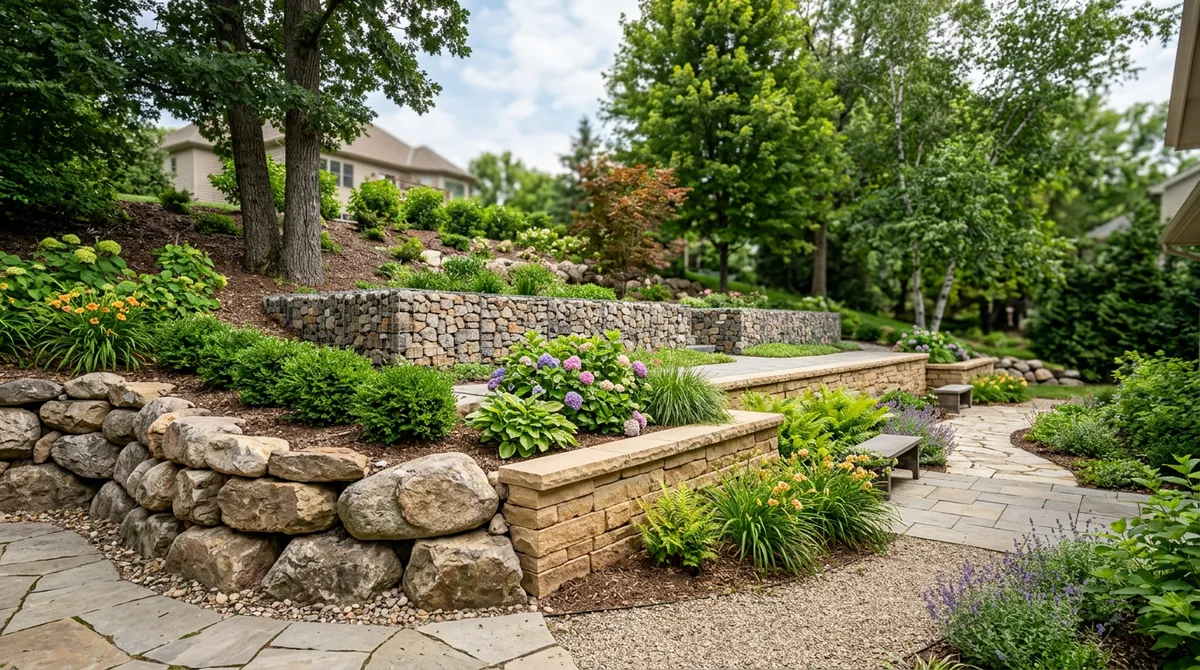
Types of Retaining Walls in Landscaping
Not all retaining walls are built the same way. Different designs are used depending on how much soil pressure the wall needs to handle and how tall it needs to be. Here are the main types you’ll encounter:
- Gravity walls — These rely on their own weight to hold back soil. They’re usually short (under 3 feet) and work great for garden beds and decorative borders.
- Cantilevered walls — These use a reinforced concrete base that extends under the soil, using leverage to resist pressure. They’re ideal for taller, more demanding applications.
- Sheet pile walls — Made from steel or wood planks driven deep into the ground. These work well in tight spaces with soft soil.
- Anchored walls — These walls use cables or rods anchored into the rock or soil behind them. They’re used for very tall walls or heavy loads.
- Segmental retaining walls — Built with interlocking concrete blocks. They’re popular for residential projects because they’re durable, attractive, and versatile.
For most homeowners and commercial properties in the Chicago suburbs, gravity walls and segmental walls are the most common choices. They offer a great balance of strength, beauty, and affordability. Check out our dedicated retaining walls service page to learn more about what we offer.
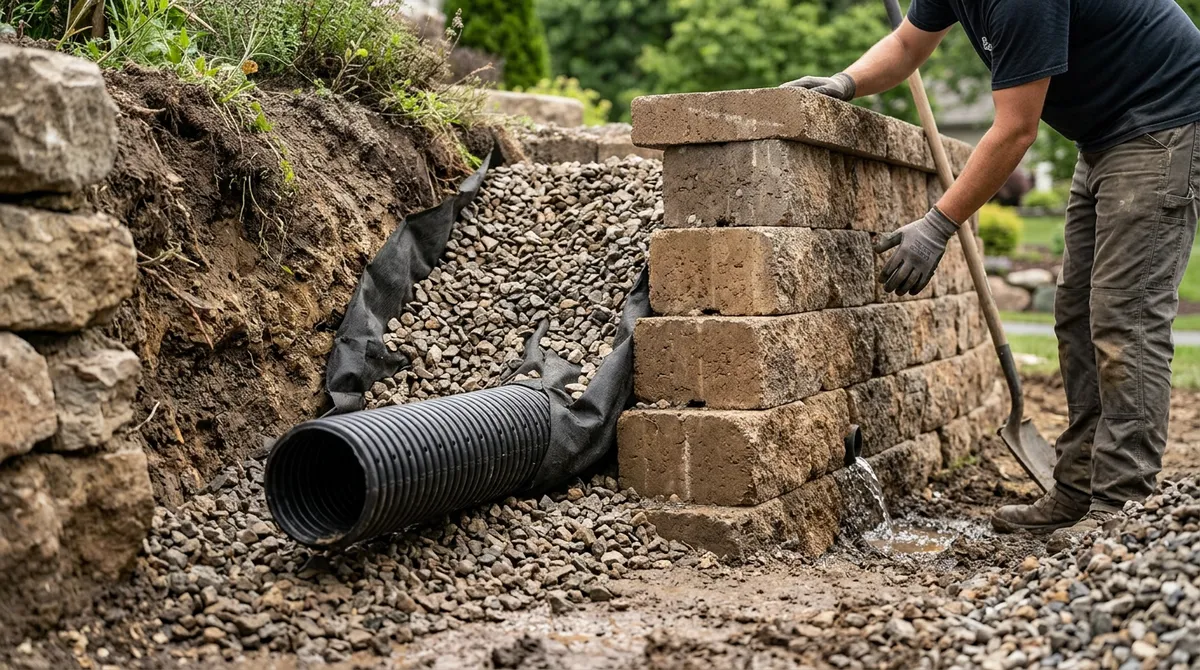
Why Drainage Is a Critical Part of Retaining Wall Design
Here’s something many people don’t realize: a retaining wall without proper drainage is a wall waiting to fail. When water builds up behind a wall, it creates enormous pressure. Over time, that pressure can cause even a well-built wall to crack, buckle, or lean.
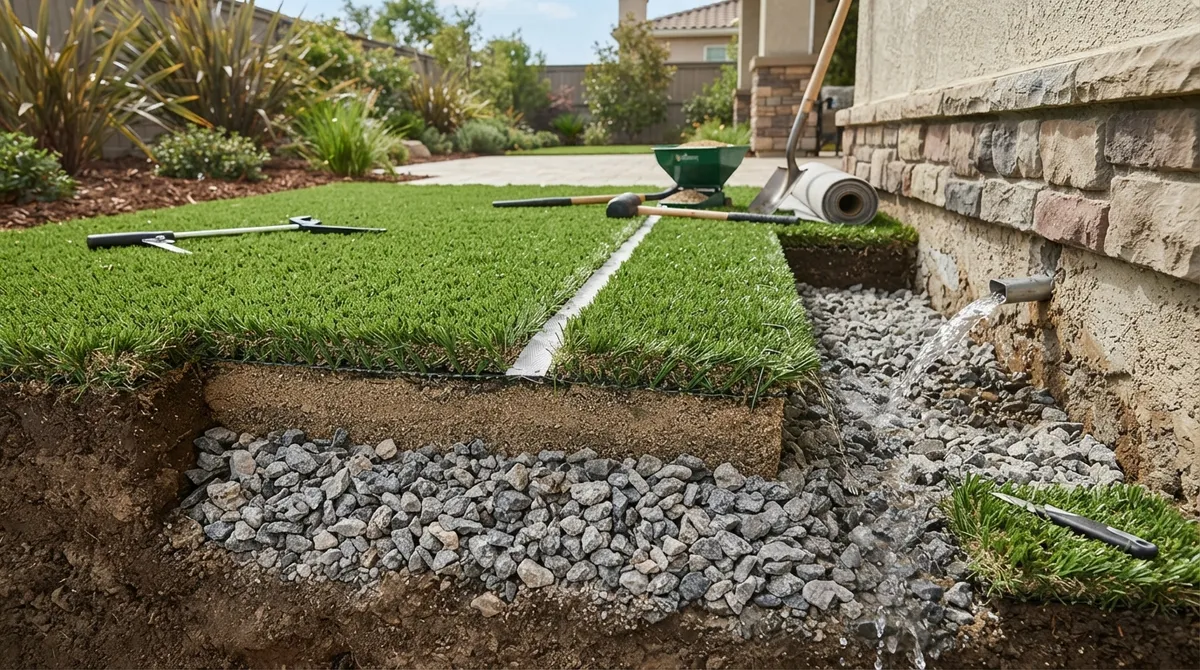
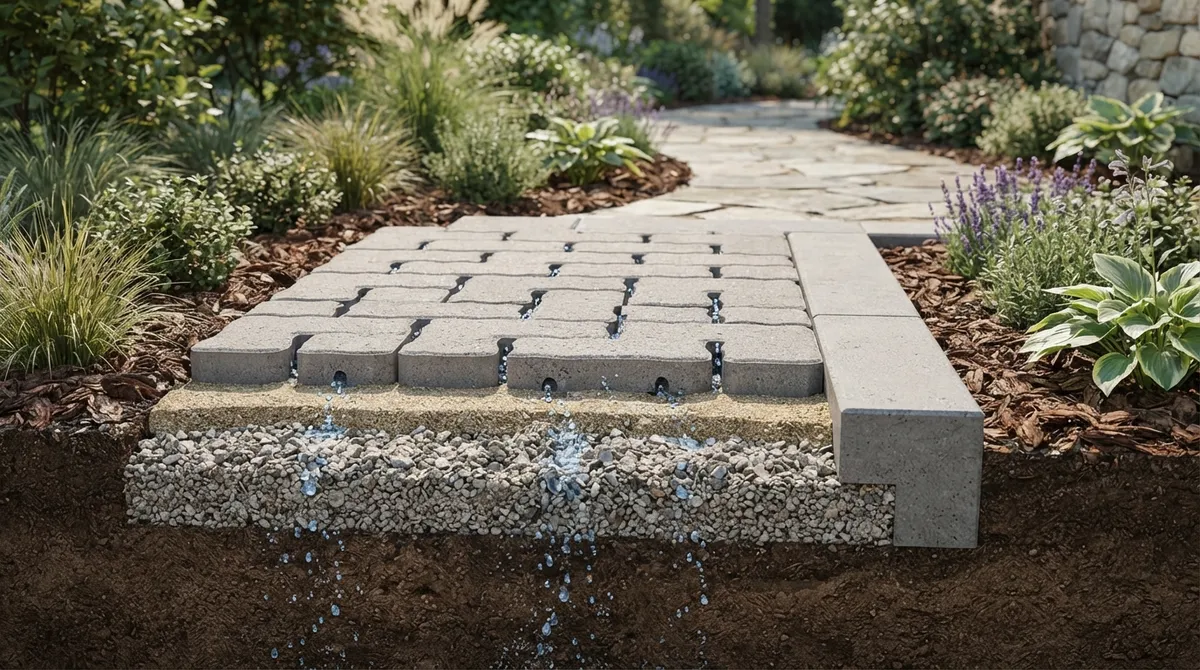
Good retaining wall design always includes a drainage plan. This typically involves:
- A gravel backfill layer behind the wall to allow water to flow freely
- Perforated drain pipes (called weeping tile) to channel water away
- Weep holes in the wall face to release built-up water pressure
- Proper grading to direct surface runoff away from the wall
In the Chicago area, where spring rains and snowmelt can really test a landscape, drainage is especially important. Proper water management protects your wall, your garden, and your home’s foundation. Landscape Illinois is a great resource for understanding best practices in the local landscaping industry.
How Retaining Walls Transform Outdoor Spaces
Beyond the practical side, retaining walls are genuinely exciting from a design perspective. They open up a whole world of creative possibilities for your landscape. Here’s how they’re commonly used to transform outdoor spaces:
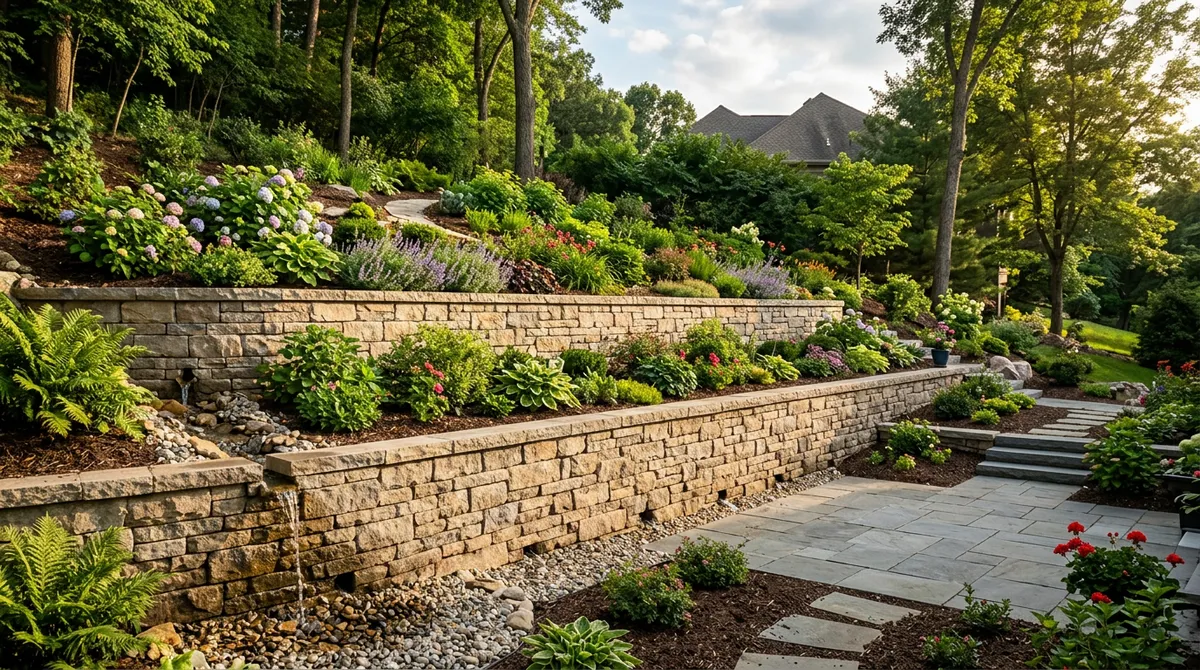
- Terraced gardens: Create multiple flat levels on a hillside for planting beds and greenery
- Patio spaces: Level an area to install a beautiful patio, perfect for entertaining
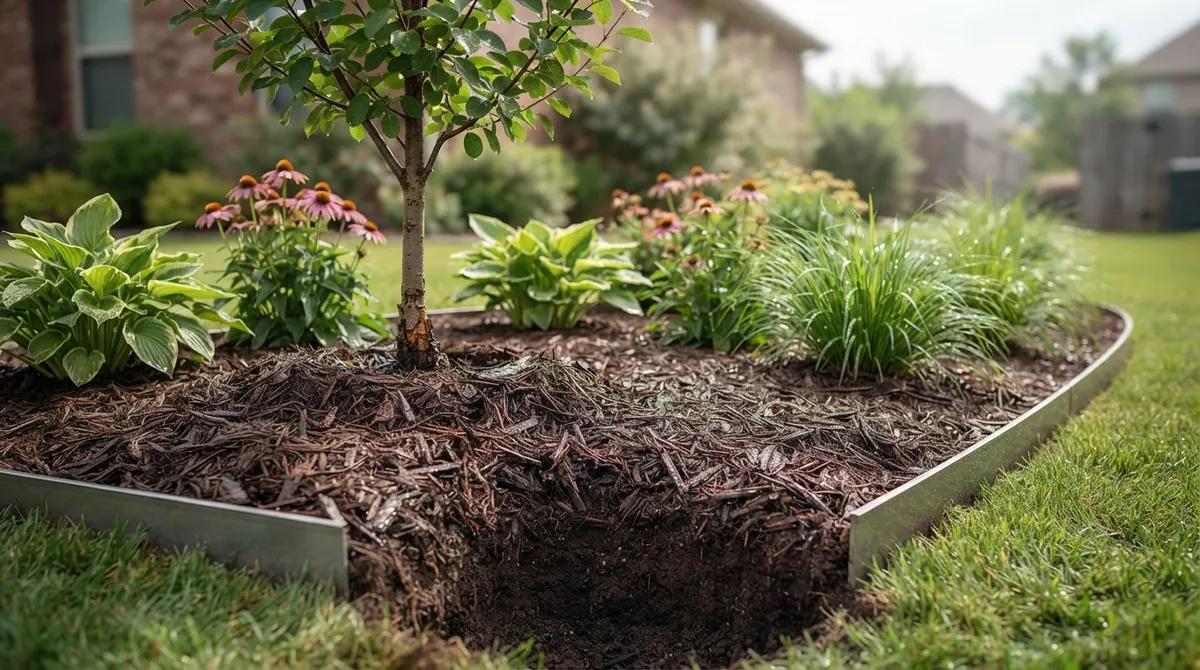
- Raised flower beds: Build elevated garden beds that are easy to tend and visually striking
- Outdoor seating areas: Use walls as built-in seating edges along paths or patios
- Privacy screens: Taller walls provide separation and seclusion in open or exposed yards
- Multi-level hardscapes: Combine walls with pavers, pathways, and steps for a cohesive, polished look
Imagine transforming a steep, unusable backyard slope into a gorgeous tiered garden with a patio at the bottom and a fire pit area at the top. That’s the magic of a well-designed retaining wall. You might also love pairing your new wall with a cozy fire pit or a stylish pergola or pavilion for a complete outdoor retreat.
Signs Your Property Might Need a Retaining Wall
Not sure if a retaining wall is right for your property? Here are some tell-tale signs it’s time to consider one:
- Soil is washing away after rain — If you notice bare patches or dirt collecting at the bottom of a slope, erosion is already happening.
- Your slope is steep — Any slope greater than a 1:2 ratio (rising more than 1 foot for every 2 feet forward) is a candidate for a retaining wall.
- You have unused sloped yard space — A retaining wall can turn that wasted slope into a usable patio, garden, or play area.
- Water is pooling near your foundation — Improper drainage on a slope can send water toward your home, and a retaining wall with proper drainage can fix that.
- An existing wall is cracking or leaning — This signals that your current structure is failing and needs to be replaced or reinforced.
If any of these sound familiar, it’s a great idea to have a professional assess your property. Our project process starts with a thorough consultation to evaluate your specific needs, soil type, and site conditions before recommending a solution.
Do You Need a Permit for a Retaining Wall?
The short answer: it depends on your location and the height of the wall. In many Chicago-area municipalities, walls over a certain height (often 3 or 4 feet) require a building permit. Some neighborhoods or HOAs may also have design guidelines to follow.
This is one of the biggest reasons to work with a professional landscaping team. A skilled contractor will know your local codes, pull the necessary permits, and ensure your wall is designed and built to meet all regulations. Skipping permits can lead to fines and, worse, having to tear down and redo your wall.
At Serenity Landscape Group, we handle all the details — from permit research to final installation — so you never have to worry about compliance. With over two decades of experience serving Chicagoland homeowners and commercial clients, we know the ins and outs of local requirements.
How Retaining Walls Work With the Rest of Your Landscape
A retaining wall rarely stands alone. The best landscapes weave hardscaping and softscaping together into one cohesive, beautiful design. Your retaining wall can be the foundation for so much more.
Consider pairing your retaining wall with:
- Lush softscaping like shrubs, perennials, and ornamental grasses along the wall face
- Beautiful paver patios or walkways at the base or top of the wall
- Elegant landscape lighting to highlight the wall at night and add ambiance
- Steps built into the wall for easy access between levels
When all these elements work together, your outdoor space becomes something truly special. It’s not just functional — it’s a place you’ll want to spend time in every single day. For inspiration, explore how to create a landscape design that transforms your space.
Retaining Walls for Commercial Properties
Retaining walls aren’t just for residential yards. Commercial property managers and small business owners can benefit hugely from well-placed retaining walls too. They can turn a sloped, hard-to-manage commercial property into a polished, professional-looking space.
For businesses, retaining walls can:
- Define and organize parking areas and entry drives
- Create level planting areas for branded, seasonal greenery
- Manage stormwater runoff and protect building foundations
- Enhance the overall curb appeal that attracts customers
Pairing a retaining wall with a commercial lawn maintenance plan ensures your property always looks its best. First impressions matter, and a clean, well-structured landscape sends the right message to every customer who pulls up.
Ready to Transform Your Outdoor Space?
Now that you know what a retaining wall is and what it can do, you can see why it’s one of the most valuable investments in outdoor living. Whether you’re battling erosion, trying to create usable space on a slope, or simply dreaming of a more beautiful backyard, a retaining wall could be the answer you’ve been looking for.
The key is working with a team that understands both the technical side and the creative side of landscape design. A well-built retaining wall should be strong, safe, properly drained, and genuinely beautiful — all at the same time. That’s exactly what we aim for on every single project.
If you’re ready to explore what a retaining wall could do for your Chicago-area home or business, we’d love to help. Request your free estimate today and let’s start designing the outdoor space you’ve always imagined. Or, if you prefer to talk it through, feel free to call us at (630) 359-5139 — we’re always happy to chat!
FAQs
Q: What materials are best for retaining walls in landscaping?
A: The best material really depends on your budget, the look you love, and your site conditions. Natural stone and concrete blocks are super durable and great for larger projects, while timber works nicely for smaller garden beds. A professional can help you choose the perfect fit for your property!
Q: How do I know if my yard needs a retaining wall?
A: Great question! If you notice soil washing away after rain, a steep slope that’s hard to use, water pooling near your home’s foundation, or an old wall that’s leaning or cracking, those are all signs you might benefit from a retaining wall. A quick consultation with a landscaping pro can give you a clear answer.
Q: Do retaining walls help with drainage in my yard?
A: Absolutely — when designed correctly, retaining walls include drainage systems like gravel backfill, perforated pipes, and weep holes that direct water away from your home and garden. Good drainage is actually one of the most important parts of building a retaining wall that lasts.
Q: How long does a retaining wall last?
A: A professionally built retaining wall using quality materials like natural stone or concrete blocks can last 50 years or more with proper maintenance. Timber walls tend to have a shorter lifespan — typically 20 years — before needing replacement. The key is proper installation and drainage from the start!
Q: Can a retaining wall add value to my property?
A: It sure can! Retaining walls maximize usable outdoor space, improve curb appeal, and solve drainage and erosion problems — all things that make a property more attractive to buyers. Turning a steep, unusable slope into a beautiful terraced garden or patio is a smart investment you’ll enjoy every day.