Key Takeaways
-
Professional paver contractors are crucial for commercial properties, delivering durable hardscapes that withstand heavy traffic and challenging weather conditions.
-
Permeable paver systems solve critical drainage challenges, reducing stormwater management costs and supporting environmental compliance.
-
Climate-resilient design is essential in 2026, focusing on materials and installation techniques that minimize maintenance and adapt to changing weather patterns.
-
Technology integration in paver projects now includes smart lighting, heating systems, and sensors that enhance functionality and property value.
-
Safety considerations are paramount, with professional installations ensuring level surfaces, proper drainage, and compliance with ADA accessibility requirements.
-
Material selection is critical, with concrete and clay pavers offering different aesthetic and performance benefits for commercial spaces.
-
Commercial paver installations require specialized expertise in load-bearing capacity, municipal code compliance, and strategic project scheduling.
If you manage a commercial property or own a business in the greater Chicago area, you know that first impressions matter tremendously. When clients, customers, or tenants arrive, what do they see first? Your outdoor spaces, including parking areas, walkways, and patios, speak volumes about your business before anyone steps through your door. That’s where professional commercial paver contractors come into play, transforming ordinary concrete surfaces into beautiful, durable, and functional hardscapes that enhance your property’s appeal and value.
Commercial paver installations are quite different from residential projects. They require specialized knowledge of high-traffic durability, drainage solutions, safety regulations, and long-term maintenance considerations. A skilled contractor understands how to create hardscapes that withstand heavy use while maintaining their beauty through Chicago’s challenging seasons. In 2026, businesses increasingly recognize that quality hardscaping isn’t just about aesthetics—it’s a strategic investment in safety, sustainability, and cost-effective property management.
Whether you’re planning a new development, upgrading an existing property, or addressing drainage issues, understanding what professional paver contractors bring to your project will help you make informed decisions. Let’s explore why commercial properties benefit so much from expert paver installation, what trends are shaping the industry in 2026, and how the right contractor can transform your outdoor spaces into assets that serve your business for decades to come.
What Makes Commercial Paver Installation Different from Residential Work
Commercial paver projects demand an entirely different level of planning and execution than residential installations. When contractors work on business properties, they’re dealing with significantly higher traffic volumes, stricter safety requirements, and more complex drainage needs. Your parking lot sees dozens or hundreds of vehicles daily, and your walkways accommodate constant foot traffic from employees, customers, and delivery personnel.
The materials selected for commercial applications must meet specific durability standards. While residential pavers might last beautifully with moderate use, commercial settings require pavers engineered to resist cracking under heavy loads, withstand repeated freeze-thaw cycles, and maintain their appearance despite constant exposure to vehicle traffic. Professional contractors understand these requirements and select appropriate materials based on your property’s specific use patterns.
Here are the key considerations that set commercial paver work apart:
- Load-bearing capacity calculations for parking areas and delivery zones
- ADA compliance for accessible walkways and ramps
- Strategic drainage planning to prevent water pooling and ice formation
- Municipal code compliance and permitting requirements
- Project scheduling that minimizes business disruption
- Warranty provisions suitable for commercial applications
At Serenity Landscape Group, we’ve spent over 20 years understanding these distinctions. Our commercial projects throughout Chicagoland demonstrate how proper planning and execution create outdoor spaces that enhance rather than complicate business operations. We coordinate installations during off-hours when needed and work efficiently to get your property back to full functionality quickly.
How Permeable Pavers Solve Common Commercial Property Challenges
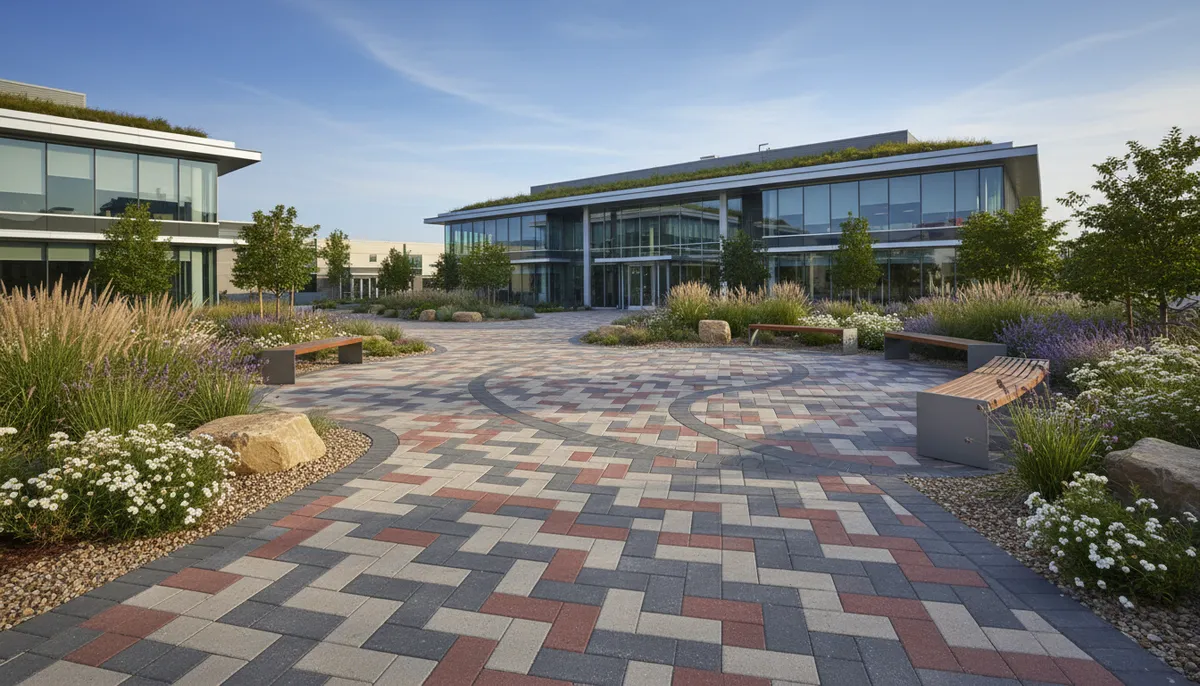
One of the most significant innovations in commercial hardscaping involves permeable paver systems. These specialized pavers address multiple challenges that property managers face, particularly regarding stormwater management and environmental compliance. In 2026, many municipalities have implemented stricter stormwater regulations, making permeable solutions increasingly valuable for commercial properties.
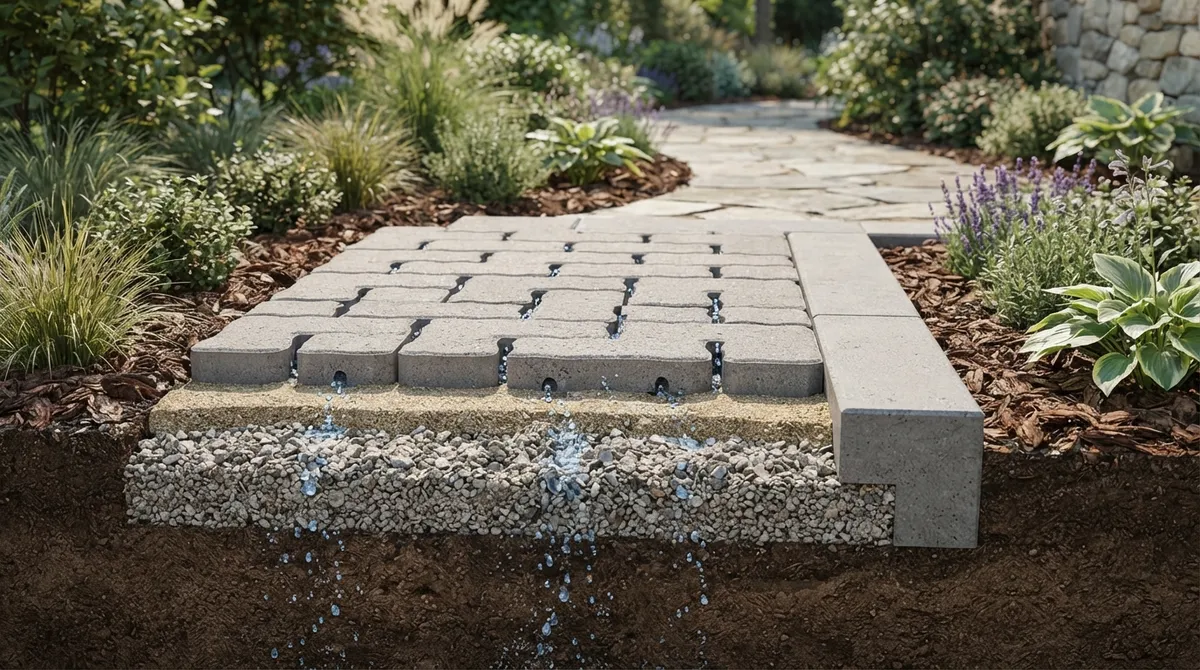
Permeable pavers allow rainwater to filter through the surface into the ground below rather than running off into storm drains. This natural drainage reduces the burden on municipal systems, prevents pooling in parking areas, and helps recharge groundwater supplies. For business owners, this translates to fewer maintenance callbacks, reduced tenant complaints about standing water, and potentially lower stormwater management fees.
The benefits extend beyond drainage. Permeable systems also help:
- Reduce heat island effects in urban commercial areas by allowing cooler groundwater to moderate surface temperatures
- Filter pollutants from runoff before they reach natural waterways, supporting environmental responsibility goals
- Minimize ice formation in winter since water drains away rather than freezing on the surface
- Extend pavement lifespan by reducing freeze-thaw damage to the base materials
Research shows that the U.S. landscaping services industry, which includes hardscaping installations, comprises approximately 726,000 businesses employing 1.3 million people and generating nearly $200 billion in annual revenue. This robust industry growth reflects increased demand for sustainable solutions like permeable pavers that address both functional and environmental concerns.
When selecting pavers for your commercial property, discuss with your contractor whether permeable options suit your site conditions. These systems work exceptionally well in parking areas, pedestrian plazas, and overflow parking zones where drainage is critical.
The Role of Climate-Resilient Design in 2026 Commercial Landscaping
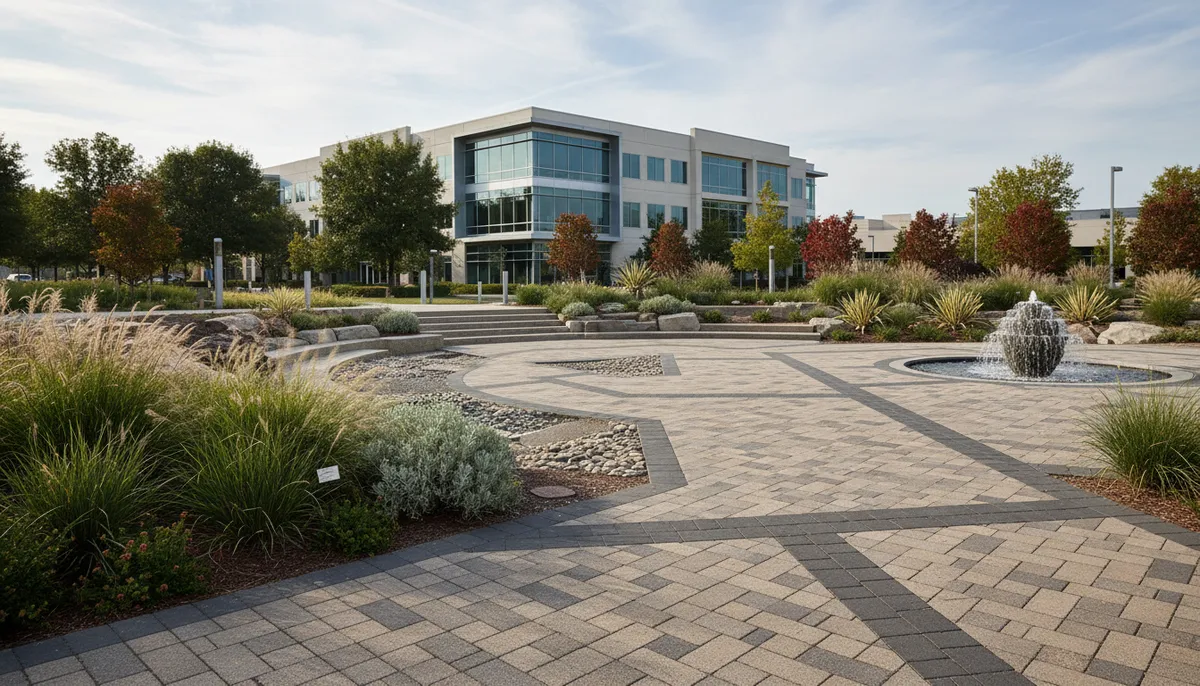
Climate considerations have moved from optional to essential in commercial landscape planning. In 2026, forward-thinking property owners work with contractors who understand how to create hardscapes that withstand increasingly variable weather patterns while reducing environmental impact. Climate-resilient design isn’t just environmentally responsible—it’s financially smart, reducing long-term maintenance costs and improving property performance.
Commercial paver contractors now integrate hardscaping with complementary landscape features that enhance climate resilience. This might include pairing permeable pavers with native plant installations that require less irrigation, or designing drainage patterns that direct water to rain gardens rather than storm sewers. These integrated approaches create outdoor spaces that work with natural systems rather than against them.
Key climate-resilient strategies include:
- Selecting paver colors and materials that minimize heat absorption
- Designing proper drainage grades to handle intense rainfall events
- Incorporating green infrastructure elements like bioswales alongside paved areas
- Using joint materials that allow flexibility during temperature fluctuations
- Planning for proper base preparation that prevents frost heaving
The landscaping market is projected to grow from approximately $100 billion in 2024 to $150 billion by 2033, with a compound annual growth rate of 4.5%. Much of this growth stems from demand for durable, climate-appropriate installations that reduce long-term ownership costs. Property managers recognize that investing in quality hardscaping today prevents expensive repairs and replacements down the road.
Smart irrigation systems paired with hardscaping represent another 2026 trend. Contractors now design paver installations that integrate with lighting and irrigation technologies, creating efficient, manageable outdoor spaces that look beautiful while using resources wisely. These systems can be monitored remotely, alerting managers to potential issues before they become costly problems.
Understanding the Commercial Paving Industry Landscape
The paving contractors industry specifically—which focuses on asphalt, concrete, and brick installations for driveways, parking lots, and commercial areas—represents a $18.9 billion market in 2026. This substantial industry faces high and increasing competition as property owners become more selective about contractor qualifications and service quality. Understanding this competitive landscape helps you make better hiring decisions.
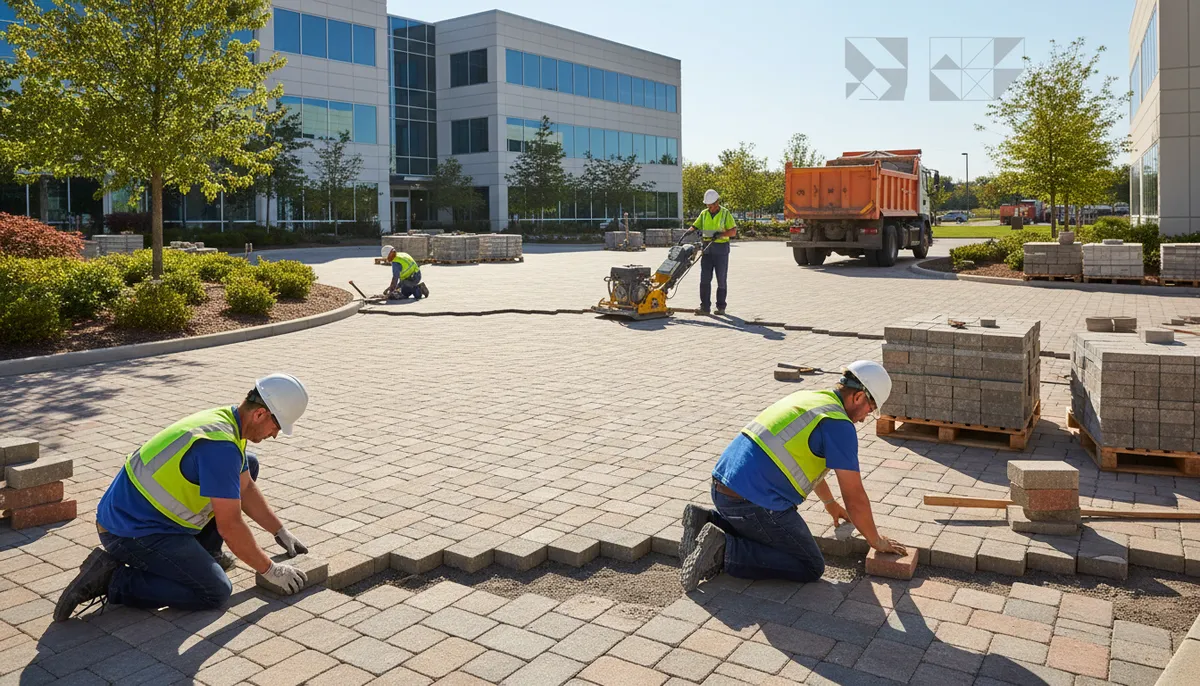
Commercial paver contractors operate within the broader landscaping services sector but specialize in the technical aspects of hardscape installation. Unlike street or highway paving, commercial landscape paving focuses on creating functional, attractive outdoor spaces that complement building architecture and serve specific business needs. This specialization requires knowledge of materials, design principles, and installation techniques specific to commercial landscape applications.
Industry challenges in 2026 include:
- Labor shortages affecting project timelines and requiring careful contractor selection
- Rising material costs that make quality planning and efficient installation even more important
- Increasing demand for sustainable, low-maintenance solutions from environmentally conscious clients
- Need for year-round operations to meet client demands despite seasonal weather challenges
Data shows that 79% of commercial landscape companies focus on revenue growth through new projects, while 71% emphasize client acquisition. This competitive environment benefits property owners who can access multiple qualified contractors but also requires careful vetting to ensure you select a partner with proven experience and appropriate resources for your project scale.
What Safety and Maintenance Benefits Come from Professional Installation
Safety represents a critical concern for any commercial property owner. Poorly installed or maintained pavement creates liability risks from slip-and-fall accidents, trip hazards from uneven surfaces, and vehicle damage from deteriorated parking areas. Professional paver contractors understand these risks and design installations that prioritize safety alongside aesthetics.
Level pavements installed to proper grades prevent water accumulation that leads to slippery conditions and ice formation. Quality base preparation ensures surfaces remain stable and even over time, reducing trip hazards as pavers shift or settle. Proper joint spacing and edge restraints keep individual pavers locked in place despite heavy traffic and temperature changes.
Professional installation delivers specific safety advantages:
- Consistent surface levels that meet ADA accessibility requirements
- Proper drainage that prevents standing water and ice hazards
- Durable materials that resist cracking and pothole formation
- Clear transitions between different surface types to prevent trips
- Appropriate texture selection for slip resistance in wet conditions
- Strategic lighting integration points for nighttime safety
Maintenance considerations also play into long-term safety. Approximately 59% of commercial landscape revenue comes from recurring maintenance contracts, including hardscape upkeep. Contractors who install pavers properly make future maintenance simpler and more cost-effective. Individual damaged pavers can be replaced without disturbing surrounding areas, unlike concrete that often requires large-section replacement when damaged.
Property managers find that professional paver installations reduce insurance claims and tenant complaints related to outdoor surface conditions. This translates to better tenant retention, lower liability premiums, and enhanced property reputation. When you invest in quality installation from experienced commercial landscaping professionals, you’re protecting both people and your bottom line.
How Technology Integration Enhances Modern Paver Projects
The intersection of traditional hardscaping and modern technology creates exciting possibilities for commercial properties in 2026. Smart technologies now integrate seamlessly with paver installations, adding functionality that wasn’t possible even a few years ago. Progressive contractors understand these opportunities and can incorporate technology into your project design from the beginning.
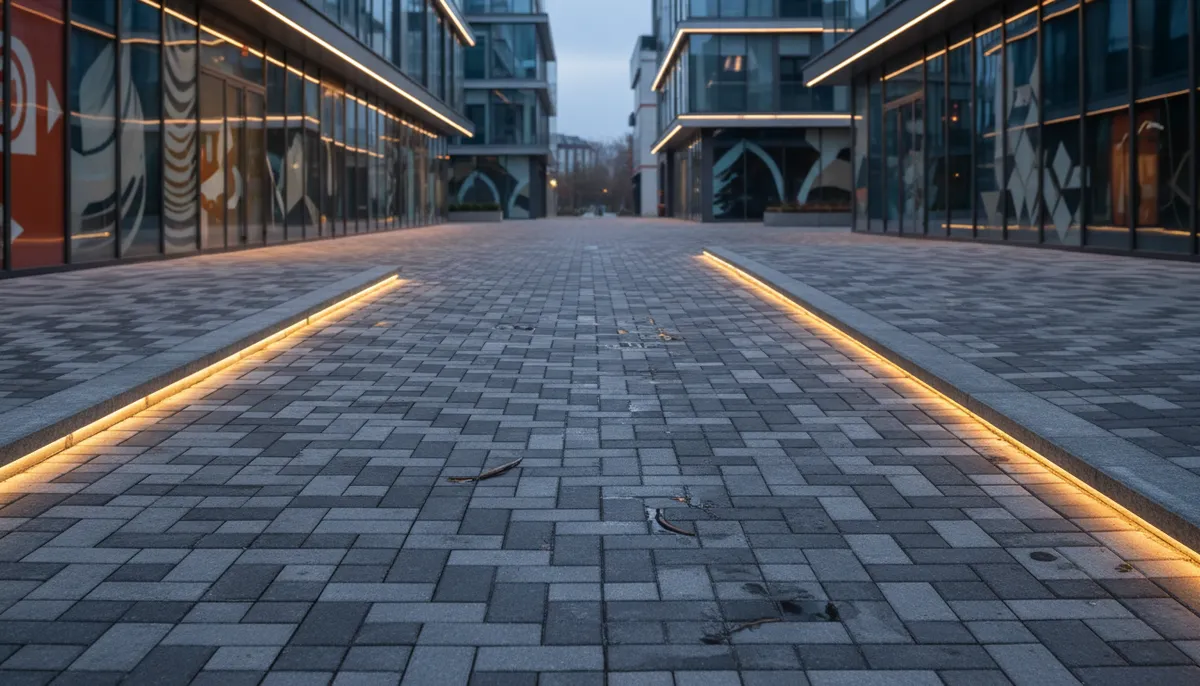
Lighting represents the most common technology integration. LED systems embedded alongside or within paver patterns create attractive, energy-efficient illumination for walkways, parking areas, and outdoor gathering spaces. These systems enhance security, extend usable hours for outdoor areas, and create distinctive visual appeal that sets your property apart. Modern LED installations use minimal energy and last for years with virtually no maintenance.
Other technology integrations include:
- Heating systems beneath pavers in high-priority walkways that automatically melt snow and ice, eliminating shoveling and salt damage
- Irrigation sensors embedded in paver joints that monitor soil moisture and trigger watering only when needed
- Permeable paver systems with subsurface monitoring that tracks drainage performance and alerts to potential blockages
- Smart controls that adjust outdoor lighting based on occupancy, time of day, or security needs
The adoption of technology in commercial landscaping reflects broader industry trends. Many landscape firms now use AI tools for design planning and project management, improving accuracy and efficiency. This technological sophistication extends to the installation itself, with contractors using laser-guided grading equipment and precision measurement tools that ensure perfect levels and drainage slopes.
When discussing your project with potential contractors, ask about technology options that might enhance your property’s functionality. The right planning process considers these possibilities from the start, incorporating necessary infrastructure during initial installation rather than retrofitting later at greater expense.
Selecting Materials That Balance Durability and Aesthetics
Material selection significantly impacts both the immediate appearance and long-term performance of your commercial paver installation. Professional contractors understand the characteristics of different paver types and can recommend options that suit your property’s specific needs, traffic patterns, and aesthetic goals. Making informed material choices ensures your investment delivers value for years to come.
Concrete pavers offer exceptional durability and come in numerous colors, textures, and sizes. They’re manufactured to precise specifications, ensuring consistent quality and performance. Modern manufacturing techniques create pavers that resist fading, withstand freeze-thaw cycles, and maintain structural integrity under heavy loads. Concrete pavers work well for parking areas, pedestrian walkways, and decorative accents throughout commercial properties.
Clay brick pavers provide classic aesthetic appeal with natural color variations that add character to commercial spaces. These traditional materials offer excellent durability and typically don’t fade since their color runs throughout the material rather than being surface-applied. Brick pavers suit properties seeking timeless elegance or historical character, particularly in downtown areas or traditional commercial districts.
Natural stone pavers like granite or bluestone deliver premium appearance with unmatched individuality. No two natural stone pavers look exactly alike, creating distinctive installations that make powerful visual statements. While generally more expensive than manufactured options, natural stone can elevate property prestige and appeal to high-end clientele or tenants.
| Paver Type | Best Applications | Key Advantages | Considerations |
|---|---|---|---|
| Concrete Pavers | Parking lots, walkways, patios | Cost-effective, consistent quality, wide variety | May fade slightly over time without sealant |
| Clay Brick Pavers | Pedestrian areas, decorative borders | Classic appearance, color throughout, durable | Limited size and shape options |
| Natural Stone | Entrances, high-visibility areas | Premium aesthetic, unique appearance, prestigious | Higher cost, some maintenance needs |
| Permeable Pavers | Overflow parking, pedestrian plazas | Drainage benefits, environmental advantages | Requires periodic maintenance to maintain permeability |
Color selection also matters for commercial applications. Lighter colors reflect heat and stay cooler underfoot, improving comfort in pedestrian areas. Darker colors absorb heat but can hide stains better in high-traffic zones. Many commercial projects use color combinations that define different functional areas—perhaps lighter pavers for walkways and darker tones for parking zones—creating visual organization that guides traffic flow.
Your contractor should provide samples showing how different materials weather in your local climate. Chicago’s temperature extremes and freeze-thaw cycles affect materials differently than climates in other regions. Seeing how pavers perform locally helps you make confident selections that will look great and perform well through every season.
Why Erosion Control and Proper Base Preparation Matter
What you don’t see beneath finished pavers matters as much as the visible surface. Professional contractors spend significant time and resources on proper base preparation because this invisible foundation determines whether your installation remains beautiful and functional for decades or develops problems within a few years. Understanding these technical aspects helps you appreciate the value of skilled installation.
Erosion control represents a critical concern, especially in areas with slopes or drainage challenges. Without proper planning, water flowing beneath pavers can wash away base materials, creating voids that allow pavers to sink or shift. Professional contractors assess your site’s topography and implement appropriate erosion control measures during base preparation, ensuring long-term stability.
Proper base preparation involves several key steps:
- Excavation to appropriate depth based on expected loads and soil conditions
- Geotextile fabric installation that prevents base material from mixing with underlying soil
- Properly compacted aggregate base in layers that create stable support
- Bedding sand that allows pavers to be set to precise levels
- Edge restraints that prevent lateral movement of the paver system
The depth and composition of base layers vary based on whether you’re installing pedestrian walkways or heavy-duty parking areas. Commercial parking lots might require 8-12 inches of compacted aggregate base, while walkways might need 4-6 inches. Contractors calculate these specifications based on soil bearing capacity, expected loads, and local frost depth.
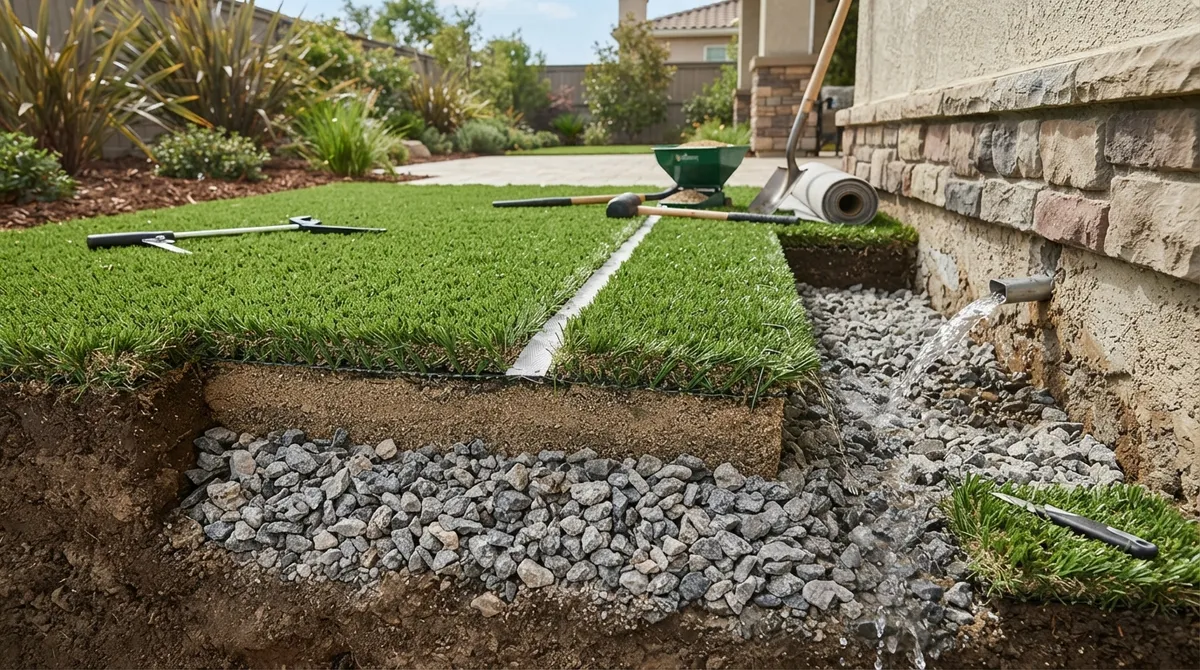
Drainage considerations integrate with base preparation. Contractors grade bases to direct water away from buildings and toward appropriate drainage points. For permeable systems, they design subsurface drainage layers that collect filtered water and direct it to appropriate discharge points or storage areas for reuse in irrigation systems.
These technical details explain why DIY commercial paving rarely succeeds. Professional contractors bring specialized equipment, engineering knowledge, and installation experience that ensure your pavers remain level, stable, and attractive through years of use. The Landscape Illinois organization provides resources about professional standards that protect your investment.
Understanding Project Timelines and Minimizing Business Disruption
Commercial paver projects require careful scheduling to balance quality installation with minimal disruption to your business operations. Experienced contractors understand that your property needs to remain functional during construction and work efficiently to reduce impact on tenants, customers, and daily activities. Clear communication about timelines helps you plan accordingly and set appropriate expectations.
Project duration depends on several factors including size, complexity, site conditions, and weather. A straightforward parking lot repair might take a few days, while a comprehensive property enhancement involving multiple paver areas could span several weeks. Contractors break larger projects into phases when possible, completing sections sequentially so your property remains partially operational throughout the work.
Typical commercial paver project phases include:
- Site assessment and design development (1-2 weeks)
- Permitting and approvals (varies by municipality, 2-6 weeks)
- Site preparation and base work (varies by project size)
- Paver installation and finishing (varies by square footage)
- Cleanup, final inspections, and project closeout (1-3 days)
Weather significantly impacts outdoor construction timelines. Chicago’s climate presents particular challenges with cold winters, spring rain, and occasional summer heat waves. Professional contractors monitor forecasts carefully and adjust schedules to work during favorable conditions. They also understand seasonal considerations—for example, base materials compact better in moderate temperatures, and joint sand sets more effectively in dry conditions.
Some contractors offer extended hours or weekend work for projects where minimizing business disruption is critical. While this might increase project costs somewhat, the benefit of maintaining normal operations often justifies the expense. Retail properties, restaurants, and office buildings with strict operational requirements particularly benefit from flexible scheduling options.
Communication throughout the project keeps everyone informed. Quality contractors provide regular updates about progress, any challenges encountered, and timeline adjustments. They coordinate with property managers to schedule deliveries during low-traffic periods and position equipment to maintain access to important areas. This professional approach reflects the commitment to client service that sets experienced contractors apart.
How Maintenance Plans Protect Your Hardscape Investment
Once your beautiful new pavers are installed, ongoing maintenance ensures they continue performing well and looking attractive for years. Many commercial property owners find that maintenance agreements with their landscaping contractor provide cost-effective protection for their hardscape investment while simplifying property management. Understanding maintenance needs helps you budget appropriately and prevent small issues from becoming expensive problems.
Paver maintenance is generally straightforward compared to asphalt or concrete. Regular sweeping removes debris that can stain surfaces or clog permeable systems. Periodic washing with appropriate equipment restores color and removes accumulated grime. Unlike asphalt that requires regular sealcoating or concrete that needs crack filling, pavers maintain their integrity with relatively simple care.
Key maintenance activities for commercial pavers include:
- Regular cleaning to remove debris, stains, and organic growth
- Joint sand replenishment to maintain paver stability
- Individual paver replacement when damaged rather than large-section repairs
- Sealant application to enhance color and provide stain protection
- Edging inspection and adjustment to prevent spreading
- Drainage system checks to ensure proper water flow
Maintenance schedules vary based on traffic levels, weather exposure, and paver type. High-traffic areas benefit from quarterly professional attention, while lower-use sections might need only annual service. Many contractors offer customized maintenance programs that address your property’s specific needs and budget constraints. These programs typically cost less than paying for individual service calls and ensure consistent care throughout the year.
Data indicates that approximately 70% of commercial landscape companies plan wage increases for employee retention in 2026, reflecting labor market pressures. This trend makes maintenance agreements increasingly valuable, locking in services at predictable costs while ensuring qualified crews familiar with your property handle the work. Rather than scrambling to find available contractors when problems arise, you have scheduled service that prevents issues before they develop.
Professional maintenance also supports safety and liability reduction. Regular inspections identify potential hazards like uneven pavers or drainage problems before they cause accidents. Documentation of maintenance activities provides evidence of responsible property management should any issues arise. For property managers juggling multiple responsibilities, partnering with a full-service landscape contractor simplifies operations and ensures all outdoor elements work together cohesively.
Evaluating Contractors: What to Look for Beyond Price
Selecting the right commercial paver contractor represents one of the most important decisions in your project’s success. While cost certainly matters, focusing exclusively on the lowest bid often leads to disappointing results and expensive corrections. Professional contractors with proven track records provide value that extends far beyond initial pricing, delivering quality installations that perform reliably and look beautiful for years.
Start your contractor evaluation by verifying credentials and experience. Look for businesses with established histories in commercial work specifically—residential paving experience doesn’t automatically translate to commercial expertise. Check whether contractors maintain proper licensing, insurance, and bonding. Ask about their experience with projects similar to yours in size, complexity, and application.
Important qualifications to verify include:
- Appropriate business licenses and professional certifications (such as ICPI certification for paver installation)
- General liability and workers’ compensation insurance protecting you from job-site accidents
- References from commercial clients with verifiable completed projects
- Portfolio showing range and quality of previous installations
- Clear warranty terms covering both materials and workmanship
| Evaluation Factor | Why It Matters | What to Ask |
|---|---|---|
| Experience | Commercial work requires specific skills and equipment | How many commercial paver projects have you completed in the past year? |
| References | Past performance predicts future results | Can you provide contacts for three recent commercial clients? |
| Insurance | Protects you from liability and financial risk | Will you provide certificates of insurance before starting work? |
| Warranty | Demonstrates confidence in work quality | What warranty do you offer on materials and installation? |
| Timeline | Affects business operations and planning | What’s your estimated timeline and how do you handle delays? |
Communication style matters too. Quality contractors listen carefully to your needs, ask thoughtful questions about your property and goals, and explain technical aspects in understandable terms. They provide detailed written proposals that specify materials, timelines, costs, and terms clearly. Be cautious of contractors who pressure for immediate decisions or can’t explain their recommendations convincingly.
Project management capabilities become especially important for larger installations. Ask how contractors coordinate with other trades, handle permit applications, manage materials delivery, and communicate progress. Professional organizations and industry resources often maintain directories of qualified contractors who meet specific standards and ethical guidelines.
The investment in quality contractors pays dividends through superior results, fewer callbacks, and installations that maintain value over time. With the paving contractors industry earning $18.9 billion annually in 2026 amid high competition, property owners benefit from abundant choices—but must evaluate carefully to identify contractors who deliver genuine value rather than just attractive initial pricing.
Create Outdoor Spaces That Elevate Your Commercial Property
Your commercial property’s outdoor spaces represent valuable real estate that can either enhance or detract from your business success. Professional paver installations transform these areas into functional, attractive assets that welcome visitors, protect against liability, support environmental goals, and require minimal ongoing maintenance. In 2026, forward-thinking property owners recognize that quality hardscaping delivers returns through increased property values, tenant satisfaction, and operational efficiency.
The trends shaping commercial paver work in 2026 reflect broader shifts toward sustainability, technology integration, and climate resilience. Permeable pavers address stormwater challenges while reducing environmental impact. Smart lighting and heating systems extend usable seasons and enhance safety. Durable materials and proper installation techniques create surfaces that withstand Chicago’s challenging climate while maintaining their beauty year after year.
Working with experienced commercial paver contractors ensures your project benefits from technical expertise, quality materials, and professional execution. From initial design through final installation and ongoing maintenance, the right contractor partnership makes the difference between outdoor spaces that serve your property well and those that create ongoing problems and expenses.
At Serenity Landscape Group, we’ve dedicated over 20 years to creating outdoor spaces throughout the greater Chicago area that exceed our clients’ expectations. Our comprehensive approach integrates pavers with complementary landscape elements, creating cohesive designs that enhance functionality and beauty. We understand commercial properties’ unique needs and work efficiently to minimize disruption while delivering superior results. From initial consultation through years of ongoing maintenance support, we’re committed to your complete satisfaction and project success. Contact us today for a free estimate and discover how professional paver installation can transform your commercial property into an asset you’ll be proud to showcase.
FAQs
Q: What makes commercial paver installation different from residential projects?
A: Commercial paver work handles much heavier traffic, requires stricter safety standards, and needs more complex drainage solutions. Contractors must select materials that withstand constant vehicle and foot traffic, meet ADA accessibility requirements, and comply with municipal codes. Projects also require careful scheduling to minimize business disruption during installation.
Q: How do permeable pavers benefit commercial properties?
A: Permeable pavers allow rainwater to filter through the surface into the ground, reducing stormwater runoff and helping meet environmental regulations. They prevent water pooling in parking areas, reduce ice formation in winter, and can lower stormwater management fees. These systems also help filter pollutants and reduce urban heat island effects.
Q: What should I look for when selecting a commercial paver contractor?
A: Look beyond just price to verify credentials like proper licensing, insurance, and professional certifications. Check their experience with commercial projects similar to yours, ask for verifiable references, and review their portfolio. Quality contractors communicate clearly, provide detailed written proposals, and offer solid warranties on both materials and workmanship.
Q: How long do commercial paver installations typically last?
A: With professional installation and regular maintenance, commercial pavers can last 25-30 years or longer. Proper base preparation, quality materials, and appropriate design for your property’s traffic patterns ensure long-term durability. Individual damaged pavers can be replaced without disturbing surrounding areas, extending the overall system’s lifespan.
Q: What maintenance do commercial pavers require?
A: Commercial pavers need regular cleaning to remove debris and stains, periodic joint sand replenishment, and occasional sealant application. High-traffic areas benefit from quarterly professional attention, while lower-use sections may need only annual service. Maintenance is simpler than asphalt or concrete, and many contractors offer customized maintenance programs for predictable costs.