Key Takeaways
-
Well-maintained commercial landscaping acts as a 24/7 marketing tool that attracts foot traffic and signals professionalism, making it one of the most cost-effective investments a business owner can make.
-
Hardscaping elements like pavers, retaining walls, and pergolas provide durable, year-round structure and functionality while improving traffic flow, safety, and usable outdoor space for customers and employees.
-
Professional landscape maintenance plans should include weekly mowing, fertilization, seasonal cleanups, and irrigation checks to protect your investment and catch small issues before they become expensive problems.
-
Outdoor lighting extends business hours by creating safety and ambiance after dark, with applications including path lighting for customer safety, accent lighting for architectural features, and security lighting that deters incidents.
-
Retaining walls solve critical drainage and erosion problems on sloped properties while reducing long-term maintenance costs and liability issues—proper drainage is among the most overlooked aspects of commercial landscape planning.
-
Choose a commercial landscaping partner with commercial experience, full-service design and maintenance capabilities, local Chicago-area knowledge, and industry certifications like ICPI Certified Installer status.
First impressions matter — especially in business. When a client pulls into your parking lot or walks past your storefront, what they see outside shapes how they feel inside. A well-maintained, thoughtfully designed outdoor space can signal professionalism, invite customers in, and even increase property value. That’s the real power of commercial landscaping.
Whether you manage a busy office park in Naperville, own a boutique shop in Oak Park, or oversee a retail complex in Aurora, the outside of your property is always talking to people. The good news? With the right landscaping partner, it can say exactly what you want it to. Let’s explore seven smart ways commercial landscaping can work harder for your business in 2026.
1. Curb Appeal That Actually Converts
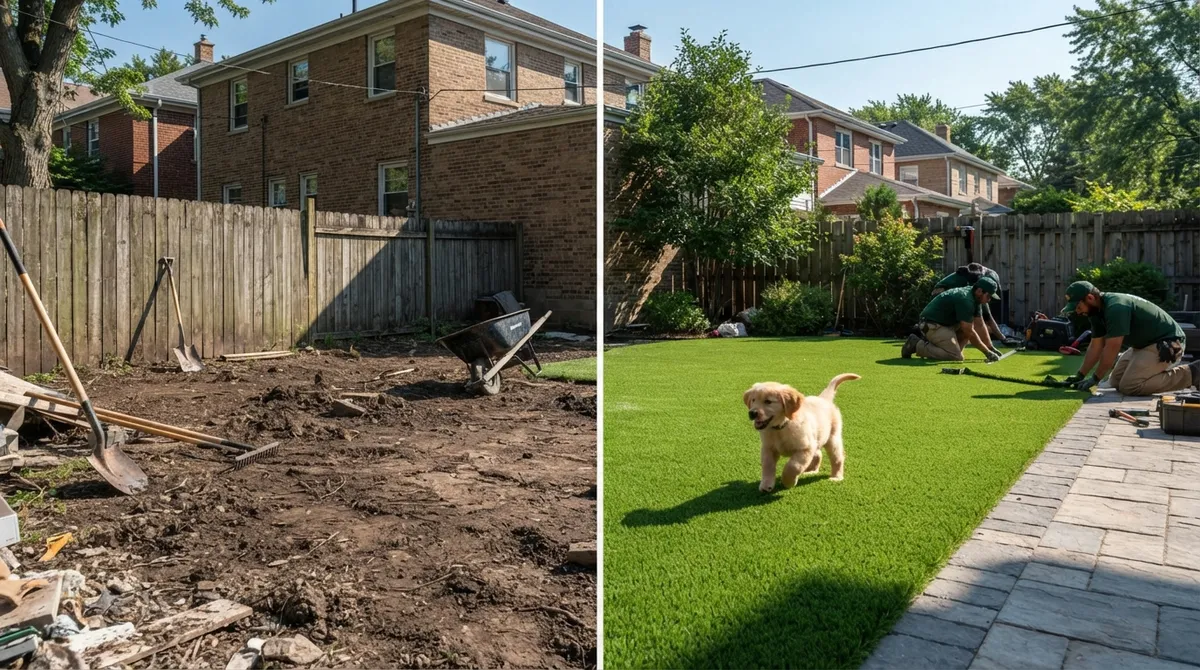
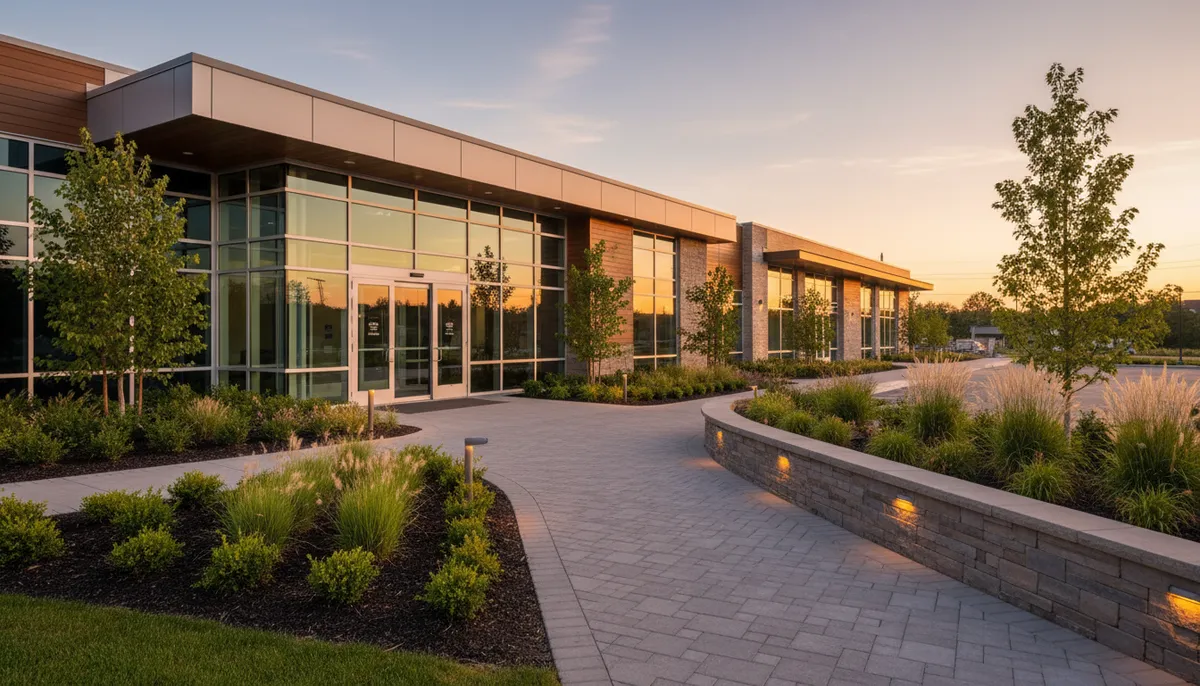
Your property’s exterior is your first marketing tool — and it works 24/7. Studies consistently show that well-landscaped commercial properties attract more foot traffic and generate stronger customer interest than neglected ones. Clean walkways, trimmed hedges, and seasonal plantings send a clear message: this business cares about quality.
Think of your landscaping as a silent salesperson. A fresh, welcoming entrance nudges people to come inside. A messy, overgrown front yard does the opposite. Investing in curb appeal is one of the most cost-effective things a business owner can do. You can check out our gallery of our work to see how transformative the right design can be.
2. Hardscaping Creates Functional Outdoor Spaces
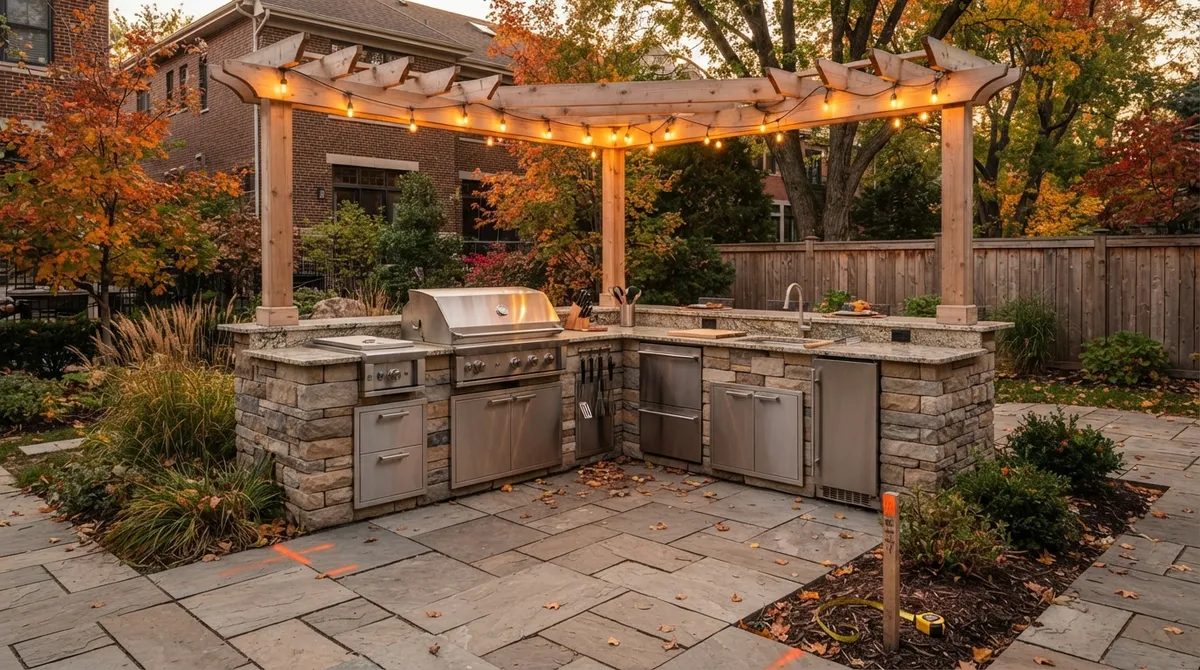
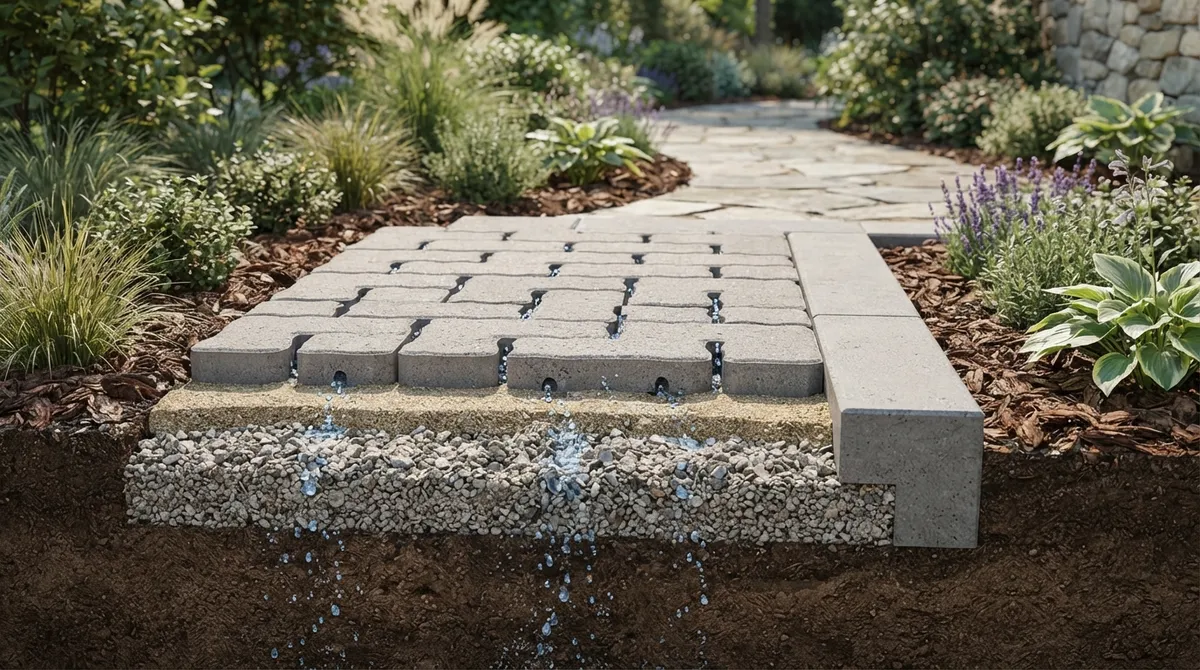
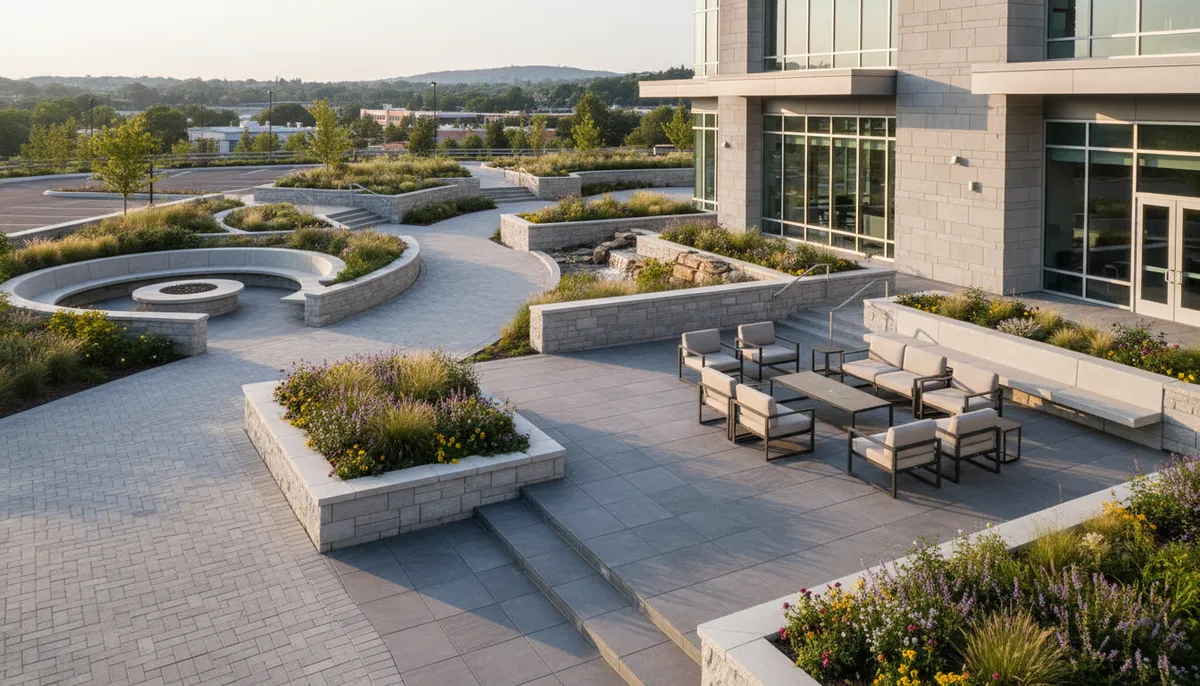
Commercial landscaping isn’t just about plants and grass. Hardscaping adds structure, durability, and style to your property. Well-placed pavers can define walkways, parking areas, and entryways in a way that feels intentional and polished.
For restaurants and shops, outdoor patios created with quality pavers extend your usable space and invite customers to linger longer. For office buildings, clean hardscaping between parking and entrances improves traffic flow and safety. It’s a practical investment that also looks great year-round.
Here’s a quick look at how different hardscaping elements serve different commercial needs:
| Hardscaping Feature | Best For | Key Benefit |
|---|---|---|
| Pavers | Walkways, patios, parking edges | Durability and visual appeal |
| Retaining Walls | Sloped properties, gardens | Erosion control and structure |
| Pergolas and Pavilions | Restaurants, event spaces | Shade, ambiance, extended outdoor use |
| Lighting | All commercial properties | Safety, security, and night-time appeal |
3. Softscaping Brings Life and Color to Your Property
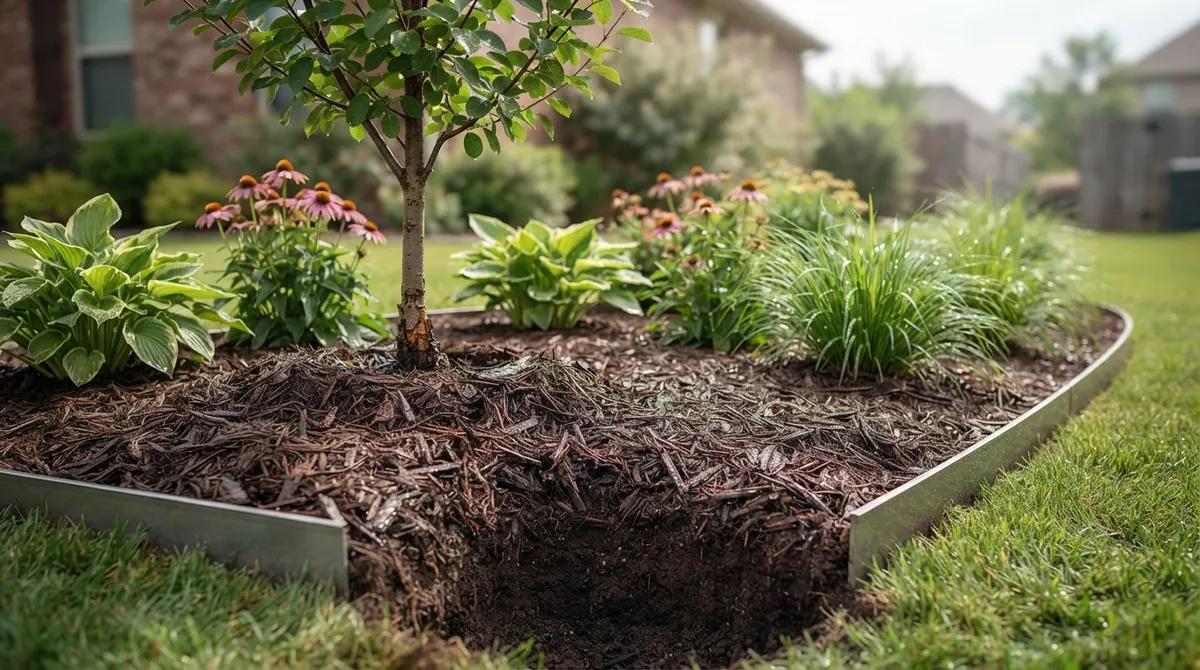
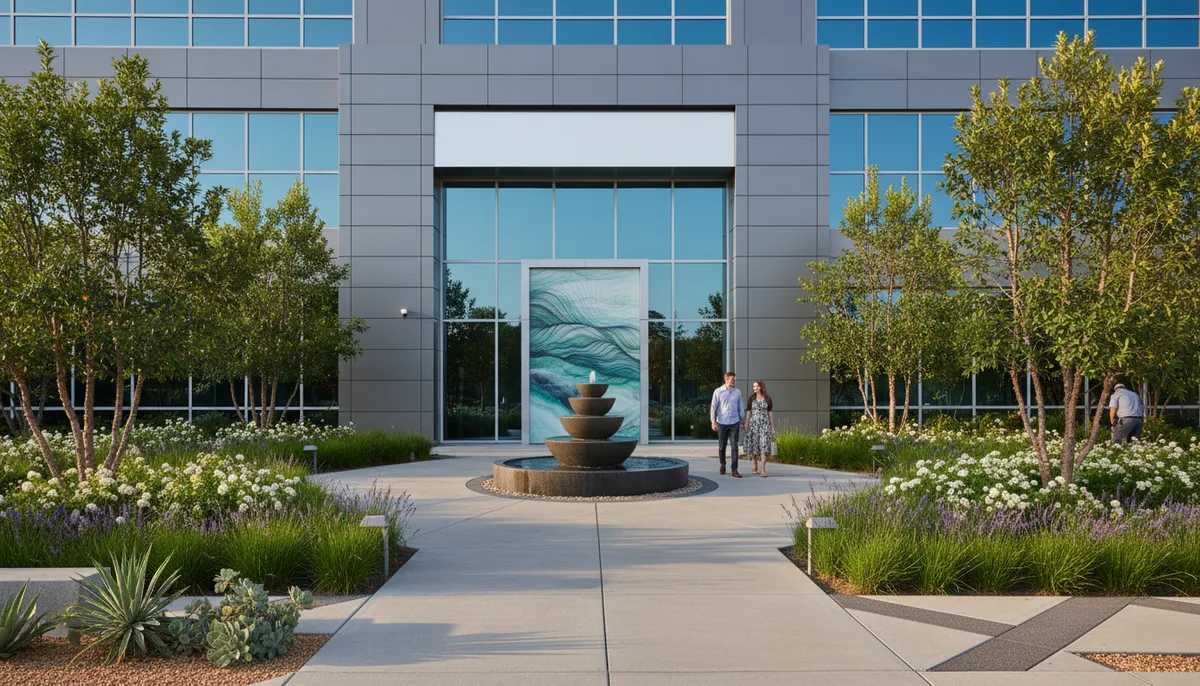
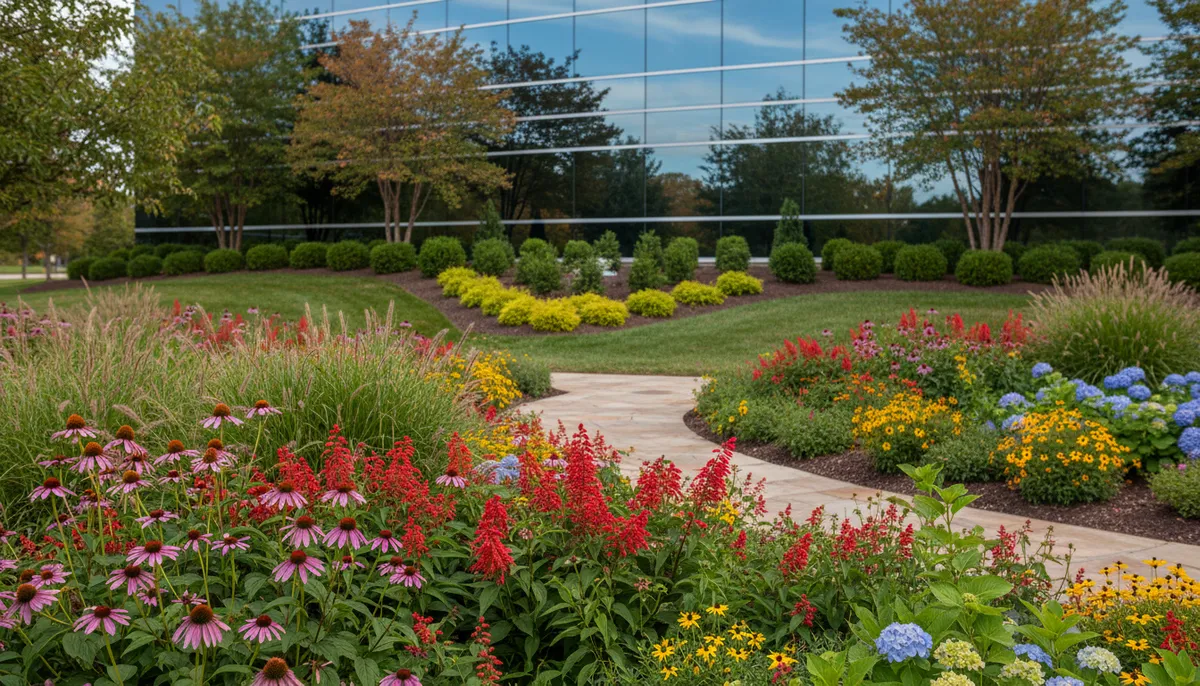
While hardscaping builds the bones of your landscape, softscapes bring it to life. Trees, shrubs, flowers, and ground cover add color, texture, and seasonal interest to your commercial property. They also improve air quality and create a more welcoming environment for employees and customers alike.
In Chicago’s climate, choosing the right plants matters a lot. You want species that can handle harsh winters and humid summers without constant replacement. A professional landscaper will choose plants that thrive locally, reducing long-term maintenance costs and keeping your property looking great through every season.
Smart softscaping benefits include:
- Seasonal color that refreshes your property’s look throughout the year
- Shade trees that reduce cooling costs in summer months
- Native plants that require less water and care
- Greenery that reduces noise and creates a calm atmosphere
- Biophilic design elements that improve employee well-being
4. Retaining Walls Solve Real Landscaping Problems
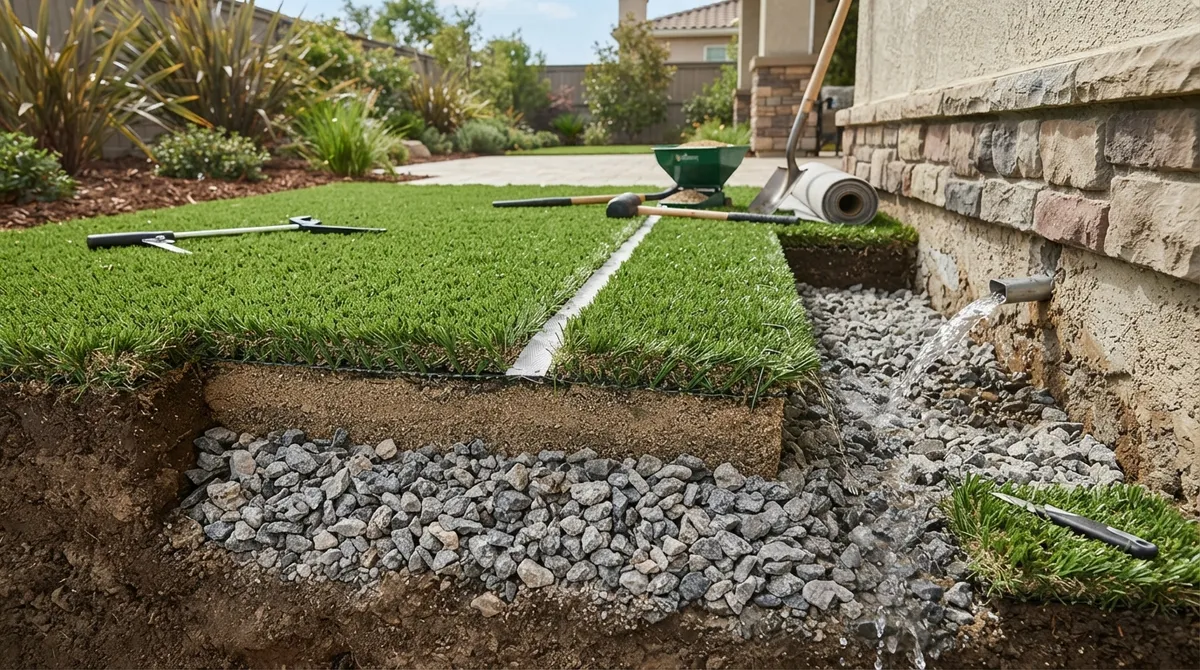
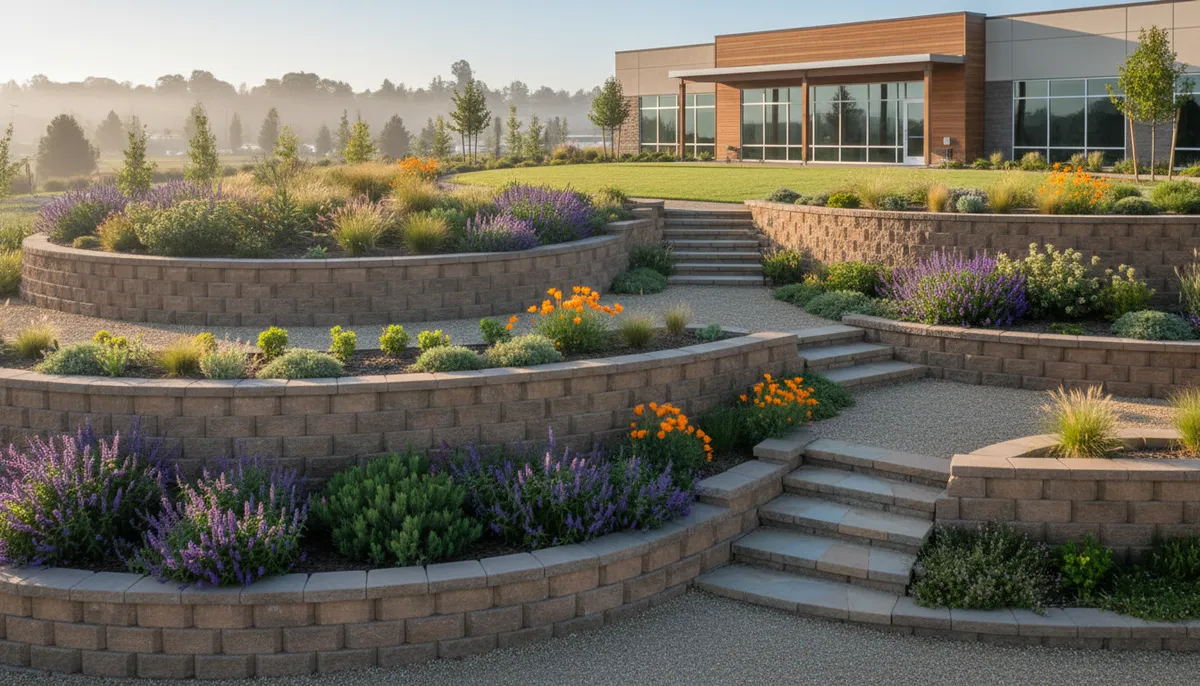
Many commercial properties in the Chicago suburbs deal with uneven terrain, poor drainage, or soil erosion. These aren’t just eyesores — they can be safety hazards and liability issues. Retaining walls are a smart solution that addresses both form and function.
A well-built retaining wall keeps soil in place, manages water runoff, and creates level areas for planting or seating. They can be designed with natural stone, concrete blocks, or brick to match your brand’s aesthetic. For property managers dealing with sloped lots or stormwater challenges, retaining walls are often the most practical and attractive fix available.
According to Landscape Illinois, proper drainage and grading are among the most overlooked aspects of commercial landscape planning — but they have a significant impact on long-term property maintenance costs.
5. Outdoor Lighting Extends Your Business Hours
Good lighting and sound design can completely transform how your commercial property looks and feels after dark. Landscape lighting highlights architectural features, illuminates walkways, and creates a safe environment for customers and employees leaving in the evening.
For restaurants and retail shops, evening lighting extends the invitation to come inside well after sunset. For office buildings and commercial complexes, well-lit pathways and parking areas reduce liability and improve security. It’s one of those commercial landscaping upgrades that pays for itself quickly in both safety and ambiance.
Top lighting applications for commercial properties:
- Path lighting — Guides customers safely from parking to entrance
- Accent lighting — Highlights trees, signage, and architectural details
- Security lighting — Deters after-hours incidents with bright, motion-activated fixtures
- Ambient lighting — Creates an inviting mood for outdoor seating areas
- Uplighting — Adds drama and visual interest to focal plants and structures
6. Pergolas and Pavilions Add Serious Value
Outdoor covered structures like pergolas and pavilions are becoming increasingly popular in commercial landscaping. They create comfortable, shaded gathering spaces that work for employees, customers, and guests. For restaurants, a well-designed pergola turns an empty side yard into a revenue-generating patio. For corporate campuses, an outdoor pavilion becomes a popular break or meeting spot.
These structures also signal investment and quality. When a business takes the time to create a beautiful outdoor space, it communicates that the business itself is well-run and thoughtful. Customers notice, and they remember.
Want to see what’s possible? Browse our project gallery to get inspiration for your own commercial property.
7. Ongoing Commercial Lawn Maintenance Protects Your Investment
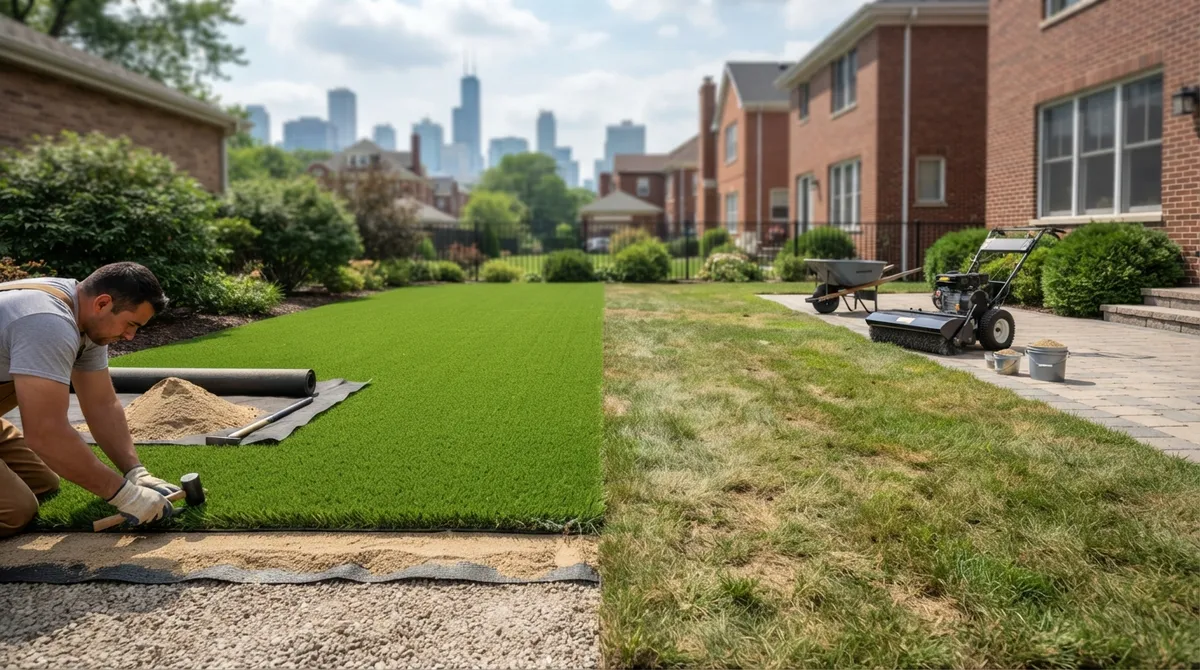
A beautiful landscape installation only stays beautiful with consistent care. That’s where commercial lawn maintenance makes all the difference. Regular mowing, edging, fertilizing, and seasonal cleanups keep your property looking sharp every single week, not just right after a new installation.
For property managers juggling multiple responsibilities, outsourcing lawn maintenance to a reliable team is a huge relief. You get a consistently polished property without having to manage the day-to-day logistics yourself. A professional maintenance plan also catches small issues — like dead patches or drainage problems — before they become expensive headaches.
Here’s what a well-rounded commercial lawn maintenance plan typically includes:
- Weekly or bi-weekly mowing and edging
- Fertilization and weed control programs
- Spring and fall cleanups
- Mulching of garden beds
- Irrigation system checks and winterization
- Snow and ice management (critical in Chicagoland!)
When you work with a team that follows a clear, documented process, you can trust that nothing falls through the cracks — season after season.
What to Look for in a Commercial Landscaping Partner
Choosing the right commercial landscaping company is a big decision. You’re not just hiring someone to mow the grass — you’re trusting a team to represent your business visually to every person who drives or walks by. Here’s what to prioritize when evaluating potential partners:
- Experience with commercial properties — Residential and commercial landscaping have different demands. Look for a company with a proven track record in the commercial space.
- Full-service capabilities — A team that handles both design and ongoing maintenance keeps your vision consistent.
- Local knowledge — A company rooted in the Chicago area understands local climate, soil conditions, and municipality requirements.
- Certifications and credentials — Look for professionals affiliated with industry organizations. For example, working with an ICPI Certified Installer ensures your hardscaping meets industry best practices.
At Serenity Landscape Group, we’ve spent over two decades helping commercial clients across Chicagoland create and maintain beautiful outdoor spaces. From first consultation to ongoing care, we manage the entire process so you can focus on running your business.
Commercial Landscaping Investment at a Glance
| Service | Ideal For | Primary Benefit | Maintenance Level |
|---|---|---|---|
| Softscaping | All commercial properties | Visual appeal and air quality | Moderate |
| Pavers and Hardscaping | High-traffic areas | Durability and structure | Low |
| Retaining Walls | Sloped or erosion-prone lots | Erosion control | Very Low |
| Outdoor Lighting | Evening businesses, safety needs | Security and ambiance | Low |
| Pergolas and Pavilions | Restaurants, event venues | Usable outdoor space | Low |
| Lawn Maintenance Plans | All commercial properties | Year-round curb appeal | Ongoing |
Steps to Get Started with Commercial Landscaping
Ready to take your property’s outdoor space to the next level? The process doesn’t have to be complicated. Here’s a simple way to move forward:
- Assess your current space — Walk your property and note what’s working and what isn’t. Look at drainage, worn areas, lighting gaps, and outdated plantings.
- Define your goals — Are you trying to attract more customers? Improve employee morale? Solve a drainage problem? Knowing your goal helps shape the right plan.
- Consult a professional — A qualified commercial landscaping team will evaluate your property and propose a design that fits your budget and goals.
- Review the plan and timeline — A good landscape partner will walk you through every phase of the project before work begins.
- Schedule ongoing maintenance — Installation is just the beginning. Set up a maintenance plan to protect your investment long-term.
You can also explore resources like Landscape Illinois for industry guidance and consumer tips on working with professional landscapers in the state.
Your Outdoor Space Is an Asset — Treat It Like One
Commercial landscaping is more than just keeping the grass green. It’s about creating an outdoor environment that supports your brand, welcomes your customers, and protects your property’s long-term value. From beautiful softscapes to durable hardscaping and reliable maintenance, every element works together to make your business look and feel its best.
The businesses that stand out in 2026 are the ones that understand: your outdoor space is part of your brand. And a well-invested landscape pays dividends in customer perception, employee satisfaction, and property value for years to come.
If you’re ready to see what’s possible for your commercial property, we’d love to help. Request a free estimate from our team and let’s start building something beautiful together.
FAQs
Q: How much does commercial landscaping cost in the Chicago area?
A: Costs vary widely depending on the size of your property and the services you need. A basic lawn maintenance plan might start at a few hundred dollars per month, while a full design-and-installation project could range from several thousand to tens of thousands of dollars. The best way to get an accurate number is to request a free estimate from a local professional who can assess your specific property.
Q: How often should a commercial property be professionally maintained?
A: Most commercial properties benefit from weekly or bi-weekly maintenance during the growing season, with seasonal cleanups in spring and fall. In Chicagoland, a good maintenance plan also includes winterization services and snow management to keep your property safe and looking great year-round.
Q: What’s the difference between hardscaping and softscaping in commercial landscaping?
A: Great question! Hardscaping refers to the non-plant elements of your landscape — things like pavers, retaining walls, pergolas, and lighting. Softscaping covers all the living elements, like trees, shrubs, flowers, and grass. A well-designed commercial landscape uses both together to create a space that’s both beautiful and functional.
Q: Can commercial landscaping help with stormwater management?
A: Absolutely! Features like retaining walls, graded planting beds, native plant selections, and permeable pavers all help manage stormwater runoff effectively. This is especially important for commercial properties in Illinois, where local municipalities often have specific drainage requirements that a professional landscaper can help you meet.
Q: How long does a commercial landscaping installation project typically take?
A: The timeline depends on the scope of the project. A basic softscape installation might take just a few days, while a comprehensive project involving hardscaping, lighting, and structural features could take several weeks. A good landscaping team will give you a clear timeline upfront and keep you updated throughout the process.