Key Takeaways
-
Clear debris before the first snowfall using a leaf blower or turf-safe rake to prevent matting and maintain appearance under snow cover.
-
Use only plastic shovels or soft-bristle brooms for snow removal; metal tools can snag and tear synthetic fibers, causing permanent damage.
-
Artificial turf requires minimal winter maintenance compared to natural grass—no fertilizing, aeration, overseeding, or irrigation shutdown needed.
-
Avoid rock salt and harsh ice melt products on artificial turf; use sand-based traction alternatives instead to prevent fiber damage and drainage issues.
-
Inspect turf after freeze-thaw cycles by checking for uneven areas, seam lifting, and moss growth, which takes only minutes and prevents larger issues.
-
Early November installations are feasible in the Chicago area, but deep winter months (December-February) may require case-by-case evaluation due to frozen ground conditions.
If you’ve ever stared out your Chicago-area window at a brown, frost-bitten lawn and thought, “There has to be a better way,” you’re not alone. Midwest winters are no joke. Between the freezing temperatures, heavy snowfall, and relentless freeze-thaw cycles, keeping a lawn looking great from November through March feels nearly impossible. That’s exactly why so many homeowners and property managers are turning to artificial turf. But here’s the big question: does synthetic grass really hold up in our harsh Midwest climate, and what does winterizing artificial turf in the Midwest actually look like compared to caring for natural grass? Let’s break it all down in a friendly, side-by-side look so you can make the best choice for your outdoor space.
Natural Grass in Midwest Winters: The Real Story
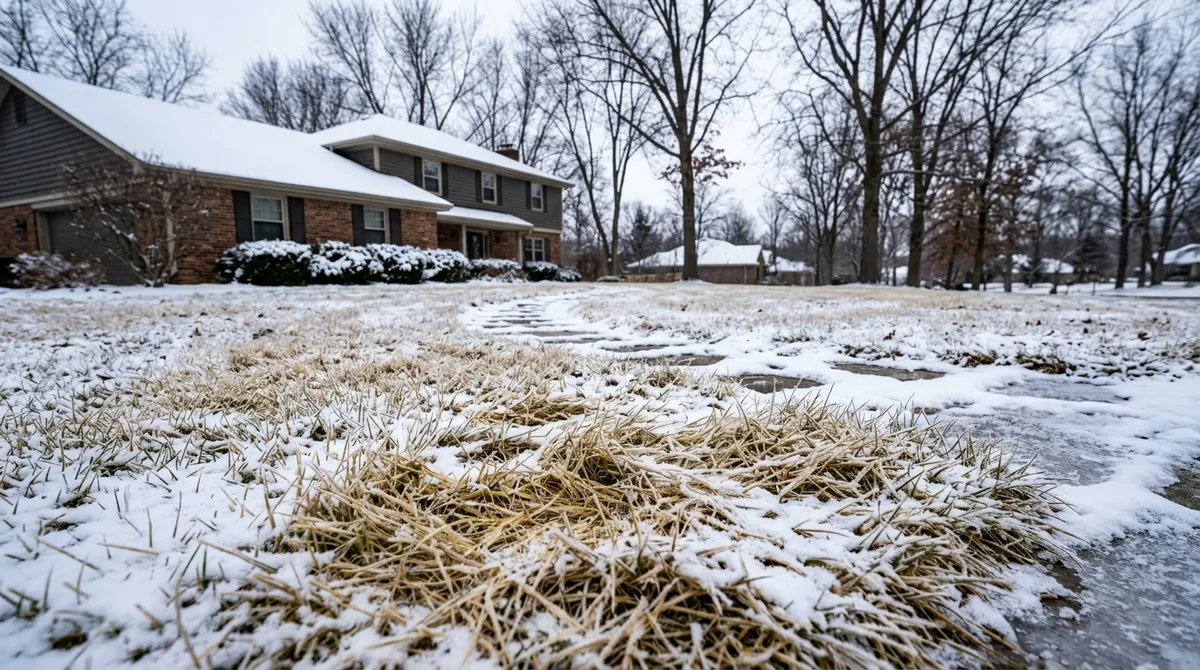
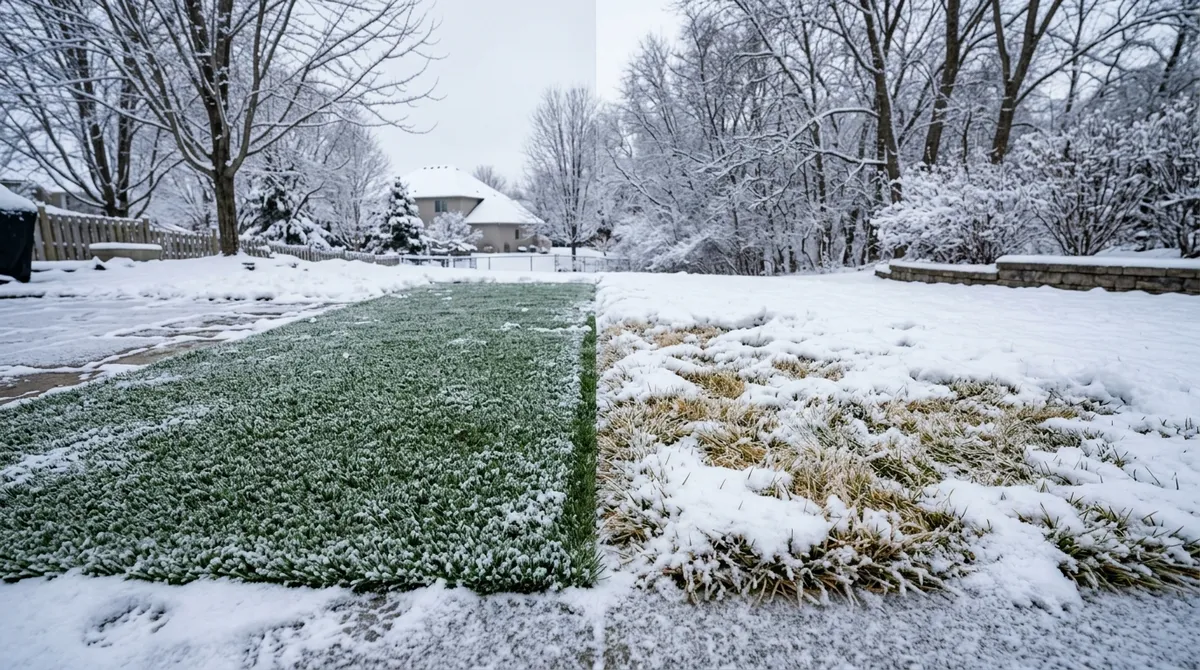
Natural grass goes dormant in cold weather. That means it stops growing, turns brown, and essentially “shuts down” until spring. While this is a natural process, it comes with a long list of winter care headaches.
Here’s what traditional lawn winterizing typically involves:
- Aerating the soil to relieve compaction before the ground freezes
- Applying a winterizer fertilizer to strengthen roots
- Overseeding bare or thin patches to prepare for spring growth
- Raking and clearing all leaves and debris before the first freeze
- Adjusting irrigation systems and shutting off sprinkler lines
- Avoiding heavy foot traffic on frozen or frosty grass blades
Even after all that effort, there’s no guarantee your lawn will bounce back beautifully in spring. Harsh winters can damage root systems, invite snow mold, and leave you with patchy, thin turf come April.
Winterizing Artificial Turf in the Midwest: A Simpler Story
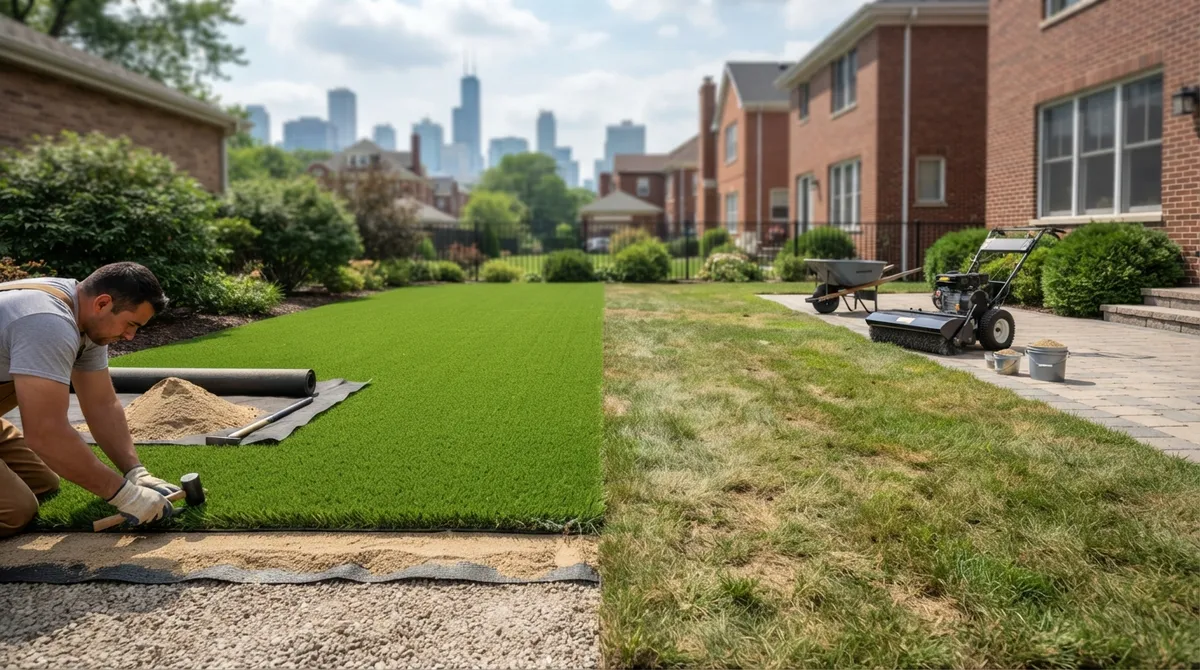
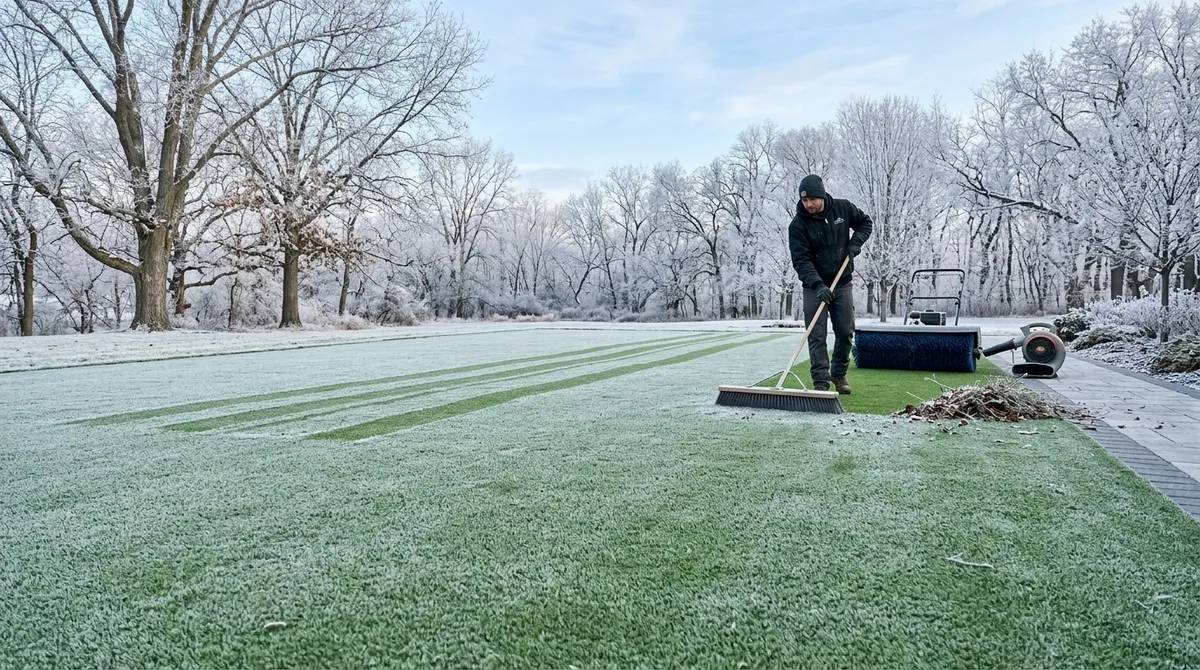
Here’s the good news: winterizing artificial turf in the Midwest is dramatically simpler. Synthetic grass doesn’t go dormant. It doesn’t turn brown. It doesn’t need fertilizer, aeration, or overseeding. Its polyethylene fibers are built to stay resilient even in freezing temperatures, meaning your lawn stays green and attractive all winter long.
That said, artificial turf isn’t completely maintenance-free in winter. A few simple steps keep it looking great and performing well through the cold months. If you’re curious about installation options, check out our artificial turf installation services to see what’s possible for your property.
Step-by-Step Winter Care for Artificial Turf
- Clear debris before the first snowfall. Use a leaf blower or a turf-safe rake to remove leaves, twigs, and organic material. Leaving debris under snow can cause matting and affect the turf’s appearance.
- Let snow and ice melt naturally when possible. Artificial turf handles snow beautifully on its own. Avoid using rock salt or harsh ice melt products, as these can damage fibers and affect drainage.
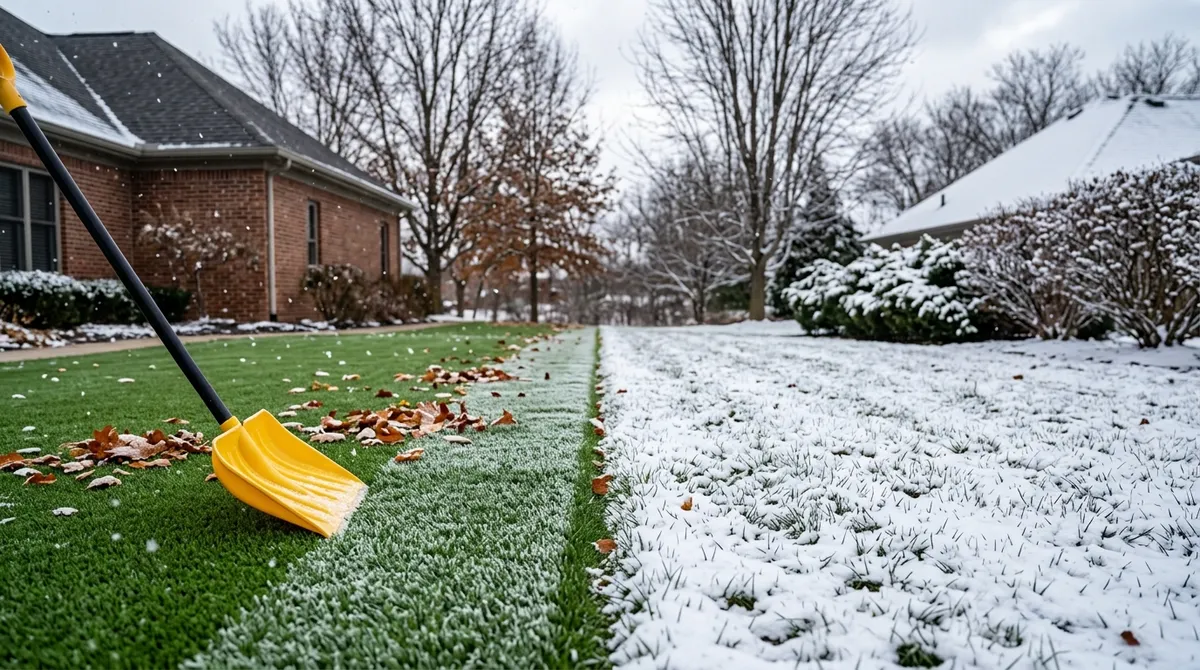
- Use a plastic shovel if manual snow removal is needed. Metal tools can snag and tear synthetic fibers. A plastic snow shovel or a soft-bristle push broom works perfectly without causing damage.
- Reduce foot traffic during extreme cold. When temperatures drop well below freezing, turf fibers can become temporarily brittle. Light foot traffic is fine, but try to avoid dragging heavy furniture or equipment across the surface.
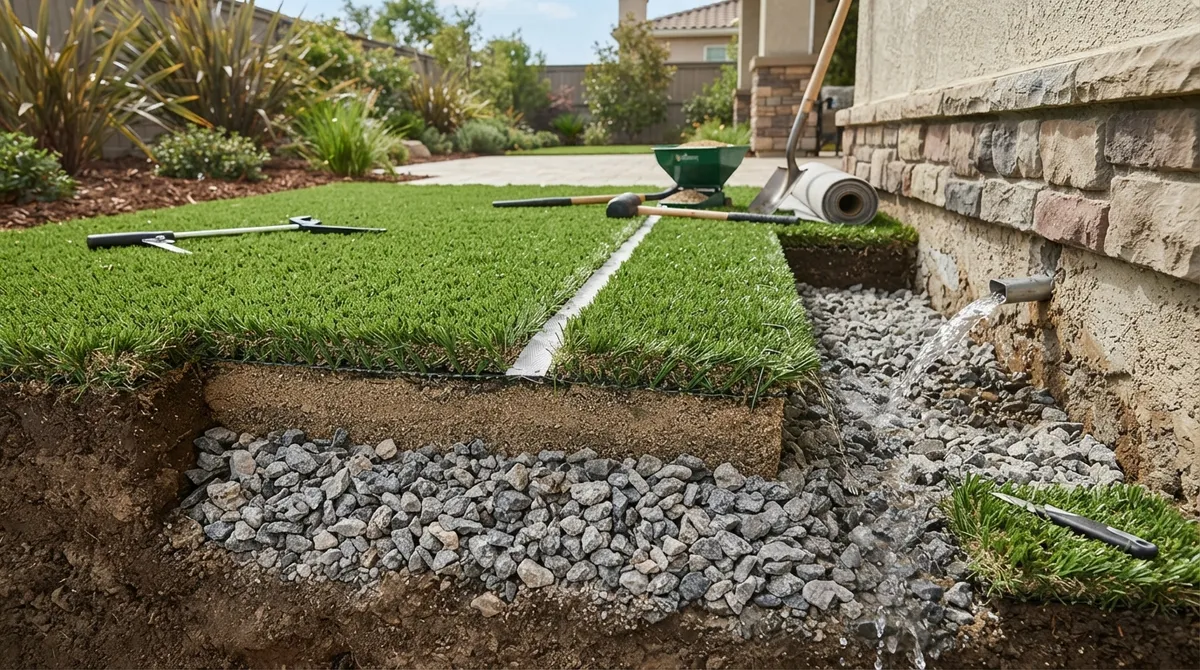
- Inspect drainage and base after thaw cycles. Freeze-thaw cycles can occasionally cause minor base shifting. After a significant thaw, walk the area and check for any uneven spots or drainage concerns.
Side-by-Side Winter Comparison: Artificial Turf vs. Natural Grass
Let’s put the two options head-to-head so you can see exactly how they compare when Midwest winters hit hard.
| Winter Care Factor | Artificial Turf | Natural Grass |
|---|---|---|
| Appearance in Winter | Stays green and attractive | Browns and goes dormant |
| Fertilizing Required | None | Winterizer application needed |
| Aeration Needed | No | Yes, before ground freezes |
| Snow Removal | Optional; let it melt naturally | Recommended to prevent snow mold |
| Irrigation Winterizing | Not required | Must shut off and drain system |
| Foot Traffic Concern | Limit during extreme cold | Avoid on frozen or frosty grass |
| Risk of Winter Damage | Very low with basic care | Moderate to high (root damage, snow mold) |
| Spring Recovery Needed | None | Often requires reseeding and repair |
| Overall Maintenance Level | Very low | High |
The difference is pretty clear. Artificial turf simply requires far less effort to maintain a great-looking outdoor space through Chicago’s cold months. For homeowners trying to keep up with HOA standards or commercial property managers focused on curb appeal, that’s a major advantage.
What About Snow and Ice on Artificial Turf?
This is one of the most common questions we hear. Snow and ice behave a bit differently on synthetic grass than on natural turf, and it’s worth understanding what to expect.
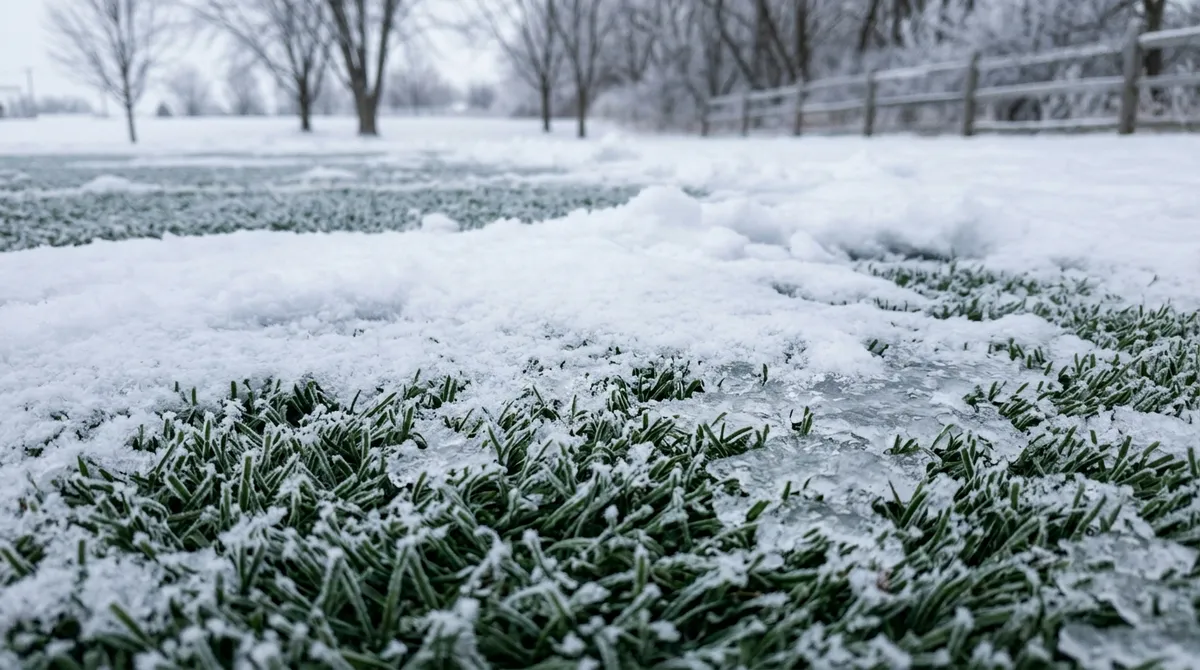
Artificial turf’s efficient drainage system means that as snow and ice melt, water drains through the turf base rather than pooling on the surface. This reduces the risk of standing water, ice patches, or bacterial buildup underneath the surface. Landscape Illinois highlights that proper drainage is one of the most important factors in any landscape installation, and synthetic turf is designed with this in mind.
- Artificial turf can become slippery when covered in a thin layer of ice, similar to any hard surface
- Applying sand-based traction products is safe, but avoid chloride-based ice melt
- A light brush or rinse after a thaw keeps fibers upright and drainage flowing
- Thick snow accumulation can be gently pushed aside with a plastic shovel or soft broom
For natural grass, snow actually acts as an insulating blanket. However, heavy or prolonged snow cover can encourage snow mold, a fungal condition that damages turf in late winter or early spring. Artificial turf has no such risk.
Can You Install Artificial Turf in Winter in the Chicago Area?
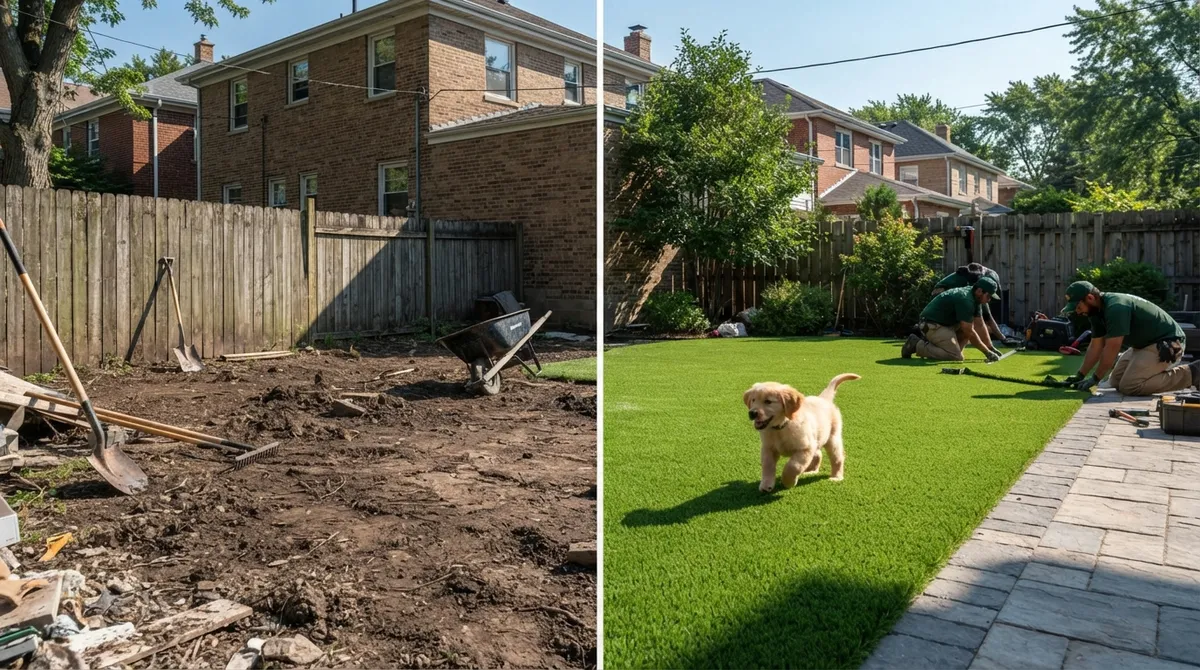
This is a great question for homeowners planning ahead. In the greater Chicago area, installation is generally possible in the milder early winter months, but it becomes more challenging as the ground freezes deeply. In the Upper Midwest — think northern Wisconsin and Minnesota — installations are typically delayed until spring because deeply frozen ground makes excavation and base preparation very difficult.
The Chicago area sits in a middle ground. Early November installations are often still feasible, but December through February installs may require evaluation on a case-by-case basis. Our team at Serenity Landscape Group can assess your specific property and recommend the ideal installation window to ensure a strong, lasting result. For more on how we approach each project, take a look at our project process.
Checking Your Turf After Midwest Freeze-Thaw Cycles
One area where artificial turf does need a little attention is after significant freeze-thaw cycles. These cycles are common in Chicagoland, where temperatures can swing dramatically between January and March. Here’s what to check after a major thaw:
- Walk the surface and feel for uneven areas. Minor base shifting can occur after repeated freeze-thaw cycles. Catching this early prevents larger issues.
- Check seams and edges. Cold temperatures can cause slight contraction in turf materials. Inspect seams for any lifting or separation that might need professional attention.
- Look for weed or moss growth. Moist winter conditions occasionally allow weeds or moss to creep in at edges. A spot treatment handles this quickly.
These inspections take just a few minutes and keep your turf in top shape. For commercial properties, professional seasonal maintenance is a smart investment. Our commercial lawn maintenance team handles all of this and more.
Beyond Turf: Pairing Winter-Ready Features with Your Landscape
One of the smartest things Chicago-area property owners do is pair artificial turf with other low-maintenance, winter-friendly landscape features. A well-designed outdoor space doesn’t have to shut down in winter — it can stay functional and beautiful all year.
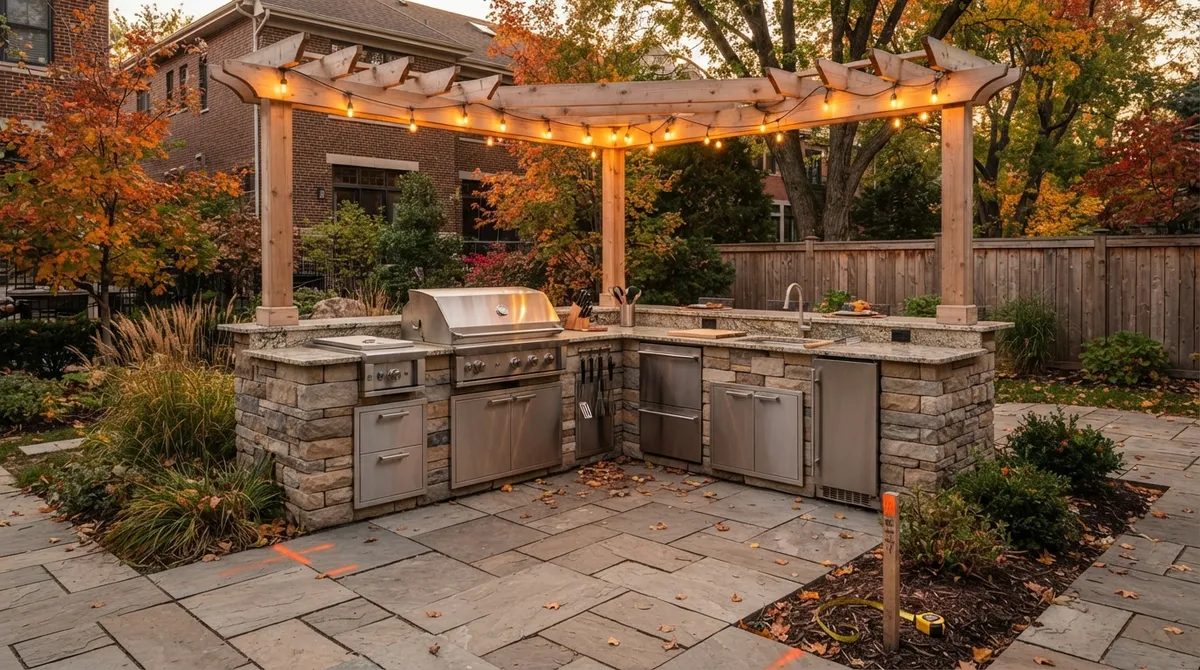
- Add a fire pit to create a warm gathering spot even on cold evenings
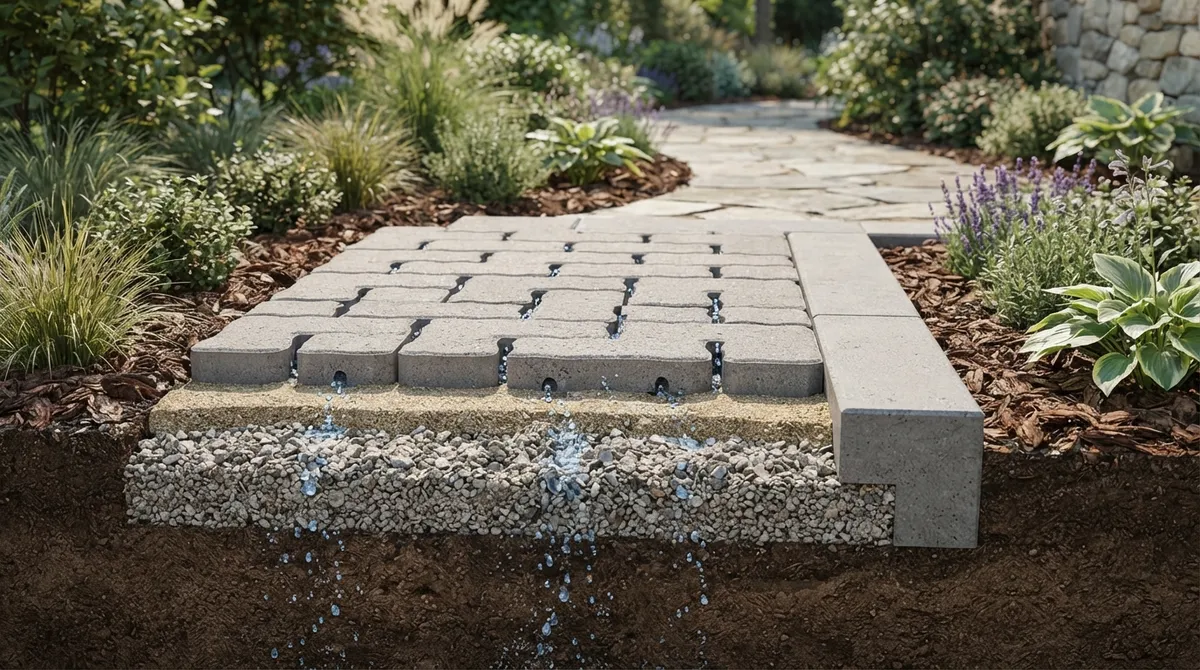
- Install durable pavers for pathways and patios that handle freeze-thaw cycles with ease
- Consider a pergola or pavilion to protect your outdoor space from heavy snowfall
- Use smart landscape lighting to keep your property looking polished and safe in shorter winter days
These features work beautifully together. You can also explore how retaining walls help manage soil and drainage changes that winter weather brings. For inspiration, browse our gallery of completed projects to see what’s possible in a Midwest climate. Industry resources like the ICPI Certified Installer network also highlight the importance of professional installation for long-lasting hardscape results alongside your synthetic turf.
The Verdict: Which Wins Midwest Winters?
When it comes to surviving — and actually thriving — through a Midwest winter, artificial turf wins hands down. Here’s a quick recap of why:
- Stays green and attractive all winter with no dormancy
- Requires minimal care compared to the full winterizing process for natural grass
- No fertilizing, aerating, overseeding, or irrigation shutdown needed
- Handles snow and ice well with simple precautions
- No spring recovery period — it’s ready to go as soon as weather warms
- A smart, long-term investment for both residential and commercial properties
Natural grass has its charm, but in a climate like ours, the maintenance demands are real and ongoing. For busy homeowners, commercial property managers, and anyone who’d rather spend winter evenings by a warm fire than worrying about their lawn, artificial turf is the clear winner.
Ready to make the switch or simply want to learn more? We’d love to help you create a landscape design that transforms your space into something you’ll enjoy every single season. Get your free estimate today and let’s talk about making your outdoor space beautiful — even in January.
FAQs
Q: Does artificial turf really need to be winterized in the Midwest?
A: Great news — winterizing artificial turf in the Midwest is much simpler than caring for natural grass! You mainly need to clear debris before the first snowfall, avoid metal tools for snow removal, and do a quick inspection after major freeze-thaw cycles. That’s really about it, which makes it a fantastic low-maintenance choice for Chicago-area homeowners.
Q: How do you safely remove snow from synthetic grass without damaging it?
A: The best approach is to let snow melt naturally whenever possible — artificial turf’s drainage system handles it beautifully. If you do need to remove snow manually, use a plastic shovel or a soft-bristle push broom, and always work gently. Metal tools can snag or damage the synthetic fibers, so it’s worth keeping a plastic shovel handy just for your turf.
Q: Can you install artificial turf during winter in the Chicago area?
A: In the Chicago area, early winter installations (October through November) are often still possible, but deep winter months can be tricky as the ground freezes. Our team evaluates each property individually to find the best installation window. If timing is a concern, we’re happy to help you plan ahead for a smooth spring installation!
Q: Is artificial turf slippery when it snows or ices over?
A: Like any outdoor surface, artificial turf can become slippery when a thin layer of ice forms on top, so it’s good to be cautious. You can safely apply sand-based traction products for grip — just avoid chloride-based ice melts, which can harm the fibers. Once the ice melts, a quick brush helps restore the turf’s natural texture and drainage.
Q: What should I check on my artificial turf after a Midwest freeze-thaw cycle?
A: After a significant thaw, take a short walk across your turf and feel for any uneven or soft spots that might signal base shifting. Also check the seams and edges for any lifting, and look for any moss or weed growth creeping in at the borders. Catching these small issues early keeps your turf looking and performing its best all season long!