Key Takeaways
-
Non-toxic synthetic grass is made from 100% polyethylene and contains zero lead, VOCs, heavy metals, and PFAs, making it genuinely safer than chemically-treated natural grass for pets.
-
Premium pet turf drains at over 1,000 inches per hour with antimicrobial agents reducing bacteria and odors by 99%, eliminating mud, yellow spots, and odor problems within minutes of pet use.
-
Synthetic pet grass saves homeowners 3-5 hours monthly on maintenance and thousands over 10 years by eliminating water bills ($200-$600+), fertilizers, repairs, and mowing services ($500-$1,500 annually).
-
Pet-friendly synthetic turf naturally deters fleas and ticks without requiring chemical treatments, reducing pesticide exposure and ongoing pest control costs.
-
Stays lush and green year-round in Chicago winters when natural grass goes dormant, maintaining curb appeal and eliminating bare patches caused by pet activity.
-
Professional installation typically lasts 10-15 years and works in any space—small urban yards, rooftops, kennels, and commercial pet areas—where natural grass is impractical or high-maintenance.
If you have pets, you know the struggle. Your dog races across the lawn, digs up patches, and leaves behind yellow spots. Your once-beautiful yard starts to look more like a muddy obstacle course than a serene outdoor retreat. Sound familiar? You’re not alone — pet owners across the Chicago suburbs face this exact challenge every single season.
The good news? There’s a real solution that’s changing how homeowners and property managers think about outdoor spaces. Non-toxic synthetic grass for pets offers a safe, durable, and low-maintenance alternative to natural turf. But is it truly better than keeping natural grass? Let’s break down both options honestly, so you can make the best choice for your furry family members and your landscape.
Whether you have a sprawling suburban backyard or a compact urban rooftop space, this comparison will help you decide. Let’s dig in — pun intended!
What Is Non-Toxic Synthetic Grass for Pets?
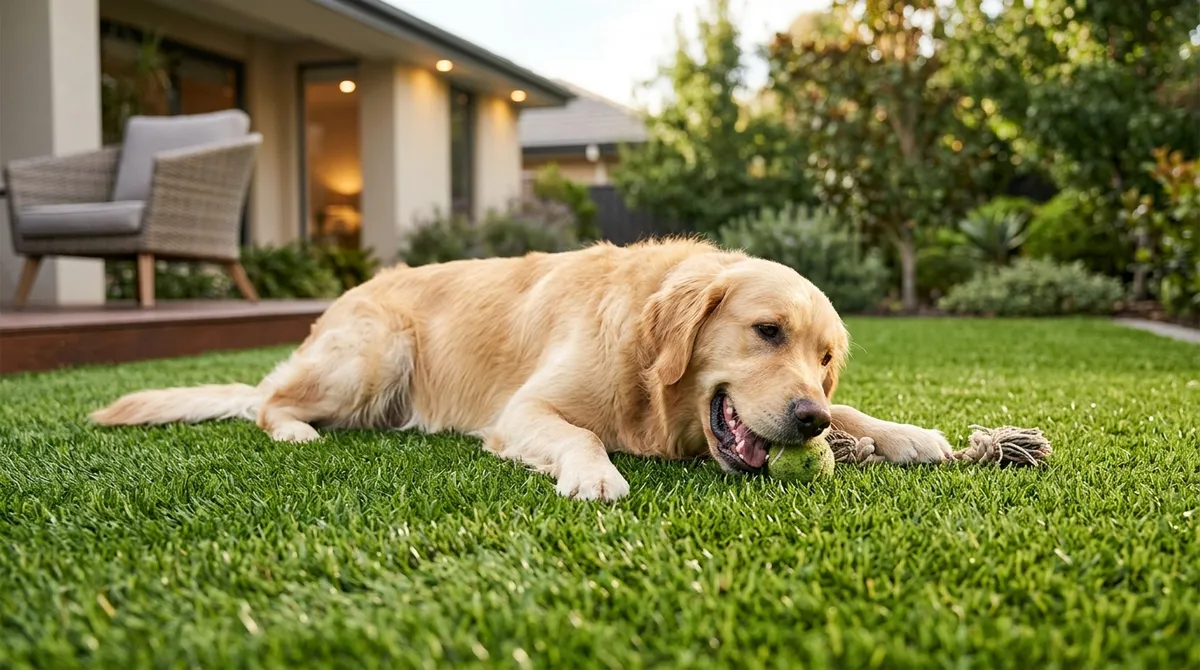
Non-toxic synthetic grass for pets is a specially engineered artificial turf designed with animal safety at the forefront. Unlike older generations of artificial grass, today’s pet-safe turf is made from 100% polyethylene (PE) monofilament fibers. These materials are free of heavy metals, PFAs, VOCs, and lead. Independent safety certifications back these claims, giving pet owners real peace of mind.
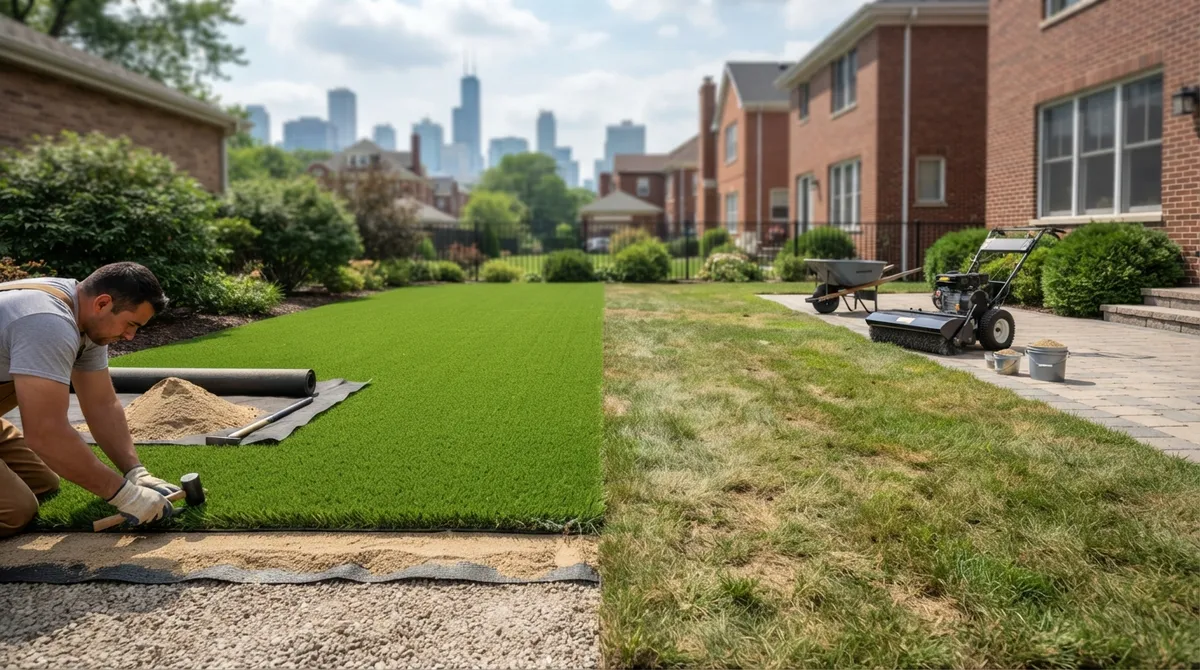
Many modern pet turf products are also infused with antimicrobial agents — such as Microban or Sanitized technology — that eliminate up to 99% of bacteria, mold, mildew, and odors. That means less smell after your dog does their business and a cleaner outdoor environment overall. You can learn more about how professional artificial turf installation works and what to expect from the process.
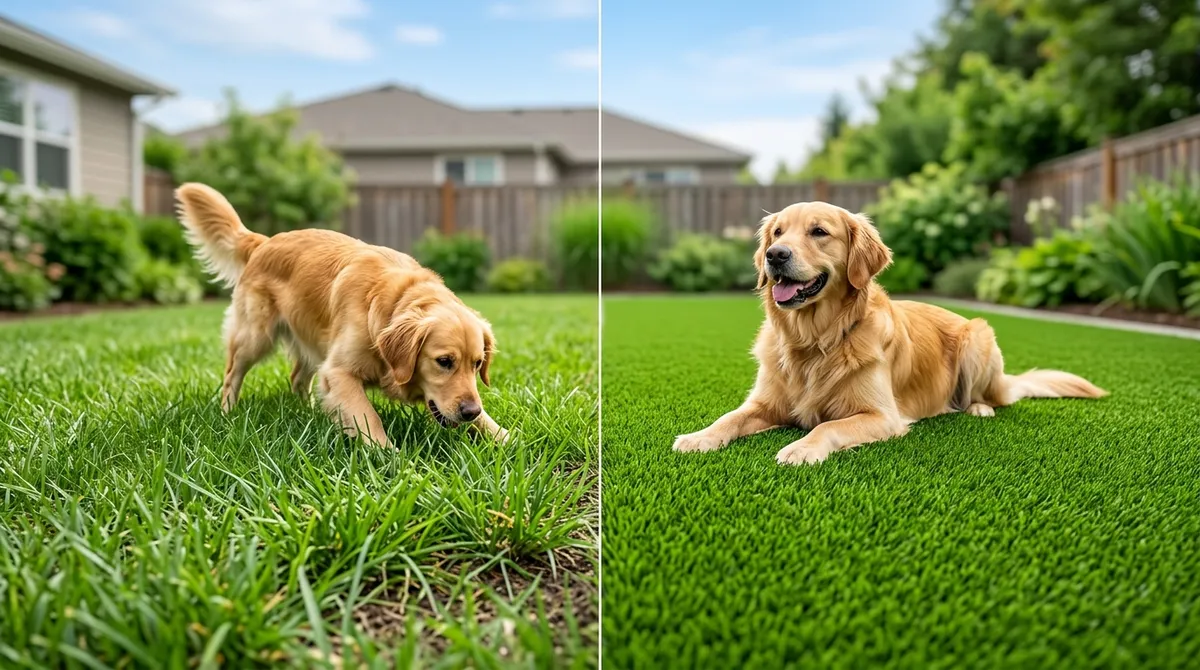
Natural Grass vs. Non-Toxic Synthetic Grass: The Big Comparison
Let’s look at both options side by side. This table covers the most important factors for pet owners and homeowners in the greater Chicago area.
| Factor | Natural Grass | Non-Toxic Synthetic Grass for Pets |
|---|---|---|
| Pet Safety | Requires pesticides and fertilizers (potential toxins) | 100% free of lead, VOCs, heavy metals, and PFAs |
| Maintenance | Mowing, watering, seeding, patching required | Simple hose-down cleanup after pet use |
| Drainage | Varies; prone to puddles and mud | Over 1,000 inches per hour in premium products |
| Odor Control | Bacteria and odors build up in soil | Antimicrobial agents reduce odors by up to 99% |
| Appearance Year-Round | Brown and dormant in Chicago winters | Lush and green all year, regardless of season |
| Pest Resistance | Attracts ticks, fleas, and mosquitoes | Deters fleas, ticks, and other pests naturally |
| Water Usage | High — especially in dry Chicago summers | None required after installation |
| Long-Term Cost | Ongoing — fertilizers, water bills, repairs | Higher upfront, lower ongoing costs |
The comparison tells a pretty clear story — especially when pet safety and low maintenance are your top priorities. But let’s explore each category a little deeper so you can truly understand the difference.
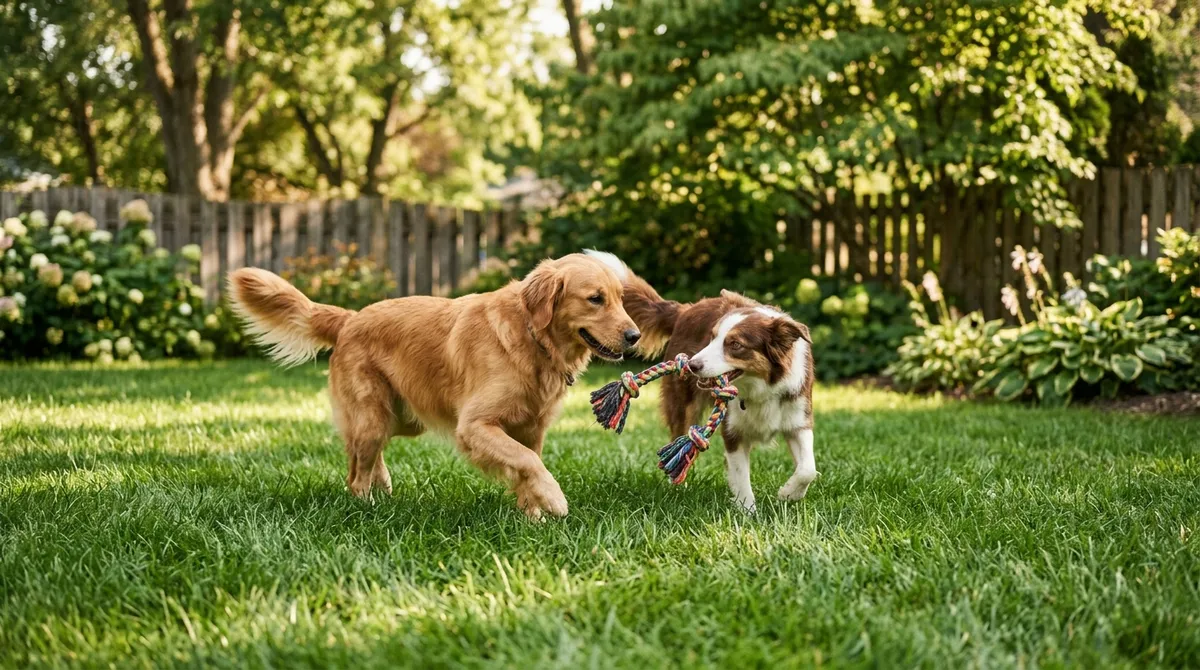
Pet Safety: Why Materials Matter
Natural grass sounds safe, right? But keeping it green often means applying fertilizers, herbicides, and pesticides. Many of these chemicals are harmful to pets who roll, dig, and lick the ground. Even “pet-safe” chemical products carry some risk with repeated exposure.
Non-toxic synthetic grass for pets removes this concern entirely. Made from polyethylene, the same material used in food-safe packaging, it contains no harmful substances. Look for products certified free of PFAs (forever chemicals), VOCs, and heavy metals. According to Landscape Illinois, responsible landscaping practices that reduce chemical use are increasingly recommended for residential properties — and pet turf aligns perfectly with that philosophy.
Key Safety Features of Pet-Friendly Synthetic Turf
- Made from 100% polyethylene — the same material in food containers
- Free of lead, heavy metals, PFAs, and VOCs
- No pesticides or fertilizers required — ever
- Antimicrobial infusions like Microban reduce bacteria by up to 99%
- Deters fleas and ticks naturally, reducing pest-related chemical treatments
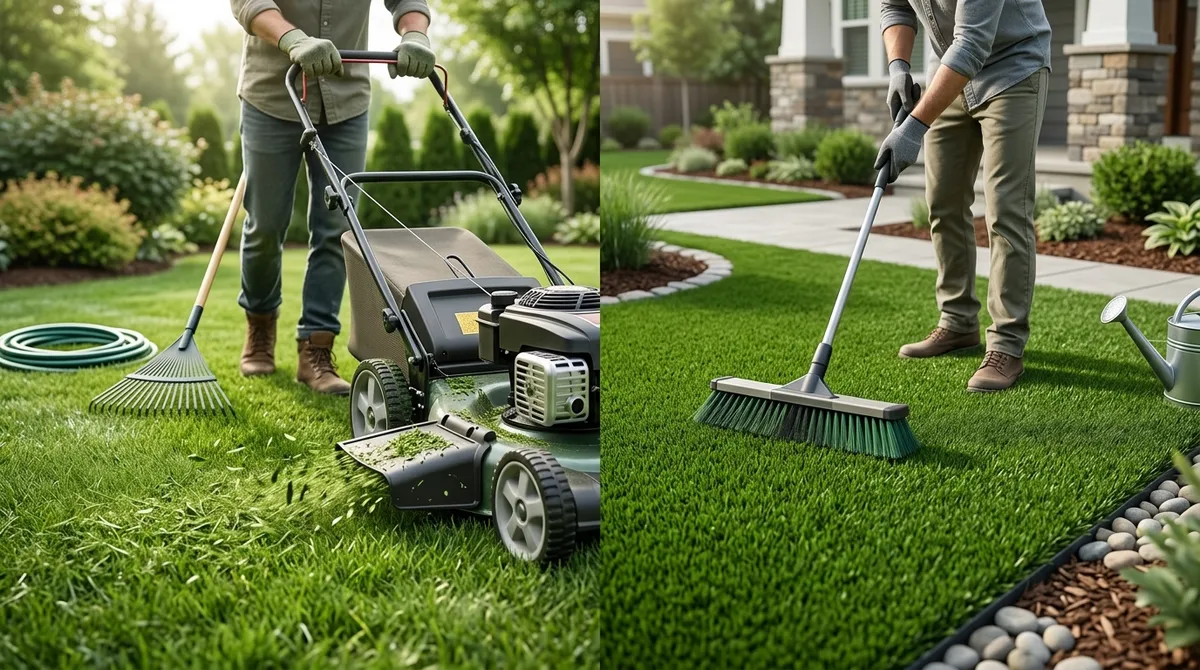
Maintenance: What Does Each Option Really Require?
Let’s be honest — maintaining natural grass with pets is a full-time job. Dogs create bare patches, urine burns grass blades, and muddy paws track mess indoors constantly. Reseeding, patching, and watering become a recurring cycle that never truly ends.
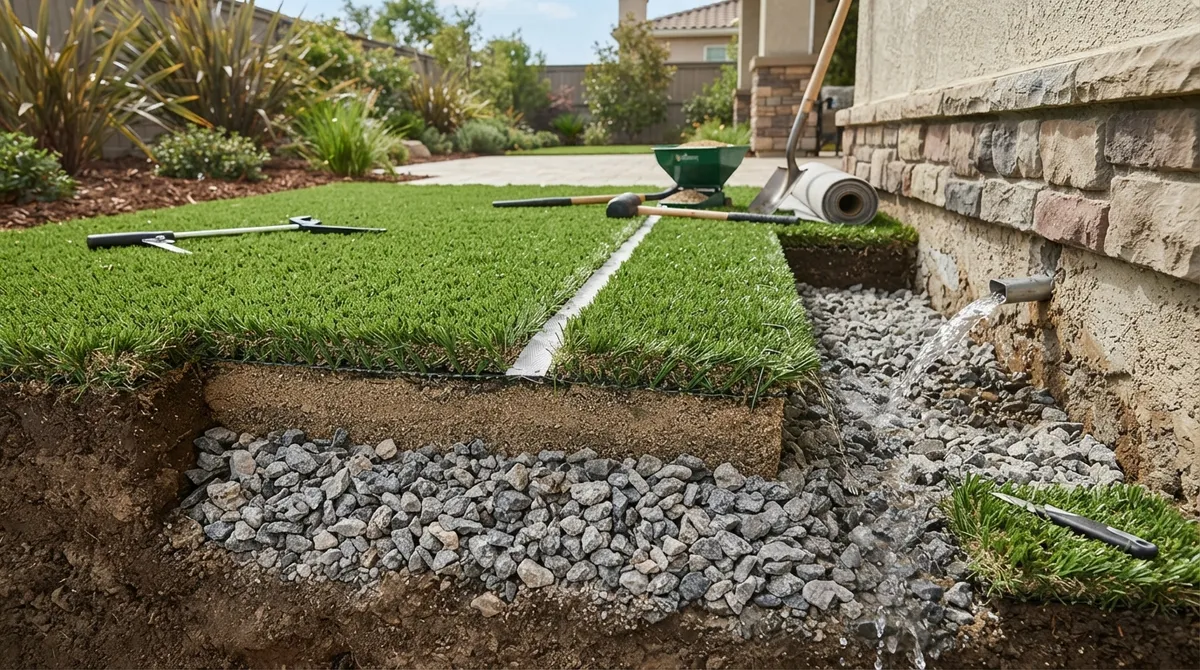
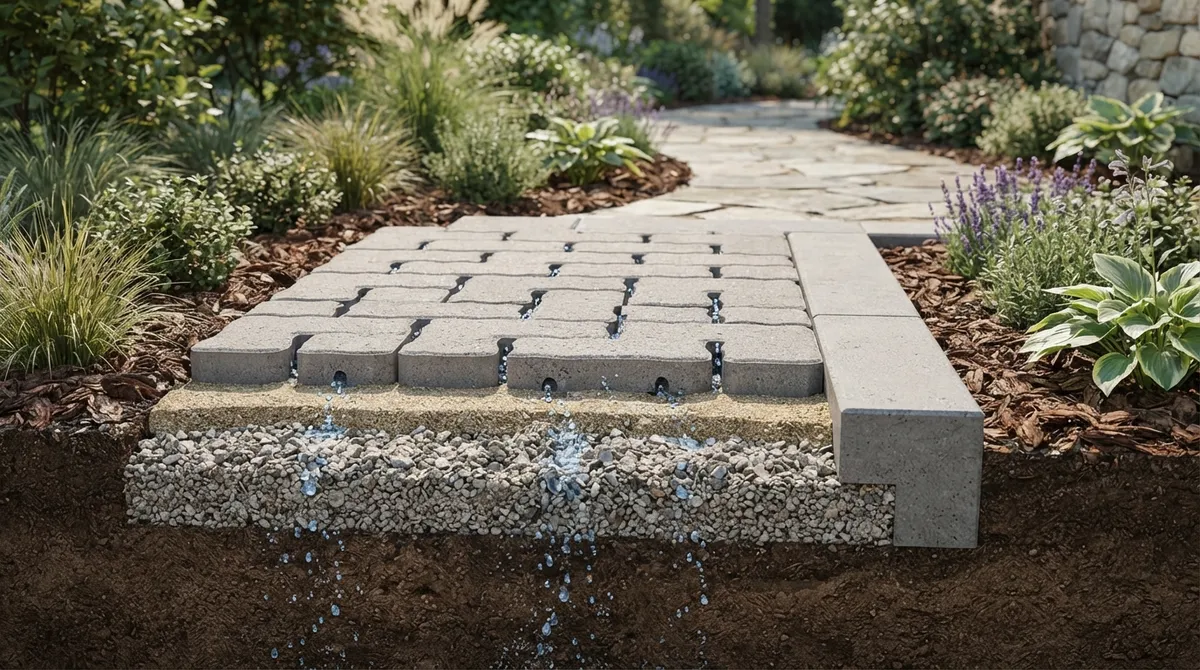
Non-toxic synthetic grass for pets simplifies your life dramatically. Many products require no infill, which makes cleanup even easier. After your pet uses the area, you simply hose it down. The superior drainage — some products drain at over 1,000 inches per hour — whisks waste away instantly, leaving no standing water or mud behind.
Monthly Maintenance Comparison
- Natural Grass Tasks: Mow weekly, water 2-3 times weekly, apply fertilizer monthly, reseed bare patches, treat for weeds and pests, and repair damage from pet activity.
- Synthetic Pet Turf Tasks: Hose down after pet use, rinse with water weekly, brush fibers upright occasionally — that’s it.
- Time Savings with Synthetic Turf: Most homeowners report saving 3-5 hours per month on lawn care after switching to pet-friendly artificial grass.
That’s a significant difference — especially for busy families or commercial property managers juggling multiple responsibilities. Check out how our team handles commercial lawn maintenance to see how professional care keeps properties looking their best year-round.
Drainage and Odor: The Practical Reality
One of the biggest concerns pet owners have about synthetic turf is odor. Will it smell? Will waste sit on the surface? These are totally valid questions, and the answer with quality pet turf is a reassuring no.
Premium non-toxic synthetic grass for pets features drainage systems that far exceed natural soil’s absorption rate. Some products, like those with SealTuft drainage technology, exceed 1,000 inches per hour in drainage capacity. Others offer approximately 30 inches per hour — still dramatically better than compacted or clay-heavy Chicago-area soils.
- Waste drains through the turf backing immediately
- Antimicrobial agents like Microban keep the surface up to 99% cleaner than untreated turf
- SYNLawn’s Sanitized technology eliminates up to 99% of bacteria and prevents fungal growth
- No mud means no paw prints tracked into your home
- Odors are neutralized at the microbial level — not just masked
For natural grass, bacteria accumulate in soil over time. This leads to persistent odors, especially in humid Chicago summers, and creates an ongoing sanitation challenge that no amount of hosing fully solves.
Appearance: Year-Round Curb Appeal
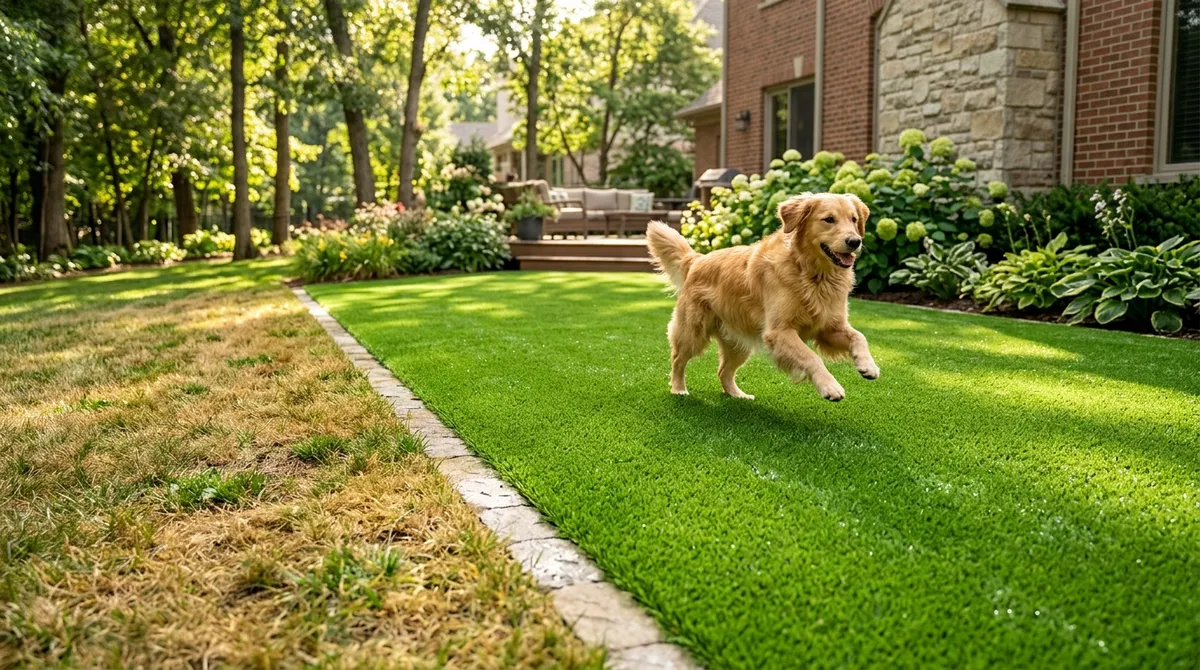
Chicago winters are no joke. Natural grass goes dormant and brown from November through March, leaving your yard looking dull and lifeless for months. Pet activity only makes things worse — bare patches and worn areas become even more visible against winter’s gray backdrop.
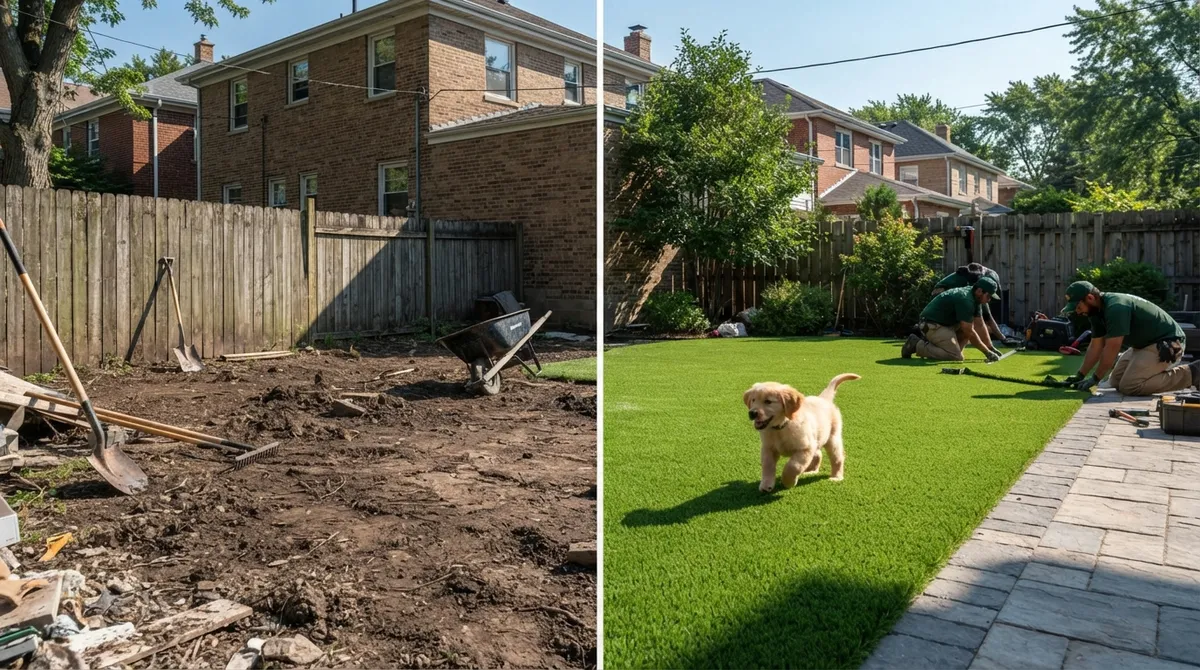
Non-toxic synthetic grass for pets stays lush and vibrant all year. Whether it’s a snowy January or a blazing July, your lawn looks impeccable. For homeowners in HOA communities or those who take pride in their curb appeal, this is a genuine game-changer. You can explore our gallery of our work to see stunning examples of how artificial turf transforms Chicago-area properties.
Aesthetic Advantages of Pet Synthetic Turf
- Realistic feel and lush appearance that mimics natural grass
- No bare patches or yellow spots from pet activityStays green through all four Chicago seasons
- Ideal for dog runs, kennels, family lawns, and commercial pet areas
- Can be paired with paver pathways and other hardscaping for a polished look
Cost: Upfront vs. Long-Term Investment
Let’s talk money honestly. Non-toxic synthetic grass for pets costs more upfront than natural sod. Professional installation includes site preparation, base material, the turf itself, and edging — which adds up. However, the long-term math tells a different story.
| Cost Category | Natural Grass (Annual) | Synthetic Pet Turf (Annual After Install) |
|---|---|---|
| Water Bills | $200–$600+ | $0 |
| Fertilizers & Chemicals | $100–$300 | $0 |
| Lawn Repairs & Reseeding | $150–$500+ | $0 |
| Pest Treatments | $100–$250 | Minimal to none |
| Mowing Services | $500–$1,500 | $0 |
Over a 10-year lifespan — the typical warranty period for quality pet turf — most homeowners save thousands of dollars compared to natural lawn upkeep. For commercial property managers overseeing large pet-friendly areas, the savings are even more significant. Partnering with a certified installer ensures proper base preparation and drainage, which maximizes turf longevity. The ICPI Certified Installer standards provide a helpful benchmark for quality installation practices in the hardscaping and outdoor surfaces industry.
Is Non-Toxic Synthetic Grass Right for Your Property?
Synthetic pet turf is an excellent fit for many Chicago-area homeowners and businesses. It’s especially ideal in these situations:
- You have active dogs who dig, run, and wear down natural grass quickly.
- You live in an HOA community where lawn appearance standards must be maintained year-round.
- You manage a commercial property with designated pet relief areas or dog-friendly outdoor spaces.
- You have a small yard, rooftop, or urban space where growing natural grass is impractical.
- You want to reduce your environmental footprint by eliminating water use and chemical lawn treatments.
At Serenity Landscape Group, we’ve helped countless Chicago-area families and businesses install non-toxic synthetic grass for pets that looks beautiful and holds up to real life. We combine this with complementary services like softscaping, retaining walls, and landscape lighting to create cohesive, stunning outdoor spaces your whole family — paws included — will love.
Curious about how our installation process works? We walk every client through our step-by-step approach so there are no surprises, just results.
The Verdict: Which Option Wins for Pet Owners?
Natural grass has its charm, but the reality for pet owners is a constant cycle of repair, maintenance, chemical applications, and frustration. Non-toxic synthetic grass for pets wins on nearly every practical front — safety, maintenance, drainage, odor control, pest resistance, and year-round appearance.
The upfront investment pays off quickly when you factor in the money saved on water, chemicals, repairs, and lawn care services. More importantly, you gain peace of mind knowing your pets play on a surface that is genuinely safe and clean.
If you’re ready to say goodbye to mud, yellow spots, and seasonal lawn stress, we’d love to help you make the switch. Request your free estimate today and discover how non-toxic synthetic grass for pets can transform your outdoor space into a place the whole family — furry members included — can enjoy every single day.
FAQs
Q: Is non-toxic synthetic grass truly safe for dogs and cats?
A: Absolutely! Quality pet turf is made from 100% polyethylene fibers that are free of lead, heavy metals, PFAs, and VOCs — the same material used in food-safe packaging. Many products are also infused with antimicrobial agents that reduce bacteria and odors by up to 99%, making them genuinely safer than chemically treated natural grass.
Q: How do you clean synthetic grass after pets use it?
A: It’s wonderfully simple! Most pet-friendly synthetic turf requires no infill, so you just hose it down after your pet does their business. Premium drainage systems whisk waste away at rates exceeding 1,000 inches per hour, leaving the surface clean, odor-free, and ready for play almost immediately.
Q: Does non-toxic pet turf prevent fleas and ticks?
A: Yes — this is one of the most loved benefits! Synthetic grass doesn’t provide the moist, organic environment that fleas and ticks thrive in, so these pests are naturally deterred. This also means you can dramatically reduce or eliminate chemical pest treatments in your yard, which is a win for your pets and the environment.
Q: How long does professionally installed pet synthetic turf last?
A: With professional installation and basic care, most high-quality pet turf products last 10-15 years. That long lifespan means the upfront investment quickly pays off compared to ongoing natural grass maintenance costs like watering, fertilizing, mowing, and repairs from pet activity.
Q: Can synthetic pet grass be installed in small Chicago urban spaces or rooftops?
A: Great news for city dwellers — yes! Non-toxic synthetic grass for pets is a fantastic option for rooftop spaces, balconies, small yards, and urban patios where growing natural grass is impractical. A professional landscaping team can customize the installation to fit any size or shape of space beautifully.