Key Takeaways
-
Never approach trees touching power lines—stay far away and call your utility company immediately, as live electricity can travel through wet trees and surrounding surfaces.
-
Not all storm-damaged trees require complete removal; a trained arborist can assess whether cabling, bracing, or sectional limb removal can save the tree instead.
-
Homeowners insurance typically covers tree removal only when the tree damages a structure like a house or garage; trees falling in the yard without structural damage are usually the owner's responsibility.
-
Before hiring, verify the removal company has trained arborists, proper liability insurance, workers' compensation, and specialized equipment like rigging gear or cranes for complex removals.
-
Get a written estimate addressing emergency stabilization, full removal versus sectional dismantling, stump grinding, debris hauling, permits, and any repairs to damaged structures before work begins.
-
Many Chicago-area municipalities protect certain trees and require permits even after storms; reputable companies know local rules and can help ensure compliance to avoid fines.
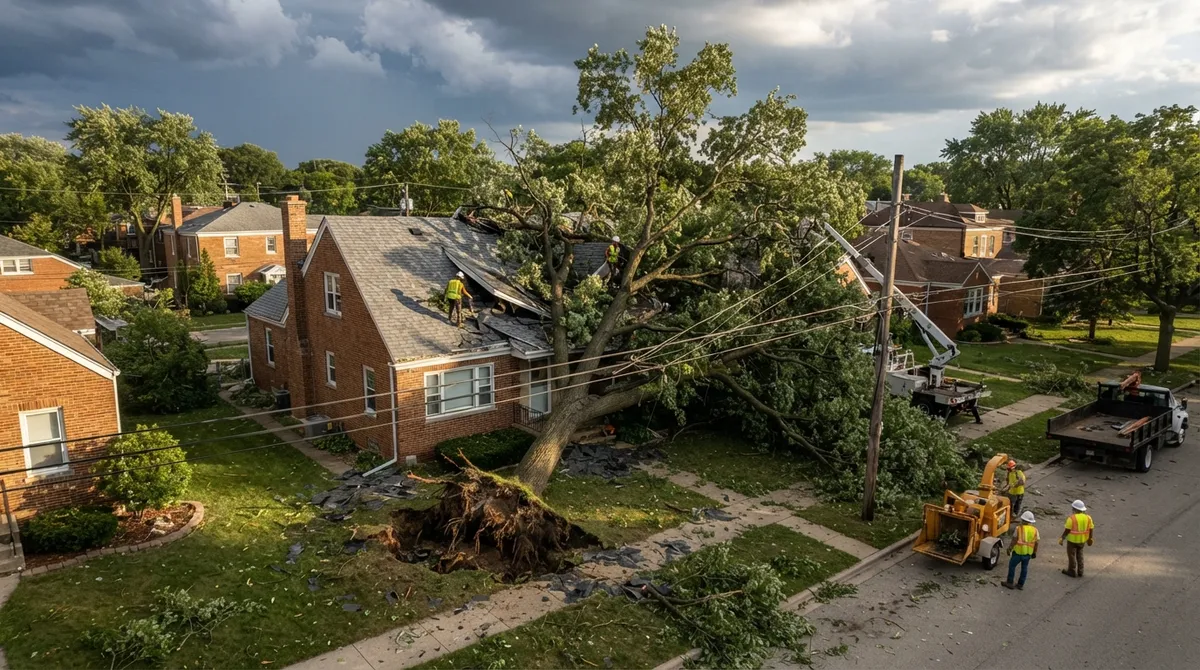
A storm rolls through Chicagoland, and suddenly there’s a massive oak leaning on your garage. Your heart races. Who do you call first? What do you do while you wait? These are the exact moments when knowing the facts about emergency tree removal can protect your family, your property, and your wallet.
Whether you’re a homeowner in Naperville, a condo owner watching a rooftop planter tree crack in the wind, or a property manager responsible for a busy retail plaza, storm-damaged trees are stressful. This guide breaks down everything you need to know, from safety basics to insurance questions, so you feel confident and prepared. Let’s walk through it together, one friendly step at a time.
1. Know What Actually Counts as an Emergency
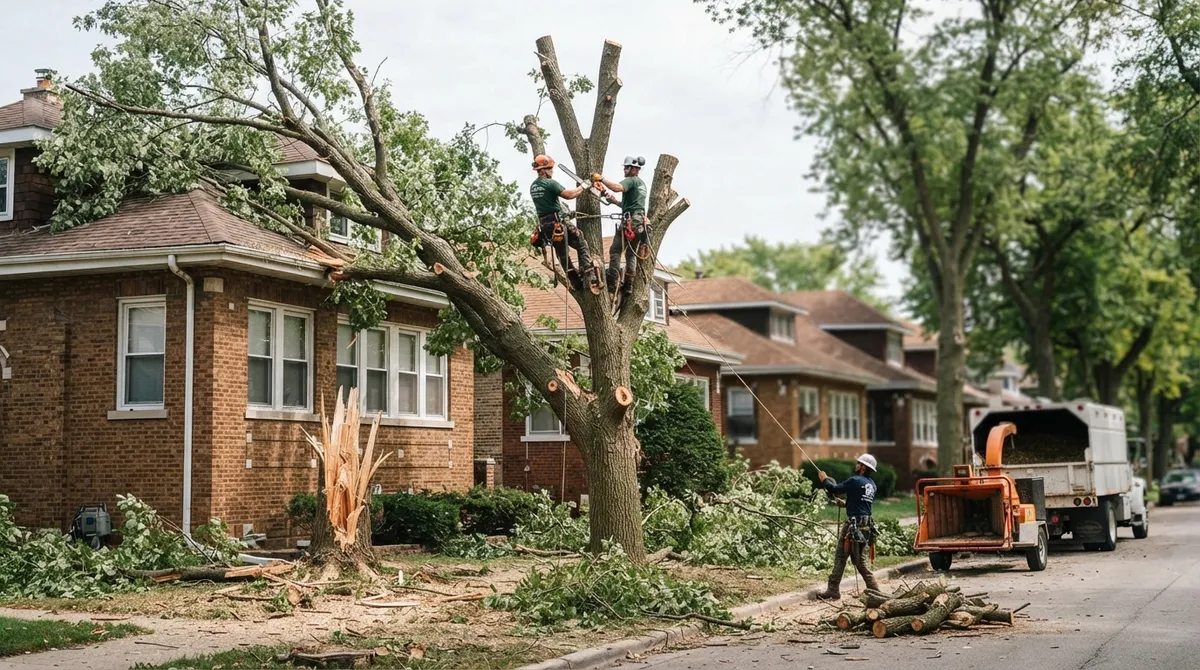
Not every wobbly branch is a five-alarm situation, but some clearly are. Emergency tree removal covers trees and limbs that threaten people, homes, cars, power lines, or roads right now, not next month.
Common triggers include:
- A tree that has fallen onto a house, garage, deck, or fence
- A split or cracked trunk that looks ready to give way
- A tree uprooted and leaning after high winds
- Heavy limbs hanging loose after ice or snow damage
- A tree blocking your driveway, front door, or the only road out of your neighborhood
If any of these sound familiar, it’s time to treat the situation seriously and call in trained help right away.
2. Never Approach a Tree Touching Power Lines
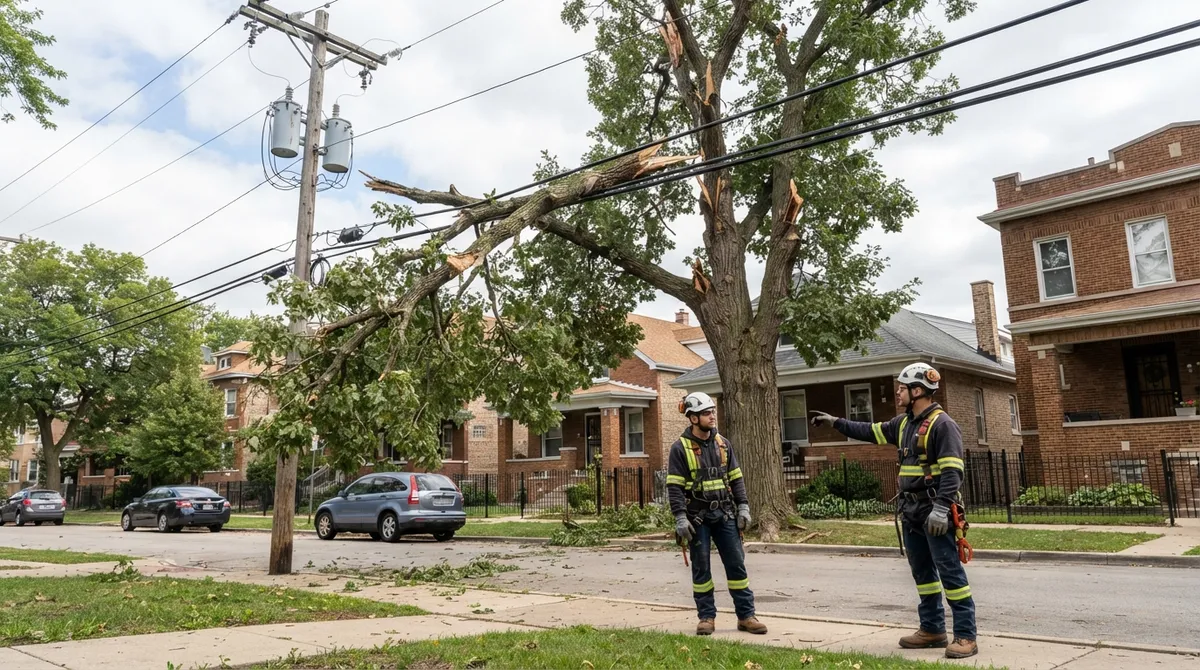
This one is simple but critical: stay far away from any tree or limb touching a power line. Downed lines can carry live current even if they look harmless, and that electricity can travel through a wet tree, wet ground, or metal fencing nearby.
According to FEMA’s disaster guidance, homeowners should wait for trained professionals whenever cables are visible near storm damage. Call your utility company immediately, then keep kids, pets, and neighbors away from the area until crews confirm it’s safe.
3. Take These First Steps Before Help Arrives
Once you’ve moved everyone away from danger, there are a few smart moves that make the rest of the process much smoother.
- Move people and pets away from the fallen tree or leaning limbs
- Avoid entering any structure the tree has damaged until it’s inspected
- Take photos and short videos of the damage from multiple angles
- Contact your utility company if lines are involved
- Call your homeowners insurance company to start documenting the claim
- Reach out to a qualified emergency tree removal team for an assessment
This simple checklist protects your safety first and your insurance claim second, which is exactly the right order.
4. Understand That Not Every Damaged Tree Needs Full Removal
Here’s some good news: a storm-damaged tree doesn’t always mean total removal. A trained arborist can often tell the difference between a tree that’s truly done and one that can be saved.
A professional assessment usually looks at:
- Whether the trunk is cracked all the way through or just superficially damaged
- How much of the root system has been pulled from the ground
- Whether cabling or bracing could stabilize a leaning tree
- If sectional limb removal solves the immediate hazard
- Whether the tree’s location near structures makes any repair too risky
Sometimes a skilled crew can save a beautiful old tree with the right stabilization work instead of cutting it down completely. This is where experience really matters, and it’s part of why homeowners across the Chicago suburbs trust seasoned teams for these calls.
5. Know Who You’re Hiring: Qualifications That Matter
When a tree is hanging over your roof, you want more than a guy with a chainsaw and a truck. Emergency tree work involves real risk, so credentials matter.
Look for these qualities in any emergency tree removal provider:
- Trained arborists with hands-on storm response experience
- Proper liability insurance and workers’ compensation coverage
- Specialized equipment like rigging gear, cranes, or bucket trucks for tricky removals
- Wood chippers and haul-away trucks for fast debris cleanup
- Clear communication about safety plans before work begins
- Hazardous trees at least 6 inches in diameter (measured 4.5 feet above ground) may be eligible in some programs
- Limbs at least 2 inches in diameter may meet certain hazardous-limb thresholds
- Stumps wider than 24 inches (measured 2 feet from the ground) sometimes qualify under specific hazardous-stump rules
- Emergency stabilization or immediate hazard removal
- Full tree removal versus sectional dismantling
- Stump grinding, if needed
- Debris hauling and disposal fees
- Repairs to fences, sheds, or hardscaping damaged by the fall
- Optional landscaping restoration once cleanup is complete
- Whether crane access, permits, or after-hours response are included in the price
- Replanting with storm-resistant tree species suited to Chicago’s climate
- Repairing damaged pavers or walkways crushed during the fall
- Rebuilding or reinforcing nearby retaining walls if roots disturbed the soil
- Adding lighting to highlight the newly opened space
- Installing a fresh design that turns the empty spot into something beautiful, like a small garden bed or seating area
- Stay away from any tree touching power lines
- Document everything with photos before cleanup begins
- Call your insurance company early in the process
- Choose a provider with real arborist training and proper insurance
- Get a detailed written estimate before follow-up work starts
- Use the opportunity to restore and even improve your landscape afterward
A company that also handles broader landscaping services, like softscapes and yard restoration, can help you recover the whole space after the tree is gone, not just the immediate hazard.
6. Check Local Permit Rules Before Work Begins
Many Chicago-area municipalities protect certain trees, including heritage trees, parkway trees, or trees within regulated conservation zones. Removing these without a permit can lead to fines, even after a storm.
That said, most local ordinances include an immediate life-safety exception. If a tree is actively threatening a structure or blocking emergency access, crews can typically act first and handle paperwork after. A reputable company will know your municipality’s rules and help you stay compliant. Organizations like Landscape Illinois are a great resource for homeowners wanting to understand regional landscaping standards and best practices.
7. Learn What Insurance Typically Covers (and What It Doesn’t)
This is one of the most confusing parts of storm recovery, so let’s simplify it. FEMA guidance is clear that private property debris removal is generally the property owner’s responsibility, not something federal disaster programs typically pay for directly.
Here’s a quick breakdown of what’s usually covered versus what usually isn’t:
| Situation | Typically Covered By |
|---|---|
| Tree fell on your house or garage | Homeowners insurance (dwelling coverage) |
| Tree fell in the yard, no structure damage | Often NOT covered; owner’s responsibility |
| Tree blocking your only driveway or entrance | Sometimes covered under debris removal clauses |
| Storm debris removal after major disaster declaration | May qualify for local or FEMA-coordinated assistance in rare cases |
Always call your insurance agent before assuming coverage either way. And remember, FEMA advises keeping photos, videos, and receipts, since documentation is often required for any claim or assistance request.
8. Understand FEMA’s Hazardous Tree Guidelines
If a major storm triggers a federal disaster declaration, FEMA may apply specific size thresholds for reimbursement eligibility in certain programs. These numbers are helpful context, even though eligibility depends heavily on the specific disaster:
These are program guidelines, not guarantees. Your local emergency management office is the best source for current disaster-specific rules in your area.
9. Compare Emergency Removal to Routine Tree Trimming
People often ask about the difference between emergency tree removal and regular tree maintenance. It really comes down to urgency and risk level.
| Feature | Emergency Tree Removal | Routine Tree Trimming |
|---|---|---|
| Response time | Same day or within hours | Scheduled in advance |
| Risk level | High; immediate danger to people or property | Low; preventive maintenance |
| Typical triggers | Storms, splits, uprooting, power line contact | Seasonal growth, aesthetics, health checks |
| Equipment needs | Cranes, rigging, bucket trucks | Basic pruning tools, ladders |
| Cost structure | Often higher due to urgency and complexity | Standard, predictable pricing |
Regular trimming actually helps prevent emergencies down the road by removing weak limbs before storms hit. It’s a smart habit to build into your yearly outdoor maintenance plan, alongside services like commercial lawn maintenance for business properties.
10. Get a Written Estimate That Covers Everything
Once the immediate danger has passed, you’ll want a written estimate before any follow-up work begins. A trustworthy company will break down the full scope, not just the initial removal.
Make sure the estimate addresses:
Because pricing varies so much by tree size, access, and damage level, there’s no single “normal” price nationwide. Getting everything in writing protects you from surprise charges later.
11. Restore Your Landscape After the Danger Is Gone
Once the hazardous tree is handled, many homeowners find themselves with a gap in their yard, or worse, damage to nearby pavers, retaining walls, or lawn areas. This is actually a great opportunity to reimagine the space.
Consider these follow-up options:
A full-service landscaping team can guide you through this entire journey, from the first emergency call to the final beautiful reveal. This is exactly the kind of comprehensive support that Serenity Landscape Group has provided to Chicagoland homeowners and businesses for over two decades.
Why Fast, Professional Response Matters So Much
Storms don’t wait for convenient timing, and neither should your response plan. A quick, professional emergency tree removal can prevent a bad situation from becoming a much worse one, whether that’s a small crack turning into a full collapse or a blocked driveway delaying emergency vehicle access.
Working with a certified, insured team also protects you legally and financially. Groups like the ICPI Certified Installer network highlight how important proper training and certification are across the hardscaping and landscaping industry, and the same logic applies to tree removal crews.
Here’s a quick recap of the smartest actions to take:
Ready to Protect Your Property?
Storm damage is stressful, but you don’t have to handle it alone. Our team understands the unique challenges Chicago weather brings to your trees, lawns, and hardscaping, and we’re here to help you respond quickly and rebuild beautifully. If you’re dealing with a hazardous tree or storm damage right now, please call us at (630) 359-5139 for fast, friendly guidance.
And once the immediate danger has passed, let’s talk about turning that empty space into something wonderful. Get a Free Estimate today, and let’s start building the outdoor space you’ll love for years to come.
FAQs
Q: What qualifies as an emergency tree removal?
A: An emergency usually means a tree or limb is threatening people, a home, a car, power lines, or blocking access to your property right now. Think fallen trees, split trunks, or heavy limbs hanging after a storm. If it feels urgent and dangerous, it’s worth calling a professional right away.
Q: How much does emergency tree removal cost?
A: Honestly, there’s no single answer here since pricing depends on tree size, damage severity, access, and whether utility lines are involved. Getting a written estimate that breaks down removal, stump grinding, and cleanup helps you understand exactly what you’re paying for. We’re always happy to walk you through pricing during your assessment.
Q: What should I do if a tree falls on my house?
A: First, get everyone away from the area and don’t go back inside until it’s been inspected for structural safety. Snap some photos for your insurance claim, then call your insurance company and a trusted tree removal team. Try to stay calm, this is exactly the kind of situation trained professionals handle every day.
Q: Does homeowners insurance cover emergency tree removal?
A: It often does when the tree has damaged your home, garage, or another covered structure, but coverage varies by policy. If the tree simply fell in the yard without hitting anything, it’s typically your responsibility. Your insurance agent can give you the clearest answer for your specific situation.
Q: Can I remove a storm-damaged tree myself?
A: We’d gently discourage it, especially if the tree is large, leaning, or anywhere near power lines. These situations involve real risks like unpredictable weight shifts and hidden structural damage. It’s much safer, and often faster in the long run, to let a trained crew handle it.