Key Takeaways
-
Professional fireplace installation requires site planning, utility coordination, permitting, and masonry work—it is not a DIY project and local codes vary significantly by town.
-
Gas fireplaces are ideal for busy households and commercial patios due to minimal maintenance and instant on/off capability, while wood-burning units offer classic ambiance but require ash removal and spark protection.
-
NFPA safety guidelines recommend placing fireplaces at least 10 feet from combustible materials, with 3-foot child/pet-free zones, though local codes may require 15–25 foot setbacks from structures.
-
Key cost drivers include fuel type and gas line installation, fireplace size and height, masonry materials, site conditions, permits, and add-ons like seating walls or pergolas.
-
Proper placement requires evaluating drainage, soil stability, tree canopy height, prevailing wind direction, and existing landscaping to ensure safety and integrate the fireplace seamlessly into your yard.
-
After installation, practice simple safety habits: never leave fires unattended, use spark screens for wood-burning units, and maintain at least 3 feet of clearance from children and pets during operation.
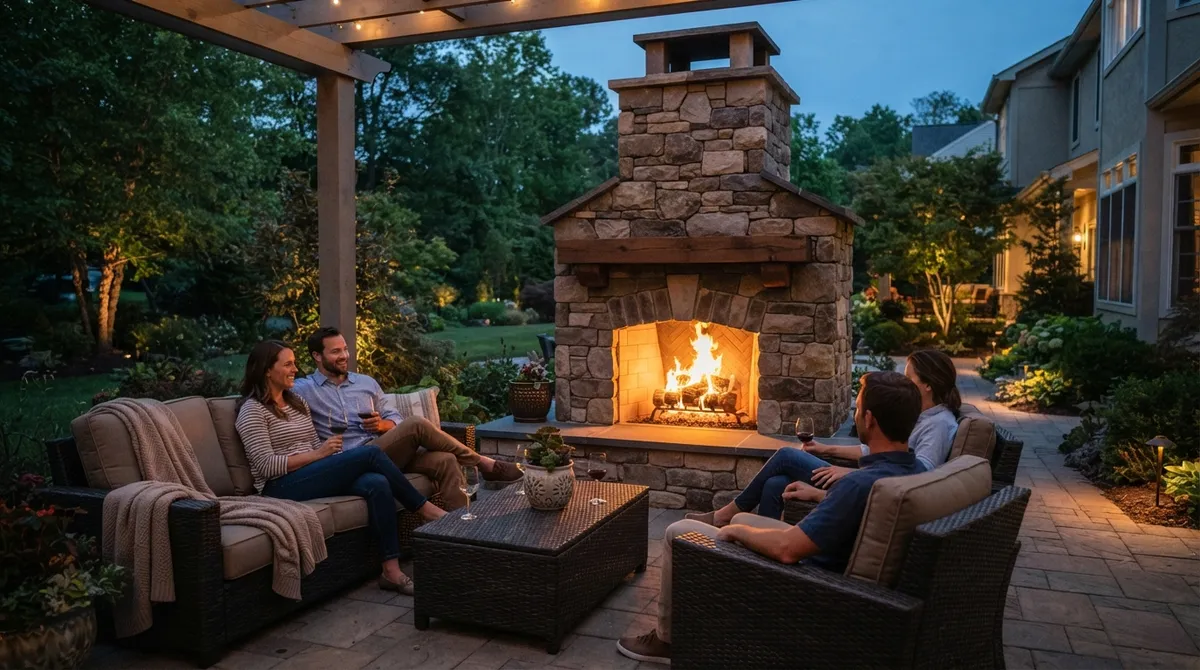
Picture this: it’s a cool October evening in Naperville, and you’re relaxing on your patio with friends, warmed by a crackling fireplace built right into your outdoor living space. No trip to a hotel lobby needed. That kind of moment is exactly why so many Chicago-area homeowners are asking about fireplace installation for their own backyards. It’s one of the most rewarding upgrades you can make to a patio, and it stretches your outdoor season by months.
But building a safe, beautiful, code-compliant outdoor fireplace is not a weekend DIY project. It involves site planning, gas or wood-burning systems, masonry work, and local permitting rules that change from town to town. Whether you live in a Naperville subdivision, manage a Chicago rooftop terrace, or run a restaurant patio in a busy suburb, this guide will walk you through exactly what goes into a proper installation. We will also share the safety numbers, cost factors, and design choices that matter most, so you can plan with confidence.
What Is Fireplace Installation in Landscaping?
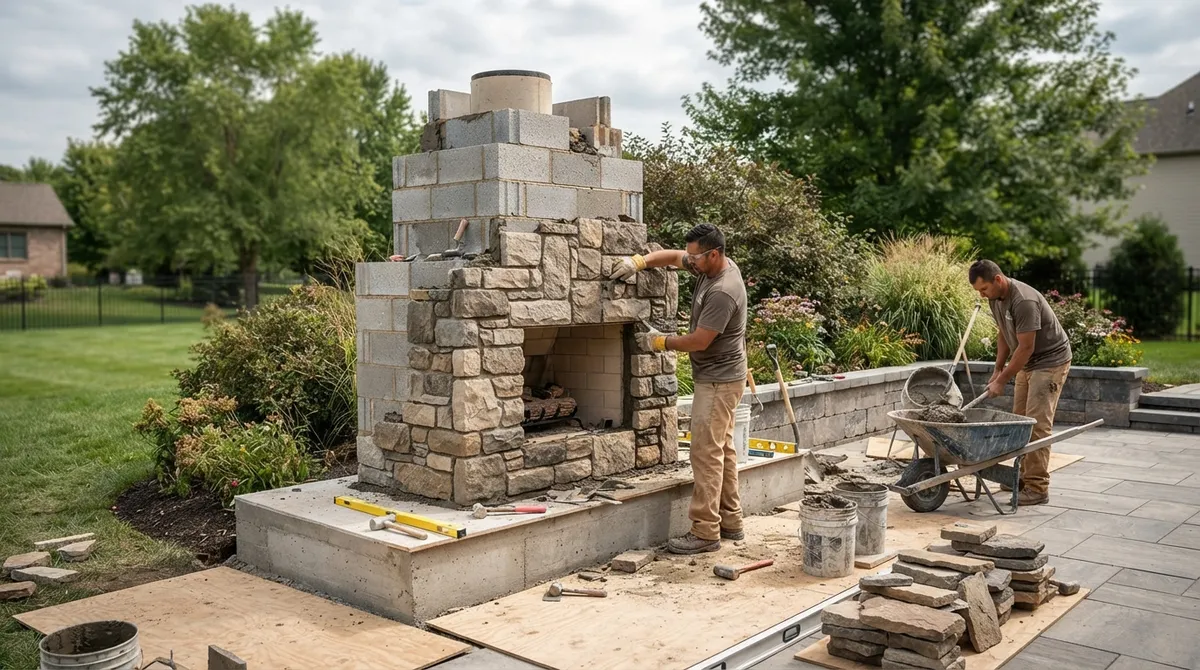
In the world of landscaping and outdoor living, fireplace installation means designing and building a permanent fireplace as part of your patio, outdoor kitchen, or backyard retreat. Unlike a portable fire pit, this is a fixed structure built into your hardscape design. It can run on wood, natural gas, or liquid propane, depending on your preference and local rules.
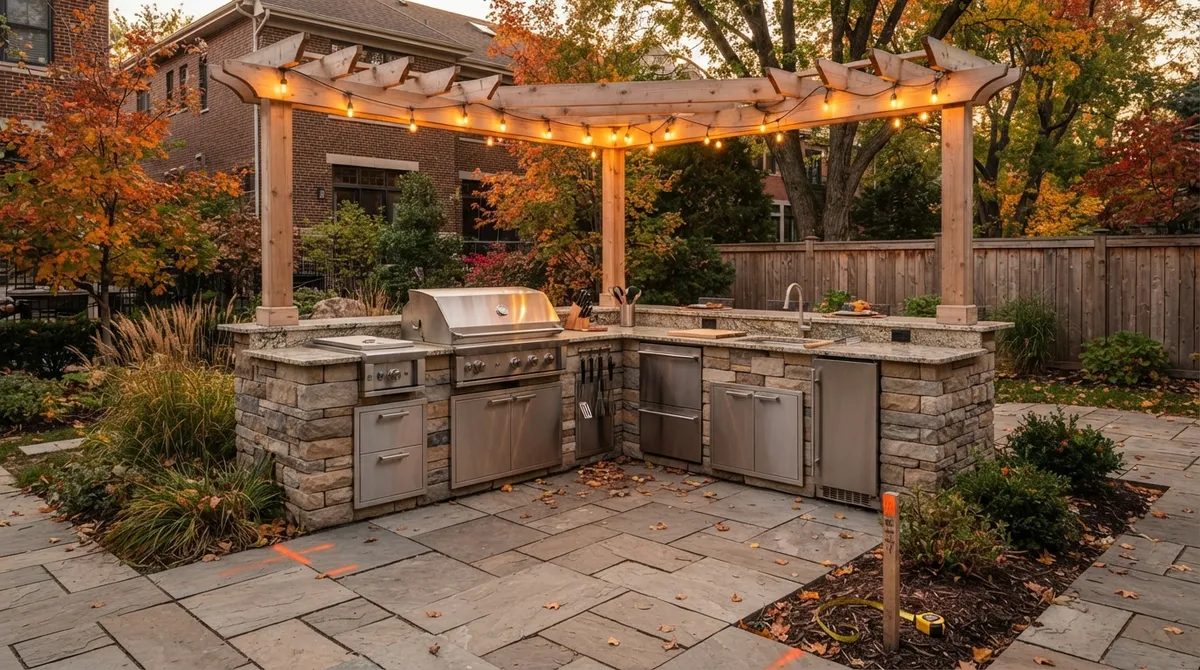
A true outdoor fireplace becomes a permanent feature of your landscape, much like a retaining wall or paver patio. It anchors your seating area, adds a focal point, and often becomes the reason your family gathers outside more often. Many of our clients pair their new fireplace with pavers, a pergola, and outdoor lighting to create one complete, cohesive space.
Why Homeowners and Businesses Choose Outdoor Fireplaces
People invest in outdoor fireplaces for more than just warmth. Here are the top reasons our clients across Chicagoland ask for this upgrade:
- Extending patio season into fall and even winter evenings
- Creating a gathering spot for family and friends
- Boosting curb appeal and resale value for suburban homes
- Adding ambiance to restaurant patios and hotel courtyards
- Meeting HOA design standards with a polished, finished look
- Reducing insect activity and creating natural light without extra fixtures
For commercial properties, a well-placed fireplace can turn an ordinary courtyard into a memorable spot that keeps customers lingering longer. Small business owners in busy suburbs often see this as a smart way to stand out from the shop next door.
Wood-Burning vs Gas Fireplaces: Which Is Right for You
This is one of the first big decisions in any fireplace installation project. Both options have real advantages, and the right choice depends on your lifestyle, budget, and how much upkeep you want.
| Feature | Wood-Burning Fireplace | Gas Fireplace |
|---|---|---|
| Ambiance | Classic crackle and scent | Clean flame, instant on/off |
| Maintenance | Ash removal, wood storage | Minimal upkeep |
| Sparks | Requires spark arrester | Very few sparks |
| Installation Complexity | Chimney, draft, and venting design | Gas line coordination required |
| Code Considerations | May fall under NFPA 211 guidance | Must follow NFPA 54 or fuel-gas code |
| Best For | Homeowners who love tradition | Busy households and commercial patios |
Many of our suburban clients love the classic feel of a wood-burning fireplace, while condo owners and commercial property managers often prefer gas for its convenience and cleaner operation.
The Step-by-Step Fireplace Installation Process
A professional installation follows a clear sequence to keep your project safe, durable, and code-compliant. Here is how our team typically approaches it:
- Site assessment. We check drainage, soil stability, sun exposure, wind patterns, and access for materials.
- Design and utility coordination. We plan the fireplace size, style, and fuel type, and coordinate any gas line or electrical work needed.
- Permitting. We confirm building, fire, zoning, and HOA requirements before any digging begins.
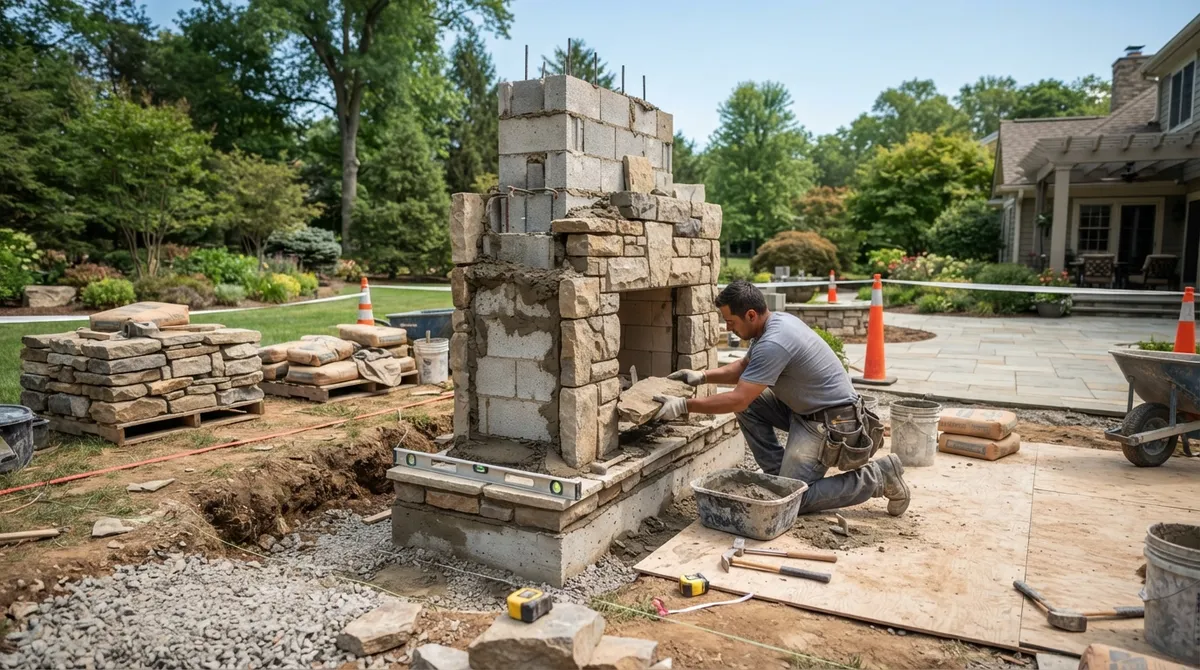
- Foundation work. A noncombustible, level base is poured to support the structure and resist frost movement.
- Firebox construction. The core burning chamber is built to handle heat safely and direct smoke properly.
- Chimney or venting installation. Proper height and draft are calculated to keep smoke moving up and away from seating areas.
- Spark protection. Screens or safety features are added for wood-burning units.
- Finish masonry. Stone, brick, or stucco veneer is applied to match your home and hardscape design.
- Landscape integration. The fireplace is tied into surrounding patios, plantings, and lighting for a finished look.
- Final inspection. Local inspectors confirm everything meets code before you enjoy your first fire.
This process is very similar in spirit to how our team approaches fire pit installations, though fireplaces involve more permanent masonry and venting work.
Safety Distances and Local Codes You Need to Know
Safety rules are not one-size-fits-all, and this is one area where local research really pays off. Here are some key numbers to keep in mind, though your town’s rules always come first.
- NFPA recommends outdoor fire features sit at least 10 feet from anything that can burn
- NFPA also recommends a 3-foot child- and pet-free zone around any outdoor fire feature
- Some municipal codes require setbacks of 10, 15, or even 25 feet from structures
- Certain fuel areas are limited to about 3 feet in diameter and 2 feet in height by local rule
- Some jurisdictions prohibit operation when winds exceed 10 mph
- NFPA 1 jurisdictions may require permits and, in some cases, a 50-foot setback for open burning
Because these numbers vary so much by city and county, always confirm with your local building and fire departments before construction begins. A trusted contractor should handle this research for you rather than leave you guessing.
Keeping the Fireplace Safe Around Your Landscape
Your fireplace also needs to play nicely with the rest of your yard. Keep these clearance points in mind:
- Stay clear of siding, decks, fences, roofs, and eaves
- Avoid placing the unit under overhanging branches or dry vegetation
- Keep exterior air intakes and vents away from smoke paths
- Use fire-resistant hardscape materials nearby, not mulch or dry plantings
- Maintain defensible space so embers cannot reach flammable landscaping
- Fuel type and whether new gas lines are needed
- Size and height of the fireplace and chimney
- Masonry materials, such as natural stone versus manufactured veneer
- Site conditions, including soil, slope, and existing patio surfaces
- Permit fees and inspection requirements in your municipality
- Add-ons like seating walls, lighting, or a connected pergola
- Natural stone for a timeless, upscale look
- Brick for a classic, warm feel that suits older Chicago-area homes
- Stucco or manufactured veneer for a modern, budget-friendly option
- Concrete block cores finished with decorative facing for durability
- Fuel type and appliance or masonry design
- Exact dimensions and materials
- Foundation and venting or chimney approach
- Gas and electrical scope of work
- Permit responsibilities and inspection timeline
- Warranty details and estimated schedule
- Restoration plan for any disturbed landscaping
- Never leave a lit fireplace unattended, even for a few minutes
- Fully extinguish the fire before leaving the area
- Skip outdoor fires during windy or very dry conditions
- Use a spark screen for wood-burning fires
- Burn only clean, seasoned hardwood
- Keep children and pets at least 3 feet away from the flame
Our designers think about smoke direction, seating circulation, and privacy when placing a fireplace, much like we do when planning softscape layouts around a new feature.
What Affects the Cost of Fireplace Installation
Costs vary widely based on size, materials, and fuel type. Here are the biggest cost drivers our clients ask about:
Building on an existing concrete patio can sometimes reduce costs, though the slab must be inspected for level, stability, and proper drainage first. If you are also considering a full patio refresh, our article on how pavers transform outdoor space style and durability is a great next read.
Choosing Materials That Match Your Style
The material you choose shapes both the look and lifespan of your fireplace. Popular choices include:
Working with an ICPI Certified Installer ensures your masonry work meets industry standards for strength and longevity. Pairing your fireplace with matching pavers or a retaining wall creates a unified look across your whole backyard.
Planning for Trees, Decks, and Existing Landscaping
Many homeowners already have mature trees, decks, or gardens they love. The good news is a fireplace can usually be designed around these features with smart placement. Our team evaluates canopy height, root zones, and prevailing wind direction before finalizing a location. This keeps your existing landscaping safe while still giving you the cozy gathering spot you want. If you are unsure how a new fireplace might affect your yard’s overall design, our design process page walks through how we balance new features with what you already have.
Fireplace Installation for Commercial and Multi-Unit Properties
Commercial property managers and small business owners have their own set of considerations. Restaurant patios, hotel courtyards, and office plazas need fireplaces that are durable, low-maintenance, and appealing to a wide range of guests. Gas units are often preferred here because they turn on and off instantly and do not require staff to manage wood or ash. Stormwater management, ADA-compliant pathways, and lighting integration also matter more on commercial sites. Our commercial lawn maintenance team often works alongside our hardscape crews to keep these spaces looking sharp year-round.
Working With a Professional Landscape Contractor
A written proposal from your contractor should always spell out the details clearly. Look for these items before signing anything:
Groups like Landscape Illinois offer helpful resources for homeowners researching qualified professionals in our region. At Serenity Landscape Group, we walk every client through this proposal step by step so there are no surprises once construction begins. You can view examples of our completed work in our gallery of past projects.
Simple Safety Habits Once Your Fireplace Is Built
Once your fireplace is installed, a few simple habits keep everyone safe:
These habits come straight from national fire safety guidance and are easy to build into your routine once your new feature is part of your outdoor life.
Bringing It All Together
A great outdoor fireplace does more than provide heat. It becomes the heart of your backyard, patio, or commercial courtyard, drawing people together season after season. When it is designed thoughtfully and built by experienced hands, it adds lasting value, comfort, and beauty to your property. We have seen firsthand how a well-placed fireplace transforms an ordinary yard into the favorite spot for family dinners, quiet evenings, or lively gatherings with friends.
If you are ready to bring this kind of warmth and charm to your own outdoor space, our team at Serenity Landscape Group would love to help. We handle everything from initial design through permitting, construction, and final landscaping touches, so you can simply relax and enjoy the results. Get a Free Estimate today, or call us at (630) 359-5139 to start planning your dream outdoor fireplace.
FAQs
Q: How much does it cost to install an outdoor fireplace?
A: Costs really depend on size, materials, and whether you choose gas or wood. Simple designs on an existing patio cost less, while custom stone fireplaces with new gas lines run higher. We are always happy to walk through the numbers with you during a free estimate.
Q: Do I need a permit for an outdoor fireplace in my area?
A: In most Chicago-area towns, yes, you will need a permit, and requirements can vary a lot between cities. Our team checks local building, fire, and HOA rules for you before any work begins, so you never have to guess.
Q: What is the required distance between an outdoor fireplace and a house?
A: NFPA guidance suggests at least 10 feet from anything that can burn, but many local codes require 15 or even 25 feet. We always confirm your specific town’s rules before finalizing the design, so your fireplace is placed safely.
Q: Is a wood-burning or gas outdoor fireplace better for a patio?
A: It really comes down to your lifestyle. Wood-burning fireplaces offer that classic crackle and scent, while gas units are cleaner and easier to turn on and off. Many of our clients choose gas for convenience, especially on busy patios.
Q: Can an outdoor fireplace be built on an existing concrete patio?
A: Sometimes, yes, as long as the slab is level, stable, and properly draining. Our team inspects the existing surface first to make sure it can safely support the new structure before we start building.