Key Takeaways
-
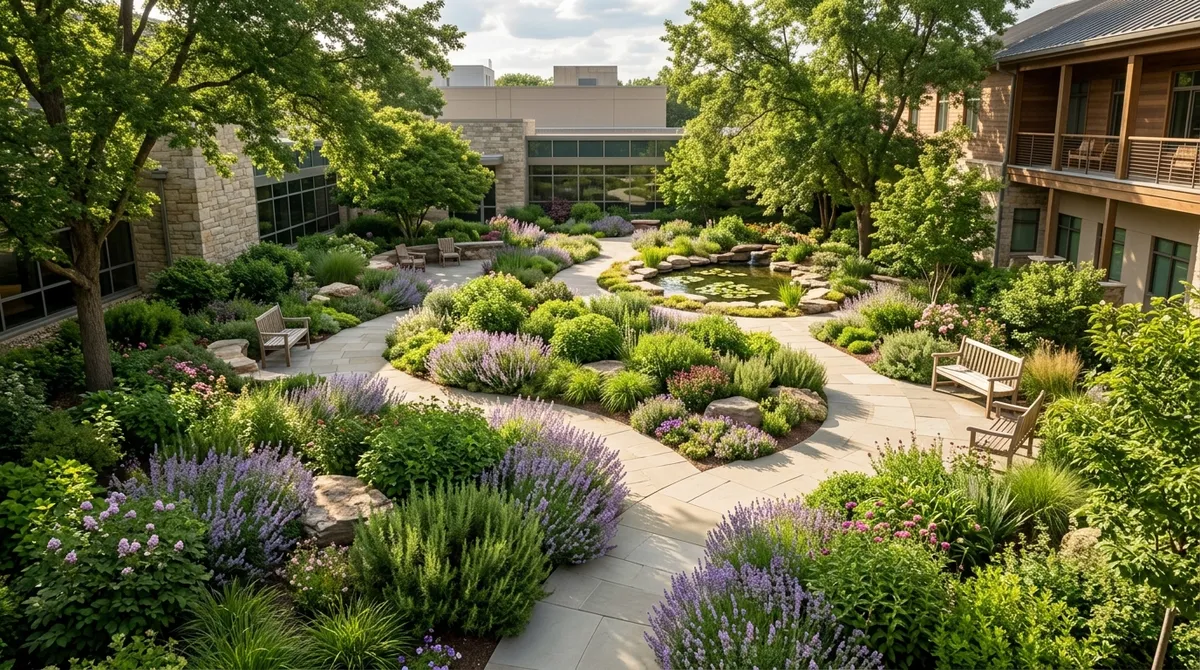
Maintain a 70% plants to 30% hardscape ratio in healing gardens to create a natural escape that feels restorative rather than clinical, as hardscape dominance eliminates the therapeutic quality patients need.
-
Choose therapeutic plants like lavender, rosemary, gardenias, and ornamental grasses that engage multiple senses and have calming effects, or use high-quality artificial turf to reduce allergens and maintenance while keeping spaces green year-round.
-
Design accessible pathways with smooth surfaces, 60+ inch widths for wheelchair and companion access, maximum 5% grade, and gently winding layouts that create exploration while meeting ADA compliance requirements.
-
Engage all five senses through seasonal blooms, water features for sound masking, fragrant plants, varied textures for touch, and edible herbs, plus strategic lighting to extend usable garden hours into evenings.
-
Distinguish between restorative gardens for passive enjoyment and enabling gardens for active participation, then consult healthcare teams to ensure the design type matches the facility's specific therapeutic and patient population needs.
-
Implement a professional maintenance plan with seasonal rotations, regular turf care, irrigation checks, and pathway inspections to preserve the garden's therapeutic benefits, as neglected spaces eliminate the healing impact research shows.
Healing gardens at hospitals are more than just pretty green spaces. They are carefully designed environments that help patients recover faster, reduce stress for staff, and offer comfort to visitors. If you manage a healthcare facility or commercial property in the Chicago area, you already know how important outdoor spaces can be. But designing a hospital healing garden turf space is very different from a standard lawn installation. There are specific rules, ratios, and plant choices that make these gardens truly therapeutic. Get them wrong, and you end up with a space that looks nice but does little to actually help people heal. Get them right, and you create something extraordinary. Let’s walk through the seven most common mistakes — and how to avoid every single one of them.
Mistake 1: Ignoring the 70/30 Plant-to-Hardscape Rule
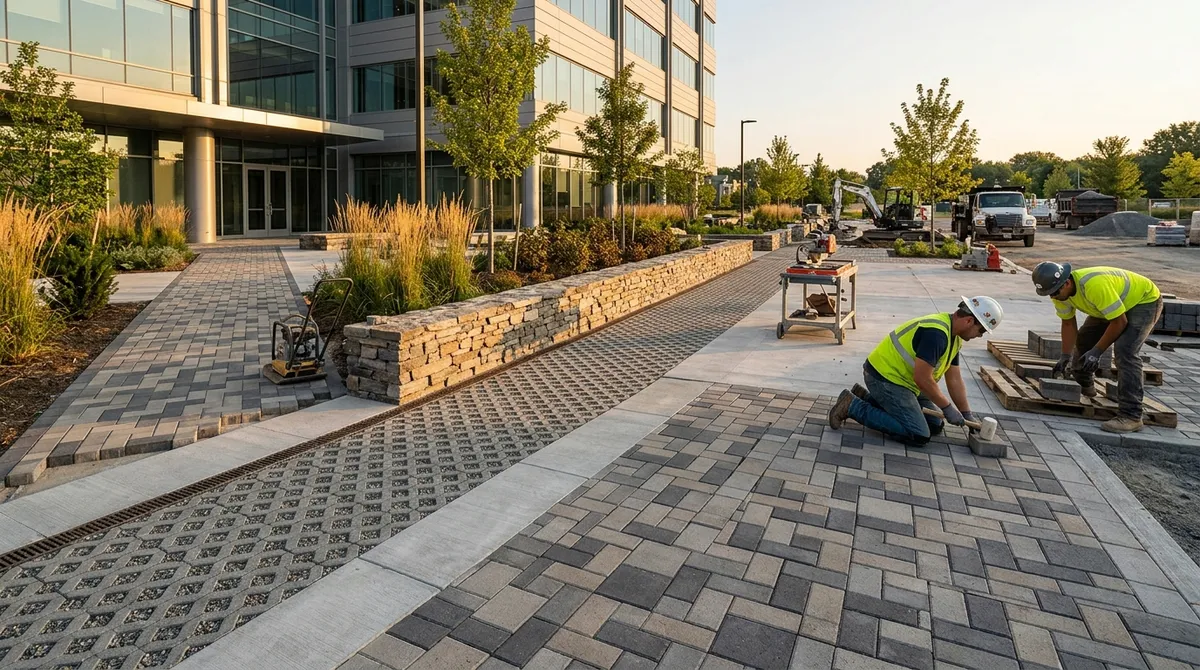
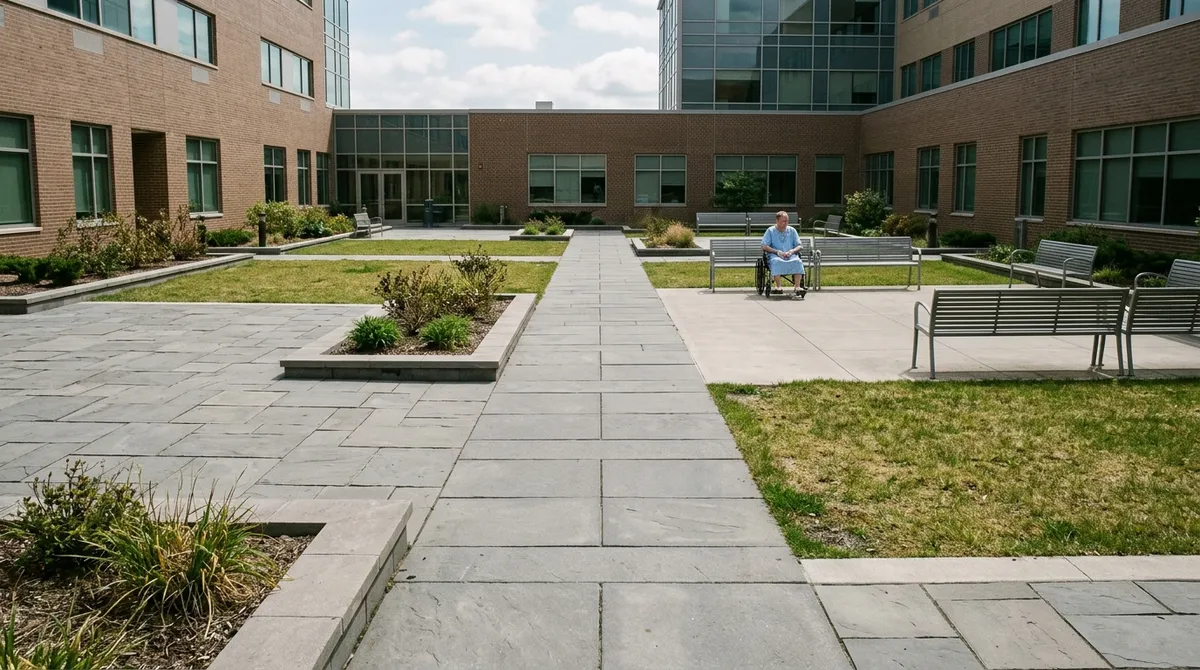
One of the biggest mistakes landscapers and property managers make is treating a healing garden like a standard commercial courtyard. They load it up with concrete, pavers, and benches — and forget that plants need to dominate. Expert guidelines recommend a 70% plants to 30% hardscape ratio. This balance is what makes a space feel like a natural escape rather than an extension of the hospital building itself.
When hardscape takes over, the space loses its restorative quality. Patients and visitors don’t feel like they’ve stepped away from the clinical environment. If you’re working on softscape design for a healthcare setting, always keep greenery as the star of the show. Your paver pathways and seating areas should support the greenery — not compete with it.
Mistake 2: Choosing the Wrong Turf and Plant Materials
Not all turf and plants work well in a therapeutic garden. Many landscapers simply install whatever grass or plants are in season without thinking about healing properties, sensory engagement, or patient safety. This is a costly mistake.
For hospital healing garden turf, you want plants that engage multiple senses and have a calming effect. Here are some excellent choices:
- Lavender — fragrant and visually soothing
- Rosemary — aromatic with strong sensory engagement
- Gardenias — beautiful fragrance for calming effects
- Azaleas — vibrant seasonal color without being overwhelming
- Ornamental grasses — gentle movement in the breeze adds a calming visual effect
- Sage and sweet marjoram — historically associated with healing traditions
- Roses — timeless beauty with soft fragrance
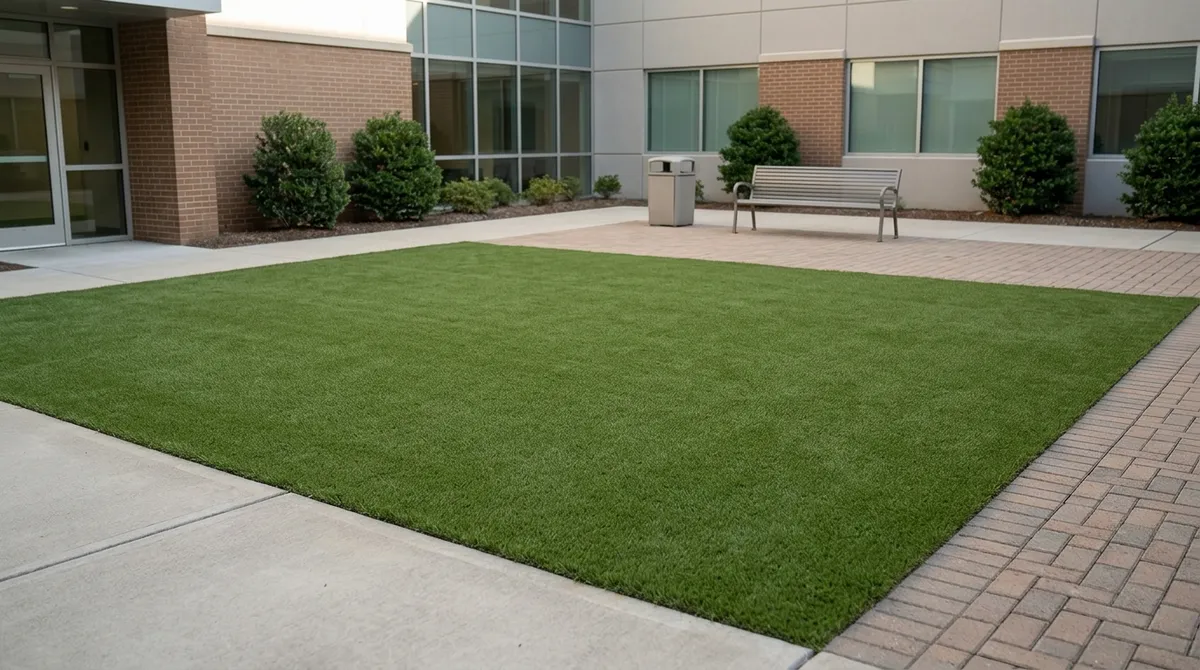
When it comes to turf, consider both natural grass and high-quality artificial turf installation. Artificial turf is a great option for hospital settings because it requires less maintenance, stays green year-round, and eliminates allergens from grass pollen — a real plus for patients with respiratory sensitivities.
Mistake 3: Designing Inaccessible Pathways
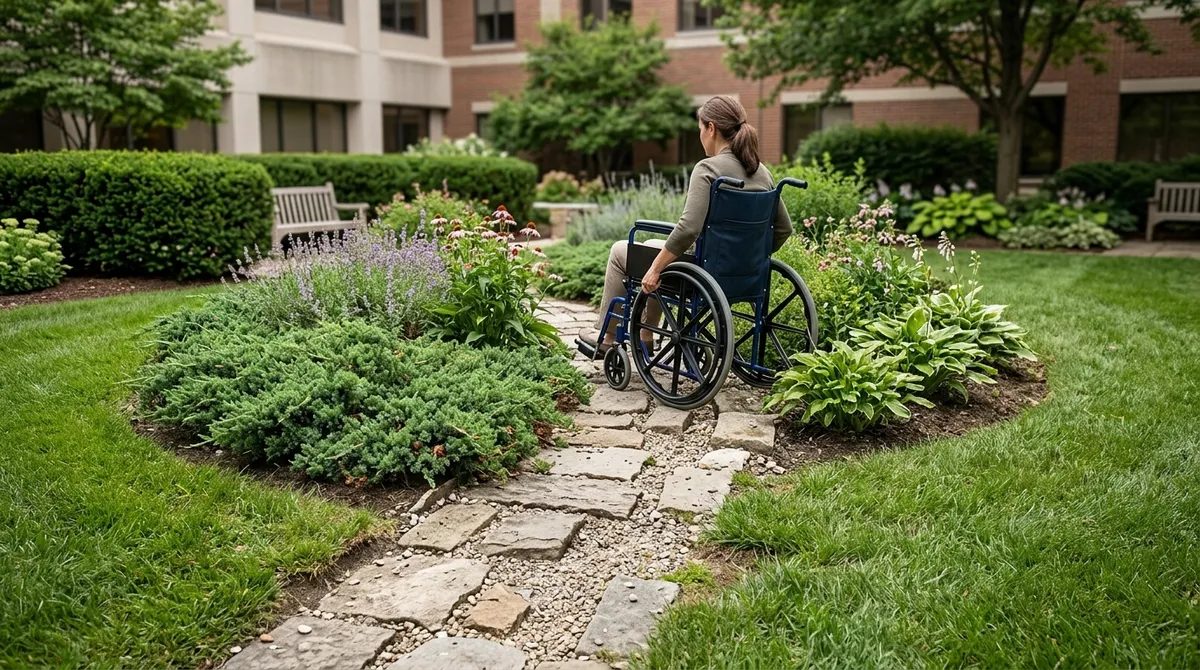
A healing garden that patients can’t easily navigate defeats its entire purpose. This is one of the most overlooked mistakes in hospital landscape design. Paths must be smooth enough that wheelchairs roll easily and IV poles don’t snag on uneven surfaces. They also need to be wide enough for a wheelchair and a companion to walk side by side.
| Pathway Feature | Standard Garden | Hospital Healing Garden |
|---|---|---|
| Surface material | Gravel or stepping stones | Smooth, compacted pavers or concrete |
| Path width | 24–36 inches | 60+ inches for wheelchair + companion |
| Path design | Straight or geometric | Gently winding for visual interest |
| Grade/slope | Up to 8% grade | Maximum 5% grade for ADA compliance |
| Edge treatment | Decorative borders | Safe, clear delineation from planting beds |
Winding paths are actually more therapeutic than straight ones — they create a sense of journey and exploration. Check out walkway paver design ideas for inspiration on creating beautiful, accessible paths that also look stunning.
Mistake 4: Skipping Sensory Design Elements
A healing garden should engage all five senses — not just sight. Many designers focus only on visual beauty and completely forget about sound, smell, touch, and even taste. This limits how therapeutic the space can truly be.
Here’s how to engage each sense in your hospital healing garden turf design:
- Sight: Seasonal blooms, layered planting heights, and contrasting colors create constant visual interest throughout the year.
- Sound: Water features like fountains or small streams mask hospital noise and provide a calming soundscape. Ornamental grasses also rustle gently in the breeze.
- Smell: Fragrant plants like lavender, rosemary, and gardenias create an immediate sensory shift away from clinical antiseptic smells.
- Touch: Smooth boulders, varied bark textures, and soft grasses invite tactile interaction along paths.
- Taste: In enabling garden designs, edible plants like herbs can offer patients the chance to participate in harvesting.
Don’t forget the value of lighting either. Thoughtful landscape lighting and sound can extend the usable hours of the garden into evenings, which is especially important for patients and families who need a quiet escape after dark.
Mistake 5: Confusing Restorative and Enabling Garden Types
This is a mistake that even experienced commercial landscapers sometimes make. There are two distinct types of healing gardens, and each serves a different purpose. Designing the wrong type for a facility’s specific needs wastes budget and misses the therapeutic mark entirely.
| Garden Type | How It Works | Best For |
|---|---|---|
| Restorative Garden | Passive enjoyment — walking, sitting, observing nature | General patient wards, staff break areas, visitor spaces |
| Enabling Garden | Active participation — planting, watering, harvesting | Rehabilitation units, long-term care, occupational therapy |
Before designing, always consult with the healthcare facility’s therapeutic and administrative teams to understand which type of garden fits their patient population. The right design makes a real difference in how much the space actually gets used and appreciated.
Mistake 6: Underestimating Limited Spaces
Many hospitals don’t have sprawling grounds. That doesn’t mean healing gardens are off the table. A common mistake is assuming that without a large footprint, a meaningful healing garden can’t be created. In reality, some of the most impactful hospital healing garden turf projects have been built in courtyards, rooftop terraces, atriums, and even repurposed parking areas.
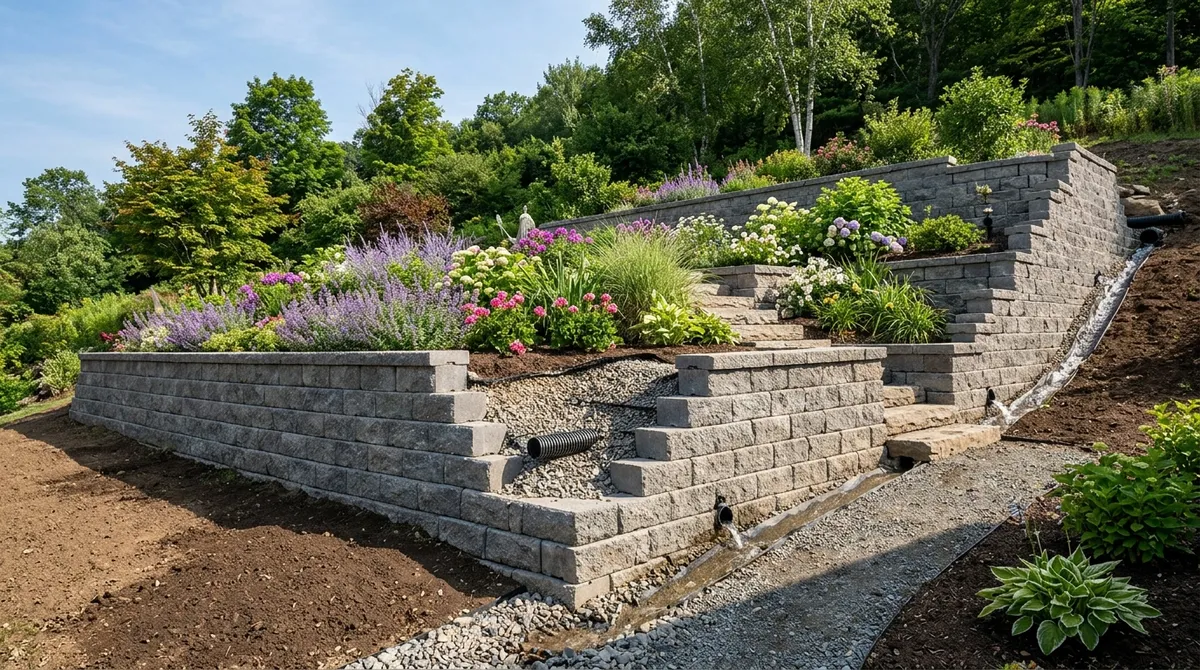
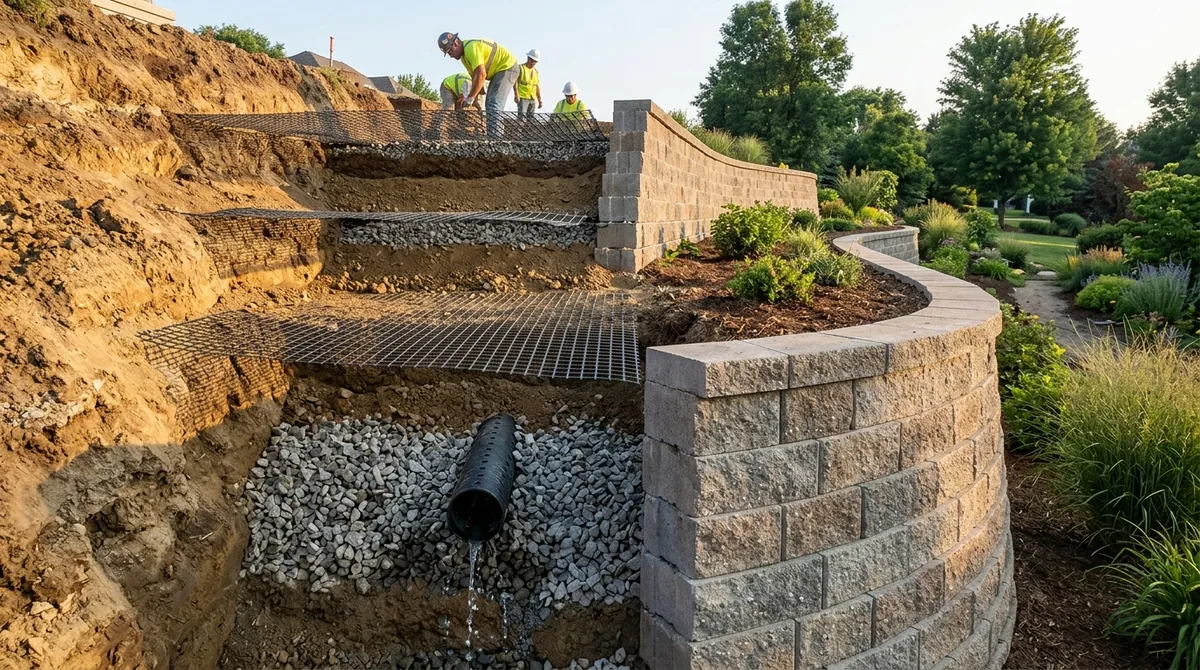
Consider Legacy Emanuel Medical Center’s Terrace Garden — a stunning 6,800 square-foot 24/7 public space built on a second-floor terrace. The key is thoughtful, vertical design thinking and smart plant layering. Retaining walls can create tiered planting levels that add depth and dimension even in tight spaces. Pergolas and pavilions add shade and shelter without consuming too much ground space.
For rooftop or elevated installations, weight-bearing considerations become critical. Always work with a licensed team experienced in commercial landscape design. Organizations like Landscape Illinois can help connect you with professionals who understand local codes and structural requirements.
Here are smart ways to maximize a small hospital outdoor space:
- Use vertical planting walls to increase greenery without expanding footprint
- Install raised planting beds for better accessibility and visual layering
- Choose compact, multi-season plants for maximum year-round impact
- Position the garden near interior windows so patients benefit from views even when they can’t go outside
- Use lightweight, high-quality artificial turf on elevated surfaces where natural grass isn’t viable
Mistake 7: Neglecting Maintenance Planning
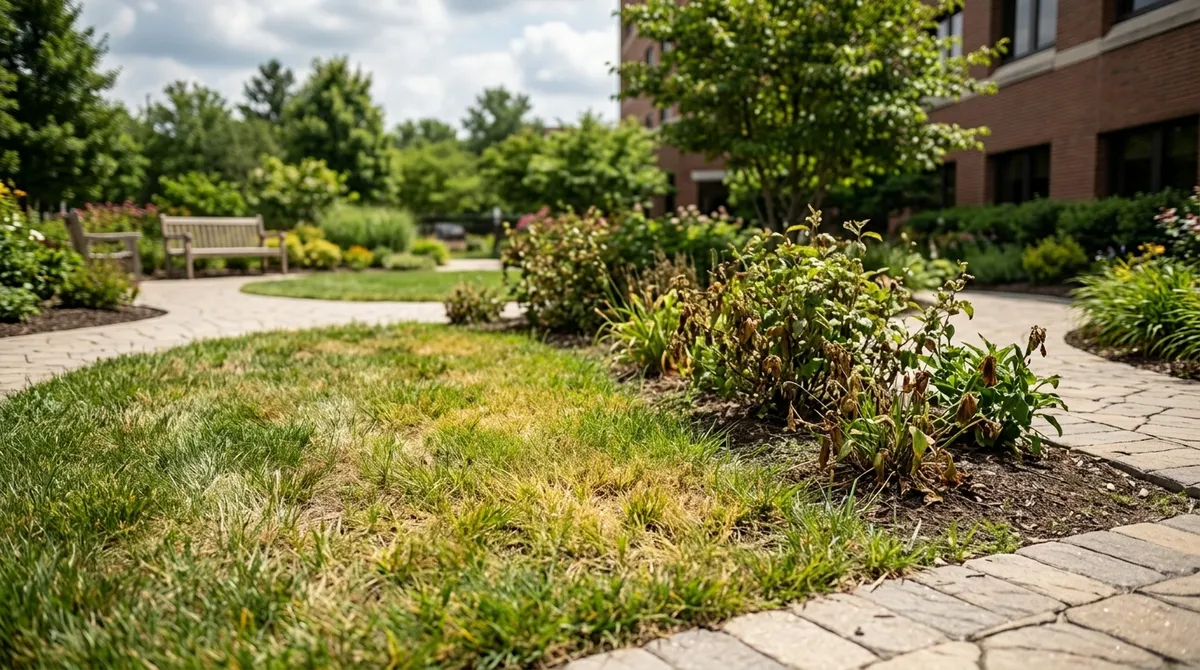
A healing garden that looks overgrown, dried out, or neglected sends exactly the wrong message in a healthcare setting. Yet many hospitals and property managers invest in a beautiful installation and then fail to plan for ongoing care. This is one of the most avoidable mistakes of all.
The science backs this up. A landmark 1984 study by environmental psychologist Roger Ulrich found that patients who had views of leafy green trees after gall bladder surgery recovered an average of one day faster, required less pain medication, and experienced fewer complications than those looking at brick walls. That benefit disappears the moment the garden starts to look neglected.
Ongoing maintenance should include:
- Seasonal planting rotations to ensure year-round color and visual interest
- Regular turf care — mowing, aerating, and overseeding for natural grass or cleaning for artificial turf
- Irrigation system checks to prevent drought stress on plants
- Pruning and deadheading to keep flowering plants looking their best
- Pathway inspections to ensure surfaces remain smooth and safe for wheelchair users
For commercial property managers in the Chicago area, partnering with a professional team for commercial lawn maintenance is the smartest way to protect your investment. A well-maintained healing garden consistently delivers on its therapeutic promise — season after season.
What the Research Tells Us About Healing Garden Design
The evidence for healing gardens is compelling and growing. Roger Ulrich’s pioneering research demonstrated real, measurable improvements in patient outcomes simply from access to natural views. His findings have been replicated and expanded upon by researchers around the world. In 2026, healthcare-focused landscape design is increasingly recognized as a clinical support tool — not just a nice-to-have aesthetic feature.
For commercial property managers, healthcare administrators, and even small business owners looking to create restorative outdoor environments, working with an experienced landscaping partner makes all the difference. At Serenity Landscape Group, we’ve spent over two decades creating landscape designs that transform spaces across the greater Chicago area — including therapeutic commercial environments that genuinely improve how people feel when they’re in them.
If you want to ensure your project is designed and built to the highest professional standards, look for installers certified through organizations like ICPI Certified Installers, especially for hardscape elements like accessible pathways and terraced planting areas.
Key Design Elements Worth Investing In
Not every feature in a healing garden carries equal weight. Here’s a quick breakdown of where to focus your budget for maximum therapeutic impact:
- Native and therapeutic plants — the foundation of any healing garden’s effectiveness
- Smooth, accessible paving — ensures all patients can benefit regardless of mobility
- Water features — among the highest-impact additions for sensory and stress relief
- Shade structures — critical for Chicago summers and for patients with light sensitivity
- Lighting — extends usability and adds beauty during evening hours
- Quality turf — whether natural or artificial, lush underfoot greenery anchors the whole design
For a deeper look at how hardscape and softscape elements come together in commercial projects, explore the gallery of our work to see real examples of thoughtful, professional landscape design in the Chicago area.
Conclusion
Designing a hospital healing garden turf space is one of the most meaningful and impactful commercial landscaping projects you can take on. When done right, these gardens genuinely help people feel better — they speed up recovery, reduce stress, and offer a moment of natural calm in a high-pressure environment. Avoiding these seven common mistakes puts you on the path to creating something truly restorative and beautiful.
Whether you’re a commercial property manager, a healthcare facility administrator, or a developer building medical campuses in the Chicago suburbs, Serenity Landscape Group is here to help every step of the way. Our experienced team understands the unique demands of therapeutic landscape design — from plant selection and accessible pathways to ongoing maintenance that keeps your garden looking its best year-round.
Ready to bring your healing garden vision to life? Request your free estimate today and let’s start creating an outdoor space that truly makes a difference — for your patients, your staff, and everyone who visits.
FAQs
Q: What is hospital healing garden turf and why does it matter?
A: Hospital healing garden turf refers to the carefully selected grass, ground cover, and green surfaces used in therapeutic outdoor spaces at healthcare facilities. It matters because lush, well-maintained turf creates the natural, calming atmosphere that research shows genuinely helps patients recover faster and reduces stress for staff and visitors.
Q: Should I use natural grass or artificial turf in a hospital healing garden?
A: Both options work well depending on the setting! Natural grass creates an authentic sensory experience, while high-quality artificial turf is a fantastic choice for rooftop terraces, atriums, or areas where maintenance resources are limited. Artificial turf also eliminates pollen — a real bonus for patients with respiratory conditions or allergies.
Q: What plants are best for a hospital healing garden in the Chicago area?
A: For Chicago’s climate, great choices include lavender, ornamental grasses, azaleas, rosemary, sage, and hardy roses. These plants offer sensory engagement through fragrance, texture, and seasonal color, and many of them handle the Midwest’s temperature swings remarkably well with proper care.
Q: How much does it cost to design and install a hospital healing garden?
A: Costs vary widely based on the size of the space, plant selection, accessibility features, and hardscape elements like pathways or water features. The best way to get an accurate picture is to schedule a free consultation with a professional landscaping team who can assess your specific site and goals.
Q: How do I keep a hospital healing garden looking great year-round in Chicago?
A: The key is a solid seasonal maintenance plan that includes rotating plantings for year-round color, regular turf care, irrigation system checks, and pathway inspections. Partnering with a professional commercial landscaping team ensures your healing garden always looks welcoming and restorative — no matter what season it is!