Key Takeaways
-
Choose synthetic turf for year-round practice with minimal maintenance, or natural grass for authentic feel requiring significant ongoing care like mowing, watering, and fertilizing.
-
Synthetic turf greens install in days and cost more upfront but require only occasional debris removal, while natural grass takes weeks to establish and demands frequent maintenance.
-
Backyard golf greens can range from simple single-hole setups to elaborate multi-hole layouts with bunkers, tee boxes, and elevation changes customized to your available space.
-
Custom chipping course designs maximize practice in small yards by placing multiple hitting areas around a central green, allowing chip and pitch practice from various angles.
-
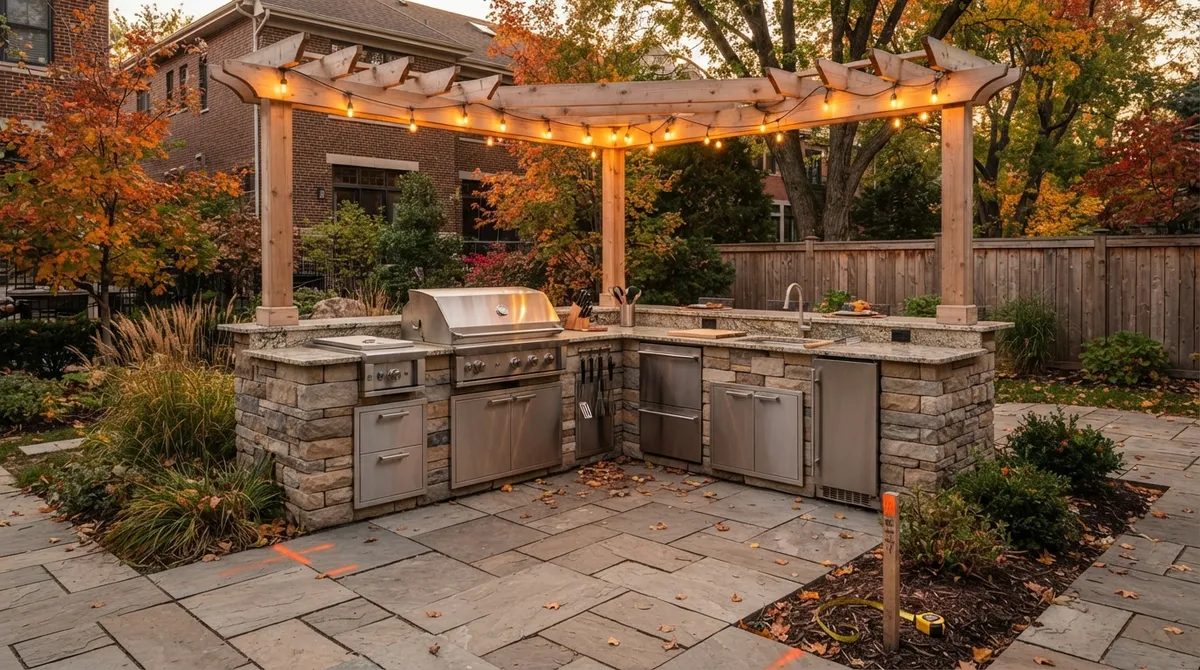
Pair your golf green with complementary features like paver pathways, retaining walls, outdoor lighting, and pergolas to create a cohesive backyard destination.
-
Work with a licensed, experienced landscaping team that holds professional certifications and can show completed projects to ensure proper site preparation and quality installation.
Imagine stepping into your backyard and having your own personal golf practice green ready to go. No driving to the range, no waiting, just pure practice at your own pace. Sounds amazing, right? More Chicago-area homeowners are making this dream a reality in 2026, and it’s easier than you might think. Whether you’re a weekend golfer or a serious player looking to sharpen your short game, a custom backyard golf practice green can transform your outdoor space into something truly special.
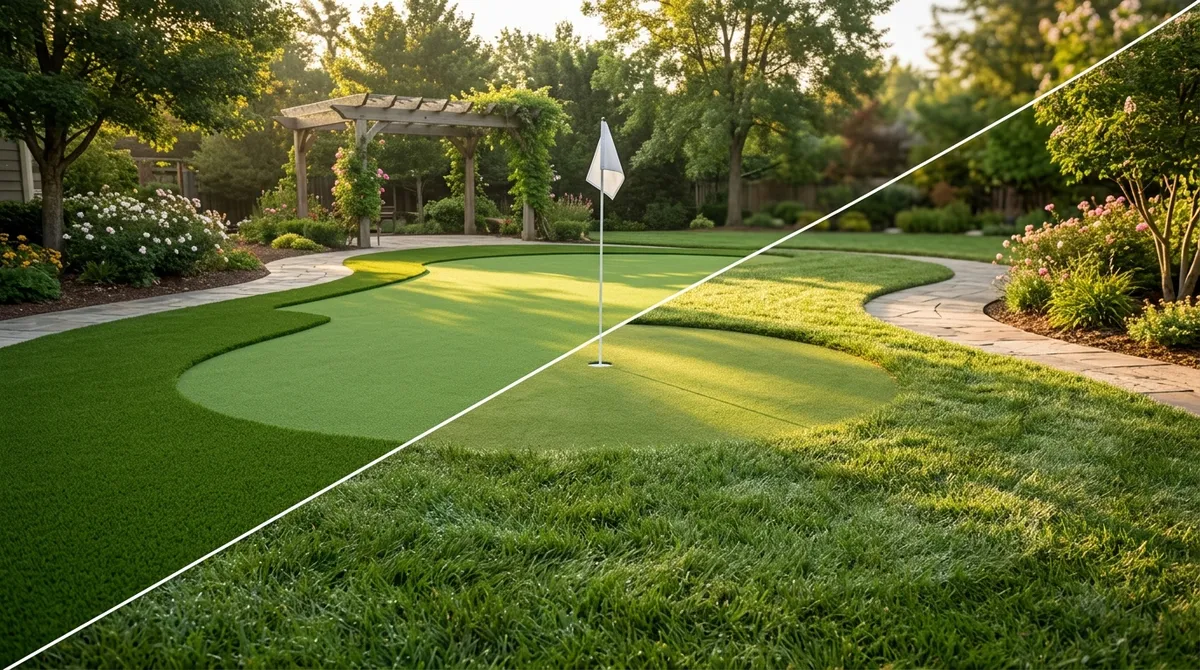
The big question most homeowners face is this: should you go with synthetic turf or natural grass? Both options have real advantages, and the right choice depends on your lifestyle, budget, and how much upkeep you want to handle. Let’s break it all down so you can make the best decision for your yard and your game.
What Are Backyard Golf Practice Greens?
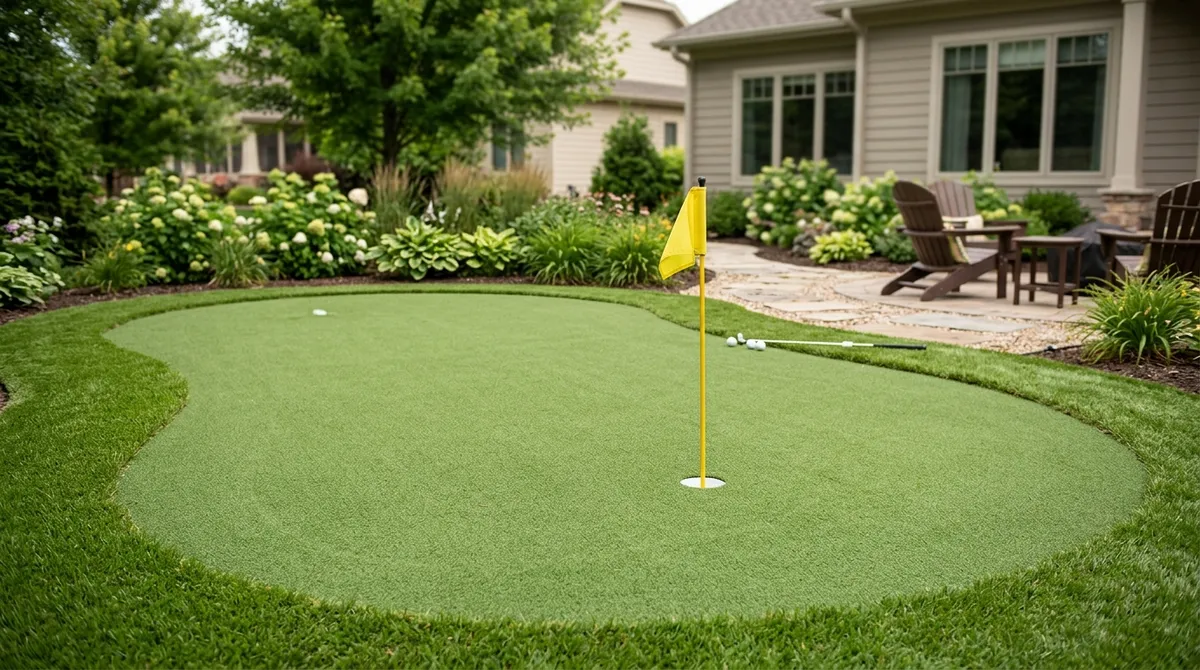
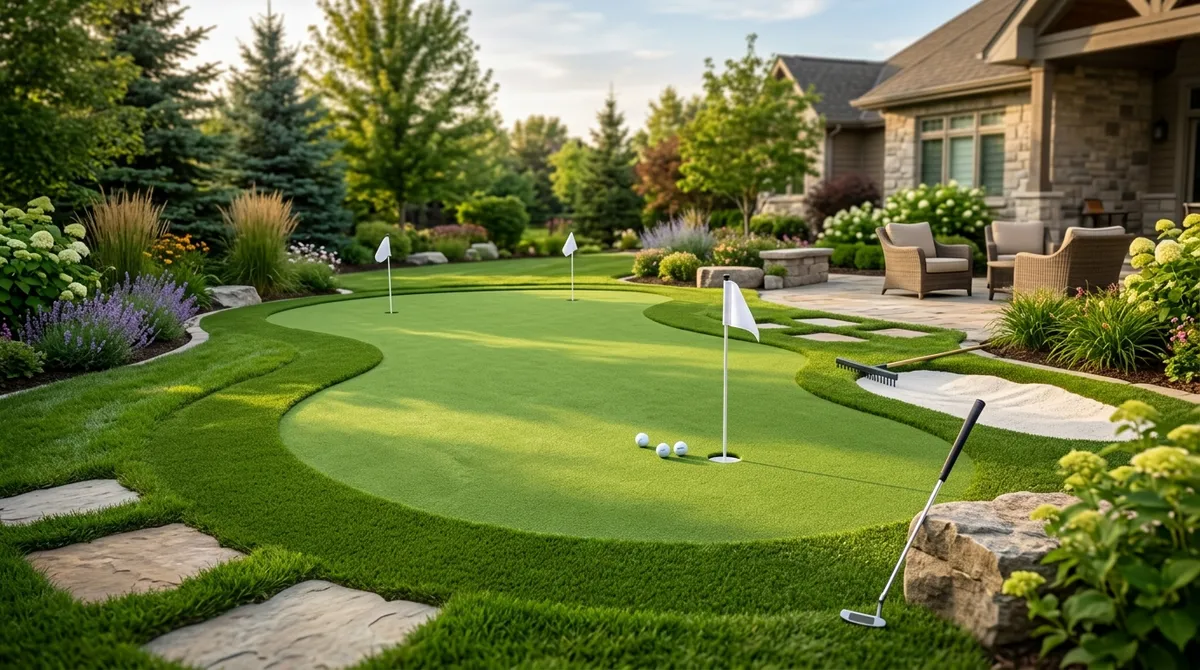
Backyard golf practice greens are custom-designed putting or chipping surfaces installed right in your yard. A professional landscaping team shapes and installs the surface to mimic a real golf green. You can practice your putting, chipping, and pitching without ever leaving home. These greens can be simple single-hole setups or elaborate multi-hole layouts with bunkers, tee boxes, and elevation changes.
Professional landscape designers can create everything from a small chipping corner to a full 18-hole par course. For example, some Chicago-area installations have featured five short game greens and nine tee boxes in a single backyard. The design possibilities are nearly endless, and a skilled landscaping team will tailor the layout to your available space and goals. You can explore more about what’s possible in our gallery of our work.
Synthetic Turf Putting Greens: The Pros and Cons
Synthetic turf has become the go-to choice for most backyard golf practice greens in the greater Chicago area. And honestly, it’s easy to see why. The technology behind modern artificial turf is impressive, and the results look and feel incredibly realistic.
Advantages of Synthetic Turf
- Very low maintenance: No mowing, watering, or fertilizing required.
- Consistent playing surface: The ball rolls the same way every time, so practice is more reliable.
- Durable in all weather: Handles Chicago’s cold winters and hot summers without deteriorating.
- Quick installation: Professional crews can complete most projects in just a few days.
- Customizable: You can add slopes, bunkers, multiple holes, and even tee boxes.
- Immediate use: You can start practicing right after installation.
- Great for small yards: Works beautifully even in compact suburban backyards.
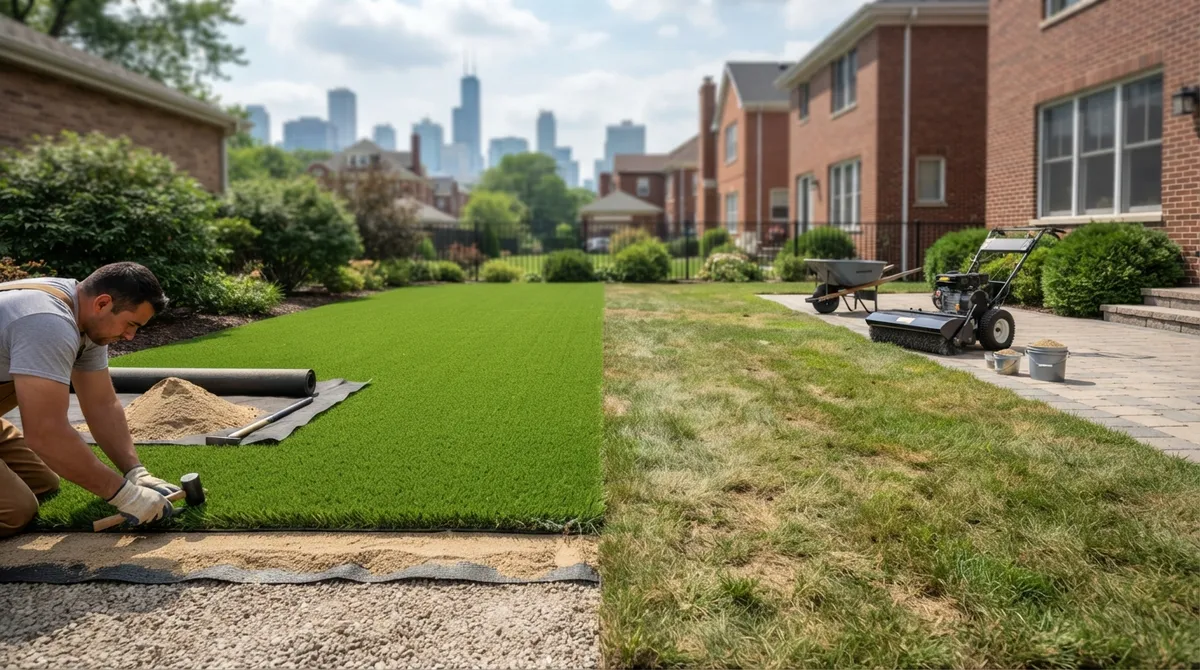
Our artificial turf installation service is designed to deliver a premium, realistic putting surface that blends naturally with the rest of your landscape design. We use high-quality materials that hold up year after year without fading or flattening.
Disadvantages of Synthetic Turf
- Higher upfront cost: The initial installation is more expensive than seeding natural grass.
- Can get warm in summer: Synthetic turf absorbs heat, so it may be uncomfortable on very hot days.
- Requires occasional cleaning: Debris, leaves, and pet waste need to be removed regularly.
- Not fully biodegradable: Some eco-conscious homeowners prefer natural options.
Natural Grass Putting Greens: The Pros and Cons
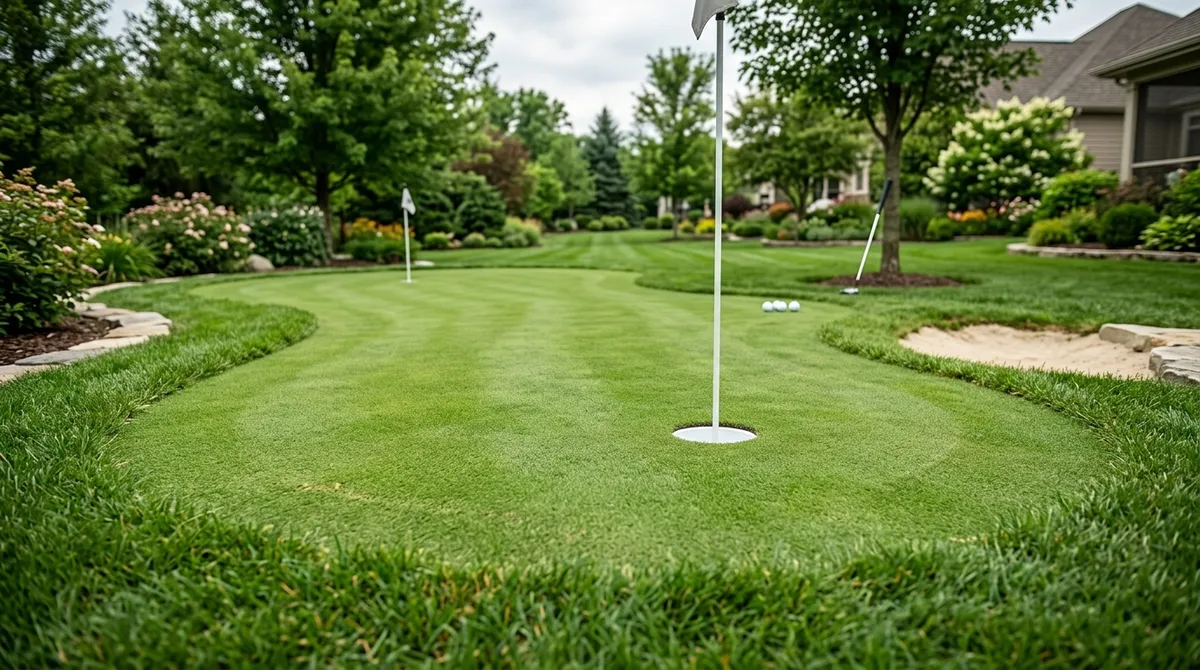
Natural grass greens carry a certain charm. There’s nothing quite like the look and feel of real bent grass under your feet. If you love the authentic golf course experience and don’t mind putting in some work, a natural green might be calling your name.
Advantages of Natural Grass
- Authentic feel: Real grass delivers the most realistic putting experience possible.
- Eco-friendly: Supports local ecosystems and contributes to air quality.
- Cooler surface temperature: Natural grass stays significantly cooler than synthetic in summer heat.
- Lower upfront material cost: Seeding or sodding is generally less expensive initially.
- Beautiful aesthetics: Lush green grass naturally complements surrounding softscape plantings and garden areas.
Disadvantages of Natural Grass
- High maintenance demands: Requires frequent mowing at very short heights, watering, aerating, and fertilizing.
- Seasonal limitations: In Chicago, natural greens go dormant in winter and need time to recover in spring.
- Inconsistent playing surface: Weather and wear can create uneven patches and unpredictable ball roll.
- Vulnerable to pests and disease: Natural turf requires ongoing treatment to stay healthy and playable.
- Slower to establish: You may need to wait weeks or months before the surface is ready to use.
Side-by-Side Comparison
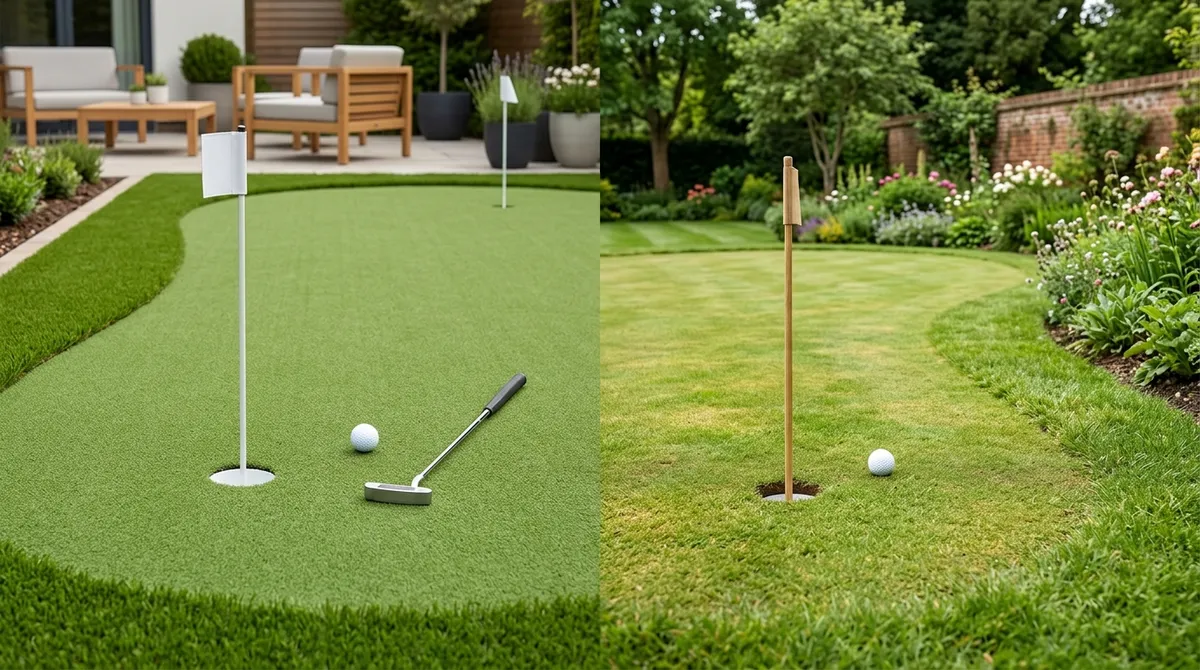
Here’s a quick comparison table to help you weigh your options at a glance:
| Feature | Synthetic Turf | Natural Grass |
|---|---|---|
| Maintenance Level | Very Low | Very High |
| Seasonal Playability | Year-Round | Spring through Fall |
| Installation Time | Days | Weeks to Months |
| Upfront Cost | Higher | Lower to Moderate |
| Long-Term Cost | Lower (less upkeep) | Higher (ongoing care) |
| Consistency of Play | Excellent | Variable |
| Customization Options | High | Moderate |
| Eco-Friendliness | Moderate | High |
| Works in Small Yards | Yes | Challenging |
How to Design Your Backyard Golf Practice Green
Once you’ve chosen your surface type, the fun part begins—designing your layout! A professional landscaping team will walk you through every decision, from the number of holes to the placement of bunkers and tee boxes. Here’s the general process most homeowners go through:
- Assess your space: Measure your backyard and identify any slopes, trees, or obstacles that could influence the design.
- Set your goals: Are you focused on putting, chipping, or a combination? Your practice priorities shape the layout.
- Choose your features: Decide on the number of holes, whether you want bunkers, separate tee areas, and any elevation changes.
- Select your surface: Work with your landscaping team to choose the best turf type for your needs and budget.
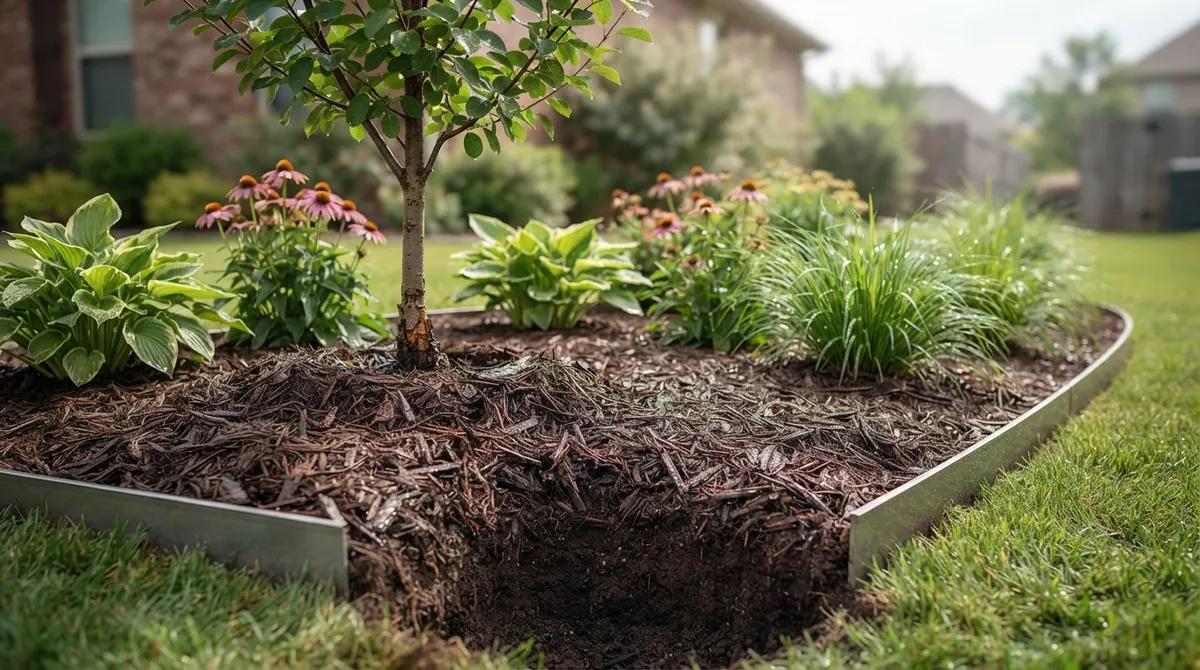
- Integrate the surrounding landscape: A great green should complement the rest of your outdoor living space, not just sit in the middle of it.
- Review the design plan: Your landscaper will present a detailed design for your approval before any work begins. Learn more about how we approach projects at our design and installation process page.
Custom chipping courses are a great option for smaller yards. These place several hitting areas around a central putting green so you can practice chips, flops, and pitches from multiple angles—all within a compact footprint. It’s a clever way to maximize your practice without needing a large property.
Pairing Your Green with Other Backyard Features
A backyard golf practice green doesn’t have to stand alone. The best outdoor spaces weave together multiple features to create a cohesive, beautiful environment. Think about pairing your green with some of these complementary additions:
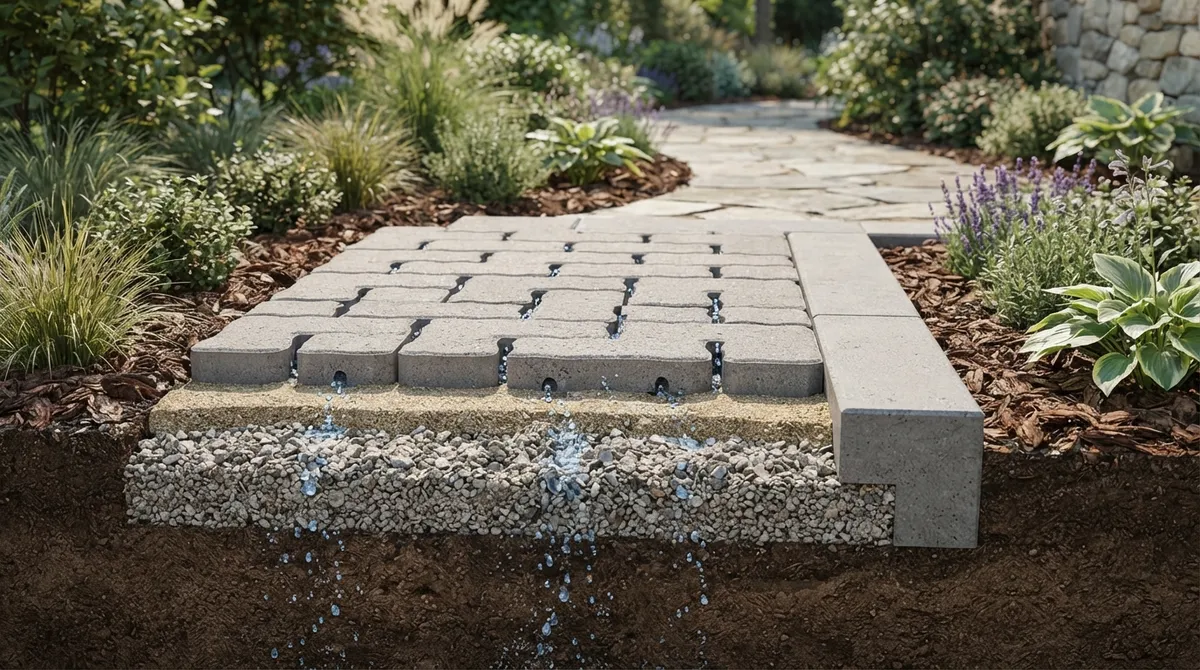
- Paver pathways: Create stylish walkways connecting your green to your patio or home. Check out our guide on walkway paver design for beautiful outdoor pathways.
- Retaining walls: Ideal for creating elevation changes and defining separate zones in your yard. Our retaining walls service can help shape the terrain around your green beautifully.
- Outdoor lighting: Extend your practice hours into the evening with smart landscape lighting and sound solutions.
- Fire pits: Turn post-round relaxation into a social event with a cozy fire pit nearby. You might even find inspiration in our list of 12 fire pits that transform backyards in 2026.
- Pergolas or pavilions: Add a shaded seating area so guests can watch and cheer. Browse 13 stunning pergola designs to transform your outdoor space for ideas.
Combining these elements creates an outdoor experience that goes far beyond just golf practice. It becomes a true backyard destination that your whole family and your guests will enjoy. Working with an experienced team like Serenity Landscape Group means all these features are designed together as one unified vision.
What Does Installation Actually Involve?
Many homeowners wonder what happens once they give the green light. Here’s a simplified look at what a typical backyard golf practice green installation involves:
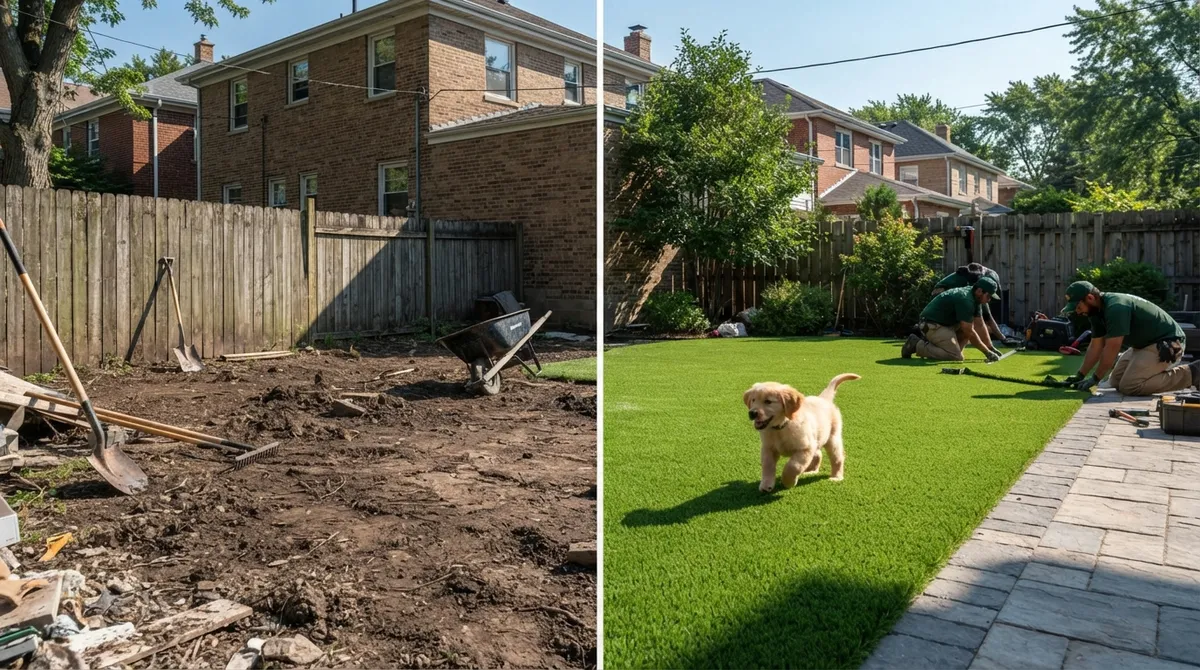
- Site preparation: The crew excavates the area, removes existing grass, and levels the ground to the planned contours.
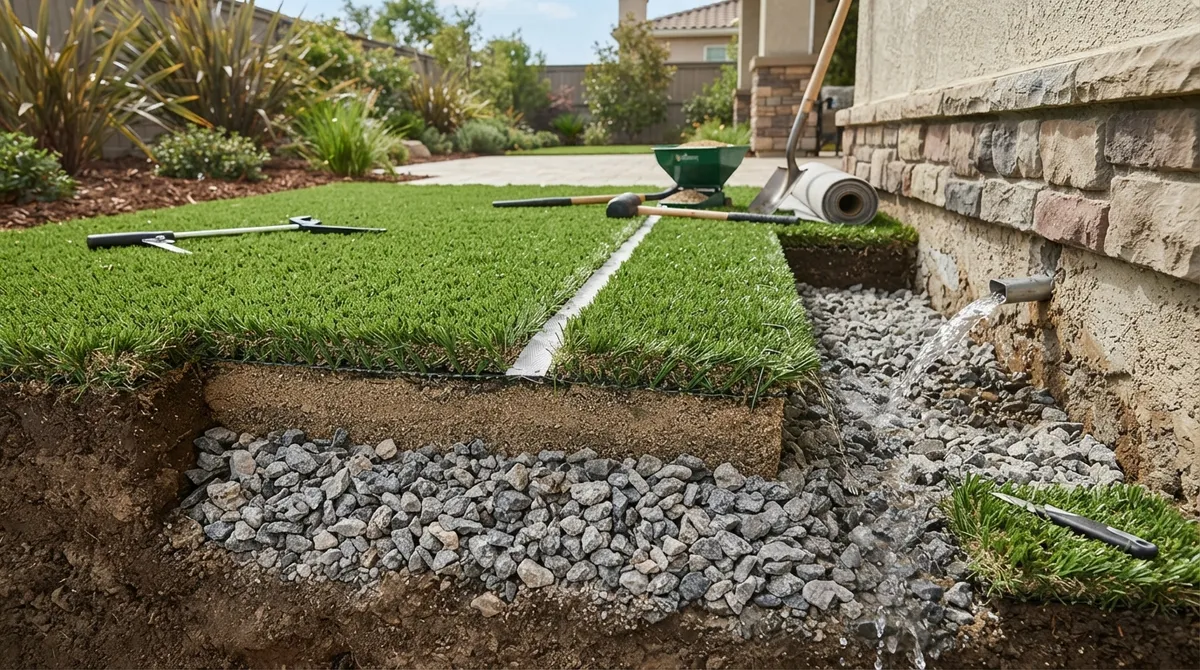
- Base construction: A crushed aggregate base layer is installed and compacted to ensure proper drainage and stability.
- Shaping terrain: For greens with slopes and undulation, the base is sculpted to match the design plan.
- Turf installation: The synthetic turf or natural sod is laid, trimmed, and secured precisely.
- Hole and cup placement: Cups are installed at the planned locations, and any edging materials are added for a clean finish.
- Final details: Sand bunkers, tee areas, and surrounding landscape elements are completed to tie everything together.
Industry organizations like Landscape Illinois encourage homeowners to work with licensed and experienced professionals for any significant landscaping installation. Proper site preparation is especially important in the Chicago area, where freeze-thaw cycles can affect drainage and structural stability over time.
Choosing the Right Landscaping Team
Not every landscaping company has experience with golf green installations. It’s important to choose a team with proven expertise in both landscape design and specialty turf work. Look for a company that holds professional credentials and certifications. You can verify installer qualifications through resources like the ICPI Certified Installer program, which promotes industry standards for quality hardscape and outdoor installations.
Ask to see photos of completed projects, request references, and make sure the team understands your specific goals and space constraints. A great landscaping partner will listen first and design second—making sure your green fits seamlessly into your overall outdoor space. You’re not just adding a golf feature; you’re enhancing your entire property’s value and livability.
Which Option Is Right for You?
So, synthetic or natural? Here’s a simple way to think about it:
- Choose synthetic turf if you want a low-maintenance, year-round practice surface that’s ready immediately and fits any yard size.
- Choose natural grass if you love the authentic feel of real turf, have a larger yard, and are willing to invest time and money in ongoing care.
- Still not sure? Talk to a professional landscaper who can evaluate your space and goals, then recommend the best fit.
For most Chicago-area homeowners, synthetic turf wins on practicality. The ability to practice year-round—even after a late-season frost—makes it the clear choice for serious golfers and casual players alike. But if you have the space, the passion, and the patience, a natural bent grass green is a stunning addition that few backyards can rival.
Conclusion: Transform Your Backyard Into a Golf Paradise
Backyard golf practice greens are one of the most exciting and rewarding ways to upgrade your outdoor living space. Whether you choose the low-maintenance ease of synthetic turf or the classic beauty of natural grass, a professionally designed green adds value, fun, and functionality to your property. It’s the kind of feature that you’ll use every day and love every time you step outside.
At Serenity Landscape Group, we’ve spent over two decades helping homeowners and businesses across the greater Chicago area create outdoor spaces they truly love. From custom golf greens to complete backyard transformations, we bring creativity, skill, and a genuine passion for great design to every project. Ready to start planning your dream backyard? Request your free estimate today and let’s build something amazing together—or feel free to call us at (630) 359-5139 and chat with our friendly team.
FAQs
Q: How much does it cost to install a backyard golf practice green in the Chicago area?
A: The cost varies widely depending on size, surface type, and features like bunkers or tee boxes. Synthetic turf greens tend to have a higher upfront cost but lower long-term maintenance expenses, while natural grass greens may cost less initially but require ongoing care. We’d love to give you an accurate estimate based on your specific yard and goals—just reach out to our team!
Q: Can I install a backyard golf practice green in a small yard?
A: Absolutely! Small yards are no problem at all. A custom chipping course design places multiple hitting areas around a central putting green, maximizing practice in a compact space. Our team specializes in creative layouts that make the most of every square foot you have available.
Q: How long does it take to install a synthetic turf putting green?
A: Most synthetic turf backyard golf practice greens can be completed in just a few days, depending on the size and complexity of the design. One of the best things about synthetic turf is that you can start practicing almost immediately after installation is complete—no waiting for grass to grow!
Q: What maintenance does a synthetic putting green require?
A: Synthetic turf greens are wonderfully low-maintenance compared to natural grass. You’ll mainly need to remove leaves and debris, rinse the surface occasionally, and brush the turf fibers to keep them standing upright. There’s no mowing, watering, or fertilizing involved, which makes it a great choice for busy homeowners.
Q: Can I add other features like bunkers and slopes to my backyard golf green?
A: Yes, and it’s one of the most fun parts of the design process! Professional landscapers can add sand bunkers, elevation changes, multiple hole locations, and separate tee box areas to create a realistic and challenging practice experience right in your backyard. The more features you add, the more enjoyable and functional your green becomes!