Key Takeaways
-
Pergolas create versatile outdoor rooms that transform yards by providing shade, defining spaces, and boosting property appeal.
-
Wooden pergolas offer timeless charm and customization, with cedar, redwood, and pine each providing unique aesthetic and durability benefits.
-
Aluminum pergolas deliver low-maintenance, weather-resistant design with modern styling and integrated technology features.
-
Attached pergolas seamlessly extend indoor living spaces, providing structural stability and creating protected transitional areas.
-
Louvered pergolas represent cutting-edge outdoor technology, offering adjustable weather control and year-round usability with motorized systems.
-
Compact 10×10 and 10×12 pergolas maximize smaller yard spaces, delivering functional outdoor living solutions without overwhelming areas.
-
Integrated LED lighting systems transform pergolas into enchanting evening retreats with professional, customizable illumination options.
Imagine stepping into your backyard and finding a shaded retreat where you can sip morning coffee, host weekend barbecues, or simply escape the afternoon heat. A pergola creates exactly that kind of space—an outdoor room that blends beauty with function and turns an ordinary yard into something special. In 2026, homeowners across the Chicago area are discovering that pergolas offer more than just shade; they provide a focal point that defines your outdoor living area and boosts your property’s curb appeal.
Whether you have a sprawling suburban yard or a cozy urban patio, the right pergola design can transform how you use and enjoy your outdoor space. From timeless wooden structures draped with climbing vines to sleek modern aluminum designs with smart technology, the options have never been more exciting or diverse. This guide walks you through 13 stunning pergola designs that combine style, durability, and functionality to help you create the outdoor oasis you’ve been dreaming about.
Let’s explore the pergola styles that are making waves in 2026 and find the perfect match for your home, lifestyle, and vision.
What Makes a Pergola Different from Other Outdoor Structures
Before we dive into specific designs, it helps to understand what sets pergolas apart. A pergola features vertical posts or columns that support an open lattice roof made of crossbeams and rafters. Unlike a gazebo with its fully covered roof or a pavilion with solid overhead protection, a pergola provides partial shade while maintaining an airy, open feel that connects you to the sky above.
This open-roof design offers several advantages:
- Natural light filters through, creating beautiful dappled shade patterns throughout the day
- Air circulates freely, keeping the space comfortable even on warm summer afternoons
- You can customize coverage by adding climbing plants, retractable canopies, or louvered panels
- The structure frames views of your garden and sky without blocking them completely
- Maintenance stays manageable since rain and snow pass through rather than accumulating
Modern pergolas have evolved far beyond simple shade structures. Today’s designs function as true outdoor rooms, complete with integrated lighting, ceiling fans, heating elements, and even motorized louvers that adjust to weather conditions. This versatility makes pergolas ideal for creating defined spaces in your yard—whether that’s an outdoor dining area, a cozy lounge zone, or a stunning poolside retreat.
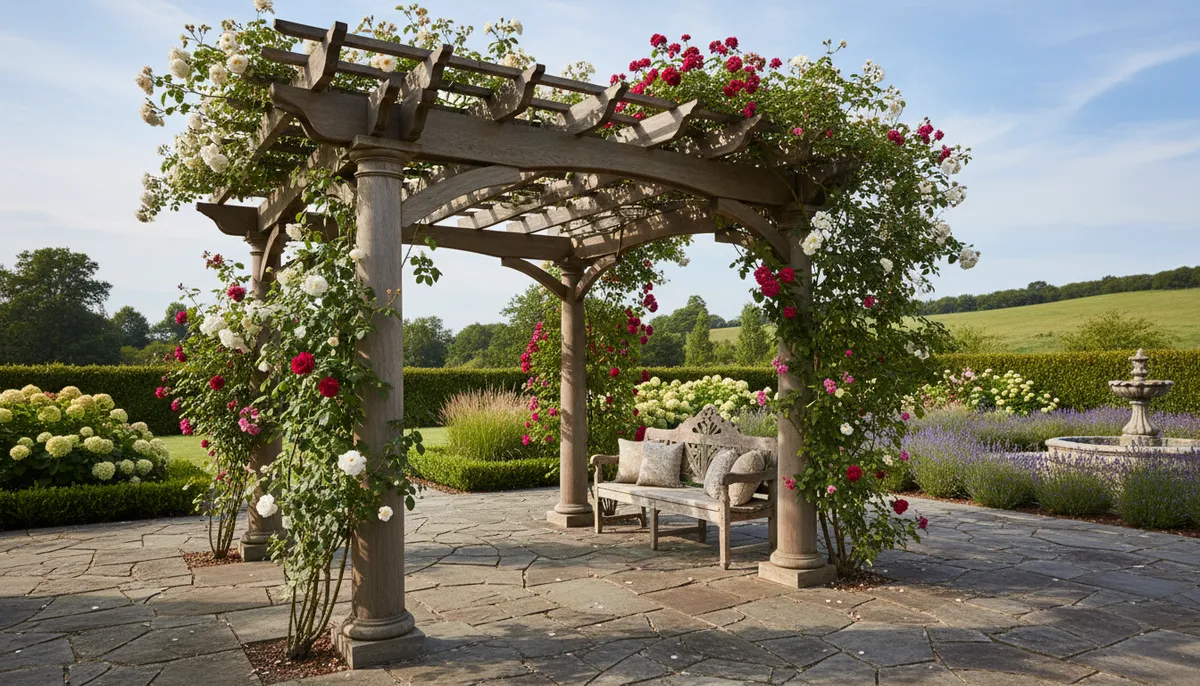
1. Classic Wooden Pergolas with Traditional Charm
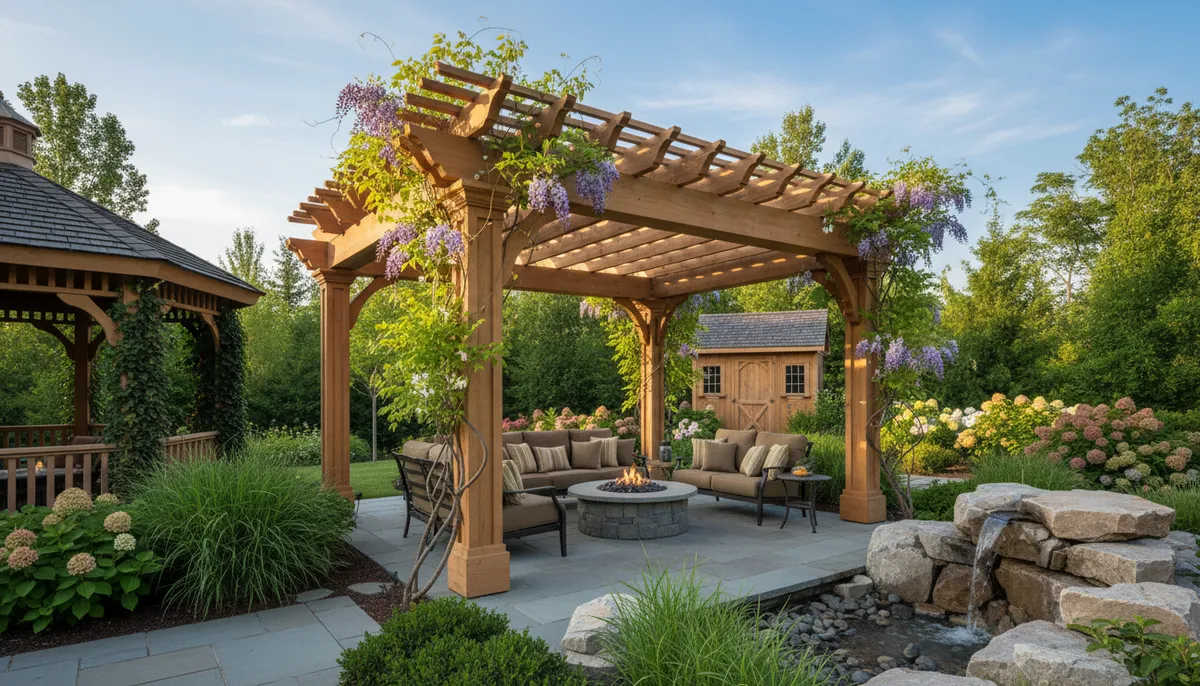
Wooden pergolas remain a beloved choice for homeowners who appreciate timeless beauty and natural materials. These structures bring warmth and character to any outdoor setting, and they blend seamlessly with traditional home architecture and garden designs. Cedar, redwood, and pressure-treated pine are popular wood choices, each offering distinct benefits in terms of durability, color, and grain patterns.
The beauty of wooden pergolas lies in their customization potential. You can stain them to match your home’s exterior, paint them for a cottage-garden look, or let them weather naturally to a silvery gray patina. Wood also serves as the perfect support for climbing plants like wisteria, clematis, or grapevines, creating a living canopy that enhances privacy and shade while adding seasonal interest.
Here are the main wood types and their characteristics:
| Wood Type | Durability | Maintenance Level | Best For |
|---|---|---|---|
| Cedar | High natural resistance | Medium (annual sealing) | Traditional designs, natural finish |
| Redwood | Excellent longevity | Medium (periodic sealing) | Premium projects, rich color |
| Pressure-Treated Pine | Good with treatment | High (regular staining) | Budget-friendly options |
Keep in mind that wooden pergolas do require more maintenance than metal alternatives. You’ll need to apply sealant or stain every few years to protect against moisture, insects, and UV damage. However, many homeowners find this maintenance worthwhile for the natural beauty and warmth that only real wood provides.
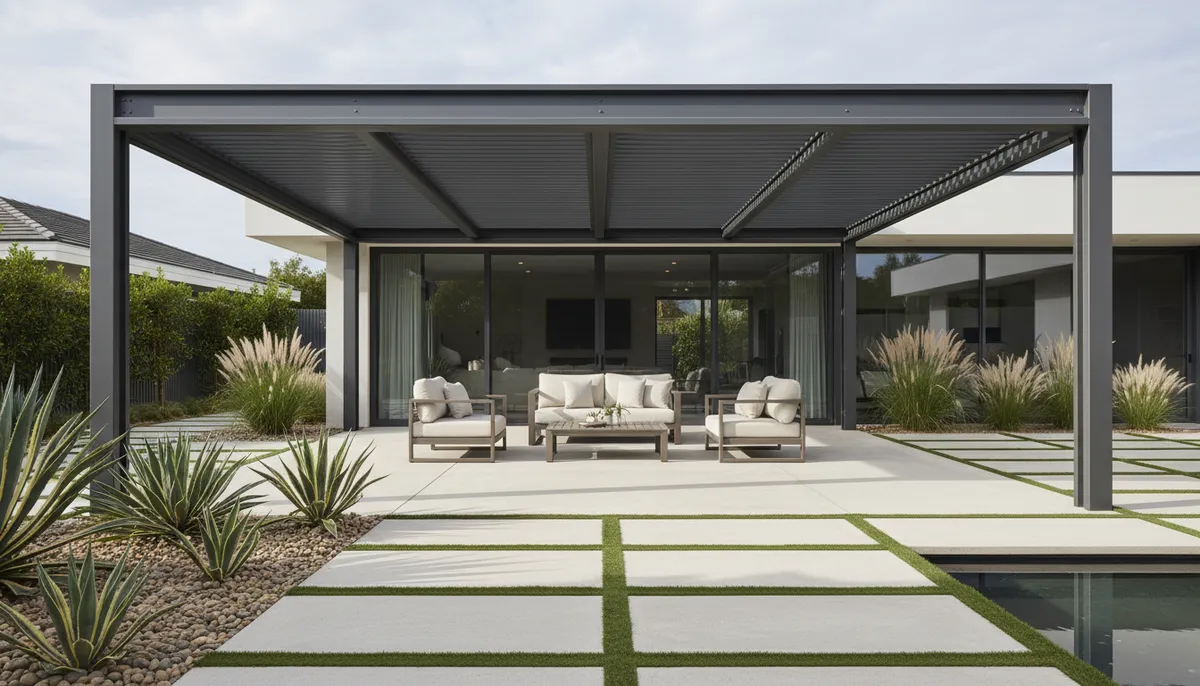
2. Modern Aluminum Pergolas for Low-Maintenance Living
Aluminum pergolas have surged in popularity throughout 2026, and it’s easy to see why. These structures offer sleek, contemporary styling combined with exceptional durability and virtually zero maintenance requirements. Unlike wood that needs regular sealing and staining, aluminum pergolas resist rust, won’t rot or warp, and maintain their appearance year after year with just occasional cleaning.
Modern aluminum designs feature slim profiles that can span wider distances without requiring as many support posts. This creates a more open, spacious feel and provides greater flexibility in furniture placement underneath. The powder-coated finishes come in various colors and textures, including options that mimic the look of wood grain for homeowners who want the aesthetic of timber without the upkeep.
Benefits of aluminum pergolas include:
- Weather resistance that stands up to Chicago’s harsh winters and humid summers
- Lightweight construction that simplifies installation while maintaining strength
- No painting, staining, or sealing required over the structure’s lifetime
- Built-in channels and systems for integrating lighting, speakers, and shade solutions
- Eco-friendly recyclable material that reduces environmental impact
- Termite and pest-proof construction that eliminates insect concerns
The initial investment for aluminum pergolas typically runs higher than basic wood options, but the long-term savings on maintenance and the extended lifespan make them cost-effective over time. For busy homeowners who want beautiful outdoor living without the ongoing upkeep, aluminum delivers exactly that balance.
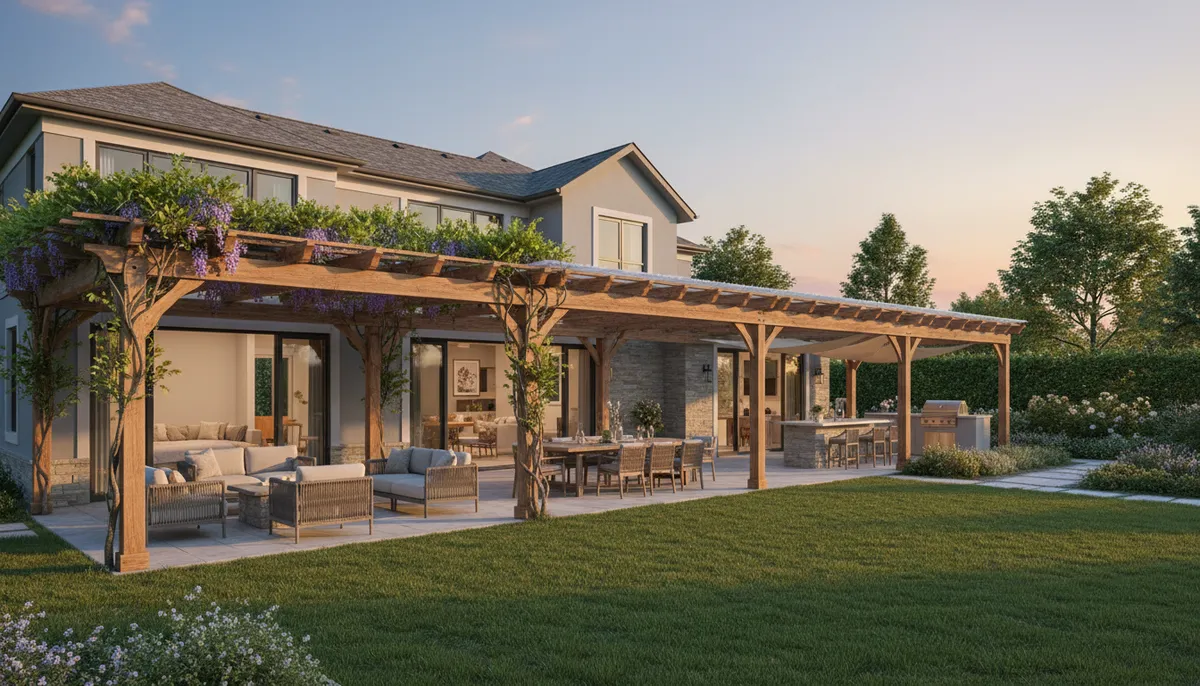
3. Attached Pergolas That Extend Your Home
Attached pergolas connect directly to your house, creating a seamless transition between indoor and outdoor living spaces. These structures typically anchor to your home’s exterior wall and extend outward over a patio, deck, or outdoor kitchen area. The connection to your house makes attached pergolas feel like natural extensions of your living space rather than separate yard features.
This design offers several practical advantages. First, the attachment to your home provides structural stability and often requires fewer support posts on the yard side. Second, the covered transition area protects your back door and creates a sheltered walkway during rain or snow. Third, the proximity to your house makes it easier to run electrical lines for lighting and sound systems, enhancing functionality for evening entertaining.
When planning an attached pergola, consider these key factors:
- Ensure the design complements your home’s architectural style and exterior materials
- Match roofline heights and angles to create visual harmony with your house
- Plan for proper water drainage away from your foundation
- Check local building codes regarding required setbacks and permits
- Coordinate finishes, colors, and materials with your home’s exterior palette
Attached pergolas work beautifully for creating outdoor dining rooms, grilling stations, or comfortable lounging areas right outside your back door. The convenience of stepping directly from your kitchen to a covered outdoor space makes these pergolas especially popular with homeowners who love to entertain or simply enjoy spending time outdoors.
4. Freestanding Pergolas for Versatile Yard Placement
Freestanding pergolas stand independently in your yard, unattached to any building structure. This independence gives you complete freedom to position the pergola wherever it makes the most sense for your landscape design and outdoor living goals. You might place one over a fire pit area, in a garden as a focal point, beside a pool, or in any corner of your yard that could benefit from definition and shade.
The standalone nature of freestanding pergolas means they require solid structural support on all sides, typically using four or more corner posts anchored into concrete footings. This self-supporting design allows the pergola to become a destination within your landscape—a special spot that draws you away from the house and into the garden or yard.
Popular uses for freestanding pergolas include:
- Creating intimate seating areas surrounded by gardens or landscaping
- Defining outdoor dining spaces away from the house for special occasions
- Providing poolside shade and changing areas with privacy
- Establishing garden rooms or meditation spaces within larger yards
- Framing views of gardens, water features, or distant landscapes
Freestanding pergolas offer maximum design flexibility since they don’t need to match your home’s architecture as closely as attached versions. This freedom lets you experiment with different styles, from romantic Victorian designs to ultra-modern minimalist structures. The key is ensuring the pergola coordinates with your overall landscape design and serves a clear purpose in how you use your outdoor space.
5. Louvered Pergolas with Adjustable Weather Control
Louvered pergolas represent one of the most exciting innovations in outdoor living for 2026. These intelligent structures feature adjustable slats in the roof that rotate to control sunlight, shade, and ventilation. With the simple push of a button, you can open the louvers completely for full sun, close them for complete shade and rain protection, or adjust them to any angle in between for customized coverage.
The louver system transforms your pergola from a fair-weather structure into an all-season outdoor room. When the louvers close completely, they create a weathertight seal that sheds rain and snow, allowing you to enjoy your outdoor space even during Chicago’s unpredictable weather. Built-in gutters channel water away from the pergola area, keeping you and your furniture dry.
Louvered pergola features include:
- Motorized operation controlled by remote, smartphone app, or wall switch
- Weather sensors that automatically adjust louvers based on conditions
- Integrated LED lighting within the louver channels
- Optional side screens or glass panels for wind and privacy protection
- Heating and cooling options for true year-round comfort
The technology built into modern louvered systems means you can program them to respond to specific weather conditions. If rain starts while you’re away, the louvers automatically close to protect your furniture. On hot afternoons, they adjust to maximize airflow while maintaining shade. Some systems even integrate with smart home platforms, allowing voice control through devices you already use.
While louvered pergolas represent a higher investment than fixed-roof designs, the extended usability and weather protection make them increasingly popular among homeowners who want maximum versatility from their outdoor spaces. For those who view their outdoor areas as true extensions of their homes, the ability to control weather exposure makes perfect sense.
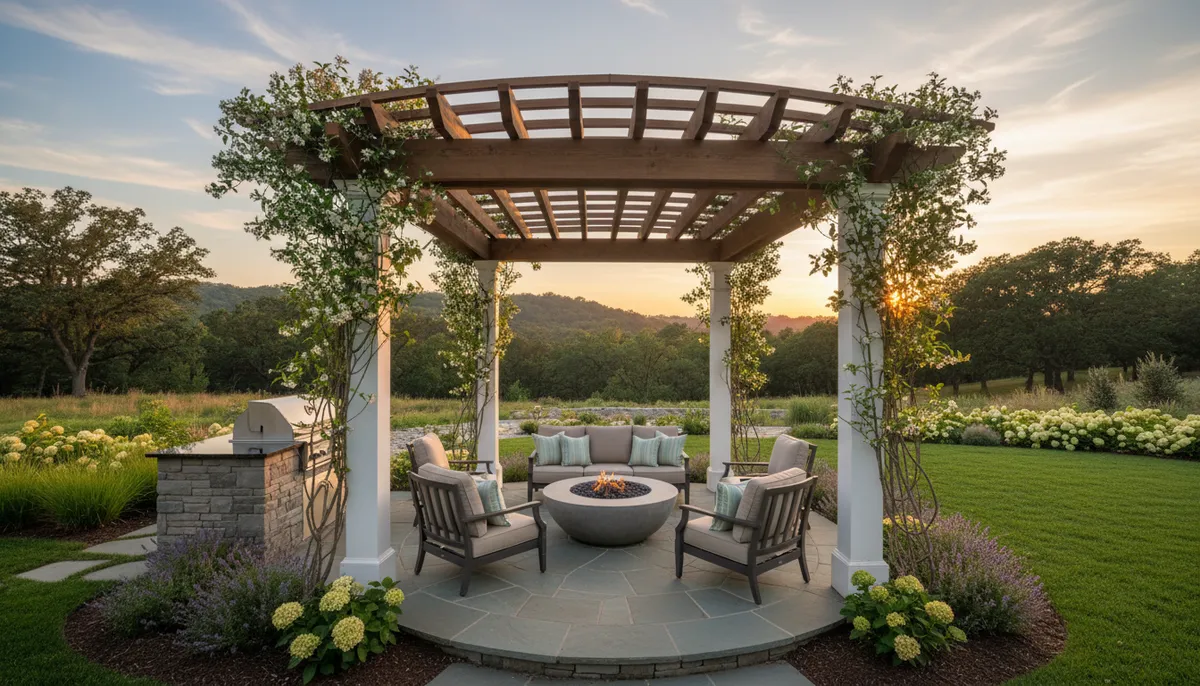
6. Arched Pergolas for Elegant Garden Statements
Arched pergolas bring romantic, elegant styling to gardens and outdoor spaces through gracefully curved beams and rafters. These structures soften the angular lines typical of traditional pergolas, creating a more organic, flowing aesthetic that complements garden settings beautifully. The curved design adds architectural interest and creates a sense of height and spaciousness that feels welcoming and grand.
The gentle arch draws the eye upward and frames whatever lies beyond—whether that’s a garden view, a seating area, or simply the sky. This makes arched pergolas particularly effective as garden entryways, creating a sense of passage from one area to another. They also work wonderfully as standalone features that anchor garden rooms or define intimate outdoor spaces.
Arched pergolas pair especially well with:
- Climbing roses and flowering vines that enhance the romantic aesthetic
- Traditional and cottage garden designs with informal plantings
- Wedding venues and special event spaces requiring elegance
- Pool areas where the softened lines complement water features
- Mediterranean or Tuscan landscape designs with curved elements
The curved construction does add complexity and cost compared to basic straight-beam designs. However, for homeowners seeking a statement piece that elevates their landscape design, the visual impact of an arched pergola delivers significant value. The structure becomes more than just a functional shade element—it transforms into a true architectural focal point.
7. Compact 10×10 and 10×12 Pergolas for Smaller Yards
Not every outdoor space offers room for a sprawling structure, and that’s where compact pergolas shine. The 10×10 and 10×12 sizes remain top sellers in 2026 precisely because they deliver maximum impact within limited square footage. These smaller footprints work perfectly for urban patios, modest suburban yards, or anyone who wants to define a specific area without overwhelming their outdoor space.
Despite their smaller size, compact pergolas provide ample room for a dining table and chairs or a comfortable seating arrangement. The key is thoughtful furniture selection and placement that maximizes usability without creating a cramped feeling. Many homeowners discover that a well-designed compact pergola actually makes a small yard feel larger by creating clear zones and adding vertical interest.
Here’s what fits comfortably under different compact pergola sizes:
| Pergola Size | Furniture Capacity | Best Uses |
|---|---|---|
| 10×10 | 4-6 person dining set or small lounge group | Intimate dining, cozy seating areas |
| 10×12 | 6-8 person dining set or larger lounge setup | Family dining, entertaining small groups |
| 10×14 | 8-10 person dining or combined dining/lounge | Larger gatherings, multi-zone spaces |
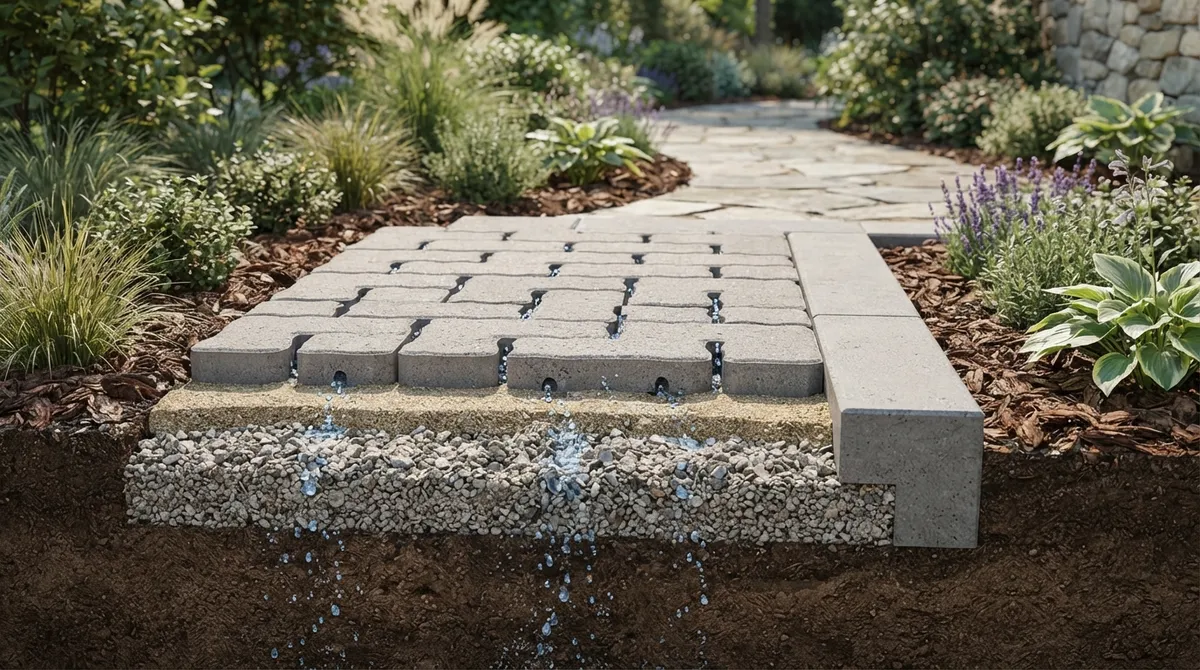
Compact pergolas benefit from strategic design choices that enhance their sense of spaciousness. Light-colored finishes help the structure feel less heavy, while minimalist designs with fewer decorative elements maintain an open, airy feeling. Pairing your pergola with quality pavers underneath creates a defined foundation that anchors the space beautifully.
8. Pergolas with Integrated Lighting for Evening Ambiance
Lighting transforms a pergola from a daytime shade structure into an enchanting evening retreat. In 2026, integrated lighting systems have become standard in many pergola designs, with LED fixtures built directly into beams, posts, and rafters. This approach eliminates the dangling wires and temporary fixtures that can look messy, instead creating clean lines and professional-looking illumination.
The right lighting extends your outdoor season and usability well into the evening hours. Whether you’re hosting a dinner party, enjoying quiet conversation, or simply relaxing with a book, properly designed lighting creates the perfect ambiance while providing the visibility you need. Modern LED systems offer adjustable brightness and color temperature, allowing you to shift from bright task lighting for dining to soft, warm tones for late-night relaxation.
Popular pergola lighting options include:
- Recessed downlights in beams that provide overhead illumination
- Strip lighting along rafters that creates a glowing canopy effect
- Post cap lights that add subtle accent lighting and define the structure
- String lights draped between beams for a festive, casual atmosphere
- Spotlights aimed at plantings or features to highlight landscape elements
- Smart LED systems controlled via smartphone apps or voice commands
When planning your pergola lighting, think about layers—combining different types of fixtures at varying heights creates depth and visual interest. Dimmer controls allow you to adjust intensity based on the occasion and time of night. For homeowners working with professionals like Serenity Landscape Group’s pergola specialists, the lighting design can integrate seamlessly with the overall structure for a cohesive, polished result.
9. Pergolas with Retractable Canopies for Flexible Shade
Retractable canopy systems give you complete control over sun exposure, allowing you to adjust shade coverage based on weather conditions, time of day, and personal preference. These fabric panels mount to your pergola’s frame and extend or retract via manual cranks or motorized operation. On hot afternoons, you can deploy the canopy for full shade coverage, then retract it in the evening to enjoy stargazing or the cool night air.
The flexibility of retractable canopies addresses one of the traditional pergola’s main limitations—the lack of complete overhead protection. With a quality canopy system, you get the best of both worlds: the airy openness of a standard pergola when you want it, plus the sun protection and weather shielding of a covered structure when conditions demand it.
Benefits of retractable canopy systems include:
- UV protection that blocks harmful sun rays while allowing filtered light
- Temperature control that can reduce heat by 15-20 degrees in shaded areas
- Protection from light rain that extends usability during unpredictable weather
- Extended fabric life since you can retract the canopy during severe weather
- Custom fabric options in various colors and patterns to match your design
- Easy replacement when fabrics eventually show wear after years of use
Quality matters significantly with canopy systems. Look for marine-grade fabrics designed for outdoor use, with fade resistance and water repellency built in. The mounting hardware should be stainless steel or similarly corrosion-resistant material to ensure smooth operation and long-term durability. Professional installation ensures proper tension and alignment, which prevents sagging and uneven wear.
10. Contemporary Steel Pergolas with Industrial Flair
Steel pergolas bring bold, modern aesthetics to outdoor spaces with their clean lines and industrial-inspired design. These structures make strong visual statements through minimalist profiles, dark powder-coated finishes, and geometric precision. Steel’s exceptional strength allows for larger spans and more daring designs compared to wood, creating dramatic architectural elements that command attention.
The industrial aesthetic pairs beautifully with contemporary home designs, particularly those featuring metal roofing, large windows, or modern architectural details. Steel pergolas complement concrete patios, minimalist landscaping, and urban outdoor spaces where sleek styling feels natural. The material’s durability rivals aluminum while offering a more substantial, grounded appearance that some homeowners prefer.
Steel pergola advantages include:
- Superior strength that enables wider spans with fewer support posts
- Powder-coated finishes in matte black, charcoal, or custom colors
- Weather resistance with proper coating and rust protection
- Compatibility with glass panel inserts for contemporary styling
- Ability to support heavier integrated features like ceiling fans
The main consideration with steel pergolas is ensuring proper rust protection through quality powder coating or galvanization. In areas with harsh winters and road salt exposure like Chicago, this protective layer is essential for long-term durability. With appropriate maintenance—primarily keeping the coating intact—steel pergolas can last for decades while maintaining their striking appearance.
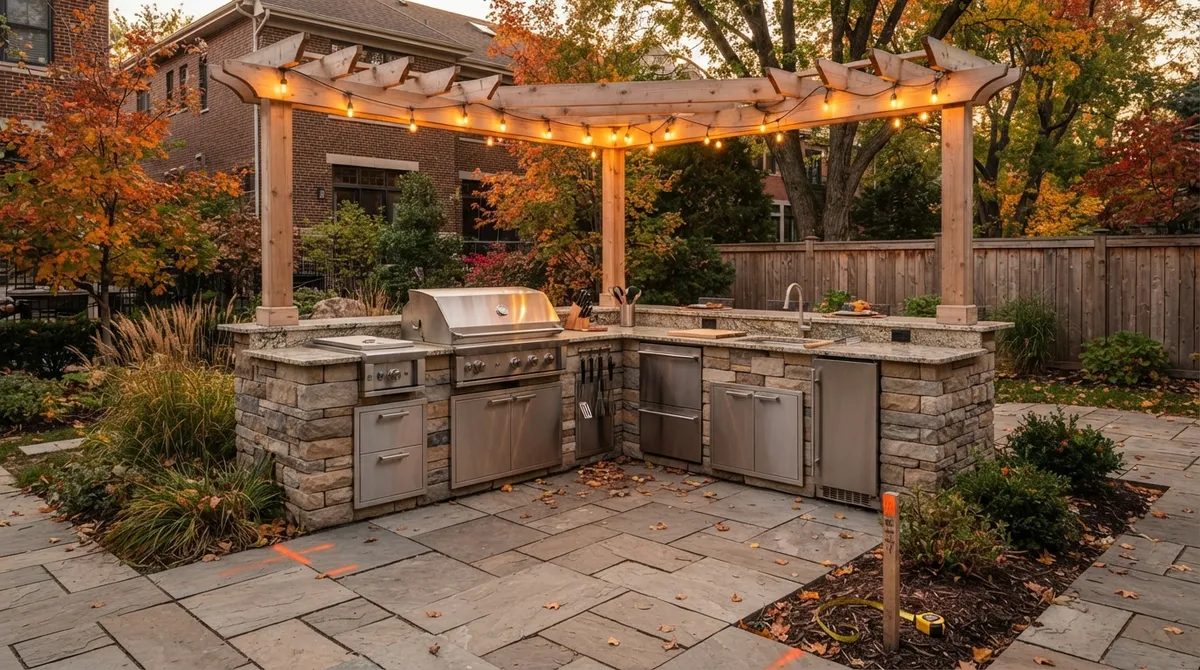
11. Pergolas Over Outdoor Kitchens and Dining Areas
Positioning a pergola over your outdoor kitchen or dining area creates a defined space that feels like a true outdoor room. This setup protects your cooking equipment from direct sun exposure and provides comfortable shade for meal prep and dining. The overhead structure also serves as an ideal mounting point for task lighting above prep areas and ambient lighting over dining tables.
An outdoor kitchen pergola typically requires careful planning to accommodate the specific needs of cooking spaces. You’ll want to consider ventilation for smoke and cooking odors, protection for appliances and surfaces, and safe clearances around heat sources. Many homeowners opt for louvered designs in these applications, allowing them to open the roof completely when grilling to vent smoke, then close it for dining afterward.
Key considerations for kitchen pergolas include:
- Position the grill away from the main seating area to separate cooking heat and smoke
- Install adequate lighting for food preparation and safety during evening cooking
- Include electrical outlets positioned conveniently for appliances and serving needs
- Provide counter space under cover for food staging and serving
- Consider adding side screens or panels for wind protection at cooking stations
The combination of a well-designed pergola with quality paver flooring underneath creates a cohesive outdoor kitchen environment that functions beautifully while looking polished and intentional. This type of outdoor space dramatically increases your home’s entertainment value and extends your living space into the outdoors.
12. Garden Pergolas with Climbing Plants and Greenery
A pergola draped in climbing plants becomes a living structure that changes with the seasons and provides natural shade, beauty, and even fragrance. This classic approach to pergola design creates romantic, garden-like spaces that feel intimate and secluded. As vines mature and grow across the overhead beams, they create a natural canopy that filters sunlight beautifully while attracting birds and pollinators.
Selecting the right climbing plants for your pergola depends on your climate, maintenance preferences, and desired aesthetic. Some vines grow vigorously and require regular pruning to maintain shape, while others grow more slowly and need patient cultivation. Consider whether you want deciduous plants that provide summer shade but allow winter sun, or evergreen varieties that maintain coverage year-round.
Top climbing plants for pergolas include:
| Plant Type | Growth Speed | Special Features |
|---|---|---|
| Wisteria | Fast | Stunning spring blooms, heavy growth requires strong structure |
| Climbing Roses | Medium | Beautiful flowers, thorns require careful placement |
| Clematis | Medium | Variety of colors, combines well with other climbers |
| Grapevines | Fast | Edible fruit, excellent shade coverage |
| Honeysuckle | Fast | Fragrant flowers, attracts hummingbirds |
Working with a professional landscaping team ensures your plant selections suit your growing conditions and integrate well with your overall garden design. Expert landscape services can help establish climbing plants properly and provide guidance on pruning and maintenance to keep your living pergola looking its best throughout the years.
13. Smart Pergolas with Automated Features and Technology
The newest frontier in pergola design incorporates smart home technology for unprecedented convenience and control. Smart pergolas integrate with home automation systems, allowing you to adjust lighting, louvers, temperature, and even music through smartphone apps or voice commands. These high-tech outdoor rooms respond to your preferences and even anticipate needs based on weather forecasts and learned patterns.
Imagine a pergola that automatically closes its louvers when rain sensors detect approaching storms, adjusts shade coverage based on the sun’s position throughout the day, and turns on integrated heaters as evening temperatures drop. That level of automation isn’t futuristic—it’s available right now and becoming increasingly popular among homeowners who want their outdoor spaces to be as comfortable and convenient as their indoor rooms.
Smart pergola features commonly include:
- Motorized louvered roofs controlled via apps or voice assistants
- Weather sensors that automatically respond to rain, wind, and temperature
- Integrated sound systems for outdoor entertainment
- Smart lighting with color-changing LEDs and programmable scenes
- Infrared heaters that activate based on temperature thresholds
- Ceiling fans with automated speed control based on conditions
- Retractable side screens that deploy automatically for privacy or wind protection
The investment in smart pergola technology pays dividends in convenience and extended usability. Rather than running outside to close the canopy when unexpected rain arrives, your pergola handles it automatically. Instead of fumbling with multiple controls for lights, music, and temperature, you adjust everything from one interface. This seamless integration makes your outdoor space genuinely livable and encourages you to spend more time enjoying it.
Choosing the Right Pergola Style for Your Space
With so many beautiful pergola designs available, selecting the right one for your outdoor space requires thoughtful consideration of several factors. Your choice should balance aesthetic preferences with practical needs, budget constraints, and long-term maintenance expectations. The perfect pergola enhances your property’s appearance while serving your lifestyle and outdoor living goals.
Start by evaluating your space and how you plan to use it. A compact 10×10 pergola might be ideal for an intimate conversation area, while a larger 12×16 structure better serves frequent entertaining. Consider whether you want the pergola attached to your home for convenience or freestanding to create a destination within your yard. Think about your climate and how much weather protection matters for your intended use.
Questions to guide your pergola selection:
- What’s your primary purpose—dining, lounging, outdoor kitchen, or garden focal point?
- How much maintenance are you willing to perform over the structure’s lifetime?
- Does the design need to match your home’s architecture closely or can it be distinct?
- What level of weather protection do you require for year-round usability?
- Are you interested in integrating smart features and automation?
- What’s your realistic budget including installation and any site preparation?
Consulting with experienced professionals helps ensure your pergola choice fits your property and meets your needs. Organizations like Landscape Illinois can provide resources on design standards and best practices. When you’re ready to move forward with your pergola project, working with established landscape professionals ensures quality results that enhance your property for years to come.
Making Your Pergola Dream a Reality
A well-designed pergola transforms your outdoor space into a beautiful, functional extension of your home. Whether you choose a classic wooden structure draped in flowering vines, a modern aluminum design with integrated technology, or a versatile louvered system that adapts to any weather, the right pergola creates an outdoor room you’ll enjoy for decades.
The 13 pergola designs we’ve explored represent the diverse options available in 2026, from traditional elegance to cutting-edge innovation. Each style offers unique benefits, and the best choice depends on your specific space, lifestyle, and vision. What matters most is selecting a design that speaks to you and serves how you want to live outdoors.
At Serenity Landscape Group, we’ve spent over 20 years helping homeowners throughout the greater Chicago area create stunning outdoor spaces that reflect their personal style and enhance their quality of life. Our team understands that a pergola isn’t just a structure—it’s an investment in how you experience your property and a focal point that brings your landscape design together. From initial concept through final installation, we manage every detail to ensure your pergola exceeds expectations and becomes your favorite place to relax, entertain, and enjoy the outdoors.
We invite you to explore our gallery of completed projects to see how we’ve transformed outdoor spaces with beautiful pergolas and comprehensive landscape designs. Whether you’re drawn to traditional styling or contemporary innovation, our team has the experience and expertise to bring your vision to life with quality craftsmanship and attention to detail.
Ready to transform your outdoor space with a stunning pergola? We’d love to help you create the backyard retreat you’ve been imagining. Contact us today for a free estimate and discover how a thoughtfully designed pergola can elevate your property and enhance your outdoor living experience. Let’s work together to create a serene, beautiful outdoor space that you’ll love for years to come.
FAQs
Q: What is the average cost to install a pergola in 2026?
A: Pergola costs vary widely based on size, materials, and features. Basic wooden pergolas typically range from $3,000 to $8,000 for a 10×12 structure. Aluminum pergolas run $5,000 to $15,000, while high-end louvered or smart pergolas can cost $15,000 to $30,000 or more. Installation complexity, site preparation, and integrated features like lighting or sound systems all affect the final price.
Q: How long does a pergola last?
A: Pergola lifespan depends primarily on materials and maintenance. Properly maintained wooden pergolas last 10 to 20 years, with cedar and redwood lasting longer than pressure-treated pine. Aluminum and steel pergolas can last 25 to 40 years or more with minimal maintenance. Regular cleaning, sealing (for wood), and addressing any damage promptly helps maximize your pergola’s lifespan regardless of material.
Q: Do I need a permit to build a pergola?
A: Permit requirements vary by location and pergola size. Many municipalities in the Chicago area require permits for structures over a certain square footage or those attached to your home. Freestanding pergolas under 200 square feet may not need permits in some areas, but it’s essential to check with your local building department. Professional installers typically handle permit applications as part of their service.
Q: Can I use a pergola year-round in Chicago’s climate?
A: Yes, with the right design features. Louvered pergolas with closing roofs provide weather protection during rain and snow. Adding retractable side screens blocks wind, while integrated heaters extend comfort into cooler months. Standard open pergolas work best spring through fall, but weatherproofed designs with heating and protection features create truly year-round outdoor rooms that handle Chicago’s varied weather beautifully.
Q: What’s the difference between a pergola and a pavilion?
A: The main difference is roof coverage. Pergolas have open lattice roofs with crossbeams that provide partial shade while allowing air and some sunlight through. Pavilions feature solid roofs that offer complete overhead protection from sun and rain. Pergolas create airy, open spaces with filtered light, while pavilions function more like covered outdoor rooms with full weather protection above.