Key Takeaways
-
Pavilions transform outdoor spaces into functional gathering spots that work in any weather, offering shelter and style for residential and commercial properties.
-
Modern pavilions incorporate smart technologies like motorized louvers, integrated lighting, and sensors that automatically adjust to weather conditions for year-round comfort.
-
Professional pavilion installations can increase property value by 60-80% and enhance outdoor living experiences, with basic designs starting around $8,000-$12,000.
-
Different pavilion types exist to suit various needs, including traditional, pergola-style, bioclimatic, gable, and hip-roof designs, each offering unique aesthetic and functional benefits.
-
Sustainable pavilion design now emphasizes climate-resilient materials, local sourcing, and biophilic principles that connect people more closely with natural outdoor environments.
Have you ever wondered how to create a stunning gathering spot in your backyard that works in any weather? Pavilions might be the answer you’re looking for. These beautiful outdoor structures have become incredibly popular in 2026, and for good reason—they transform ordinary yards into functional, inviting spaces where memories are made. Whether you’re dreaming of summer barbecues, peaceful morning coffee spots, or elegant outdoor entertaining areas, pavilions offer the perfect blend of shelter, style, and versatility that makes your outdoor space truly special.
At Serenity Landscape Group, we’ve seen firsthand how pavilions can completely change the way homeowners and businesses use their outdoor areas. Over our two decades of serving the greater Chicago area, we’ve designed and installed countless pavilions that have become the heart of backyards and commercial properties alike. Let’s explore everything you need to know about pavilions and how they might be the perfect addition to your landscape.
Understanding What Pavilions Really Are
Pavilions are freestanding outdoor structures that provide shelter and define spaces in your landscape. Think of them as outdoor rooms without walls—they typically feature a solid roof supported by posts or columns, creating a covered area that protects you from sun and rain while keeping you connected to the outdoors.
Unlike enclosed structures, pavilions maintain an open, airy feel that invites you to enjoy fresh air and natural surroundings. They come in many styles, from simple wooden structures to elaborate designs with architectural details that match your home’s character.
Different Types of Pavilions for Your Landscape
The world of pavilions offers wonderful variety to suit different needs and tastes:
-
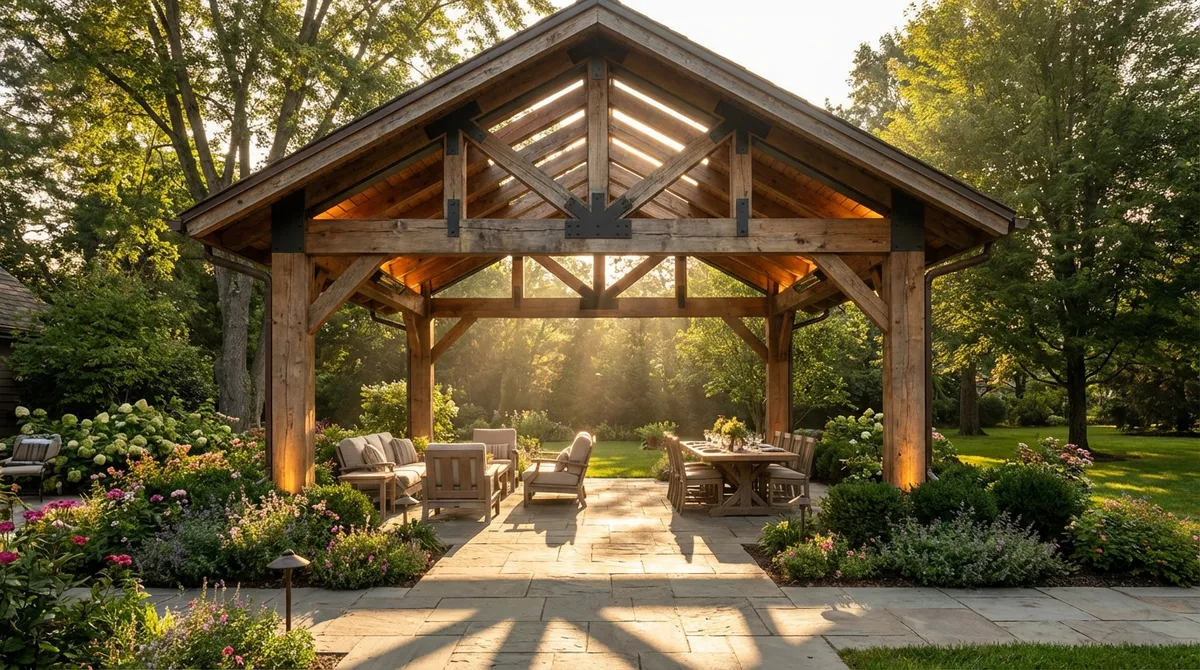
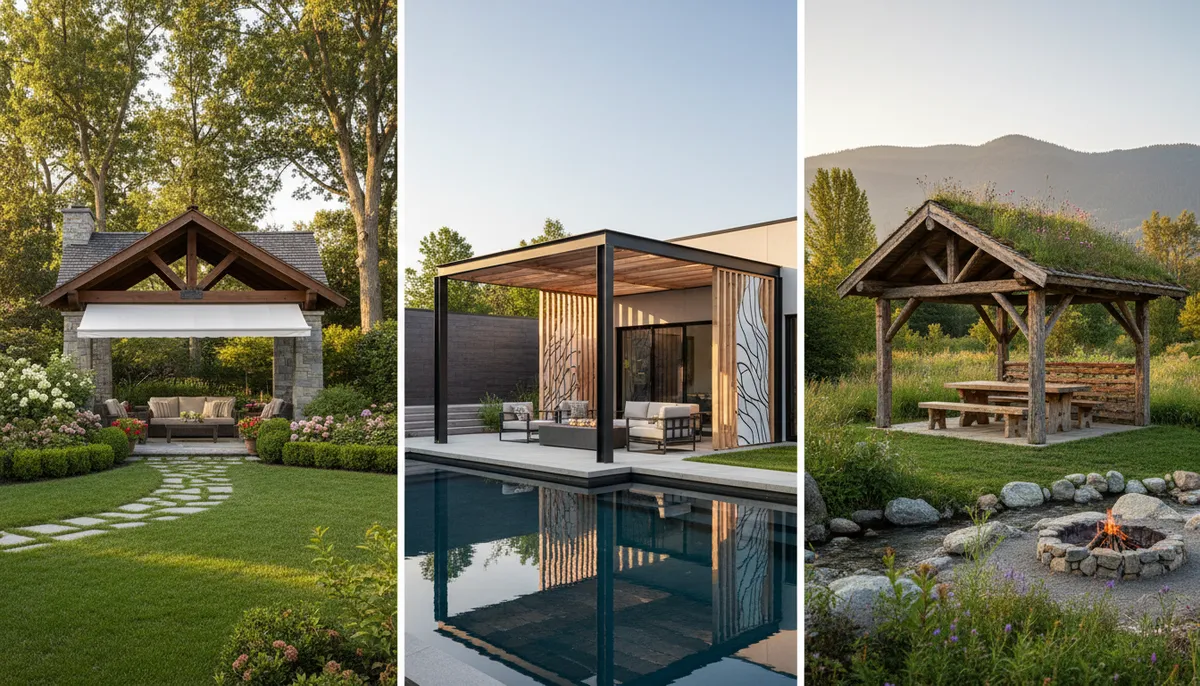
Traditional Pavilions: These classic structures feature solid roofs and sturdy posts, offering maximum weather protection and timeless appeal
-
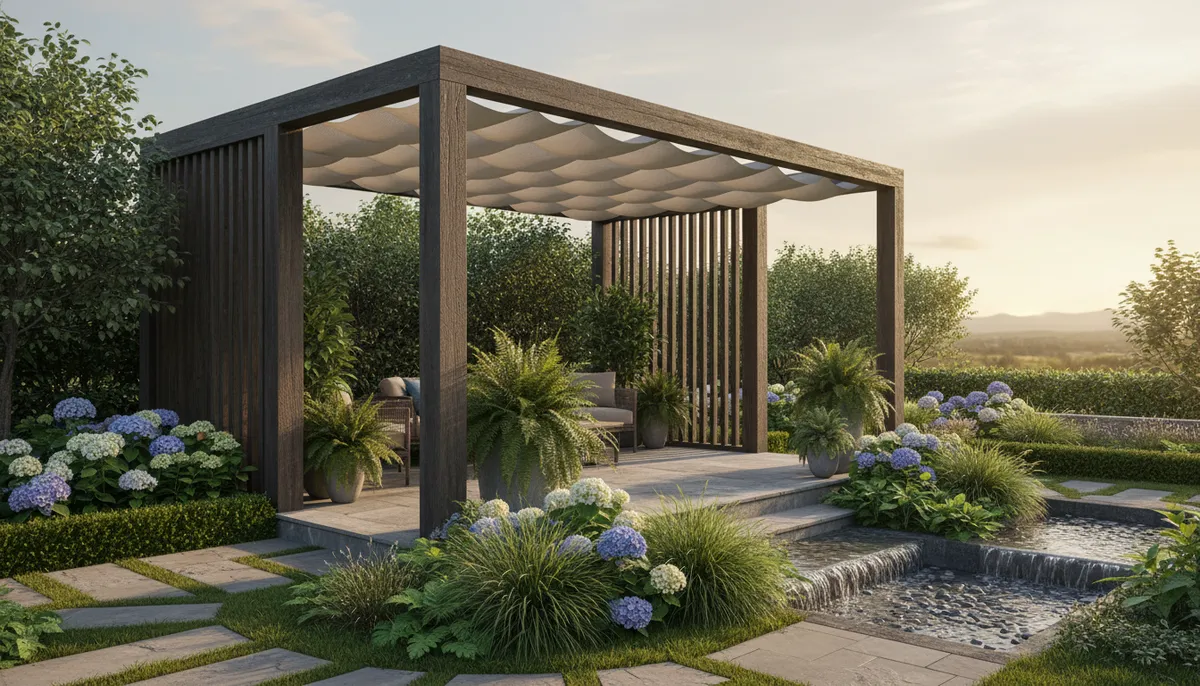
Pergola-Style Pavilions: Combining elements of both pergolas and pavilions, these include partial roofing or adjustable louvers for flexible sun and shade control
-
Bioclimatic Pavilions: The latest innovation in outdoor structures, featuring motorized louvers, integrated lighting, and climate control systems for year-round comfort
-
Gable Pavilions: With their peaked roofs, these structures offer excellent water runoff and a cottage-like charm
-
Hip-Roof Pavilions: Featuring slopes on all four sides, these provide superior wind resistance and a sophisticated look
Each type serves different purposes and aesthetic preferences, which is why we work closely with our clients to determine which style best fits their vision and lifestyle needs.
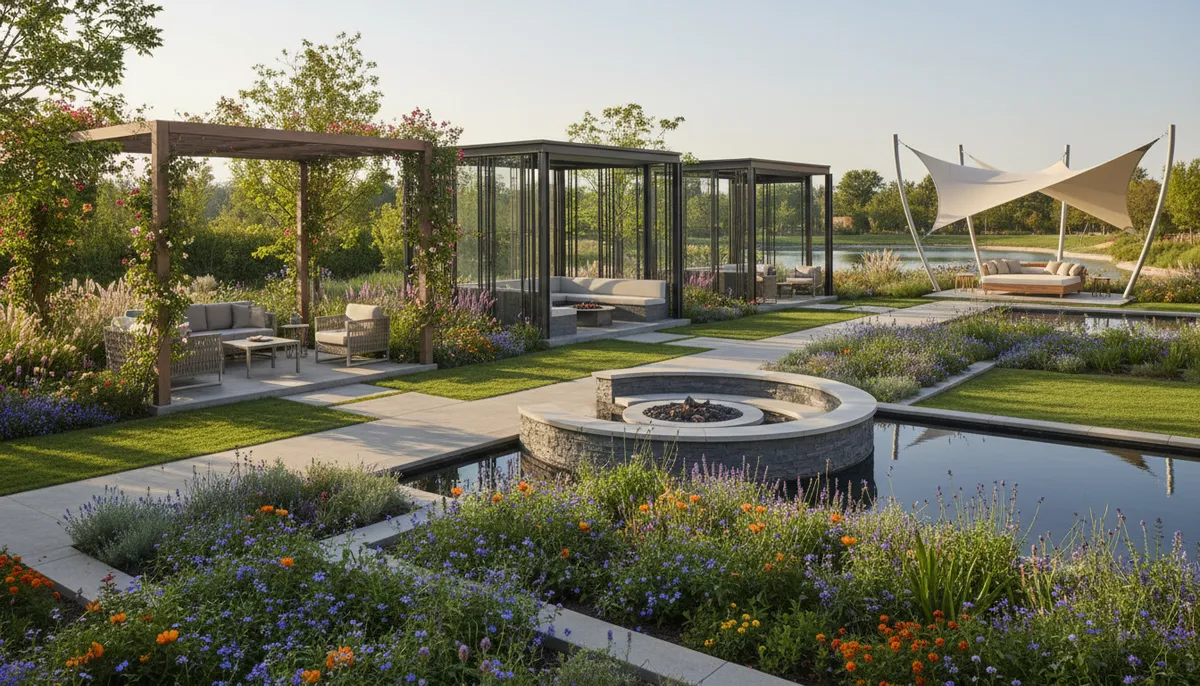
Why Pavilions Have Become So Popular in 2026
The landscaping industry has seen remarkable growth, with the U.S. market generating nearly $200 billion in annual revenue and projections showing continued expansion toward $150 billion by 2033. Pavilions are driving much of this growth because they answer a fundamental desire—people want to live more of their lives outdoors.
Modern pavilions incorporate cutting-edge features that make them functional in all seasons. Bioclimatic designs with motorized louvers allow you to adjust shade and ventilation with the touch of a button. Integrated lighting extends usability into evening hours, while built-in heaters keep the space comfortable even on cooler nights.
The Smart Technology Revolution in Pavilions
Today’s pavilions can be equipped with remarkable technology that enhances comfort and convenience. Smart sensors detect weather changes and automatically adjust louvers to protect your outdoor furniture. Integrated sound systems create ambiance for entertaining, while programmable lighting sets the perfect mood for any occasion.
These features align perfectly with the growing trend toward sustainable, climate-resilient outdoor spaces. Landscape professionals are increasingly incorporating eco-friendly materials and designs that work with nature rather than against it.
How Pavilions Enhance Different Properties
For suburban homeowners in Chicago’s surrounding communities, pavilions solve a common challenge—creating functional outdoor living space that stands up to our variable weather. Imagine hosting a family gathering without worrying about sudden rain showers, or enjoying your backyard even on hot summer afternoons when direct sun makes patios uncomfortable.
Urban condo owners with rooftop access can transform underutilized space into premium outdoor retreats. A thoughtfully designed pavilion creates shelter from wind and sun while maximizing limited square footage—turning your rooftop into a true extension of your living space.
Commercial Benefits That Drive Business Success
Commercial property managers discover that pavilions deliver measurable returns. Office complexes with pavilion-covered outdoor spaces see improved employee satisfaction and productivity. Retail centers with shaded pavilion areas create comfortable shopping experiences that encourage customers to linger longer.
Restaurant and café owners particularly benefit from pavilion installations, as they dramatically expand usable seating capacity while protecting diners from weather. One of our commercial clients reported a 40% increase in outdoor seating revenue after we installed a custom pavilion system.
Design Considerations That Make Pavilions Work
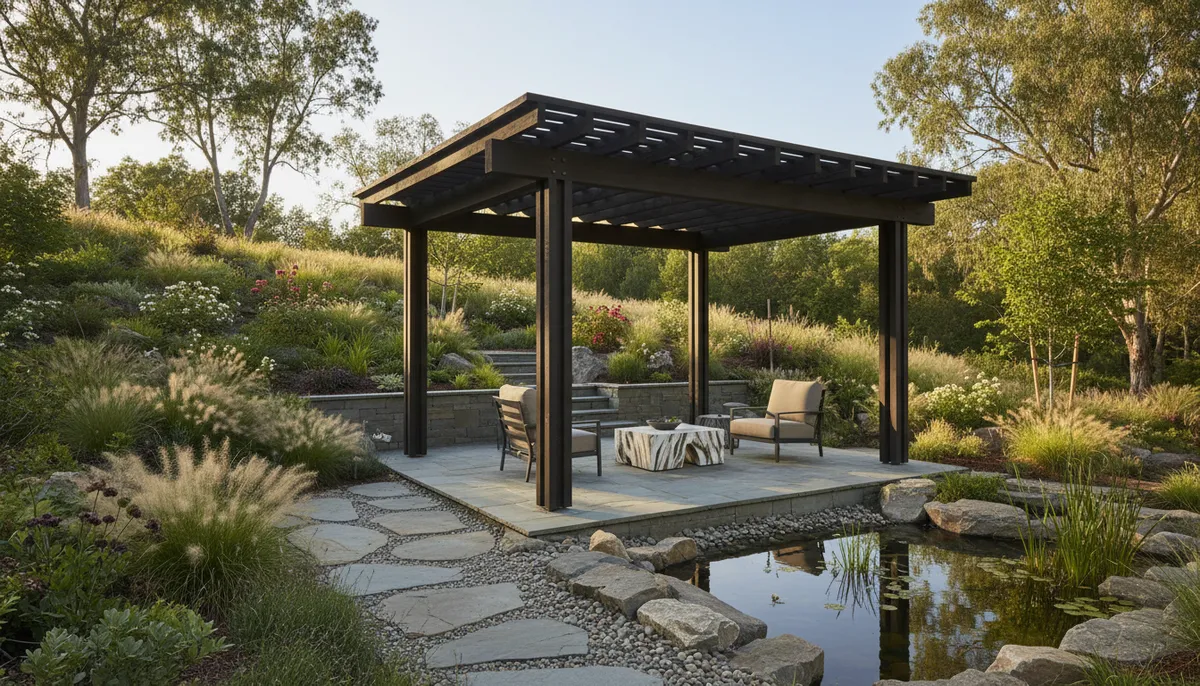
Creating the perfect pavilion starts with understanding how you’ll actually use the space. Will it primarily shelter outdoor dining areas? Do you envision it as a quiet reading spot or an entertainment hub? These questions shape everything from size to orientation to features.
Here are the key factors we consider during the design process:
-
Purpose and Function: Define primary uses (dining, entertaining, relaxation) to determine appropriate size and layout
-
Location and Orientation: Position the pavilion to take advantage of views while considering sun patterns and prevailing winds
-
Style Integration: Ensure the pavilion complements your home’s architecture and existing landscape elements
-
Material Selection: Choose durable materials that withstand Chicago’s climate while requiring minimal maintenance
-
Scale and Proportion: Size the structure appropriately for your property—not too imposing, not too small
Proper planning prevents expensive mistakes and ensures your pavilion becomes a beloved feature rather than a regretted addition.
Material Choices That Stand the Test of Time
The materials you select dramatically impact both appearance and longevity. Natural wood offers warmth and traditional beauty but requires regular maintenance. Cedar and redwood naturally resist decay and insects, making them popular choices for Chicago-area installations.
Composite materials provide wood-like appearance without the upkeep, resisting rot, fading, and insect damage. Metal pavilions using aluminum or steel offer exceptional durability and work beautifully in contemporary designs. Masonry columns combined with wooden or metal roofs create striking visual contrast and remarkable stability.
At Serenity Landscape Group, we help clients weigh these options against budget, aesthetic preferences, and maintenance willingness to find the perfect match.
Integrating Pavilions with Complete Landscape Design
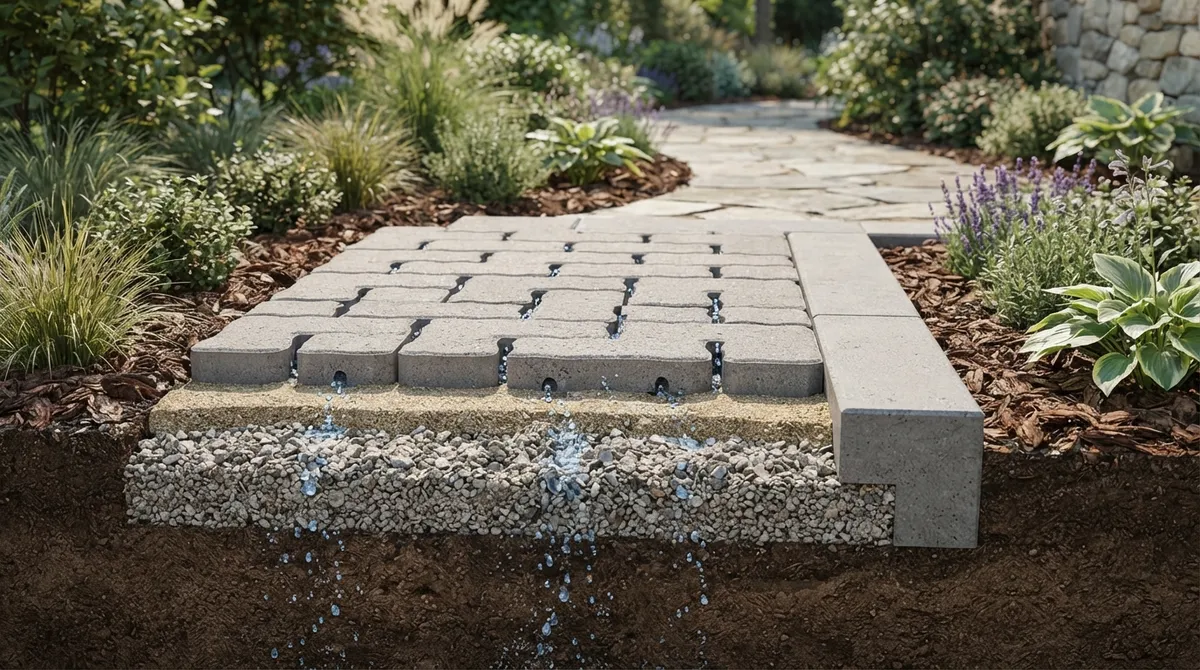
A pavilion shouldn’t stand alone—it should connect seamlessly with your overall landscape. We often incorporate pavers to create defined pathways leading to the pavilion and establish the flooring beneath it. This provides excellent drainage, prevents mud, and adds visual polish.
Surrounding plantings soften the structure and create natural transitions between the pavilion and the rest of your yard. Strategic placement of shrubs and perennials provides privacy without closing off the space completely.
Hardscaping Elements That Complete the Picture
Many clients combine pavilions with other hardscape features for maximum functionality and appeal:
-
Fire Pits: Adding a fire pit near your pavilion extends usability into cooler months and creates a natural gathering focal point
-
Retaining Walls: When working with sloped properties, retaining walls can create level spaces for pavilion placement while adding dimension and interest
-
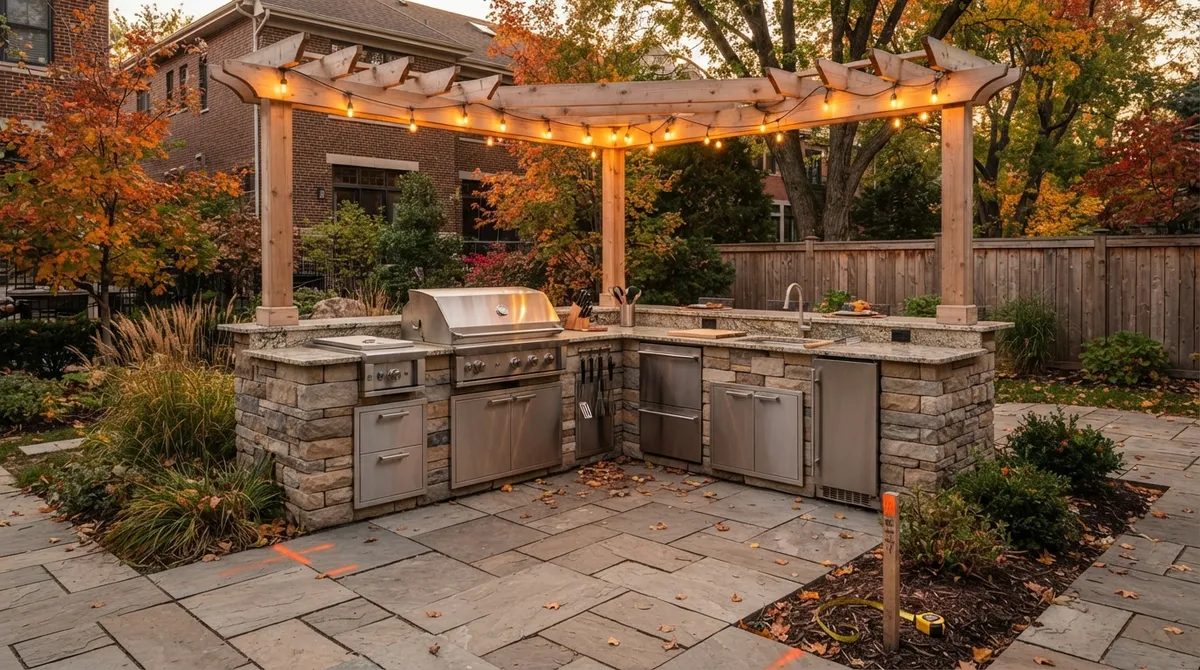
Outdoor Kitchens: Pavilions make ideal shelters for outdoor cooking areas, protecting both equipment and cooks from weather
-
Lighting Systems: Professional lighting and sound installation transforms pavilions into evening entertainment venues
This integrated approach ensures every element works together to create cohesive, functional outdoor living space that truly enhances your property value and enjoyment.
Cost Considerations and Investment Value
One of the most common questions we hear is about pavilion costs. The honest answer is that pavilions represent a significant range depending on size, materials, features, and complexity. A basic wooden pavilion might start around $8,000-$12,000, while elaborate bioclimatic systems with integrated technology can reach $30,000-$50,000 or more.
However, it’s important to consider pavilions as long-term investments rather than expenses. They immediately increase property value, typically returning 60-80% of installation costs in added home value. More importantly, they dramatically enhance quality of life by creating usable outdoor space you’ll enjoy for decades.
Factors That Influence Pavilion Pricing
Understanding what drives costs helps you make informed decisions:
-
Size and Footprint: Larger structures require more materials and labor, directly impacting cost
-
Material Quality: Premium woods, custom metalwork, and specialty finishes increase investment but offer superior durability
-
Structural Complexity: Intricate designs, custom details, and architectural features add to both beauty and cost
-
Technology Integration: Motorized systems, lighting, heating, and smart controls represent additional investment
-
Site Preparation: Sloped lots, access challenges, and necessary groundwork affect installation costs
-
Finishing Details: Electrical work, built-in features, and decorative elements complete the space but add to the budget
We always provide transparent pricing and work with clients to find solutions that fit their budget while meeting their functional needs and aesthetic goals.
Maintenance and Care for Long-Lasting Pavilions
One reason pavilions remain popular is their relatively low maintenance requirements, especially compared to fully enclosed structures. Most pavilions need only occasional cleaning and periodic inspections to stay beautiful and functional for years.
Wooden pavilions benefit from annual cleaning and resealing every 2-3 years to protect against moisture and sun damage. Metal structures typically need only washing to remove dirt and debris. Composite materials require the least maintenance—just occasional cleaning with soap and water keeps them looking fresh.
Seasonal Care Tips for Chicago Area Pavilions
Our local climate presents specific challenges that proper maintenance addresses:
-
Spring: Inspect for winter damage, clean gutters if present, check structural connections, and refresh any protective coatings
-
Summer: Monitor for insect activity, trim back overgrown vegetation, and ensure drainage remains clear
-
Fall: Remove fallen leaves promptly, prepare for winter by checking roof integrity, and store or cover outdoor furniture
-
Winter: Clear heavy snow accumulation from roofs, watch for ice damming, and address any structural concerns immediately
Regular attention prevents small issues from becoming expensive repairs and keeps your pavilion looking as beautiful as the day it was installed.
Sustainable and Climate-Resilient Pavilion Design
Modern pavilion design increasingly focuses on sustainability and environmental responsibility. This aligns with broader landscaping trends that prioritize climate-resilient materials and practices that benefit both property owners and the environment.
Choosing locally sourced materials reduces transportation impacts and supports regional economies. Selecting naturally durable woods or recycled composites minimizes environmental footprint while ensuring long-lasting performance. Many clients now request solar-powered lighting systems that eliminate electrical costs and reduce energy consumption.
Working with Nature Through Biophilic Design
Biophilic design principles—which emphasize connections between people and nature—are transforming pavilion installations. This approach incorporates natural materials, integrates plantings directly into the structure, and positions pavilions to take advantage of natural breezes and seasonal sun angles.
The result is outdoor spaces that feel more comfortable and inviting while requiring less energy for climate control. Research shows that time spent in well-designed outdoor spaces reduces stress and improves overall wellbeing—benefits that make pavilions valuable for both health and happiness.
According to industry experts, these sustainable approaches are becoming standard practice rather than premium options as awareness grows about long-term benefits.
Permitting and Installation Process
Before breaking ground on your pavilion project, understanding local requirements saves time and prevents complications. Most municipalities in the Chicago area require building permits for structures over certain sizes or with electrical components.
Professional landscape contractors handle these details, but it’s helpful to understand the process. Permit applications typically require site plans, structural drawings, and specifications. Approval times vary by location but generally take 2-6 weeks.
What to Expect During Pavilion Installation
Professional installation follows a systematic process that minimizes disruption and ensures quality results:
-
Site Preparation: Clearing and leveling the installation area, establishing drainage, and preparing foundations
-
Foundation Installation: Setting concrete footings or piers that provide stable, level support for the structure
-
Frame Construction: Erecting posts, beams, and structural elements according to engineered plans
-
Roof Installation: Adding roofing materials, ensuring proper pitch for water runoff, and completing weatherproofing
-
Finishing Details: Installing flooring, electrical components, decorative elements, and final touches
-
Cleanup and Inspection: Removing construction debris, final quality checks, and client walkthrough
Timeline varies based on project complexity, but most residential pavilions are completed within 1-3 weeks from groundbreaking to final inspection.
Making Your Pavilion Decision with Confidence
Choosing to add a pavilion to your landscape represents an exciting opportunity to transform how you use and enjoy your outdoor space. The key is approaching the decision thoughtfully, considering both immediate desires and long-term needs.
Start by clearly defining your goals. Do you need weather-protected outdoor dining space? Are you creating an entertainment area for gatherings? Would you like a peaceful retreat for relaxation and reflection? Your answers guide design decisions and ensure the finished pavilion truly serves your purposes.
Next, consider your property’s characteristics. Sun patterns, prevailing winds, views, and existing landscape features all influence ideal pavilion placement and design. Professional landscape designers evaluate these factors to optimize both function and beauty.
Why Professional Design and Installation Matter
While some homeowners consider DIY pavilion kits, professional installation offers significant advantages. Experienced contractors ensure structures meet building codes, withstand local weather conditions, and integrate seamlessly with existing landscapes.
Professional designers also help you avoid common mistakes—improper sizing, poor placement, material mismatches, and structural weaknesses that compromise safety and longevity. The investment in professional services typically pays for itself through superior results and avoided corrections.
At Serenity Landscape Group, our design process ensures every detail is considered before installation begins, resulting in pavilions that exceed expectations and provide decades of enjoyment.
Transform Your Outdoor Living Experience Today
Pavilions have earned their place as one of the most valuable additions to residential and commercial landscapes. They create functional, beautiful spaces that enhance property value, improve quality of life, and provide endless opportunities for outdoor enjoyment throughout the year.
Whether you’re drawn to traditional designs or cutting-edge bioclimatic systems, there’s a pavilion solution perfect for your property and lifestyle. The investment you make today will reward you with countless memories, increased property value, and a deeper connection to your outdoor environment.
With over two decades of experience transforming outdoor spaces throughout the greater Chicago area, we understand what makes pavilions work in our local climate and how to design installations that stand the test of time. From initial concept through final installation, we’re committed to creating outdoor spaces that truly become your favorite places to relax, entertain, and welcome guests.
Ready to explore how a pavilion could transform your outdoor space? We’d love to help you discover the possibilities and create a design that brings your vision to life. Contact us today for a free estimate and let’s start designing the outdoor retreat you’ve been dreaming about—your perfect pavilion awaits.
FAQs
Q: What is the difference between a pavilion and a pergola?
A: Pavilions feature solid roofs that provide complete protection from rain and sun, while pergolas have open, slatted roofs that offer partial shade. Pavilions are ideal when you need full weather protection, whereas pergolas work well when you want filtered sunlight and a lighter, more open feel. Some modern designs combine both features with adjustable louvers for flexible coverage.
Q: How much does a typical pavilion cost for a residential property?
A: Residential pavilion costs typically range from $8,000 to $50,000 depending on size, materials, and features. Basic wooden pavilions start around $8,000-$12,000, while mid-range designs with quality materials and moderate features cost $15,000-$25,000. High-end pavilions with bioclimatic systems, integrated technology, and premium materials can reach $30,000-$50,000 or more.
Q: Do I need a permit to install a pavilion in the Chicago area?
A: Most Chicago-area municipalities require building permits for pavilions, especially those over certain sizes or including electrical components. Requirements vary by location, so it’s important to check with your local building department. Professional landscape contractors typically handle permit applications as part of their services, ensuring all installations meet local codes and regulations.
Q: What are the best materials for pavilions in Chicago’s climate?
A: For Chicago’s variable weather, cedar and redwood offer natural durability and weather resistance with regular maintenance, while composite materials provide wood-like appearance without upkeep requirements. Metal pavilions using aluminum or steel excel in durability and modern designs. Many homeowners choose combinations—like masonry posts with wooden or metal roofs—for both strength and aesthetic appeal that withstands our harsh winters and humid summers.
Q: How do bioclimatic pavilions work and are they worth the investment?
A: Bioclimatic pavilions feature motorized louvers that adjust automatically or via remote control to manage sun, shade, and ventilation based on weather conditions. They often include integrated lighting, heating, and smart sensors for optimal comfort year-round. While they cost more upfront, they provide superior functionality, extend usability across all seasons, and offer the convenience of climate control that makes outdoor spaces comfortable regardless of weather—making them excellent investments for those who want maximum outdoor living potential.