Key Takeaways
-
Remove solid waste immediately using a scoop or bag, then rinse the area with water from multiple angles to push debris through the drainage layer beneath the turf.
-
Apply enzyme-based cleaners specifically formulated for synthetic turf, which break down organic waste at the molecular level and eliminate odors rather than masking them.
-
Follow a consistent maintenance schedule: daily solid waste removal, weekly enzyme cleaner application with brushing, monthly deep rinses, and seasonal professional cleaning to prevent odor and bacterial buildup.
-
Avoid bleach, harsh chemicals, and oil-based products as they can discolor turf fibers, damage backing material, or leave sticky residue that traps debris.
-
For persistent odors, drainage issues, or heavy multi-pet usage, hire professional landscaping services that use commercial-grade treatments and specialized equipment for deep cleaning and infill refresh.
-
Choose antimicrobial or zeolite-based infill materials during installation to actively reduce bacterial growth and odors, paired with proper drainage design to prevent waste pooling.
If you have pets and artificial turf, you already know the challenge. Your lawn looks great, but pet waste can quickly turn it into a smelly, unhygienic mess. The good news? Keeping synthetic grass clean is easier than you might think — especially when you know the right approach.
Artificial turf is one of the best investments for pet owners. It stays green year-round, handles heavy foot traffic, and never turns muddy. But cleaning artificial turf from pet waste requires consistent care and the right products. Done right, your turf stays fresh, safe, and beautiful for years to come.
Whether you’re a homeowner in the Chicago suburbs, a condo dweller with a rooftop space, or a commercial property manager with a dog run, this guide walks you through everything you need to know. Let’s make your outdoor space something you and your pets can truly enjoy.
Why Pet Waste Harms Artificial Turf
Artificial turf doesn’t absorb waste the way natural grass does. That means urine and solid waste sit on or near the surface longer. Over time, this causes odor buildup, bacterial growth, and damage to the turf fibers if left untreated.
Pet urine contains ammonia and bacteria. These break down slowly without proper cleaning. In humid climates like the Chicago area, moisture speeds up bacterial growth. This creates unpleasant smells and can become a health concern for children and pets alike.
Solid waste is a different challenge. It can get pressed into the turf blades and infill material if not removed quickly. This clogs the drainage system underneath, leading to pooling water and a breeding ground for pathogens. Regular cleaning prevents all of this.
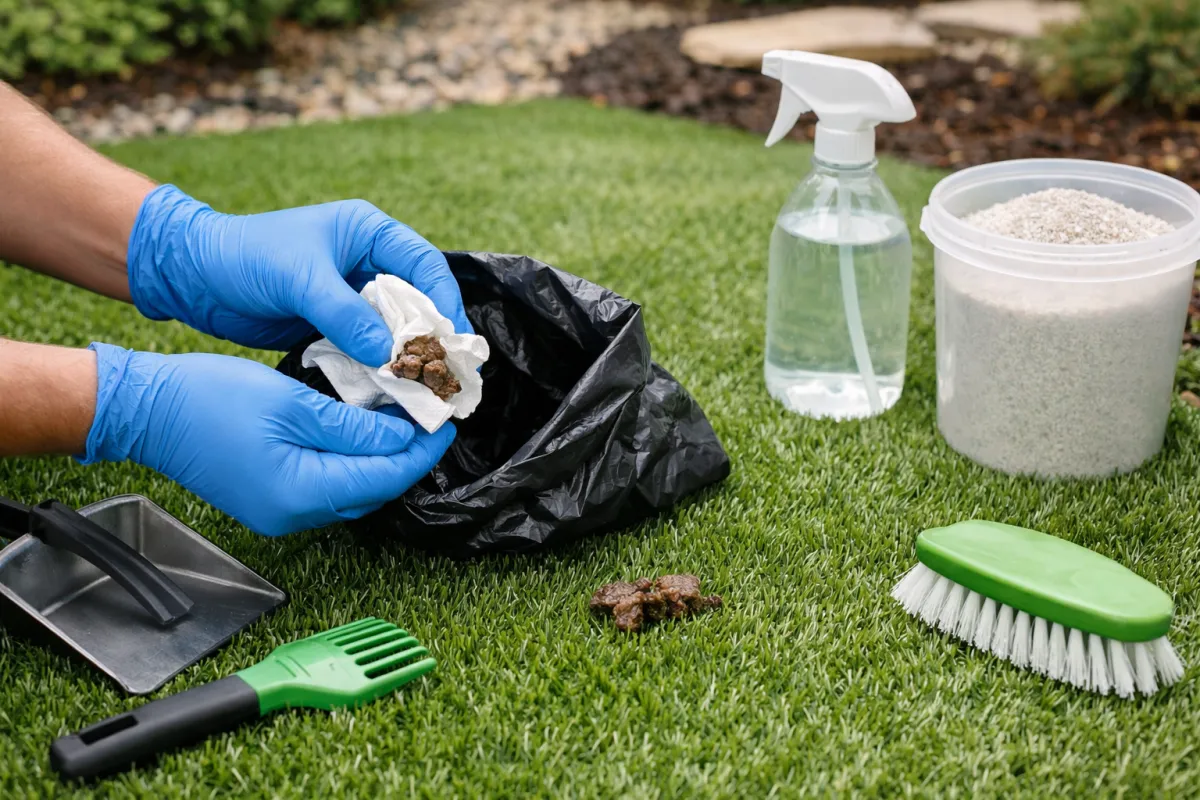
Step-by-Step: How to Clean Pet Waste from Artificial Turf
Cleaning artificial turf from pet waste doesn’t have to be complicated. Follow these steps for best results:
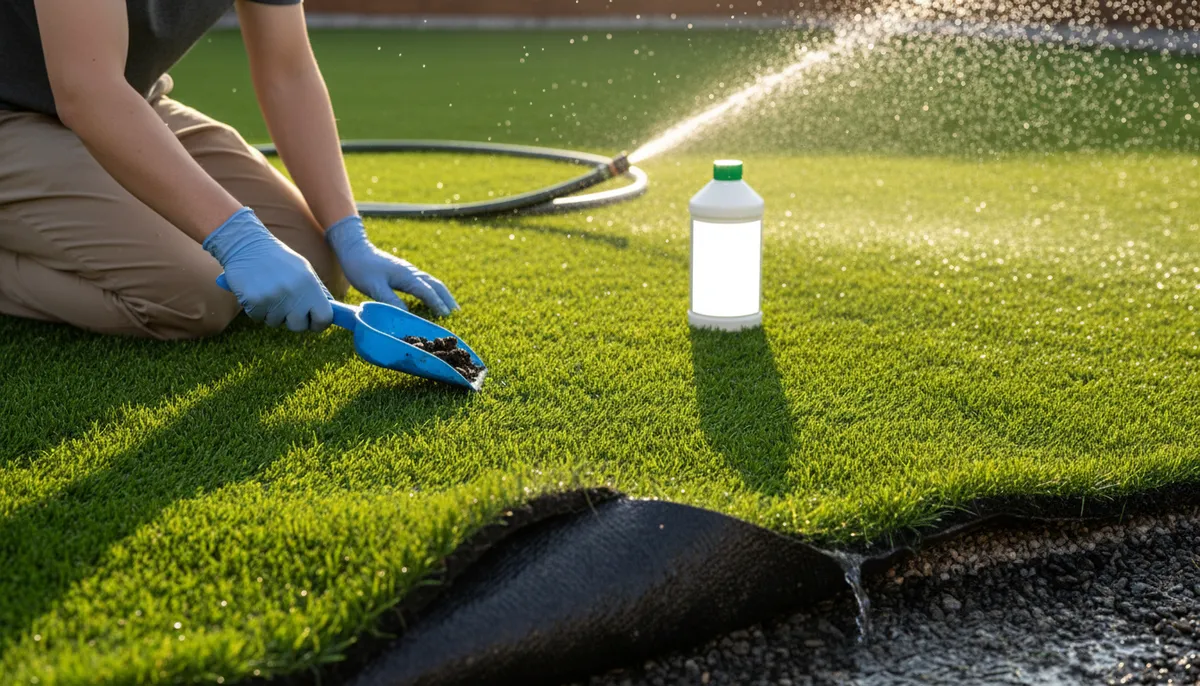
- Remove solid waste immediately. Use a scoop or bag to pick up solid waste as soon as possible. Work in a grid pattern across the turf to make sure you don’t miss hidden spots, especially near edges and corners.
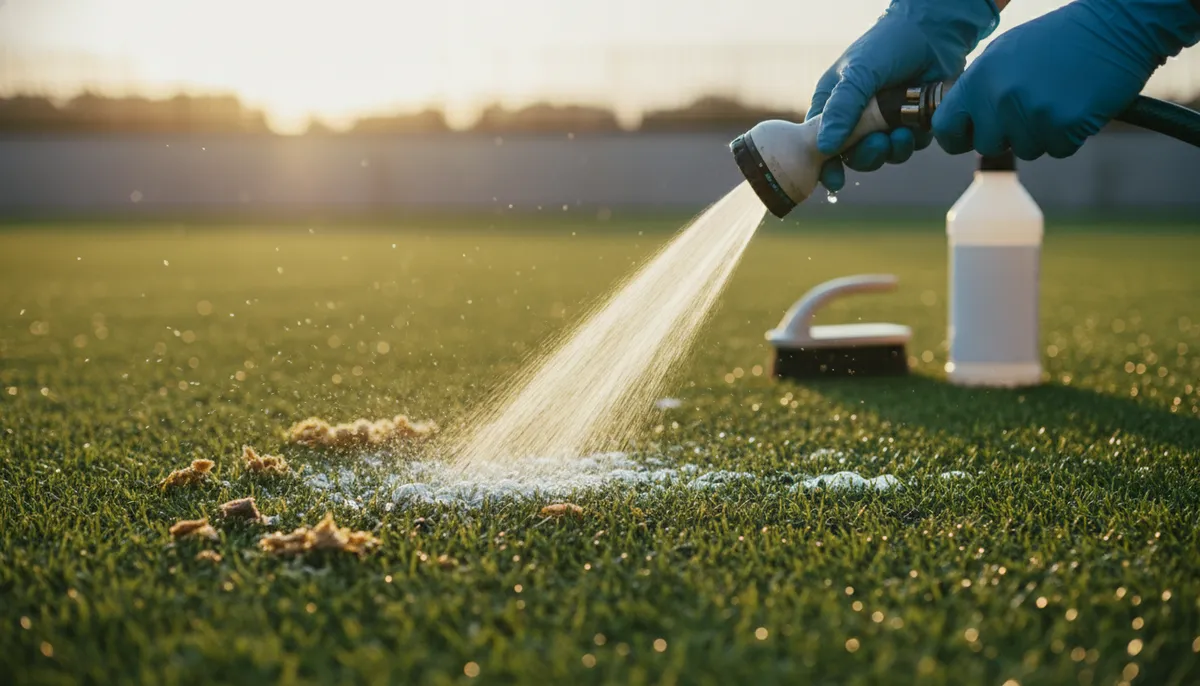
- Rinse the area with water. Use a garden hose to flush away any remaining residue. Rinse from multiple angles to push waste down through the drainage layer beneath the turf.
- Apply an enzyme-based cleaner. Spray an enzyme-based turf cleaner over the affected area. These products break down organic waste at the molecular level, eliminating odor at the source rather than just masking it.
- Let the cleaner soak in. Allow the enzyme treatment to sit for 10 to 15 minutes. This gives it time to work through the turf fibers and reach the infill layer below.
- Rinse thoroughly. Flush the area again with clean water to remove the cleaner and any remaining waste particles.
- Groom the turf fibers. Use a stiff-bristled brush or turf rake to restore the blades to an upright position. This keeps your lawn looking lush and prevents matting.
For best results, repeat this process weekly. Bi-weekly cleaning works for lighter pet usage. Regular maintenance is the key to a healthy, great-smelling turf surface.
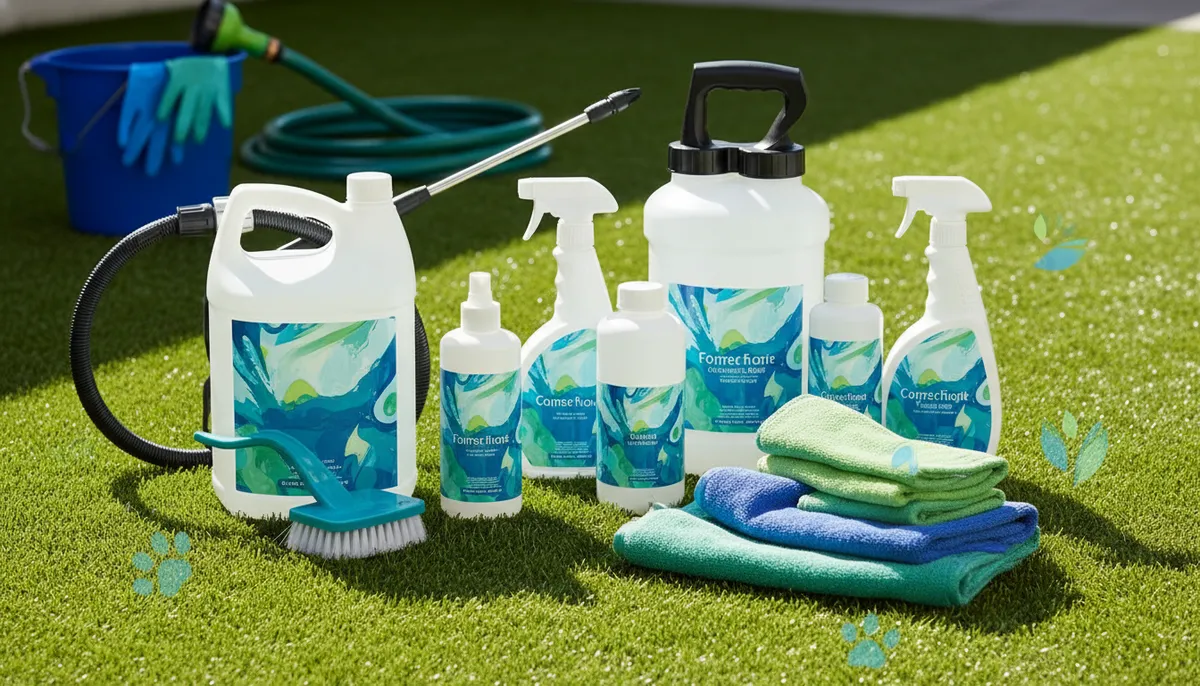
The Best Products for Cleaning Pet Waste from Synthetic Grass
Choosing the right products matters. The wrong cleaners can damage turf fibers or leave behind harmful residue. Here’s what to look for:
- Enzyme-based cleaners: These are the gold standard for artificial turf. They target bacteria and organic waste directly. They’re safe for pets, children, and the environment.
- Biodegradable sanitizers: These kill bacteria and pathogens without harsh chemicals. Look for products designed specifically for synthetic turf surfaces.
- Odor neutralizers: Some products combine enzyme treatment with deodorizing agents. These are great for heavy-use areas like dog runs or apartment pet zones.
- Avoid bleach or harsh chemicals: Strong chemicals can discolor turf fibers and break down the backing material over time.
- Avoid oil-based products: These can attract dirt and leave a sticky residue that traps debris.
The Landscape Illinois industry association recommends using products that are specifically labeled safe for synthetic turf surfaces. This protects both your investment and the health of everyone who uses the space.
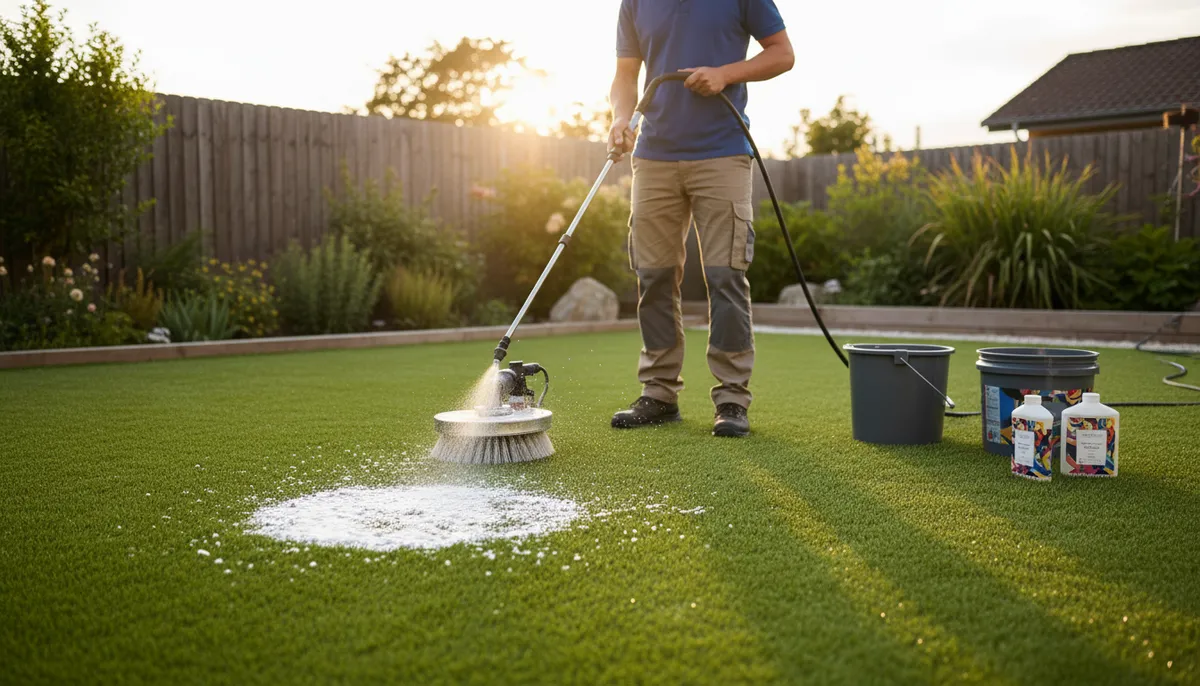
Professional Artificial Turf Cleaning Services
DIY maintenance is great for weekly upkeep, but professional cleaning takes things to another level. Professional landscaping teams bring specialized tools and expertise that make a real difference for pet-heavy properties.
Here’s what a professional turf cleaning service typically includes:
- Deep removal of pet hair, dirt, pollen, and embedded debris
- Grid-pattern scooping for thorough solid waste removal
- Enzyme treatment and full-surface sanitizing
- Infill refresh and leveling to restore drainage performance
- Turf fiber grooming to restore blade height and softness
- Optional deodorizing treatments for persistent odors
Professional services are especially valuable for commercial properties. Dog parks, apartment complexes, and pet-friendly businesses face heavy usage that goes beyond what weekly DIY cleaning can handle. Commercial lawn maintenance professionals can set up custom schedules to keep these spaces clean and welcoming year-round.
Artificial Turf Cleaning Costs: What to Expect
Pricing varies depending on the size of the turf area, the level of soiling, and the frequency of service. Here’s a helpful overview:
| Service Type | Best For | Estimated Cost | Frequency |
|---|---|---|---|
| Standard Residential Cleaning | 1-2 pets, moderate use | $150–$300 per session | Bi-weekly or monthly |
| Heavy Pet Usage Cleaning | Multiple pets, high use | $400–$600 per session | Weekly or bi-weekly |
| Commercial Dog Park / Apartment | High-traffic pet areas | Custom quote | Weekly or custom schedule |
| One-Time Deep Clean | Seasonal refresh or new move-in | $200–$500+ | As needed |
These are general estimates. The actual cost depends on your specific property. Get a free estimate from a professional landscaping team to find the right plan for your needs and budget.
Preventing Odors and Bacterial Growth
Prevention is always better than cure. A few simple habits can dramatically reduce odor and bacteria buildup between cleanings.
- Pick up solid waste daily. The faster you remove it, the less chance it has to press into the turf or affect drainage.
- Rinse urine spots immediately. A quick rinse with a garden hose right after your pet goes dramatically reduces ammonia buildup.
- Apply a weekly enzyme spray. A light application of enzyme cleaner every week keeps bacteria levels low and odors in check.
Infill material plays a big role in odor control too. Some infill types, like antimicrobial or zeolite-based options, actively reduce bacterial growth. When you install or replace your turf, ask your artificial turf installation team about odor-reducing infill options. It’s a small upgrade that makes a big difference over time.
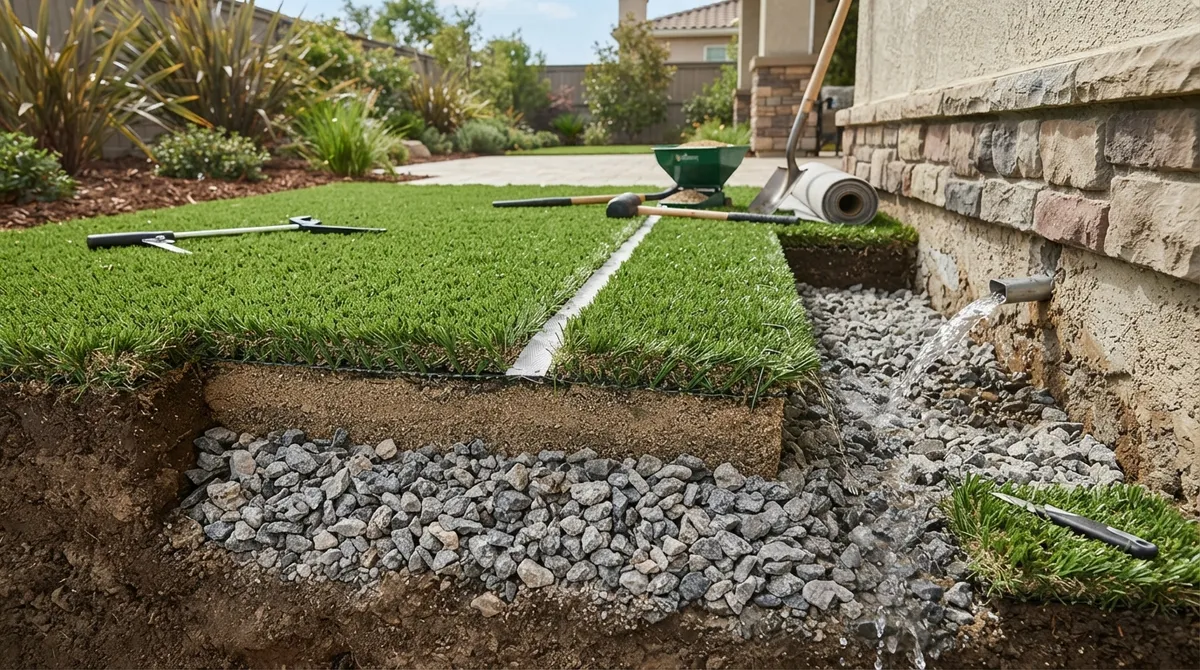
Good drainage is also critical. If your turf doesn’t drain properly, waste and moisture pool beneath the surface. This creates an ideal environment for bacteria and parasites. A properly installed turf system with adequate drainage prevents these issues from the start. Learn more about our landscaping process to see how we design systems that perform well long-term.
Artificial Turf Maintenance Schedule for Pet Owners
Consistency is everything when it comes to keeping pet turf clean. Here’s a simple schedule to follow:
- Daily: Remove solid waste. Rinse urine spots with water.
- Weekly: Apply enzyme cleaner to the full turf surface. Rinse thoroughly. Brush fibers upright.
- Monthly: Deep rinse the entire turf area. Inspect infill levels and drainage. Check for any flat or matted areas.
- Seasonally: Schedule a professional cleaning. Refresh infill if needed. Inspect turf for wear, damage, or odor that has penetrated deep into the base layer.
Following this schedule keeps your synthetic lawn fresh and extends its lifespan significantly. Well-maintained artificial turf can last 15 to 20 years, even with heavy pet use. That’s a great return on your landscaping investment.
Artificial Turf vs. Natural Grass for Pet Owners
Many Chicago-area homeowners wonder whether natural grass or artificial turf is better for pets. Here’s a simple comparison:
| Feature | Artificial Turf | Natural Grass |
|---|---|---|
| Durability with pets | Excellent — no dead patches | Poor — urine burns and digs cause damage |
| Odor control | Good with regular cleaning | Self-managing but can smell after rain |
| Maintenance frequency | Weekly cleaning needed | Mowing, watering, reseeding required |
| Mud and mess | None — clean paws always | High — especially in Chicago winters |
| Long-term cost | Higher upfront, lower ongoing | Lower upfront, higher ongoing |
For most pet owners in the Chicago suburbs, artificial turf wins hands down. It stays beautiful year-round, handles rough play, and keeps your home cleaner. Pair it with other great outdoor features like elegant pavers or a cozy fire pit to create a complete outdoor living space you’ll love.
When to Call a Professional Landscaping Team
Some situations call for professional help. Here are clear signs it’s time to bring in the experts:
- Persistent odors that don’t go away after repeated cleaning
- Visible discoloration or staining on turf fibers
- Matted or flattened areas that won’t brush back up
- Pooling water or slow drainage after rain or rinsing
- Multiple pets using the same area heavily
- Commercial property with high daily foot traffic from animals
Professional teams have access to commercial-grade enzyme treatments and sanitizers that go deeper than consumer products. They also have the tools to properly refresh infill, regrading the base if needed, and restore drainage performance. The ICPI Certified Installer network is a great resource for finding qualified professionals in your area.
At Serenity Landscape Group, we’ve spent over two decades helping Chicago-area homeowners and businesses maintain beautiful, functional outdoor spaces. Our team understands the unique challenges of the Midwest climate and designs turf systems that hold up beautifully through every season. We’d love to help you keep your outdoor space in top shape.
Keep Your Turf Beautiful for the Long Run
Cleaning artificial turf from pet waste is a straightforward task when you stay on top of it. The right products, a consistent schedule, and occasional professional care make all the difference. Your synthetic lawn can stay fresh, safe, and stunning year after year.
Don’t let pet waste compromise the beauty and hygiene of your outdoor space. Whether you need a one-time deep clean or a regular maintenance schedule, professional help is just a phone call away. You can also explore our gallery of our work to see what a well-maintained outdoor space can look like.
Ready to take the next step? Request your free estimate today and let our team help you create and maintain the perfect outdoor space for you and your pets — one you’ll be proud to show off all year long.
FAQs
Q: How do you remove pet odors from artificial turf?
A: The best way to remove pet odors from artificial turf is with an enzyme-based cleaner. These products break down the organic compounds in pet urine and waste at the source, eliminating odors rather than just covering them up. A weekly spray-and-rinse routine keeps smells from building up over time.
Q: How often should artificial turf be cleaned when you have pets?
A: For most pet owners, weekly cleaning is the sweet spot — it keeps odors and bacteria from building up without being too demanding. If you have lighter usage or a smaller pet, a bi-weekly schedule can work just fine. The key is staying consistent so small issues don’t turn into big ones!
Q: Are enzyme treatments safe for pets and children on synthetic turf?
A: Absolutely! Enzyme-based cleaners are specifically formulated to be safe for pets and children. They use natural biological processes to break down waste, with no harsh chemicals involved. Just make sure the area is fully rinsed and dry before letting your little ones and furry friends back on the turf.
Q: What does professional artificial turf cleaning cost?
A: Costs vary based on turf size and usage level. For heavy pet use, professional sessions typically range from $400 to $600. Standard residential cleanings are generally more affordable, while commercial spaces like dog parks receive custom quotes. Reaching out for a free estimate is the best way to get accurate pricing for your specific space.
Q: Can landscaping professionals handle artificial turf cleaning for commercial pet areas?
A: Yes! Professional landscaping teams are well-equipped to manage commercial pet turf areas like dog parks, apartment pet zones, and pet-friendly business spaces. They use commercial-grade equipment, enzyme treatments, and custom maintenance schedules to keep high-traffic areas clean, hygienic, and welcoming for all visitors.