Key Takeaways
-
Skip permits and engineering for commercial retaining walls over 4 feet—this is the costliest mistake, risking structural failure, liability exposure, and property complications during sale or refinement.
-
Plan grading and retaining walls as one integrated system from the start; coordinating placement, drainage, and compaction prevents misaligned grades, failed foundations, and costly rework.
-
Choose segmental concrete block or natural stone for most Chicago-area commercial walls—they withstand freeze-thaw cycles, handle heavy loads, and deliver professional aesthetics.
-
Work with contractors holding ICPI Certified Installer credentials and formal engineering relationships to ensure commercial projects meet code requirements and perform long-term.
-
Properly engineered drainage with gravel backfill, drain pipes, and weep holes behind walls is critical for relieving hydrostatic pressure and extending wall lifespan to 25-50 years.
-
Well-designed grading and walls create usable outdoor space for parking borders, planting beds, walkways, and seating areas while managing stormwater and eliminating erosion problems.
If your commercial property has a slope, drainage issue, or uneven terrain, you already know how frustrating it can be. Water pools in the wrong places. Soil erodes after every rain. Usable outdoor space feels like a distant dream. Commercial landscape grading walls are the solution that brings it all together — but only when they’re planned and built the right way.
Too many property managers, small business owners, and developers make avoidable mistakes that cost them time, money, and headaches down the road. Whether you’re managing an office complex in the Chicago suburbs or developing a new retail property in Aurora, getting your grading and retaining wall work right from the start is everything. This guide walks you through the 3 biggest mistakes people make — and how to avoid every single one of them.
What Are Commercial Landscape Grading Walls?
Before we dive into the mistakes, let’s make sure we’re on the same page. In landscaping, “grading walls” typically refers to the combination of site grading (reshaping the soil elevation) and retaining walls (engineered wall systems that hold back soil on sloped sites). These two elements almost always work hand in hand on commercial properties.
Grading reshapes the land so water flows away from buildings and toward proper drainage points. Retaining walls hold the newly shaped soil in place. Together, they create flat, stable, usable areas for parking edges, walkways, planting beds, outdoor seating, and more. You can learn more about what these structures do and why they matter by reading What Is a Retaining Wall and Do You Need One?
Commercial projects are more demanding than residential ones. They involve heavier loads, more foot traffic, stricter code requirements, and larger site areas. That’s why getting the planning right matters so much. The Landscape Illinois professional association sets standards that guide qualified contractors on projects like these throughout the state.
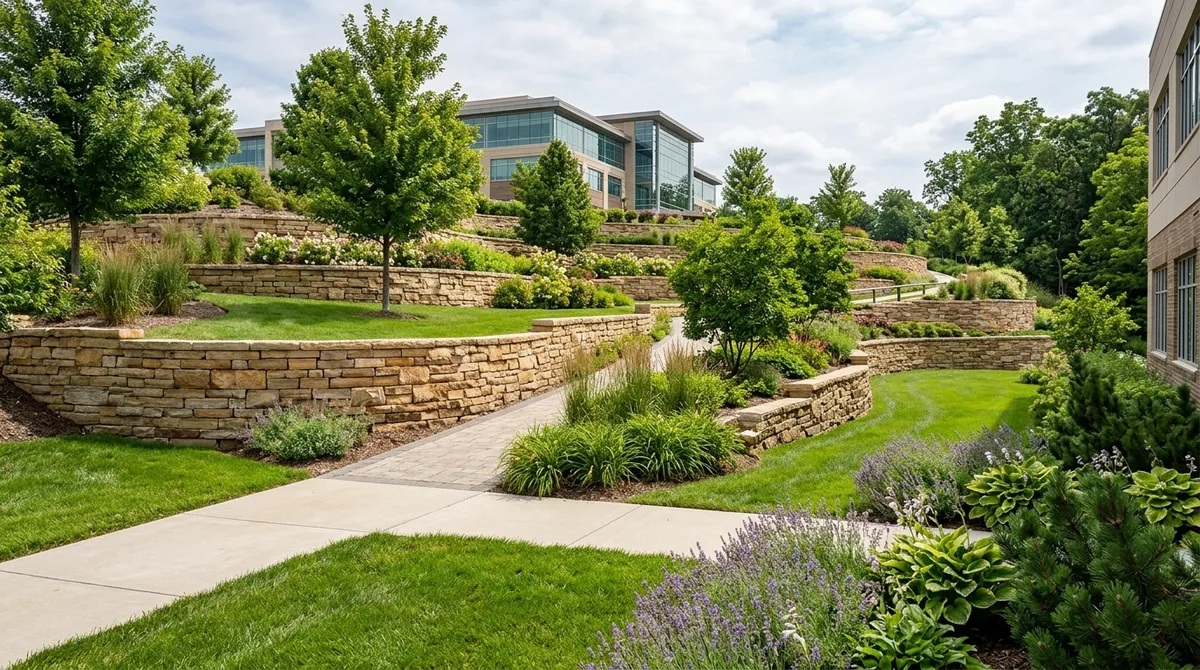
Why Commercial Properties Need Grading and Retaining Walls
Sloped sites are common across the greater Chicago area. The region’s varied terrain, combined with heavy seasonal rainfall and freeze-thaw cycles, creates real challenges for commercial properties. Here’s what happens when grading and wall systems aren’t properly addressed:
- Stormwater runoff causes erosion and damages landscaping
- Water pools near building foundations, leading to structural problems
- Slopes become unusable, wasting valuable outdoor square footage
- Soil shifting damages pavers, walkways, and hardscape features
- Liability increases when uneven ground creates safety hazards
- Long-term maintenance costs climb steadily each year
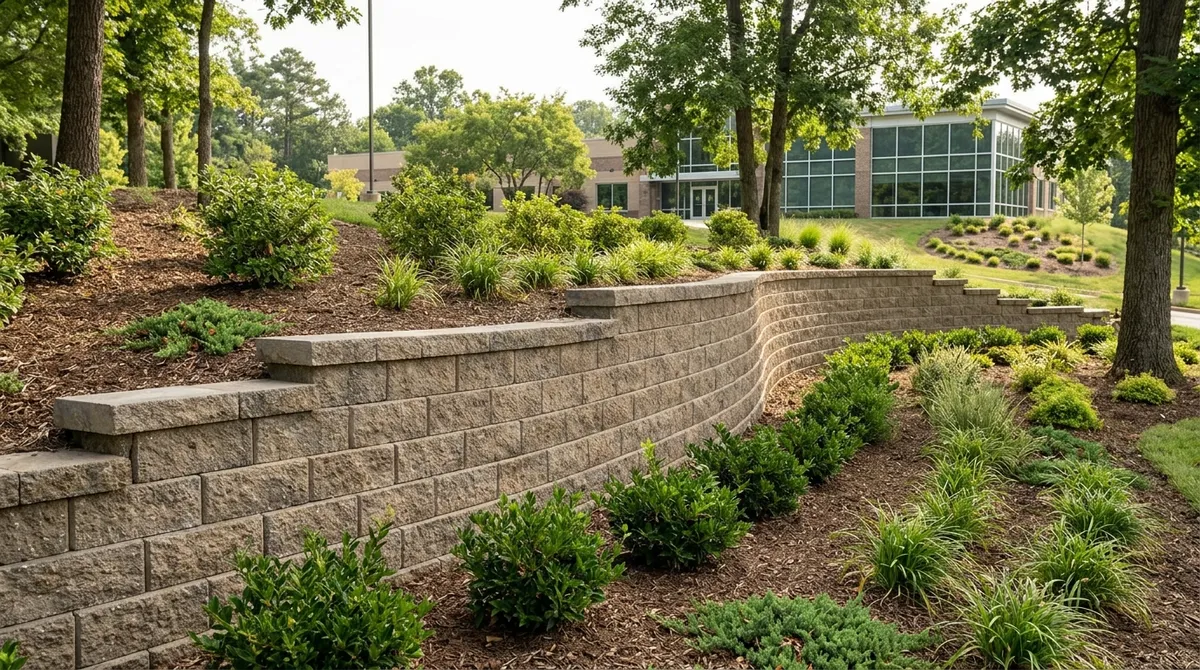
When commercial landscape grading walls are done correctly, they transform problem slopes into polished, functional spaces. They manage stormwater. They create clean edges for planting beds. They make outdoor areas safe and appealing for customers, employees, and visitors. You can see the full impact by checking out Why Do Retaining Walls Transform Sloped Yards Into Usable Spaces.
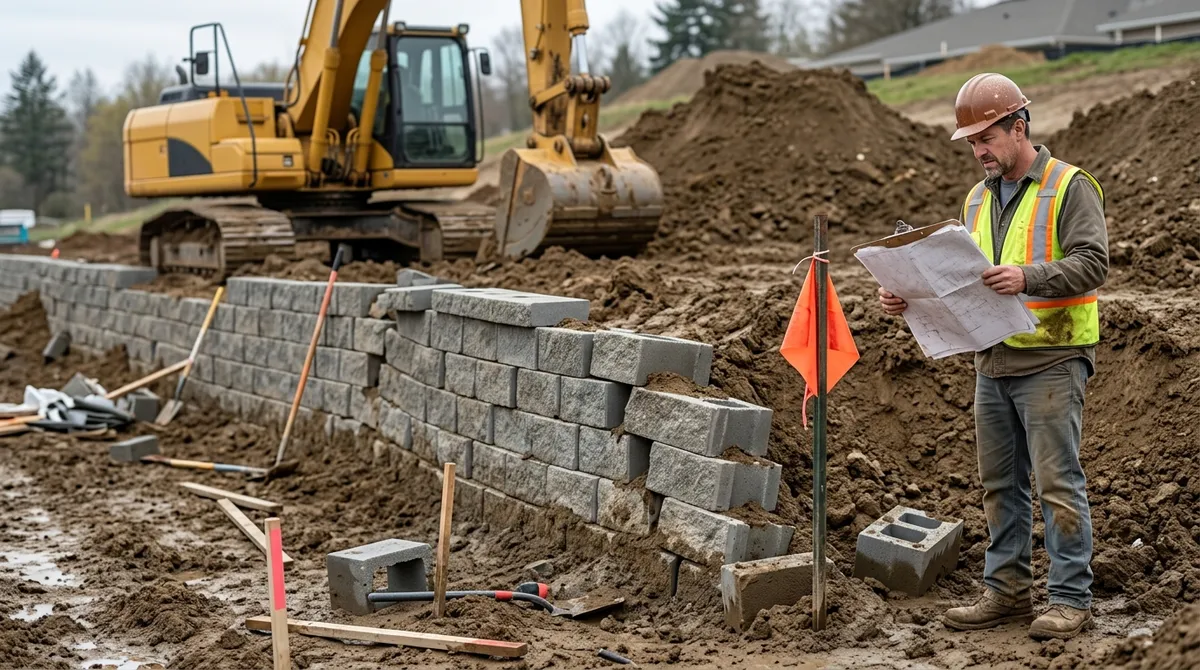
Mistake #1: Skipping the Engineering and Permit Process
This is the biggest and most expensive mistake property owners make. Many people assume that a retaining wall is just stacking some blocks or stones. For small residential walls, that might fly. For commercial landscape grading walls? Absolutely not.
Commercial retaining walls often hold back significant amounts of soil, sometimes under heavy vehicle loads or near building foundations. A wall failure doesn’t just mean a messy yard — it can mean property damage, liability exposure, and costly emergency repairs. Most municipalities in the Chicago area require engineering drawings and building permits for commercial retaining walls above a certain height, typically 4 feet.
What Proper Engineering Looks Like
A licensed engineer or experienced commercial landscape contractor will assess your site and design a wall system that accounts for:
- Soil pressure and load calculations — Understanding how much force the retained soil exerts on the wall
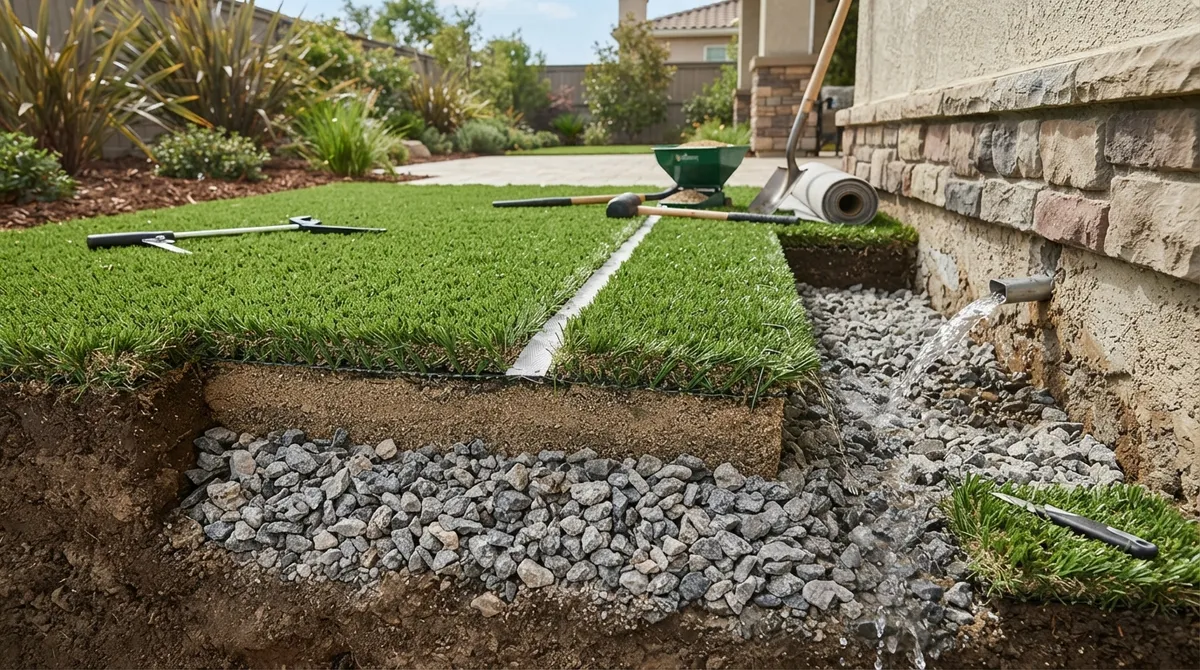
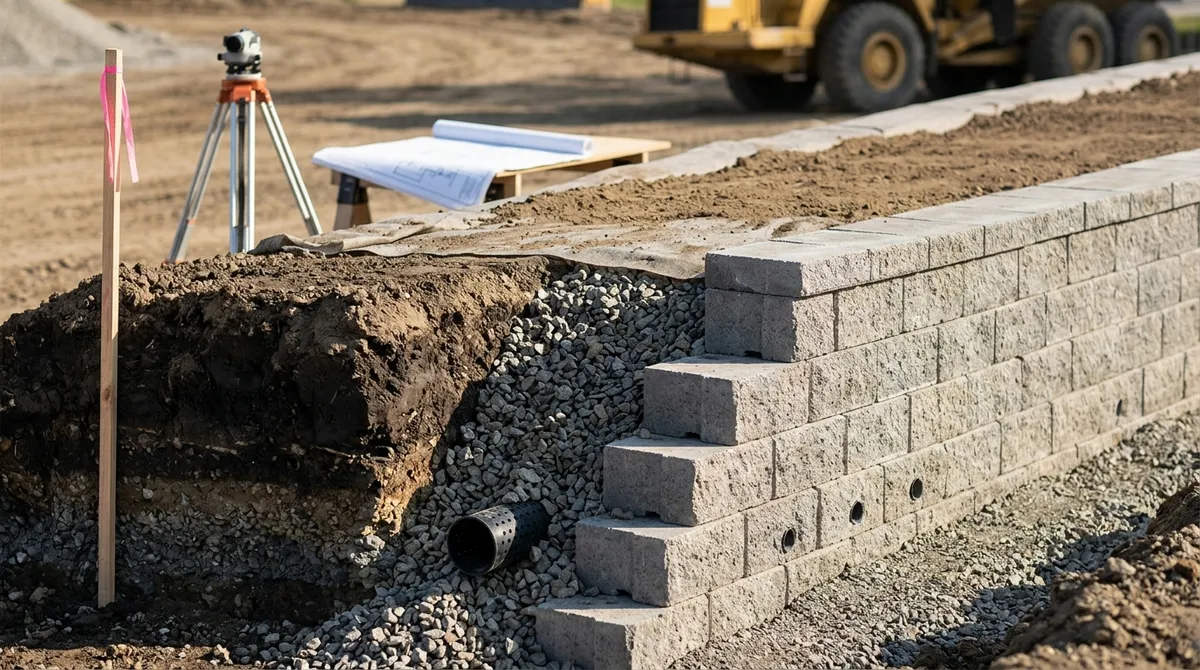
- Drainage design — Installing gravel backfill, drain pipes, or weep holes to relieve hydrostatic pressure behind the wall
- Footing depth and foundation requirements — Especially important in Illinois where the frost line sits deep and freeze-thaw cycles are harsh
Skipping permits doesn’t just risk structural failure. It can also create problems when you try to sell or refinance the property. Always work with a contractor who pulls the right permits and follows local codes. You can explore what professional commercial retaining wall contractors actually handle by visiting What Does a Commercial Retaining Wall Contractor Actually Do?
Look for contractors with formal credentials. The ICPI Certified Installer designation is one benchmark of professional hardscape and wall installation training worth looking for when vetting your team.
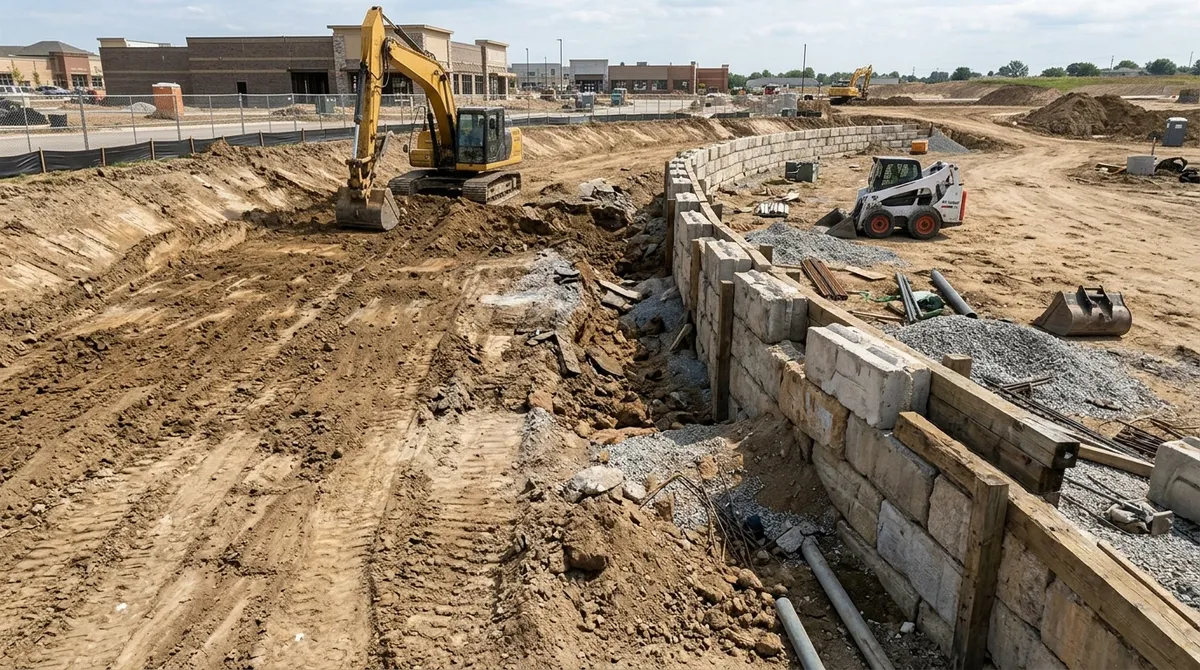
Mistake #2: Treating Grading and Walls as Separate Projects
Here’s a mistake that costs property owners real money: hiring one crew for grading and a separate crew for retaining walls and hardscaping without coordinating the two. Or worse, completing grading work first, then trying to figure out the wall system later.
Commercial landscape grading walls must be planned as one integrated system. The wall placement determines where grading ends. The grading plan determines how tall the wall needs to be. Drainage infrastructure connects both. When these elements aren’t coordinated from the start, you end up with misaligned grades, wall foundations set on improperly compacted soil, or drainage that routes water directly behind the wall.
The Right Way to Sequence a Commercial Grading Wall Project
- Site assessment and survey — Understand existing grades, drainage patterns, and soil conditions before any design begins
- Integrated design phase — Create a plan that addresses grading, wall placement, drainage, and future hardscape or softscape installations together
- Permit and engineering approval — Get everything reviewed and approved before breaking ground
- Grading and excavation — Shape the site according to the approved plan, including proper compaction
- Wall foundation and construction — Build wall systems on prepared, stable ground with proper drainage behind them
- Drainage installation — Install pipes, catch basins, and outlets as designed
- Final grading and landscape installation — Add planting beds, pavers, turf, and other features on the finished grade
Experienced commercial landscapers bundle all of these steps into one project scope. That’s exactly how commercial landscape maintenance and installation teams at Serenity Landscape Group approach projects — with a fully integrated plan that covers everything from grading through final softscape installation. You can learn more about how the process works at our project process page.
Mistake #3: Choosing the Wrong Wall Material for the Site
Not all retaining wall materials are equal. Not all of them are right for every commercial application. Choosing the wrong material is a mistake that leads to premature failure, higher maintenance costs, and a final result that looks out of place on your property.
Here’s a quick comparison of the most common commercial retaining wall materials:
| Material | Best For | Durability | Aesthetic |
|---|---|---|---|
| Segmental Concrete Block | Large commercial sites, tall walls | Very High | Clean, modern |
| Natural Stone | High-end commercial, visible areas | Very High | Premium, timeless |
| Poured Concrete | Structural applications, heavy loads | Excellent | Industrial, can be faced |
| Timber / Railroad Ties | Low-height, low-load applications | Moderate | Rustic |
| Gabion Baskets | Erosion control, naturalized sites | High | Natural, textured |
For most commercial landscape grading wall projects in the Chicago metro area, segmental concrete block or natural stone are the most popular choices. They’re durable enough to handle Illinois winters, they can be engineered to hold significant loads, and they look polished in professional settings.
Factors That Should Drive Your Material Choice
- Wall height and soil load — Taller walls holding heavier soil need more structurally capable materials
- Site visibility — High-visibility walls facing parking lots or entrances deserve premium aesthetics
- Local climate — Illinois freeze-thaw cycles are hard on some materials more than others
- Budget and long-term maintenance — Some materials cost less upfront but need more maintenance over time
- Brand and property image — The wall material should complement your overall landscaping and hardscaping design
Pairing your retaining walls with quality paver hardscaping creates a cohesive, professional look that elevates your entire property. The wall anchors the grade change, and the paving ties everything together at ground level. For inspiration on what a polished commercial outdoor space can look like, browse our gallery of our work.
How Commercial Landscape Grading Walls Fit Into a Bigger Picture
One thing that surprises many property managers is how much value a well-designed grading and wall system adds to the overall landscape. Once you stabilize slopes and create level usable areas, a whole world of outdoor possibilities opens up.
On commercial sites, graded and walled areas commonly become home to:
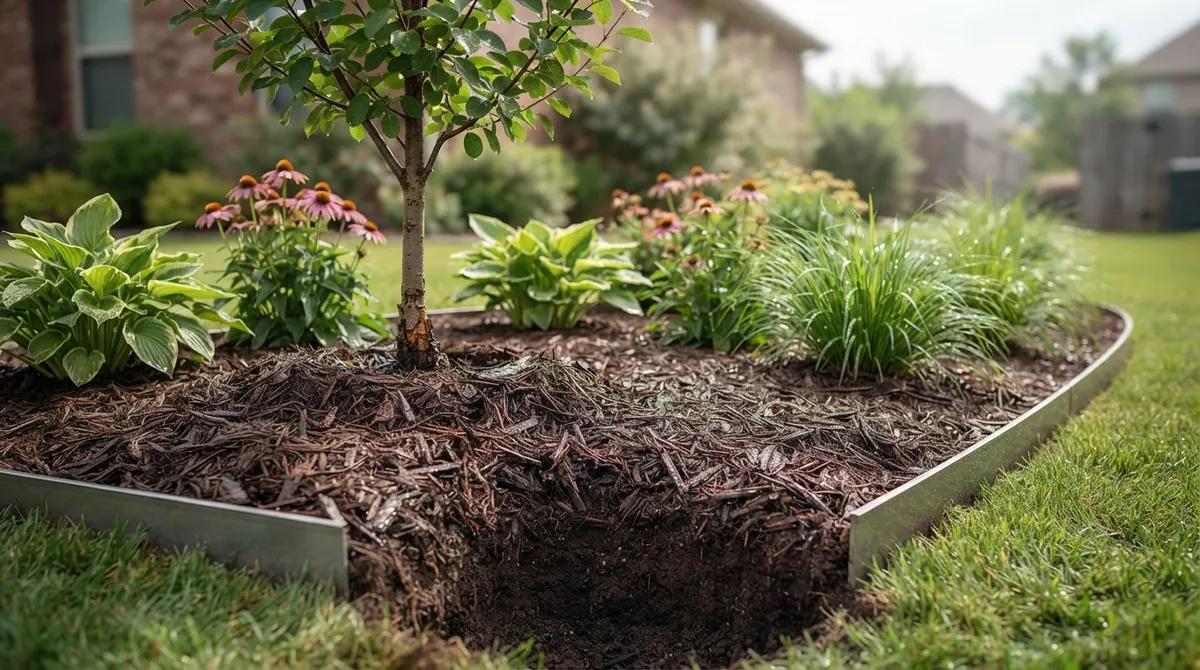
- Structured planting beds with trees, shrubs, and ground cover
- Paved walkways and pedestrian pathways
- Outdoor seating areas and gathering spaces
- Parking lot border landscaping
- Stormwater management features like rain gardens
Adding softscape elements like trees and shrubs alongside your retaining walls softens their appearance and adds year-round visual interest. Pair that with landscape lighting to highlight wall features at night, and your commercial property becomes genuinely impressive after dark too.
For small business owners especially, curb appeal matters enormously. Read more about how curb appeal landscaping transforms your property’s value and see why investing in proper site grading and walls pays off well beyond aesthetics. The Interlocking Concrete Pavement Institute also provides research showing how professional hardscape installations add measurable property value.
What to Look for in a Commercial Landscape Grading Wall Contractor
Not every landscaping company has the experience to handle commercial landscape grading walls. Here’s what to look for when choosing your contractor:
- Commercial project experience — Ask specifically about past commercial grading and retaining wall projects, not just residential work
- Integrated service capability — Can they handle grading, wall construction, drainage, and landscape installation under one roof?
- Engineering relationships — Do they work with licensed engineers for permit-required wall designs?
You can also explore 5 Ways to Find the Best Commercial Retaining Wall Contractors for a more detailed breakdown of the vetting process. And if you want to understand how to choose commercial landscaping services that actually deliver, this guide is a great place to start.
At Serenity Landscape Group, we’ve spent over two decades helping commercial clients across the greater Chicago area tackle exactly these kinds of projects. From initial site assessment through final installation, we manage every step so you don’t have to juggle multiple contractors or wonder if everything will fit together correctly.
Ready to Get Your Commercial Grading and Walls Done Right?
Commercial landscape grading walls done well are a long-term investment. They protect your property from erosion, manage stormwater, and create beautiful, functional outdoor spaces that impress clients and tenants alike. Avoiding the 3 mistakes above — skipping permits, treating grading and walls as separate projects, and choosing the wrong material — puts you on the path to a result you’ll be proud of for decades.
Whether you’re managing a retail center, office campus, or mixed-use development in the Chicago suburbs, the right team makes all the difference. Request your free project estimate today and let’s talk about transforming your site into something that works as good as it looks — or give us a call at (630) 359-5139 to get started right away.
FAQs
Q: What are commercial landscape grading walls?
A: Commercial landscape grading walls are the combination of site grading (reshaping soil elevation) and retaining wall systems used on business properties to stabilize slopes, manage drainage, and create level usable outdoor areas. Think of them as the foundation that makes the rest of your landscape design possible — they turn a problematic slope into a polished, functional space.
Q: Do commercial retaining walls require a permit in the Chicago area?
A: Yes, in most Chicago-area municipalities, commercial retaining walls over 4 feet in height require engineering drawings and a building permit. Skipping this step can lead to structural failures, fines, and complications when selling or financing the property. Always work with a contractor who understands local code requirements and pulls the proper permits — it protects everyone involved!
Q: How long do commercial landscape grading walls last?
A: When properly engineered, built with quality materials, and maintained, commercial retaining walls can last 25 to 50 years or more. Materials like segmental concrete block and natural stone are especially durable in Illinois climates where freeze-thaw cycles are a real factor. Proper drainage behind the wall is one of the biggest factors in long-term performance.
Q: What materials are best for commercial retaining walls in Illinois?
A: Segmental concrete block and natural stone are the most popular choices for commercial landscape grading walls in the Chicago area. Both handle Illinois winters well, offer strong structural performance, and look great on professional properties. The right choice depends on your wall height, site visibility, budget, and overall landscape design goals.
Q: How much do commercial landscape grading walls cost?
A: Costs vary widely depending on wall height, length, material choice, site conditions, and whether engineering is required. Smaller commercial wall projects may start in the several-thousand-dollar range, while larger engineered systems on complex sites can run significantly higher. The best way to get an accurate number is to request a site-specific estimate from a qualified commercial landscape contractor.