Key Takeaways
-
Poor drainage is the #1 cause of retaining wall failure; implement gravel backfill, perforated drainage pipes, and weep holes to prevent hydrostatic pressure that can crack or collapse the wall.
-
Professional site evaluation assessing soil type, slope grade, drainage patterns, and load requirements is essential before construction to avoid costly settlement, slope failure, or wall damage.
-
Concrete block and engineered block systems are ideal for commercial parking lots because they handle heavy vehicle loads and harsh Chicago freeze-thaw cycles better than other materials.
-
Commercial retaining walls over four feet typically require permits and licensed engineer design; working with qualified contractors ensures code compliance and protects you from liability.
-
Properly designed retaining walls increase usable parking space on sloped sites, improve curb appeal, reduce long-term maintenance costs, and extend pavement lifespan—boosting overall property value.
-
Skip site evaluation, drainage planning, or proper base installation at your peril; these shortcuts lead to expensive repairs costing far more than correct installation from the start.
If your commercial property has a sloped or uneven site, you already know the headache it can cause. Uneven ground makes parking difficult, creates drainage problems, and can even lead to soil erosion that damages your pavement over time. The good news? Retaining walls are one of the smartest hardscaping solutions for solving these exact problems — and they can make your property look great in the process.
Whether you manage an office building, a retail center, or a small business with a dedicated lot, understanding how retaining walls work for commercial parking lots will help you make smart decisions for your property. In this guide, we’ll walk you through everything you need to know — from materials and drainage to permits and professional installation — in plain, simple language.
What Is a Retaining Wall and Why Does a Parking Lot Need One?
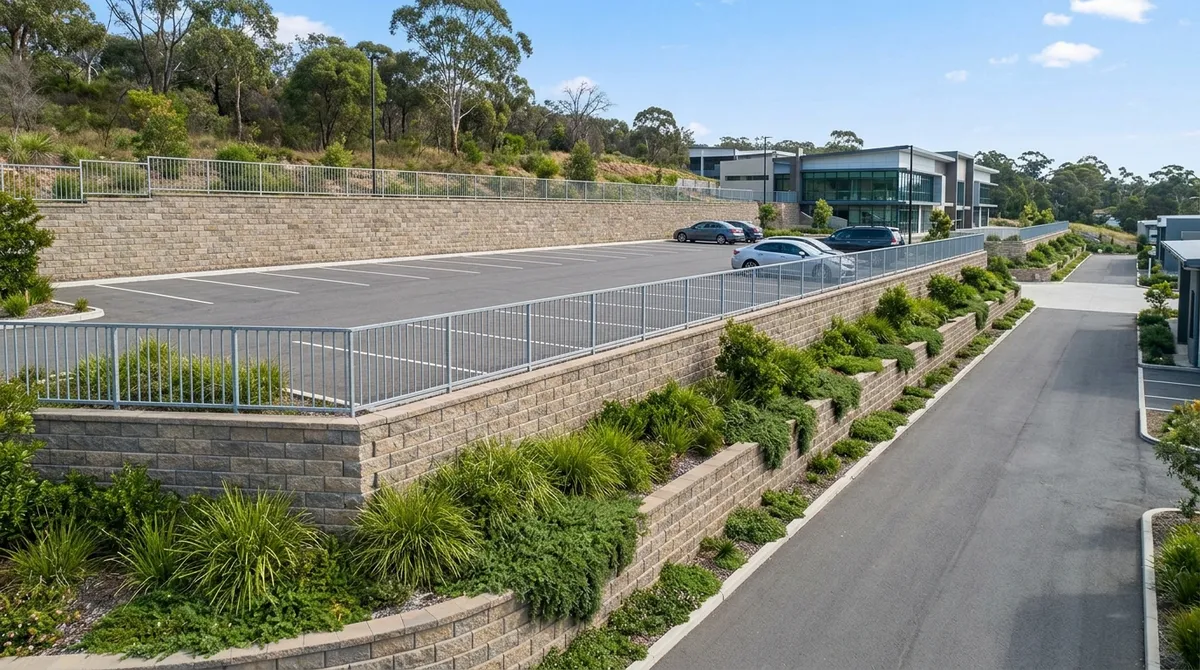
A retaining wall is a structure built to hold back soil on a sloped or graded site. It creates a level surface where one didn’t exist before. For commercial parking lots, this is a game-changer. Without a retaining wall, sloped sites can’t be safely or efficiently used for parking.
Think of it this way: if your property sits on a hillside or has a significant grade change, the ground needs to be “stepped” into level sections. Retaining walls do exactly that. They hold the soil on the high side while creating flat, usable space on the low side. You can learn more about the basics in this helpful guide: What Is a Retaining Wall and Do You Need One?
Here are the main reasons commercial parking lots benefit from retaining walls:
- They convert steep or unusable slopes into flat, paved parking areas
- They prevent soil erosion around and beneath paved surfaces
- They manage stormwater runoff and drainage challenges
- They create defined edges between parking zones and green spaces
- They improve overall property aesthetics and curb appeal
- They can expand available parking by terracing sloped terrain
Step 1 — Evaluate Your Site Before You Build
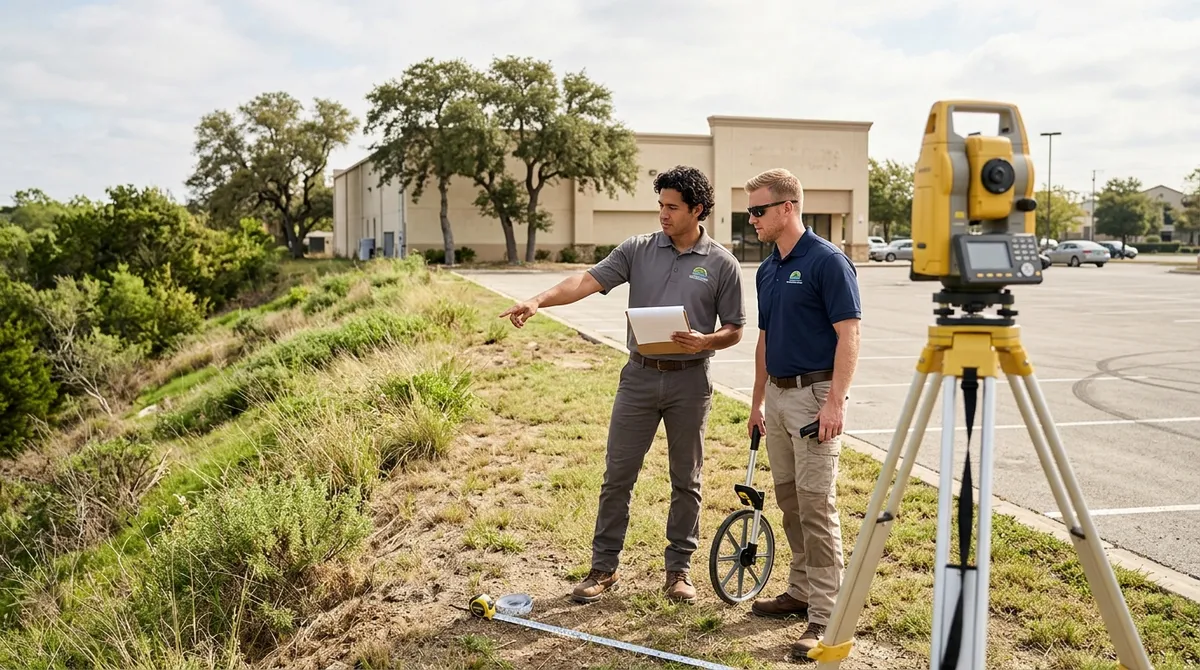
Before any wall goes up, a proper site evaluation is essential. Skipping this step is one of the most common — and costly — mistakes property owners make. A professional landscaper or hardscaping contractor will assess several key factors before recommending a design.
Professional evaluation of soil conditions, slope angle, drainage patterns, and load requirements is strongly recommended before construction. This reduces the risk of settlement, slope failure, or wall damage down the road. The Landscape Illinois association is a great resource for finding qualified professionals in the Chicago area.
Here’s what a proper site assessment should cover:
- Soil type and stability — Some soils hold water or shift under pressure, which affects wall design
- Slope grade and elevation changes — Steeper slopes require more engineering and reinforcement
- Drainage patterns — Where does water flow during and after rain?
- Load requirements — Will vehicles drive or park near the wall? That adds significant pressure
- Underground utilities — Digging safely requires knowing what’s below
Step 2 — Choose the Right Material for Your Commercial Wall
Not all retaining wall materials are created equal, especially for commercial use. The material you choose will affect the wall’s durability, appearance, cost, and maintenance needs. Here’s a breakdown of the most common options for commercial parking lot retaining walls:
| Material | Durability | Appearance | Best For |
|---|---|---|---|
| Concrete Block | Excellent | Clean, modern | Heavy-load commercial sites |
| Natural Stone | Very Good | Elegant, natural | Upscale retail or office properties |
| Brick | Good | Classic, polished | Matching existing architecture |
| Timber | Moderate | Rustic, warm | Lower walls, lighter applications |
| Engineered Block Systems | Excellent | Versatile | Large-scale or high-load sites |
Concrete block retaining walls are often preferred for commercial parking lots because they are durable, low-maintenance, and engineered to handle heavy loads and harsh weather. Here in the Chicago area, freeze-thaw cycles put enormous stress on hardscape materials, so choosing a material that holds up year-round matters a great deal.
Engineered systems — which may include geogrid reinforcement and compacted base layers — are ideal for large-scale projects or sites where the wall needs to support significant parking expansion. One real-world example documented a reinforced wall supporting a parking area above an approximately 80-foot structure. That’s serious load-bearing capability when done right.
If you’re curious about how pavers can complement your retaining wall system and give your parking lot a polished, professional look, that combination is worth exploring with your landscape contractor.
Step 3 — Design the Drainage System Correctly
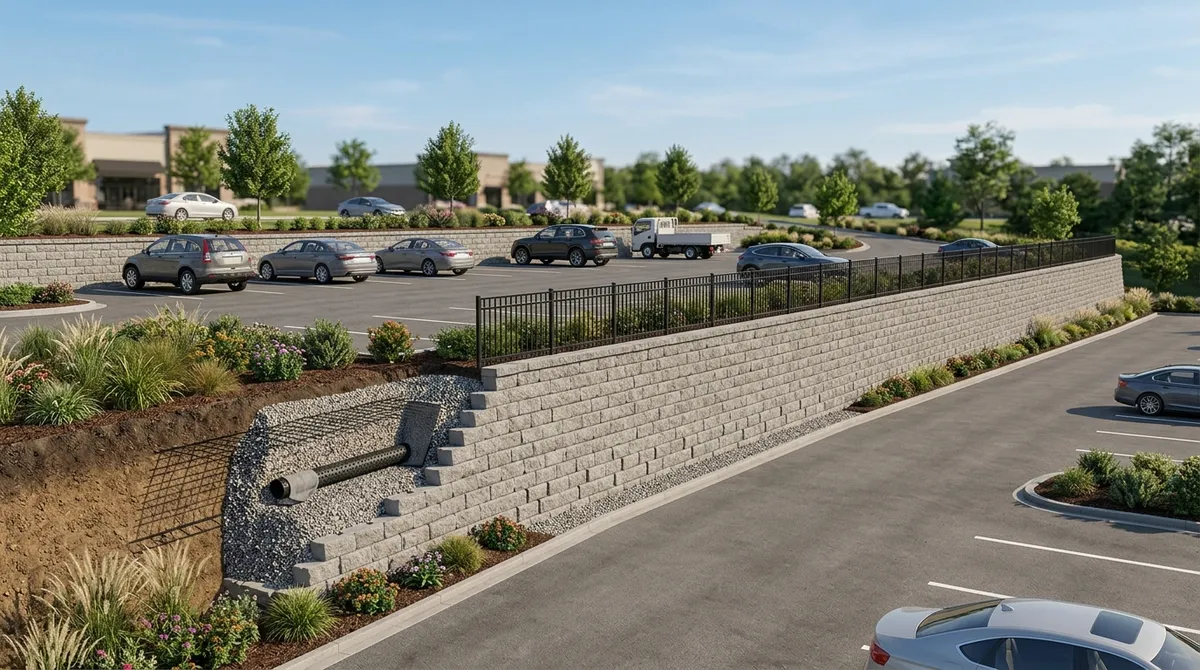
This is arguably the most important step in the entire process. Poor drainage is the number one cause of retaining wall failure. When water builds up behind a wall, it creates hydrostatic pressure — essentially, the weight of the water pushes outward and can crack, tilt, or collapse the wall over time.
Proper drainage behind the wall is absolutely critical for commercial applications, especially in the Chicago area where heavy rain and snowmelt are common seasonal realities. You can dive deeper into this topic here: Retaining Walls vs. Drainage Systems: Which Wins for Stormwater?
A well-designed commercial retaining wall drainage system typically includes:
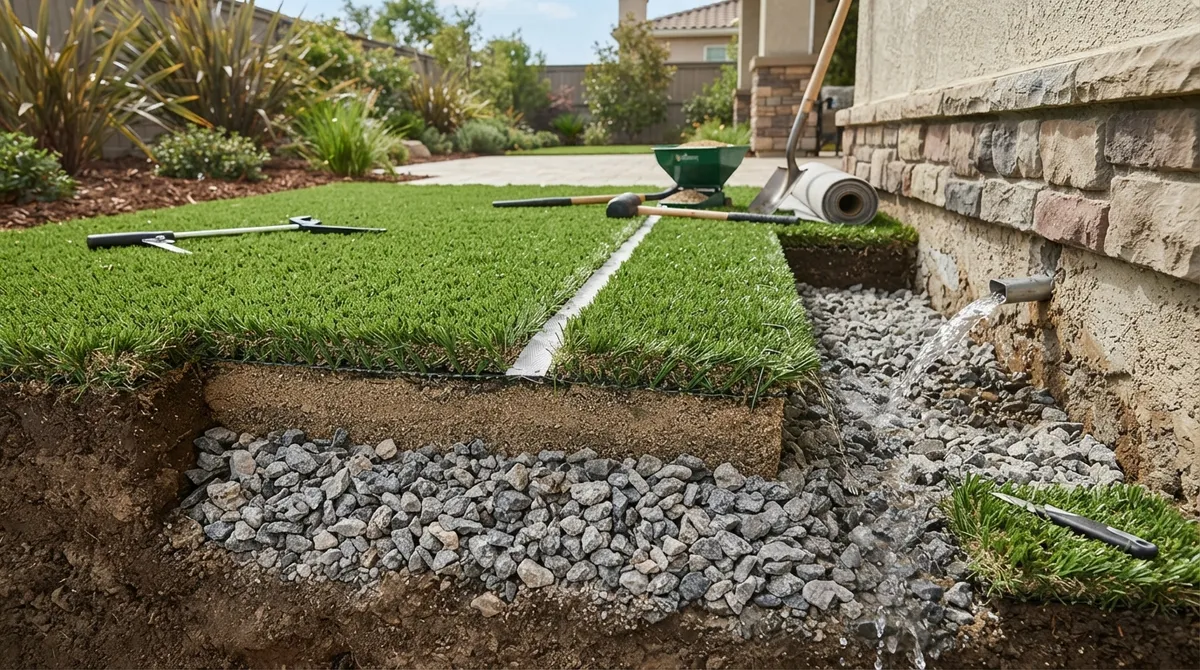
- Gravel backfill behind the wall to allow water to move freely
- Perforated drainage pipe (also called a French drain) at the wall’s base
- Weep holes built into the wall face to release pressure
- Proper grading of the surrounding site to direct runoff away from the wall
- Swales or catch basins to manage larger volumes of stormwater
Skipping or cutting corners on drainage is a risk not worth taking. It will cost far more to repair or replace a failed wall than to install proper drainage from the start.
Step 4 — Understand Engineering and Permit Requirements
Commercial retaining walls are not a DIY project. Depending on the wall’s height, location, and load requirements, you may need engineering drawings, structural calculations, and permits from your local municipality before construction begins.
In most jurisdictions, walls over a certain height — often four feet — require a permit and may need to be designed by a licensed engineer. Commercial properties are held to stricter standards than residential ones, so it’s important to work with a contractor who understands local codes. ICPI Certified Installers are professionals who have completed specialized training in hardscape installation and can help ensure your project meets industry standards.
Working with an experienced commercial retaining wall contractor means they’ll handle permitting, inspections, and compliance on your behalf — saving you the hassle and protecting you from liability.
Step 5 — Plan the Construction Process
Once your design is approved and permits are secured, construction can begin. A typical commercial retaining wall installation for a parking lot follows this general sequence:
- Site preparation — Clearing vegetation, grading the area, and marking utility lines
- Excavation — Digging the trench for the wall’s foundation (one example used an 8-inch base with a 6-inch block course, totaling about 14 inches of depth before additional grading)
- Base installation — Compacting crushed gravel to create a stable, level foundation
- Wall construction — Laying block courses, installing geogrid reinforcement where needed, and building up to the desired height
- Backfill and drainage — Adding gravel behind the wall, installing drainage pipe, and gradually backfilling with compacted soil
- Cap and finish — Adding a cap course to the top of the wall for a clean, finished look
- Site restoration — Grading, seeding, or installing softscape elements around the wall
If you want to see how a professional landscape process works from start to finish, take a look at our process at Serenity Landscape Group. We walk clients through every step so there are never any surprises.
How Retaining Walls Boost Commercial Property Value
Beyond function, retaining walls for commercial parking lots offer real business benefits. A well-designed wall improves your property’s curb appeal, creates a more organized and professional appearance, and signals to customers and clients that your property is well-maintained.
For property managers and small business owners, this visual impact matters. Research consistently shows that landscaping and hardscaping improvements increase commercial property values and attract more foot traffic. You can explore this further here: How Does Curb Appeal Landscaping Transform Your Property’s Value?
Retaining walls also protect your investment. By stabilizing soil and managing drainage, they prevent erosion damage to your pavement, reduce maintenance costs, and extend the life of your parking lot surface. That’s a win for your bottom line.
Here are additional ways a commercial retaining wall adds value:
- Creates more usable parking spaces on sloped sites
- Reduces ongoing landscape maintenance by controlling erosion
- Protects surrounding softscape and green space from runoff damage
- Improves safety by eliminating uneven grades near pedestrian areas
Common Mistakes to Avoid with Commercial Retaining Walls
Even well-intentioned projects can go wrong without proper planning. Knowing what to avoid can save you significant time and money. For a broader look at hardscaping pitfalls, check out 7 Hardscaping Mistakes to Avoid in Your Outdoor Space.
Here are the most common retaining wall mistakes seen on commercial parking lot projects:
- Poor drainage planning — Leading to water pressure buildup and wall failure
- Skipping professional evaluation — Missing soil or load issues that affect structural integrity
- Choosing the wrong material — Using materials not suited for commercial loads or Chicago’s climate
- Ignoring permits — Resulting in fines, forced removal, or liability exposure
- Under-building the base — A weak foundation causes settling and cracking over time
Also be sure to read about 3 Commercial Landscape Grading Walls Mistakes to Avoid for more insights specific to commercial grading and wall projects.
Why Work with a Professional Landscaping Company
Retaining walls for commercial parking lots are complex structures that require expertise in soil science, drainage engineering, structural design, and local code compliance. Attempting to cut costs by hiring an unqualified contractor — or tackling the project without professional guidance — can lead to costly failures and even safety hazards.
At Serenity Landscape Group, we’ve spent over two decades designing and installing retaining walls and hardscape systems for commercial clients across the greater Chicago metropolitan area. We understand the unique challenges of Chicago-area soils, drainage conditions, and freeze-thaw weather patterns — and we bring that experience to every project we take on.
Our commercial landscaping services go beyond just wall installation. We integrate retaining walls with complete site design, drainage planning, softscaping, and ongoing maintenance — so your entire property looks great and performs well year after year. You can browse our gallery of our work to see examples of what we’ve built for clients just like you.
Conclusion
Retaining walls for commercial parking lots are one of the most practical and impactful investments you can make for a sloped or uneven commercial property. They solve real problems — erosion, drainage, unusable terrain — while also elevating the look and value of your property. The key is doing it right: proper site evaluation, the right materials, excellent drainage design, and professional installation that meets local code requirements.
Whether you’re a property manager looking to maximize parking capacity, a small business owner wanting to improve curb appeal, or a developer building out a new site, retaining walls are a solution worth exploring. Ready to take the next step? Get a free estimate from our team and let’s talk about what’s possible for your commercial property.
FAQs
Q: What is the purpose of a retaining wall in a commercial parking lot?
A: A retaining wall holds back soil on sloped or uneven sites, creating flat, stable ground for parking. It also controls erosion and manages drainage around paved surfaces, keeping your lot safe and functional for the long haul.
Q: What materials are best for commercial retaining walls on parking lots?
A: Concrete block and engineered block systems are the top choices for commercial parking lots because they handle heavy loads and tough weather beautifully. Natural stone is a great option if you want a more upscale look to match your property’s character.
Q: How does drainage work behind a commercial retaining wall?
A: Good drainage uses gravel backfill, a perforated drain pipe at the wall’s base, and weep holes in the wall face to release water pressure. Without this system, water buildup can eventually push the wall out of place — so it’s definitely not a step to skip!
Q: Do commercial retaining walls require permits?
A: Yes, most commercial retaining walls require permits, especially those over four feet tall or near load-bearing areas like parking lots. Working with a licensed professional ensures your wall meets local building codes and keeps you protected from liability.
Q: How tall can a retaining wall be for a commercial parking lot?
A: With proper engineering and reinforcement, commercial retaining walls can be quite tall — documented examples include walls supporting parking areas above an 80-foot structure. The height depends on soil conditions, load requirements, and the engineering design, so a professional assessment is always the best starting point.