Key Takeaways
-
Skip professional site assessment and you’ll face expensive surprises during construction; always start with thorough evaluation of soil type, grade angle, drainage patterns, and underground utilities.
-
Poor drainage is a top cause of terrace failure; implement a comprehensive drainage solution that safely moves water off the site to prevent pooling, erosion, and structural weakness.
-
Choose retaining wall materials carefully for your climate; Chicago’s freeze-thaw cycles require durable options like concrete blocks or poured concrete, not timber or inappropriate materials.
-
Terracing is a multi-phase project requiring budget for grading, retaining walls, planting, irrigation, drainage, and lighting; underbudgeting leads to incomplete work and poor long-term performance.
-
Establish a maintenance plan before construction begins, including seasonal planting, irrigation checks, wall inspections, and drainage clearing; proper maintenance separates terraces that thrive for decades from those failing within years.
-
Integrate terracing into your overall landscape strategy rather than treating it as an isolated fix; coordinate with pathways, seating areas, and planting themes for maximum visual and functional impact.
Sloped commercial land is a real challenge. It looks rough, drains poorly, and wastes usable space. That’s where commercial property terracing comes in. Terracing converts a sloped site into a series of flat, stepped levels that are easier to use, maintain, and enjoy. Done right, it transforms a problem slope into a polished, functional landscape that works hard for your business. Done wrong, it can cost you time, money, and major headaches down the road.
Whether you manage an office park, retail center, medical campus, or corporate headquarters, understanding what terracing mistakes to avoid can save your project before it starts. At Serenity Landscape Group, we’ve helped commercial clients across the greater Chicago area fix slope problems that were left to worsen for years. Let’s walk through the 13 most common commercial property terracing mistakes so you know exactly what to watch out for.
What Is Commercial Property Terracing?
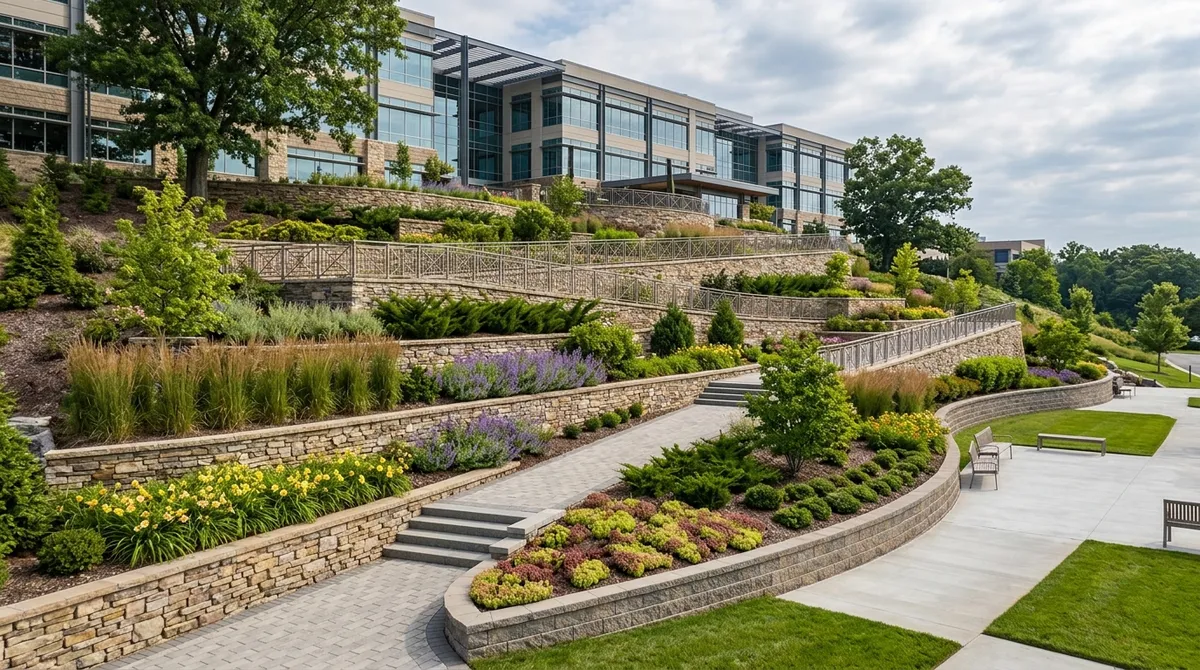
Terracing is a grading strategy that breaks a slope into multiple flat or gently sloped steps. Each step, or terrace, creates level ground that’s safe, accessible, and easy to landscape. On commercial sites, terracing is rarely a standalone job. It typically includes retaining walls, drainage improvements, irrigation design, and planting. For a deeper look at how retaining walls play a role, see why retaining walls transform sloped yards into usable spaces.
Common property types that benefit from terracing include:
- Office parks and corporate campuses
- Retail centers and shopping plazas
- Medical facilities and hospitals
- Schools and universities
- HOA communities and residential developments
- Restaurants with outdoor seating areas
The 13 Mistakes to Avoid With Commercial Property Terracing
Mistake 1: Skipping a Professional Site Assessment
Every slope is different. Soil type, grade angle, drainage patterns, and underground utilities all affect how terracing should be designed. Skipping a proper site assessment leads to expensive surprises during construction. Always start with a thorough evaluation by an experienced commercial landscaping team.
Mistake 2: Ignoring Drainage Planning
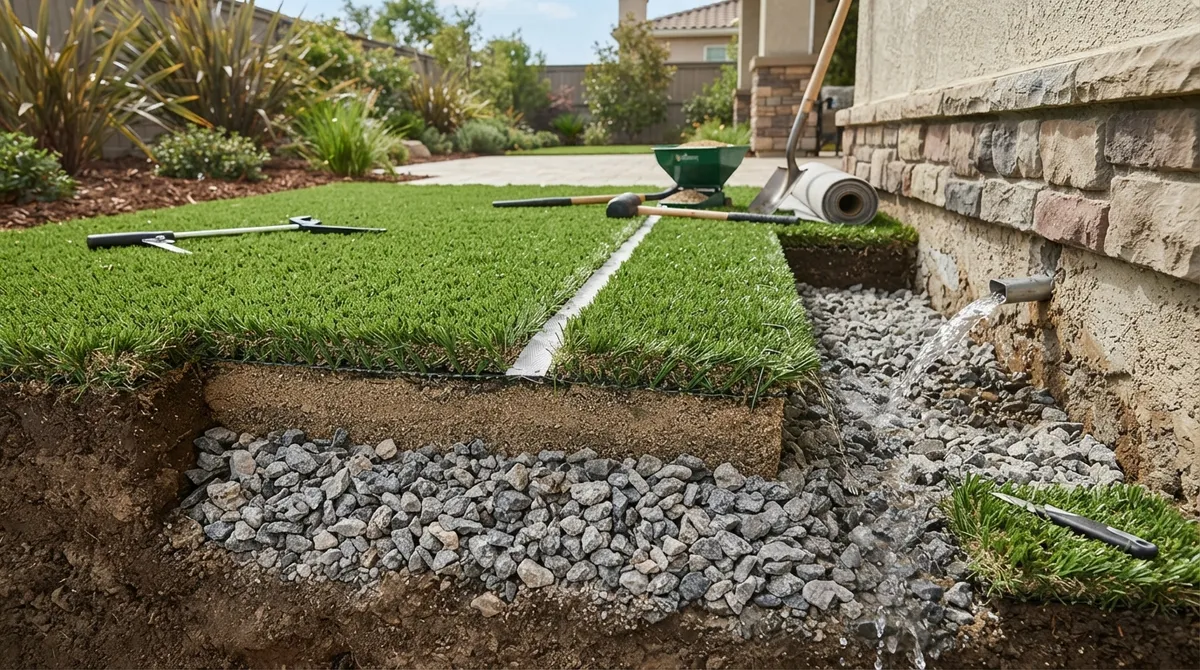
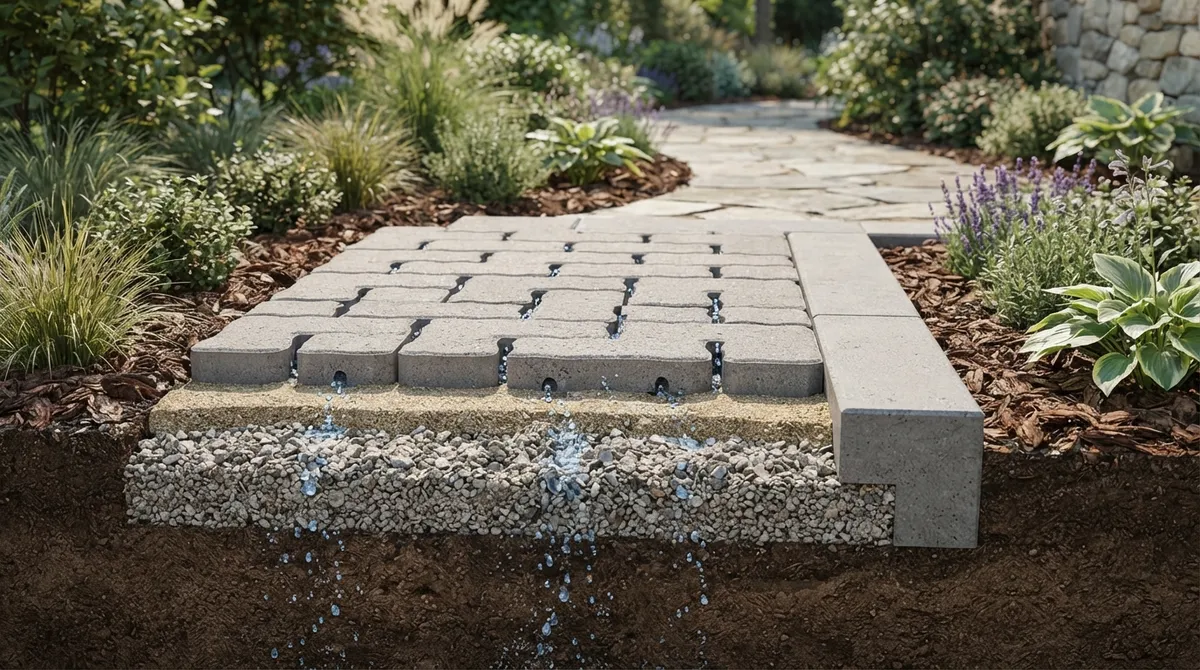
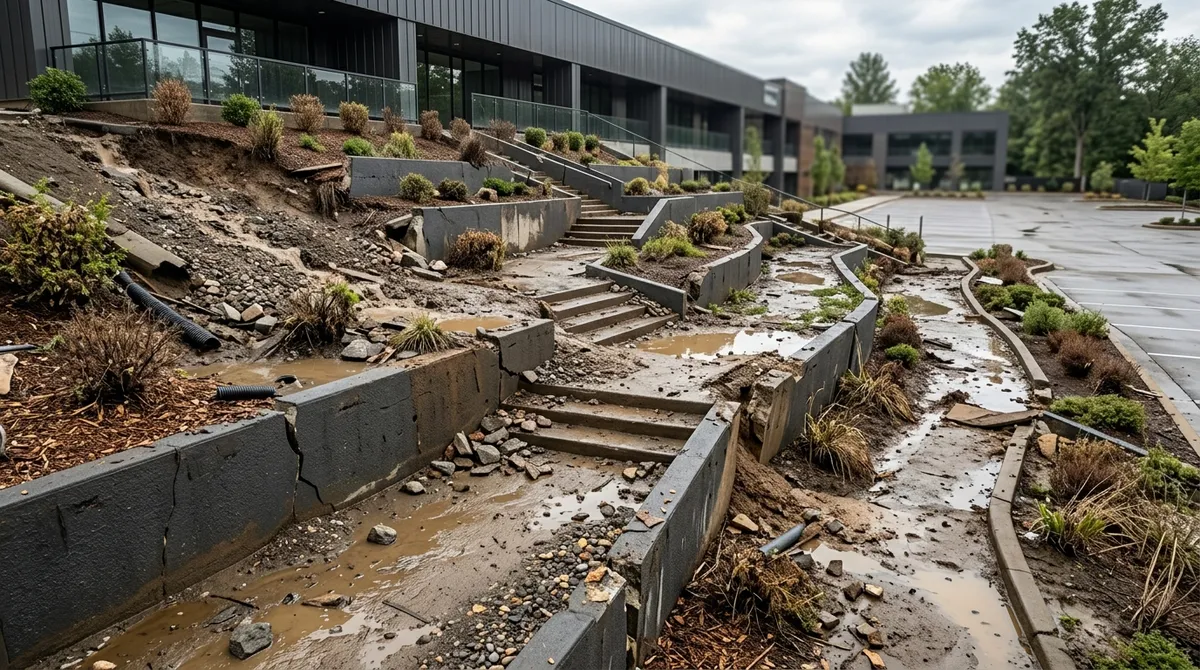
Poor drainage is one of the top causes of terrace failure. Water has to go somewhere. Without a drainage plan, it pools behind retaining walls, erodes soil, and weakens structures. Terracing should always include a drainage solution that moves water safely off the site. Check out how retaining walls and drainage systems work together for stormwater management.
Mistake 3: Choosing the Wrong Retaining Wall Material
Not all retaining wall materials are equal for commercial sites. Concrete blocks, natural stone, and timber all behave differently under load, water pressure, and freeze-thaw cycles. Chicago winters are tough, and the wrong material choice can mean cracked or collapsed walls within a few seasons. Look for guidance from Landscape Illinois on approved commercial hardscaping standards for the region.
Mistake 4: Underestimating Wall Height Requirements
Terracing a steep slope requires taller or more numerous retaining walls. Many property managers underestimate this. Walls that are too short won’t hold the soil effectively, leading to slippage and erosion. Proper engineering calculations should guide every wall height decision. Learn more about what a commercial retaining wall contractor actually does.
Mistake 5: Overlooking Slope Stabilization
Even after terracing, bare soil on slopes is vulnerable. Without plants, ground cover, or erosion control fabric, heavy rains can strip soil away quickly. Slope stabilization through strategic planting is essential for long-term terrace performance. Read more about why commercial properties need slope stabilization.
Mistake 6: Skipping Irrigation Design
Terraced landscapes have unique irrigation needs. Water pressure and distribution vary across multiple levels. Without a properly designed system, some areas get too much water and others get too little. This leads to dead plants, dry patches, and unhappy clients. Irrigation must be part of the original design, not an afterthought.
Mistake 7: Choosing Plants That Don’t Match the Site
Planting the wrong species on a commercial terrace causes long-term problems. Some plants have invasive roots that can damage retaining walls. Others need more water than the site receives naturally. Work with a landscaper who understands commercial softscape design and plant selection for Chicago’s climate.
Here’s a quick comparison of common planting approaches for commercial terraces:
| Plant Type | Best Use on Terraces | Maintenance Level |
|---|---|---|
| Native grasses | Erosion control on lower terraces | Low |
| Ornamental shrubs | Visual appeal on upper terraces | Medium |
| Ground cover plants | Filling gaps and preventing weeds | Low |
| Perennial flowers | Seasonal color and pollinators | Medium |
| Trees (small varieties) | Shade and structure on wide terraces | Low after establishment |
Mistake 8: Not Using Certified Hardscape Installers
Commercial terracing involves real structural work. Retaining walls, grading, and drainage systems must be installed correctly the first time. Hiring uncertified or inexperienced crews leads to structural failures. Look for professionals recognized by the ICPI Certified Installer program, which sets the standard for commercial hardscape quality.
Mistake 9: Ignoring Accessibility and Safety
Terraced commercial properties must be accessible and safe. Steps between terrace levels need proper handrails, lighting, and slip-resistant surfaces. Failing to plan for accessibility can create liability issues. Landscape lighting is an easy win that improves both safety and visual appeal at night.
Mistake 10: Skipping a Long-Term Maintenance Plan
Terracing is not a one-and-done project. Plants grow, walls settle, drains clog, and irrigation systems need seasonal adjustments. Without a maintenance plan, a beautiful terrace can look neglected within a year. Make sure your contractor discusses ongoing care before the project begins. Explore how to choose commercial landscaping services that actually deliver results for your site.
Mistake 11: Underbudgeting for the Full Scope
Many property managers plan for just the grading work and forget to budget for retaining walls, planting, irrigation, drainage, and lighting. Commercial property terracing is a multi-phase project. Getting a detailed scope of work upfront prevents budget surprises. Here’s what a complete terracing project typically includes:
- Site assessment and grading plan
- Excavation and soil preparation
- Retaining wall construction
- Drainage system installation
- Irrigation design and installation
- Softscape planting and ground cover
- Lighting and finishing touches
- Ongoing maintenance scheduling
Mistake 12: Not Thinking About Curb Appeal
Terracing isn’t just functional — it’s a huge opportunity to elevate your property’s visual impact. Flat, level terraces are perfect for adding pavers, seating areas, or decorative planting beds. A well-designed terrace tells visitors and customers that the property is cared for. If you want inspiration, browse the gallery of our work to see how commercial terracing and hardscaping combine beautifully.
Here’s how terracing benefits connect to specific commercial property goals:
| Business Goal | How Terracing Helps |
|---|---|
| Improve curb appeal | Creates clean, polished levels with planting and hardscape |
| Manage stormwater | Reduces runoff speed and improves drainage paths |
| Increase usable space | Converts slopes into flat, functional areas |
| Control erosion | Stabilizes soil with walls, plants, and ground cover |
| Reduce maintenance costs | Flat terraces are easier to mow and maintain |
Mistake 13: Treating Terracing as Separate From Your Overall Landscape Plan
The biggest mistake of all? Viewing terracing as an isolated fix rather than part of your full landscape strategy. Terracing works best when it integrates with your overall design vision — including pathways, seating areas, signage zones, and planting themes. Work with a team that can handle the whole picture. Learn how to create a landscape design that transforms your entire space for a smarter approach.
How to Get Commercial Property Terracing Right From the Start
Getting terracing right requires a clear, organized process. Here’s a simple step-by-step approach that experienced commercial landscapers follow:
- Consult early. Bring in a landscape contractor before you finalize any site plans. Early input saves money and avoids rework.
- Assess the site fully. Evaluate soil, drainage, slope grade, utilities, and accessibility before designing anything.
- Design with function first. Plan terraces around how the property will actually be used — not just how it will look.
- Build with quality materials. Use commercial-grade retaining wall systems designed for Chicago’s freeze-thaw climate.
- Plant strategically. Choose species that anchor soil, require minimal water, and thrive in Illinois conditions.
- Plan for the long term. Build a maintenance schedule into the contract from day one.
If you’re wondering whether your sloped commercial property could benefit from terracing, you’re not alone. It’s one of the most common questions property managers ask. The short answer: if you have a slope that’s causing drainage issues, erosion, or unusable outdoor space, terracing is almost certainly worth exploring. For more ideas on commercial landscaping that boosts your bottom line, read 7 ways commercial landscaping boosts your business in 2026.
What Materials Are Used for Commercial Landscape Terraces?
The right materials depend on your site, budget, and aesthetic goals. Here are the most common options used in commercial terracing projects:
- Segmental concrete blocks: Durable, cost-effective, and widely available. Great for large commercial sites.
- Natural stone: Beautiful and long-lasting. Ideal for high-end properties where appearance matters.
- Poured concrete walls: Strong and customizable. Best for steep or high-load situations.
- Gabion baskets: Wire cages filled with rock. An eco-friendly option with great drainage properties.
- Timber (treated): Budget-friendly but less durable. Better suited for smaller or temporary applications.
Need help choosing the right retaining wall system? Explore 5 ways to find the best commercial retaining wall contractors to start your search confidently. You can also review 3 commercial landscape grading and wall mistakes to avoid before finalizing your plan.
Why Ongoing Maintenance Matters After Terracing
Once your terraces are built, the work isn’t over. Plants grow, soil settles, and drainage pipes need clearing. Here’s what a solid maintenance routine includes for commercial terraced landscapes:
- Seasonal planting and mulching to protect soil and roots
- Irrigation system checks and winterization
- Retaining wall inspections for cracks or shifting
- Drainage clearing after heavy rain or snowmelt
- Mowing and trimming on terrace levels
- Weed control to prevent unwanted growth between walls
Keeping up with maintenance is what separates a terrace that thrives for decades from one that starts failing within a few years. Learn about our process to see how Serenity Landscape Group handles projects from first design to ongoing care. You can also explore landscaping services that transform your outdoor space in 2026 for a full picture of what professional care looks like.
Ready to Transform Your Sloped Commercial Property?
Commercial property terracing is one of the smartest investments a property manager or business owner can make. It turns a problem slope into a polished, productive landscape that works for your business day after day. But only when it’s done right. Avoid the 13 mistakes above and you’ll be well on your way to a terrace that looks great, lasts long, and requires minimal headache to maintain.
Whether you need a full design-build project or just a professional opinion on your slope, we’re here to help. Request a free estimate from our team today and let’s talk about what’s possible for your commercial property. You can also call us directly at (630) 359-5139 — we’d love to hear about your site and share some ideas. Serenity Landscape Group has been transforming outdoor spaces across Chicagoland for over two decades, and we’re ready to help you do the same.
FAQs
Q: What is commercial property terracing in landscaping?
A: Commercial property terracing is the process of converting a sloped site into a series of flat, stepped levels to improve usability, drainage, and appearance. It typically involves retaining walls, grading, planting, and irrigation as part of a complete landscape design-build project. It’s a fantastic way to turn a frustrating slope into a polished, functional outdoor space!
Q: Does terracing really help with drainage and erosion control?
A: Absolutely! Terracing slows down water runoff by breaking up the slope into level sections, which gives water more time to absorb into the soil or redirect safely through drainage systems. Combined with strategic planting and proper drainage infrastructure, terraced sites experience significantly less erosion over time.
Q: What types of businesses benefit most from commercial property terracing?
A: Office parks, retail centers, medical facilities, schools, HOA communities, corporate campuses, and restaurants with outdoor areas all benefit greatly from terracing. Any commercial property with a slope that creates drainage issues, erosion problems, or wasted space is a great candidate for a terracing project.
Q: How is terracing different from simply grading or installing a retaining wall?
A: Grading adjusts the overall slope of a site, while a single retaining wall holds back soil at one point. Terracing combines multiple levels of grading and retaining walls to create a stepped landscape across the full slope. Think of it as a more complete, multi-level solution that addresses the entire slope rather than just one section.
Q: How much maintenance do terraced commercial landscapes need?
A: Terraced landscapes need regular care to stay looking great and functioning properly — this includes seasonal planting, irrigation checks, retaining wall inspections, drainage clearing, and weed control. The good news is that well-designed terraces are actually easier to maintain than raw slopes, and a professional maintenance plan makes it simple to keep things looking sharp year-round.