Key Takeaways
-
Conduct a thorough site assessment before construction to determine soil type, drainage patterns, and bearing capacity; skipping this step is the leading cause of retaining wall failures.
-
Install proper drainage with 6-8 inches of crushed gravel, a 4-inch perforated drain pipe, and filter fabric to prevent hydrostatic pressure buildup, which is responsible for more wall failures than any other factor.
-
Design gravity walls with a backward lean (batter) toward the soil and a compacted gravel base layer of 6+ inches; vertical walls are weaker and more prone to tilting and settlement.
-
Limit gravity retaining walls to heights of 3-6 feet maximum; for taller applications over 6 feet, use mechanically stabilized earth (MSE) walls or terrace with multiple shorter walls instead.
-
Choose durable materials suited for your climate—in Chicago’s freeze-thaw cycle, prioritize segmental concrete blocks, precast modular blocks, or stone over cheaper alternatives that may require costly maintenance.
-
Consult with a structural engineer or ICPI Certified Installer for walls holding significant soil loads or near surcharge loads like parking areas, and monitor for warning signs like leaning, cracks, or water seepage.
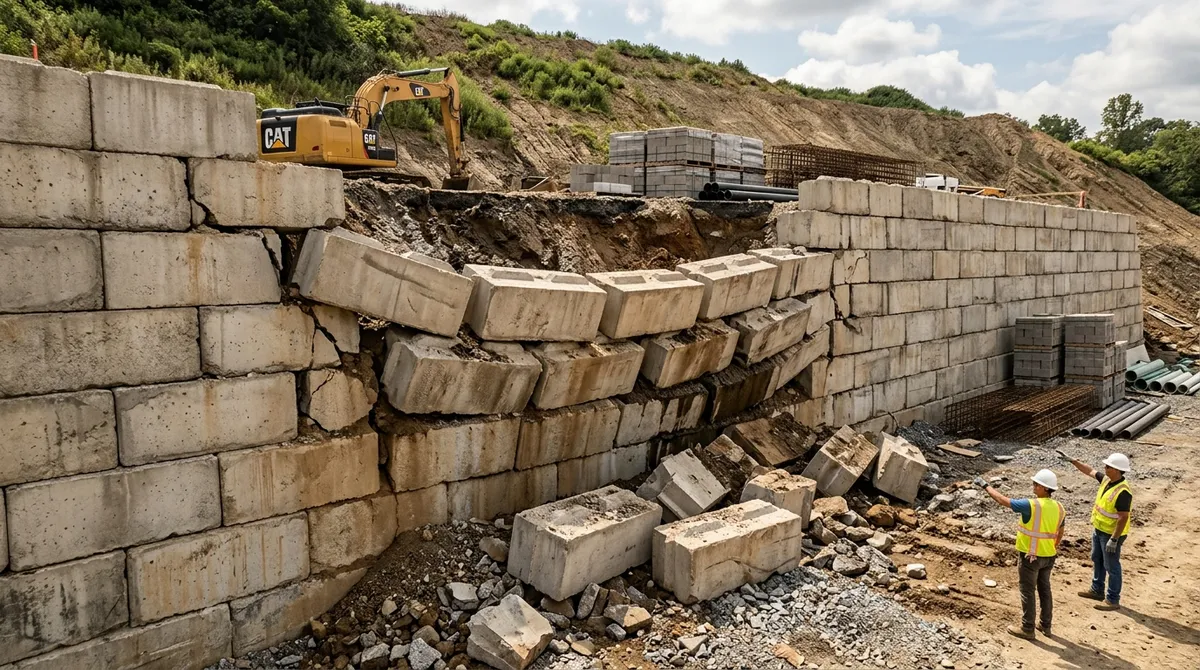
If your commercial property has slopes, uneven terrain, or erosion problems, a retaining wall might be exactly what you need. Specifically, commercial gravity retaining walls are a popular and cost-effective solution for managing soil, controlling runoff, and creating usable outdoor space. But here’s the thing — they’re often misunderstood, misplanned, or just plain misinstalled. The result? Walls that lean, crack, or fail entirely.
Whether you manage an office building, own a restaurant, or are developing a new residential community in the Chicago suburbs, understanding what can go wrong with gravity retaining walls is the first step to getting them right. Let’s walk through the seven most common mistakes — and how to avoid every single one of them.
What Is a Commercial Gravity Retaining Wall?
Before we jump into mistakes, let’s make sure we’re on the same page. A gravity retaining wall uses its own weight and mass to resist the pressure of soil behind it. Unlike other wall systems, it doesn’t rely on steel reinforcement or geogrid fabric buried in the ground. Instead, it depends on the sheer bulk of its materials — whether that’s natural stone, concrete blocks, or segmental retaining wall units.
These walls work beautifully for low-to-moderate height applications. According to Belgard Commercial, gravity walls are typically limited to about 2 to 3 times the front-to-back depth of the facing unit. In practical terms, this often means walls up to roughly 3 meters (about 10 feet) in height. For taller or more demanding applications, a different system like mechanically stabilized earth (MSE) walls may be needed. You can explore the differences in our guide on cantilever vs. gravity retaining walls for commercial properties.
Mistake #1: Skipping a Proper Site Assessment
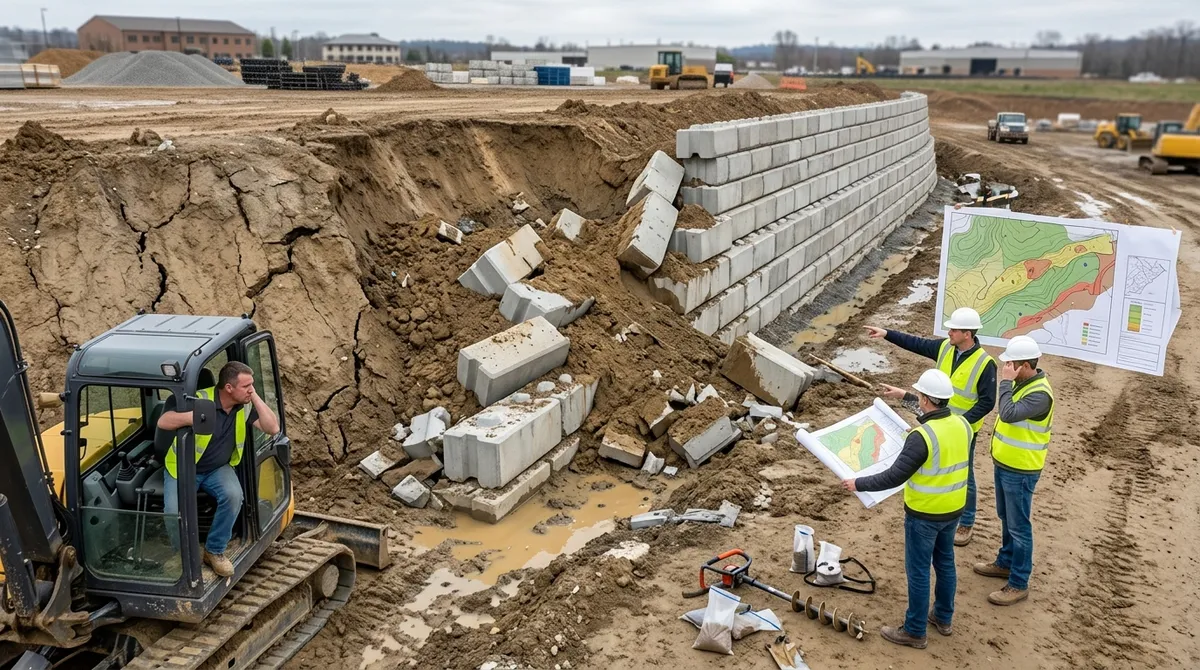
The number one mistake property owners make is jumping straight into construction without fully understanding the site. Soil type, slope angle, water drainage patterns, and load conditions all affect how your wall needs to be built. Clay-heavy soils like those common in the greater Chicago area expand when wet and contract when dry — that creates enormous pressure on any retaining structure.
A thorough site assessment should always come first. It helps determine:
- The right wall height and depth for your specific slope
- Soil bearing capacity and drainage needs
- Whether a gravity wall is even the right system for your site
- Local code requirements and permit needs
Skipping this step is like building a house without checking the foundation. Don’t do it. Visit our project planning process page to see how a professional assessment sets every project up for success.
Mistake #2: Ignoring Drainage — The Silent Wall Killer
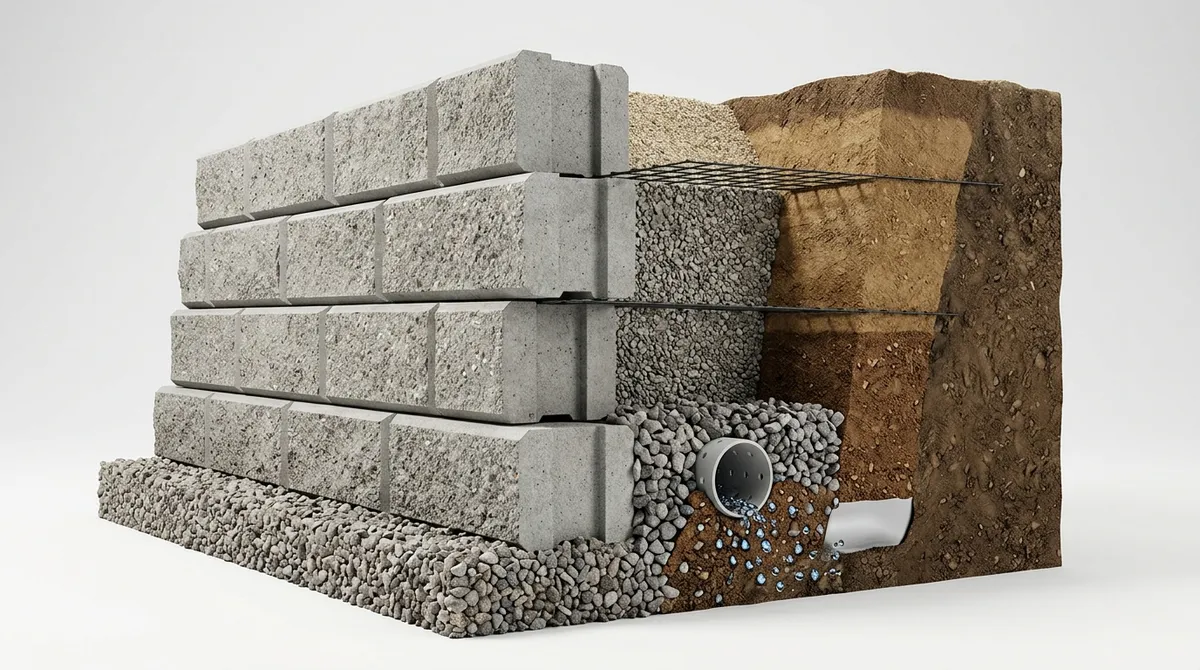
Poor drainage is responsible for more retaining wall failures than almost anything else. When water builds up behind a gravity wall, hydrostatic pressure increases dramatically. That extra pressure can push even a well-built wall out of alignment over time.
Proper drainage for a commercial gravity retaining wall typically includes:
- A base layer of 6 to 8 inches of clear crushed gravel directly behind the wall
- A 4-inch perforated drain pipe running along the base of the wall
- Filter fabric to prevent fine soil particles from clogging the gravel
This isn’t optional — it’s essential. Whether you’re working near a retention pond or on a sloped commercial lawn, proper drainage protects your investment for the long haul. Learn how our team handles retaining walls vs. drainage systems for commercial stormwater management.
Mistake #3: Building the Wall Too Tall for Gravity Design
Gravity walls are not the right tool for every job. One of the most common errors in commercial landscaping is asking a gravity wall to do more than it’s designed for. If your wall needs to hold back a significant amount of soil on a steep slope, gravity alone may not be enough.
Here’s a simple comparison to help you decide:
| Wall Height | Recommended System | Notes |
|---|---|---|
| Under 3 feet | Gravity wall | Ideal for borders, garden edging, low slopes |
| 3 to 6 feet | Gravity wall (engineered) | Requires careful drainage and batter design |
| 6 to 10 feet | MSE or anchored wall | Geogrid or soil anchors often required |
| Over 10 feet | Structural engineered system | Professional engineering required |
If your commercial site needs a taller wall, consider terracing the slope with multiple shorter gravity walls instead. This distributes the load and actually looks great in commercial landscapes. Our team at Serenity Landscape Group has helped many Chicago-area property managers create stunning retaining wall solutions that are both functional and visually impressive.
Mistake #4: Choosing the Wrong Materials
Not all retaining wall materials are created equal — and not all of them are right for every commercial application. The material you choose affects durability, appearance, cost, and how well the wall performs over time, especially in Chicago’s harsh freeze-thaw climate.
Here are the most common materials used for commercial gravity retaining walls:
- Natural stone: Beautiful and timeless, but can be costly and requires skilled installation. Learn more about choosing natural stone for commercial retaining walls.
- Segmental concrete blocks: Versatile, durable, and widely used in commercial projects. They can be arranged for different aesthetics.
- Precast modular block: Fast to install and consistent in quality. A great option for larger commercial projects. See why precast modular block walls are a smart choice.
- Gabion baskets: Wire cages filled with rock — excellent for drainage and a modern industrial aesthetic. Find out why gabion wall installation works well for commercial properties.
Choosing materials purely based on price often leads to problems. Always factor in long-term maintenance costs, freeze-thaw resistance, and how well the material fits the rest of your commercial landscape design.
Mistake #5: Neglecting the Wall’s Batter and Base
A gravity retaining wall needs to lean slightly backward — toward the soil it’s holding. This backward lean is called the “batter.” Many DIY and inexperienced contractors build walls perfectly vertical, which actually makes them weaker against soil pressure.
The base is equally important. A proper base should include:
- Excavation to remove unstable topsoil and organic material
- A compacted gravel base layer (usually 6 inches or more)
- A level, stable footing for the first course of wall material
Cutting corners on the base leads to settlement, tilting, and eventual failure. It’s one of the common commercial landscape grading and wall mistakes we see regularly across commercial properties in the Chicago metro area.
Mistake #6: Not Getting Professional Engineering Consultation
Many commercial property managers assume that a gravity retaining wall is simple enough to skip the engineering review. For very small walls, that might be true. But for anything holding significant soil loads, surcharge loads (like parked cars or heavy foot traffic nearby), or walls on unstable ground — professional input is non-negotiable.
A structural engineer or certified landscape contractor can review:
- Soil pressure calculations and load requirements
- Drainage design and hydrostatic pressure management
- Compliance with local building codes and permits
- Long-term stability under Chicago’s climate conditions
Working with ICPI Certified Installers ensures your contractor understands proper segmental retaining wall installation standards. Organizations like Landscape Illinois also provide resources for finding qualified professionals in the state. You can also learn more about what a commercial retaining wall contractor actually does before hiring.
Mistake #7: Forgetting About Aesthetics and Long-Term Curb Appeal
A commercial gravity retaining wall is a big, visible feature of your property. Treating it purely as a functional structure and ignoring how it looks is a missed opportunity — especially for businesses that rely on curb appeal to attract customers and clients.
A well-designed retaining wall can do so much more than hold back soil. It can:
- Define outdoor gathering spaces and seating areas
- Create terraced garden beds with lush plantings
- Complement your building’s architecture and color palette
- Add visual interest and depth to an otherwise flat commercial landscape
Think about how the wall integrates with other hardscape features like pavers, walkways, or outdoor lighting. A cohesive design turns a plain wall into a landscape feature that makes your property stand out. Explore how commercial landscaping boosts your business to see the bigger picture.
Common Warning Signs Your Retaining Wall May Be Failing
Even well-built walls can show signs of stress over time. Knowing what to watch for helps you act fast and avoid costly repairs. Here are warning signs that your commercial gravity retaining wall needs attention:
- Visible leaning or bulging in the wall face
- Cracks running vertically or horizontally through the wall material
- Soil erosion or settlement near the base of the wall
- Water seeping through the wall face, indicating poor drainage
- Gaps between wall blocks or shifting material
If you notice any of these signs, don’t wait. Acting early prevents small issues from becoming expensive failures. Read more about why commercial properties need slope stabilization and what options are available.
Making the Right Choice for Your Commercial Property
Commercial gravity retaining walls are a smart, economical choice for the right applications. They work beautifully for low-to-moderate slopes, decorative landscape borders, terraced designs, and erosion control on commercial sites. The key is matching the right system to your specific needs — and avoiding the seven mistakes above.
When planned correctly, a gravity retaining wall adds lasting value to your property — both functional and aesthetic. It manages water, creates usable space, controls erosion, and enhances the visual appeal of your commercial landscape for years to come. You can also check our gallery of our work to see real examples of retaining walls and hardscaping projects we’ve completed across the Chicago area.
At Serenity Landscape Group, we’ve been designing and building commercial retaining walls across the greater Chicago metropolitan area for over two decades. We understand the unique challenges that come with Illinois soil conditions, freeze-thaw cycles, and commercial site demands. Ready to get started? Request your free estimate today and let’s build something that lasts.
FAQs
Q: What is a commercial gravity retaining wall?
A: A commercial gravity retaining wall is a structure that uses its own weight and mass to hold back soil on a commercial property — no steel rods or geogrid reinforcement needed! They’re commonly used for managing slopes, controlling erosion, and creating level outdoor spaces. They work best for low-to-moderate wall heights, typically up to about 3 meters or 10 feet.
Q: How tall can a commercial gravity retaining wall be?
A: Gravity walls are generally suited to heights of about 2 to 3 times the front-to-back depth of the wall unit — often up to around 6 feet for standard segmental blocks. For taller walls, a reinforced system like a mechanically stabilized earth (MSE) wall is usually a better fit. A professional site assessment will help determine the right height limit for your specific project.
Q: Do commercial gravity retaining walls need drainage?
A: Absolutely — drainage is one of the most important parts of any retaining wall system! Without it, water pressure builds up behind the wall and can cause it to lean or fail over time. A proper drainage system typically includes crushed gravel backfill and a perforated drain pipe running along the base of the wall.
Q: What materials are best for commercial gravity retaining walls?
A: The most common materials include natural stone, segmental concrete blocks, precast modular blocks, and gabion baskets. The best choice depends on your budget, desired look, and the demands of your specific site. In the Chicago area, freeze-thaw resistance is especially important, so choosing durable materials built for harsh winters makes a big difference.
Q: When should a commercial property consider a retaining wall?
A: If your commercial property has sloped terrain, soil erosion issues, poor drainage, or underutilized uneven ground, a retaining wall is worth serious consideration! Retaining walls help create usable level space, protect against runoff, and can dramatically improve the curb appeal of your property. A landscape professional can assess your site and recommend the best solution for your needs.