Key Takeaways
-
Combine retaining walls with drainage systems for properties facing both slope erosion and high water volume, as neither solution alone addresses complex multi-challenge commercial sites effectively.
-
Proper drainage behind retaining walls is critical—without it, water pressure buildup can cause wall failure, so all materials require drainage layers installed from the ground up during construction.
-
Retaining walls work best for sloped properties with erosion problems, while drainage systems (French drains, catch basins, swales) are ideal for flat areas with high runoff from paved surfaces.
-
Integrate native plants and rain gardens alongside hardscape solutions to naturally absorb water, reduce drainage infrastructure load, and create long-term stormwater resilience.
-
Commercial stormwater management walls require professional site assessment of grading, soil type, and existing drainage before design, and most projects need building permits handled by your contractor.
-
Select wall materials based on function and site conditions: segmental concrete blocks for standard installations, natural stone for high-visibility areas, poured concrete for tall walls, and gabions for drainage-heavy applications.
If you manage a commercial property in the Chicago area, you’ve probably dealt with water pooling after a heavy rain. Maybe you’ve watched runoff carve channels through your lawn, or noticed soil washing away from slopes near your building. These are signs that stormwater isn’t being managed well — and that’s a problem worth solving sooner rather than later.
When it comes to commercial stormwater management walls and drainage solutions, there are two main approaches that landscaping professionals use. The first is structural: installing retaining walls designed to hold soil in place and redirect water flow. The second is systemic: creating a broader drainage network that channels water away from critical areas. Both work. But which one is right for your property?
This guide breaks down both approaches in plain terms so you can make a smart decision for your commercial landscape. Let’s dig in.

What Are Commercial Stormwater Management Walls?
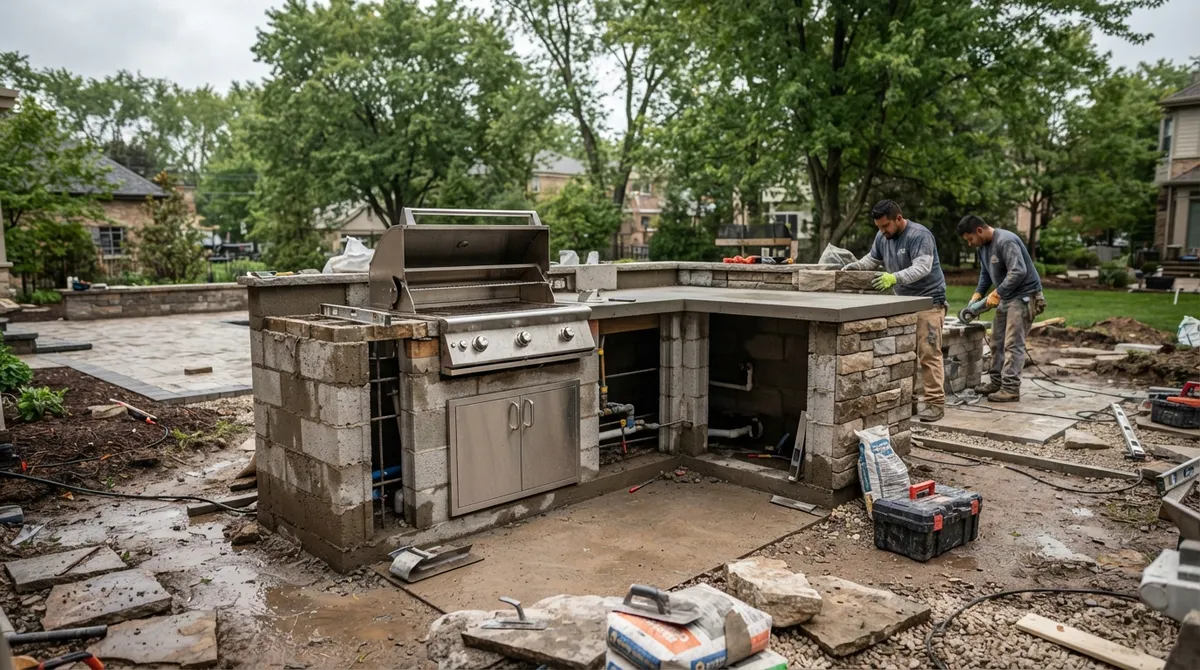
Commercial stormwater management walls are engineered wall structures built into a landscape to control how rainwater moves across a property. They’re not just decorative. These walls are designed to hold back soil, slow down runoff, and direct water safely to where it won’t cause damage.
You’ll typically see commercial stormwater management walls used on properties with:
- Sloped terrain that causes runoff to rush downhill
- Erosion problems along walkways, parking lots, or building foundations
- Low-lying areas that collect standing water
- Grading challenges from new construction or site development
- Large paved surfaces that shed water quickly into surrounding landscaping
These walls are usually made from concrete blocks, natural stone, poured concrete, or treated timber. Each material offers different strengths depending on the site conditions and aesthetic goals. For a deeper look at how these structures work on commercial sites, learn what a commercial retaining wall contractor actually does before planning your project.

Retaining Walls: The Structural Solution
Retaining walls are the most direct way to manage water on sloped or uneven commercial properties. They hold soil in position, create level terraces, and physically block runoff from eroding vulnerable areas. Think of them as the foundation of a solid stormwater plan.
How Retaining Walls Help with Stormwater
A well-built retaining wall does more than look good. It creates flat, stable ground that slows water down before it can build up speed and cause damage. When water moves slower, it soaks into the soil rather than washing it away.
Here’s how retaining walls directly address stormwater challenges:
- Terracing slopes: Breaking a long slope into flat steps reduces the speed of runoff and gives water a chance to absorb into the ground.
- Protecting foundations: Walls placed uphill from a building keep saturated soil and runoff from pressing against the structure.
- Redirecting flow: Angled walls can guide water toward drains, bioswales, or planted areas designed to absorb it.
- Preventing erosion: Walls hold soil in place during heavy rain events, protecting landscaping investments.
To understand whether your site could benefit from this type of solution, check out this resource on why commercial properties need slope stabilization.
Best Situations for Retaining Walls
Retaining walls shine when the problem is primarily a slope or erosion issue. If your property has visible grade changes, soil loss, or areas where water rushes unchecked, a wall is often the first line of defense. They’re also a great fit when you want a solution that doubles as an attractive landscape feature.
You can explore how retaining walls transform sloped areas into usable spaces to see the full range of possibilities for your commercial site.

Drainage Systems: The Systemic Solution
Drainage systems take a different approach. Instead of stopping water at the source, they manage how and where water travels across the entire property. This includes French drains, catch basins, swales, perforated pipes, and permeable surfaces working together as a network.
Key Components of a Commercial Drainage System
A complete drainage system for a commercial landscape might include several elements working together:
- French drains: Gravel-filled trenches with perforated pipes that collect and redirect subsurface water
- Catch basins: Underground collection points that gather surface runoff from paved areas
- Swales: Shallow, planted channels that slow and filter water as it moves across the site
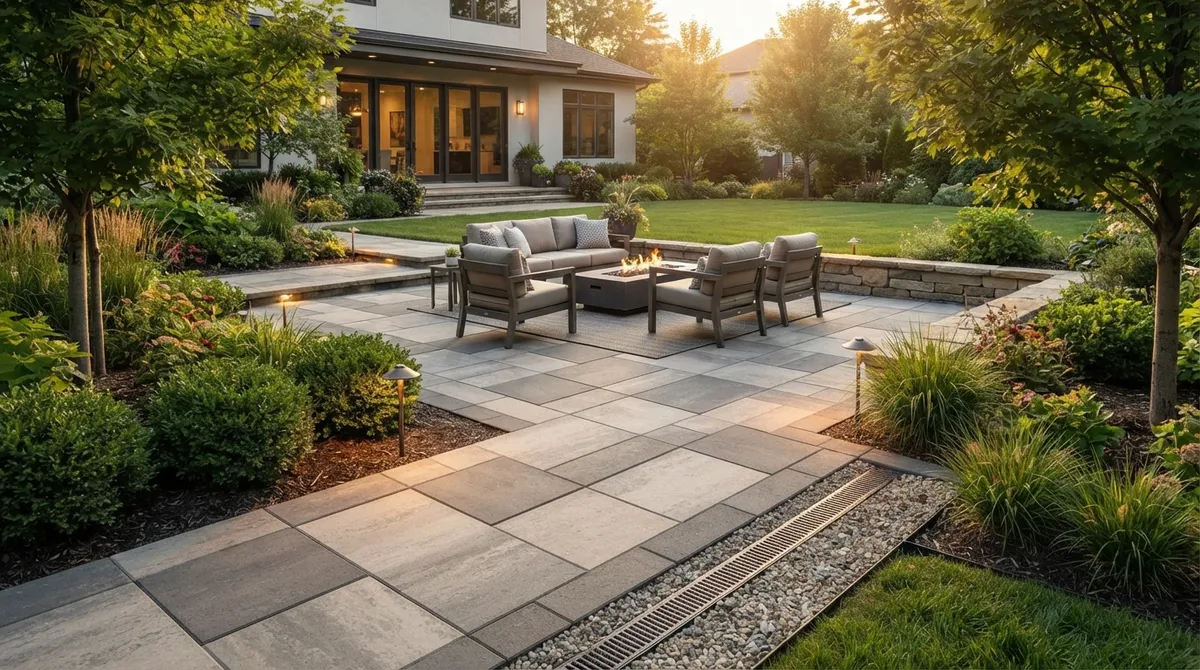
- Permeable pavers: Paved surfaces that allow water to pass through rather than run off
- Grading adjustments: Reshaping the land to direct water toward designated drainage areas
Proper grading is especially important. According to Landscape Illinois, professional site grading is one of the most effective ways to manage stormwater on commercial properties before any walls or drains are even installed.
Best Situations for Drainage Systems
Drainage systems work best when water volume is the main issue rather than slope. If your property collects large amounts of runoff from paved parking lots, rooftops, or neighboring sites, a drainage network can move that water quickly and efficiently. They’re also the right choice when local codes require specific stormwater compliance measures.
If you’re dealing with both erosion and high water volume, combining walls with a drainage system is often the smartest move. Avoid common grading and wall mistakes by planning both elements together from the start.

Side-by-Side Comparison
Still trying to decide which approach fits your property? Here’s a clear breakdown of how retaining walls and drainage systems compare across the factors that matter most to commercial property managers and business owners.
| Factor | Retaining Walls | Drainage Systems |
|---|---|---|
| Primary function | Hold soil, slow runoff, prevent erosion | Move and redirect water away from site |
| Best for | Sloped properties, erosion problems | High water volume, flat or low-lying areas |
| Visual impact | High — adds landscape structure and beauty | Low — mostly hidden underground |
| Maintenance | Low — inspect annually for shifting | Moderate — pipes and basins need cleaning |
| Cost range | Moderate to high depending on material | Moderate depending on complexity |
| Compliance support | Helps with grading requirements | Directly addresses municipal runoff codes |
| Lifespan | 20–50+ years with proper installation | 15–30 years with regular maintenance |
As you can see, both solutions have real strengths. The best choice depends on what your specific site needs most. For many commercial properties, the answer is actually a combination of both.
When to Use Both Together
In many commercial landscapes, the smartest stormwater strategy uses retaining walls AND a drainage system together. This is especially true on large properties with complex grading, multiple buildings, or significant paved areas.
Here’s how a combined approach typically works:
- Walls stabilize the slopes and create terraced areas that slow water down.
- Swales or graded channels carry water across flat areas toward collection points.
- French drains or catch basins gather the collected water and route it off the property safely.
- Planted areas and softscapes absorb whatever water remains, reducing the load on the drainage system.
Working with an experienced team like Serenity Landscape Group means you get a plan that looks at your whole property — not just one problem area. Our team handles everything from initial grading assessments to full installation of walls, drainage, and planted features. You can also explore how earth retention systems work on commercial properties to get a better sense of the full picture.
Materials Matter: Choosing the Right Wall for Stormwater Control
Not all retaining walls perform the same way when it comes to managing water. The material you choose affects drainage, durability, and how well the wall integrates with the rest of your landscape design.
Here are the most common materials used in commercial stormwater management walls:
- Segmental concrete block: The most popular choice for commercial sites. Interlocking blocks are strong, flexible, and allow for built-in drainage behind the wall.
- Natural stone: Beautiful and durable, though more expensive. Works well on high-visibility properties where aesthetics matter.
- Poured concrete: Best for very tall walls or heavy load situations. Requires excellent drainage installation to prevent hydrostatic pressure buildup.
- Gabion baskets: Wire cages filled with rock that allow water to pass through freely — excellent for drainage-heavy applications near water features or retention ponds.
Regardless of material, every commercial retaining wall needs proper drainage behind it. Without it, water pressure builds up and can cause the wall to fail. ICPI Certified Installers follow strict standards to ensure walls are built with the right drainage layers from the ground up.
You can also look at how walls work alongside water features in projects like retaining walls for retention ponds — a great option for commercial properties that need to manage large water volumes.
What to Expect from the Planning Process
Planning a commercial stormwater management wall project is a multi-step process. Here’s what a typical project looks like from start to finish:
- Site assessment: A professional evaluates your property’s grading, soil type, existing drainage, and problem areas.
- Design phase: A custom plan is developed that addresses your specific stormwater challenges while meeting local code requirements.
- Material selection: Wall materials, drainage components, and planted elements are chosen based on function and aesthetics.
- Permitting: Many commercial wall projects require permits, especially for walls over a certain height. Your contractor handles this.
- Installation: Excavation, foundation preparation, wall construction, and drainage installation all happen in sequence.
- Final grading and planting: The area is graded and planted to complete the stormwater system and restore landscape appearance.
You can learn more about what to expect by reading about how to plan site development retaining walls that last. Understanding the process helps you ask the right questions and set realistic timelines.
The Role of Softscapes in Stormwater Management
Walls and pipes aren’t the only players in a good stormwater plan. Plants are a powerful and often overlooked tool. Deep-rooted native plants, grasses, and groundcovers absorb water, hold soil, and slow runoff naturally. They work alongside walls and drainage systems to create a truly resilient landscape.
Planted swales, rain gardens, and bioretention areas can dramatically reduce the load on your drainage infrastructure. They also improve the appearance of your property and support local biodiversity. Our softscape services are specifically designed to complement hardscape stormwater solutions, creating a balanced outdoor environment that handles water beautifully.
Combining hardscape walls with smart softscape design is one of the most effective long-term stormwater strategies available to commercial property owners in the Chicago metro area. The Pipeline stormwater landscape design guide highlights just how impactful this integrated approach can be for commercial sites.
Making the Right Choice for Your Commercial Property
So, retaining walls vs. drainage systems — which actually wins? The honest answer is: it depends on your site. If you have slopes and erosion, walls are your first priority. If you have flat areas with high water volume, drainage networks are essential. And if your property has both challenges, a combined solution is the way to go.
What matters most is getting a professional assessment from someone who understands commercial landscape drainage from the ground up. The right solution will protect your property, meet local stormwater regulations, and look great doing it.
Ready to take the next step? Our team at Serenity Landscape Group would love to walk your property and help you build a stormwater plan that works. Reach out today for a free consultation and let’s start solving your stormwater challenges together. You can also call us directly at (630) 359-5139 to speak with a member of our team right away.
FAQs
Q: What is the main purpose of commercial stormwater management walls?
A: Commercial stormwater management walls are built to control how rainwater moves across your property. They hold soil in place, slow down runoff, and redirect water away from buildings, walkways, and other vulnerable areas — protecting your investment and keeping your landscape looking its best.
Q: Do I need both a retaining wall and a drainage system for my commercial property?
A: Many commercial properties benefit from using both together! If your site has slopes, erosion issues, AND high water volume, a retaining wall combined with a drainage network gives you the most complete protection. A professional site assessment will tell you exactly what your property needs.
Q: How long do commercial stormwater management walls last?
A: With proper installation and regular inspections, well-built retaining walls can last 20 to 50 years or more. The key is using quality materials and making sure drainage is built into the wall from day one — otherwise water pressure can shorten the wall’s lifespan significantly.
Q: Do commercial stormwater walls require permits in the Chicago area?
A: Yes, in most cases they do! Commercial retaining walls above a certain height typically require building permits in the greater Chicago metropolitan area. A qualified landscaping contractor will handle the permitting process for you so you don’t have to worry about the paperwork.
Q: Can plants help with stormwater management on my commercial property?
A: Absolutely — plants are a fantastic stormwater tool! Deep-rooted native plants, rain gardens, and planted swales absorb water, hold soil, and slow runoff naturally. When combined with walls and drainage systems, softscape plantings create a balanced, resilient landscape that handles heavy Chicago rains beautifully.