Key Takeaways
-
Gabion walls offer superior drainage compared to concrete walls because their permeable wire-mesh structure allows water to pass freely, reducing hydrostatic pressure that causes retaining wall failure.
-
Commercial gabion walls last 50+ years when properly installed with quality galvanized wire and appropriate stone fill, making them a durable long-term investment for property managers.
-
Gabion walls are more cost-effective than poured concrete retaining walls because they require less formwork and specialized equipment, with locally sourced materials typically available at competitive prices.
-
Site assessment and proper base preparation are critical steps—walls under 3 feet need compacted base material, while commercial walls over 6 feet may require engineering review and additional foundation work.
-
Angular stone fills (granite, basalt, limestone) interlock better and resist shifting better than rounded stones, so stone selection directly impacts both wall durability and structural performance.
-
Gabion walls work effectively on unstable or shifting soils common in clay-heavy regions because their flexible structure tolerates ground movement better than rigid concrete wall systems.
If you manage a commercial property, you know how tricky it can be to handle slopes, erosion, and drainage — all while keeping things looking great. That’s where gabion wall installation for commercial landscapes comes in. These rugged, rock-filled wire cages are both tough and beautiful, making them a favorite for property managers, developers, and business owners across the Chicago area. Whether you’re dealing with a steep grade, a soggy slope, or just want a striking landscape feature, gabion walls deliver on every front. Let’s dig into what makes them such a smart choice for commercial sites.
What Is a Gabion Wall and How Does It Work?
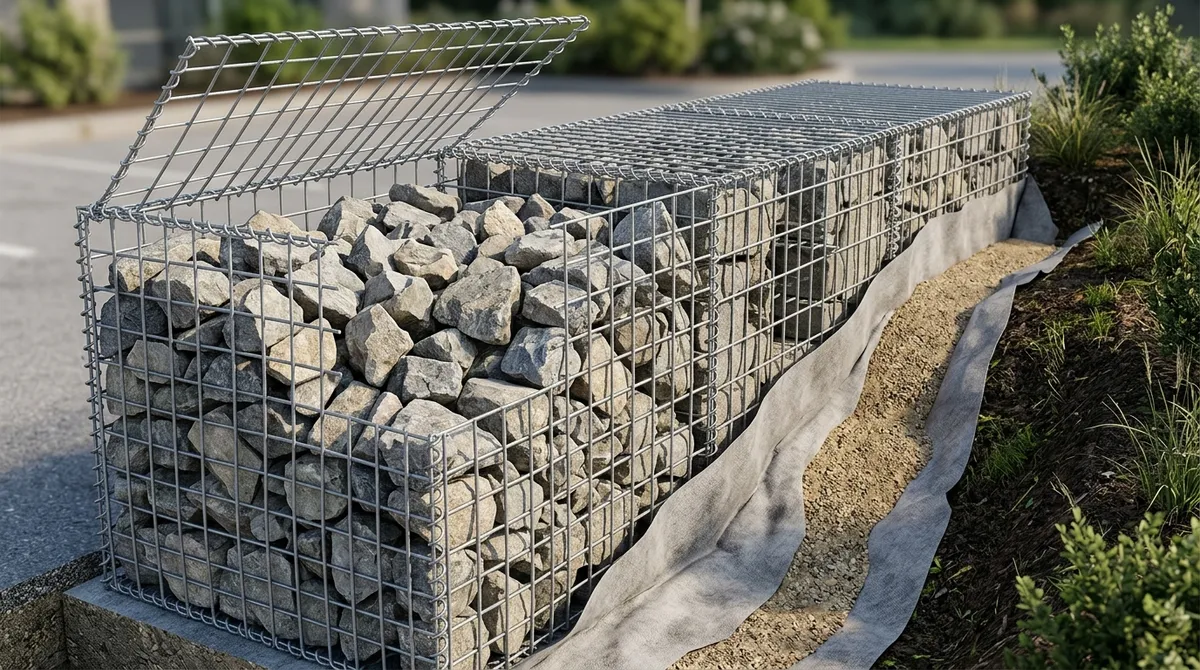
A gabion wall is a structure made from galvanized wire mesh cages or baskets filled with rocks or stones. The word “gabion” comes from the Italian word for “big cage” — and that’s pretty much exactly what they are. Once filled and stacked, these cages create a solid, permeable wall that can hold back soil, manage water flow, and define a landscape beautifully.
What makes gabion walls special is their permeability. Unlike solid concrete walls, water can pass through gabion structures freely. This reduces hydrostatic pressure — the buildup of water pressure behind a wall — which is one of the main reasons retaining walls fail. You can learn more about how walls manage water on our page about retaining walls vs. drainage systems for commercial stormwater management.
Top Reasons Commercial Properties Choose Gabion Walls
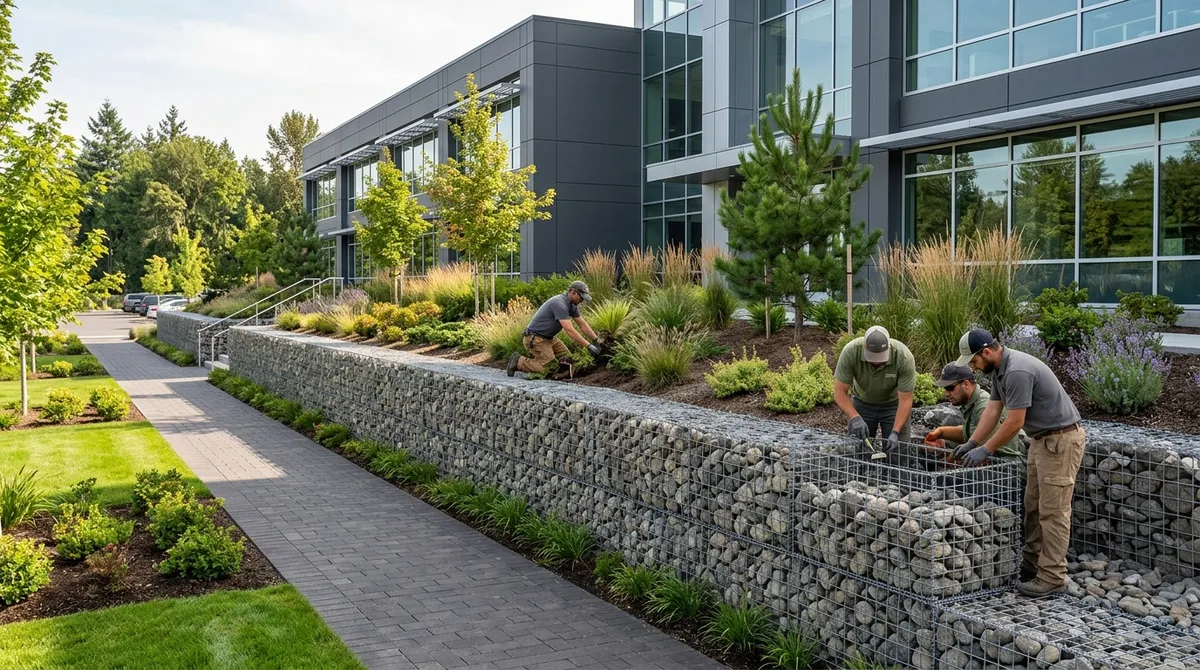
Gabion walls are versatile, and commercial sites have unique needs compared to residential properties. Here are the main reasons commercial property owners and managers love them:
- Erosion control: They stop soil from washing away on slopes and embankments.
- Slope stabilization: They hold unstable ground in place, even on shifting soils.
- Natural drainage: Their permeable design lets water flow through, reducing runoff.
- Aesthetic appeal: Stone-filled cages blend beautifully with natural surroundings.
- Flexibility: They can follow changing grades and irregular contours on complex sites.
- Durability: With proper installation, gabion walls last for decades with minimal maintenance.
Commercial applications include parks, roadway edges, streambanks, retail developments, office campuses, and terraced landscape areas. If your property has challenging terrain, a gabion wall may be exactly what you need. Check out our guide on why your commercial property needs slope stabilization for more insight.
Gabion Walls vs. Other Commercial Retaining Wall Options
Choosing the right retaining wall type for your commercial property is a big decision. Here’s a quick comparison to help you understand where gabion walls shine:
| Wall Type | Drainage | Aesthetics | Flexibility on Slopes | Best Use Case |
|---|---|---|---|---|
| Gabion Wall | Excellent (permeable) | Natural, rustic look | High — follows grade changes | Erosion control, slopes, water features |
| Concrete Retaining Wall | Poor (needs added drains) | Modern, clean lines | Low — rigid structure | Parking structures, flat-grade sites |
| Natural Stone Wall | Good | Premium, classic | Moderate | High-end commercial landscapes |
| Modular Block Wall | Moderate | Uniform appearance | Moderate | Tiered gardens, parking lot edges |
As you can see, gabion walls have a real edge when drainage and adaptability matter most. For more wall options, explore our full overview of commercial retaining wall services. You can also compare materials in our article on how to choose natural stone commercial retaining walls.
How Gabion Wall Installation Works on Commercial Sites
Commercial gabion wall installation is a multi-step process that requires experience, planning, and often heavy equipment. Here’s a simplified look at how the process unfolds:
- Site assessment and planning: The installer evaluates the slope, soil type, drainage patterns, and site dimensions. This shapes the wall design, height, and placement.
- Site preparation: The ground is graded and leveled as needed. On commercial sites, this often involves excavation and heavy machinery.
- Base layer installation: The first row of gabion baskets is set along the base line. A solid, level base is essential for the wall’s stability.
- Basket assembly: Wire mesh cages are assembled on-site and customized for the specific slope, size, and drainage requirements of the project.
- Stone filling: Baskets are filled with rock — typically angular stones that lock together well. Stone choice affects both durability and appearance.
- Stacking and securing: Additional layers of filled baskets are stacked and tied together to reach the required wall height.
- Final grading and finishing: Surrounding areas are graded, and softscape elements or drainage features may be added to complete the look.
Because commercial projects are large and complex, experienced crews are essential. Industry organizations like Landscape Illinois highlight the importance of working with qualified landscape contractors for structural projects like gabion installations.
What Type of Stone Is Used in Gabion Walls?
The rock fill is a big part of what makes a gabion wall work — and look great. Here are common stone types used in commercial gabion installations:
- Granite: Dense, durable, and available in attractive gray tones. A top choice for high-visibility commercial sites.
- Limestone: Light-colored and widely available in the Midwest, including the Chicago area.
- River rock: Smooth and rounded, giving a softer, more natural aesthetic.
- Basalt: Dark and striking, often used for modern commercial design projects.
- Recycled concrete: A cost-effective and eco-friendly fill option for lower-visibility areas.
Angular stones are usually preferred for structural walls because they interlock better and resist shifting. Rounded stones work well for decorative gabion features. The choice often comes down to budget, availability, and the visual style of the overall commercial landscape design.
Where Are Gabion Walls Used in Commercial Landscaping?
You might be surprised at how many places gabion walls show up in commercial and public landscapes. Common applications include:
- State and city parks for slope and streambank protection
- Office and retail development sites with graded terrain
- Roadway and highway embankments needing erosion control
- Creek and riverbank stabilization on commercial parcels
- Flood control channels and drainage swales
- Terraced garden areas and outdoor seating environments
- Commercial parking lot perimeter walls
Their flexible, adaptable structure means gabion walls can be installed in multiple layers to meet different site heights and support needs. If you’re curious about how retaining structures integrate with parking lots, our article on retaining walls for commercial parking lots is a great read.
Do Gabion Walls Need a Foundation or Footings?
This is one of the most common questions we hear! The short answer is: it depends on the wall’s height and site conditions. Here’s a quick breakdown:
| Wall Height | Foundation Required? | Notes |
|---|---|---|
| Under 3 feet | Usually not required | Compacted base material is typically sufficient |
| 3–6 feet | Sometimes required | Depends on soil conditions and load |
| Over 6 feet | Often recommended | Engineering review may be needed for commercial sites |
One big advantage of gabion walls is that their flexible structure helps them tolerate ground movement better than rigid wall systems. This makes them especially useful on unstable or shifting soils — a common challenge on commercial sites in the Chicago area with its clay-heavy ground. For a deeper look at earth retention, see our article on how earth retention systems work on commercial properties.
How Long Do Commercial Gabion Walls Last?
When properly installed and maintained, gabion walls are incredibly long-lasting. Galvanized wire baskets are designed to resist rust and corrosion. In non-corrosive environments, gabion walls commonly last 50 years or more. Even as the wire ages, the stones themselves often remain in place naturally due to how they settle and interlock over time.
The key factors that affect lifespan include:
- Quality of the wire mesh (heavier gauge = longer life)
- Stone type and fill density
- Soil chemistry and drainage around the wall
- Quality of installation and base preparation
Working with certified professionals is the best way to ensure a long-lasting installation. The ICPI Certified Installer program is one benchmark of quality for hardscape and masonry professionals. You can also read about what a qualified contractor actually does in our post on what a commercial retaining wall contractor actually does.
Gabion Walls and Commercial Landscape Design
Beyond their structural role, gabion walls are increasingly popular as design features. Their natural, textured appearance blends effortlessly with plantings, water features, and other hardscape elements. In 2026, environmentally conscious commercial developments are choosing gabion walls specifically because they look organic while performing a critical structural function.
At Serenity Landscape Group, we’ve seen firsthand how gabion walls elevate the overall aesthetic of commercial properties in the Chicago suburbs. When paired with softscapes like native plants and grasses, they create a landscape that looks intentional and inviting. Check out some of our work in our gallery of completed projects.
If you’re also considering pavers or other hardscape features to complement your gabion walls, our resources on commercial paver installation and softscaping services are worth exploring. You can also see how other hardscape elements work together in our guide on landscaping vs. hardscaping.
For commercial property managers looking at the bigger picture, our post on 7 ways commercial landscaping boosts your business in 2026 is a great resource, as is our guide on how to choose commercial landscaping services that deliver results. And if you want to understand the full scope of what structured landscape walls can do, don’t miss our explainer on what a retaining wall is and whether you need one.
Is Gabion Wall Installation Cost-Effective for Commercial Sites?
Cost is always a consideration for commercial landscape projects. The good news is that gabion walls are generally considered one of the more cost-effective retaining wall options. They require less formwork and specialized equipment than poured concrete walls. The materials — wire mesh baskets and locally sourced stone — are often widely available and competitively priced.
That said, commercial gabion installations do involve significant labor and sometimes heavy machinery for large-scale projects. Factors that influence overall cost include:
- Wall length and height: Larger walls require more baskets, stone, and labor.
- Stone type selected: Granite and premium stone cost more than basic fill rock.
- Site accessibility: Steep or hard-to-reach sites add equipment and labor costs.
- Engineering requirements: Taller walls on commercial sites may need a structural review.
- Additional features: Integrated drainage, planting pockets, or lighting add to the scope.
For an accurate estimate tailored to your property, the best step is to connect with an experienced commercial landscape contractor. To understand common pitfalls before you budget, our article on commercial property terracing mistakes that cost you is a must-read. You can also explore the full Serenity Landscape Group project process to understand how we approach planning and pricing for every project.
Ready to Explore Gabion Wall Installation for Your Commercial Property?
Gabion walls are one of the smartest investments a commercial property owner or manager can make. They solve real problems — erosion, drainage, slope instability — while adding a natural, striking look to your landscape. They’re tough, flexible, cost-effective, and built to last for decades.
Whether you’re managing a retail center, an office park, a municipal property, or a new development in the Chicago suburbs, gabion wall installation could be the solution you’ve been looking for. The team at Serenity Landscape Group is here to help you explore your options and build something that truly works for your site. Don’t wait until erosion becomes a crisis — request a free estimate today and let’s start building something great together. You can also reach us directly by calling us at (630) 359-5139 — we’d love to hear about your project!
FAQs
Q: What is a gabion wall used for in commercial landscaping?
A: Gabion walls are used for erosion control, slope stabilization, retaining soil, managing drainage, and creating decorative landscape features on commercial properties. They’re a popular choice for parks, office developments, roadway edges, and terraced commercial landscapes because they handle both structure and style beautifully.
Q: Are gabion walls better than concrete retaining walls for drainage?
A: Yes, for most commercial landscaping situations, gabion walls have a big drainage advantage! Their permeable wire-and-stone structure allows water to pass through freely, which reduces hydrostatic pressure — a common cause of retaining wall failure. Concrete walls, on the other hand, require additional drainage systems to handle water buildup.
Q: How long do commercial gabion retaining walls last?
A: With proper installation and quality materials, commercial gabion walls can last 50 years or more. Galvanized wire mesh resists corrosion well, and over time the stones settle and interlock naturally, adding to the wall’s longevity. Choosing an experienced installer is the best way to maximize the lifespan of your investment.
Q: Do gabion walls need a concrete foundation or footings?
A: Not always — shorter gabion walls (under 3 feet) typically just need a well-compacted base. Taller commercial walls, especially those over 6 feet or on soft soils, may benefit from a more engineered foundation. Your landscape contractor can assess your specific site conditions and recommend the right approach.
Q: Who installs commercial gabion walls in the Chicago area?
A: Commercial gabion wall installation is best handled by experienced hardscape and landscaping contractors who have the right equipment, crew, and site knowledge. Teams like Serenity Landscape Group specialize in commercial retaining wall projects across the greater Chicago metropolitan area and can manage the full process from design to installation.