Key Takeaways
-
Untreated slopes worsen quickly during heavy rain seasons; early intervention is far less expensive than repairing extensive damage after erosion occurs.
-
Most successful stabilization projects combine multiple methods (retaining walls, drainage, grading, and vegetation) rather than relying on a single solution.
-
Commercial properties must comply with Illinois stormwater management regulations requiring runoff and sediment control, or face fines and violation notices.
-
Native deep-rooting plants like switchgrass, big bluestem, and creeping juniper establish quickly and effectively stabilize slopes long-term with minimal maintenance.
-
Professional installation is essential—poorly installed retaining walls or improper grading can cause structural failure, flooding, and property damage liability.
-
Spring and early fall are ideal project timing in Chicago because workable soil conditions and temperatures support plant establishment before winter.
If your commercial property has a hillside, embankment, or sloped section, you already know how much trouble it can cause. Rain washes away soil. Mud slides toward walkways and parking lots. Bare patches look terrible and signal neglect. These are not just cosmetic problems — they can threaten safety, damage infrastructure, and even put you out of compliance with local stormwater regulations. Commercial slope stabilization is the solution that tackles all of these issues at once, and it is far more accessible than most property managers and business owners realize.
Whether you manage an office park, a retail strip, an industrial facility, or a newly developed commercial site in the greater Chicago area, understanding your stabilization options can save you significant time, money, and headaches. Let’s walk through what commercial slope stabilization really involves, which methods work best, and how to get started on protecting your property for the long term.
What Is Commercial Slope Stabilization?
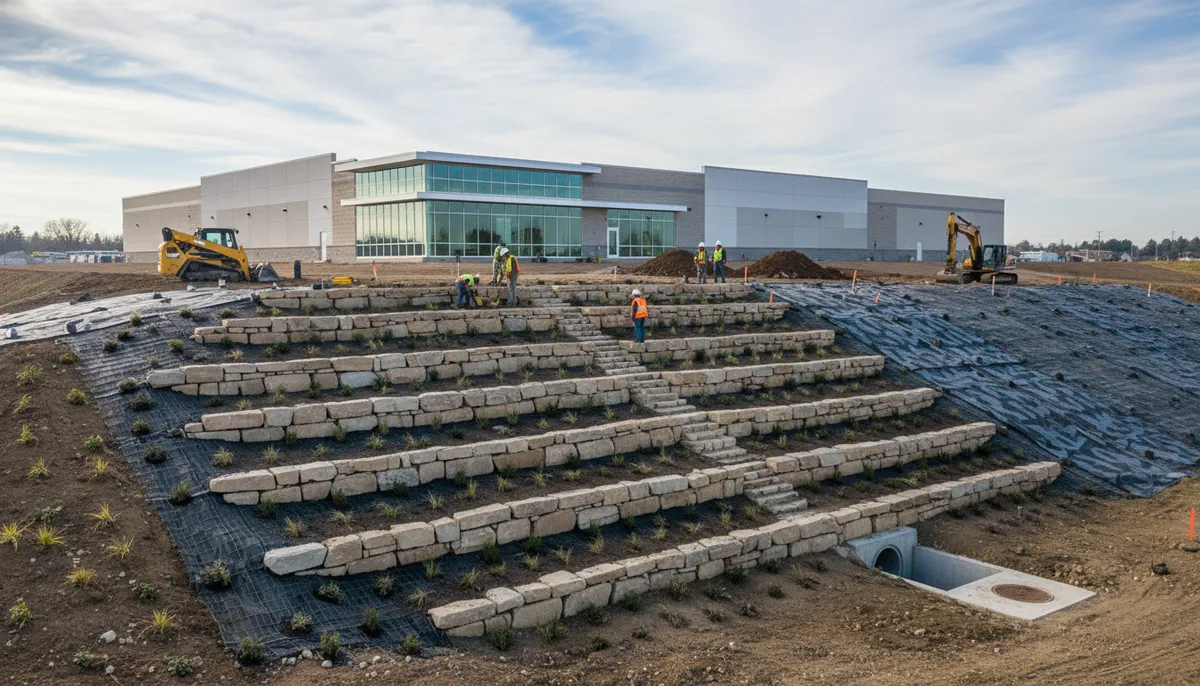
Commercial slope stabilization is the process of securing soil on sloped areas of a commercial property so it does not shift, erode, or wash away. Think of it as giving your hillside a strong foundation — one that holds firm through heavy rain, freeze-thaw cycles, and everyday foot or vehicle traffic.
This is especially important in the Chicago metro area, where clay-heavy soils and intense spring storms create ideal conditions for erosion and slope failure. A well-designed stabilization plan combines multiple strategies — grading, drainage, structural support, and planting — rather than relying on a single fix. You can explore the full range of solutions available through our retaining walls and softscapes services.
Signs Your Commercial Slope Needs Attention
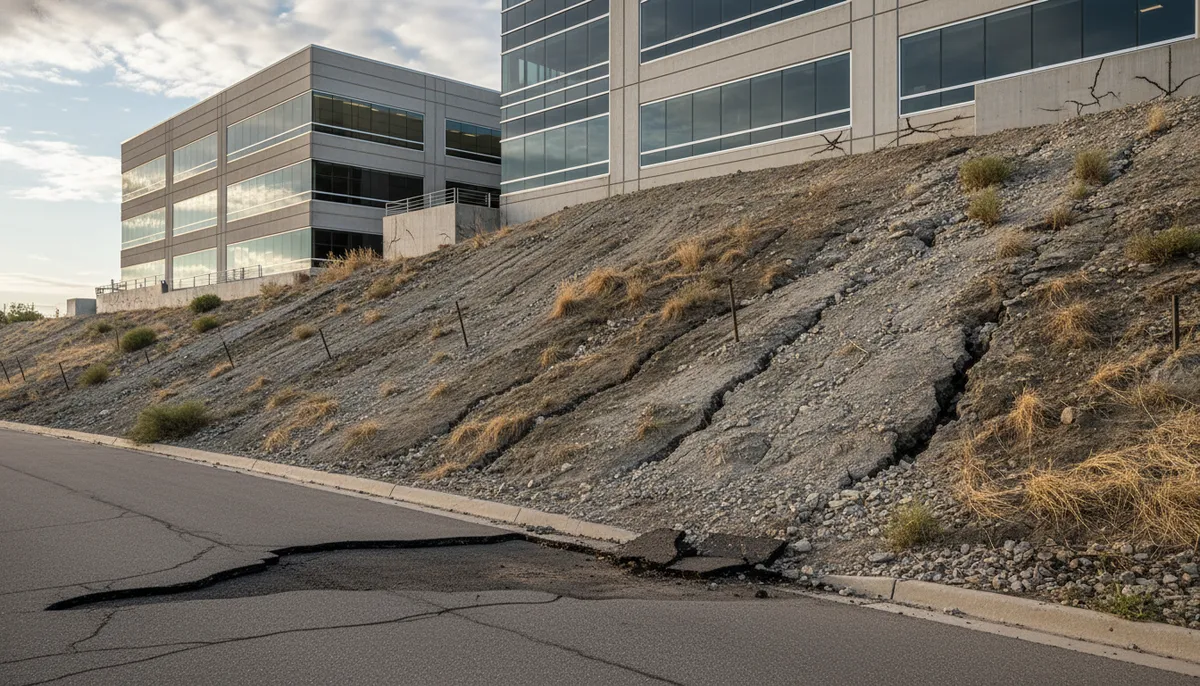
How do you know when a slope has become a real problem? Here are the most common warning signs to watch for on your property:
- Soil washing onto paved surfaces after rain events
- Visible ruts, channels, or gullies forming on the slope
- Bare or thinning grass and plant cover on hillsides
- Pooling water at the base of a slope
- Cracking or shifting in nearby retaining walls or pavement
- Silt buildup near drains, curbs, or property boundaries
- Muddy areas that remain wet long after rainfall
If you are seeing any of these signs, it is time to take action. Slopes that are left untreated tend to get worse quickly, especially during Chicago’s heavy spring rain season. Early intervention is always less expensive than repairing extensive slope damage after the fact.
Common Methods Used for Commercial Slope Stabilization
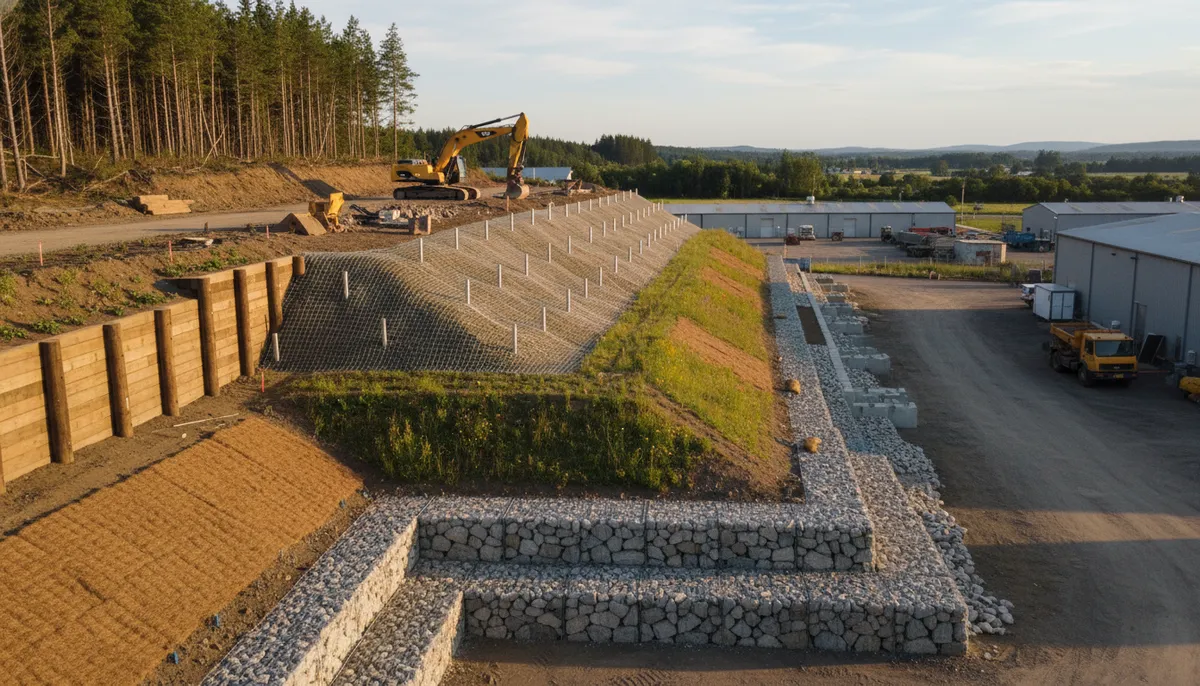
There is no single solution that works for every slope. The best approach depends on the angle, soil type, drainage patterns, and how the surrounding property is used. Here are the most widely used methods in commercial landscaping:
1. Retaining Walls
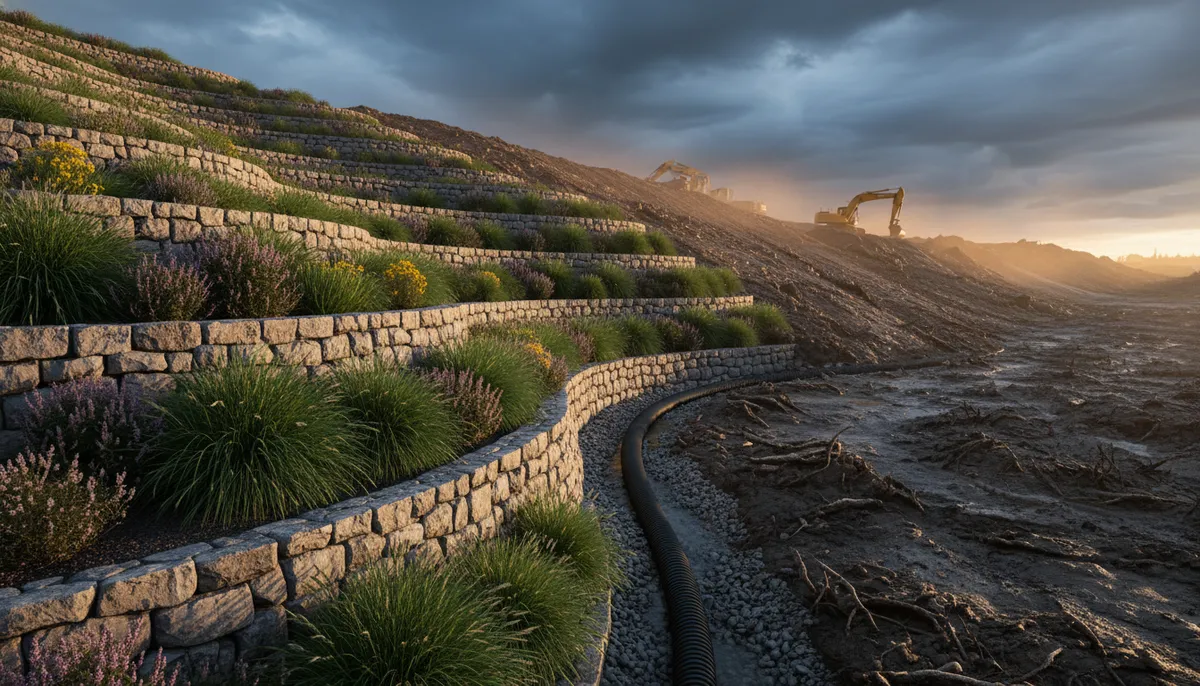
Retaining walls are one of the most effective structural solutions for slopes. They physically hold back soil, reduce the pressure on a hillside, and allow you to create flat, usable terraces above and below. Walls can be built from concrete blocks, natural stone, timber, or modular systems depending on your aesthetic and load requirements. You can read more about why retaining walls transform sloped areas into usable spaces on our blog.
2. Terracing and Grading
Terracing involves reshaping a slope into a series of level steps or platforms. This slows water runoff dramatically, reduces the angle of the slope, and creates planting opportunities. Proper grading — adjusting the overall slope angle and soil profile — is often the first step before any other method is applied. Understanding commercial landscape grading mistakes to avoid can save your project significant cost and rework.
3. Vegetation-Based Stabilization
Plants are one of nature’s best erosion fighters. Deep-rooting grasses, native perennials, shrubs, and groundcovers bind soil together with their root systems and reduce the impact of rainfall on bare earth. Hydroseeding — spraying a mixture of seed, mulch, and fertilizer — is a popular choice for large commercial slopes because it establishes coverage quickly and cost-effectively. Resources from Landscape Illinois highlight the value of native plant species for sustainable erosion control in Illinois landscapes.
4. Erosion Control Blankets and Matting
Erosion control materials are used to protect bare soil while plants are establishing. Common options include:
- Straw or wood fiber erosion control blankets
- Coir (coconut fiber) or jute mesh mats
- Silt fencing to intercept sediment runoff
- Erosion control matting that biodegrades over time
These products are typically temporary but serve a critical purpose. Without them, newly seeded slopes can lose topsoil during the first few rain events before plants have had a chance to take hold.
5. Drainage Improvements
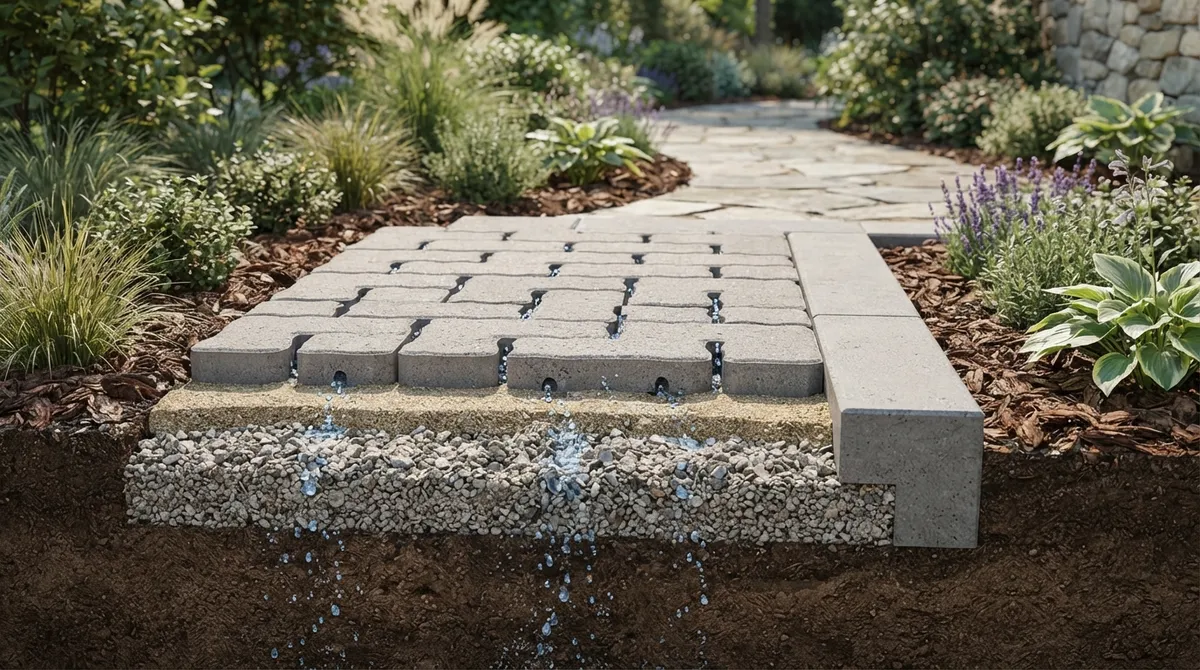
Unmanaged water is the number one driver of slope erosion. Installing proper drainage — French drains, catch basins, channel drains, or graded swales — redirects water away from vulnerable areas before it can cause damage. Addressing drainage is almost always part of a well-rounded commercial slope stabilization plan. This is closely tied to commercial lawn maintenance programs that monitor and maintain drainage infrastructure over time.
Comparing Slope Stabilization Methods at a Glance
Not sure which method fits your situation? This overview can help you start narrowing down your options:
| Method | Best For | Durability | Aesthetic Value |
|---|---|---|---|
| Retaining Walls | Steep slopes, heavy soil pressure | Very High | High |
| Terracing and Grading | Large slopes needing reshaping | High | Medium-High |
| Vegetation and Hydroseeding | Gentle to moderate slopes | High (long-term) | High |
| Erosion Control Matting | Newly seeded or bare slopes | Temporary | Low |
| Drainage Improvements | Water-driven erosion problems | Very High | Medium |
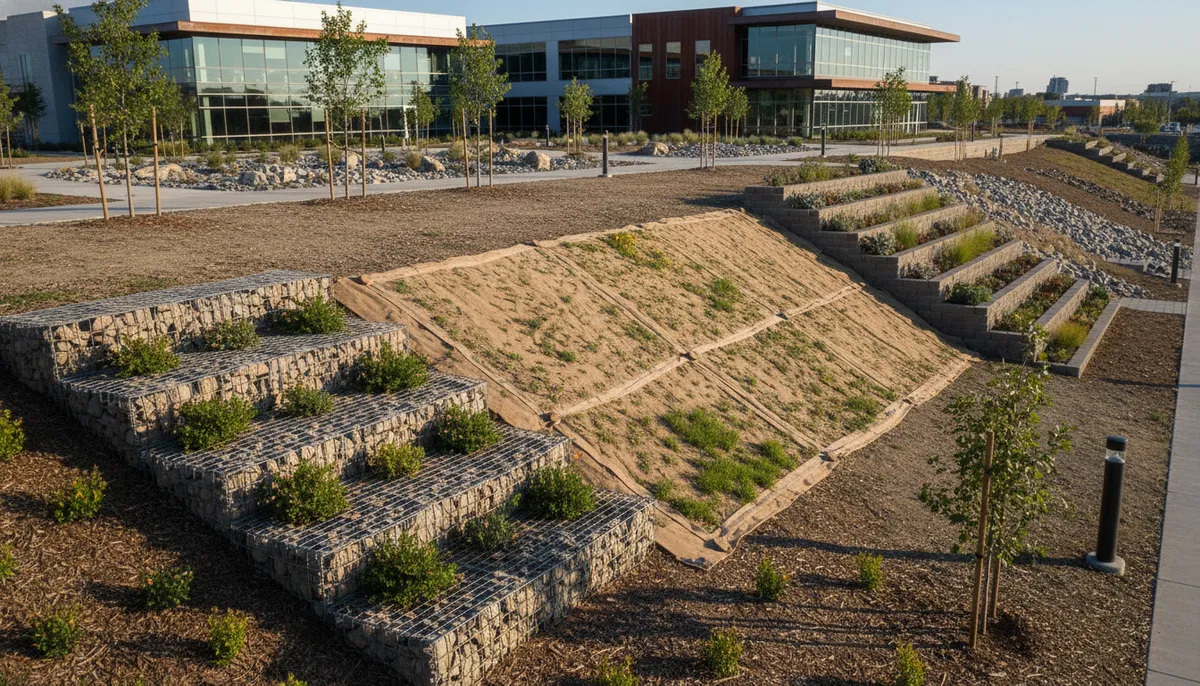
In practice, most successful commercial slope stabilization projects combine two or more of these methods. For example, a retaining wall with proper backfill drainage and native plantings above it creates a system that is far stronger than any single element alone. This is consistent with guidance from the ICPI Certified Installer program, which emphasizes integrated design for long-term structural performance.
Which Commercial Properties Need Slope Stabilization?
You might be surprised by how many different commercial site types benefit from professional slope stabilization. Here are some of the most common:
- Office parks and corporate campuses with landscaped berms
- Retail centers and shopping plazas with graded perimeters
- Industrial yards and warehousing facilities near embankments
- Utility corridors and right-of-ways with maintained slopes
- Solar farms on graded terrain requiring long-term erosion control
- New construction sites requiring post-grading stabilization
- Municipality-managed commercial zones near water features
If your property falls into any of these categories and has a significant slope, a professional assessment is a smart first step. You can also explore how choosing the right commercial landscaping service makes a major difference in outcomes.
The Step-by-Step Process for Commercial Slope Stabilization
Wondering what the process actually looks like from start to finish? Here is a general overview of how a professional commercial slope stabilization project unfolds:
- Site Assessment: A landscape professional evaluates the slope angle, soil type, drainage patterns, existing vegetation, and any nearby structures or infrastructure that could be affected.
- Design and Planning: Based on the assessment, a customized stabilization plan is created. This may combine retaining walls, drainage improvements, grading adjustments, and a planting strategy.
- Site Preparation: Existing vegetation may be removed, soil may be regraded, and erosion control materials may be installed to protect bare areas during construction.
- Structural Installation: Retaining walls, drainage systems, and any other hardscape elements are built first, as they form the structural backbone of the stabilization plan.
- Planting and Seeding: Vegetation is installed — whether through sodding, plugging, native plantings, or hydroseeding — to provide long-term biological stabilization.
- Establishment and Monitoring: Newly stabilized slopes require a period of care to ensure plants establish and drainage functions as designed. Adjustments may be made based on performance.
You can learn more about what to expect by reviewing our project process, which reflects the same careful, client-centered approach we bring to every commercial engagement.
Stormwater Compliance and Commercial Slopes
For many commercial properties, slope stabilization is not just a good idea — it is a regulatory requirement. Municipalities across Illinois and the broader Chicago metro area enforce stormwater management standards that require developed properties to control runoff and sediment. Failing to maintain stable slopes can lead to fines, notices of violation, or required remediation at significant cost.
A professionally designed commercial slope stabilization plan helps you stay ahead of compliance requirements. It also demonstrates good stewardship of your property to tenants, clients, and neighbors. The team at Serenity Landscape Group understands local stormwater management expectations and designs solutions that keep properties both beautiful and compliant.
Best Plants for Slope Stabilization on Commercial Properties
Plant selection matters a great deal on commercial slopes. You need species that establish quickly, root deeply, and require minimal ongoing maintenance once established. Here are excellent options for the Chicago region:
- Native grasses: Big bluestem, switchgrass, and prairie dropseed root deeply and handle both wet and dry conditions well
- Groundcovers: Creeping juniper, crown vetch, and daylilies spread quickly and prevent bare soil exposure
- Shrubs: Native serviceberry, buttonbush, and dogwood varieties provide woody root structure that anchors slopes effectively
- Wildflower mixes: Native wildflower blends add color and pollinator value while helping stabilize soil between larger plantings
Our softscaping services include plant selection tailored to your specific site conditions, slope exposure, and long-term maintenance preferences. You can also browse our gallery of our work to see how vegetation-based stabilization looks on completed projects.
How Long Does Commercial Slope Stabilization Take?
The timeline depends on the size of the slope, the methods used, and the time of year. Here is a general sense of what to expect:
- Design and permitting: One to three weeks for most commercial projects
- Construction phase: One to four weeks depending on scope (retaining walls and drainage add time)
- Plant establishment: Six weeks to six months before vegetation is fully established and functional
Spring and early fall are ideal times to start a commercial slope stabilization project in the Chicago area. Soil conditions are workable, temperatures support plant establishment, and you have time to let plants root before winter sets in.
Why Professional Installation Makes All the Difference
Commercial slope stabilization is not a DIY project. The consequences of a poorly installed retaining wall or an improperly graded slope can be severe — including wall failure, flooding, property damage, and liability. Working with an experienced landscape contractor ensures the solution is engineered for your specific site conditions and built to last. Learn more about what a commercial retaining wall contractor actually does and how to plan site development retaining walls that last.
Serenity Landscape Group has spent over two decades working with commercial clients throughout the Chicago metropolitan area. We bring together grading expertise, structural installation, and native planting knowledge to create stabilization solutions that perform season after season. Whether you are managing one troubled hillside or planning a full-site erosion control system, we are ready to help you protect your investment. Request your free estimate today and let’s create a plan that works for your property.
FAQs
Q: What is commercial slope stabilization in landscaping?
A: Commercial slope stabilization is the process of securing soil on sloped areas of a commercial property to prevent erosion, washouts, and slope failure. It typically combines structural solutions like retaining walls with drainage improvements and vegetation-based methods to create a long-lasting, site-specific solution.
Q: Do retaining walls help with slope stabilization on commercial properties?
A: Absolutely — retaining walls are one of the most effective tools for commercial slope stabilization! They physically hold back soil, manage drainage pressure, and can transform an unstable hillside into a functional, attractive landscape feature. They work even better when paired with proper drainage and strategic planting.
Q: What plants work best for erosion control on commercial slopes?
A: Deep-rooting native plants work best for commercial slope erosion control in the Chicago area. Great options include native grasses like switchgrass and big bluestem, groundcovers like creeping juniper, and sturdy shrubs like native dogwood varieties — all of which anchor soil effectively while looking great year-round.
Q: How long does it take for commercial slope stabilization to establish?
A: The construction phase of a commercial slope stabilization project typically takes one to four weeks, but full plant establishment can take six weeks to six months depending on the species used and seasonal conditions. Spring and early fall are the best times to start a project in the Chicago metro area for faster, more reliable establishment.
Q: When does a commercial property need professional slope stabilization?
A: If you are seeing soil washing onto paved areas, gullies forming on hillsides, bare patches on slopes, or pooling water near embankments, it is time to call in a professional. Compliance with Illinois stormwater management regulations is another key reason — many commercial properties are required to manage runoff and sediment from sloped areas.