Key Takeaways
-
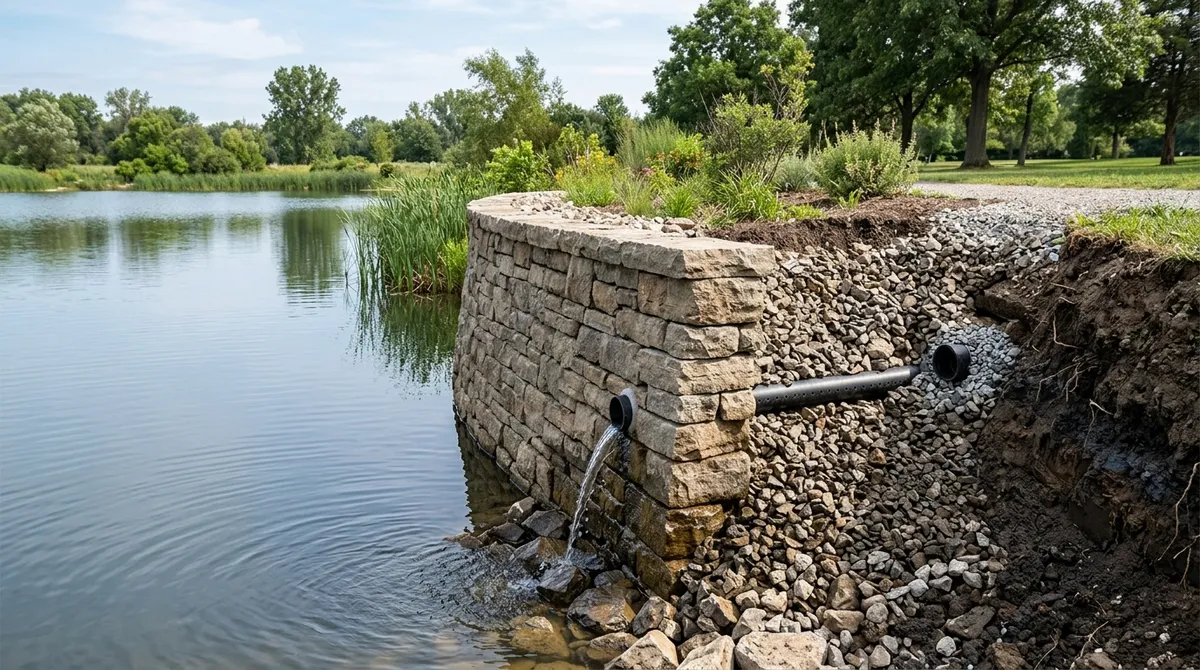
Proper drainage design with gravel backfill, drain pipes, and weep holes is critical to prevent hydrostatic pressure buildup, which is the most common cause of pond-side retaining wall failure.
-
Site evaluation assessing soil type, drainage patterns, and water level fluctuations must come before wall design, as saturated soils near ponds are softer and more unstable than dry soil elsewhere.
-
Natural stone and concrete block are the best material choices for Chicago-area residential pond walls because they’re durable, aesthetically pleasing, and handle freeze-thaw cycles well.
-
Walls over 4 feet tall near water require a licensed engineer’s structural analysis; using an ICPI Certified Installer ensures the job meets industry standards from foundation to completion.
-
Annual spring inspections after ground thaws are essential in Chicago’s climate; early repairs to small cracks prevent expensive wall failures caused by freeze-thaw expansion cycles.
-
The retaining wall design should provide safe crew access for routine pond maintenance like cleaning and vegetation management to avoid costly upkeep problems later.
If your property has a retention pond — or you’re planning to add one — you’ve probably wondered how to keep the banks stable and the surrounding landscape looking great. That’s where retaining walls for retention ponds come in. These structures do so much more than just look good. They hold back soil, control erosion, and help manage water flow around the pond edges. Whether you’re a suburban homeowner in the Chicago area, a commercial property manager, or a developer building out a new community, getting this right from the start can save you a lot of headaches down the road.
In this guide, we’ll walk you through everything you need to know — from why these walls matter to which materials work best and how to make sure your project stands the test of time (and Chicago weather). Let’s dig in!
What Is a Retaining Wall for a Retention Pond?
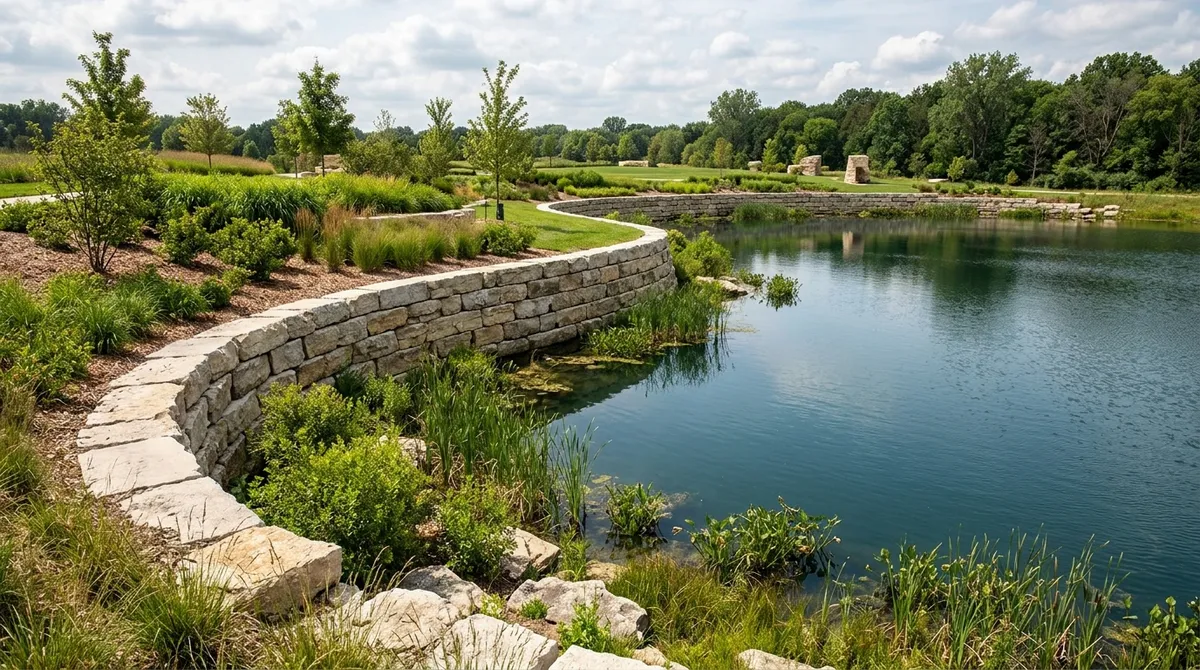
A retaining wall near a retention pond is a structure built to hold back soil along the pond’s banks or surrounding slopes. Without proper support, pond edges can erode over time. Soil slides into the water, banks become unstable, and the whole area can become a safety hazard.
You might have heard the term “retention wall” thrown around. While people use it informally, the correct landscaping and construction term is retaining wall. A retaining wall holds soil in place. A retention pond holds water. When you combine both on one property, the retaining wall plays a critical supporting role for the entire water management system. You can learn more about the basics in this helpful resource: What Is a Retaining Wall and Do You Need One?
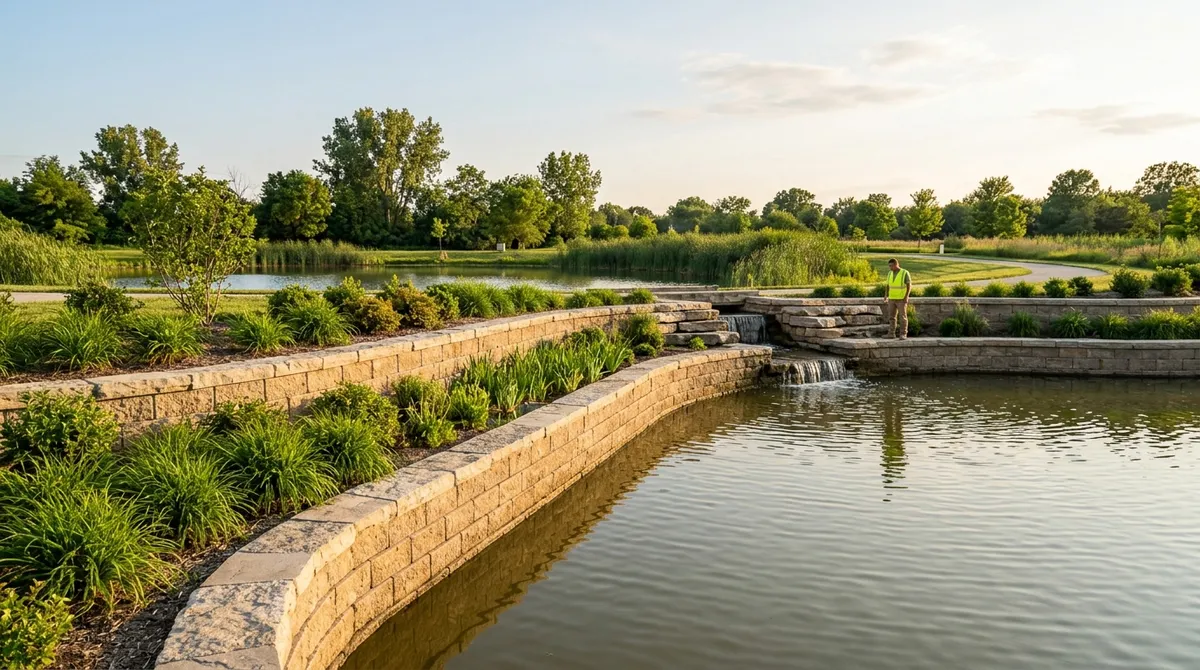
Why Retaining Walls Matter Around Ponds
Retention ponds are designed to collect and slowly release stormwater runoff. That means the soil around them is almost always wet or saturated at some point. Wet soil is heavy soil — and heavy soil puts enormous pressure on anything trying to hold it in place.
Here’s why a properly built retaining wall is so important in this setting:
- Erosion control: Prevents soil from washing into the pond during heavy rain
- Slope stabilization: Keeps surrounding embankments from slipping or sliding
- Safety: Creates a defined, stable edge that’s safer for people walking nearby
- Drainage management: Helps direct water where it should go
- Aesthetics: Transforms a raw muddy bank into a clean, attractive landscape feature
- Usable space: Terraced walls can create flat planting areas or walking paths near the pond
For commercial properties especially, a well-designed pond and retaining wall system also demonstrates responsible stormwater management — something many municipalities in the Chicago area require. The team at Landscape Illinois provides great resources on Illinois-specific landscaping regulations and best practices worth reviewing before you start your project.
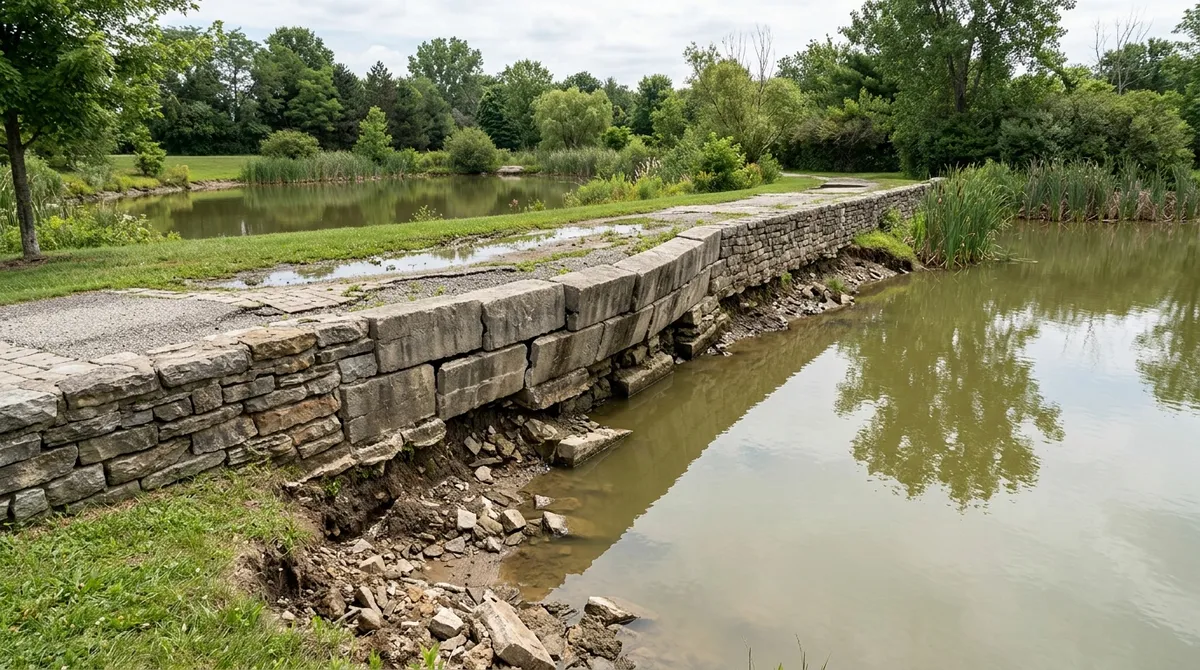
Common Challenges with Pond-Side Retaining Walls
Building a retaining wall near a retention pond is not the same as building one on a dry hillside. The environment is more demanding, and a few key challenges make site-specific planning essential.
Hydrostatic Pressure
When water builds up in the soil behind a wall, it creates hydrostatic pressure. This is one of the most common causes of retaining wall failure. As water levels in the pond rise and fall, the soil behind the wall swells and contracts. Without proper drainage relief, the wall can bulge, crack, or collapse entirely.
This is why proper drainage behind the wall is absolutely critical. Drain pipes, gravel backfill, and weep holes all help release that water pressure before it becomes a problem. Check out more on this topic at 3 Commercial Landscape Grading Walls Mistakes to Avoid.
Soft or Saturated Soils
Soil near ponds is often softer and more unstable than soil elsewhere on a property. A wall foundation that works great on firm ground may shift or sink in saturated conditions. That’s why a proper site evaluation — including a look at soil type and drainage patterns — must come before any wall is designed or built.
Access for Maintenance
Retention ponds need regular maintenance. The retaining wall design should allow crews to safely access the pond for cleaning, inspection, and vegetation management. Poor planning here can make routine upkeep much harder and more expensive over time.
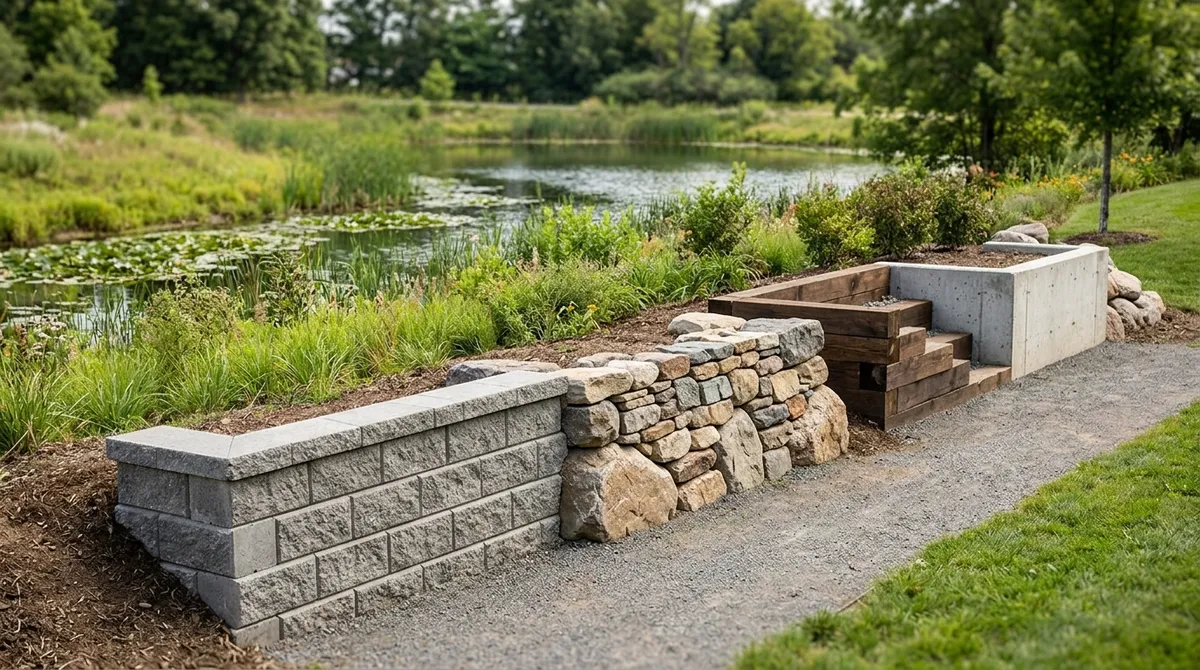
Best Materials for Retaining Walls Near Retention Ponds
Choosing the right material is one of the most important decisions you’ll make. Each option has real strengths and limitations depending on your site conditions, slope, and design goals.
| Material | Best For | Key Advantage | Key Consideration |
|---|---|---|---|
| Natural Stone | Aesthetic-focused residential ponds | Beautiful, durable, blends with nature | Higher cost, skilled installation needed |
| Concrete Block | Larger slopes, commercial properties | Strong, consistent, flexible design | Requires good drainage planning |
| Poured Concrete | Heavy-duty applications, tall walls | Maximum strength and durability | Less visually natural, higher cost |
| Timber | Low walls, informal garden settings | Affordable, easy to work with | Shorter lifespan near water |
| Riprap / Natural Rock | Gradual slopes, naturalistic banks | Allows drainage, low maintenance | Not ideal for formal or steep designs |
For most residential pond projects in the Chicago suburbs, natural stone or concrete block tend to be the go-to choices. They look great, hold up well through freeze-thaw cycles, and can be engineered to handle the specific drainage demands of a pond environment. You can explore more about how stonework elevates landscape design at Why Is Stonework the Secret to a Stunning Outdoor Space?
How to Design Retaining Walls for Retention Ponds: Step-by-Step
A successful project follows a clear process. Here’s how experienced landscaping professionals approach retaining walls for retention ponds:
- Site Evaluation: Assess soil type, slope grade, drainage patterns, and water level fluctuations around the pond
- Wall Height and Placement: Determine how tall the wall needs to be and exactly where it should sit relative to the pond edge and surrounding grade
- Material Selection: Choose the right material based on soil conditions, aesthetics, budget, and long-term performance needs
- Drainage Design: Plan for gravel backfill, drain pipes, and weep holes to relieve hydrostatic pressure
- Foundation Preparation: Excavate and prepare a stable base, accounting for soft soils near the water
- Wall Construction: Build the wall in lifts, placing drainage materials as you go
- Backfill and Compaction: Carefully backfill behind the wall and compact in layers to avoid settlement
- Final Grading and Planting: Grade the surrounding area, add plants or ground cover to further stabilize the soil and improve appearance
If your project involves a taller wall (generally over four feet), it’s wise to involve a licensed engineer. Walls of that height near water require detailed structural analysis. Working with a certified hardscaping professional — look for an ICPI Certified Installer — ensures the job meets industry standards from the ground up.
Adding Beauty Around Your Retention Pond
A retaining wall doesn’t have to be purely functional. Done right, it becomes a beautiful focal point that enhances the entire outdoor space. Here are some great ways to make the most of a pond-side retaining wall:
- Add terraced planting beds behind tiered walls for flowers, ornamental grasses, or native plants
- Install landscape lighting along the wall to make the pond area glow at night — explore ideas at Lighting & Sound
- Create a walking path or seating area near the pond using pavers — see inspiration at Pavers
- Use softscape plantings along the wall base to soften hard edges — visit Softscapes for ideas
- Consider a pergola or pavilion nearby to create a relaxing outdoor retreat overlooking the water
When every element works together — wall, plants, lighting, and hardscape — a retention pond transforms from a purely functional stormwater feature into a stunning landscape centerpiece. Take a look at what’s possible at the Gallery of our work.
Retaining Walls for Commercial Properties with Retention Ponds
If you manage an office park, retail center, or apartment complex in the Chicago area, your retention pond likely serves a very practical purpose: stormwater compliance. Many municipalities require retention ponds as part of site development approvals. Keeping those ponds functional — and keeping the surrounding landscape stable and attractive — is an ongoing responsibility.
A well-designed retaining wall system helps commercial properties:
- Maintain compliance with local stormwater management requirements
- Reduce ongoing maintenance costs by preventing erosion and soil loss
- Improve the visual appeal of the property for tenants and visitors
- Protect surrounding pavement, walkways, and structures from shifting soils
For commercial property managers looking for end-to-end solutions, it helps to partner with a team that understands both the engineering and the aesthetics. Learn more about What a Commercial Retaining Wall Contractor Actually Does and how to find the right fit for your property.
Maintenance Tips for Retaining Walls Near Retention Ponds
Even the best-built wall needs some attention over the years. Here’s a simple maintenance checklist to keep your retaining wall in great shape:
- Inspect annually: Look for cracks, bulging, or leaning — especially after a wet winter or spring thaw
- Clear drainage outlets: Make sure weep holes and drain pipes aren’t clogged with debris
- Control vegetation: Remove large roots or invasive plants that could push against or destabilize the wall
- Monitor erosion: Watch for soil washing away from behind or below the wall after heavy rains
- Address small problems early: A small crack fixed now is far cheaper than a wall rebuild later
Chicago’s freeze-thaw cycles can be tough on retaining walls. Water gets into small cracks, freezes, expands, and makes those cracks bigger. Staying on top of inspections each spring — after the ground thaws — is especially important in our climate. For more ongoing care advice, visit Why Does Your Commercial Property Need Slope Stabilization?
Why Work with a Professional Landscaping Team?
It might be tempting to treat a pond-side retaining wall as a straightforward DIY project. But the combination of water, soft soils, drainage demands, and slope pressures makes this one of those jobs where professional expertise really pays off.
At Serenity Landscape Group’s retaining wall services, we bring over two decades of experience to projects exactly like this. We evaluate your site carefully, design walls that work with your drainage needs, and build them to last through everything Chicago’s seasons can throw at them. We also tie your retaining wall into a complete landscape vision — so the whole outdoor space looks intentional and beautiful, not just structurally sound.
From the first consultation through installation and beyond, we’re here to make the process smooth and the results stunning. Curious about how we work? Check out our process page to see how we approach every project.
Conclusion
Retaining walls for retention ponds are a smart investment for any property with a water feature, sloped banks, or stormwater management needs. They protect your landscape, improve safety, support drainage, and — when designed thoughtfully — make the whole outdoor space more beautiful and enjoyable. Whether you’re a homeowner wanting a gorgeous backyard pond area or a commercial property manager keeping slopes and stormwater systems in check, the right retaining wall makes a real difference.
Ready to explore what’s possible on your property? Request your free estimate today and let’s start planning an outdoor space that works as beautifully as it looks. You can also call us at (630) 359-5139 — we’d love to hear about your project!
FAQs
Q: What is the purpose of a retaining wall around a retention pond?
A: A retaining wall around a retention pond holds back soil along the pond’s banks and surrounding slopes. It prevents erosion, stabilizes the ground, and helps manage drainage — keeping the pond functional and the surrounding landscape safe and attractive.
Q: What is the difference between a retaining wall and a retention wall?
A: Great question! A retaining wall is a structure that holds back soil and prevents it from sliding or eroding. ‘Retention wall’ is an informal term people sometimes use, but in landscaping and construction, the correct term is retaining wall. A retention pond, on the other hand, is a water feature designed to collect stormwater runoff.
Q: What materials work best for retaining walls near ponds?
A: Natural stone and concrete block are popular choices for pond-side retaining walls because they’re durable, look great, and handle moisture well. The best material depends on your slope, soil conditions, aesthetic goals, and budget — a professional site evaluation helps narrow it down.
Q: Do I need a professional to build a retaining wall near a retention pond?
A: We’d strongly recommend it! Pond-side walls deal with wet soils, hydrostatic pressure, and drainage challenges that make them more complex than a typical garden wall. A professional landscaping team can evaluate your site, design proper drainage, and build a wall that lasts — especially important through Chicago’s tough freeze-thaw seasons.
Q: How much maintenance do retaining walls near retention ponds require?
A: Not too much, thankfully! An annual inspection — especially in spring after the ground thaws — is a great habit. You’ll want to check for cracks, clear any drainage outlets, and watch for erosion near the base. Catching small issues early keeps maintenance costs low and your wall looking great for years to come.