Key Takeaways
-
Pond retaining walls must be engineered to handle hydrostatic pressure from water, unlike decorative garden walls; walls exceeding 30 inches near water require specialized structural design to prevent failure.
-
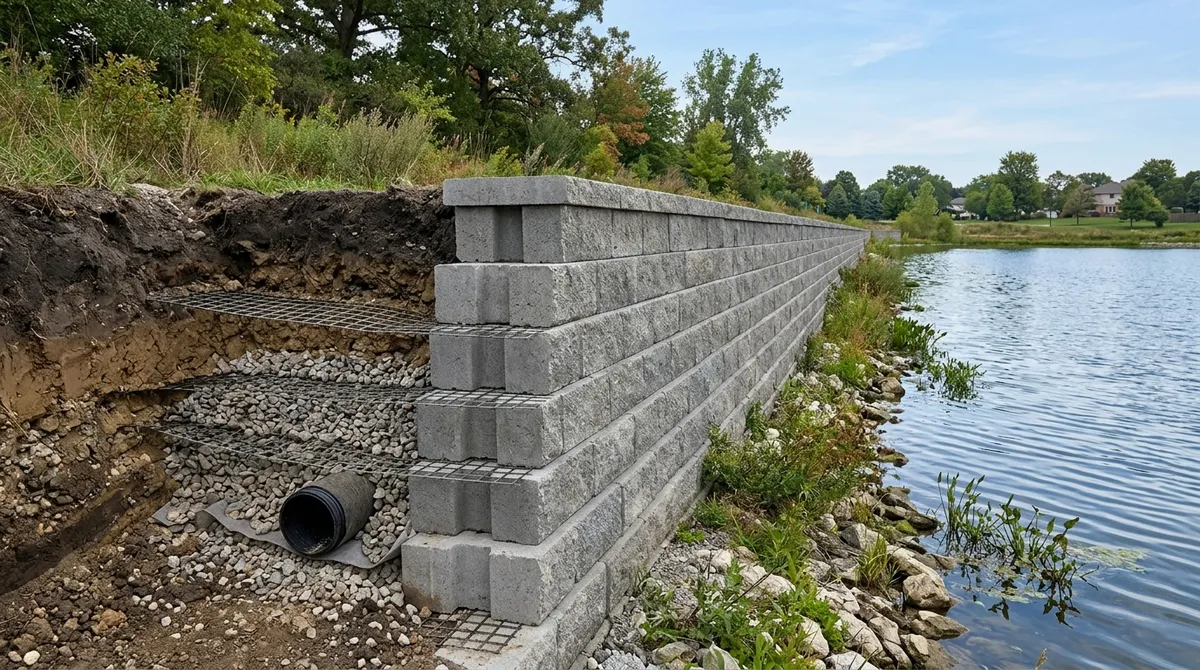
Proper drainage is critical—install clean gravel aggregate, corrugated drain pipes, weep holes, and geotextile fabric behind walls to prevent water buildup that causes bulging, cracking, and collapse.
-
Retaining walls over 3 feet tall require geogrid reinforcement mesh embedded every two courses to resist soil and water pressure; this is non-negotiable in Chicago’s shifting clay soils and freeze-thaw cycles.
-
In Chicago, most retaining walls over 3-4 feet near retention ponds require building permits; skipping this step risks fines, forced removal, or costly rebuilds—verify local requirements before construction.
-
Residential concrete block walls cost $6,000–$12,000, while natural stone runs $10,000–$18,000+; multi-tiered systems for large ponds range $15,000–$20,000+, but cutting corners on base prep or drainage causes expensive repairs.
-
Hire only ICPI-certified installers with local Chicago experience, full-service capabilities (design to permits), and verifiable portfolio of pond wall projects to ensure structural integrity in harsh winter conditions.
If you have a retention pond on your property, you already know how much work goes into keeping it looking great. But here’s the thing — without the right support structure around that pond, you could be looking at serious erosion, flooding, and costly repairs. That’s where retaining walls for retention ponds in Chicago come in. These aren’t just decorative features. They’re structural lifelines that hold your pond banks in place, manage water runoff, and protect your entire landscape investment.
Chicago’s climate is no joke. Freeze-thaw cycles, heavy spring rains, and clay-heavy soils put enormous pressure on pond edges. Whether you’re a suburban homeowner, a commercial property manager, or a new home builder, getting your retention pond wall right the first time saves you time, money, and headaches down the road. Let’s walk through nine practical tips to help you do exactly that.
1. Understand How Pond Retaining Walls Differ from Garden Walls
Not all retaining walls are created equal. A decorative garden wall holds back flower beds and soil. A retaining wall for a retention pond must support structural loads and manage constant water pressure. These are two very different engineering challenges.
Once a wall exceeds 30 inches in height near water, it needs to be designed to handle hydrostatic pressure — the force of water pushing against the structure. Ignoring this difference is one of the most common mistakes property owners make. You can learn more about the basics in this helpful guide on what a retaining wall is and whether you need one.
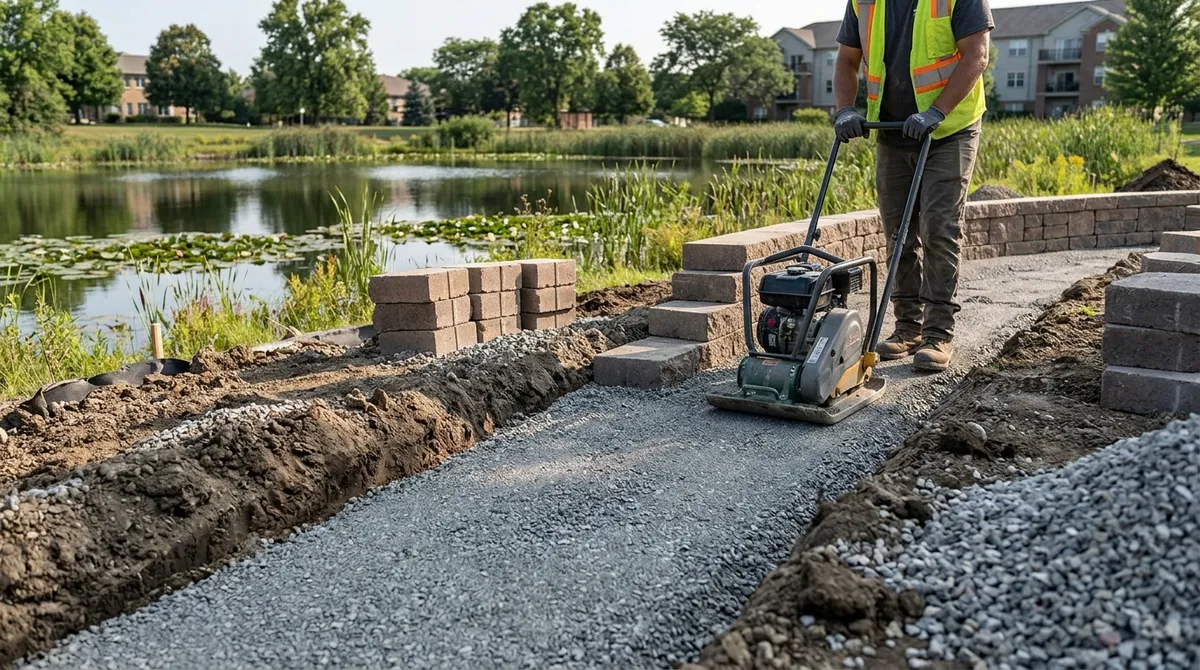
2. Build on a Solid, Compacted Gravel Base
Every strong retaining wall starts below ground. For pond-side walls, you need a compacted gravel base that is at least 4 to 6 inches deep. This base prevents settling and shifting, especially in Chicago’s freeze-thaw conditions.
Skipping this step — or cutting corners on base depth — leads to wall movement and eventual failure. The gravel layer also helps with drainage, which we’ll cover a bit later. Think of the base as your wall’s foundation. If it’s weak, everything above it is at risk.
3. Install Proper Drainage Behind the Wall
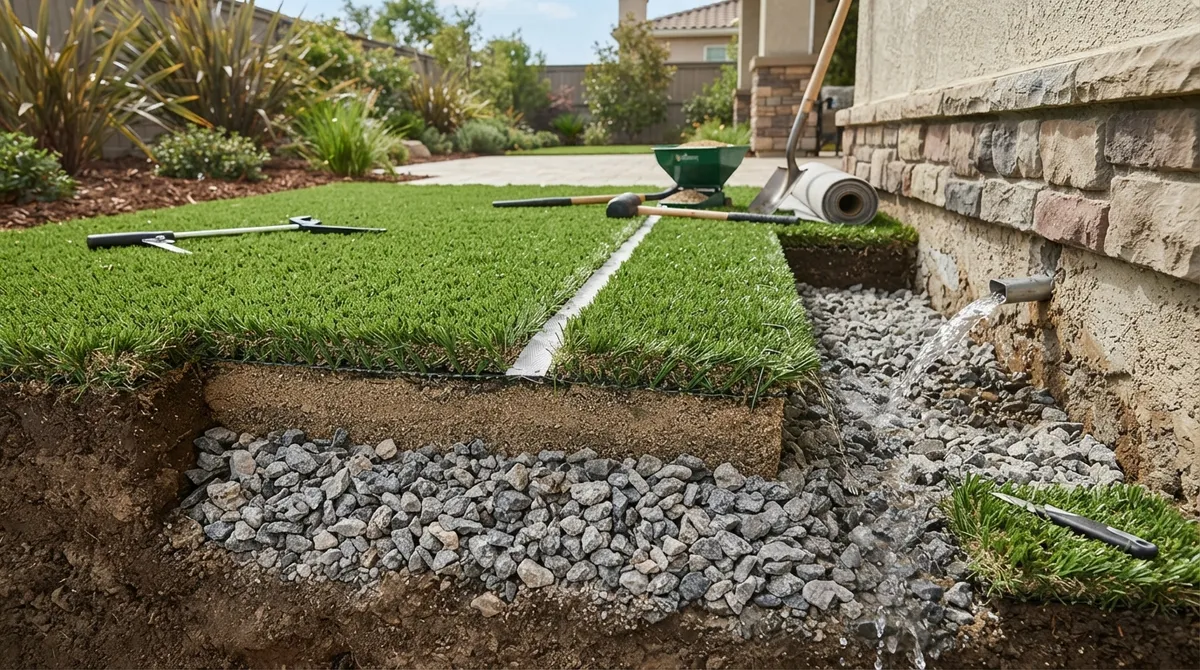
Drainage is the single most critical element in any retaining wall near water. Without it, hydrostatic pressure builds up behind the wall and pushes it outward. Over time, this causes bulging, cracking, and collapse.
Here’s what proper drainage looks like for pond retaining walls:
- Clean aggregate (gravel) placed directly behind the wall
- Corrugated drain pipes running horizontally behind the structure
- Weep holes or drainage gaps built into the wall face
- A filter fabric or geotextile barrier to prevent soil from clogging the drainage layer
Getting this right keeps water moving through and around the wall rather than building up and causing damage. For more on how drainage solutions complement retaining walls, check out this resource on retaining walls vs. drainage systems for stormwater management.
4. Use Geogrid Reinforcement for Walls Over 3 Feet
If your retaining wall exceeds 3 feet in height, geogrid reinforcement is not optional — it’s essential. Geogrid is a mesh material that gets embedded into the soil behind the wall and anchors it against horizontal movement.
Industry standards recommend placing geogrid reinforcement every two courses of wall units. This dramatically increases the wall’s ability to resist pressure from both the soil and the water nearby. Walls taller than 3 to 4 feet in the Chicago area almost always require this reinforcement to prevent premature failure, and most certified installers won’t skip it. You can explore how segmental systems use this technique in this article on how segmental retaining wall installation works.
5. Choose the Right Material for Wet, Pond-Side Conditions
Material selection matters a lot when a wall sits next to standing water. Here’s a quick comparison of your main options:
| Material | Durability Near Water | Relative Cost | Best For |
|---|---|---|---|
| Treated Wood | Moderate (can rot over time) | Lowest | Budget-conscious projects |
| Segmented Concrete Block | High | Mid-range | Residential pond walls |
| Mortar-Fused Brick or Stone | Very High | Higher | Aesthetic and structural durability |
| Natural Stone | Excellent | Premium | High-end residential and commercial |
| Gabion Baskets | Excellent | Mid-range to Higher | Large commercial ponds |
Wood is affordable but degrades faster in wet environments. Concrete block systems offer a puzzle-piece fit and great stability. Mortar-fused stone or brick offers the highest resilience but comes at a higher price point. For high-end projects, natural stone is hard to beat. You can read more about how to choose natural stone for commercial retaining walls if that direction interests you.
6. Know Chicago’s Permit Requirements Before You Build
Here’s something many property owners don’t realize until it’s too late: in Chicago and the surrounding suburbs, any retaining wall over 3 to 4 feet tall typically requires a building permit. This is especially true for walls near retention ponds, where structural failure could impact neighboring properties or public drainage systems.
Before any work begins, check with your local municipality about permit requirements. Skipping this step can result in fines, forced removal, or costly rebuilds. The team at retaining wall engineering services can help you navigate these requirements smoothly. Professional landscapers familiar with Chicagoland regulations — like those at Serenity Landscape Group — can connect you with certified installers who handle permitting as part of the process.
7. Plan for Multi-Tiered Designs on Larger Ponds
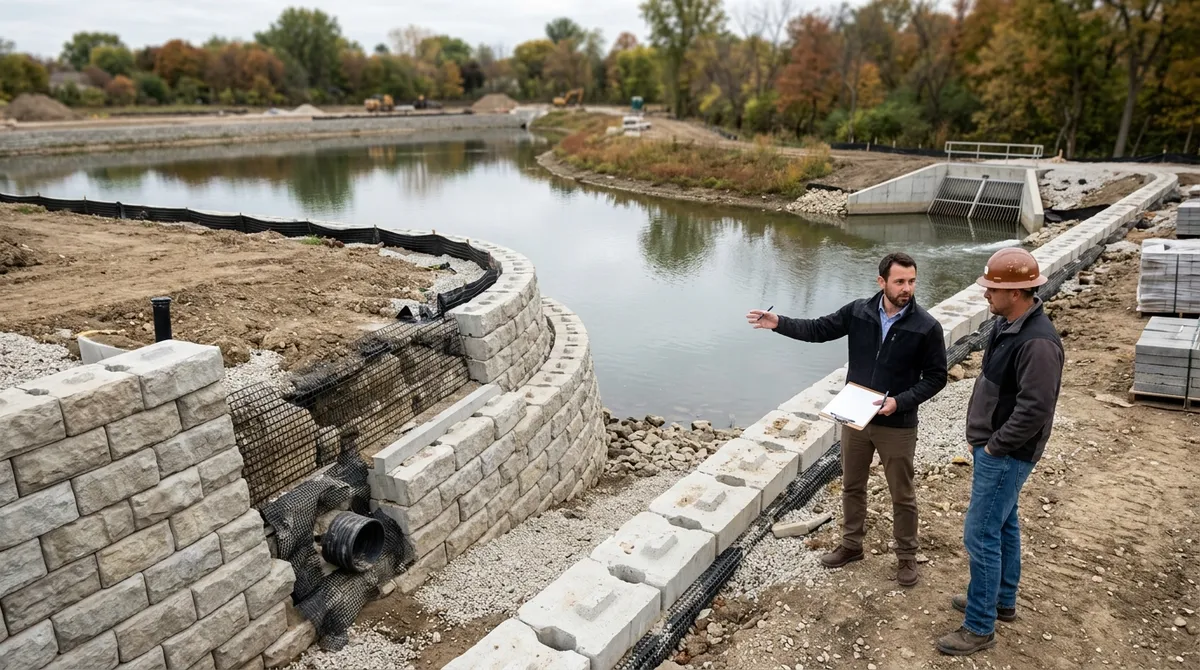
Larger retention ponds often need more than a single wall. Multi-tiered retaining wall systems break up the total wall height into smaller, stepped sections. This reduces pressure on each individual wall and creates a more visually appealing design.
Here are the key benefits of a tiered approach:
- Distributes soil and water pressure across multiple structures
- Creates planting opportunities between tiers for added beauty
- Reduces the height of each individual wall, which can simplify permitting
- Improves long-term stability in Chicago’s shifting soils
The trade-off is cost. A double-stacked, multi-tiered retaining wall project in the Chicago area can run anywhere from $15,000 to $20,000 or more, depending on materials and site complexity. But for large ponds, this investment pays for itself in long-term structural integrity. See how professionals approach this kind of work at 12 key steps for large-scale retaining wall installation.
8. Budget Realistically for Your Retention Pond Wall
Let’s talk numbers. Cost is often the first question property owners ask, and it’s a fair one. Here’s a general cost breakdown for retaining walls for retention ponds in Chicago:
| Project Type | Estimated Cost Range | Notes |
|---|---|---|
| Basic wood wall (residential) | $3,000 – $6,000 | Lower durability near water |
| Concrete block wall (residential) | $6,000 – $12,000 | Good balance of cost and durability |
| Natural stone or brick wall | $10,000 – $18,000+ | Premium aesthetics and longevity |
| Multi-tiered complex system | $15,000 – $20,000+ | Large ponds, commercial properties |
Block or concrete materials can double or even triple the price compared to wood, depending on your provider and site conditions. Always get multiple quotes and make sure they include base preparation, drainage, geogrid reinforcement, and permits. Cutting corners on any of these elements will cost you more in repairs later. Industry organizations like Landscape Illinois are a great resource for finding qualified professionals in the area.
9. Work with a Certified, Experienced Retaining Wall Installer
This final tip might be the most important one on the list. Retaining walls for retention ponds are not DIY projects. The combination of water pressure, soil movement, and Chicago’s harsh winters demands professional-level expertise.
Here’s what to look for when hiring a contractor:
- Certification and credentials — Look for contractors certified by recognized industry bodies. An ICPI Certified Installer has demonstrated competency in hardscape installation best practices.
- Local experience — Chicago’s clay soils and freeze-thaw cycles require specific knowledge. Choose someone who works in the Chicagoland area regularly.
- Full-service approach — The best contractors handle everything from site assessment and design to permitting, installation, and drainage.
- References and portfolio — Always ask to see past pond wall projects. A strong portfolio speaks louder than any sales pitch.
- Transparent pricing — Get a detailed written estimate that breaks down materials, labor, drainage, and any permit fees.
At Serenity Landscape Group, we’ve spent over two decades building retaining walls that stand up to everything Chicago throws at them. From residential backyard ponds to large commercial retention systems, we bring the technical skill and design artistry to every project. Explore our full range of retaining wall services to see what’s possible for your property.
You can also browse our gallery of our work to get inspired, and if you’re curious about how erosion and water management connect to broader landscape design, this article on why commercial properties need slope stabilization is worth a read. For more background on pond-specific wall planning, visit our dedicated page on retaining walls for retention ponds.
It’s also worth understanding how the State of Illinois regulates stormwater management and construction near water features, as local codes can directly impact your project scope and timeline.
Bringing It All Together
A retention pond is a beautiful and functional landscape feature — but only when it’s properly supported. The right retaining wall keeps your pond banks stable, your yard free from erosion, and your property looking its best through every Chicago season. Whether you’re starting from scratch or reinforcing an existing structure, these nine tips give you a solid roadmap to follow.
Ready to get started? Our team would love to walk your property, assess your pond’s needs, and design a retaining wall solution that’s built to last. Request your free estimate today and take the first step toward a safer, more beautiful outdoor space. You can also call us at (630) 359-5139 to speak with one of our friendly landscape experts right away.
FAQs
Q: Do I need a permit for a retaining wall around a retention pond in Chicago?
A: Yes, in most Chicago-area municipalities, any retaining wall over 3 to 4 feet tall requires a building permit — especially near water features like retention ponds. It’s always a good idea to check with your local village or city before breaking ground, and a professional contractor can help you navigate the permitting process with ease.
Q: What materials work best for retaining walls next to retention ponds?
A: Concrete segmented block, mortar-fused stone, and natural stone all hold up well in wet, pond-side environments. Wood is the most affordable option but tends to degrade faster when exposed to consistent moisture, so most professionals recommend concrete or stone for longer-lasting results near water.
Q: Why is drainage so important for retaining walls near retention ponds?
A: Without proper drainage, water pressure builds up behind the wall and can push it outward over time — leading to bulging, cracking, or even full collapse. Installing clean gravel aggregate, corrugated drain pipes, and geotextile fabric behind the wall keeps water moving safely away from the structure.
Q: How much does a retaining wall for a retention pond cost in the Chicago area?
A: Costs vary widely based on materials and project complexity. A basic residential wood wall might start around $3,000 to $6,000, while a multi-tiered concrete or stone system for a larger pond can run $15,000 to $20,000 or more. Getting a detailed quote that includes drainage, base preparation, and permits will give you the most accurate picture.
Q: Do retaining walls over 3 feet need geogrid reinforcement in Illinois?
A: Absolutely — walls over 3 feet near retention ponds almost always require geogrid reinforcement to prevent lateral movement caused by soil and water pressure. Industry standards call for geogrid placement every two courses of wall units, and most certified installers in Illinois include this as a standard part of the installation process.