Key Takeaways
-
Chicago’s clay-heavy soils, freeze-thaw cycles, and 36 inches of annual rainfall make integrated slope stabilization essential; single-method fixes are inadequate for long-term commercial property protection.
-
Soft armoring solutions like hybrid-turf armor mats (ShearForce10) are more cost-effective than rock riprap while providing better aesthetics and actively supporting permanent vegetation establishment.
-
Professional site assessment evaluating slope gradient, soil composition, drainage patterns, and erosion signs must precede any stabilization work to ensure the right technique selection.
-
Multi-layered approach combining retaining walls, French drains, erosion control blankets, and native vegetation takes one growing season but delivers permanent stabilization compared to temporary single-solution fixes.
-
Vegetation establishment with native grasses and deep-rooted shrubs typically shows meaningful results within 60-90 days and requires one complete growing season for full root system development.
-
Hiring certified contractors familiar with Chicago regulations and soil science is critical; DIY attempts lack the expertise in drainage engineering, soil stabilization, and local climate adaptation needed for lasting results.
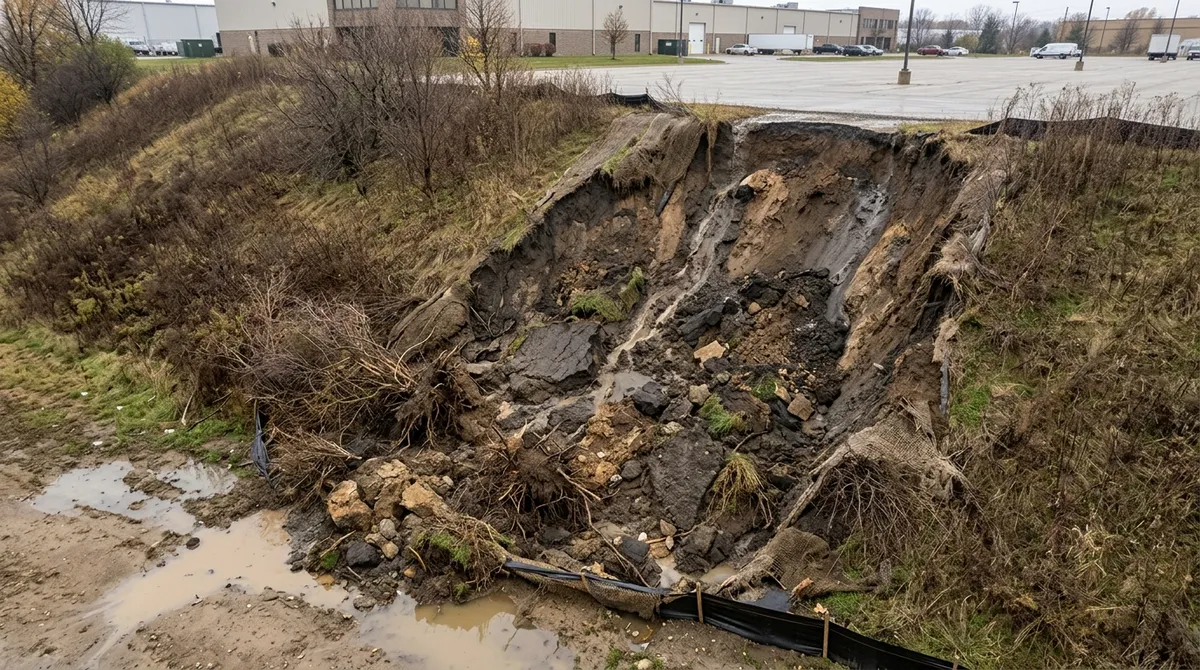
If your commercial property has a sloped area, you already know the headaches it can cause. Erosion sneaks up on you after every heavy rain. Muddy runoff stains walkways. Unstable ground creates safety hazards and can even threaten nearby structures. In Chicago’s unpredictable climate — with its freeze-thaw cycles, heavy spring rains, and summer storms — commercial slope stabilization is not just a nice-to-have. It’s a necessity.
The good news? Modern landscaping techniques make slope stabilization more effective, affordable, and even beautiful than ever before. Whether you manage a corporate campus, retail center, or mixed-use development, the right combination of vegetation, structural elements, and drainage can turn a problematic hillside into a polished, professional feature. In this guide, we’ll walk you through exactly how to get it done — step by step.
Why Commercial Slopes Fail in the Chicago Area
Chicago’s climate is tough on landscapes. Slopes take the brunt of it. Understanding why slopes fail helps you choose the right fix — and avoid costly mistakes.
Here are the most common reasons commercial slopes become unstable:
- Heavy rainfall and stormwater runoff — Chicago receives an average of 36 inches of rain per year, and sloped ground channels that water fast, stripping topsoil with it.
- Clay-heavy soil — Much of the Chicago metro sits on clay, which swells when wet and shrinks when dry, weakening slope stability over time.
- Freeze-thaw cycles — Winter temperature swings expand and contract the soil, loosening its structure and making slopes vulnerable to spring washout.
- Lack of vegetative cover — Bare or sparse slopes have no root systems to anchor the soil, leaving them wide open to erosion.
- Poor drainage design — Water that pools or channels incorrectly accelerates soil loss and can undermine retaining structures.
When you understand the root causes, it becomes much easier to build a solution that actually lasts. You can also learn more about why your commercial property needs slope stabilization and the risks of leaving it untreated.
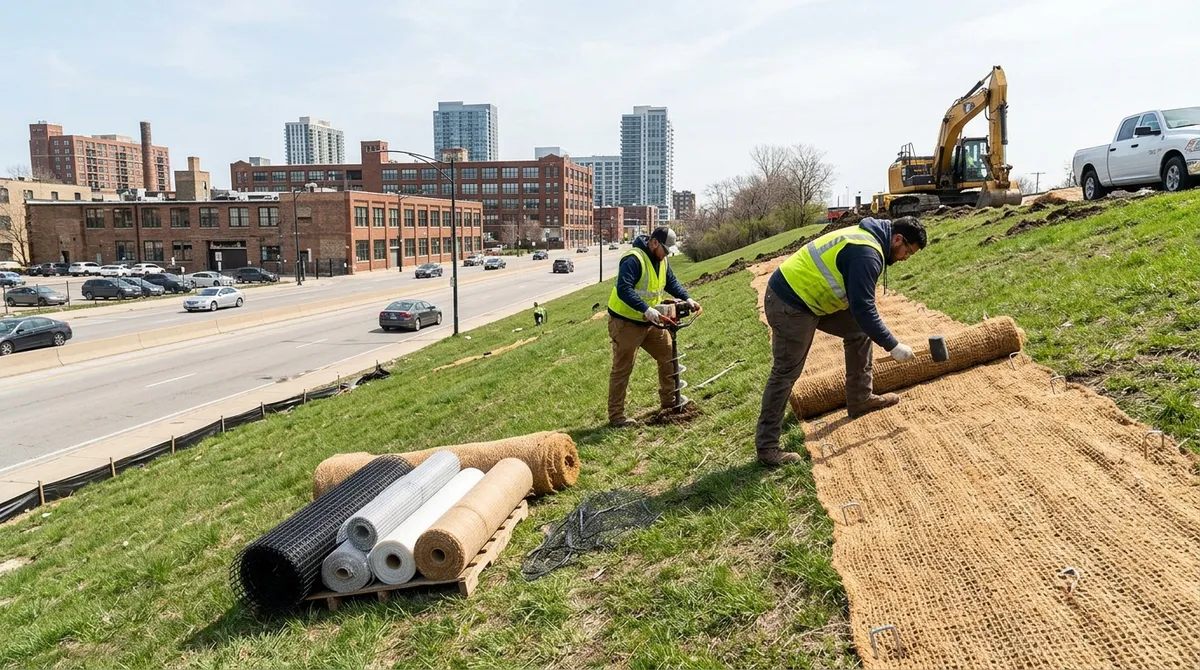
Step-by-Step Guide to Commercial Slope Stabilization in Chicago
Effective slope stabilization isn’t a one-size-fits-all job. It requires a thoughtful process that matches the right techniques to your specific site conditions. Here’s a practical, step-by-step breakdown to help you move from problem to solution with confidence.
Step 1: Assess the Slope and Identify Risk Factors
Before anything else, you need a clear picture of what you’re working with. A professional site assessment looks at slope angle, soil type, drainage patterns, and surrounding structures. This step shapes every decision that follows.
Key things to evaluate during a slope assessment include:
- Slope gradient (steeper slopes need more aggressive stabilization)
- Soil composition and stability
- Existing vegetation coverage
- Proximity to parking lots, buildings, or water features
- Signs of active erosion such as rills, gullies, or exposed roots
If you’re unsure where to start, resources from Landscape Illinois can help you find qualified professionals who specialize in commercial erosion control throughout the state.
Step 2: Choose the Right Erosion Control Method
Once you know your slope’s profile, it’s time to select the best approach. Most commercial slope stabilization projects in Chicago use a combination of methods for best results. Here’s a quick comparison of the most common options:
| Method | Best For | Key Benefit | Timeline |
|---|---|---|---|
| Erosion Control Blankets | Moderate to severe slopes | Immediate protection + vegetation support | Fast installation |
| Retaining Walls | Steep or load-bearing slopes | Structural hold, long-term stability | 1–2 weeks |
| Vegetation Planting | Mild to moderate slopes | Root anchoring, natural aesthetics | 1 growing season |
| Drainage Systems | Any slope with runoff issues | Redirects water, reduces erosion force | 1–3 days |
| Soil Reinforcement | Slopes with unstable subsoil | Strengthens slope structure | Varies by method |
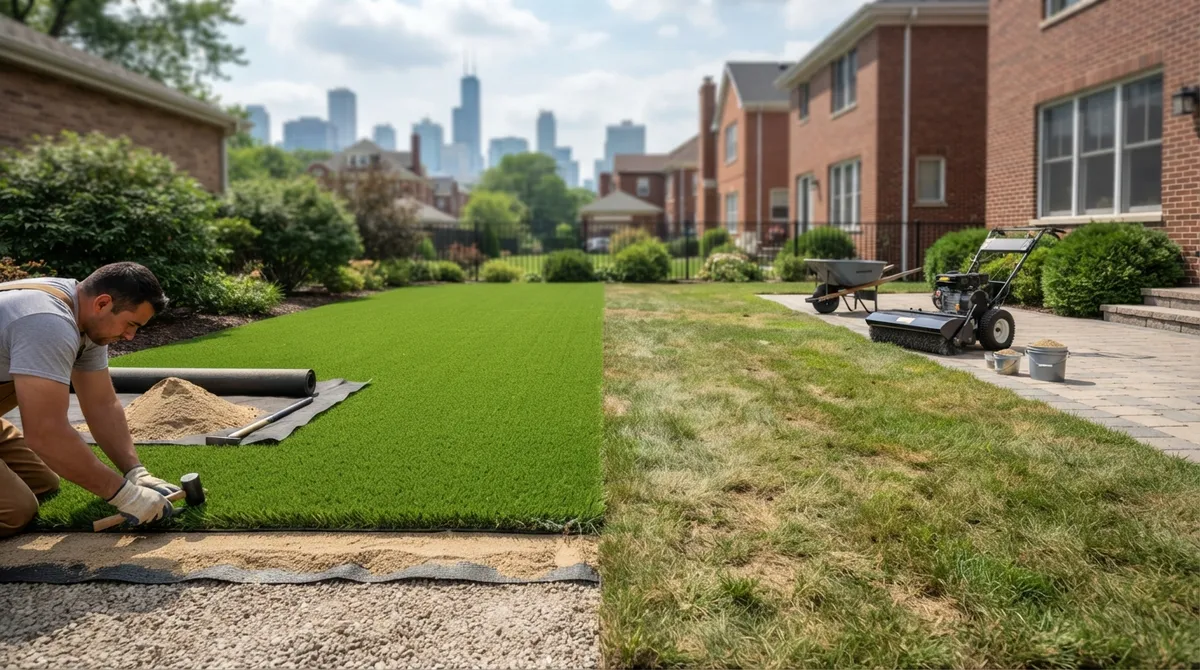
For very severe slopes, hybrid-turf armor mats like ShearForce10 have become popular in Chicago. These products come in manageable rolls — 3ft x 45ft (49 lb) and 6ft x 45ft (99 lb) — making them practical to handle on commercial sites. They deliver the flow protection of traditional rock riprap while also supporting the establishment of permanent vegetative cover. That means better aesthetics and stronger long-term results at a lower cost than rock-based solutions.
Step 3: Install a Proper Drainage System
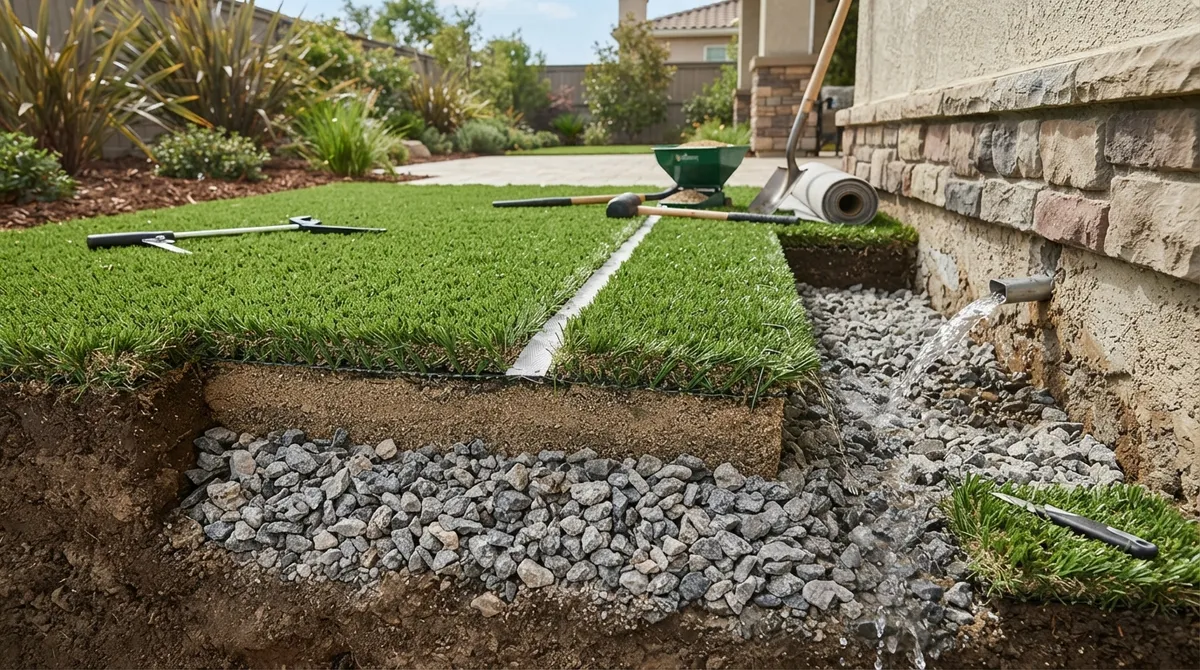
No slope stabilization plan works well without smart drainage. Water is the enemy of stable slopes, so you need to control where it goes before it does damage. A well-designed drainage system catches runoff at the top of the slope, channels it safely away, and reduces the erosive force of water moving downhill.
Common drainage solutions for commercial slopes in Chicago include:
- Swales and channels — Graded depressions that guide water away from vulnerable areas
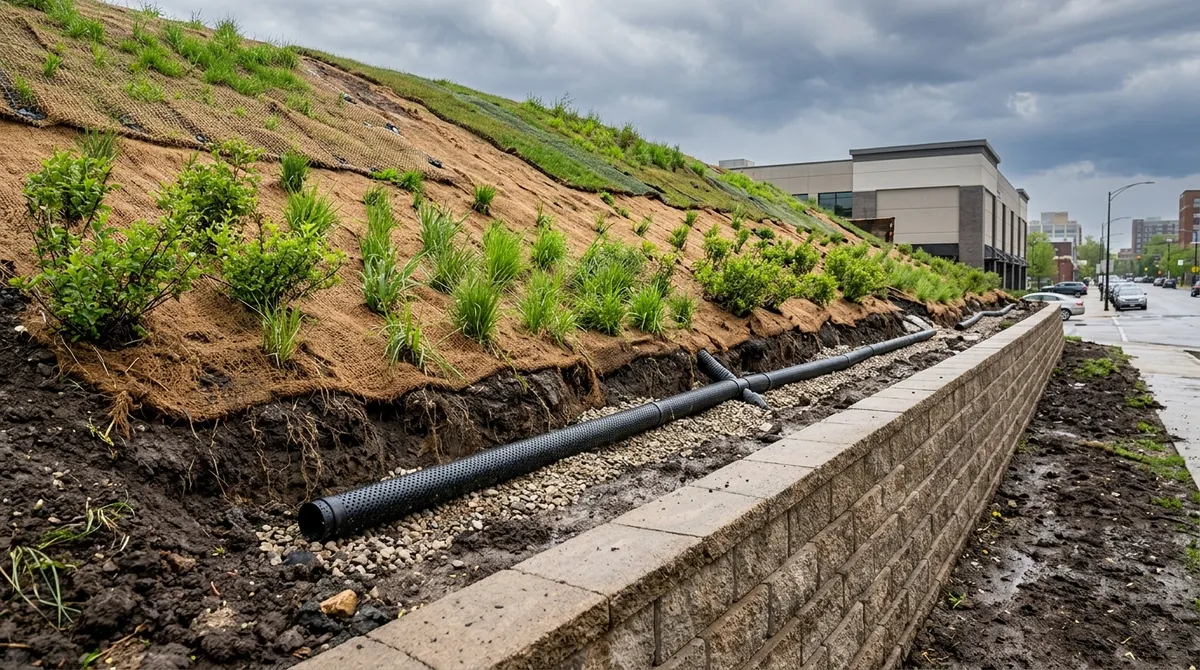
- French drains — Subsurface pipes that collect and redirect groundwater
- Catch basins — Surface inlets that collect stormwater runoff efficiently
- Rip-rap lined channels — Rock-lined waterways that slow and redirect high-velocity runoff
Integrating drainage with your broader slope stabilization plan is essential. You can explore how retaining walls compare to drainage systems for commercial stormwater management to find the right balance for your property.
Step 4: Install Retaining Walls Where Needed
For steep slopes or areas where soil movement poses a direct threat to structures, retaining walls are often the backbone of the stabilization plan. These structures hold back soil, create level terraces, and provide a solid foundation for other plantings and features.
There are several retaining wall options suited to commercial applications:
- Segmental block walls — Modular, versatile, and cost-effective for most commercial sites
- Concrete walls — High-strength solutions for heavy loads or severe slopes
- Gabion walls — Wire baskets filled with rock, excellent for drainage and natural aesthetics
- Natural stone walls — Premium appearance with excellent durability
- MSE (Mechanically Stabilized Earth) walls — Engineered systems for large-scale commercial projects
You can read more about what a commercial retaining wall contractor does and how they assess which wall type fits your specific conditions. Working with certified professionals — including those recognized by the ICPI Certified Installer program — ensures your retaining walls are built to last and meet industry standards.
Step 5: Apply Erosion Control Blankets or Soft Armor
Once your structural elements are in place, erosion control blankets protect the exposed soil while vegetation gets established. These blankets are laid directly on the slope surface and hold the soil in place against rain impact and surface runoff.
Soft armoring products are preferred by experienced contractors in Chicago for protecting streambanks, shorelines, and severe slope channels. Unlike rock riprap, they blend into the landscape and actively encourage plant growth. Over time, the roots take over the stabilization role, and the blanket biodegrades naturally — leaving a healthy, permanent vegetative cover.
Vegetation establishment typically takes one growing season, though fast-growing species can show meaningful root development within 60–90 days. Choosing native plants suited to Chicago’s climate speeds up the process and reduces long-term maintenance needs. Check out our softscaping services to explore plant options that work beautifully on commercial slopes.
Step 6: Establish and Maintain Vegetative Cover
Vegetation is your slope’s long-term armor. Once plants establish deep root systems, they hold soil in place naturally, even during heavy rains. The best plants for commercial slope stabilization in Chicago tend to share a few key traits:
- Deep or fibrous root systems that anchor soil effectively
- Drought tolerance once established
- Native or adapted species that thrive in Chicago’s climate
- Low maintenance requirements suited to commercial properties
Native grasses like switchgrass and big bluestem, ground covers like creeping juniper, and deep-rooted shrubs like native viburnums are all excellent choices. They look great, support local pollinators, and keep your slope stable year after year. Pair your planting plan with routine commercial lawn maintenance to keep vegetation healthy and effective through every season.
Combining Techniques for Best Results
The most successful commercial slope stabilization projects in Chicago don’t rely on a single method. They layer techniques to create a system that handles water, holds soil, supports vegetation, and looks polished at the same time. Think of it as a team approach — each element does its part, and together they deliver a result that stands up to Chicago’s demanding conditions.
Here’s what an integrated slope stabilization plan might look like for a typical commercial property:
- Site assessment and drainage analysis
- Retaining wall installation at the toe and mid-slope where needed
- French drain or swale installation to manage runoff
- Erosion control blanket application across the slope face
- Seeding or planting with native vegetation
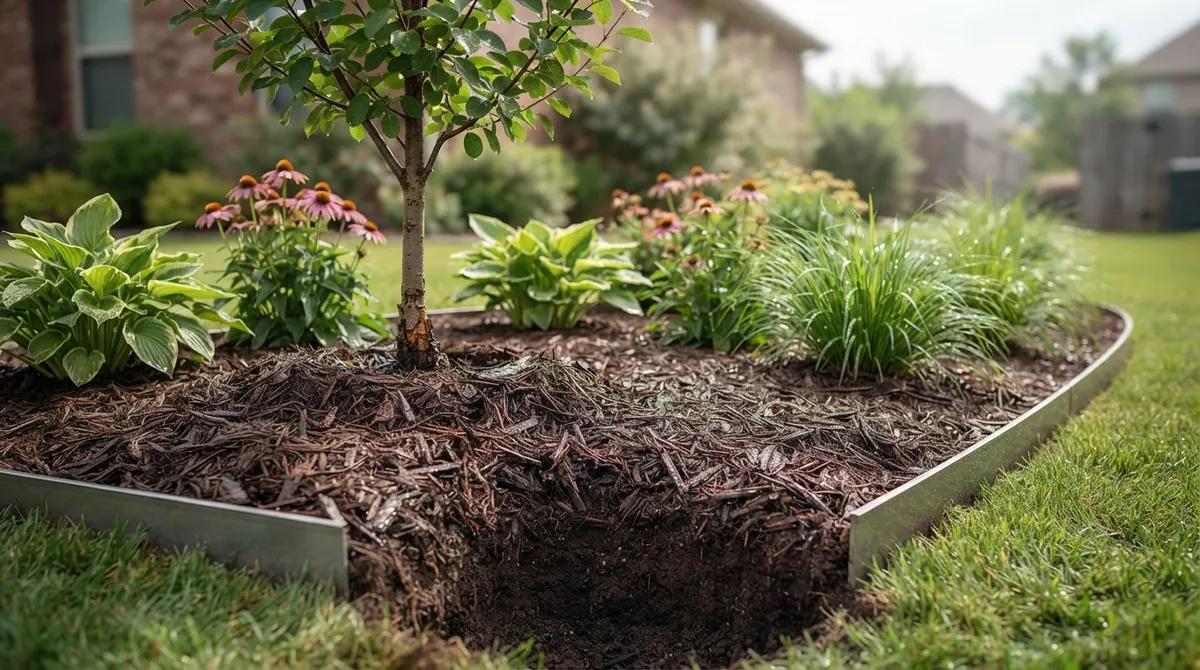
- Mulch application to retain moisture and reduce surface erosion
- Ongoing monitoring and maintenance through the first growing season
At Serenity Landscape Group, we’ve spent over two decades helping commercial clients throughout the greater Chicago area bring exactly this kind of integrated approach to life. From the first site visit to the final planting, our team manages every detail so you don’t have to.
Cost Factors for Commercial Slope Stabilization in Chicago
Costs vary widely depending on slope size, severity, and the methods required. Here’s a general breakdown of factors that affect pricing:
| Factor | Impact on Cost |
|---|---|
| Slope size (linear feet and height) | Larger slopes require more materials and labor |
| Slope gradient | Steeper slopes need more structural reinforcement |
| Soil conditions | Clay or unstable soils require additional prep work |
| Retaining wall type | Natural stone costs more than concrete block |
| Drainage complexity | Subsurface systems cost more than surface swales |
| Vegetation selection | Native plantings may cost more upfront but save on maintenance |
Soft armoring solutions like erosion control blankets are generally more cost-effective than rock riprap, offering superior aesthetics and vegetation support at a lower installed cost. For a personalized estimate based on your specific site, reach out to our team for a free consultation.
Choosing the Right Contractor for the Job
Commercial slope stabilization is not a DIY project. It requires experienced professionals who understand soil science, drainage engineering, and plant ecology — all in the context of Chicago’s specific climate and regulatory environment.
When evaluating contractors, look for these qualities:
- Proven experience with commercial erosion control and slope stabilization
- Familiarity with Chicago-area soils, climate, and local regulations
- Ability to provide integrated solutions — not just single-method fixes
- Portfolio of completed commercial projects you can review
- Clear communication and a transparent project process
You can browse our gallery of completed work to see examples of slope stabilization and other commercial landscape projects we’ve brought to life across Chicagoland. For more guidance on selecting the right partner, our article on how to choose commercial landscaping services that deliver results walks you through the key questions to ask.
Ready to Stabilize Your Commercial Slope?
A well-stabilized slope is more than just an engineering solution — it’s an investment in your property’s safety, appearance, and long-term value. With the right plan in place, your commercial slope can go from a liability to a landscape asset that impresses visitors and protects your property for decades to come.
Don’t let another rainy season cause more damage. The team at Serenity Landscape Group is ready to help you design and implement a commercial slope stabilization plan that works for your property, your budget, and your timeline. Get a free estimate today and take the first step toward a safer, more beautiful outdoor space — or give us a call directly at (630) 359-5139 to speak with one of our friendly landscape professionals.
FAQs
Q: What are the best erosion control methods for commercial slopes in Chicago?
A: The best approach usually combines erosion control blankets, retaining walls, and native vegetation — all working together as a system. Chicago’s clay soils and heavy rainfall make a multi-method plan far more effective than relying on any single technique alone. A professional site assessment will help you find the right mix for your specific slope.
Q: How long does it take for vegetation to establish on a commercial slope after stabilization?
A: Most vegetation shows meaningful root development within 60–90 days when fast-growing native species are used, though full establishment typically takes one complete growing season. Erosion control blankets protect the soil during this window, so your slope stays stable while the roots do their thing. Patience pays off — once those roots dig in, your slope stays put naturally!
Q: Are erosion control blankets better than rock riprap for commercial slope stabilization?
A: In many cases, yes! Erosion control blankets like hybrid-turf armor mats deliver comparable flow protection to rock riprap while offering better aesthetics, easier installation, lower costs, and long-term vegetation support. Rock riprap can be bulky and visually unappealing, while soft armoring solutions blend beautifully into the landscape as plants establish over time.
Q: How do retaining walls help with slope stabilization on commercial properties?
A: Retaining walls physically hold back soil on steep or load-bearing slopes, preventing mass movement and creating level terraces that make the rest of the slope easier to manage. They’re often the structural backbone of a larger stabilization plan, working alongside drainage systems and vegetation to deliver complete, long-lasting protection.
Q: What drainage solutions are recommended for commercial slope stabilization in Chicago?
A: French drains, catch basins, surface swales, and rip-rap lined channels are all commonly used on commercial slopes in Chicago. The right choice depends on your slope’s size, gradient, and surrounding features. The goal is always the same: redirect water away from vulnerable areas before it builds up enough force to cause serious erosion.