Key Takeaways
-
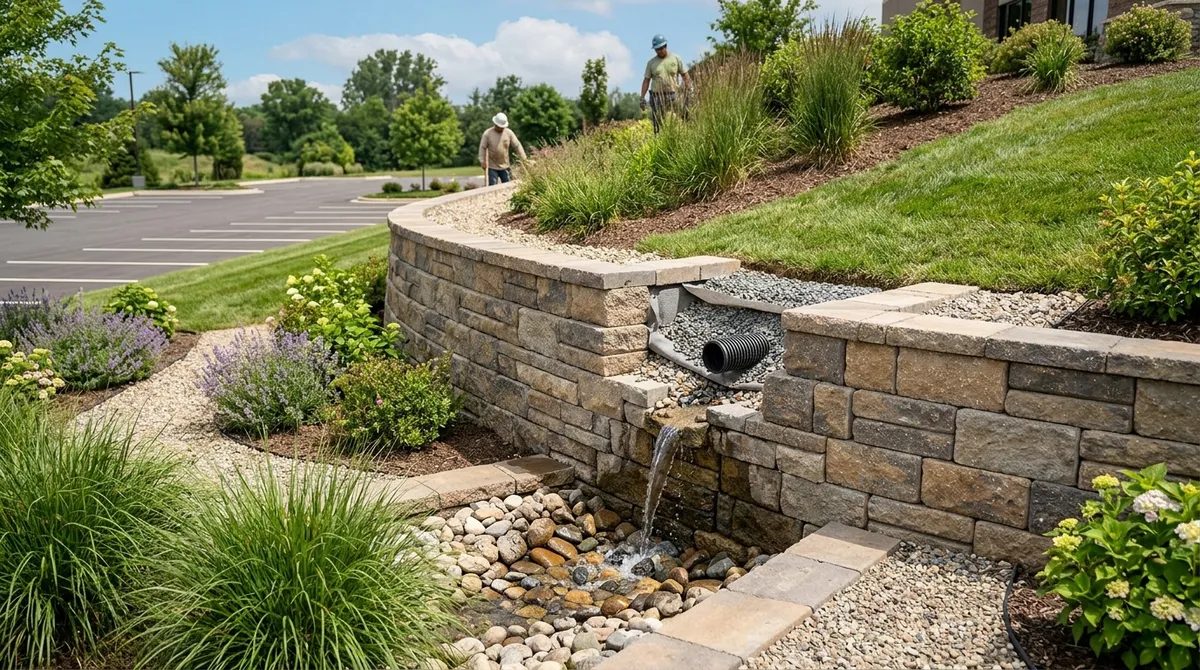
Poor drainage design is the leading cause of retaining wall failure on commercial properties; prioritize contractors with clear drainage expertise and water management systems in their proposals.
-
Commercial retaining walls typically cost $20-$50 per square foot, with engineered systems reaching $150/sq ft; investing in quality materials and installation upfront saves thousands in repair costs.
-
Walls above 3-4 feet in Illinois require building permits and engineering review; hire contractors who handle permitting and code compliance to avoid costly stop-work orders and fines.
-
Choose full-service landscaping contractors over wall-only specialists to ensure your retaining wall integrates with drainage, grading, and overall site design for better long-term results.
-
Verify contractor qualifications by checking for Illinois commercial licensing, insurance, ICPI Certified Installer designation, and references from similar commercial projects in your area.
-
Red flags include vague answers about drainage and permits, extremely low bids, lack of commercial references, and requests for large upfront payments before work begins.
Your commercial property’s landscape says a lot about your business. A crumbling slope or eroding hillside isn’t just an eyesore — it can create serious liability issues, drainage problems, and wasted outdoor space. That’s why finding the right commercial retaining wall contractors near me is one of the smartest investments a property owner or manager can make in 2026.
Whether you manage an office park, retail center, apartment community, or small business in the greater Chicago area, a well-built retaining wall does far more than hold back soil. It creates usable space, controls water runoff, prevents erosion, and adds real curb appeal. But the key is hiring the right contractor — someone with the experience, licensing, and know-how to get it done correctly the first time.
Ready to find the best fit for your property? Here are five proven ways to identify and hire a top-quality commercial retaining wall contractor near you.
1. Know What to Look For in a Commercial Retaining Wall Contractor
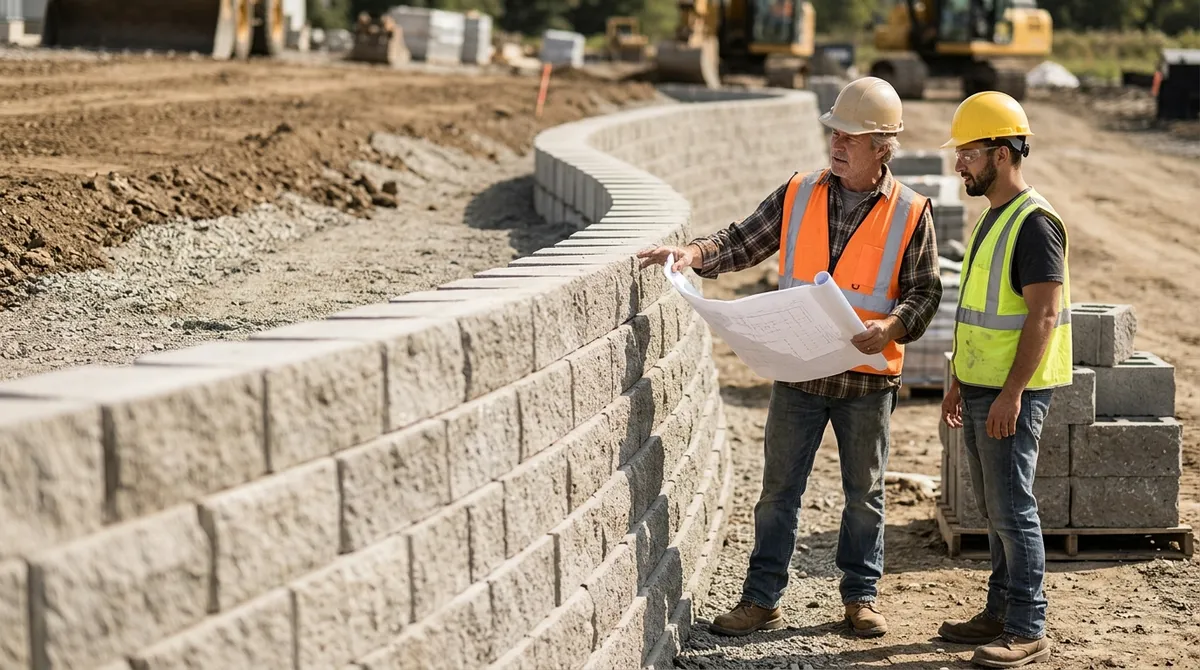
Not every landscaping company is qualified to build a commercial retaining wall. Commercial projects involve more complex engineering, stricter code requirements, and heavier structural loads than residential jobs. Before you start your search, it helps to understand what separates a truly qualified contractor from the rest.
Here’s a quick checklist of what to look for:
- Licensed and insured for commercial landscaping and hardscaping work in Illinois
- Experience with engineered walls, especially for taller structures that require structural review
- Proven commercial portfolio with projects similar in scope to yours
- Knowledge of local permits and municipal code requirements in Chicago and surrounding suburbs
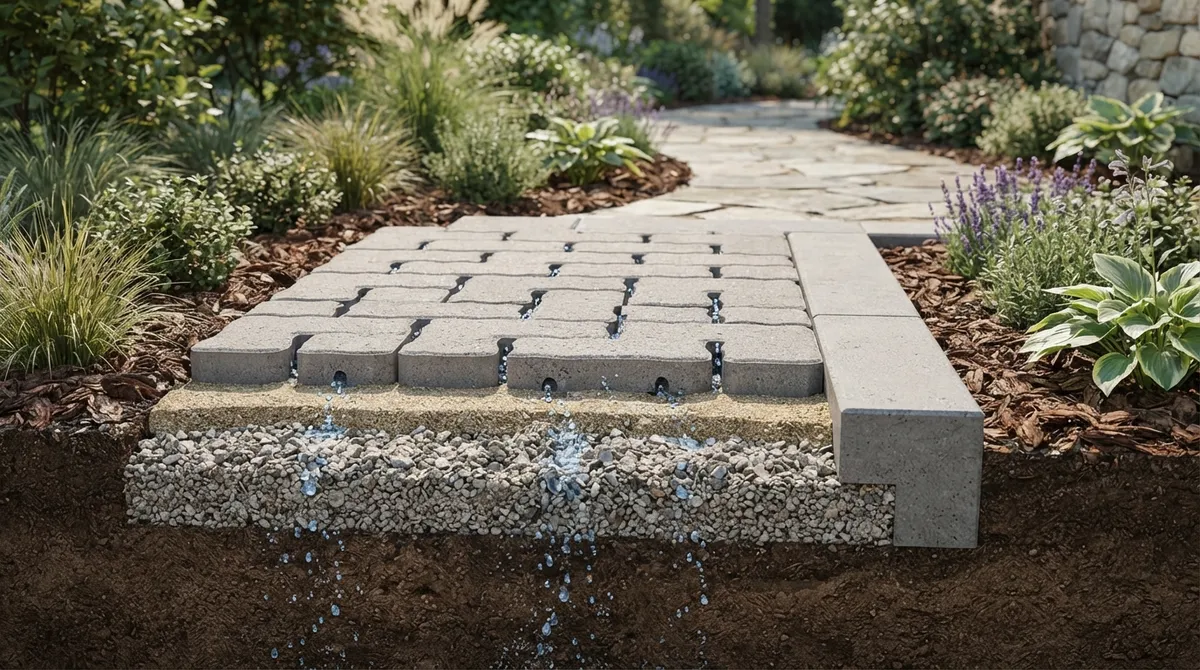
- Drainage expertise, since improper water management is the leading cause of retaining wall failure
- Clear written estimates and transparent project timelines
If you want to dive deeper into what a qualified professional actually handles on the job, check out this helpful resource: What Does a Commercial Retaining Wall Contractor Actually Do?. It breaks down the full scope of work in plain language.
The ICPI Certified Installer designation is also a reliable indicator that a contractor has met industry standards for hardscape installation — worth checking during your vetting process.
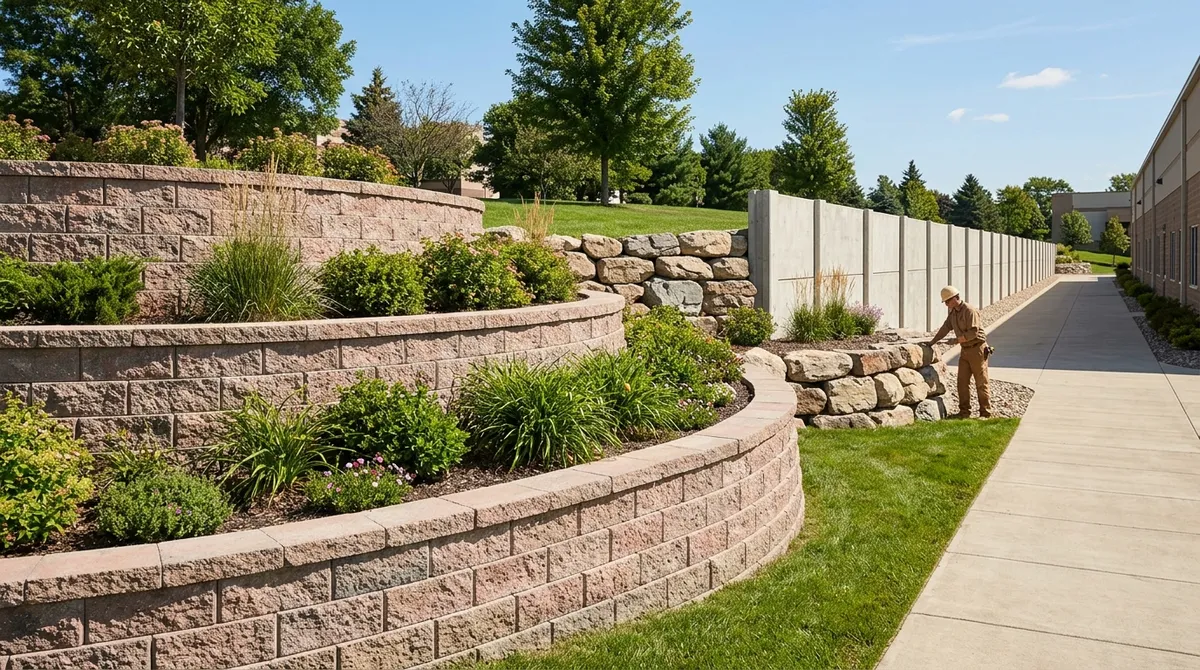
2. Understand the Types of Commercial Retaining Walls
Before you meet with contractors, it helps to understand your options. Different materials and construction methods work better for different commercial applications. Knowing the basics makes it easier to have informed conversations and compare quotes accurately.
Here’s a comparison of the most common commercial retaining wall materials:
| Material | Best For | Approx. Cost Per Sq. Ft. | Durability |
|---|---|---|---|
| Segmental Block (Concrete) | Large commercial slopes, parking areas | $20–$50 | Very High |
| Natural Stone | Aesthetic entrances, boutique properties | $50–$100 | High |
| Poured Concrete | High-load walls, engineered applications | $30–$60 | Very High |
| Timber/Landscape Ties | Low walls, budget applications | $20–$35 | Moderate |
| Engineered/Premium Systems | Complex terrain, heavy surcharge loads | Up to $150 | Exceptional |
According to HomeGuide, retaining wall construction typically costs between $20 and $50 per square foot on average, though highly engineered or premium systems can reach around $150 per square foot. For commercial properties with specific structural needs, investing in the right material upfront saves significant money on repairs down the road.
For inspiration on how hardscaping elements like retaining walls combine with other features, browse the Gallery of our work at Serenity Landscape Group to see real commercial and residential projects across Chicagoland.
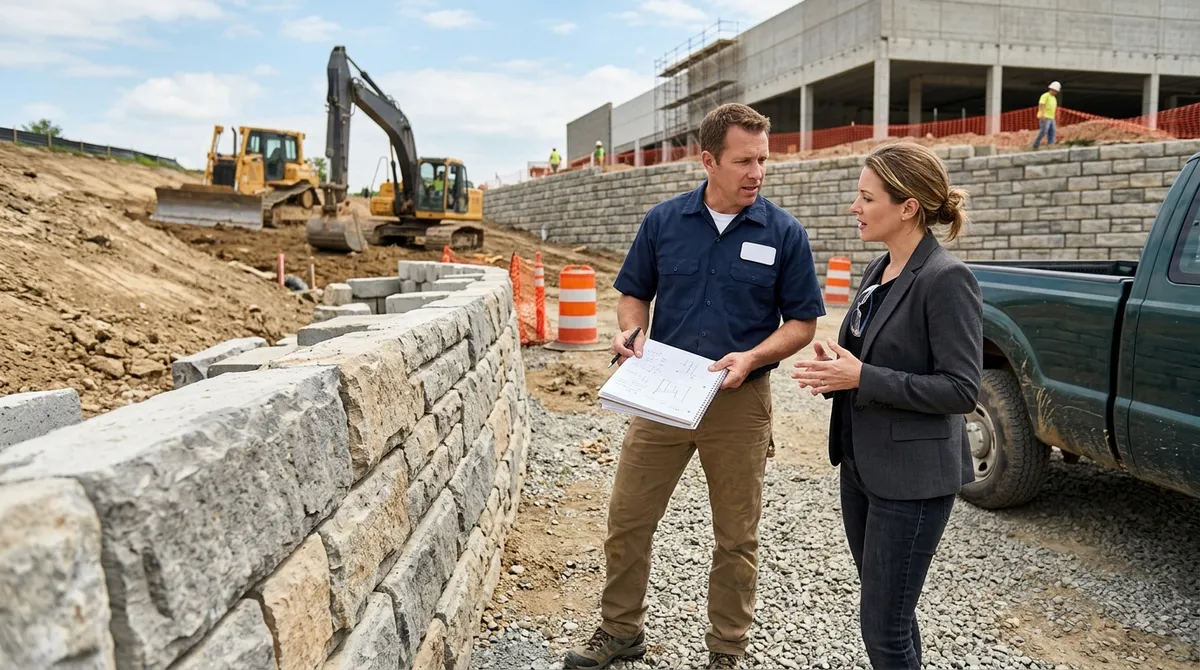
3. Ask the Right Questions Before Hiring
Once you’ve identified a few local candidates, it’s time to interview them. The questions you ask will reveal a lot about their experience, professionalism, and ability to handle your specific project. Don’t skip this step — it can save you thousands of dollars and a lot of headaches.
Here are the top questions to ask any commercial retaining wall contractor:
- Have you completed similar commercial projects in the Chicago area? Ask to see photos or visit a reference site.
- Will my wall require engineering drawings or permits? In many Illinois jurisdictions, walls above a certain height need permits and engineering review before construction begins.
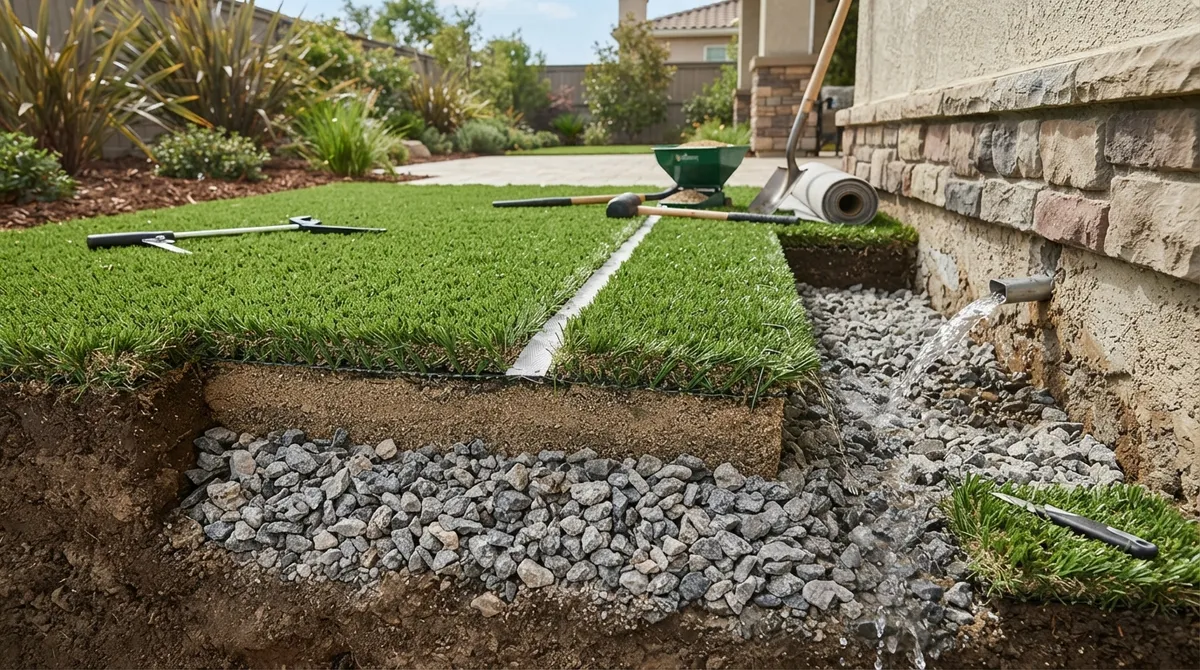
- How do you handle drainage behind the wall? A qualified contractor should have a clear answer about drainage aggregate, weep holes, and water management systems.
- What materials do you recommend for my site, and why? The right material depends on soil conditions, load requirements, aesthetics, and budget.
- What does your warranty cover? Both materials and labor should be covered — get it in writing.
A great contractor will welcome these questions. If someone gets defensive or vague, that’s a red flag. You can also learn what common mistakes to avoid by reading 7 Hardscaping Mistakes to Avoid in Your Outdoor Space — it’s a practical guide that applies directly to retaining wall projects.
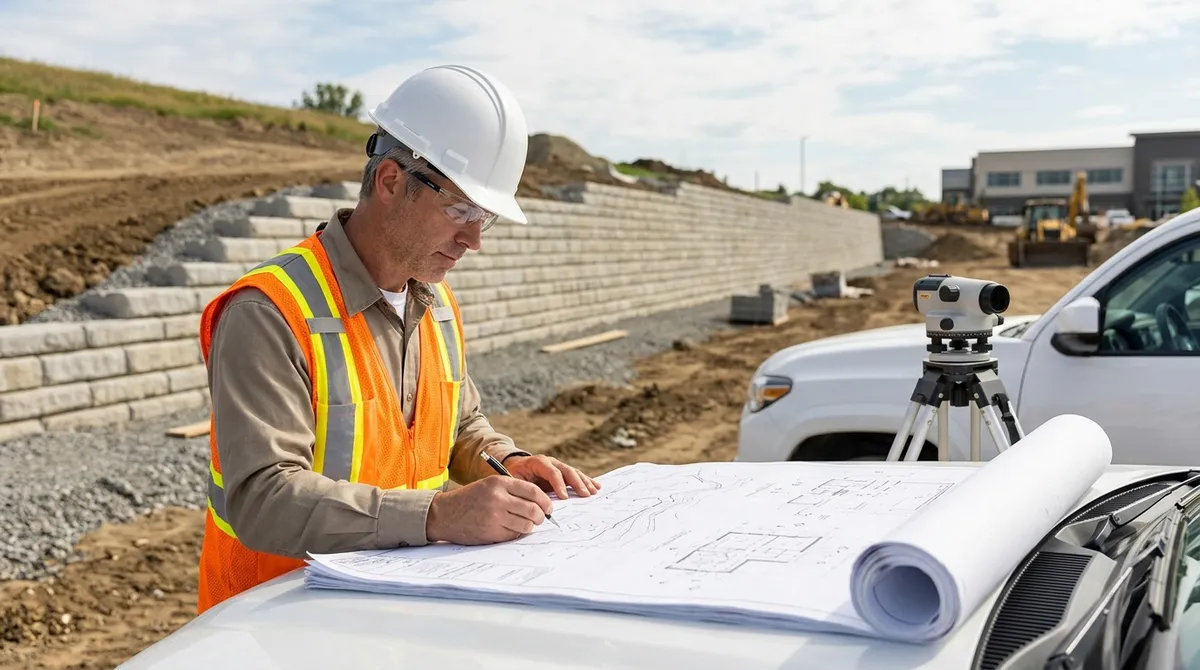
4. Understand Permits, Engineering, and Local Requirements
This is where many commercial property owners get caught off guard. In the greater Chicago metropolitan area and surrounding suburbs, retaining walls above a certain height — often three to four feet — typically require a building permit and may need engineering review before construction begins.
Skipping this step can lead to costly consequences:
- Stop-work orders that delay your project
- Fines from local municipalities
- Required demolition and reconstruction at your expense
- Liability issues if the wall fails and causes property damage or injury
A reputable contractor handles the permitting process on your behalf and coordinates with engineers when required. This is a sign of professionalism — and protection for you as the property owner.
For commercial properties dealing with significant grade changes, slope stabilization, and drainage management, it’s also worth understanding how retaining walls interact with the broader landscape. The article Why Do Retaining Walls Transform Sloped Yards Into Usable Spaces explains the full functional value of a well-planned wall system.
You can also find industry standards and best practices through Landscape Illinois, a great resource for understanding what professional landscaping contractors in Illinois are expected to deliver on commercial projects.
5. Compare Full-Service Landscaping Contractors vs. Wall-Only Specialists
Here’s something many commercial clients don’t consider until it’s too late: your retaining wall doesn’t exist in isolation. It interacts with your drainage system, parking lot grading, plantings, walkways, and overall property aesthetic. Hiring a full-service commercial landscaping company often delivers better long-term results than a wall-only specialist.
Here’s a side-by-side look at the key differences:
| Factor | Full-Service Landscaping Contractor | Wall-Only Specialist |
|---|---|---|
| Scope of Work | Handles walls, drainage, planting, grading, and more | Focuses only on wall construction |
| Design Cohesion | Integrates wall into full landscape plan | May not consider surrounding landscape |
| Drainage Integration | Plans drainage as part of overall site design | May treat drainage separately |
| Long-Term Relationship | Ongoing maintenance and support available | Typically project-only engagement |
| Value for Commercial Sites | Higher — one cohesive plan for entire property | Lower if broader site work is also needed |
For commercial property managers, small business owners, and developers in the Chicago suburbs, working with a full-service team means your retaining wall project is part of a bigger, better outdoor vision. You can explore what a complete commercial landscaping approach looks like at How to Choose Commercial Landscaping Services That Deliver Results.
Serenity Landscape Group offers exactly this kind of integrated approach. From retaining walls and pavers to softscapes and commercial lawn maintenance, our team handles every element of your outdoor space as part of one seamless plan.
Red Flags to Watch Out For
Even in a strong market, not every contractor who shows up in a local search delivers quality work. Here are some warning signs to watch for when evaluating commercial retaining wall contractors near you:
- No proof of licensing or insurance for commercial work in Illinois
- Extremely low bids that seem too good to be true (they usually are)
- Vague answers about drainage, engineering, or permits
- No references or photos from previous commercial projects
- Pressure to sign contracts quickly without time to review
- Requests for large upfront cash payments before any work begins
A trustworthy contractor takes time to understand your site, explain their process, and provide a detailed written proposal. Check out how Serenity Landscape Group approaches every project to see what a professional, client-first process looks like from start to finish.
What Causes Retaining Walls to Fail on Commercial Properties
Understanding failure points helps you appreciate why quality installation matters so much. Most commercial retaining wall failures come down to a handful of preventable issues.
The top causes of retaining wall failure include:
- Poor drainage design — Water pressure buildup behind the wall is the number one cause of structural failure.
- Inadequate footing or base preparation — Without a solid foundation, even well-built walls will shift and crack over time.
- Wrong material for the load — Using lightweight materials for high-load commercial applications leads to premature failure.
- No engineering for tall walls — Walls over three to four feet without proper engineering review are a structural risk.
- Poor backfill compaction — Improper compaction behind the wall creates uneven pressure and instability.
You can read more about what makes a retaining wall succeed long-term in this helpful overview: What Is a Retaining Wall and Do You Need One?. It’s a great starting point if you’re still deciding whether a wall is the right solution for your property’s slope or drainage challenges.
For reference on industry construction standards, the ICPI Certified Installer program sets clear benchmarks for how hardscape and retaining wall systems should be built and installed professionally.
Making the Most of Your Retaining Wall Investment
A well-built commercial retaining wall does more than stabilize soil — it actively improves your property. Here’s how smart property owners and managers maximize the value of their retaining wall projects:
- Pair the wall with quality plantings to soften the look and reduce surface erosion further
- Add lighting along or behind the wall for safety, security, and evening ambiance — explore options at Lighting & Sound
- Combine with paver walkways or patios to create functional terraced outdoor areas — see inspiration at Pavers
- Use the new level grade created by the wall to add parking, seating, or green space that improves how customers and tenants experience your property
- Schedule regular inspections to catch minor issues — small cracks or drainage problems — before they become expensive repairs
If you’d like to see how retaining walls can work alongside other hardscaping elements, How to Choose Between Landscaping vs Hardscaping for Your Yard is a fantastic resource that helps clarify the relationship between these two important components of a successful outdoor space.
Conclusion: Find the Right Partner for Your Commercial Property
Finding the best commercial retaining wall contractors near me doesn’t have to feel overwhelming. When you know what to look for — licensing, drainage expertise, commercial experience, and a transparent process — you can quickly separate the qualified pros from the rest. And when you work with a full-service team, your retaining wall becomes part of a bigger, smarter landscape plan that adds lasting value to your property.
At Serenity Landscape Group, we’ve spent over two decades building beautiful, functional outdoor spaces for commercial and residential clients across the greater Chicago area. Our team understands the unique challenges of Illinois soils, weather, and local code requirements — and we bring that expertise to every retaining wall project we take on.
Whether you need slope stabilization, erosion control, or a dramatic graded terrace for your commercial property, we’re here to help. Request your free estimate today and let’s start building something great together — or feel free to call us directly at (630) 359-5139 to talk through your project with our team.
FAQs
Q: What does a commercial retaining wall contractor do?
A: A commercial retaining wall contractor designs and builds structural walls that stabilize slopes, prevent soil erosion, and manage drainage on business properties. They handle everything from site assessment and material selection to permitting, engineering coordination, and full installation — making sure your wall is both safe and beautiful.
Q: How much does a commercial retaining wall cost per square foot?
A: Most commercial retaining walls cost between $20 and $50 per square foot depending on the material and complexity of the project. Highly engineered or premium wall systems can run up to $150 per square foot — but investing in quality upfront almost always saves money on repairs and replacements down the road!
Q: Do commercial retaining walls require permits or engineering in Illinois?
A: Yes, in many Illinois municipalities — including communities throughout the greater Chicago area — retaining walls above a certain height (often three to four feet) require a building permit and may need engineering review before work begins. A reputable contractor will manage this process for you and ensure everything meets local code.
Q: How do I find qualified commercial retaining wall contractors near me?
A: Start by looking for licensed, insured contractors with a proven track record of commercial projects in your area. Ask for references, photos of past work, and clear answers about drainage and permitting. A full-service landscaping company that offers both hardscaping and softscaping services is often your best bet for a cohesive, long-lasting result.
Q: What is the most common reason commercial retaining walls fail?
A: The number one cause of retaining wall failure is poor drainage design — when water pressure builds up behind the wall, it creates forces that even well-built structures can’t handle over time. That’s why a great contractor always includes a proper drainage plan as part of the wall design, not as an afterthought!