Key Takeaways
-
Walls exceeding 30-48 inches require permits and structural engineering review in most jurisdictions; skipping permits can result in fines, forced removal, or liability issues if the wall fails.
-
Concrete segmental blocks are the most cost-effective choice for commercial retaining walls, while natural stone offers premium aesthetics and gabion walls excel in drainage-heavy applications.
-
Proper drainage installation behind the wall is critical to prevent hydrostatic pressure buildup, the most common cause of wall failure—this should never be skipped despite upfront costs.
-
Commercial retaining wall costs typically range from $800-$7,200 for smaller projects, influenced by height, length, materials, site conditions, and engineering requirements.
-
Choose contractors with proven commercial experience, proper licensing/insurance, transparent pricing, and workmanship warranties of 5+ years to ensure long-term wall performance and safety.
-
A properly installed retaining wall lasts 25+ years and transforms unusable sloped terrain into flat, functional outdoor space while improving property value and curb appeal simultaneously.
If your commercial property has a slope, uneven terrain, or erosion problems, a retaining wall might be exactly what you need. Retaining walls are one of the most practical and attractive hardscaping solutions available for commercial sites. They hold back soil, control water runoff, and create flat, usable outdoor areas that would otherwise be wasted. Whether you manage an office park, a retail center, or a multi-tenant building, commercial retaining wall installation can genuinely transform your property’s functionality and curb appeal.
In the greater Chicago area, where freeze-thaw cycles and heavy rainfall can accelerate erosion, a well-built retaining wall is more than just a landscaping feature — it’s a long-term investment in your property’s safety and value. This guide walks you through everything you need to know, from materials and costs to the installation process and what to look for in a contractor.
Why Commercial Properties Need Retaining Walls
Many commercial properties deal with sloped terrain, poor drainage, or soil instability. Without proper structural support, these issues can lead to serious and costly problems. Slope stabilization is a top concern for property managers and business owners throughout Chicagoland.
Here are the most common reasons commercial properties invest in retaining wall installation:
- Erosion control: Prevent soil from washing away during heavy rain events
- Slope stabilization: Reduce the risk of landslides or shifting ground near buildings and parking areas
- Usable space creation: Level out sloped areas to add patios, walkways, or green spaces
- Stormwater management: Direct water flow away from foundations and structures
- Aesthetic improvement: Add structure, definition, and visual appeal to the landscape
- Property value: Well-designed retaining walls can meaningfully increase the value of commercial real estate
For property managers looking to improve both safety and appearance, pairing retaining walls with commercial lawn maintenance and quality pavers creates a cohesive, professional landscape that leaves a lasting impression on clients and visitors.
Materials Used in Commercial Retaining Wall Installation
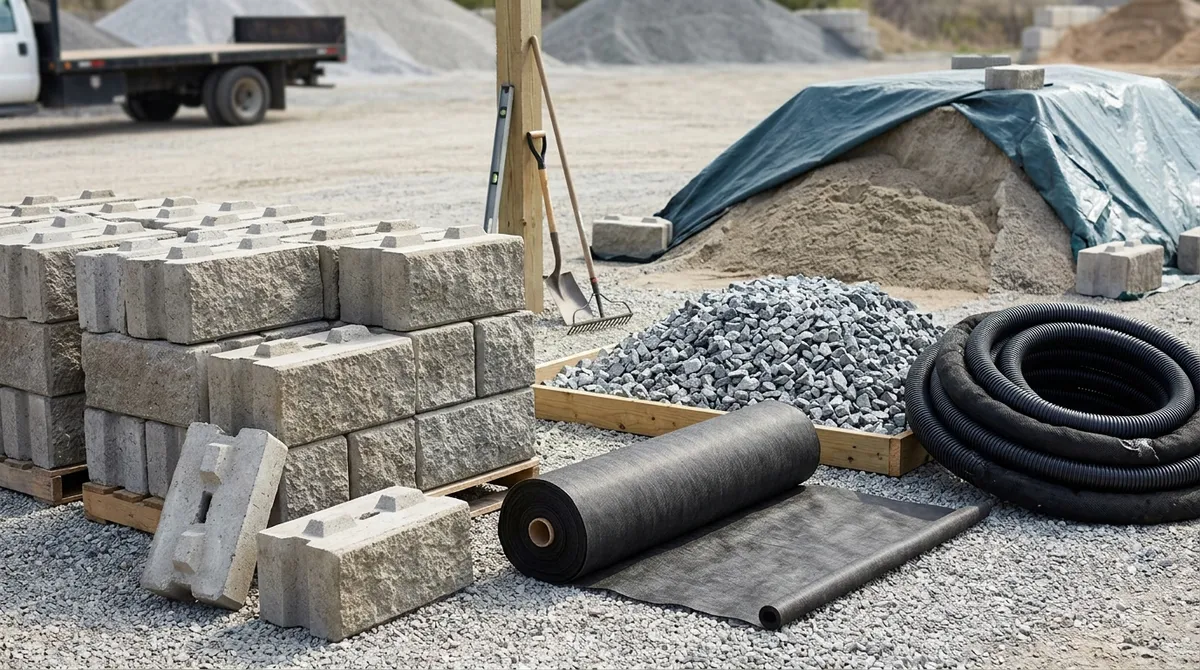
The right material depends on your property’s needs, your budget, and the look you want to achieve. Here’s a quick overview of the most popular options used in commercial retaining wall installation:
| Material | Best For | Durability | Aesthetic Appeal |
|---|---|---|---|
| Concrete Blocks (Segmental) | Large commercial walls, high load areas | Very High | Modern, clean look |
| Natural Stone | Upscale properties, decorative walls | High | Timeless, elegant |
| Brick | Lower walls, matching existing architecture | High | Classic, traditional |
| Timber/Treated Wood | Smaller walls, informal areas | Moderate | Warm, natural feel |
| Gabion (Wire & Stone) | Industrial sites, drainage-heavy areas | Very High | Industrial, textured |
Concrete block walls are the go-to choice for most commercial projects because of their strength, flexibility, and cost-effectiveness. Natural stone retaining walls are a popular premium option for businesses that want their landscape to reflect a high-end image. You can also explore gabion wall installation for sites where drainage is a primary concern.
The Commercial Retaining Wall Installation Process
A successful commercial retaining wall installation follows a clear, step-by-step process. Cutting corners at any stage can lead to wall failure, safety hazards, and expensive repairs down the road. Here’s how a professional landscaping contractor approaches the job:
- Site assessment and engineering: A qualified contractor evaluates the slope, soil type, load requirements, and drainage needs. For walls exceeding 30–48 inches in height (the common permit threshold), a structural engineer may be required.
- Permits and approvals: Commercial retaining wall projects often require local building permits, especially for taller walls. A reputable contractor handles this paperwork for you.
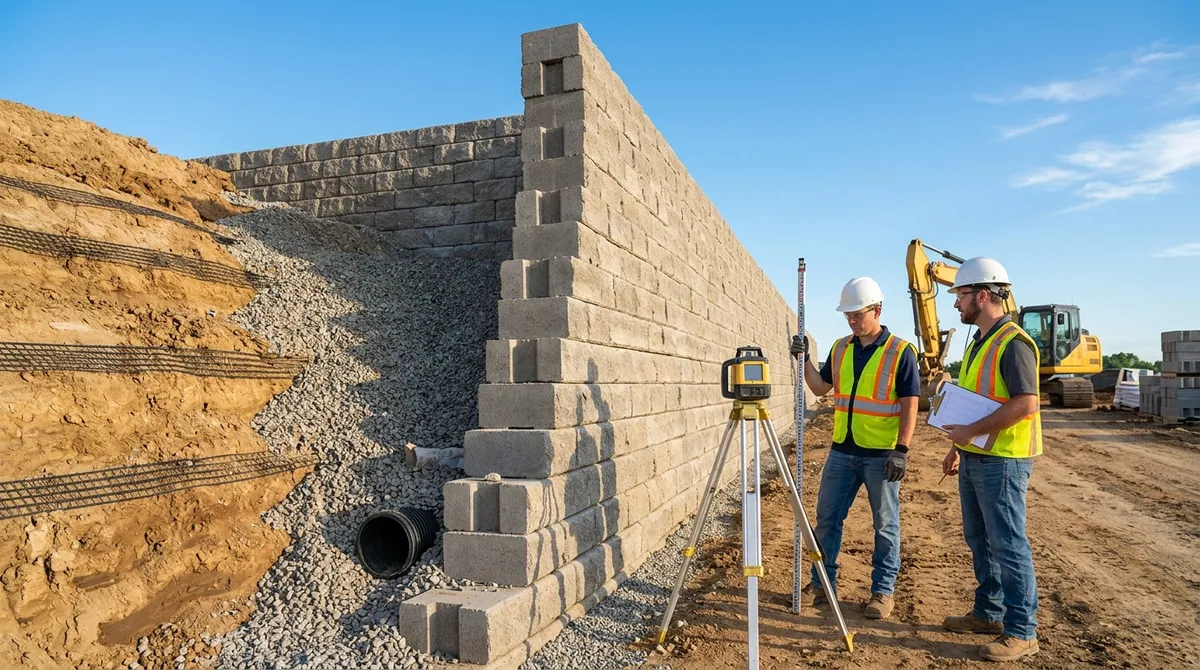
- Excavation and grading: The site is excavated to create a level foundation. Proper grading ensures water flows away from the wall and the structure sits on stable ground.
- Foundation preparation: A gravel base is compacted to provide a firm, level footing for the wall. This step is critical for long-term stability.
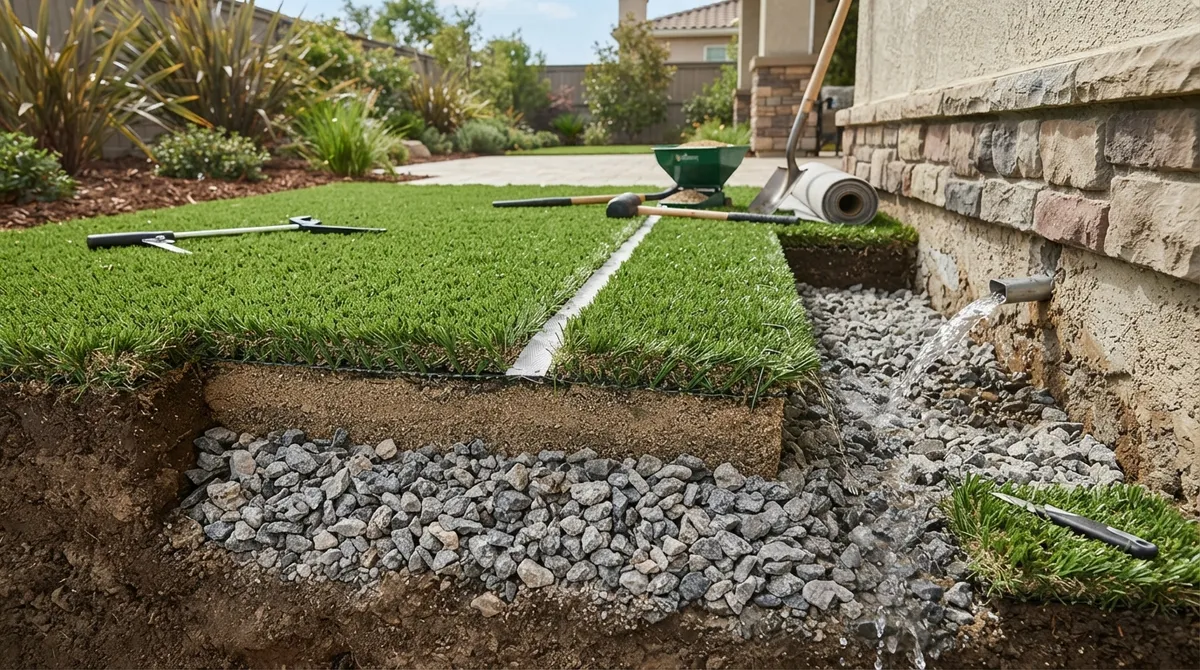
- Drainage installation: Drainage pipes and gravel backfill are placed behind the wall to prevent hydrostatic pressure from building up — one of the most common causes of wall failure.
- Wall construction: Blocks, stones, or other materials are laid course by course. Reinforcement like geogrids or tie-backs may be added for taller walls.
- Backfilling and compaction: Soil is filled in behind the wall in layers and compacted carefully to ensure stability.
- Finishing and integration: The wall is finished and integrated into the broader landscape design, including any adjacent walkways, plantings, or other features.
If you want to understand this process in greater depth, check out this helpful resource on the key steps for large-scale retaining wall installation. You can also learn more about how segmental retaining wall installation works for a material-specific breakdown.
Permits, Engineering, and Building Codes
One thing that surprises many property managers is the regulatory side of commercial retaining wall installation. Most jurisdictions require permits for walls that exceed a certain height — commonly between 30 and 48 inches, depending on your local building codes. In the Chicago metro area, this is something you absolutely need to plan for.
For taller or more complex walls, a licensed structural engineer may need to review and stamp the design before construction begins. This is standard practice for commercial projects and ensures the wall is safe and code-compliant. Working with a contractor who understands local regulations is essential. Landscape Illinois is a great resource for understanding professional standards in the state’s landscaping and hardscaping industry.
Skipping permits or engineering reviews can lead to fines, forced removal of the wall, or liability issues if the structure fails. Always work with a licensed, experienced commercial retaining wall contractor who handles the permitting process as part of their service.
How Much Does Commercial Retaining Wall Installation Cost?
Costs for commercial retaining wall installation vary widely based on several factors. According to industry data, retaining wall projects in the U.S. commonly range from about $200 to $14,000, with many commercial jobs averaging between $800 and $7,200 depending on scale and materials. Larger engineered systems for commercial sites can run significantly higher.
Here are the key factors that influence your total project cost:
- Wall height and length: Taller and longer walls require more materials and labor
- Material choice: Natural stone and engineered systems cost more than basic concrete block
- Site conditions: Difficult terrain, poor soil, or limited access can increase costs
- Engineering requirements: Walls that need structural engineering or special reinforcement add to the budget
- Drainage systems: Proper drainage installation adds cost upfront but prevents expensive repairs later
- Permits and inspections: These fees vary by municipality but are always worth budgeting for
The best way to get an accurate number for your specific project is to request a professional estimate. You can get a free estimate from our team to understand what your commercial property needs and what it will cost to get there.
Benefits of Retaining Walls for Commercial Properties
Beyond the practical advantages, commercial retaining wall installation delivers real business benefits. Here’s a quick summary of what you can expect when you invest in a quality wall system:
- Increased usable land: Transform steep slopes into flat areas for parking, seating, or landscaping
- Improved safety: Reduce erosion risks and prevent soil movement near walkways and structures
- Better curb appeal: A well-designed wall adds polish and professionalism to any commercial property
- Higher property value: Structural improvements and attractive hardscaping increase real estate value
- Stormwater control: Manage runoff and protect your property from water damage
Many commercial landscaping contractors who specialize in retaining walls also offer complementary services. Pairing your retaining wall with beautiful walkway paver designs or landscape lighting and sound can take your property’s outdoor experience to the next level. You can also explore how curb appeal landscaping transforms property value for a broader look at the ROI of professional outdoor improvements.
What to Look for in a Commercial Retaining Wall Contractor
Not all contractors are created equal. Choosing the right team for your commercial retaining wall installation makes all the difference in long-term performance, safety, and aesthetics. Here are the top qualities to look for:
- Proven commercial experience: Look for a contractor with a track record of completed commercial retaining wall projects, not just residential work.
- Licensing and insurance: Always verify that your contractor is properly licensed and carries liability insurance and workers’ compensation coverage.
- Engineering capabilities: For taller or more complex walls, your contractor should have relationships with structural engineers or offer in-house engineering services.
- Transparent pricing: A reliable contractor provides detailed, written estimates with no hidden fees.
- Workmanship warranty: Many experienced contractors offer warranties of five years or more on their work, which reflects confidence in their craftsmanship.
- Positive references and portfolio: Ask to see past projects and speak with previous clients. A solid contractor will be happy to share their work.
You can also look for contractors who hold certifications from recognized industry organizations. ICPI Certified Installer credentials are a strong indicator of professional training and quality standards in hardscaping and masonry work. For more guidance on making the right choice, read our article on how to choose commercial retaining wall builders that last.
At Serenity Landscape Group, we’ve been building retaining walls for commercial and residential clients across the Chicago metro area for over two decades. Our team combines technical expertise with a genuine passion for beautiful outdoor spaces, and we handle everything from design and permitting to installation and finishing.
Integrating Retaining Walls Into Your Commercial Landscape Design
The best commercial retaining walls don’t just solve a structural problem — they enhance the entire landscape. When planned as part of a cohesive hardscaping design, retaining walls become a natural and attractive feature of the property.
Think about combining your retaining wall with tiered planting beds filled with native plants and shrubs. Add paver walkways along the base or top of the wall to guide foot traffic through the space. Incorporate landscape lighting to highlight the wall’s texture at night and improve safety around the property.
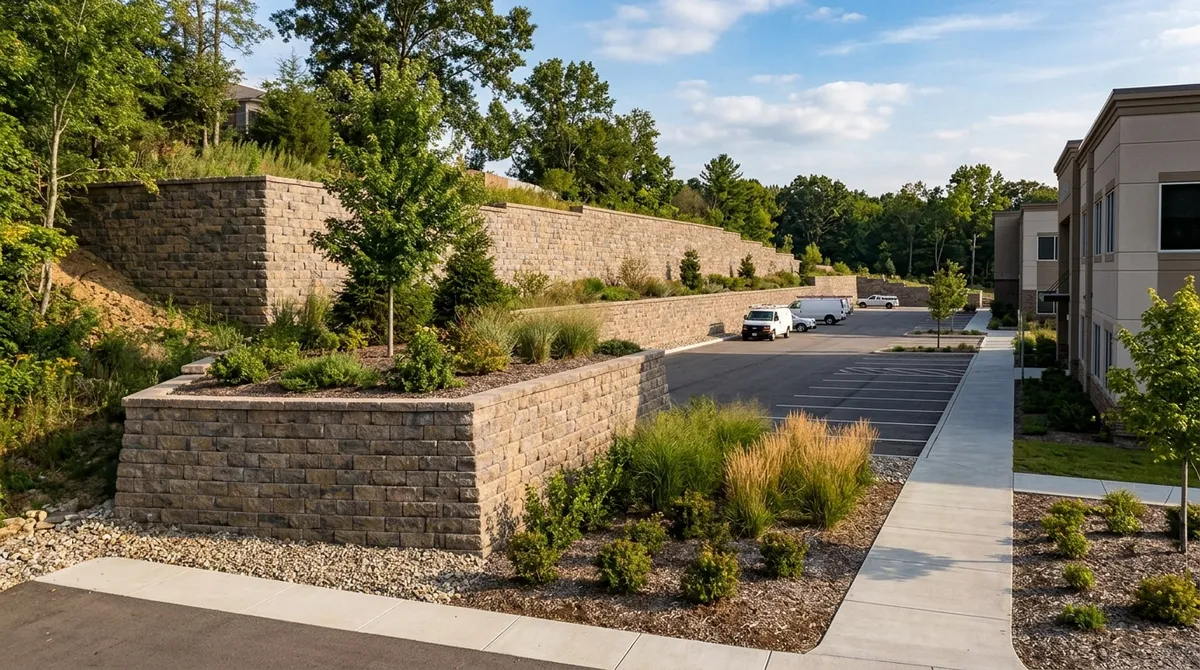
If your commercial property has a large, open outdoor area, a series of terraced retaining walls can create multiple usable levels — perfect for seating areas, green spaces, or signage installations. For ideas and inspiration, browse our gallery of completed projects to see how retaining walls have transformed commercial properties throughout Chicagoland.
You might also want to explore how retaining walls compare to drainage systems for commercial stormwater management to make the best decision for your site’s specific challenges. For a deeper look at the full range of structural landscaping options, the 7 hardscaping mistakes to avoid is a great read before you start planning your project.
Ready to Transform Your Commercial Property?
Commercial retaining wall installation is one of the smartest investments you can make for your property. It solves real structural problems, improves safety, enhances curb appeal, and adds long-term value — all at the same time. The key is working with an experienced contractor who knows how to design and build walls that truly last.
Whether you’re managing a sprawling office campus, a busy retail center, or a small commercial property with a tricky slope, the right retaining wall solution is out there for you. Explore your options, ask the right questions, and don’t hesitate to bring in professionals who can engineer the best outcome for your site.
Our team at Serenity Landscape Group would love to help you take the next step. Request your free estimate today and let’s start planning a retaining wall solution that works beautifully for your commercial property — or give us a call at (630) 359-5139 to talk through your project with one of our friendly landscape experts.
FAQs
Q: What is commercial retaining wall installation in landscaping?
A: Commercial retaining wall installation is the process of designing and building engineered wall structures on commercial properties to hold back soil, prevent erosion, and create level usable areas. Landscaping contractors handle everything from site assessment and material selection to construction and integration with the broader landscape design.
Q: Do commercial retaining walls require permits?
A: Yes, in most areas commercial retaining walls require permits when they exceed certain height thresholds — commonly between 30 and 48 inches depending on local building codes. A reputable contractor will pull the necessary permits on your behalf and ensure the project meets all local regulations, so you can relax and let the professionals handle it!
Q: How much does commercial retaining wall installation cost?
A: Costs vary widely based on wall height, length, materials, and site conditions. Industry data shows projects commonly range from about $800 to $7,200 for smaller jobs, while larger engineered commercial systems can run significantly higher. The best way to get an accurate number is to request a free on-site estimate from a qualified contractor.
Q: What materials are best for commercial retaining walls?
A: Concrete segmental blocks are the most popular choice for commercial retaining wall installation because of their strength, versatility, and cost-effectiveness. Natural stone is a great premium option for properties that want a high-end aesthetic, while gabion walls work well where drainage is a primary concern. Your contractor can help you choose the right material for your specific site and budget.
Q: How long does a commercial retaining wall last?
A: A properly designed and installed commercial retaining wall can last 25 years or more with minimal maintenance. Many experienced contractors offer workmanship warranties of five years or longer, which is a great sign of confidence in their materials and craftsmanship. Proper drainage installation and regular inspections are the keys to maximizing your wall’s lifespan.