Key Takeaways
-
Chicago’s clay-heavy soils, freeze-thaw cycles, and heavy rainfall make sheet piling essential—it anchors deep into stable soil layers and resists lateral pressure that damages lighter wall systems.
-
Sheet piling solves specific commercial problems: parking lot slope retention, waterway bank stabilization, site grading, erosion control, and stormwater management that standard retaining walls cannot handle.
-
Material selection matters—vinyl and composite resist corrosion from road salts and moisture (ideal for Chicago winters), while steel suits high-load applications like large commercial developments.
-
Installation typically requires permits, engineered drawings, and site assessment; projects take days to weeks depending on scale, with skilled contractors minimizing business disruption through transparent processes.
-
Sheet piling extends 10-25 feet underground with interlocking panels, making it superior to standard retaining walls for deep retention, heavy loads, and wet soil conditions in commercial applications.
-
Choose contractors with proven commercial experience, knowledge of Chicago permitting, engineering partnerships, and integrated landscaping capabilities to avoid costly delays and ensure project success.
If you manage a commercial property in the Chicago area, you’ve probably dealt with erosion, slope instability, or stormwater runoff at some point. These challenges are frustrating — and expensive if left unaddressed. That’s where commercial sheet piling walls in Chicago come into play. These sturdy, vertical retaining structures are a game-changer for commercial landscaping projects that need serious earth retention support.
Whether you’re developing a new commercial site in Aurora, managing a retail property in the suburbs, or overseeing a large office campus, sheet piling walls can protect your investment while keeping your outdoor spaces looking sharp and functional. And the good news? You don’t have to figure it all out alone. At Serenity Landscape Group, we’ve spent over two decades helping Chicago-area property owners tackle exactly these kinds of challenges with smart, beautiful hardscaping solutions.
Let’s walk through six essential facts about commercial sheet piling walls that every property owner and manager in Chicago should know before starting a project.
1. What Commercial Sheet Piling Walls Actually Are
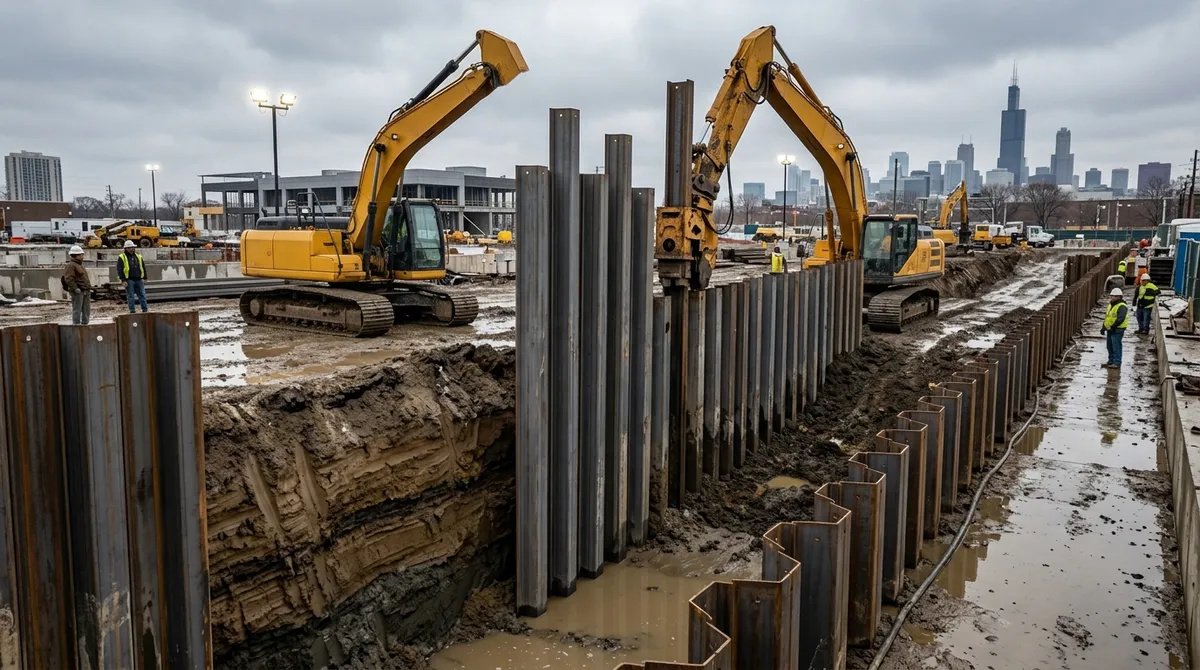
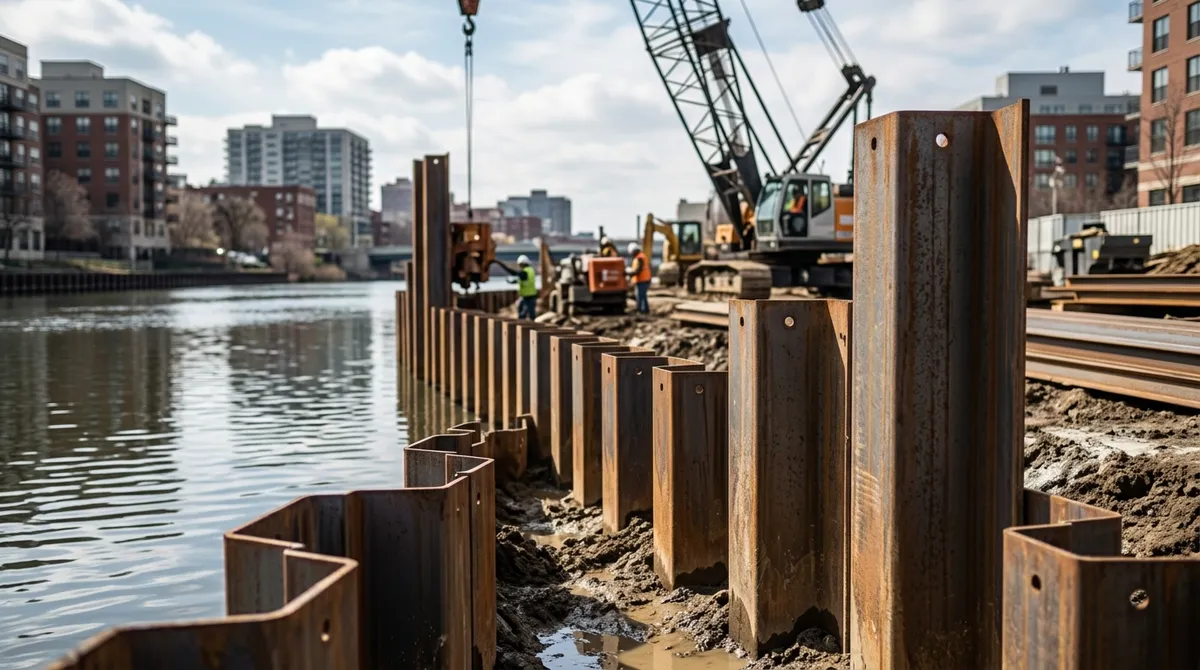
Sheet piling walls are thin, interlocking panels driven deep into the ground to hold back soil and water. Think of them as a firm underground barrier that keeps everything in its place. They’re commonly used in commercial landscaping for slope stabilization, waterway banks, and large graded areas.
In the context of commercial landscaping, these walls serve as a powerful form of earth retention system that prevents soil movement on properties with dramatic grade changes. Unlike freestanding retaining walls, sheet piling is installed vertically and extends well below the surface — sometimes 10 to 20 feet down — for maximum stability.
They’re especially valuable on Chicago commercial properties near waterways, parking lots on slopes, and large-scale developments where traditional retaining methods just won’t cut it. You can also explore how these solutions compare by reading about 12 commercial sheet piling wall facts for a deeper dive.
2. Chicago’s Soil and Climate Make Sheet Piling a Smart Choice
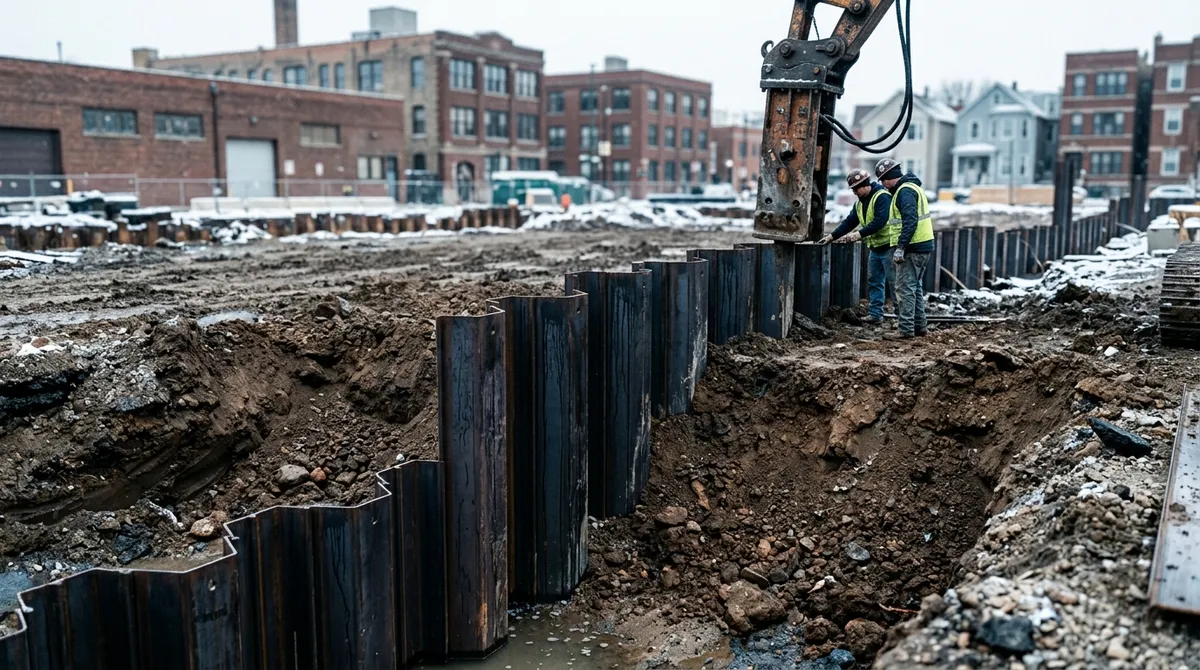
Chicago’s geography throws some serious curveballs at commercial property owners. The region is known for its clay-heavy soils, freeze-thaw cycles, and heavy seasonal rainfall — all of which can wreak havoc on outdoor structures and landscaped slopes.
Here’s why these conditions matter for your retaining wall choice:
- Clay soil expands and contracts with moisture changes, putting enormous lateral pressure on structures
- Freeze-thaw cycles in Illinois winters can shift soil and destabilize lighter wall systems
- Heavy spring rains increase hydrostatic pressure behind retaining features
- Urban runoff accelerates erosion on commercial sites with large paved surfaces
- Lake Michigan’s proximity elevates groundwater levels in many Chicago neighborhoods
Sheet piling handles all of these conditions well because of its depth and continuous interlocking design. It doesn’t just sit on the surface — it anchors deep into more stable soil layers. That’s a massive advantage in the Chicagoland environment. Resources like Landscape Illinois also emphasize designing for regional soil and climate conditions when selecting hardscaping systems.
3. The Key Materials Used in Commercial Sheet Piling
Not all sheet piling is created equal. Depending on your project goals, budget, and aesthetic preferences, different materials offer different benefits. Here’s a quick comparison to help you understand your options:
| Material | Best For | Durability | Aesthetic Appeal | Cost Range |
|---|---|---|---|---|
| Steel | Heavy-load commercial sites | Excellent | Industrial/modern | High |
| Vinyl/PVC | Waterfront and wet areas | Very Good | Clean, low-profile | Moderate |
| Aluminum | Lighter commercial applications | Good | Sleek finish | Moderate-High |
| Composite/Fiberglass | Corrosion-prone environments | Very Good | Versatile | Moderate |
For most commercial landscaping projects in the Chicago area, vinyl and composite materials are popular because they resist corrosion from moisture and road salts — a common issue in Illinois winters. Steel is often preferred for high-load applications like parking lot retaining or large commercial site development.
Your landscape contractor should assess your specific soil conditions, load requirements, and aesthetic goals before recommending a material. A certified hardscape professional will factor in all of these elements to recommend the right solution for your site.
4. Commercial Sheet Piling Walls Solve Real Landscaping Problems
Let’s talk practical applications — because knowing how sheet piling actually solves day-to-day commercial landscaping problems is what really matters. Here are the most common scenarios where commercial sheet piling walls shine on Chicago properties:
- Parking lot slope retention: Many commercial parking lots are built on graded terrain. Sheet piling holds back soil at the lot’s edges, preventing collapse and protecting pavement from undermining.
- Waterway and detention pond edges: Properties near ponds, retention basins, or drainage channels benefit enormously from sheet piling to stabilize banks. Learn more about retaining walls for retention ponds and how they work.
- Site development grading: New commercial builds often require significant grading. Sheet piling creates a solid perimeter to hold cut slopes while construction proceeds.
- Erosion control on sloped commercial properties: Sloped lawns and embankments near commercial buildings can erode fast. Sheet piling stops that in its tracks. Read more about why slope stabilization matters for commercial properties.
- Underground utility protection: On dense urban commercial sites, sheet piling protects existing underground infrastructure from soil movement during renovations.
- Stormwater management: Combined with drainage planning, sheet piling helps direct and manage stormwater flow, reducing flooding risks on commercial sites.
These aren’t just structural benefits — they also protect your landscape investment over the long term. If you’ve spent money on beautiful commercial pavers, green spaces, or plantings, having a solid earth retention system underneath keeps all of that looking great.
5. How the Installation Process Works
One of the most common questions property managers ask is: “How disruptive is sheet piling installation going to be to my business?” The honest answer is — it depends on the scale, but a skilled contractor minimizes disruption significantly.
Here’s a simplified step-by-step overview of how commercial sheet piling wall installation typically works:
- Site assessment and soil testing: The contractor evaluates soil type, groundwater level, and load requirements before any work begins.
- Engineering and permitting: Large commercial projects in Chicago typically require permits and engineered drawings. This is a non-negotiable step. You can learn more about retaining wall engineering services to understand what this involves.
- Panel driving or pressing: Sheet pile panels are driven or hydraulically pressed into the ground in sections, interlocking as they go to form a continuous wall.
- Anchoring (if required): For tall walls or heavy loads, tiebacks or anchors may be installed to provide additional lateral support. Explore how anchored retaining wall construction works in practice.
- Drainage integration: Proper drainage is installed to prevent hydrostatic pressure from building behind the wall.
- Landscaping finishing: Once the structural work is done, the surrounding landscape is restored and beautified — plantings, grading, and surface treatments are applied.
A great contractor will walk you through the entire process upfront so there are no surprises. At Serenity Landscape Group, we take pride in our transparent project process that keeps clients informed from day one.
6. Choosing the Right Contractor for Sheet Piling in Chicago
Here’s the truth: not every landscaping company has the experience or equipment to handle commercial sheet piling walls in Chicago. This is a specialized area of hardscaping that demands technical knowledge, proper certifications, and the right machinery.
When evaluating contractors, here’s what to look for:
- Proven commercial experience: Ask for photos of completed commercial retaining wall projects — check out a gallery of real work to see quality firsthand
- Knowledge of Chicago permitting: A contractor unfamiliar with local codes can create expensive delays
- Integrated landscaping capabilities: Choose someone who can handle both the structural wall AND the surrounding landscape design
- Engineering partnerships: For large commercial projects, your contractor should work closely with structural engineers
- References from commercial clients: Ask specifically for references from property managers or commercial developers in the Chicago area
- Transparent project estimates: A quality contractor provides detailed written estimates with no vague line items
It’s also smart to understand the broader picture of what a commercial retaining wall contractor does. Read our guide on what a commercial retaining wall contractor actually does to set expectations before your first consultation. You might also find it helpful to learn 5 ways to find the best commercial retaining wall contractors in your area.
A Quick Comparison: Sheet Piling vs. Other Retaining Wall Types
You might be wondering how sheet piling stacks up against other popular commercial retaining wall options. Here’s a side-by-side look to help you think it through:
| Wall Type | Best Application | Depth Capability | Typical Cost | Speed of Install |
|---|---|---|---|---|
| Sheet Piling | Waterfront, heavy loads, deep retention | Very Deep (10–25 ft) | Higher | Moderate |
| Concrete Block | Mid-range slopes, landscaped areas | Moderate (3–10 ft) | Moderate | Moderate |
| Gabion Walls | Erosion control, natural aesthetics | Moderate | Moderate | Fast |
| MSE Walls | Large-scale highway/commercial fills | Deep | Moderate-High | Moderate |
| Gravity Walls | Smaller retaining needs | Shallow (2–6 ft) | Lower | Fast |
As you can see, sheet piling is the go-to choice when depth, load capacity, and wet soil conditions are in play. For a broader look at how different wall types compare, check out our article on cantilever vs. gravity retaining walls for commercial properties.
What to Expect in Terms of Cost and Timeline
Commercial sheet piling walls in Chicago are a significant investment — but so is letting erosion or slope failure damage your property. Here’s a general sense of what factors affect cost and timeline:
- Wall height and length are the biggest cost drivers — longer and taller walls require more materials and labor
- Material choice significantly impacts price, with steel typically being the most expensive option
- Site accessibility affects how quickly and cost-effectively equipment can be deployed
- Permitting complexity varies by municipality in the Chicago metro area
- Integration with landscaping adds cost but also adds tremendous long-term value
Most commercial sheet piling projects in the Chicago area take anywhere from a few days to several weeks depending on scale. Always get a detailed written estimate and ask your contractor to walk you through what commercial retaining wall installation really involves so you’re fully prepared.
Make Your Commercial Property Safer and More Beautiful
Commercial sheet piling walls in Chicago aren’t just about holding back soil — they’re about protecting your property, your business, and the beautiful landscape you’ve invested in. When done right, they’re virtually invisible beneath a polished commercial landscape that wows clients and tenants alike.
From choosing the right material to navigating Chicago permitting and integrating the wall into your broader landscape design, there’s a lot that goes into getting this right. That’s why working with an experienced, full-service landscaping partner makes all the difference. Whether you need help with stormwater management, slope stabilization, or a complete commercial landscape overhaul, the right team will turn a complex structural challenge into a seamless, stunning result.
Ready to explore your options? Request your free estimate today and let’s talk about how we can protect and elevate your Chicago commercial property — or give us a call and speak directly with our team at (630) 359-5139. We’d love to help you build something that lasts.
FAQs
Q: What are commercial sheet piling walls used for in landscaping?
A: Commercial sheet piling walls are used in landscaping to retain soil on sloped commercial properties, stabilize waterway banks, support parking lot edges, and manage stormwater on large sites. They’re a great solution when standard retaining walls can’t handle the depth or load requirements of a project. Think of them as the heavy-duty backbone behind a polished, functional commercial landscape!
Q: How long do commercial sheet piling walls last in the Chicago climate?
A: With the right material choice and proper installation, commercial sheet piling walls can last 25 to 50 years or more — even in Chicago’s tough freeze-thaw conditions. Vinyl and composite options are especially corrosion-resistant, which makes them well-suited for Illinois winters and wet soil environments. Routine inspections help catch any minor issues early and keep your wall performing beautifully for decades.
Q: Do I need a permit to install a sheet piling wall on my commercial property in Chicago?
A: Yes, most commercial sheet piling installations in the Chicago metro area require permits and may need engineered drawings depending on wall height and load. Permit requirements vary by municipality, so it’s important to work with a contractor who knows the local regulations inside and out. A knowledgeable contractor will handle the permitting process so you don’t have to stress about it!
Q: How is sheet piling different from a standard retaining wall?
A: Sheet piling is installed vertically and driven deep into the ground — often 10 to 25 feet — making it far more capable of handling heavy loads and deep soil retention than most standard retaining wall systems. Standard retaining walls typically sit on the surface or extend just a few feet below grade. Sheet piling is the go-to choice when conditions are particularly challenging, like near water features, on steep commercial slopes, or in clay-heavy soils.
Q: Can sheet piling walls be combined with other landscape features?
A: Absolutely — and this is actually one of the most exciting parts! Sheet piling walls can be integrated seamlessly with commercial landscaping features like paver walkways, green spaces, drainage systems, and lighting to create a beautiful and functional outdoor environment. A full-service landscape contractor can design the structural and aesthetic elements to work together as one cohesive, stunning package.