Key Takeaways
-
Poor drainage is the leading cause of retaining wall failure; qualified contractors must plan for drainage from the start using gravel backfill, perforated drain pipes, and weep holes to prevent cracks, bulges, and collapse.
-
Choose contractors with regional expertise familiar with your area’s soil conditions and climate cycles, plus verified licensing, insurance, ICPI certification, and a strong portfolio of completed projects before signing any contract.
-
Retaining walls require permits in many Chicago-area municipalities for walls above 4 feet; professional contractors handle permit research and applications to avoid fines, forced removal, or property sale complications.
-
Full-service retaining wall companies handle site evaluation, soil analysis, material selection, structural design, installation of tiered landscaping, and repairs—combining both engineering and aesthetic design expertise.
-
Clear warning signs you need a contractor include soil erosion after rain, unusable sloped yards, existing walls that are leaning or cracking, foundation water pooling, or desires to create terraced garden beds.
-
Retaining wall materials range from natural stone and modular segmental blocks to boulder walls and concrete; the right choice depends on soil conditions, wall height, drainage needs, and desired aesthetic style.
If your yard has a slope, you already know the struggle. Rain washes soil downhill, grass won’t grow evenly, and that uneven ground makes your outdoor space hard to enjoy. The right retaining wall construction company can change all of that. A well-built retaining wall stops erosion, levels your landscape, and turns a tricky slope into a beautiful, usable space.
Whether you’re a homeowner in the Chicago suburbs, a commercial property manager, or a small business owner looking to boost curb appeal, retaining walls are one of the smartest investments you can make in your outdoor space. But choosing the right company to build yours? That takes a little know-how. Let’s walk through everything you need to know.
What Does a Retaining Wall Construction Company Actually Do?
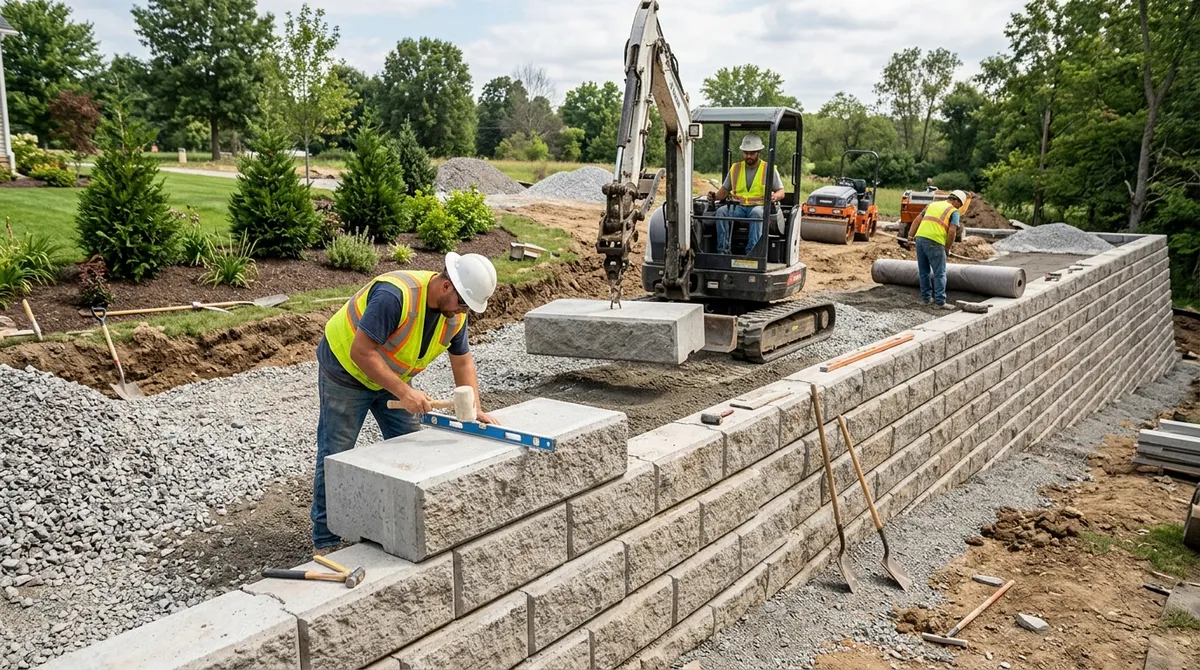
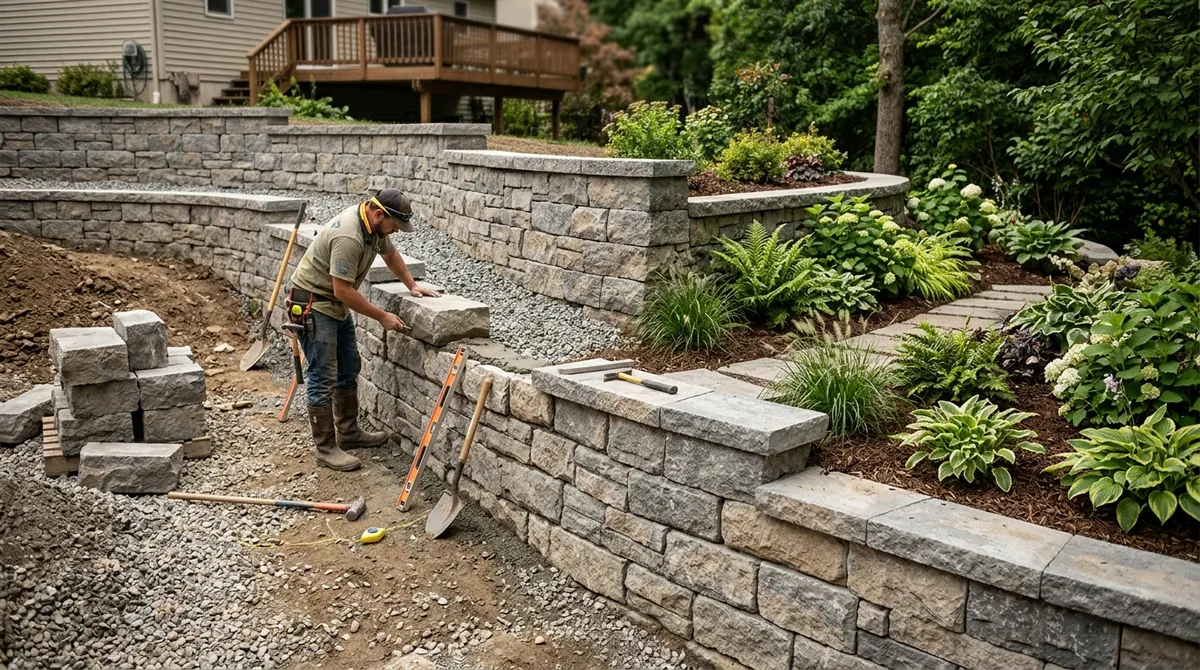
A retaining wall construction company does much more than stack blocks or stones. These professionals assess your site, plan the right wall system, manage drainage, and install a structure built to last for decades. You can learn more about what a retaining wall contractor actually does before you start your search.
Here’s what a full-service retaining wall company typically handles:
- Site evaluation and soil condition analysis
- Drainage planning and integrated water management
- Material selection based on your style and budget
- Structural design for walls of all heights
- Installation of tiered landscaping and terraced gardens
- Repair and replacement of failed or aging walls
Many landscaping companies offer retaining wall work as part of broader hardscape services, so you can combine your wall project with patios, pathways, and plantings in one cohesive plan.
Is a Retaining Wall Landscaping or Construction?
Great question! The honest answer is both. Retaining walls sit right at the intersection of landscaping and structural construction. In local service markets, retaining wall contractors are often listed alongside landscape contractors and masonry contractors. That overlap reflects the nature of the work itself.
Functionally, a retaining wall is a structural element that holds back soil and manages water. Aesthetically, it shapes your landscape, defines garden beds, and adds visual texture. When done right, a retaining wall is both an engineering solution and a design statement. That’s why working with an experienced retaining wall construction company that understands both sides of the equation matters so much.
You might also want to read about what a retaining wall is and whether you need one before moving forward with your project.
Top Materials Used by Retaining Wall Companies
One of the first conversations you’ll have with your contractor is about materials. The right choice depends on your soil conditions, wall height, site drainage, and personal style. Here’s a look at the most common options:
| Material | Best For | Durability | Aesthetic |
|---|---|---|---|
| Natural Stone | Residential gardens, accent walls | Very High | Rustic, timeless |
| Stacked Fieldstone | Low walls, garden borders | High | Organic, charming |
| Modular Segmental Units | All property types, slopes | Very High | Clean, modern |
| Boulder Walls | Large slopes, commercial sites | Extremely High | Bold, natural |
| Timber | Small garden terraces | Moderate | Warm, casual |
| Concrete Block | Commercial, large-scale projects | Very High | Versatile, structured |
Want to explore natural stone options in more detail? Check out this guide on how to choose natural stone retaining walls for your property. You can also learn about why precast modular block walls are a great fit for many yards.
Why Drainage Is the Most Important Part of Any Retaining Wall
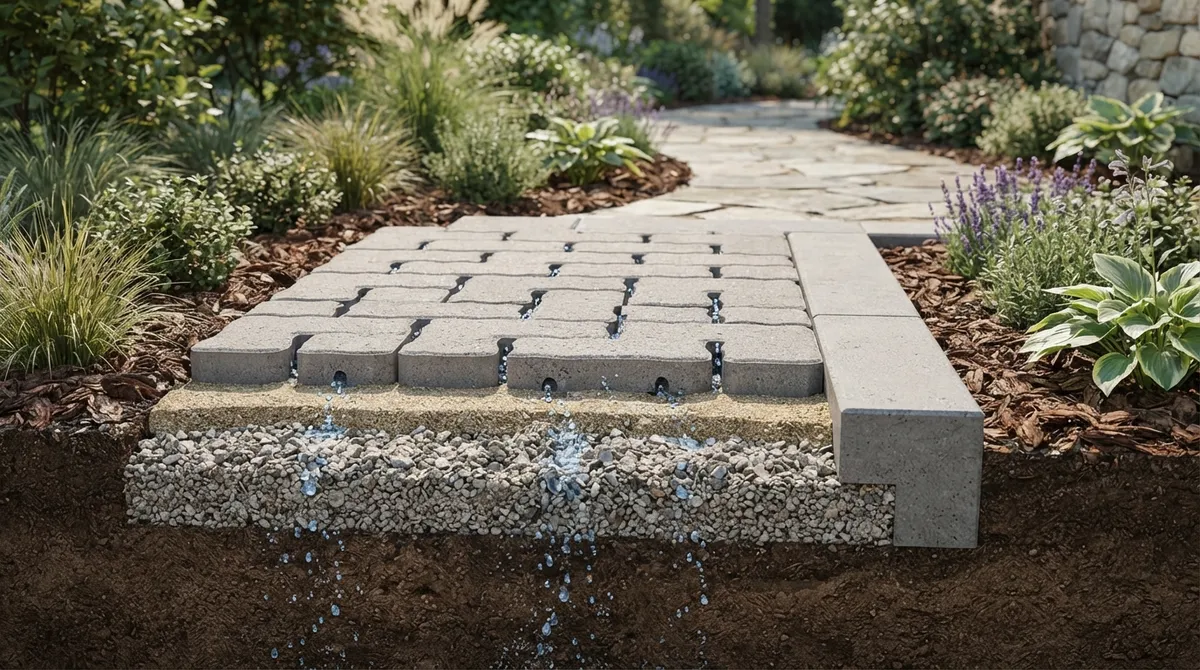
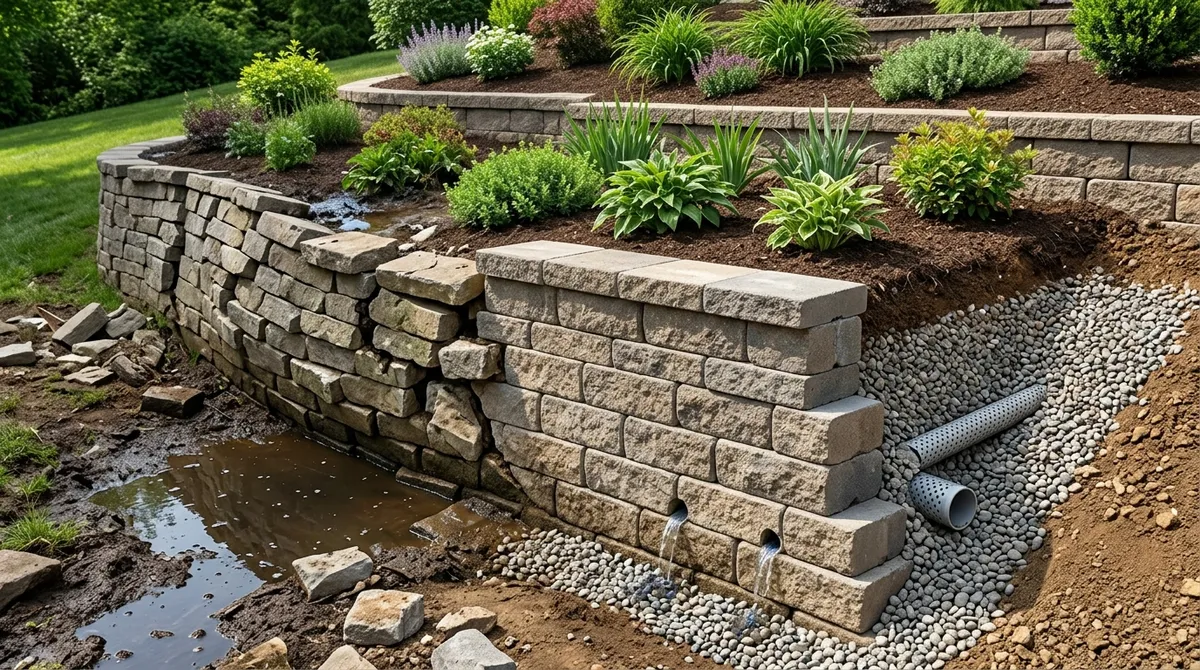
Here’s something many homeowners don’t realize until it’s too late: poor drainage is the number one reason retaining walls fail. When water builds up behind a wall with nowhere to go, the pressure eventually wins. Cracks, bulges, and full collapses follow.
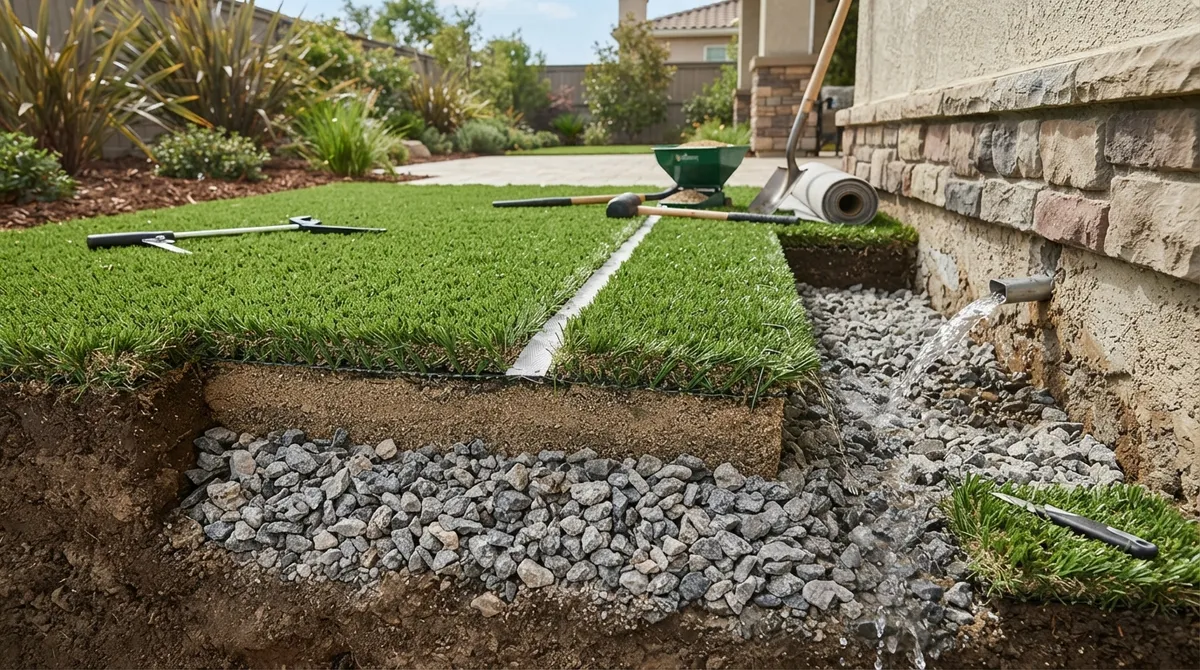
A qualified retaining wall construction company always plans for drainage from the start. This includes gravel backfill, perforated drain pipes, and weep holes that allow water to escape safely. Understanding the relationship between retaining walls and drainage systems can help you ask the right questions when hiring a contractor.
Good drainage planning protects your wall investment for the long term. It also helps prevent erosion in surrounding garden beds and lawn areas.
5 Signs You Need to Call a Retaining Wall Contractor
Not sure if your property needs retaining wall work? Here are five clear signals it’s time to pick up the phone:
- Soil is washing away after every rainstorm, leaving bare patches and muddy runoff near your home’s foundation.
- Your yard has an unusable slope that makes mowing difficult and prevents you from enjoying your outdoor space.
- An existing wall is leaning, cracking, or bulging, which means structural failure may be imminent.
- Water is pooling near your home’s foundation or in low spots in your yard after rain.
- You want to create terraced garden beds or a level patio area on a sloped lot.
If any of these sound familiar, it’s time to explore your options. You can also read more about how retaining walls transform sloped yards into functional, beautiful spaces.
How to Choose the Right Retaining Wall Construction Company
Choosing a contractor is one of the most important decisions in any outdoor project. Here are the key factors to evaluate before you sign anything:
- Experience and local knowledge. Look for companies with years of experience in your specific region. Established firms often emphasize long-term local expertise, and that matters a lot when dealing with Chicagoland’s clay-heavy soil and freeze-thaw cycles.
- Portfolio and past projects. Ask to see completed work. A strong gallery of past retaining wall projects tells you a lot about a company’s skill level and design range.
- Drainage expertise. A company that talks about drainage from the start is a company that knows what they’re doing. If they don’t mention it, that’s a red flag.
- Licensing and insurance. Always verify that your contractor carries proper liability insurance and is licensed in your state. Industry associations like Landscape Illinois and certified installers recognized by the ICPI Certified Installer program are good markers of professionalism.
- Clear estimates and transparent pricing. Reputable companies offer detailed written estimates. Many also offer promotional pricing on larger projects, so it pays to ask.
You can also explore five proven ways to find the best retaining wall contractors in your area. And don’t skip reading about common hardscaping mistakes to avoid before your project begins.
What to Expect During the Retaining Wall Installation Process
Understanding the installation process helps you set realistic expectations and communicate better with your contractor. Here’s a general overview of how a professional retaining wall project unfolds:
- Consultation and site assessment — Your contractor visits the site, evaluates topography, soil conditions, and drainage needs.
- Design and material selection — A plan is developed that matches your goals, budget, and site conditions.
- Permitting (if required) — Depending on wall height and local codes, permits may be needed before work begins.
- Excavation and base preparation — The ground is graded, and a compacted base is established for structural stability.
- Wall construction and drainage installation — Blocks, stone, or other materials are laid according to the design plan, with drainage built in from the ground up.
- Backfill and finishing — Soil is replaced behind the wall, and surrounding areas are graded and cleaned up.
For a deeper look at how large-scale projects are managed, check out this guide on the key steps for large-scale retaining wall installation.
Retaining Walls for Every Property Type in Chicago
One of the best things about working with a full-service retaining wall construction company is that their solutions scale for any property type. Here’s how retaining walls add value across different client needs:
| Property Type | Common Retaining Wall Use | Key Benefit |
|---|---|---|
| Suburban Homes | Terraced garden beds, yard leveling | More usable outdoor space |
| Commercial Properties | Slope stabilization, parking lot walls | Erosion control and curb appeal |
| New Home Developments | Site grading, drainage management | Turnkey outdoor appeal for buyers |
| Small Businesses | Entrance walls, branded hardscape | Professional appearance, foot traffic |
| Urban/Condo Properties | Rooftop terracing, small-space walls | Space efficiency and design impact |
For commercial clients specifically, understanding how to choose commercial retaining wall builders is an important first step. You can also explore how retaining wall engineering services support larger and more complex projects.
Why Serenity Landscape Group Is a Trusted Choice in Chicagoland
At Serenity Landscape Group, we’ve spent over two decades building retaining walls that are as beautiful as they are functional across the greater Chicago metropolitan area. From residential terraced gardens to large-scale commercial slope stabilization, our team brings hands-on expertise and a genuine love for the craft to every project.
We combine thoughtful design, proper drainage planning, and quality materials to deliver walls that stand the test of time — and Chicago winters. Our clients often tell us their new retaining walls didn’t just solve a problem; they transformed their entire outdoor experience. That’s the kind of result we work hard to deliver every single time.
Want to see what’s possible? Browse our gallery of completed projects for inspiration, or explore our full range of retaining wall services to learn more. You can also explore how our design-to-installation process works from start to finish.
Do You Need a Permit to Build a Retaining Wall?
In many municipalities across the Chicago area, retaining walls above a certain height — often 4 feet — require a building permit. The rules vary by city and county, so it’s important to check local regulations before work begins. A reputable retaining wall construction company will handle permit research and applications as part of their service.
Skipping permits can lead to fines, forced removal, or issues when selling your property. Always work with a contractor who takes permitting seriously. It’s one of the clearest signs of a professional operation.
Ready to Transform Your Yard? Here’s Your Next Step
A great retaining wall does more than hold back dirt. It creates space, adds beauty, protects your property, and boosts your home’s value. Whether you’re dealing with a steep slope, soil erosion, or simply want to create beautiful terraced garden beds, the right retaining wall construction company can make it happen.
Before you wrap up your research, it’s worth exploring how landscaping and hardscaping work together to create a complete outdoor space. You might also find inspiration in our guide on 11 ways to transform your outdoor spaces in 2026.
When you’re ready to get started, we’d love to help. Request your free project estimate today and let’s talk about how we can turn your outdoor challenges into something truly beautiful. You can also call us directly at (630) 359-5139 — we’re always happy to chat about your vision.
FAQs
Q: What does a retaining wall construction company do?
A: A retaining wall construction company designs, installs, repairs, and replaces walls that hold back soil, manage slopes, and control erosion on residential and commercial properties. They also handle drainage planning, material selection, and site preparation to ensure your wall is structurally sound and beautiful for years to come.
Q: What materials are best for a retaining wall?
A: The best material depends on your site conditions, wall height, and personal style. Popular options include natural stone, modular segmental blocks, boulder walls, and concrete systems — each with its own look, durability level, and price range. A great contractor will help you match the right material to your specific project!
Q: Do retaining wall companies also handle drainage?
A: Yes, and they absolutely should! Drainage is one of the most critical parts of any retaining wall project. Poor water management is the leading cause of wall failure, so a reputable company will always incorporate gravel backfill, drain pipes, and weep holes into their installation plan.
Q: Do you need a permit to build a retaining wall?
A: In many Chicago-area municipalities, a permit is required for retaining walls above a certain height, typically 4 feet. Requirements vary by location, so it’s important to check local codes before construction begins. A professional retaining wall company will usually handle permit research and applications as part of their service.
Q: How do I know if my retaining wall needs repair or replacement?
A: Watch for warning signs like leaning, cracking, bulging, or soil spilling out from behind the wall — these all suggest structural stress that needs attention soon. A professional inspection can determine whether a repair will do the trick or whether a full replacement is the smarter long-term investment.