Key Takeaways
-
Skip professional engineering review and soil testing for commercial retaining walls in Chicago – this leads to wall failure, code violations, and fines since Chicago’s clay soil and freeze-thaw cycles create unique structural demands.
-
Proper drainage with gravel backfill, weep holes, and drainage pipes is critical; water buildup behind walls causes cracking, bulging, and collapse – it’s the most common cause of retaining wall failures.
-
Chicago requires permits and stamped engineering plans for walls over 4 feet tall; skipping this results in stop-work orders, fines, or mandatory rebuilding of non-compliant structures.
-
Concrete ($20-$50/sq ft) is the best material choice for commercial parking lots due to durability under heavy vehicle weight and harsh winters, while wood fails quickly in wet/freezing conditions.
-
Hire licensed, experienced contractors with ICPI certification or Landscape Illinois membership who understand Chicago’s specific climate and soil conditions – inexperienced contractors can cost thousands in repairs.
-
Establish a maintenance schedule including biannual inspections, weep hole clearing, professional reviews every 3-5 years, and concrete sealant reapplication to extend wall lifespan to 30-50 years.
If you manage a commercial property in Chicagoland, you already know parking lots take a beating. Between harsh winters, heavy vehicles, and tricky slopes, your pavement needs serious backup. That backup often comes in the form of a well-built retaining wall. But here’s the thing: not all retaining walls are created equal, and a few common mistakes can turn a smart investment into a costly headache.
At Serenity Landscape Group, we’ve spent over two decades helping property owners across Chicago build outdoor spaces that actually work. When it comes to retaining walls for commercial parking lots in Chicago, we’ve seen it all – the good, the bad, and the expensive fixes that could have been avoided. So let’s walk through the ten mistakes you really want to steer clear of, in a friendly, no-nonsense way that’ll help you make smart choices for your property.
Why Retaining Walls Matter So Much for Chicago Parking Lots
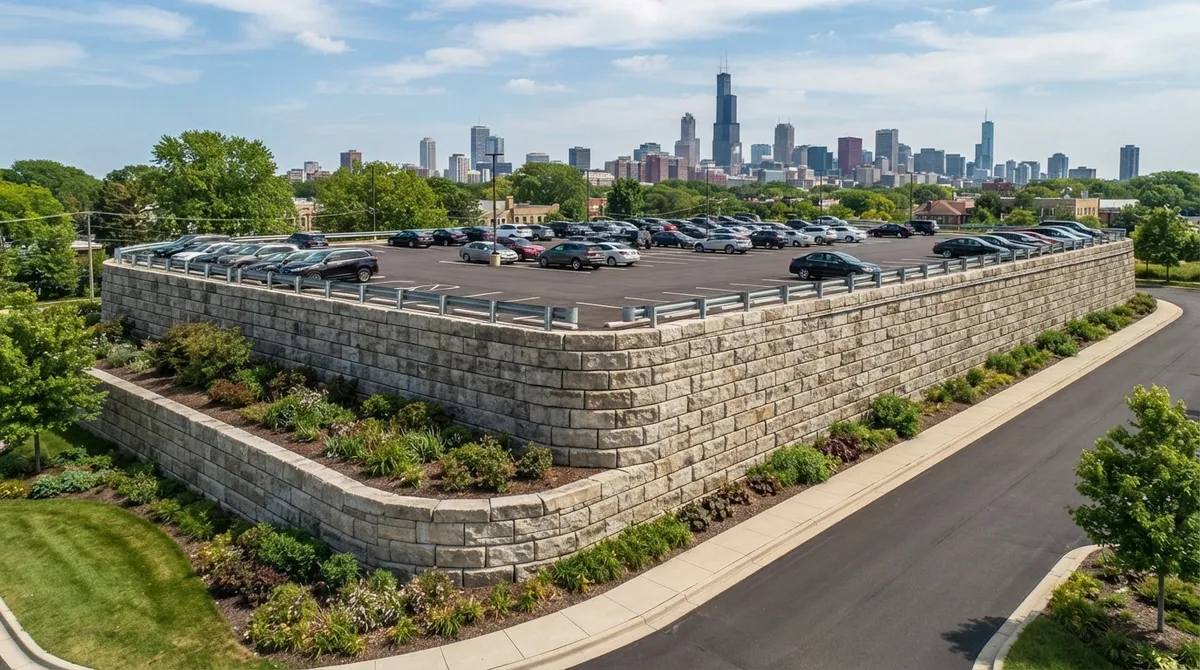
Chicago’s clay-heavy soil and freeze-thaw cycles are tough on any structure. Parking lots built on sloped or uneven land need something to hold that soil back. That’s exactly what a retaining wall does. It keeps soil in place, controls water runoff, and creates a safe, flat surface for cars and pedestrians alike.
Without proper support, you risk erosion, cracked pavement, and even dangerous ground shifting near your building’s foundation. A good retaining wall isn’t just functional – it can also boost curb appeal for your commercial property. Let’s dig into the mistakes that trip up so many property managers.
1. Skipping Professional Engineering Review
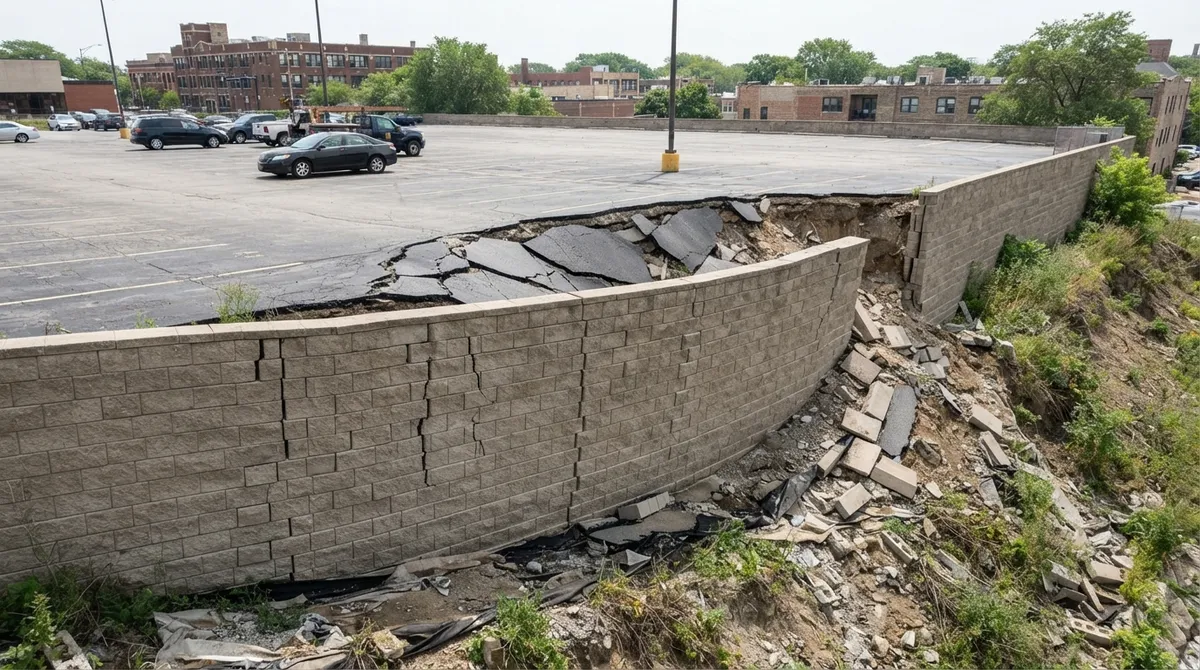
This one’s a biggie. Some property owners try to save money by skipping a proper engineering assessment. Big mistake. Commercial retaining walls need to handle serious lateral soil pressure, especially in high-traffic areas.
A licensed contractor will evaluate soil type, slope grade, and drainage needs before any construction begins. Chicago has specific building codes for retaining walls over a certain height, and skipping this step can lead to fines or, worse, wall failure.
2. Choosing the Wrong Material for Your Budget and Needs
Not every material works for every situation. Here’s a quick breakdown to help you understand your options:
| Material | Average Cost per Square Foot | Best For |
|---|---|---|
| Concrete | $20 – $50 | High-traffic commercial lots, durability |
| Wood | $10 – $40 | Lower-budget projects, shorter walls |
| Steel or Metal | Up to $150 | Premium, long-lasting industrial applications |
Concrete tends to be the top pick for commercial parking lots because it holds up well under heavy vehicle weight and Chicago’s brutal winters. Wood can work for smaller projects, but it won’t last as long in wet or freezing conditions.
3. Forgetting About Proper Drainage
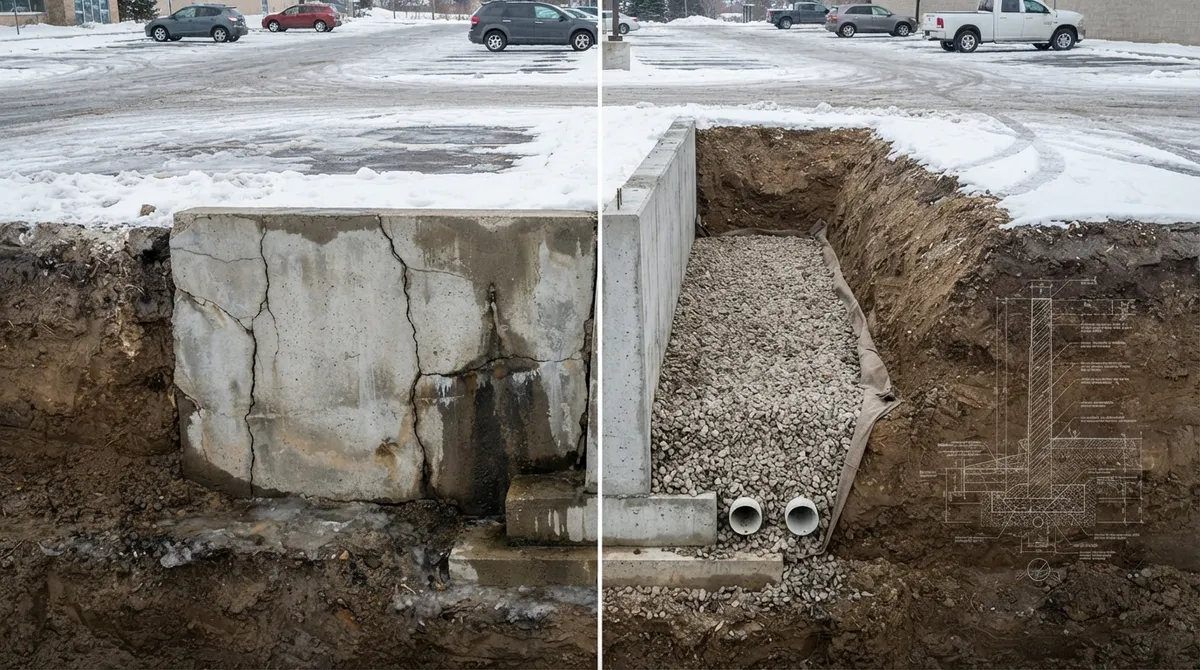
This mistake causes more wall failures than almost anything else. Water buildup behind a retaining wall creates pressure that can crack, bulge, or completely collapse the structure over time.
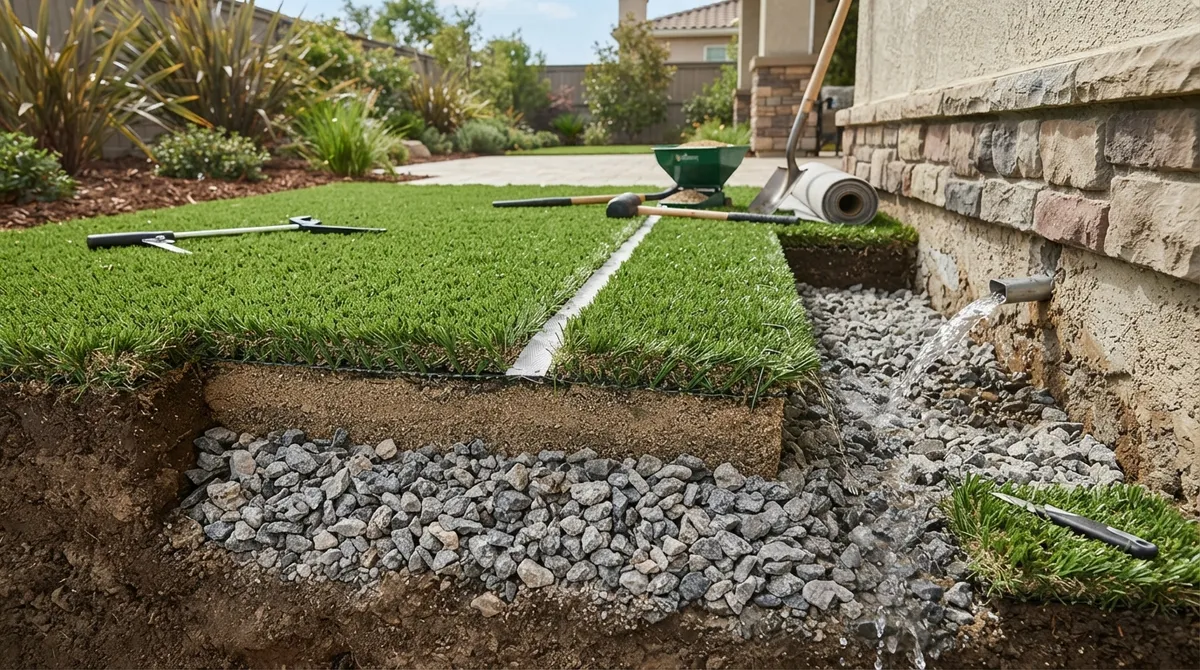
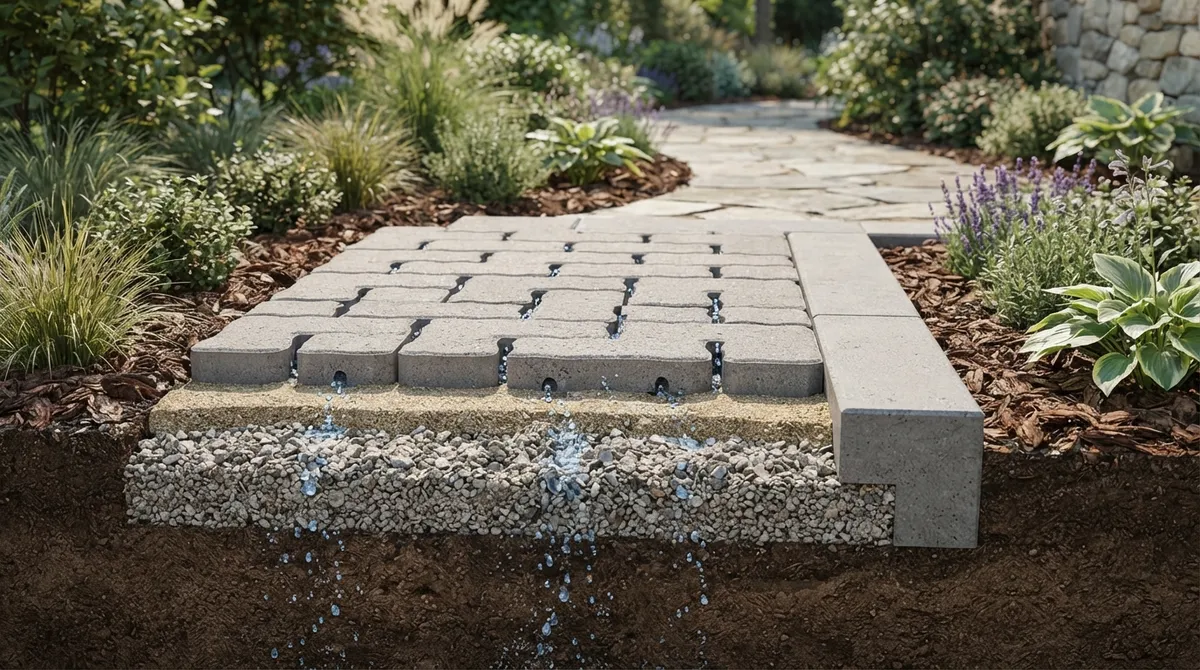
A smart drainage plan includes gravel backfill, weep holes, and sometimes a full drainage pipe system behind the wall. Think of drainage as the unsung hero of any retaining wall project. Without it, even the strongest concrete wall won’t last.
4. Ignoring Local Chicago Building Codes and Permits
Chicago and the surrounding suburbs have specific rules about retaining wall height, setbacks, and engineering requirements. Walls over four feet tall almost always need a permit and stamped engineering plans.
Skipping this step might feel like a shortcut, but it can lead to stop-work orders, fines, or having to tear out and rebuild a wall that doesn’t meet code. Always check with your municipality or work with a contractor who already knows the local rules inside and out.
5. Picking the Wrong Wall Type for Your Slope
Not all retaining walls work the same way. Here are the main types used in commercial settings:
- Gravity walls – rely on their own weight to hold back soil, great for shorter walls
- Reinforced walls – use steel bars or geogrid for extra support in weak or unstable soil
- Cantilever walls – use a base slab for leverage, ideal for taller commercial applications
- Segmental retaining walls – built from interlocking blocks, popular for their flexibility and clean look
Choosing the wrong type for your soil conditions and slope can mean early failure. A knowledgeable contractor will assess your site and recommend the right fit, not just the cheapest option.
6. Underestimating Soil Type and Conditions
Chicago’s clay soil holds water and expands when it freezes. This creates extra pressure on retaining walls that wouldn’t be an issue in sandier soil regions. If your contractor doesn’t test and understand your soil, your wall could be doomed from day one.
Soil testing helps determine the right footing depth, reinforcement needs, and drainage design. It’s a small upfront step that saves major headaches down the road.
7. Hiring Unlicensed or Inexperienced Contractors
This mistake can cost you thousands. Retaining walls for commercial properties aren’t a DIY weekend project. You need a team with real experience in Chicago’s climate and soil conditions.
Look for contractors who are members of respected industry groups like Landscape Illinois or certified through organizations such as the ICPI Certified Installer program. These credentials show a real commitment to quality and ongoing education.
8. Overlooking Erosion Control Around the Wall
A retaining wall alone doesn’t always stop erosion completely. Ground around the wall, especially near parking lot edges, can still wash away without additional erosion control measures.
Options like plantings, mulch beds, or rock beds around the base of the wall help keep soil in place. Pairing your wall with smart softscape elements creates a more complete, long-lasting solution.
9. Neglecting Long-Term Maintenance Plans
Even the best-built wall needs occasional check-ups. Skipping maintenance is a mistake that sneaks up on property owners years down the line.
Here’s a simple maintenance checklist to keep your commercial retaining wall in top shape:
- Inspect for cracks or bulging at least twice a year
- Clear debris from weep holes and drainage areas
- Check for signs of soil erosion at the wall’s base
- Monitor for shifting or leaning after major storms
- Reapply sealant on concrete walls every few years
- Schedule a professional inspection every 3-5 years
Pairing this with regular commercial lawn maintenance keeps your entire property looking sharp and functioning well.
10. Not Thinking About Aesthetics and Property Value
Some property managers treat retaining walls as purely functional, forgetting they’re also part of your property’s first impression. A well-designed wall can actually boost curb appeal and make your parking lot feel more welcoming.
Natural stone facades, decorative block patterns, or integrated lighting can transform a plain retaining wall into a design feature. Check out our gallery of our work to see how function and beauty can work together on commercial properties throughout Chicagoland.
What Makes Chicago Commercial Retaining Walls Unique
Building retaining walls in Chicago isn’t quite the same as building them somewhere with milder weather. Our freeze-thaw cycles, heavy rain, and clay soil all create extra challenges that require thoughtful planning.
According to industry data, top-rated contractors serving the greater Chicagoland area understand these regional quirks and design walls specifically built to handle them. This regional expertise is exactly why hiring a local team matters so much for commercial projects.
Quick Comparison: Gravity Walls vs. Reinforced Walls
| Feature | Gravity Walls | Reinforced Walls |
|---|---|---|
| Best Height | Under 4 feet | 4 feet and taller |
| Soil Suitability | Stable soil | Weak or unstable soil |
| Cost | Lower | Higher, due to added materials |
| Common Use | Small commercial lots | Large parking structures, sloped sites |
Steps to Get Your Commercial Retaining Wall Project Started
Ready to move forward? Here’s a simple, step-by-step process that keeps your project on track:
- Schedule a site assessment with a licensed landscaping contractor
- Get a soil test to determine ground conditions
- Review wall type recommendations based on your slope and traffic needs
- Confirm permit requirements with your local municipality
- Choose materials that fit your budget and durability needs
- Finalize drainage and erosion control plans
- Approve final design and begin construction
- Schedule regular maintenance check-ins after installation
Following this process helps avoid costly surprises and ensures your wall meets both safety standards and your property’s visual goals. Learn more about our step-by-step process for commercial landscaping projects.
Common Signs Your Existing Retaining Wall Needs Attention
If you already have a retaining wall on your property, watch out for these warning signs:
- Visible cracks running horizontally or vertically along the wall
- Bulging or leaning sections
- Water pooling at the base after rain
- Soil washing out from behind or beneath the wall
- Gaps forming between wall sections
- Pavement cracking near the top of the wall
Catching these issues early can save you from a full wall replacement down the road. Our team can also help with paver repairs if your parking lot surface has been affected by wall movement.
Wrapping Up: Building It Right the First Time
Retaining walls for commercial parking lots in Chicago aren’t just about holding back dirt. They’re about protecting your investment, keeping your property safe, and creating a space that looks great year after year. Avoiding these ten common mistakes puts you miles ahead of property owners who learn the hard way.
At Serenity Landscape Group, we’ve built our reputation over two decades by doing this work right the first time. From soil testing to drainage design to final finishing touches, our team handles every detail so you don’t have to worry. If you’re ready to protect your parking lot and boost your property’s curb appeal, get a free estimate today, or feel free to call us at (630) 359-5139 to chat about your project. We’d love to help you build something that lasts.
FAQs
Q: What are the best materials for commercial parking lot retaining walls in Chicago?
A: Concrete is usually the top choice for commercial parking lots because it stands up well to heavy vehicles and Chicago’s harsh winters. Wood can work for smaller budgets, but steel or metal offers premium durability if you’re willing to invest a bit more upfront.
Q: How much does it cost to install a retaining wall for a commercial parking lot in Chicago?
A: Costs typically range from $20 to $50 per square foot for standard concrete designs. Premium materials like steel can run up to $150 per square foot, so it really depends on your site’s needs and budget.
Q: Why are drainage solutions important for commercial retaining walls?
A: Without proper drainage, water builds up behind the wall and creates pressure that can cause cracking or collapse. Good drainage, including weep holes and gravel backfill, keeps your wall strong for the long haul.
Q: Do commercial retaining walls in Chicago require special engineering permits?
A: Yes, in most cases walls taller than four feet need a permit along with stamped engineering plans. It’s always smart to check with your local municipality before breaking ground.
Q: How long do commercial retaining walls typically last in Chicago’s climate?
A: A well-built and properly maintained retaining wall can last 30 to 50 years or more, even with Chicago’s freeze-thaw cycles. Regular inspections and good drainage go a long way toward extending that lifespan.