Key Takeaways
-
Chicago's freeze-thaw climate and clay-heavy soil require specialized retaining wall design with proper drainage systems, geogrid reinforcement every 2 courses, and quality materials like segmental block or natural stone to prevent failure.
-
Walls exceeding 30 inches or supporting structures like patios require professional engineering and must meet specific structural standards—hiring an engineer is non-negotiable for these projects.
-
Verify contractor credentials through ICPI Certified Installers, check Illinois licensing and insurance, review past projects, and get at least three estimates to avoid shortcuts and unusually low bids.
-
Proper drainage installation behind the wall is the #1 factor in preventing wall failure; it reduces water pressure, prevents frost heaving, and protects your foundation from damage.
-
A quality retaining wall system requires a 4-6 inch compacted gravel base, vertical drainage with clean aggregate, geogrid reinforcement, quality materials, and finishing cap stones for durability.
-
Local contractors familiar with Chicago's soil conditions, freeze-thaw cycles, and municipal permit requirements will deliver superior results compared to those without regional experience.
If your yard has a slope, you know the struggle. Rain washes away your soil. Grass refuses to grow on steep grades. And that hillside you’ve been ignoring? It’s quietly becoming a bigger problem every season. The good news is that the right retaining wall contractor can fix all of that — and make your property look stunning in the process.
In the Chicago area, many homeowners and commercial property managers are searching for highway retaining wall contractors in Chicago — professionals who bring that same level of structural expertise and scale to private residential and commercial landscapes. Whether you’re dealing with a sloped backyard, a terraced garden, or a commercial property with serious erosion issues, this guide will walk you through exactly how to find the best contractor for your needs.
What Does a Highway-Style Retaining Wall Contractor Actually Do?
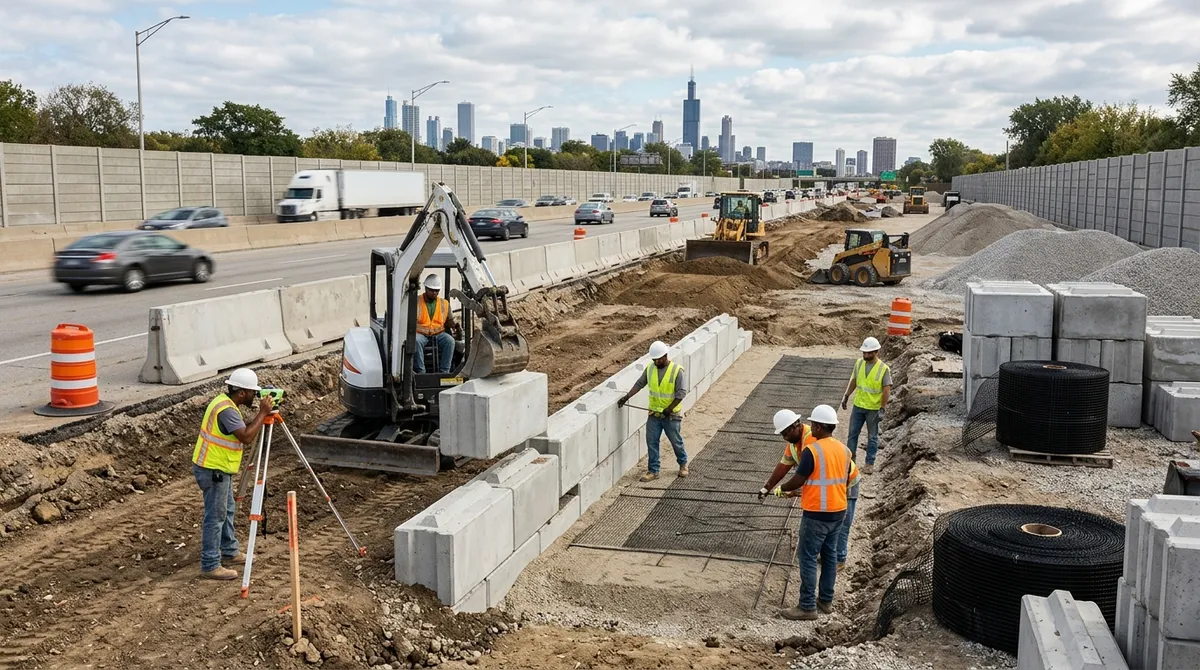
You may have noticed those massive walls along Chicago expressways that hold back tons of earth and rock. That same engineering philosophy — strong, durable, built to last — applies to landscape retaining walls on private properties. A skilled retaining wall contractor uses proven construction techniques to stabilize soil, manage water runoff, and create usable flat spaces on sloped land.
These contractors aren’t just stacking rocks. They’re designing systems that work with your soil type, drainage patterns, and Chicago’s freeze-thaw climate. If you’re curious about what a commercial contractor does specifically, check out this helpful breakdown: What Does a Commercial Retaining Wall Contractor Actually Do?
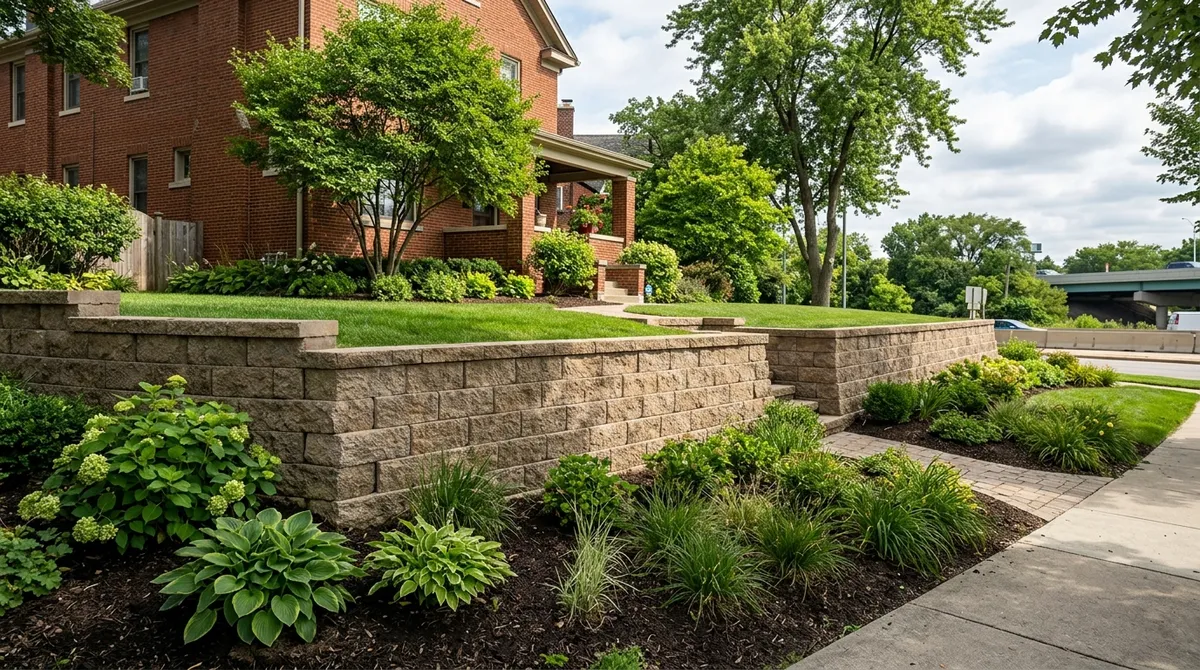
Why Chicago Properties Need Retaining Walls
Chicago’s climate is tough on landscapes. Harsh winters, heavy spring rains, and clay-heavy soil create the perfect storm for erosion and slope instability. Here’s why so many Chicago-area property owners invest in retaining walls:
- Erosion control: Retaining walls stop soil from washing away during heavy rain events — a common problem in Chicagoland suburbs.
- Grade management: They create flat, usable outdoor spaces on otherwise unusable slopes.
- Stormwater management: Proper walls with drainage systems reduce runoff and protect your foundation.
- Property value: A well-designed retaining wall adds visual appeal and serious curb appeal to any property.
- Structural safety: Walls prevent dangerous soil movement near driveways, patios, or building foundations.
Learn more about how these structures work by reading Why Do Retaining Walls Transform Sloped Yards Into Usable Spaces.
Key Components of a Quality Retaining Wall System
Not all retaining walls are created equal. A professional contractor builds a wall that will last decades — not just a few seasons. Here are the essential components that any reputable highway retaining wall contractor in Chicago should include:
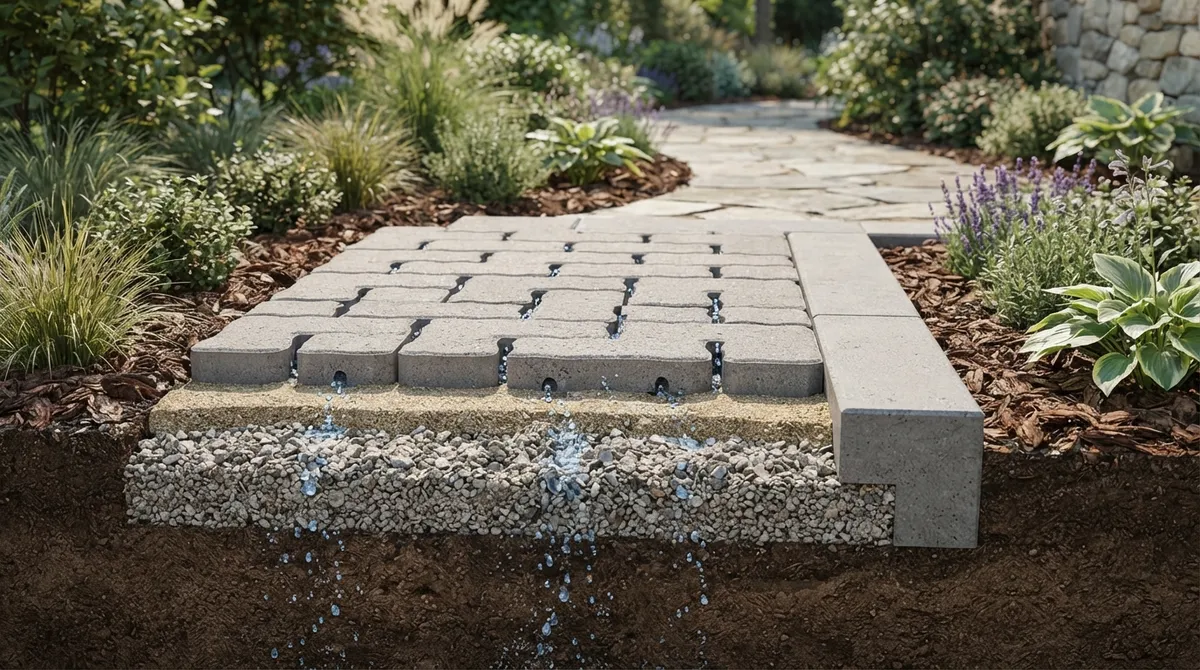
- Compacted gravel base: A 4–6 inch compacted gravel base is essential for stability and preventing wall shifting over time.
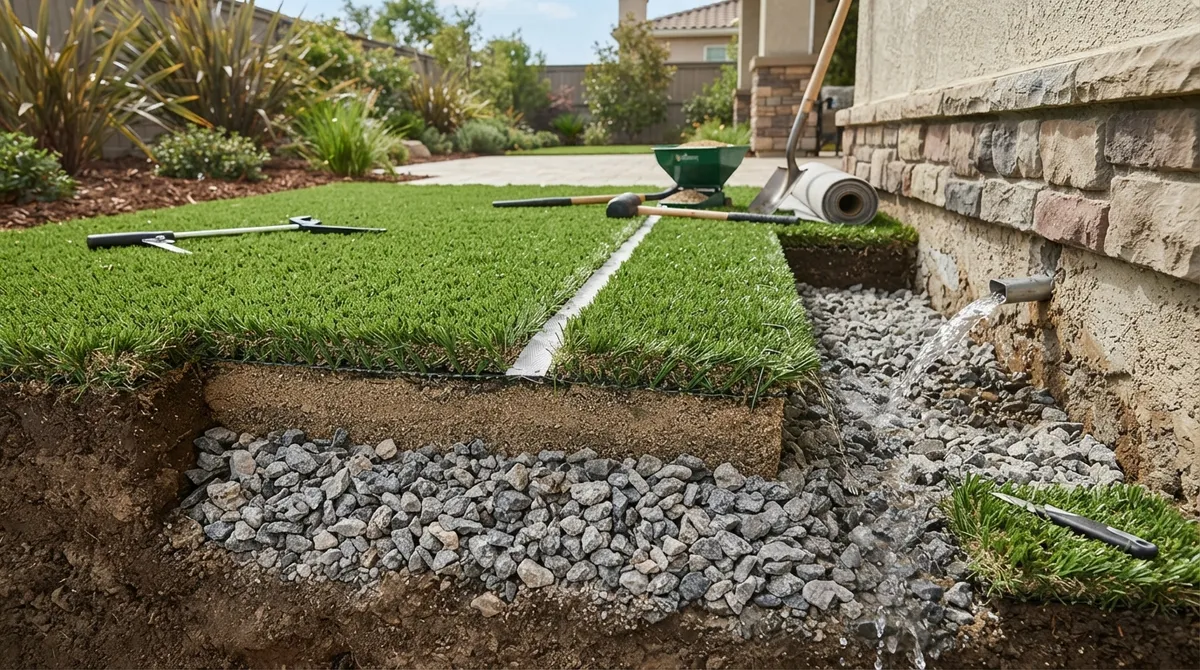
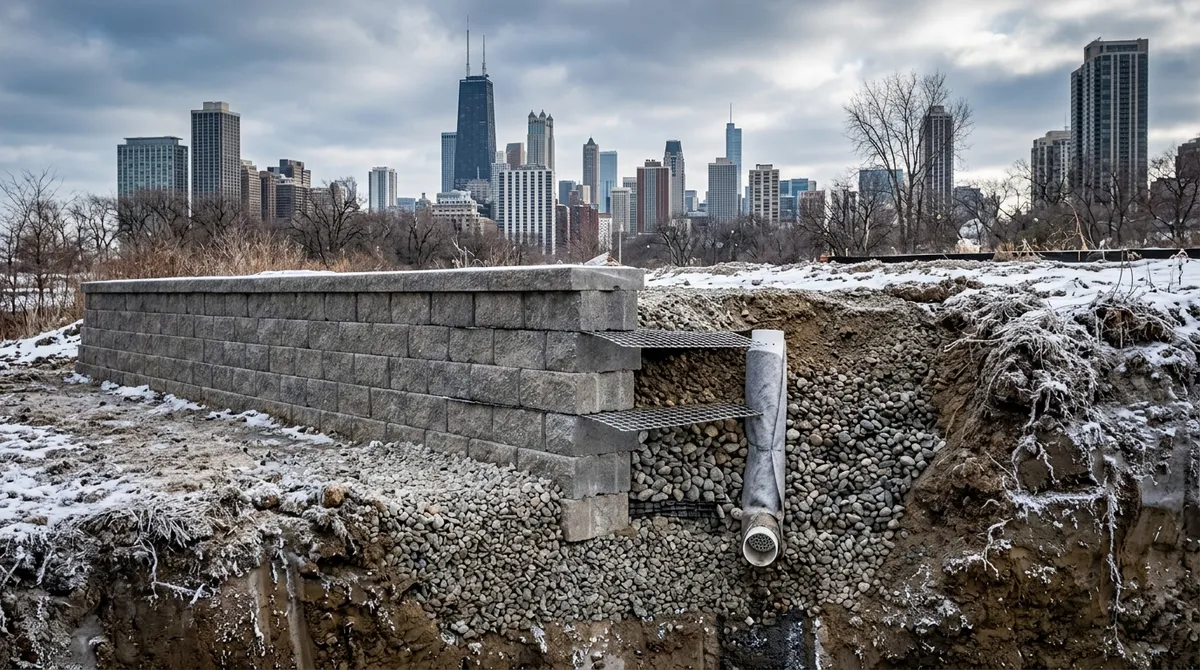
- Vertical drainage system: Clean aggregate placed behind the wall allows water to drain freely, reducing pressure and preventing frost heaving.
- Geogrid reinforcement: Placed every 2 courses, geogrid layers anchor the wall to the soil behind it and prevent outward movement.
- Quality retaining wall units: Whether natural stone, segmental blocks, or timber, the right material matters for both strength and aesthetics.
- Cap stones or finishing elements: These protect the top of the wall and give it a polished, finished look.
For walls taller than 30 inches — or walls supporting heavy structures like patios and decks — professional engineering is required. These are classified as engineered retaining walls and must meet specific structural standards. You can learn more at Retaining Wall Engineering Services: What You Need to Know.
Best Materials for Chicago Retaining Walls
Chicago’s freeze-thaw cycles are brutal. The material you choose needs to handle extreme temperature swings without cracking or shifting. Here’s a quick comparison of the most popular options:
| Material | Durability | Aesthetic Appeal | Best For | Maintenance Level |
|---|---|---|---|---|
| Segmental Block | Excellent | Modern, Clean | Residential & Commercial | Low |
| Natural Stone | Excellent | Classic, Premium | High-End Residential | Low-Medium |
| Timber/Landscape Ties | Moderate | Rustic, Natural | Garden Walls, Low Heights | Medium-High |
| Concrete Block | Excellent | Industrial, Structural | Large-Scale Commercial | Low |
| Gabion Baskets | Very Good | Contemporary, Unique | Erosion Control & Design | Low |
For natural stone options specifically, check out How to Choose Natural Stone Commercial Retaining Walls. If you’re considering modular block systems, read Why Are Precast Modular Block Walls Perfect for Your Yard?
How to Find the Right Highway Retaining Wall Contractor in Chicago
Finding a great contractor takes more than a quick Google search. Here’s a step-by-step process to help you hire smart:
- Look for local experience: Chicago’s clay soil and freeze-thaw conditions require specialized knowledge. A contractor with local experience will understand these challenges intimately.
- Check credentials and certifications: Look for contractors affiliated with organizations like ICPI Certified Installers, which ensures your contractor meets industry standards for hardscape installation.
- Ask to see past projects: Any reputable contractor should have a portfolio of completed retaining wall projects. Request photos or site visits to evaluate their work quality.
- Request multiple estimates: Get at least three quotes to compare pricing, scope of work, and materials. Be cautious of unusually low bids — they often signal shortcuts.
- Verify licenses and insurance: Illinois requires contractors to be properly licensed. Always verify insurance coverage to protect yourself from liability.
- Read reviews and testimonials: In 2026, top-rated retaining wall contractors in Chicago listed on Yelp include Lux Reno Group, JEM Landscaping, and Secor & Sons Construction & Design — but always do your own due diligence beyond ratings alone.
For more guidance on vetting contractors, read 5 Ways to Find the Best Commercial Retaining Wall Contractors.
Questions to Ask Before You Hire
Before signing any contract, ask these important questions to make sure you’re working with a qualified professional:
- Do you have experience with walls over 30 inches that require engineering?
- What drainage system will you use behind the wall?
- How do you handle Chicago’s freeze-thaw conditions in your design?
- Will you use geogrid reinforcement, and how many layers?
- What is your warranty on materials and workmanship?
- Do you pull the necessary permits for the project?
These questions separate professional contractors from less experienced ones quickly. A great contractor will answer them confidently and in detail. You can also explore the Serenity Landscape Group project process to understand what a transparent, professional workflow looks like from consultation to completion.
What to Expect from the Installation Process
Once you’ve hired your contractor, here’s what a typical retaining wall installation looks like for a residential or commercial Chicago property:
- Site assessment: The contractor evaluates your slope, soil type, drainage patterns, and any existing structures.
- Design and engineering: For larger walls, a licensed engineer creates structural drawings. For smaller walls, the contractor designs the layout and material selection.
- Excavation: The area is excavated to create a level, compacted base for the wall foundation.
- Base preparation: A 4–6 inch compacted gravel layer is installed to provide a stable, draining foundation.
- Wall construction: Courses are laid with geogrid reinforcement placed every 2 rows for added strength.
- Drainage installation: Clean aggregate and drainage pipes are placed behind the wall to manage water pressure.
- Backfilling and finishing: Soil is carefully backfilled, and cap stones or finishing elements complete the look.
A typical residential retaining wall project takes anywhere from 2–5 days depending on size and complexity. Larger commercial projects can take several weeks. Illinois landscaping industry standards are maintained through organizations like Landscape Illinois, which promotes professionalism and best practices across the state.
How Retaining Walls Complement Your Broader Landscape Design
A retaining wall doesn’t have to be purely functional. The best projects integrate retaining walls seamlessly into the overall landscape design. Here are some popular ways to enhance your retaining wall project:
- Add pavers: Complement your wall with beautiful paver pathways or patios at different terrace levels.
- Plant softscapes: Use softscape plantings like ornamental grasses and flowering perennials to soften the wall’s edges.
- Install lighting: Landscape lighting along retaining walls creates dramatic evening ambiance and improves safety.
- Add a fire pit: A flat terrace created by your retaining wall is the perfect spot for a cozy fire pit or outdoor gathering space.
- Consider a pergola: Elevated terraces are perfect for pergolas or pavilions that create shaded outdoor living areas.
For inspiration on creating a cohesive outdoor design, check out the Serenity Landscape Group gallery of completed work. You can also read How To Create A Landscape Design That Transforms Your Space for ideas on tying everything together beautifully.
Common Retaining Wall Mistakes to Avoid
Even great projects can go sideways without the right planning. Here are the most common mistakes property owners make when hiring retaining wall contractors:
- Skipping drainage installation (the #1 cause of wall failure)
- Choosing a contractor based on price alone without checking credentials
- Building a wall taller than 30 inches without engineering oversight
- Ignoring local permit requirements in Chicago-area municipalities
- Using low-quality materials that crack under freeze-thaw stress
For a deeper look at what can go wrong, read 7 Hardscaping Mistakes to Avoid in Your Outdoor Space. Avoiding these mistakes up front will save you thousands of dollars and years of headaches.
Transform Your Chicago Property with the Right Contractor
Finding the right highway retaining wall contractor in Chicago doesn’t have to be overwhelming. Focus on local experience, proper credentials, quality materials, and transparent communication — and you’ll be in great shape. Whether you’re a suburban homeowner looking to reclaim a sloped backyard, a commercial property manager managing stormwater, or a developer creating beautiful new communities, the right retaining wall transforms your property’s function and beauty.
At Serenity Landscape Group, we’ve been helping Chicago-area clients design and build beautiful, structurally sound retaining walls for over two decades. We combine technical expertise with creative landscape design to deliver results that last — and that you’ll genuinely love looking at every day.
Ready to get started? Request your free estimate today and let’s talk about how we can transform your outdoor space into something extraordinary. You can also call us directly at (630) 359-5139 — we’d love to hear about your project!
FAQs
Q: What are the best retaining wall contractors in Chicago for residential landscaping?
A: There are many talented contractors in the Chicago area! Look for professionals with local experience, proper licensing, and strong reviews. Serenity Landscape Group has over two decades of experience serving residential and commercial clients across Chicagoland and would love to help with your project.
Q: How much does it cost to build a retaining wall in Chicago, IL?
A: Costs vary based on wall height, length, material choice, and site conditions. In the Chicago area, residential retaining walls typically range from $3,000 to $20,000+. The best way to get an accurate number is to schedule a free site consultation so a contractor can assess your specific needs.
Q: Do I need an engineer for a retaining wall taller than 30 inches in Chicago?
A: Yes! Any retaining wall exceeding 30 inches in height — or one that supports structures like patios or decks — must be engineered to meet structural safety standards. Always work with a contractor who can coordinate engineering services for taller walls.
Q: What materials are best for retaining walls in the Chicago climate?
A: Segmental concrete block and natural stone are the top choices for Chicago’s harsh freeze-thaw climate. Both materials handle extreme temperature swings beautifully without cracking or shifting. Your contractor can help you choose the best material based on your budget and design goals.
Q: How do retaining walls help with erosion control in Chicago landscaping?
A: Retaining walls physically hold soil in place on sloped properties, preventing it from washing away during heavy rains. When combined with proper drainage systems and geogrid reinforcement, they offer long-term erosion protection that keeps your landscape looking great season after season.