Key Takeaways
-
Professional playground turf installation costs $8-$15 per square foot and requires shock-absorbent padding, proper base preparation, and drainage planning to meet safety standards and prevent premature wear.
-
Playground turf differs from regular artificial grass by including built-in shock absorption, fall-height ratings for safety compliance, and denser fibers designed specifically to withstand heavy foot traffic in play areas.
-
Signs your playground needs a turf upgrade include constant mud and puddles, bare worn patches in high-traffic areas, and rising maintenance costs from frequent mulch replacement or grass mowing.
-
Hiring experienced installers ensures proper seaming around equipment, correct shock pad placement under swings and slides, and adherence to local safety guidelines to avoid gaps, tripping hazards, and liability issues.
Picture this: a play area with no muddy puddles, no bare dirt patches, and no worried parents checking for wood chip splinters. That’s the magic of professional playground turf installation. If you manage a school, run a daycare, oversee an HOA, or simply want a safer backyard play space for your kids, this guide is for you.
At Serenity Landscape Group, we’ve spent over two decades helping Chicago-area properties look their best. Playground turf installation has become one of our favorite projects because it combines safety, beauty, and practicality in one neat package. Let’s walk through everything you need to know, from cost to safety padding to long-term care.
Why Playground Turf Installation Is Booming Across Chicagoland
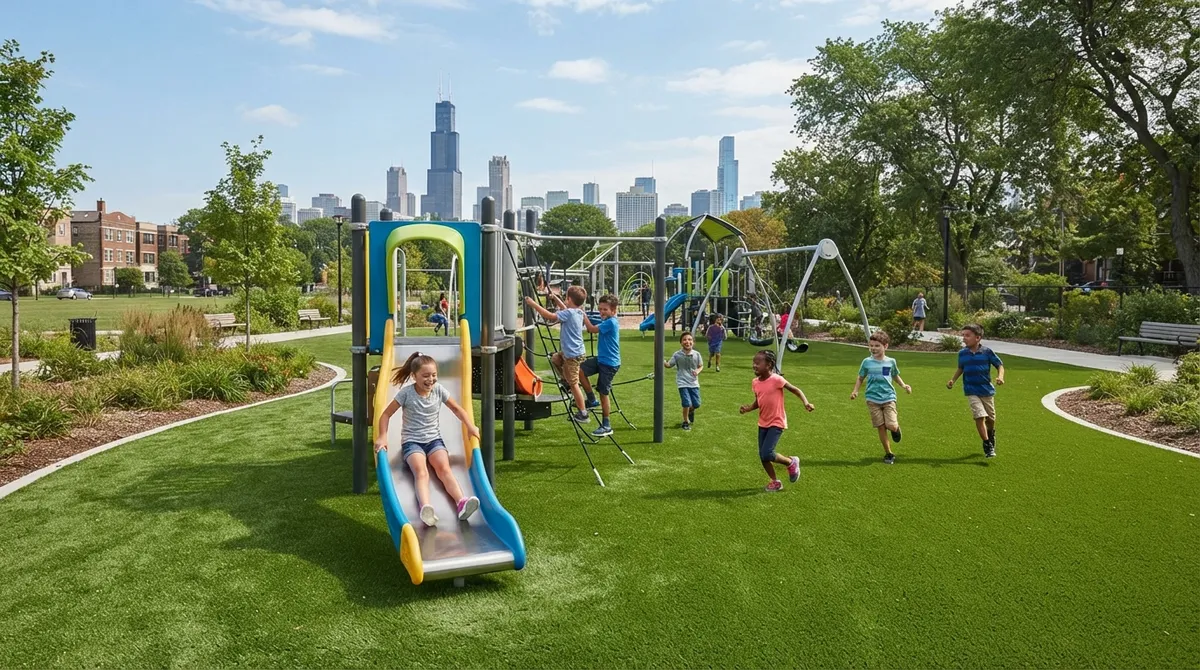
Schools, parks, daycares, and HOAs across the Chicago suburbs are switching to synthetic turf for their play areas. Why the sudden popularity? Simple. It solves problems that mulch, gravel, and natural grass just can’t fix.
Traditional play surfaces get muddy after rain. They grow weeds. They need constant raking and refilling. Synthetic turf skips all of that. It drains fast, stays soft, and looks great year-round, even through harsh Illinois winters.
One regional turf installer reports completing over 300 playground installations, showing just how much demand exists for this service. Property managers and parents alike are catching on to the benefits.
Who Benefits Most From Playground Turf
- Schools looking to reduce liability and maintenance costs
- Daycare centers wanting a clean, safe space for toddlers
- HOAs managing shared community playgrounds
- Parks departments serving high-traffic public spaces
- Homeowners building a backyard play zone for their kids
- Multifamily communities offering amenities to attract residents
If you’re curious how this fits into a broader outdoor upgrade, check out our guide on daycare playground turf options in Chicago or explore our commercial playground turf solutions for Illinois properties.
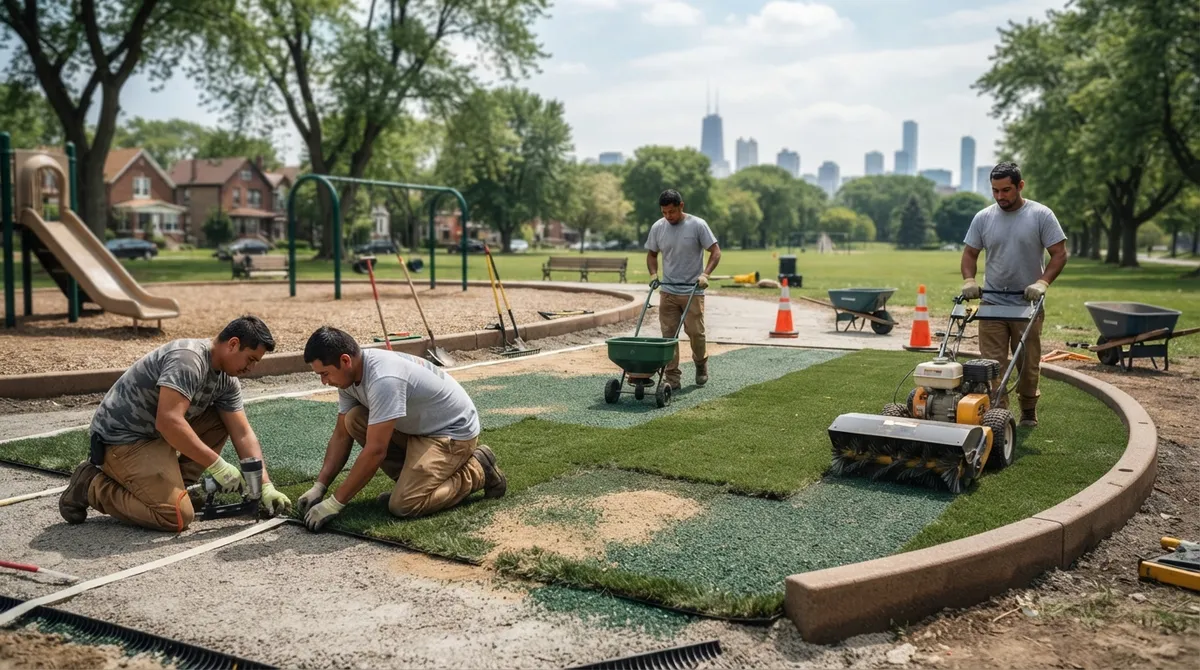
6 Key Steps in Professional Playground Turf Installation
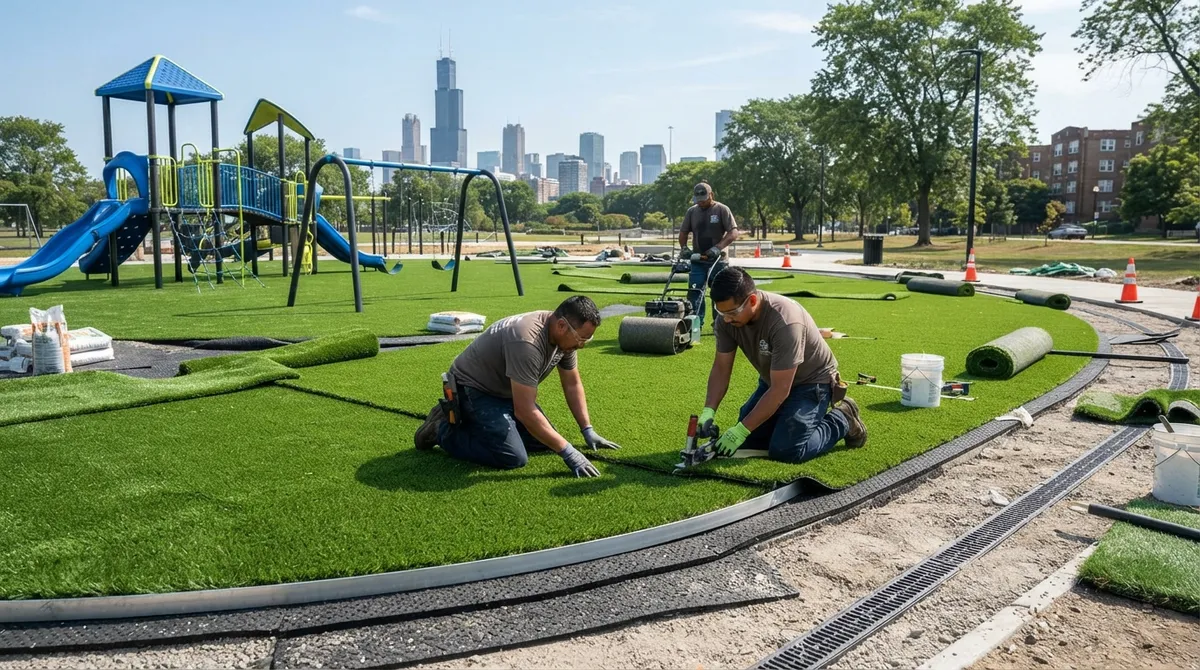
Playground turf installation isn’t just rolling out fake grass and calling it done. It takes careful planning and skilled labor. Here’s how the process typically works.
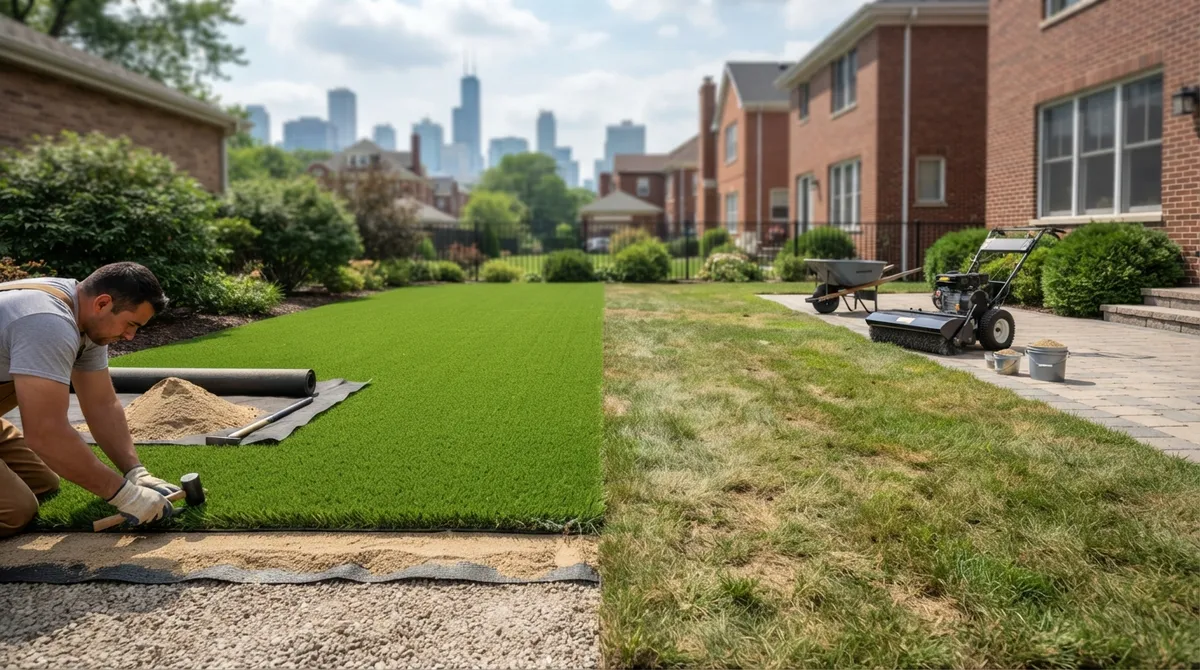
- Site assessment and grading. Our team checks the slope, soil type, and drainage patterns before anything else happens. Proper grading prevents water from pooling under the play area.
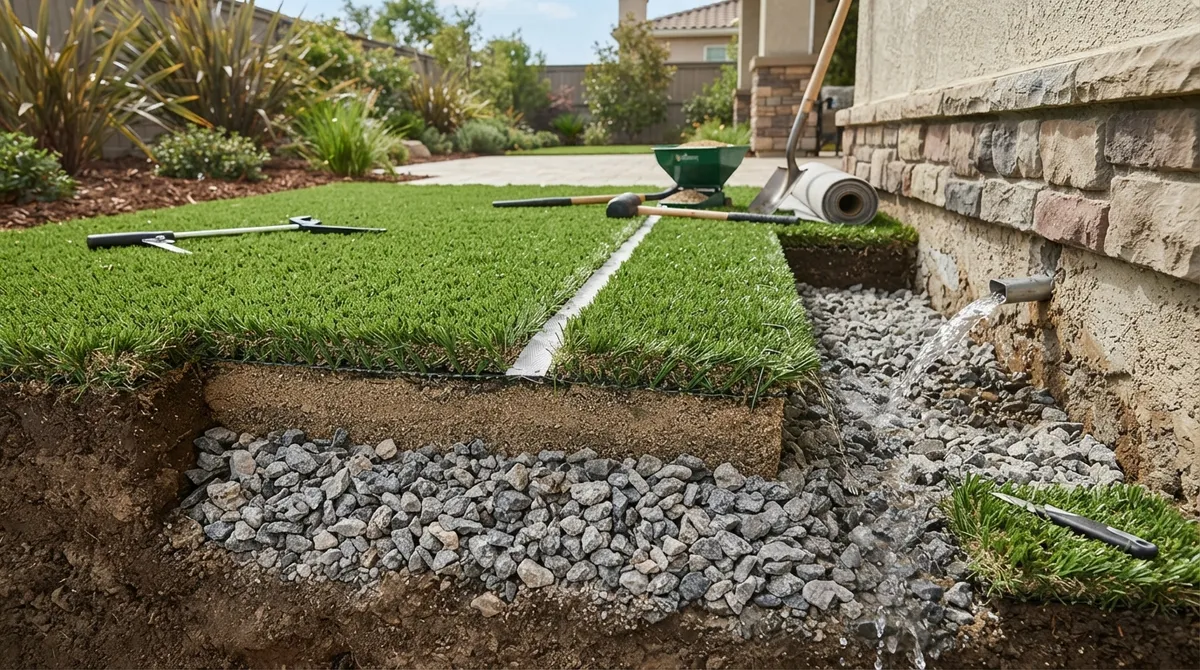
- Base preparation. A strong base layer, usually crushed stone, gets compacted to create a stable, even foundation. This step is critical for long-term turf performance.
- Shock pad or underlayment installation. This cushioned layer absorbs impact if a child falls, meeting fall-height safety standards for playground equipment.
- Turf placement and seaming. The synthetic grass gets rolled out, trimmed, and seamed together so seams are invisible and secure.
- Infill application. A layer of infill material, often silica sand or specialized playground infill, helps the turf blades stand up and adds extra cushioning.
- Final inspection around equipment. Installers check that turf fits cleanly around swings, slides, and climbing structures without gaps or tripping hazards.
Every step matters. Skipping base prep or shock padding can lead to safety issues and a shorter lifespan for the turf. That’s why hiring experienced professionals pays off in the long run. Learn more about our approach in the Process page.
Playground Turf vs. Regular Artificial Grass: What’s Different?
A common question we hear is whether playground turf is just regular artificial grass. It’s not, and the difference matters for safety.
| Feature | Playground Turf | Standard Artificial Grass |
|---|---|---|
| Shock Absorption | Built-in padding or shock pad required | Usually not required |
| Fall-Height Rating | Designed to meet safety standards | Not rated for fall protection |
| Pile Height | Shorter, denser fibers for durability | Varies widely by product |
| Typical Use | Schools, parks, daycares, backyard play areas | Lawns, patios, general landscaping |
| Drainage Needs | Heavy-duty drainage planning | Standard drainage |
If you’re comparing this to other turf applications, our article on artificial turf installation covers general residential and commercial uses in more detail.
How Much Does Playground Turf Installation Cost?
Budget is always a big question, and rightly so. Pricing depends on square footage, site conditions, and the type of safety padding you choose.
Most artificial turf projects, including playground applications, run between $8 and $15 per square foot installed. Playground turf can sometimes land on the higher end because of the shock pad and extra safety features involved.
Factors That Affect Your Final Price
- Size of the play area and total square footage
- Type of shock pad or underlayment selected
- Site grading and drainage complexity
- Accessibility requirements, including ADA-compliant surfacing
- Number of play structures the turf needs to fit around
- Additional features like border edging or color patterns
We always recommend getting a detailed quote before starting any project. You can request a free estimate to get exact numbers for your specific property.
Is Artificial Playground Turf Safe for Kids?
Safety is probably your number one concern, and that’s completely understandable. The good news is that modern playground turf systems are designed with children in mind.
Shock-absorbent underlayment reduces injury risk from falls. Many systems are engineered to meet specific fall-height ratings based on the height of nearby play equipment. This means a taller slide requires thicker padding than a small toddler swing.
Playground turf is also non-toxic, free of sharp debris, and doesn’t attract bugs the way mulch can. For daycare centers especially, this creates a cleaner, safer environment for little ones to explore.
Following guidelines from organizations like the Landscape Illinois and working with an ICPI Certified Installer ensures your project meets industry safety and quality standards.
3 Signs Your Playground Needs a Turf Upgrade
Not sure if it’s time to switch? Here are three clear signs it might be time for an upgrade.
- Constant mud and puddles. If your play area turns into a swamp after every rainstorm, poor drainage is likely the culprit.
- Bare, worn patches. Natural grass under heavy foot traffic often thins out and dies, leaving unsafe bare spots.
- High maintenance costs. If you’re constantly replacing mulch or mowing grass around play equipment, turf can cut those costs significantly.
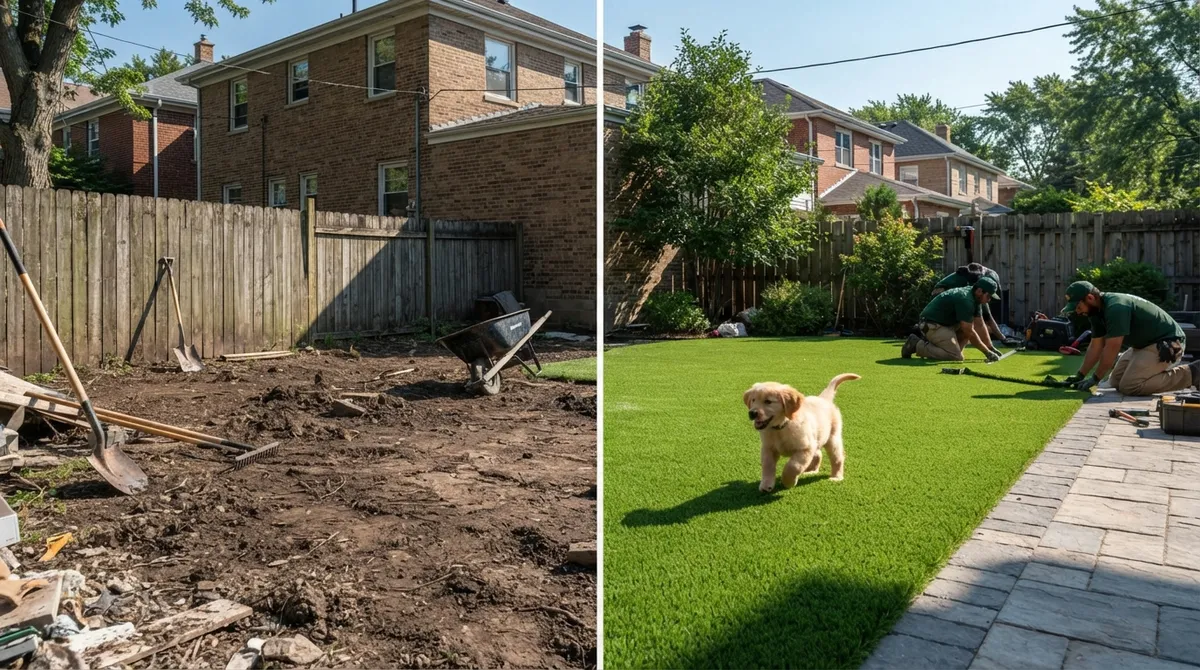
Many HOAs and schools we’ve worked with tell us they were shocked at how much time and money they saved after making the switch. Our gallery of our work shows real transformations from soggy, worn-out play areas to clean, vibrant turf spaces.
How Long Does Playground Turf Last?
With proper installation and reasonable care, playground turf typically lasts many years, even with heavy daily use. High-quality turf is built to withstand constant running, jumping, and playing without matting down or fading quickly.
Factors that affect lifespan include the quality of materials, how well the base was prepared, and how much foot traffic the area receives. Proper drainage also plays a huge role. Water pooling under turf can cause premature wear, which is why we always emphasize careful site grading upfront.
For property managers overseeing multiple locations, understanding turf lifespan helps with long-term budgeting. Our article on artificial turf lifespan in Chicago dives deeper into what affects durability in our local climate.
Playground Turf Installation Around Equipment
One tricky part of playground turf installation is fitting it neatly around swings, slides, climbing walls, and other structures. This requires precision cutting and careful seaming so there are no gaps or tripping hazards.
Best Practices for Equipment Areas
- Measure equipment footings carefully before cutting turf
- Use extra shock padding directly under swings and slide landing zones
- Seal seams tightly near high-traffic pivot points
- Leave proper clearance zones as required by safety guidelines
- Inspect regularly for wear near equipment bases
Getting this right takes experience. It’s one reason many property managers choose to hire professionals rather than attempt a DIY approach. Our team has handled everything from small backyard play zones to large-scale commercial installations, and we know how to work around existing structures without compromising safety.
Bundling Playground Turf With Other Landscaping Upgrades
Playground turf installation often works best as part of a bigger outdoor improvement plan. Many of our commercial clients pair turf projects with other services to create a cohesive, welcoming space.
For example, a school might add pavers for pathways leading to the play area, or an HOA might install lighting and sound features for evening community events. Commercial properties often combine turf upgrades with our commercial lawn maintenance services to keep the entire property looking sharp.
This bundled approach saves money and ensures every part of your outdoor space works together seamlessly.
Choosing the Right Installer for Your Project
Not all turf installers are created equal, especially when it comes to playground applications. Here’s what to look for.
- Experience specifically with playground and commercial turf projects
- Knowledge of local safety and accessibility requirements
- Clear communication about base prep, drainage, and shock padding
- Positive reviews from schools, daycares, or HOAs in your area
- Willingness to provide a detailed written estimate
With over 20 years serving the greater Chicago area, our team at Serenity Landscape Group has built a reputation for careful planning and quality craftsmanship. We treat every playground project, big or small, with the same attention to detail we’d want for our own kids.
Ready to Transform Your Play Area?
Playground turf installation offers safety, beauty, and years of low-maintenance enjoyment for kids and property managers alike. Whether you’re upgrading a school playground, refreshing an HOA common area, or building a backyard play zone, the right turf system makes all the difference.
We’d love to help bring your vision to life. Feel free to get a free estimate for your project, or simply call us at (630) 359-5139 to chat about your playground turf needs. Let’s create a safer, more beautiful play space together.
FAQs
Q: What is playground turf installation?
A: It’s the process of installing synthetic grass systems specifically designed for play areas, complete with shock-absorbent padding and proper drainage. This creates a safe, low-maintenance surface for kids to play on year-round, whether at a school, daycare, or backyard.
Q: How much does playground turf installation cost?
A: Most projects run between $8 and $15 per square foot installed, though playground turf can land on the higher end due to safety padding requirements. We’re happy to provide a detailed, no-obligation quote based on your specific space.
Q: Is artificial playground turf safe for children?
A: Yes! Modern systems include shock-absorbent underlayment designed to meet fall-height safety ratings for nearby equipment. It’s also free of sharp debris and doesn’t attract bugs, making it a cleaner option than mulch or gravel.
Q: Does playground turf require shock pads or underlayment?
A: In most cases, yes. Shock pads are essential for cushioning falls and meeting safety standards, especially near swings, slides, and climbing structures. Skipping this step can compromise both safety and the turf’s long-term performance.
Q: How long does playground turf last?
A: With proper installation and reasonable care, playground turf can last many years even under heavy daily use. Good base preparation and drainage planning make a huge difference in how long your turf stays looking great.