Key Takeaways
-
Playground turf meets ASTM F1292 safety standards with foam pad cushioning that significantly reduces fall injuries, making it the safest surface option for Chicago daycare facilities.
-
Artificial turf eliminates mud tracking, requires no watering/mowing/fertilizing, and costs less over 10-20 years than repeatedly replacing wood chips or rubber mulch despite higher upfront installation costs.
-
Chicago’s freeze-thaw weather causes natural grass to become muddy or icy, while turf drains quickly, stays functional year-round, and maximizes outdoor play time across all seasons.
-
Modern playground turf is lead-free, PFAS-safe, and requires no pesticides or herbicides, eliminating chemical exposure risks that natural grass treated with treatments poses to young children.
-
ADA-compliant turf systems provide firm, stable surfaces that support wheelchair mobility better than alternatives like Engineered Wood Fiber that can shift and compact unevenly over time.
-
Professional installation by certified contractors typically completes within days and includes proper base preparation, foam padding, and drainage systems ensuring long-term durability and safety compliance.
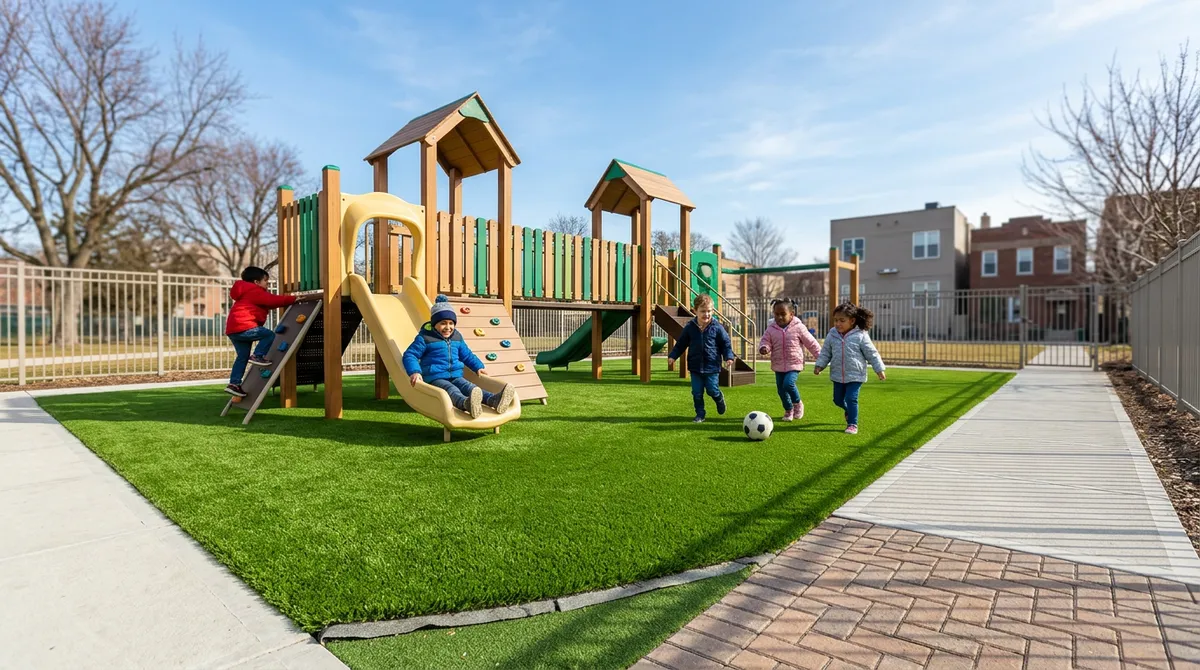
If you manage a daycare or childcare facility in Chicago, you know how important the playground is. It’s where kids laugh, run, explore, and grow. But the surface under their feet matters just as much as the equipment above. Traditional grass gets muddy, worn out, and patchy fast. That’s why so many Chicago childcare providers are switching to daycare playground turf.
Artificial turf designed for playground use offers a safe, clean, and beautiful surface that holds up through every Chicago season. It’s not just a practical upgrade — it genuinely transforms the look and feel of an outdoor play space. Whether you’re a daycare director, a property manager, or a small business owner running a children’s program, this guide walks you through exactly why playground turf is worth considering in 2026.
What Is Daycare Playground Turf?
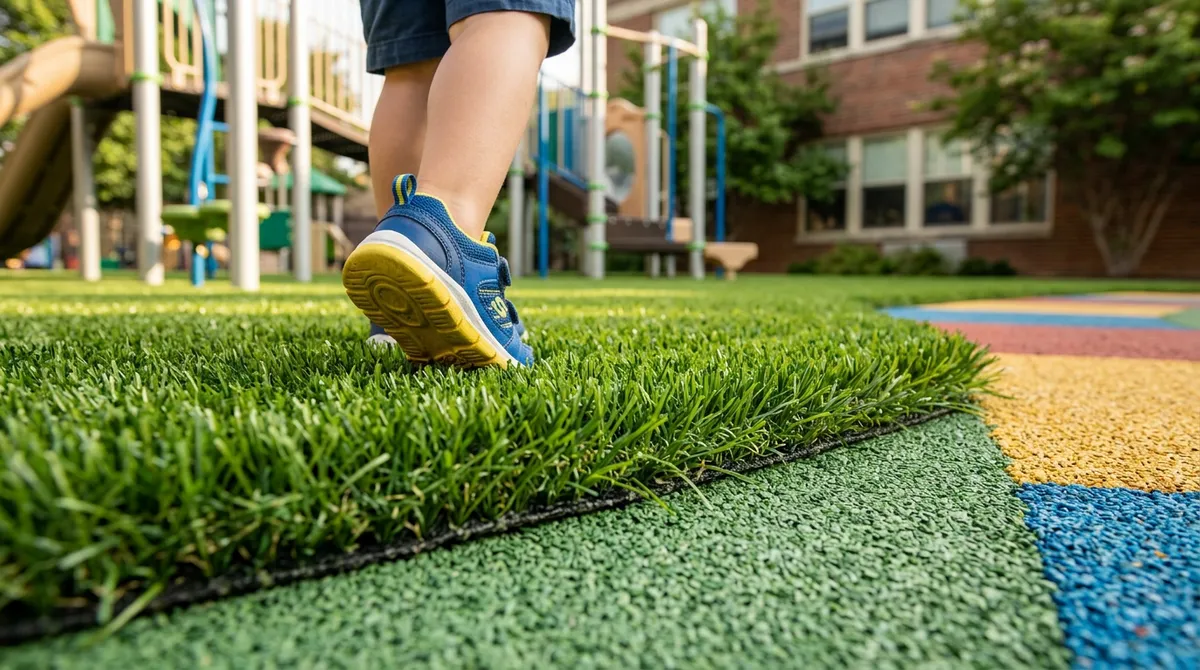
Playground turf is a specially engineered artificial grass system. It uses soft polyethylene blades on top of a foam pad or rubber infill base. This combination cushions falls and absorbs impact. The result is a surface that looks like natural grass but performs far better in high-traffic, high-activity environments like a daycare play area.
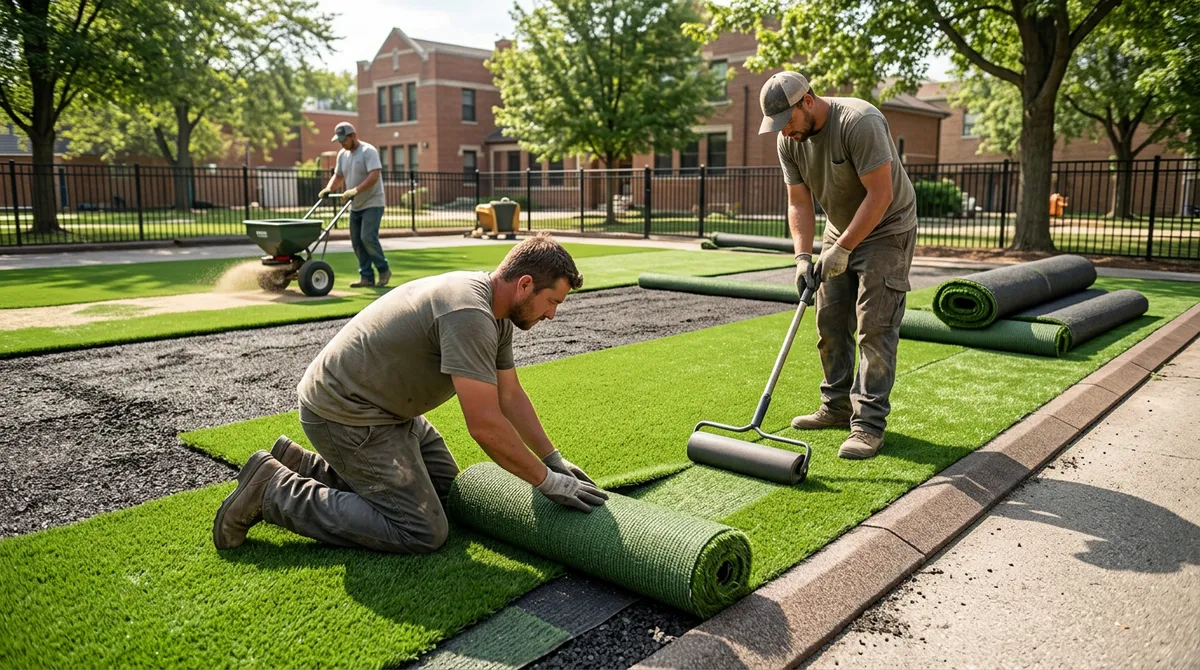
Professional landscaping crews install these systems by first preparing the base, then laying the padding layer, and finally securing the turf on top. It blends naturally into the surrounding landscape while offering consistent, year-round performance. You can learn more about what professional artificial turf installation looks like when done right.
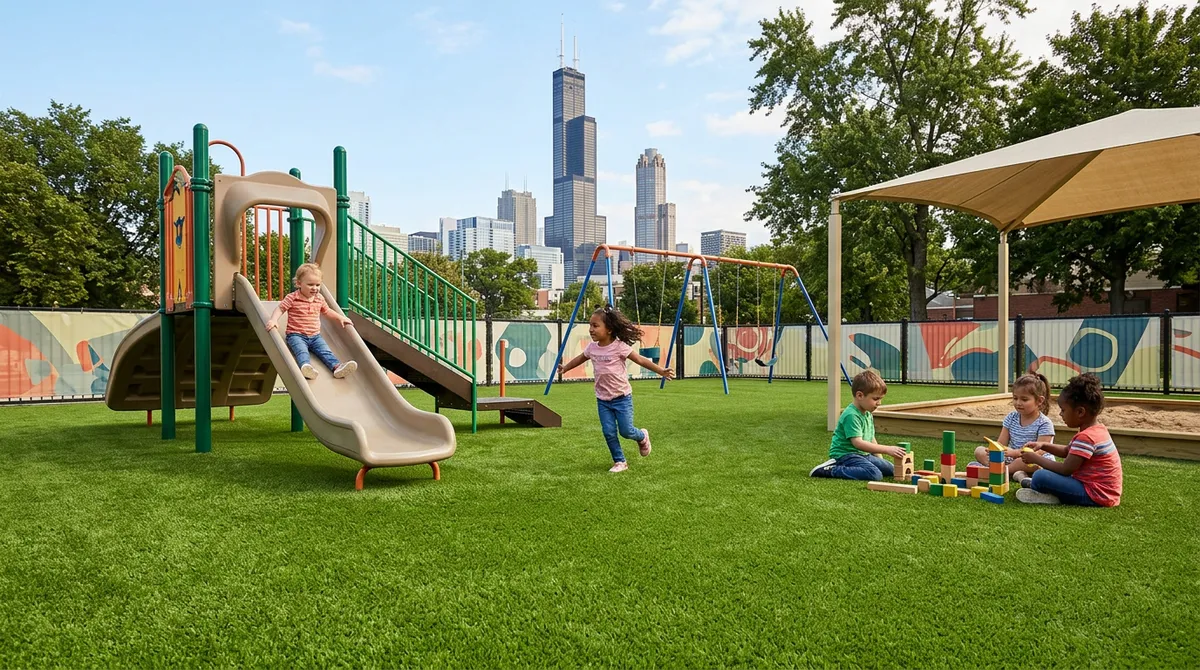
9 Reasons to Choose Playground Turf for Your Chicago Daycare
1. Superior Fall Protection for Little Ones
Safety is the number one concern for any childcare environment. Playground turf systems use foam pads made from recycled materials beneath the turf surface. These pads absorb impact from falls at specified heights, reducing injury risk significantly.
High-quality turf systems meet ASTM F1292 impact attenuation standards. This is the safety benchmark set by the American Society for Testing and Materials. It measures how well a surface absorbs the force of a fall — and certified turf systems perform exceptionally well on this test.
2. Low Maintenance Year-Round
One of the biggest wins for daycare operators is time saved. Natural grass needs constant attention — watering, mowing, fertilizing, reseeding bald spots. Playground turf needs none of that.
Here’s what low maintenance looks like with artificial turf:
- No watering required
- No mowing or edging
- No fertilizer or pesticides
- No reseeding worn patches
- Easy to rinse and sanitize
This is a huge advantage for commercial property managers and small business owners who want a clean, attractive space without the ongoing upkeep costs. Pair it with commercial lawn maintenance services for a fully managed outdoor property.
3. ADA-Compliant Surface Options
Accessibility matters. Daycares and childcare facilities in Illinois must meet ADA requirements for playground surfaces. A properly installed turf system provides a firm, stable surface that supports wheelchair mobility and complies with accessibility guidelines.
This makes turf one of the most versatile options available. It works for all children, including those with mobility challenges. Engineered Wood Fiber (EWF) is actually the most common playground surfacing in Chicago parks, but it can shift and compact unevenly. Turf stays consistent, which supports better ADA compliance over time.
4. Hypoallergenic and Non-Toxic Materials
Parents want to know the playground is safe — not just physically, but chemically. Modern playground turf is designed with child safety in mind. Look for products that are:
- Lead-free and PFAS-safe
- Non-toxic and hypoallergenic
- Free from harmful chemical treatments
- Resistant to mold and bacteria growth
Unlike natural grass, artificial turf doesn’t require herbicides or pesticides. That means no chemical exposure during play. This is a strong selling point for health-conscious parents and childcare directors alike.
5. All-Weather Usability in Chicago’s Climate
Chicago weather is no joke. Between freezing winters, muddy springs, and scorching summers, outdoor surfaces take a beating. Traditional grass turns into a muddy mess after rain and goes dormant and brown in winter.
Playground turf drains quickly and stays functional in all weather conditions. Kids can play outside sooner after rain. The surface doesn’t freeze into dangerous ice patches the same way wet natural grass does. And in summer, quality turf systems resist heavy foot traffic without wearing down.
For Chicago facilities, this all-weather reliability is a genuine game-changer for maximizing outdoor play time throughout the year.
6. No Mud, No Mess, No Dirt Tracking
Anyone who works with young children knows that mud is the enemy. It gets tracked inside, stains clothing, and creates extra cleanup work every single day. Playground turf eliminates mud entirely.
The surface stays clean and dry far faster than natural grass. Children come in from the playground without dirt-caked shoes. This is a small detail that makes a big difference for daycare staff and for parents dropping off their kids in nice clothes.
7. Long-Lasting Durability in High-Traffic Areas
Daycare playgrounds see intense use every single day. Dozens of children running, jumping, and playing in the same spots quickly destroys natural grass. High-traffic zones under swings and slides become bare dirt patches within weeks.
Playground turf is engineered to handle this kind of wear. The blades are resilient and spring back after compression. Quality installation includes reinforced backing that holds up under constant foot traffic for years. This long-term durability makes turf a smart investment for any childcare facility.
8. Beautiful Aesthetics That Impress Parents
First impressions matter. When parents arrive to tour a daycare, the outdoor space says a lot about how the facility is cared for. A lush, green playground looks inviting and well-maintained even in the middle of February.
Artificial turf blends naturally with surrounding plantings, garden beds, and landscape features. Pair it with thoughtful softscapes like shrubs and flowering plants, and you have a playground that feels like a beautiful outdoor sanctuary rather than a bare utility yard.
You can even see the difference great landscaping makes by browsing our gallery of our work to get inspired.
9. Cost-Effective Over the Long Term
The upfront cost of turf installation is higher than some alternatives. But the long-term math works strongly in turf’s favor. Let’s compare common playground surfacing options:
| Surface Type | Approx. Initial Cost/sq ft | Maintenance Level | Lifespan |
|---|---|---|---|
| Wood Chips / EWF | ~$4 | High (replenish, rake) | 1–3 years |
| Rubber Mulch | ~$6–$9 | Medium | 5–10 years |
| Poured-in-Place Rubber | ~$13 | Low | 10–15 years |
| Artificial Turf System | ~$10–$15 | Very Low | 10–20 years |
When you factor in zero watering costs, no chemical treatments, no annual replenishment, and fewer staff hours spent on upkeep, artificial turf pays for itself. Over a 10-year period, it often costs less than repeatedly replacing worn-out wood chips or rubber mulch.
What Illinois Safety Standards Apply to Playground Surfacing?
In Illinois, childcare facilities must comply with state licensing requirements for outdoor play spaces. Playground surfacing must provide adequate fall protection based on the height of the equipment. Here are the key standards to know:
- ASTM F1292 — Impact attenuation standard measuring how well a surface cushions falls from specific heights
- ASTM F1951 — Accessibility standard ensuring surfaces are firm and stable for wheelchair users
- ADA compliance — Federal requirements ensuring equal access to playground equipment for children with disabilities
For guidance on playground safety standards and landscaping best practices in Illinois, Landscape Illinois is a trusted industry resource. Professional installation by certified contractors ensures your turf system meets all relevant standards from day one.
How Playground Turf Is Installed
Understanding the installation process helps you plan and budget confidently. Here’s how a professional playground turf installation typically unfolds:
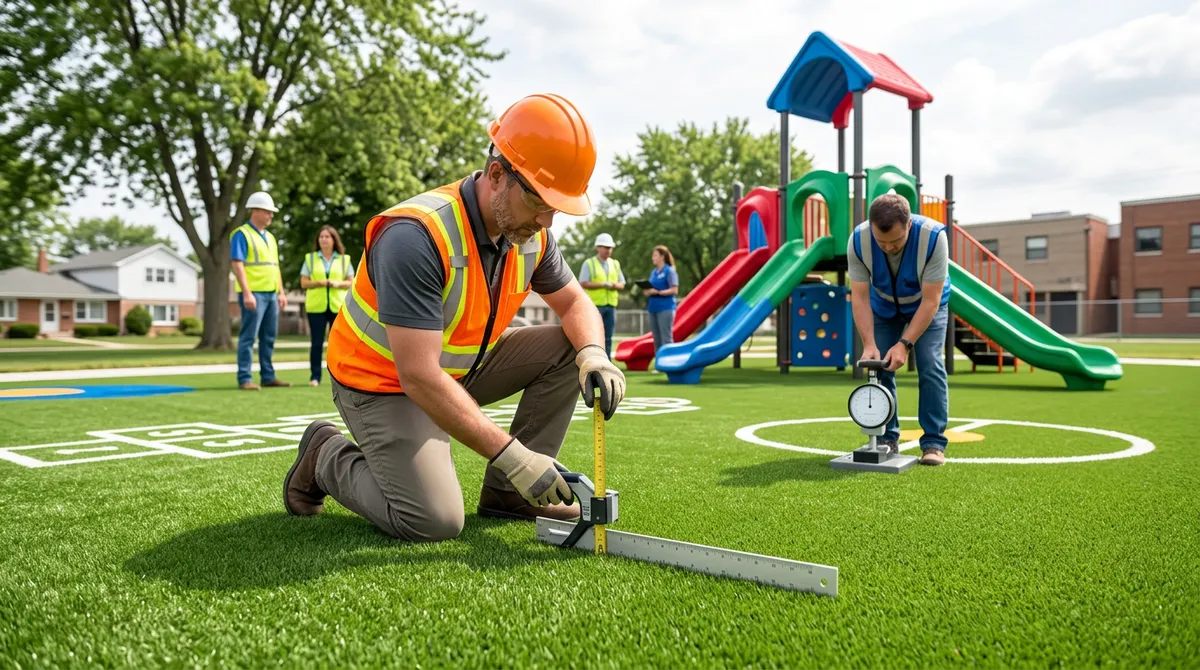
- Site assessment — Measure the area, evaluate drainage, and assess existing ground conditions
- Excavation — Remove existing grass, soil, or old surfacing to the required depth
- Base preparation — Install a compacted gravel base to promote drainage and stability
- Foam pad installation — Lay the impact-absorbing foam padding layer to meet fall height requirements
- Turf installation — Secure the artificial turf system over the pad with proper seaming and edging
- Infill application — Apply rubber or sand infill as needed to support blade upright position and cushioning
- Final inspection — Check for safety compliance, smooth seams, and proper drainage before use
The whole process can typically be completed within a few days for an average-sized playground. Working with an experienced team like Serenity Landscape Group ensures every step meets safety and quality standards. Want to understand how we approach every project? Explore our design and installation process to see what working with us looks like from start to finish.
Playground Turf vs. Other Surfacing Options
How does turf stack up against the alternatives? Here’s a quick side-by-side comparison of the most common options for Chicago daycare playgrounds:
| Feature | Artificial Turf | Rubber Mulch | Engineered Wood Fiber |
|---|---|---|---|
| Fall Protection | Excellent (foam base) | Good | Good (when maintained) |
| ADA Compliance | Yes | Partial | Yes (when maintained) |
| Mud/Mess | None | Minimal | Moderate |
| Maintenance | Very Low | Low–Medium | High |
| Aesthetics | Excellent | Fair | Fair |
| All-Weather Use | Yes | Yes | Limited |
Rubber mulch made from 100% recycled materials also meets ASTM F1292 fall height and impact testing standards, and it remains a solid choice for budget-conscious facilities. But turf consistently wins on aesthetics, cleanliness, and long-term cost. For more information on playground surfacing safety, the ICPI Certified Installer network connects you with qualified professionals who follow industry best practices.
Tips for Maintaining Your Playground Turf
One of the greatest things about playground turf is how little it asks of you. Still, a small amount of regular care keeps it looking great and performing safely for years. Here are the best maintenance practices:
- Rinse with water weekly to remove dust, pollen, and light debris
- Use a mild, child-safe disinfectant to sanitize surfaces regularly
- Brush the turf blades with a stiff broom to keep them upright and springy
- Remove leaves, sticks, and larger debris promptly to prevent compaction
- Inspect seams and edges periodically for any lifting or separation
- Schedule a professional inspection annually to check padding integrity
With this simple routine, a quality turf installation can last 10 to 20 years — making it one of the most durable outdoor investments a childcare facility can make.
Is Playground Turf Right for Your Chicago Facility?
Daycare playground turf in Chicago is a smart, safe, and beautiful choice for childcare facilities of all sizes. It protects children, saves time, cuts long-term costs, and makes a strong visual impression on parents and visitors. From the freezing winters to the wet springs and hot summers, turf holds up beautifully through every season Chicago throws at it.
Whether you’re upgrading an existing play area or designing a brand-new childcare campus, artificial turf deserves serious consideration. Pair it with complementary landscape features like pavers for walkways and pathways, or add outdoor lighting for safe evening visibility — and you’ll have a truly exceptional outdoor environment.
Ready to explore playground turf for your Chicago daycare or childcare facility? Our team at Serenity Landscape Group is here to help you every step of the way. Request your free estimate today and let’s create a safe, beautiful outdoor space that kids and parents will love — or give us a call directly at (630) 359-5139 to talk through your project with our team.
FAQs
Q: What safety standards does daycare playground turf need to meet in Chicago?
A: Great question! In Illinois, playground turf should meet ASTM F1292 (impact attenuation) and ASTM F1951 (accessibility/ADA compliance) standards. A professionally installed turf system with a foam pad base is designed to meet these benchmarks, giving you peace of mind that your play area is both safe and compliant.
Q: How much does it cost to install artificial turf on a Chicago daycare playground?
A: Artificial turf systems typically run around $10–$15 per square foot installed, which is comparable to poured-in-place rubber. While the upfront cost is higher than wood chips, turf saves money over time because it requires virtually no maintenance, no replenishment, and no chemical treatments — making it a genuinely smart long-term investment.
Q: How do I keep playground turf clean and safe for young children?
A: Keeping your turf in great shape is wonderfully simple! Just rinse it weekly with water, use a mild child-safe disinfectant periodically, brush the blades upright with a stiff broom, and remove debris promptly. An annual professional inspection rounds out your maintenance routine and keeps the padding layer performing at its best.
Q: Is artificial turf safe for toddlers and infants at a daycare facility?
A: Absolutely — modern playground turf is specifically designed with young children in mind. Look for products that are lead-free, PFAS-safe, non-toxic, and hypoallergenic. Unlike natural grass, artificial turf requires no pesticides or herbicides, so there’s no chemical exposure risk during outdoor play time.
Q: How long does daycare playground turf last in Chicago’s climate?
A: With proper installation and basic care, quality playground turf typically lasts between 10 and 20 years — even through Chicago’s challenging freeze-thaw cycles, heavy rain, and hot summers. It drains quickly after rain and holds up beautifully through high-traffic daily use, making it one of the most durable playground surfaces available.