Key Takeaways
-
Artificial turf is ideal for rooftops because it’s lightweight, eliminating structural stress compared to natural grass or heavy materials, while requiring only occasional brushing and rinsing instead of constant watering, mowing, and fertilizing.
-
Professional rooftop turf installation requires critical steps including drainage layer installation and proper sub-base preparation to prevent water pooling and protect the building structure, especially important in Chicago’s significant rainfall.
-
High-quality rooftop artificial turf lasts 10-15+ years with minimal maintenance, making it more durable and cost-effective than natural grass, wooden decking, or other rooftop surface options for urban properties.
-
Chicago rooftop designs must account for wind exposure by securing turf edges tightly, choosing wind-resistant planters, and potentially adding pergolas or pavilion structures for wind protection and shade.
-
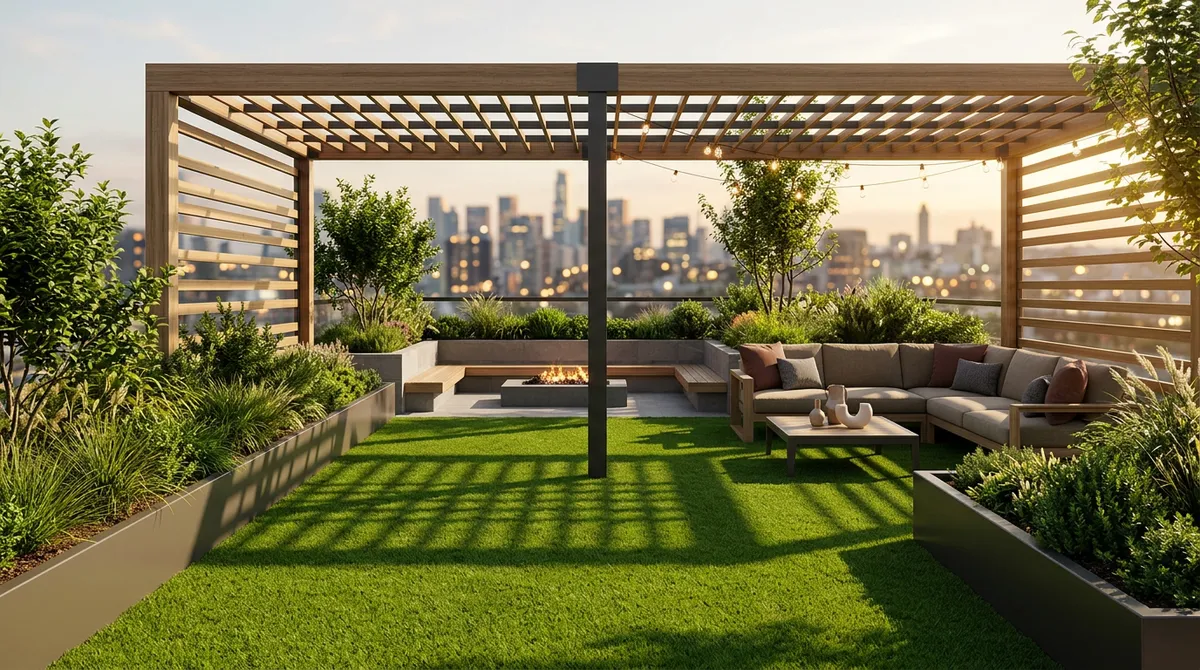
Rooftop turf can be enhanced with complementary elements like fire pits, pergolas, outdoor lighting, raised planters with live plants, and defined seating zones to create complete outdoor living spaces.
-
Artificial turf is pet-friendly, water-conserving, and provides insulation benefits that help regulate building temperatures—making it an environmentally sustainable choice for urban rooftop terraces in Chicago.
Imagine stepping out onto your rooftop and feeling soft, green grass beneath your feet — right in the heart of Chicago. Sounds pretty dreamy, right? Rooftop terrace turf design is making that dream a reality for homeowners, condo owners, and commercial property managers across the greater Chicago metropolitan area. Whether you have a small urban balcony or a sprawling rooftop deck, the right turf design can turn an empty, underused space into your favorite outdoor retreat.
The secret is artificial turf. Modern synthetic grass looks and feels incredibly natural, but it comes without the headaches of watering, mowing, or fighting off weeds. It’s also lightweight enough to work on rooftops without stressing the building’s structure. In 2026, rooftop green spaces are one of the hottest trends in urban landscaping — and for very good reason. Let’s explore how rooftop terrace turf design works, what it can look like, and why it might be exactly what your space needs.
Why Artificial Turf Works So Well on Rooftops
Not all green solutions are created equal when it comes to rooftops. Natural grass requires deep soil beds, heavy irrigation systems, and constant care. On a rooftop, that adds up to serious structural weight and expensive maintenance. Artificial turf, on the other hand, is designed to be lightweight and durable — making it the ideal choice for elevated outdoor spaces.
Here are the top reasons why artificial turf is a smart pick for rooftop terraces:
- Lightweight design — Synthetic grass puts minimal stress on rooftop structures compared to natural grass or heavy pavers.
- Low maintenance — No watering, mowing, or fertilizing needed. Just occasional brushing and rinsing.
- UV-resistant fibers — Quality artificial turf is built to handle direct sun exposure without fading or breaking down.
- Weed and insect resistant — Say goodbye to weeds popping up and insects nesting in your rooftop oasis.
- Pet-friendly surface — Great for pet areas, easy to clean, and soft enough for paws to enjoy.
- Water conservation — Rooftop turf helps conserve water, making it an environmentally smart option for urban settings.
- Insulation benefits — Turf adds a layer of temperature regulation, helping keep buildings cooler in summer.
These benefits make rooftop terrace turf design particularly attractive in Chicago, where summers can be hot and winters harsh. A well-installed synthetic lawn holds up through every season while keeping your rooftop looking lush year-round. You can learn more about how we approach artificial turf installation to get a sense of the quality and craftsmanship we bring to every project.
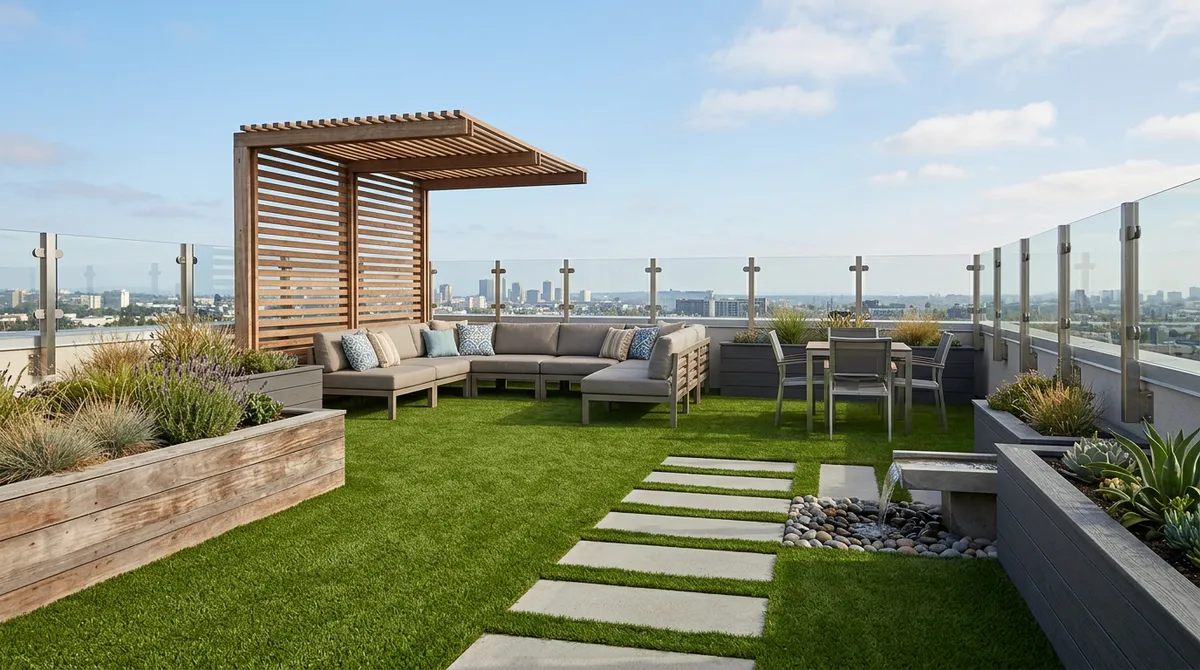
Popular Rooftop Terrace Turf Design Ideas
One of the most exciting parts of rooftop terrace turf design is the sheer variety of looks you can create. Your rooftop doesn’t have to look like everyone else’s. Here are some of the most popular design approaches we see in 2026:
Full Green Oasis
Cover the entire rooftop surface with lush artificial turf to create a seamless green escape. This look works beautifully for residential condos and apartment buildings where residents want a park-like feel without leaving the building. Pair it with comfortable seating and you have an instant outdoor living room in the sky.
Patterned Turf Layouts
Mix different turf textures, colors, or pile heights to create visual interest. Geometric patterns, stripes, or checkerboard designs add a modern, artistic touch to rooftop spaces. This approach works especially well for commercial properties that want a polished, branded aesthetic.
Turf with Raised Planters and Garden Beds
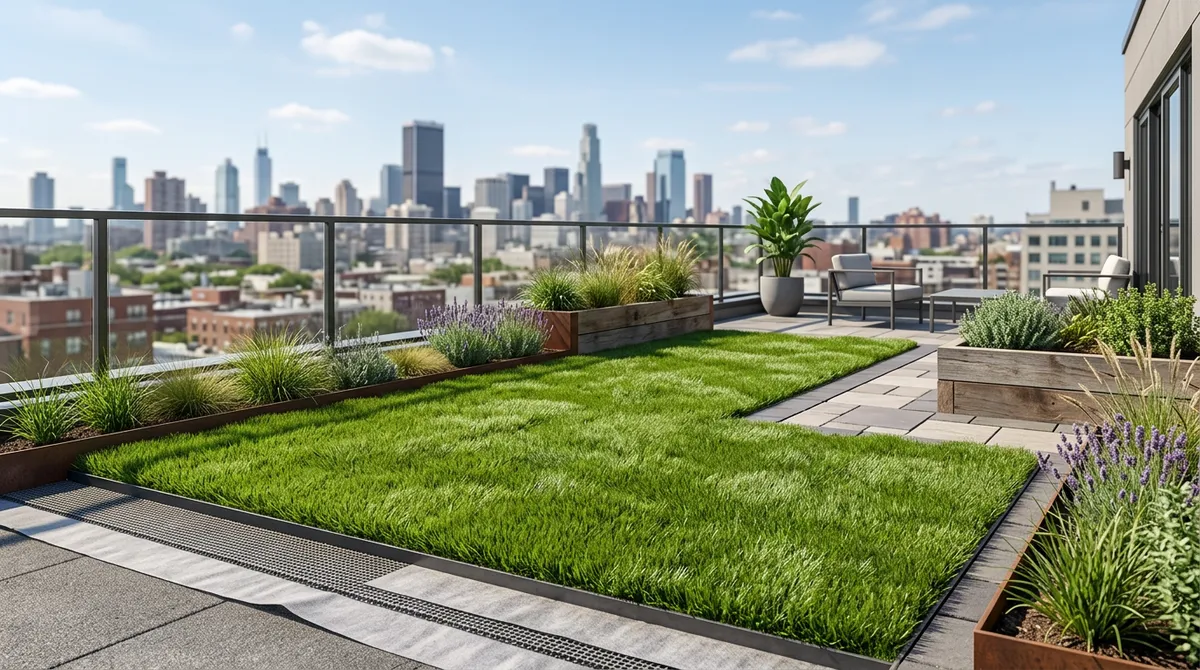
Combine the clean look of synthetic grass with the natural charm of live plants. Raised planters and vertical gardens placed around a turf base create a hybrid natural-synthetic look that feels incredibly rich and layered. The softscapes professionals at Serenity Landscape Group love pairing real greenery with turf for this elevated effect.
Putting Green or Recreation Zone
Why not make your rooftop functional and fun? A rooftop putting green is a fantastic upgrade for homeowners and corporate spaces alike. You can also set up bocce ball courts, cornhole areas, or casual game zones using specialty turf designed for recreational use.
Turf with Hardscape Elements
Combine artificial turf with pavers or decking to create defined zones on your rooftop — a grassy lounge area, a paved dining section, and a walking path all in one cohesive design. This multi-zone approach maximizes your rooftop’s functionality.
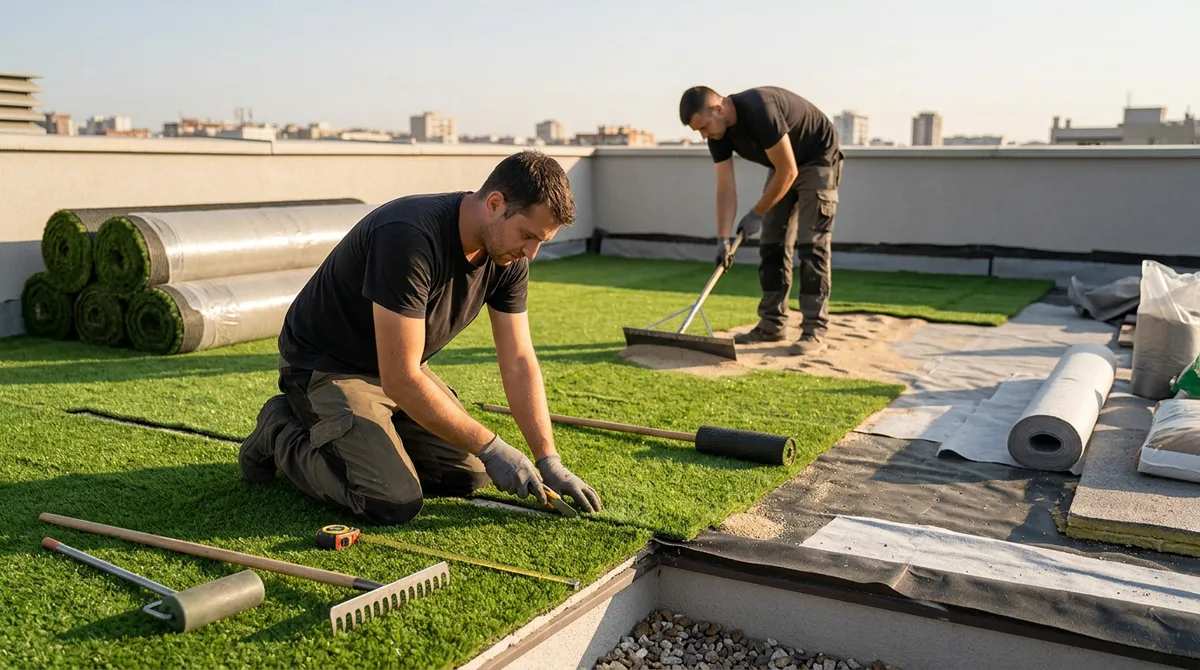
How Rooftop Turf Is Installed: A Step-by-Step Overview
Wondering what the installation process actually looks like? Here’s a clear, simple breakdown of how professional rooftop terrace turf design projects come together:
- Site assessment — A professional evaluates the rooftop’s structural load capacity, drainage, and surface condition before any work begins.
- Surface preparation — The existing rooftop surface is cleaned and any uneven areas are addressed to create a smooth, stable base.
- Drainage installation — Proper drainage is critical on rooftops. A drainage layer is installed to prevent water pooling and protect the building structure.
- Sub-base laying — A compacted sub-base, often using materials like crushed granite or limestone, is laid to provide a firm foundation for the turf.
- Turf roll-out and acclimation — The synthetic grass is rolled out and allowed to acclimate to the rooftop environment before final positioning.
- Securing and finishing — The turf is cut to fit the space, secured along edges, and infill material is added for stability and a natural feel.
- Final inspection — The installation is checked for seams, drainage, and overall appearance before the space is handed over to the client.
Working with an experienced team ensures each step is done correctly. You can explore our project process to see how we handle every stage of a landscape installation from start to finish.
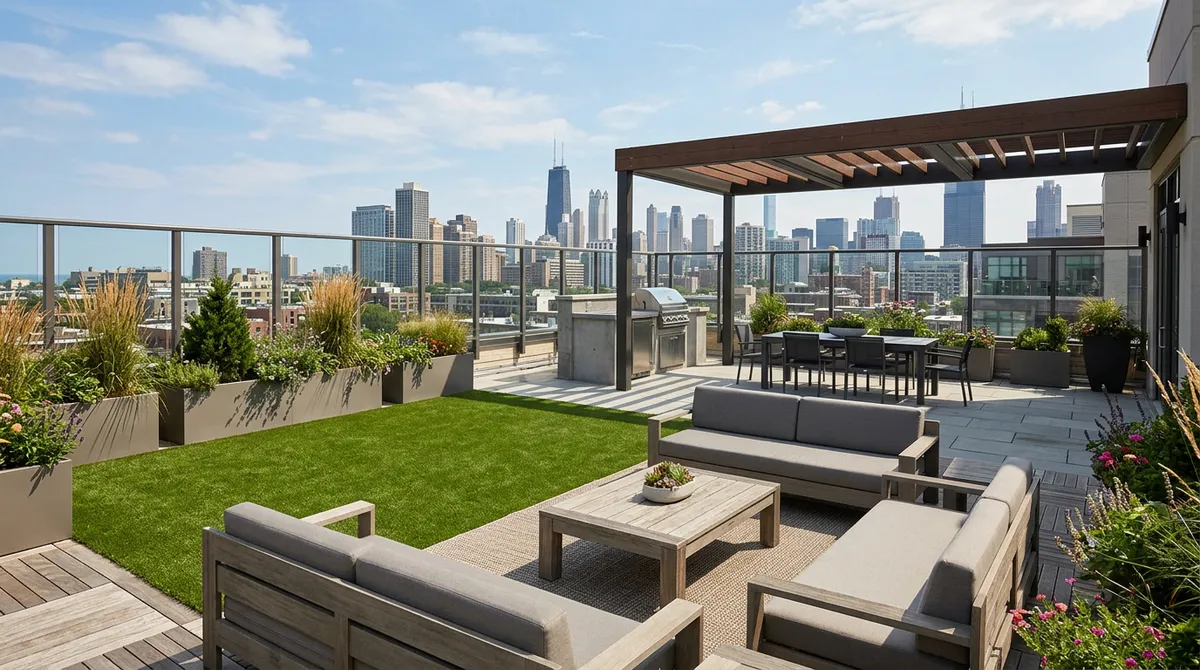
Design Considerations for Chicago Rooftop Spaces
Rooftop terrace turf design in Chicago comes with some unique considerations. The city’s climate, building regulations, and urban environment all play a role in planning the right design.
Structural and Weight Limits
Before installing anything on a rooftop, it’s essential to verify the building’s load capacity. Artificial turf is lightweight, but drainage layers, planters, and furniture all add weight. Always consult a structural engineer or work with a professional landscaping team familiar with rooftop builds.
Wind Exposure
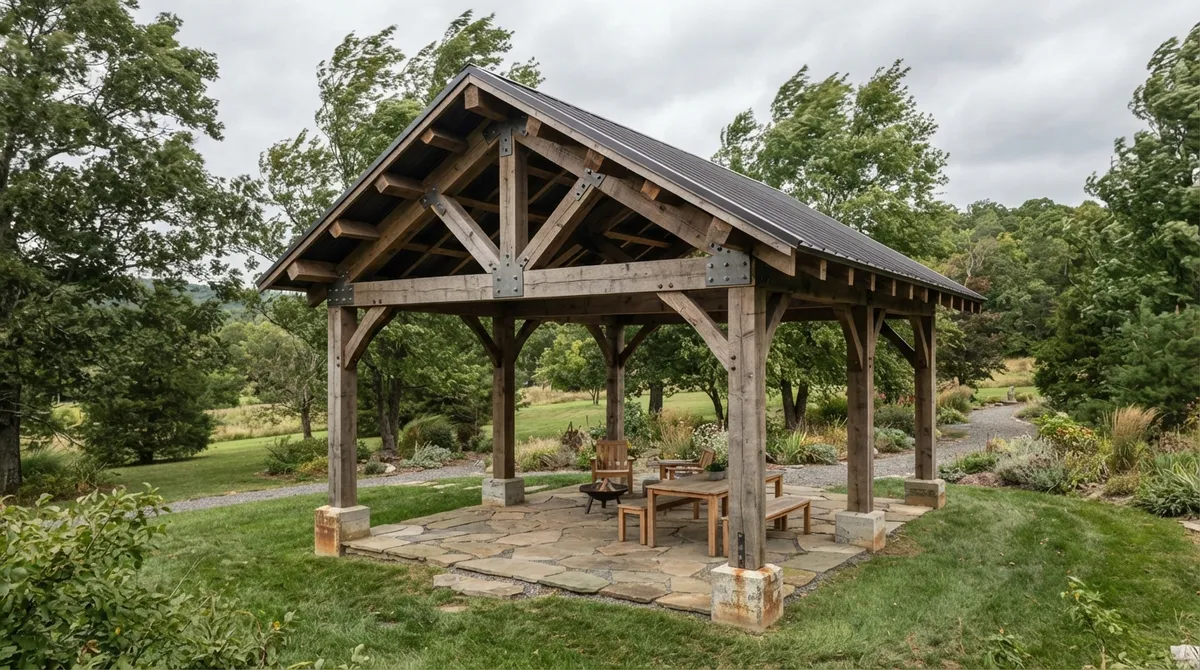
Chicago is famously windy. Rooftop designs should account for wind by securing turf edges tightly and choosing wind-resistant planters and furniture. Adding a pergola or pavilion structure can also help block wind while adding shade and visual appeal.
Drainage Requirements
Water management is one of the most critical factors in any rooftop terrace turf design. Chicago gets significant rainfall, and rooftops need to handle that water efficiently. A professional installation always includes proper drainage planning to protect the building and keep the turf looking great.
Lighting for Year-Round Use
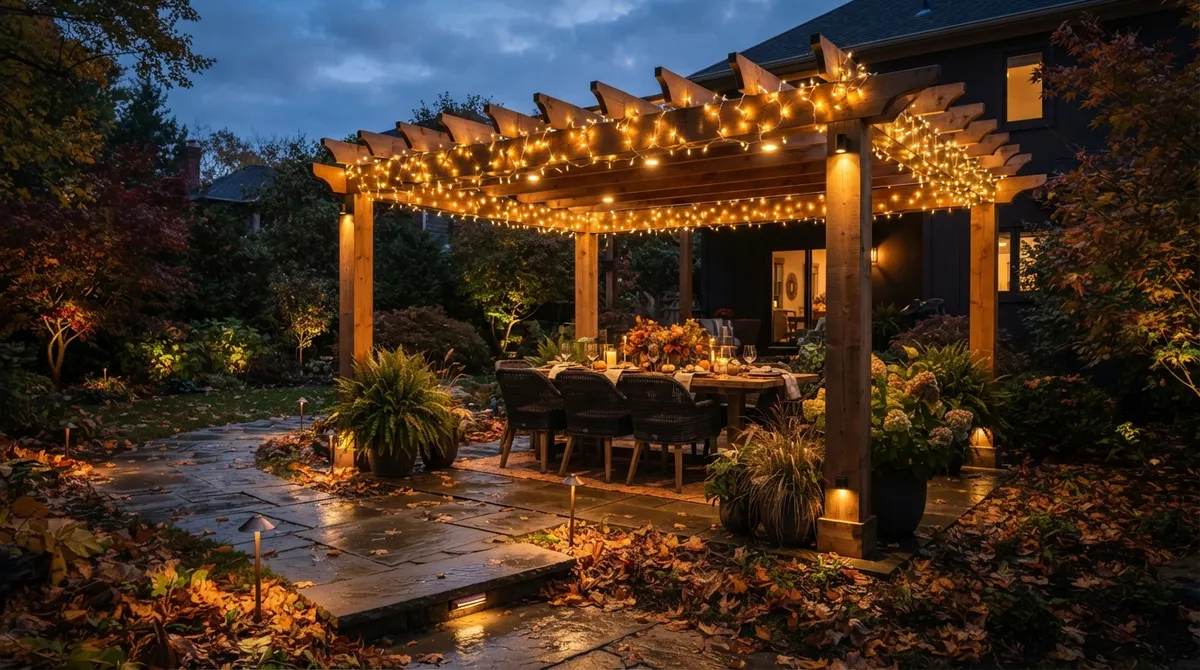
Adding rooftop lighting extends your outdoor living hours well into the evening. String lights, pathway lights, or built-in deck lighting make a rooftop terrace feel magical after dark — especially during Chicago’s beautiful summer evenings.
Comparing Rooftop Surface Options
Choosing the right rooftop surface is a big decision. Here’s a quick comparison to help you understand why artificial turf is often the top choice for rooftop terraces:
| Surface Type | Weight | Maintenance | Durability | Aesthetics |
|---|---|---|---|---|
| Artificial Turf | Lightweight | Very Low | High (10–15+ years) | Lush, green, versatile |
| Natural Grass | Very Heavy | Very High | Low (weather dependent) | Natural but inconsistent |
| Pavers/Tile | Heavy | Low | High | Clean, structured look |
| Wooden Decking | Moderate | Moderate | Medium (weather sensitive) | Warm, natural aesthetic |
| Concrete/Gravel | Heavy | Low | High | Industrial, minimal |
For urban spaces where weight, maintenance, and longevity all matter, artificial turf consistently comes out ahead. Industry organizations like Landscape Illinois recognize the growing role of sustainable, low-maintenance surfaces in modern urban landscaping projects.
Who Benefits Most from Rooftop Terrace Turf Design?
Rooftop turf isn’t a one-size-fits-all solution — but it does fit a surprisingly wide range of property types. Here’s a quick look at who benefits most:
- Urban condo owners — Create a private green escape without needing a backyard.
- Commercial property managers — Transform an unused rooftop into a tenant amenity or event space that boosts property value.
- Restaurant and hospitality businesses — Add a rooftop dining or lounge area that draws customers and elevates the brand experience.
- New home builders — Include rooftop terrace features in luxury developments to attract buyers seeking upscale outdoor living.
- Suburban homeowners with flat garage roofs — Convert an underused flat surface into a stylish outdoor lounge or garden.
No matter what type of property you have, a thoughtfully designed rooftop terrace adds real value — both financially and in terms of everyday enjoyment. Working with certified professionals who understand both the design and technical requirements is key. Look for installers with credentials from organizations such as the ICPI Certified Installer program to ensure your project is handled to the highest standard.
Maintenance Tips for Rooftop Artificial Turf
One of the biggest selling points of rooftop terrace turf design is how easy it is to maintain. Here’s what a simple, regular maintenance routine looks like:
- Brush the turf regularly — Use a stiff-bristled brush to keep fibers standing upright and looking full.
- Rinse periodically — A quick rinse with water removes dust, pollen, and light debris. Chicago’s rain often does this naturally!
- Remove leaves and debris promptly — Prevent organic material from building up, which can create odors or affect drainage.
- Check drainage points — Inspect drains seasonally to ensure they’re clear and working properly.
- Spot clean as needed — For pet areas or spills, use a mild soap and water solution to clean the affected area.
That’s really it! Compare that to natural grass, which requires mowing, watering, fertilizing, reseeding, and fighting weeds — and it’s easy to see why so many Chicago property owners are making the switch. For a deeper look at our full range of outdoor services, visit our gallery of our work to see what’s possible.
Enhancing Your Rooftop Terrace Beyond the Turf
Turf is just the beginning. The most stunning rooftop terraces layer in additional design elements to create a complete outdoor experience. Here are some great additions to consider:
- Fire pits — A rooftop fire pit extends your outdoor season well into Chicago’s cooler months and creates a cozy gathering spot.
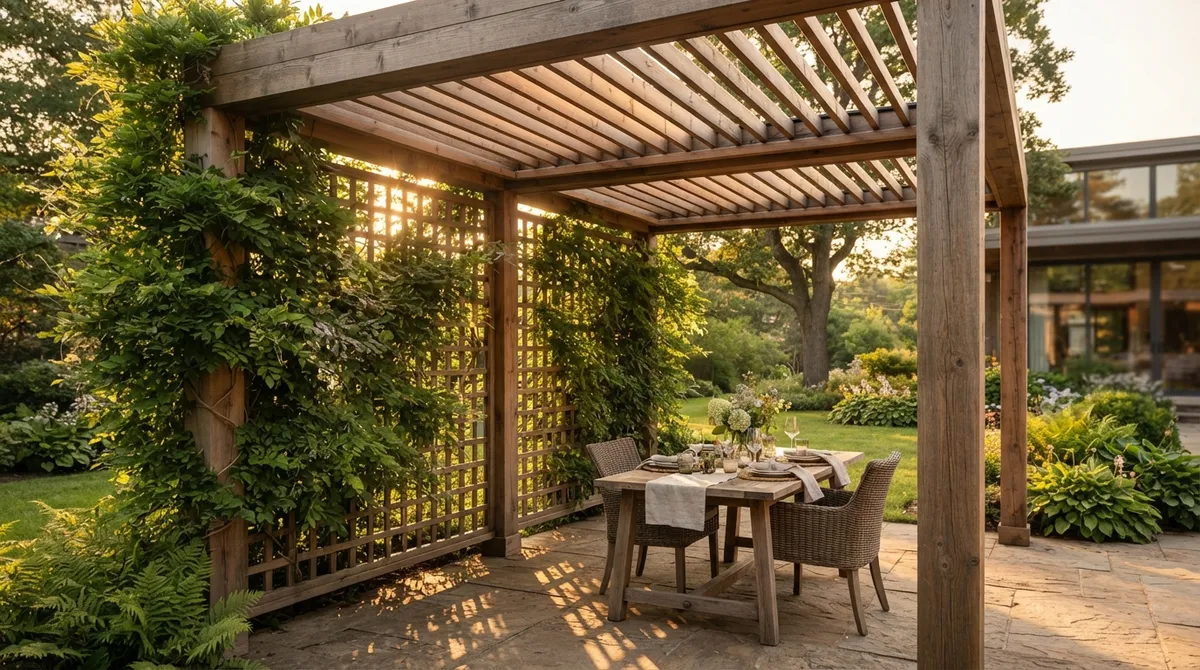
- Pergolas and shade structures — A beautiful pergola or pavilion adds shade, style, and a sense of enclosure to an open rooftop.
- Outdoor lighting — Strategic lighting transforms the space after sunset and makes it usable year-round.
- Planters and vertical gardens — Add real plants and flowers to complement the synthetic turf for a living, breathing rooftop garden.
- Comfortable seating and dining areas — Define zones with quality outdoor furniture to encourage relaxation and entertaining.
At Serenity Landscape Group, we specialize in designing and building complete rooftop and outdoor spaces that bring all these elements together in one cohesive plan. With over two decades of experience serving Chicago-area clients, we know how to make a rooftop terrace feel like a true extension of your home or business.
Ready to Transform Your Rooftop?
Rooftop terrace turf design is one of the most exciting ways to unlock the full potential of your property. Whether you’re envisioning a lush urban garden, a sleek modern lounge, or a fun recreation space, artificial turf provides the perfect green foundation for any rooftop vision. It’s low-maintenance, long-lasting, eco-friendly, and absolutely beautiful — especially when paired with the right hardscape and design elements.
If you’re curious about what a rooftop terrace transformation could look like for your specific space, we’d love to talk. Learn how we create landscape designs that truly transform spaces and bring outdoor dreams to life across Chicagoland. Don’t let that rooftop sit empty any longer — request your free estimate today and let’s start building your perfect rooftop retreat together.
FAQs
Q: What are the biggest benefits of artificial turf for a rooftop terrace?
A: Artificial turf is lightweight, low-maintenance, and incredibly durable — making it perfect for rooftop spaces where heavy materials and constant upkeep just aren’t practical. It also conserves water, resists weeds and insects, and stays green and lush through Chicago’s wildly unpredictable seasons. It’s honestly one of the best investments you can make for an urban outdoor space!
Q: Is rooftop terrace turf design suitable for pet owners?
A: Absolutely! Artificial turf is one of the most pet-friendly surfaces you can choose for a rooftop terrace. It’s soft on paws, easy to clean, and doesn’t get muddy or patchy the way natural grass does. Just rinse it down regularly and use a mild soap solution for any messes — it’s that simple.
Q: How long does rooftop artificial turf typically last?
A: High-quality artificial turf installed by professionals can last 10 to 15 years or more, even in tough urban environments like Chicago. With minimal maintenance — regular brushing, rinsing, and keeping drains clear — your rooftop turf will look fantastic for many years to come.
Q: Can rooftop turf really help with building insulation and energy efficiency?
A: Yes, it can! Artificial turf adds a natural insulating layer to your rooftop, which helps moderate temperatures inside the building — keeping things cooler in summer and reducing heat loss in cooler months. It’s a small but meaningful contribution to your building’s overall energy performance.
Q: What plants pair well with artificial turf on a rooftop terrace?
A: Rooftop turf looks stunning when combined with raised planters, ornamental grasses, flowering perennials, and vertical gardens. In Chicago, hardy plants like ornamental sedums, lavender, and native wildflowers work beautifully alongside synthetic grass, creating a lush hybrid look that feels both natural and polished.