Key Takeaways
-
Professional pergola installation costs average $4,240 ($30-$60 per sq ft), with most projects between $2,103-$6,382; budget for site prep, footings, permits, and finishing rather than just materials when planning.
-
Choose materials based on Chicago's climate: cedar or redwood for natural aesthetics with moderate maintenance, aluminum or vinyl for durability and low upkeep, or pressure-treated wood for budget-friendly options.
-
Verify permit requirements with your local building department before installation, as rules vary by municipality and structure size; freestanding designs often bypass restrictions better than attached pergolas.
-
Decide between freestanding (simpler, flexible, ideal for gardens/pools) and attached designs (seamless home extension, requires careful waterproofing) based on your space, HOA rules, and long-term flexibility needs.
So you’ve been dreaming about a pergola. Maybe you picture morning coffee under climbing vines, or summer dinners with string lights glowing overhead. That’s a wonderful thing to want, and honestly, pergola installation is one of the most rewarding upgrades you can make to your outdoor space. But before you get too far into the daydream, there are some real facts worth knowing first.
Whether you’re a homeowner in the Chicago suburbs juggling HOA rules, a condo owner working with a tiny rooftop, or a business owner hoping to create a welcoming patio for customers, pergola installation looks a little different for everyone. That’s exactly why we put together this guide. We’ll walk through costs, materials, permits, and placement, all explained in plain language so you can make a confident decision.
At Serenity Landscape Group, we’ve spent over two decades helping Chicagoland homeowners and businesses build outdoor spaces they genuinely love. Pergolas are one of our favorite projects because they change the whole feel of a yard or patio. Let’s dig into the five things you really need to know before you start.
1. Know What Pergola Installation Actually Involves
A pergola is an outdoor structure with posts and an open (or partly open) roof made of beams and rafters. It’s not a fully enclosed room, but it creates definition, shade, and a sense of “outdoor room” that a bare patio just can’t match.
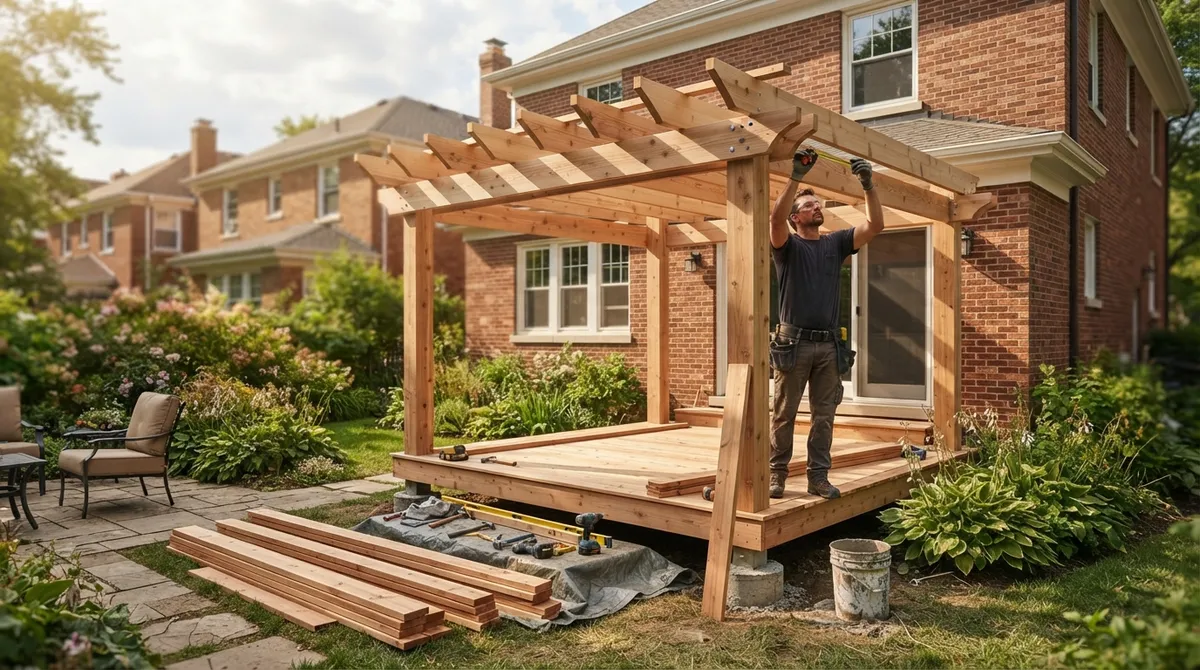
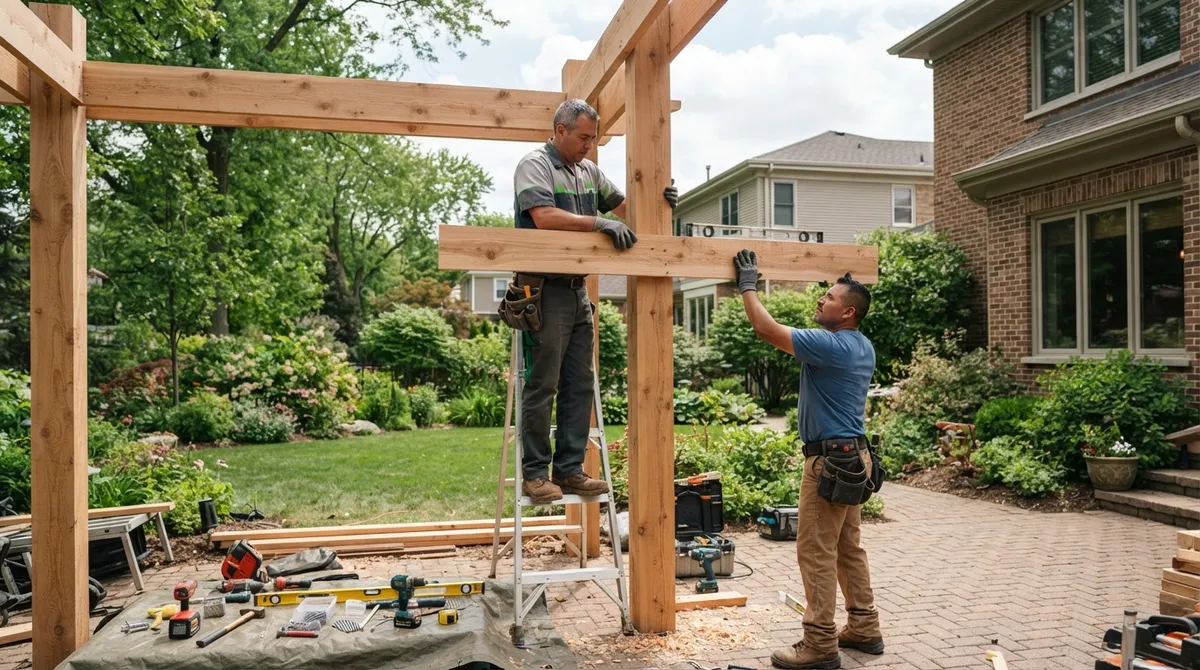
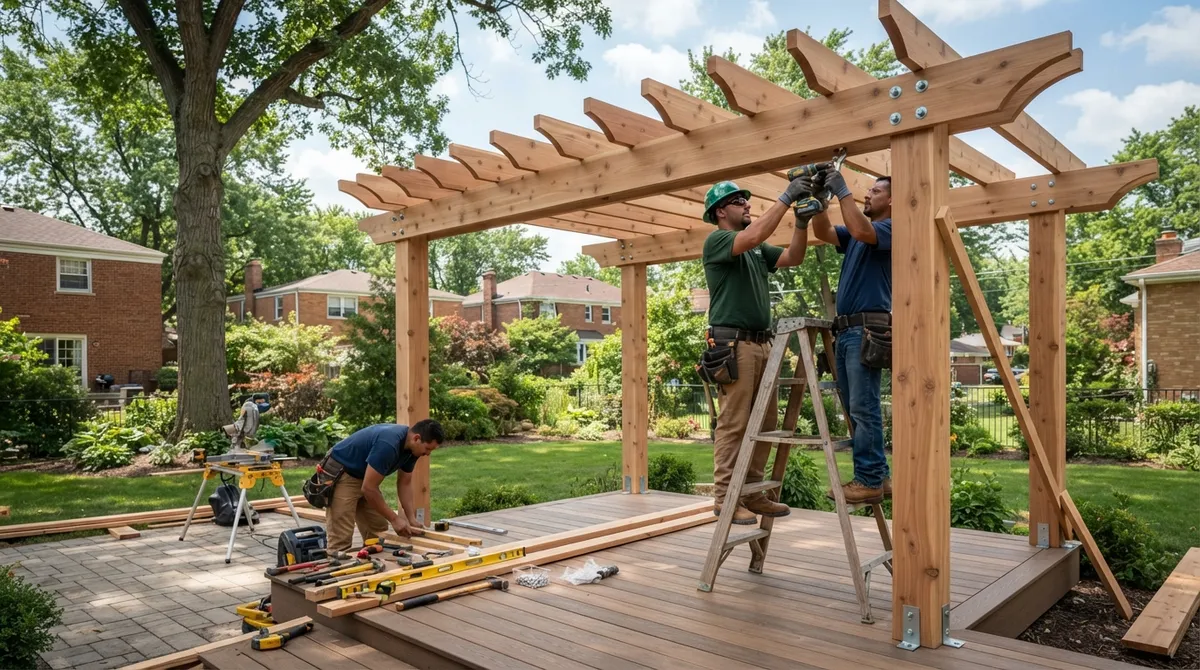
Professional pergola installation usually includes several steps, not just hammering some posts into the ground. Here’s what a typical project looks like:
- Site assessment to check soil, drainage, and sun exposure
- Design and layout planning based on how you’ll use the space
- Utility checks to avoid hitting buried lines
- Material selection suited to your budget and style
- Footings and structural assembly for stability
- Anchoring to the ground, a deck, or your home
- Finishing touches like staining, sealing, or trim work
Many homeowners also add lighting, ceiling fans, privacy screens, curtains, or climbing plants once the frame is up. Some even opt for retractable or louvered roof panels that open and close depending on the weather. If you want to see how these features come together, our gallery of our work shows real pergola projects across the Chicago area.
2. Understand the Real Cost of Pergola Installation
Let’s talk numbers, because this is usually the first question everyone asks. According to Angi’s 2025/2026 cost data, the average professionally built pergola costs around $4,240, with most projects falling between $2,103 and $6,382. Per square foot, installed pricing typically runs $30 to $60, so a common 100-square-foot pergola often lands somewhere between $3,000 and $6,000.
Of course, your final price depends heavily on size, material, and extras. Here’s a quick breakdown to help you budget:
| Project Type | Typical Cost Range |
|---|---|
| Basic DIY kit (materials only) | $1,000 – $4,000 |
| Standard professional install | $2,000 – $10,000 |
| Custom or premium-material build | $10,000 – $15,000+ |
| Large motorized louvered roof system | $15,000 – $25,000+ |
DIY kits look tempting on the price tag, but keep in mind those figures don’t include site prep, footings, finishing, or permit fees. Pressure-treated wood tends to be the most budget-friendly material, often around $15 to $30 per square foot installed, while aluminum and motorized systems cost quite a bit more. If you want a clear, itemized quote for your yard, it’s easy to get a free estimate from our team before you commit to anything.
What Affects Your Final Price
A few factors tend to push costs up or down more than anything else:
- Size of the structure (bigger footprint, higher cost)
- Material choice (wood versus aluminum versus vinyl)
- Attached versus freestanding design
- Roof type (open lattice, solid, retractable, or louvered)
- Site access and how much prep work your yard needs
- Add-ons like lighting, fans, or privacy screens
3. Pick the Right Material for Chicago’s Climate
Chicago weather is no joke. We get humid summers, icy winters, and everything in between, so material choice really matters here. Here’s how the common options stack up:
| Material | Pros | Cons |
|---|---|---|
| Pressure-treated wood | Affordable, classic look | Needs regular staining/sealing |
| Cedar or redwood | Naturally rot-resistant, beautiful grain | Higher cost, still needs upkeep |
| Vinyl or composite | Low maintenance, resists rot | Less traditional appearance |
| Aluminum | Extremely durable, minimal upkeep | Higher upfront cost |
If you love the warm, natural look of wood but don’t want to spend every spring re-staining it, cedar is a nice middle ground. If low maintenance is your top priority (we hear this a lot from busy suburban homeowners and property managers alike), aluminum or vinyl might be worth the extra investment upfront.
4. Freestanding or Attached? Choose Based on Your Space
This decision matters more than people expect. Freestanding pergolas are generally simpler and faster to install since they don’t connect to your home’s structure. Attached pergolas, on the other hand, require careful ledger board installation, flashing, and waterproofing so they don’t cause leaks or damage to your siding.
Here’s a simple way to think about it:
- Choose freestanding if you want it over a garden area, pool deck, or fire pit zone away from the house
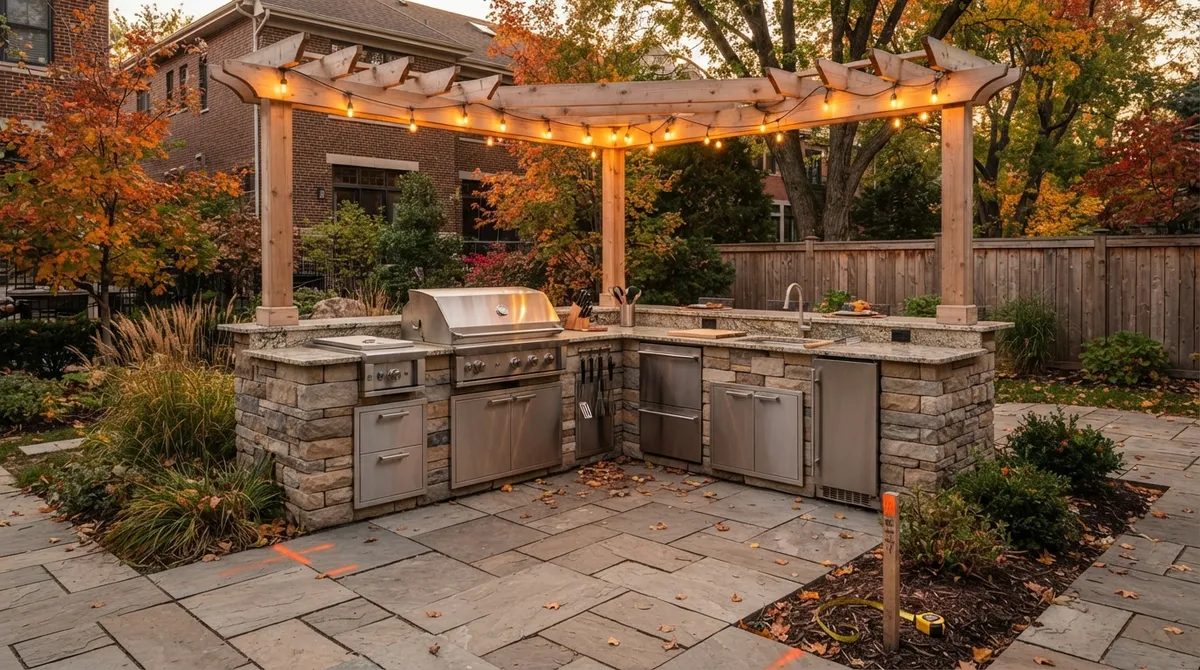
- Choose attached if you want it right off your patio doors or over an outdoor kitchen
- Choose freestanding if you’re renting or want more flexibility to move it later
- Choose attached if you want a seamless extension of your existing living space
For condo owners with rooftop or balcony space, freestanding designs are often the only realistic option due to structural and HOA restrictions. For suburban homeowners with more room to work with, either style can work beautifully when paired with pavers or a stone patio underneath.
5. Don’t Skip the Permit and Placement Planning
This is the step people love to forget, and it can cause real headaches later. Permit rules vary a lot by municipality, and whether you need one depends on things like size, attachment method, electrical work, and whether you’re in an HOA community.
According to recent cost guides, permit fees typically range from $50 to $500, though the actual amount depends entirely on your local building department. Some guides mention 120 to 200 square feet as a common exemption threshold for small freestanding pergolas, but this isn’t universal, so always check with your local office directly. For general guidance on regional landscaping standards, Landscape Illinois is a solid resource for homeowners in our area.
Steps to Get Your Placement Right
- Check sun orientation so you get shade when you actually want it
- Consider prevailing wind direction for comfort and structural stability
- Look at drainage patterns to avoid water pooling under the structure
- Mark underground utilities before any digging begins
- Check property line setbacks required by your municipality
- Coordinate placement with existing features like retaining walls or planting beds
- Confirm HOA guidelines if you live in a managed community
A good contractor will also hold proper licensing and insurance, and should belong to respected trade organizations. Look for professionals connected to groups like the ICPI Certified Installer network, which signals a real commitment to quality hardscape work.
Bringing It All Together With Complementary Features
A pergola rarely stands alone in a well-designed yard. Many of our clients pair theirs with fire pits for cozy evenings, lighting and sound systems for entertaining, or lush softscapes for a layered, natural feel. Commercial property managers often request pergolas as part of a larger plan involving commercial lawn maintenance to keep everything looking sharp year-round.
If you’re a small business owner in the suburbs, a pergola over your patio seating area can transform the customer experience and boost curb appeal at the same time. New home builders in Aurora and nearby communities also use pergolas as a turnkey feature that helps homes stand out to buyers. Whatever your goals, our process is built to walk you through every decision, from first sketch to final walkthrough.
Quick Recap: Questions to Ask Before You Hire
Before signing any contract, make sure your contractor provides:
- A written scope of work with clear pricing
- Drawings or a detailed layout of the design
- Material specifications in writing
- Footing and anchoring details specific to your soil
- Permit responsibilities clearly stated
- Proof of licensing, insurance, and relevant references
Taking the time to ask these questions upfront saves you from surprises later. It’s one of the best ways to protect your investment and your peace of mind.
Ready to Start Your Pergola Project?
Pergola installation is one of those upgrades that pays you back every single time you step outside. It adds shade, style, and a sense of “arrival” to your outdoor space, whether that’s a backyard, rooftop, or commercial patio. With the right material, smart placement, and a contractor who knows Chicago’s climate and permit rules, your new pergola can become the heart of your outdoor living for years to come.
We’d love to help bring your vision to life. Feel free to get a free estimate from our team, or simply call us at (630) 359-5139 to chat about your ideas. We can’t wait to help you create the outdoor space you’ve been dreaming about.
FAQs
Q: How much does pergola installation cost?
A: On average, professionally built pergolas cost around $4,240, with most projects landing between $2,103 and $6,382. Your final price depends on size, material, and any extras like lighting or a motorized roof, so getting a personalized quote is always the best way to know exactly what to expect for your yard.
Q: Do I need a permit to install a pergola?
A: It really depends on where you live and how big or attached your pergola is. Many municipalities require permits for attached structures or larger builds, so it’s worth a quick call to your local building department before you get started, just to save yourself any headaches later.
Q: What is the best material for a residential pergola?
A: It honestly comes down to your priorities. Wood gives you that classic, cozy look but needs regular staining, while aluminum and vinyl are lower maintenance and hold up beautifully through Chicago winters. Many of our clients love cedar because it strikes a nice balance between beauty and durability.
Q: Should I choose an attached or freestanding pergola?
A: Freestanding pergolas are simpler to install and work great for garden areas or pool decks, while attached ones create a seamless extension of your patio or outdoor kitchen. Think about how you’ll use the space and whether you want flexibility down the road, since that usually points you in the right direction.
Q: How long does professional pergola installation take?
A: Most standard pergola installations take anywhere from a few days to about two weeks, depending on size, material, and site conditions. Custom builds with motorized roofs or extensive add-ons can take longer, but a good contractor will always give you a realistic timeline upfront.