Key Takeaways
-
Proper site preparation and base compaction are more critical to paver longevity than the pavers themselves; industry standards require compacting to at least 98% Standard Proctor density to prevent settling.
-
Concrete pavers offer easier repairability and consistent sizing for predictable installation, while natural stone provides unique aesthetics but requires more experienced installation and costs more upfront.
-
Use ASTM C33-graded coarse sand for the bedding layer (not masonry sand or stone dust) and fill joints with polymeric sand, then compact the surface at least twice to lock everything together.
-
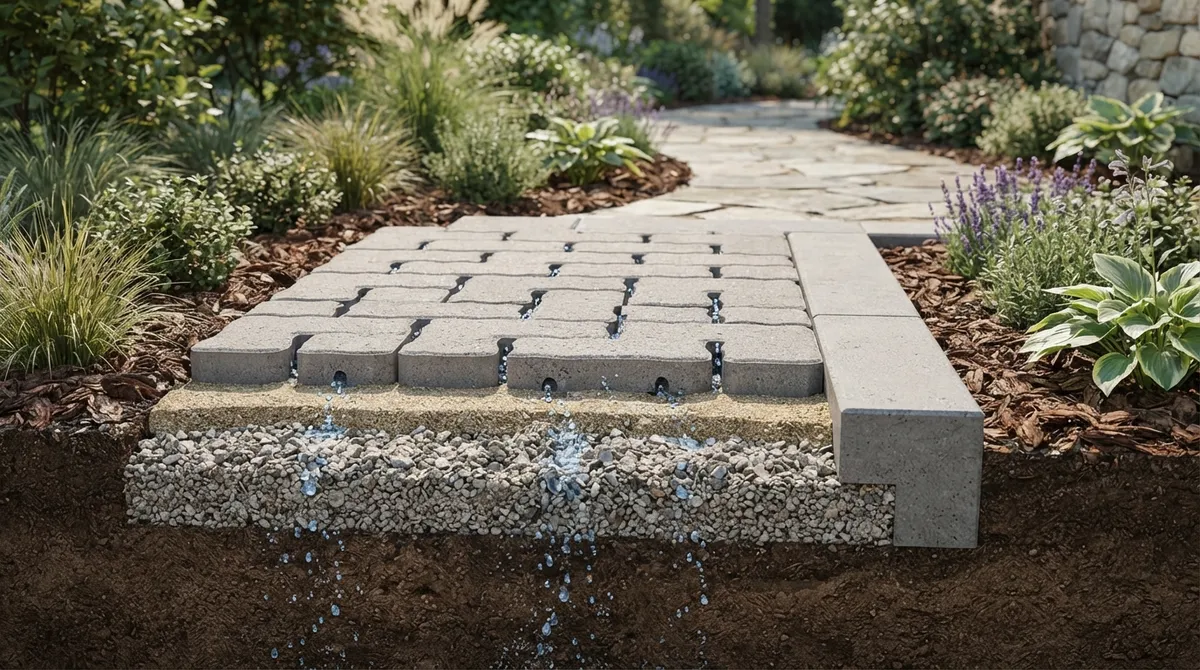
Permeable paver systems with open-graded aggregate bases solve stormwater management issues by allowing water infiltration of 100+ inches per hour, making them ideal for commercial properties and drainage-prone yards.
-
Individual paver units can be lifted and replaced without disrupting the entire surface, unlike poured concrete; maintain pavers by sweeping regularly, pulling weeds promptly, and replenishing joint sand every couple of years.
-
Installation costs vary significantly based on material choice, project size, site conditions (poor soil/drainage), design complexity, and base depth requirements, so get a site-specific estimate rather than relying on general pricing.
So you’re finally ready for that patio, walkway, or driveway you’ve been dreaming about. Good for you! But now you’re staring down a big question: concrete pavers or natural stone? Don’t worry, you’re not alone in this. It’s one of the most common questions we hear at Serenity Landscape Group, and honestly, there’s no single right answer for everyone. It really depends on your budget, your style, and how you plan to use the space.
Here’s the good news. Whichever material you choose, successful paver installation comes down to the same core principles: smart planning, solid site prep, and skilled hands doing the work. We’ve spent over two decades installing patios, driveways, and walkways across the greater Chicago area, and we’ve learned a thing or two about what makes a paver surface last for decades instead of years.
In this guide, we’ll walk you through the real differences between concrete and natural stone pavers, break down what goes into a quality installation, and help you figure out which option fits your outdoor space best. Grab a coffee and let’s dig in together.
Concrete Pavers vs. Natural Stone: The Real Comparison
Let’s get right into it. Both materials can create gorgeous outdoor spaces, but they behave differently once they’re in the ground.
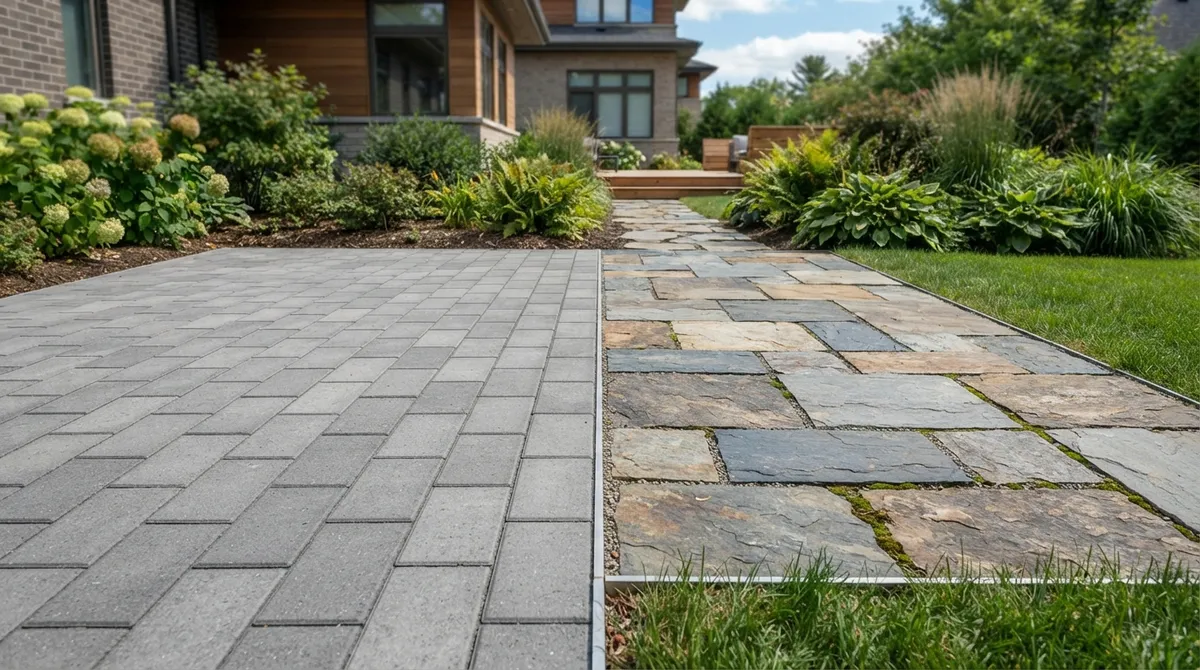
Interlocking concrete pavers are the workhorse of the paving world. They’re manufactured to precise, consistent dimensions, which makes installation more predictable and repairs much simpler down the road. If one paver cracks or a section settles unevenly, your contractor can usually pop it out and replace it without disturbing the rest of your patio. Concrete pavers also come in a huge range of colors, textures, and patterns, so you’re never short on design options.
Natural stone, like granite or sandstone, brings a one-of-a-kind, organic beauty that’s hard to replicate. Every piece is unique, which some homeowners absolutely love. The tradeoff? Natural stone tends to cost more, and because pieces vary in thickness and shape, installation can take longer and requires a more experienced hand.
| Feature | Concrete Pavers | Natural Stone |
|---|---|---|
| Cost | More budget-friendly | Higher upfront investment |
| Consistency | Uniform size and shape | Unique, varied appearance |
| Repairability | Easy to replace individual units | Possible, but trickier to match |
| Design options | Wide range of colors and patterns | Natural, timeless look |
| Durability | Excellent with proper base | Excellent, very long-lasting |
There’s also a third option worth mentioning: clay brick and porcelain pavers, each with their own charm and performance traits. We break down clay brick benefits in more detail in our guide on clay brick pavers, which is worth a look if you love that classic, warm aesthetic.
Why Site Prep Matters More Than the Pavers Themselves
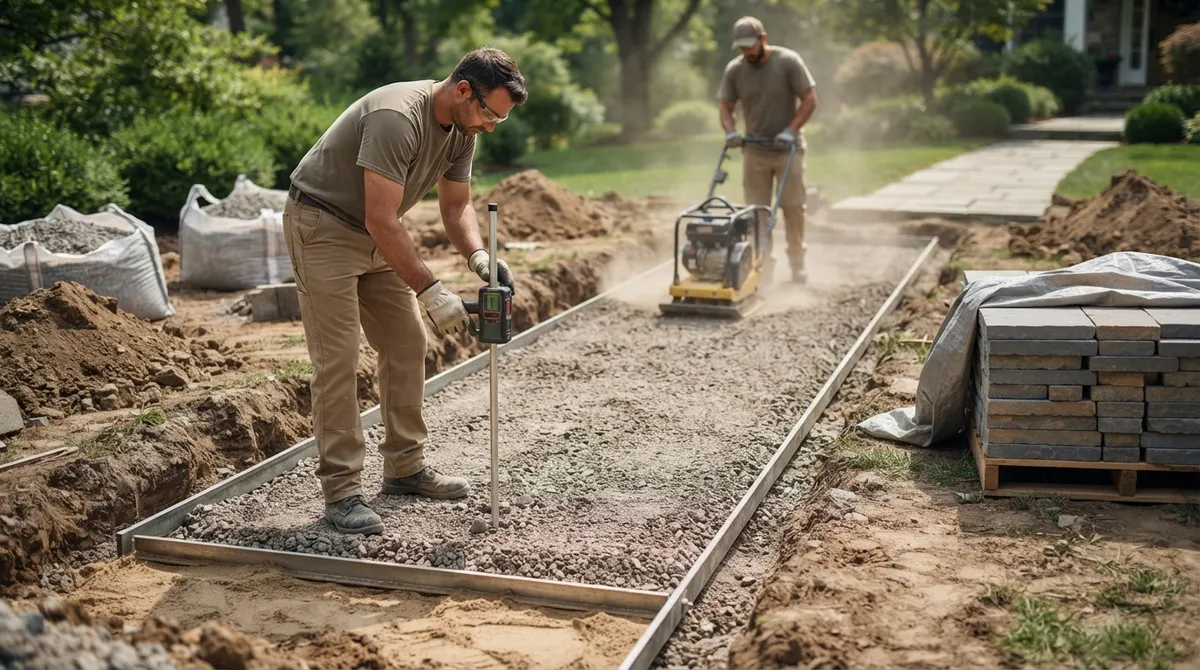
Here’s a little secret from the industry: the pavers themselves aren’t what makes or breaks your project. It’s everything underneath them. Even the most beautiful natural stone will heave, sink, or shift if the base isn’t built correctly. This is why choosing an experienced ICPI Certified Installer matters so much.
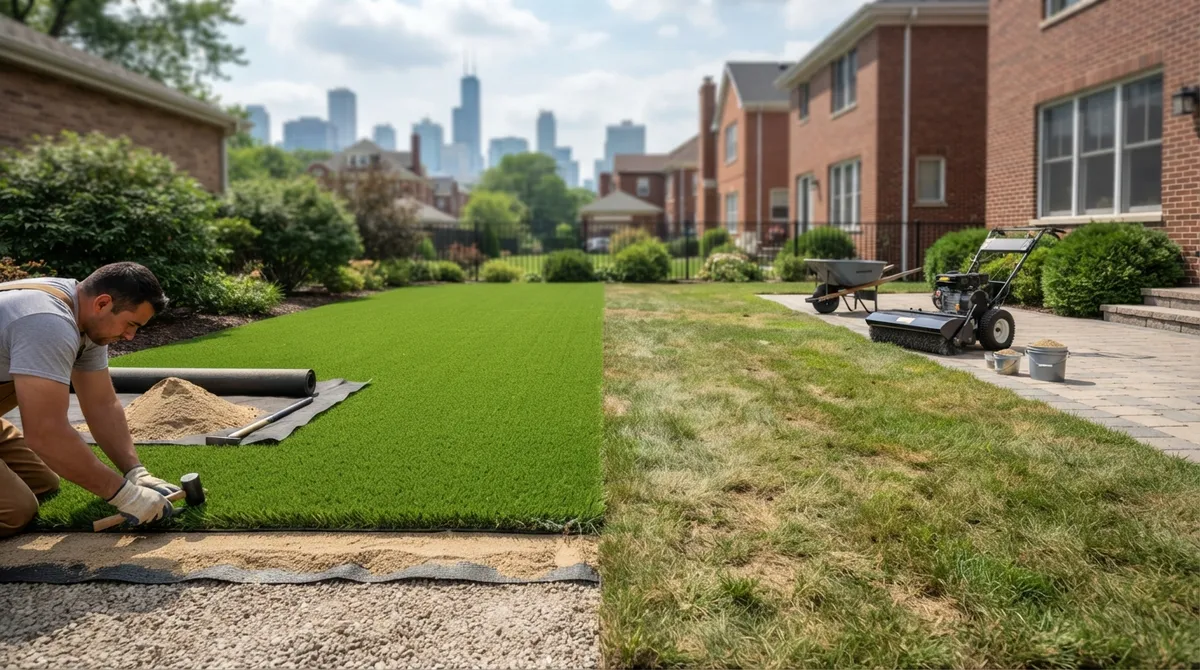
A proper installation follows a clear sequence of steps. Skipping any of these can lead to headaches later.
- Layout and design. Your contractor maps out the space, considering drainage, traffic patterns, and how the area connects to your home or business.
- Excavation. The soil is dug out to the proper depth, which depends on your soil type, climate, and whether the area will handle foot traffic or vehicles.
- Subgrade compaction. The exposed soil gets compacted to create a stable foundation before any base material goes down.
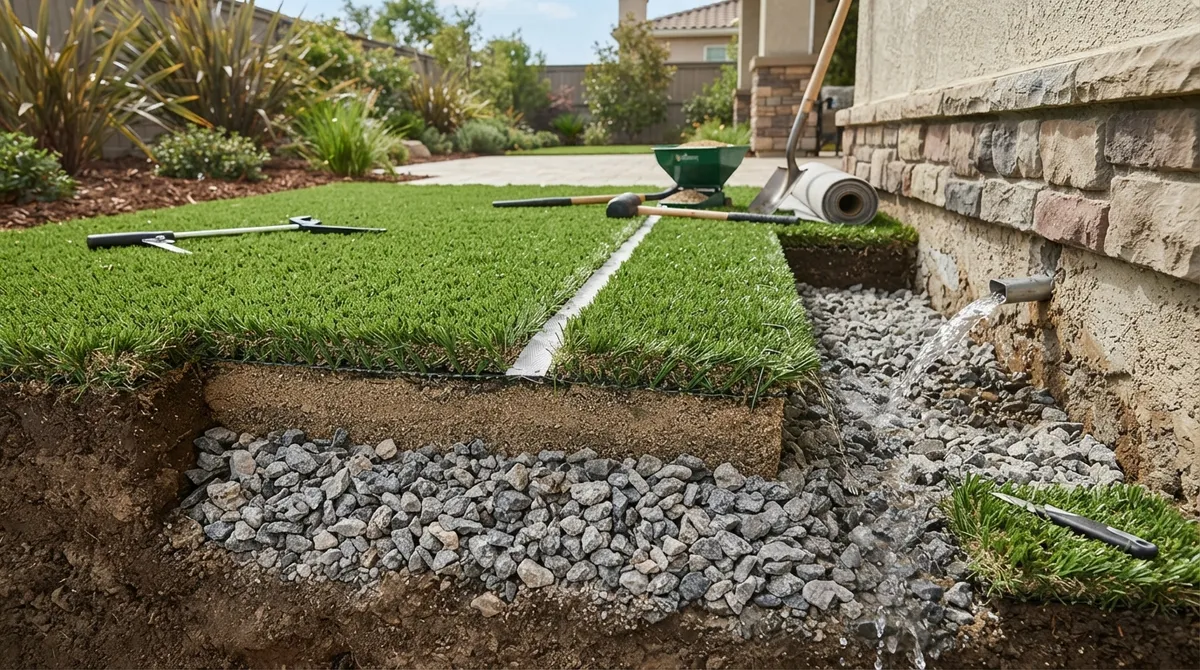
- Aggregate base installation. A layer of crushed stone is added and compacted in lifts, giving the whole system strength and helping water drain properly.
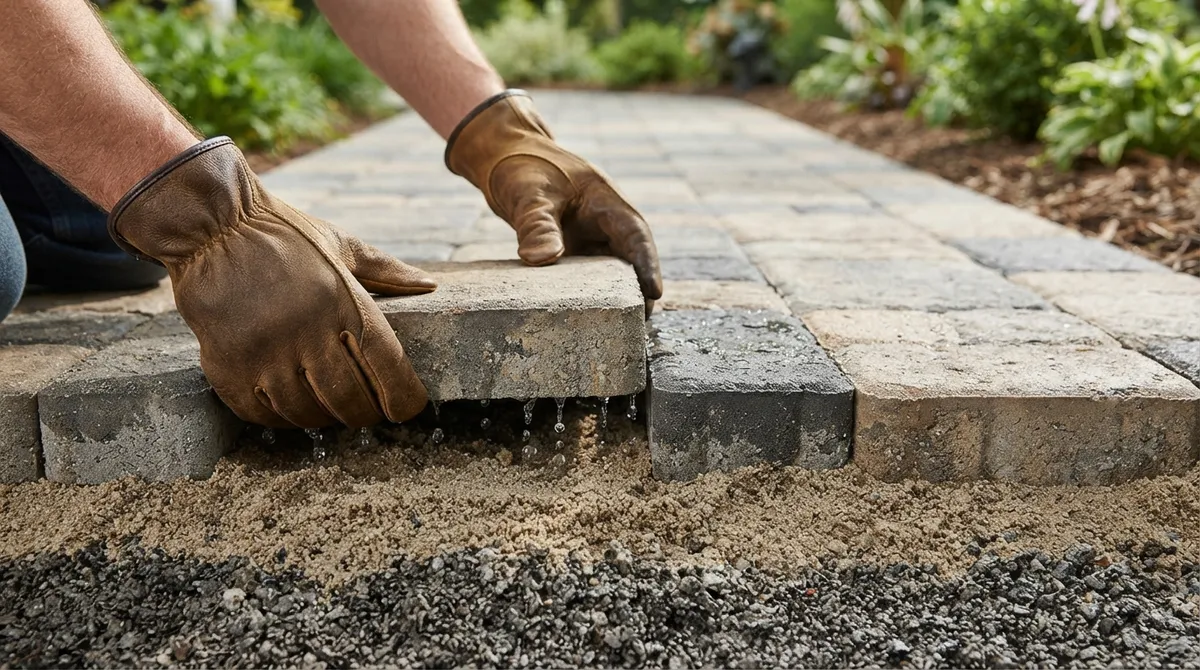
- Bedding layer. A nominal 2-inch layer of coarse, ASTM C33-graded sand is spread evenly. This is not the place to cut corners with masonry sand or stone dust, since those materials drain poorly.
- Paver placement. Pavers are set in the chosen pattern, with attention to consistent joint spacing, usually about 1/4 to 1/2 inch wide.
- Edge restraints. These hold everything in place so pavers don’t shift or spread apart over time.
- Joint filling and compaction. Sand or polymeric sand fills the joints, and the whole surface gets compacted at least twice more to lock everything together.
Industry guidance from CMHA and ICPI recommends compacting pedestrian areas and driveways to at least 98% Standard Proctor density. That might sound technical, but it simply means the ground under your patio needs to be packed firm enough to resist settling for years to come. Our own process follows these same industry best practices on every project, big or small.
Standard Pavers vs. Permeable Pavers: Which One Fits Your Property?
If you’ve dealt with stormwater pooling in your yard or you’re managing a commercial property with strict drainage requirements, permeable pavers might be worth considering.
Standard pavers use a solid sand bedding layer and send water off to the side, directed toward drains or lower ground. Permeable paver systems work differently. They use open joints and a special open-graded aggregate base, often washed ASTM No. 8 stone, that lets water soak straight through the surface and into the ground below. This can dramatically reduce runoff, which is a big deal for commercial properties trying to meet local stormwater rules.
According to technical guidance referenced by industry groups, permeable interlocking concrete pavement should reach a minimum infiltration rate of 100 inches per hour at final inspection. That’s a lot of water moving through in a short time. Of course, actual requirements vary depending on your local jurisdiction and site conditions, so it’s smart to work with a contractor familiar with Landscape Illinois standards and Chicago-area drainage codes.
- Permeable pavers work great for driveways, parking areas, and patios in yards with drainage struggles.
- Standard pavers are often simpler and more affordable when drainage isn’t a major concern.
- Commercial properties frequently choose permeable systems to meet stormwater management regulations.
- Both systems can use the same attractive surface materials, so you don’t have to sacrifice style for function.
What Affects Paver Installation Cost?
We know cost is probably on your mind, and it’s a fair question. The honest answer is that it depends on quite a few factors, so there’s no one-size-fits-all number.
Here are the biggest things that move the price up or down:
- Material choice. Concrete pavers are generally more budget-friendly than natural stone or premium porcelain options.
- Project size. A small walkway costs far less than a full driveway or large commercial plaza.
- Site conditions. Poor soil, poor drainage, or difficult access can add labor and material costs.
- Design complexity. Intricate patterns, curves, and multiple materials take more time to install correctly.
- Base depth requirements. Driveways and commercial areas need deeper, stronger bases than a simple garden path.
The best way to get an accurate number for your specific project is to get a free estimate from our team. We’ll walk your property, talk through your goals, and give you a clear picture of what to expect.
Which Audience Are You? Matching Pavers to Your Property
Different properties have different needs, so let’s talk about where you might fit in.
Suburban Homeowners
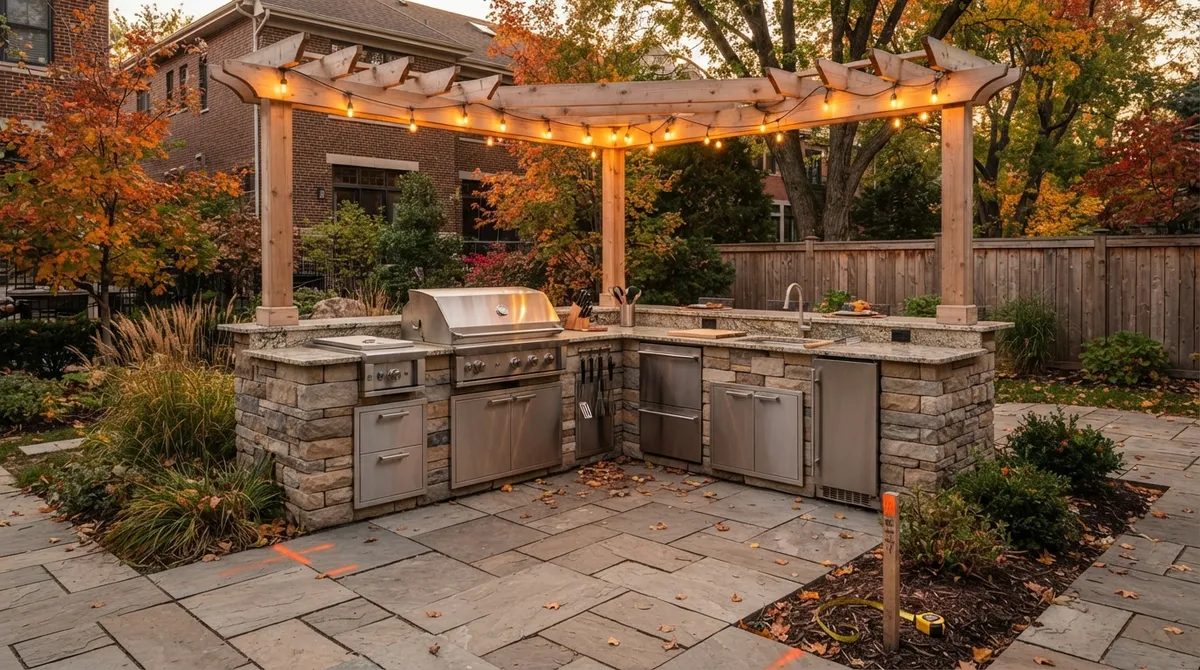
If you’re in the Chicago suburbs dealing with clay-heavy soil and harsh winters, a properly built base is non-negotiable. Frost heave is real, and it can wreck a poorly installed patio in just a few seasons. We often pair paver patios with fire pits or pergolas to create a true outdoor living room that also satisfies HOA aesthetic guidelines.
Urban Condo Owners
Small rooftop spaces need pavers that are lightweight, low-maintenance, and drainage-friendly. Permeable systems shine here, helping manage runoff while giving you a stylish, low-fuss surface for container gardens and seating areas.
Commercial Property Managers
Durability and stormwater compliance are the name of the game. Commercial plazas see heavy foot traffic and sometimes vehicle loads, so base compaction and material selection need to be spot on. Our commercial lawn maintenance team can also help keep the surrounding softscapes looking sharp year-round.
New Home Builders
Builders in Aurora and nearby suburbs need turnkey installations that impress buyers without delaying closing dates. A dependable paver contractor who can move quickly while maintaining quality is essential for staying on schedule.
Small Business Owners
Restaurants and shops benefit from branded, pedestrian-friendly walkways paired with lighting and sound features that create ambiance and draw customers in after dark.
Keeping Your Pavers Looking Great for Years
One of the best things about segmental pavers, whether concrete or natural stone, is how repairable they are. Unlike poured concrete or asphalt, which usually require major rework once cracked, individual paver units can be lifted and replaced without tearing up the whole surface.
To keep your investment looking fresh, here’s a simple maintenance routine:
- Sweep regularly to remove leaves, dirt, and organic debris.
- Pull weeds as soon as you spot them, before roots take hold in the joints.
- Treat stains promptly with a gentle cleaner suited to your paver material.
- Replenish joint sand every couple of years, especially in high-traffic areas.
- Consider sealing your pavers if recommended for your specific material, though it’s optional for most installations.
Signs of a quality installation include tight, even joints, no rocking pavers, and water draining away from your home instead of pooling. If you notice any of these issues, it might be time to call in a professional for repairs. You can browse our gallery of our work to see examples of long-lasting, beautifully finished projects throughout Chicagoland.
Ready to Start Your Paver Project?
Whether you’re leaning toward classic concrete pavers or the timeless beauty of natural stone, the real key to success is working with a team that understands proper site prep, drainage, and installation techniques. At Serenity Landscape Group, we’ve spent over 20 years helping Chicago-area homeowners and business owners build outdoor spaces they truly love.
Ready to see what’s possible for your yard or property? Get a free estimate today, or feel free to call us at (630) 359-5139 to chat with our team about your vision. We can’t wait to help you create a space you’ll enjoy for years to come.
FAQs
Q: How much does professional paver installation cost?
A: It really varies based on material, project size, and site conditions, so there’s no flat rate we can quote here. The best way to know for sure is to reach out for a free estimate, and we’ll give you honest numbers based on your specific yard or property.
Q: Do pavers need a concrete foundation?
A: Nope, and that’s actually one of the best things about pavers. Instead of a solid concrete slab, they rest on a compacted aggregate base and sand bedding layer, which allows for flexibility and easier repairs down the road.
Q: What’s the difference between standard and permeable pavers?
A: Standard pavers direct water off to the side using a solid sand base, while permeable pavers let water soak straight through the surface using an open-graded stone base. Permeable systems are great for managing stormwater and reducing runoff on your property.
Q: How long does paver installation take?
A: It depends on the size and complexity of your project, but most residential patios or walkways can be completed within a few days to about a week. Larger driveways or commercial spaces naturally take a bit longer to get everything right.
Q: How can I prevent weeds and shifting between my pavers?
A: Good joint filling with polymeric sand goes a long way toward keeping weeds out and joints stable. Regular maintenance, like sweeping and replenishing joint sand every couple of years, also helps keep everything looking sharp and staying put.