Key Takeaways
-
Ask how you'll use the fire pit first, since expected group size, cooking plans, and fuel choice shape the size, seating, and safety plan more than stone color does.
-
Confirm local setbacks and permits before design: NFPA suggests at least 10 feet from combustibles, but some local codes require up to 50 feet from structures.
-
Compare wood, natural gas, and propane honestly, weighing smoke, ash, upkeep, and whether a gas line with licensed installation is needed.
-
Request an itemized quote covering the pit, patio, gas or fuel work, excavation and drainage, seating, and permits so hidden costs are easy to spot.
-
Check the site for hazards like low branches, slopes, wind direction, and underground utilities, and ask who will call to mark utilities before digging.
-
Ask about materials and base prep, including liners, drainage, and freeze-thaw protection, plus ongoing maintenance and winterizing needs.
Picture this: it’s a crisp October evening, the sky is turning orange, and you’re finally sitting by your brand-new backyard fire pit. Sounds dreamy, right? Now picture the other version. The smoke blows straight into your living room window, the seating feels too far away, and your neighbor is giving you a look over the fence.
The difference between those two evenings often comes down to one thing: the quality of your design consultation. A great consultation is a friendly, honest chat that turns your ideas into a safe, practical plan. The right fire pit design consultation questions help you avoid expensive surprises later.
The good news? You don’t need to be an expert. You just need to know what to ask, and what not to skip. In this guide, we’ll walk through 15 common mistakes homeowners make during fire pit consultations, plus the exact questions that help you dodge each one. Grab a warm drink, and let’s get started!
Why Your Consultation Matters More Than You Think
A fire pit looks simple. It’s a ring of stone with a fire in the middle. But behind every great one is a lot of thoughtful planning about safety, fuel, comfort, and local rules.
A consultation is your chance to match the design to how you really live. It also helps your landscaper spot problems early, like low tree branches, a sloped yard, or a gas line that needs special work. Fixing those things on paper is far cheaper than fixing them after the stone is set.
Chicago-area homeowners have extra things to think about. Our windy lake-effect weather, freeze-thaw cycles, and tight suburban lots all shape a good fire pit plan. Our team at Serenity Landscape Group builds this planning into every fire pit project, so nothing gets missed.
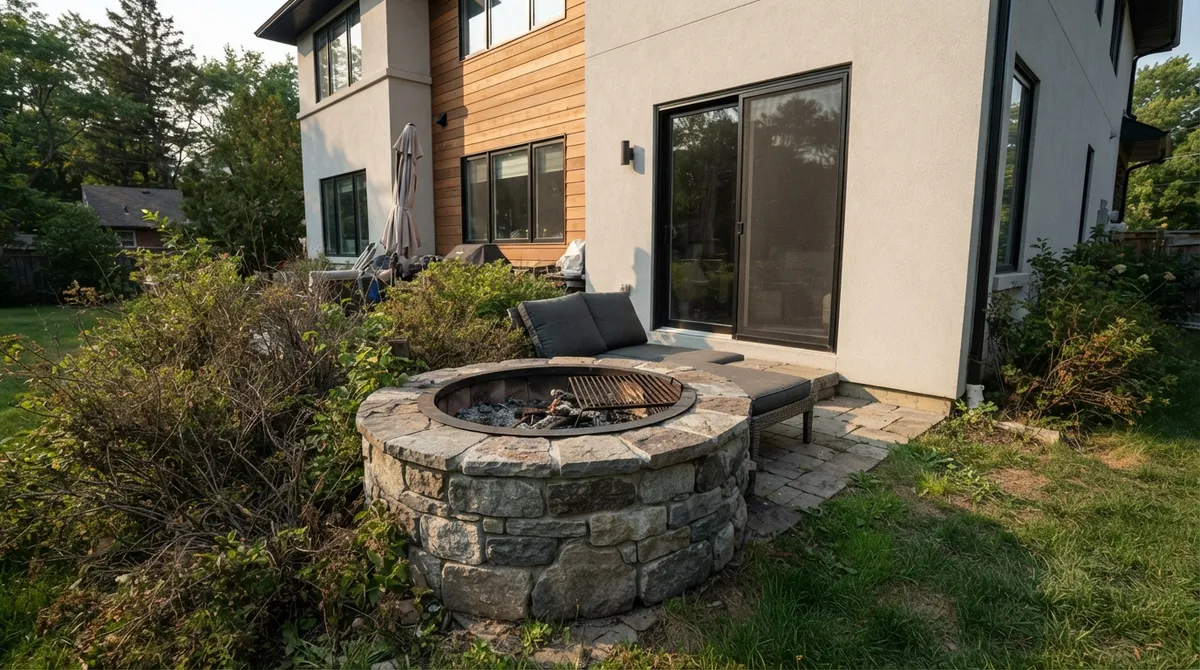
Mistakes About Purpose and Placement
Mistake 1: Skipping the “How Will We Use It?” Question
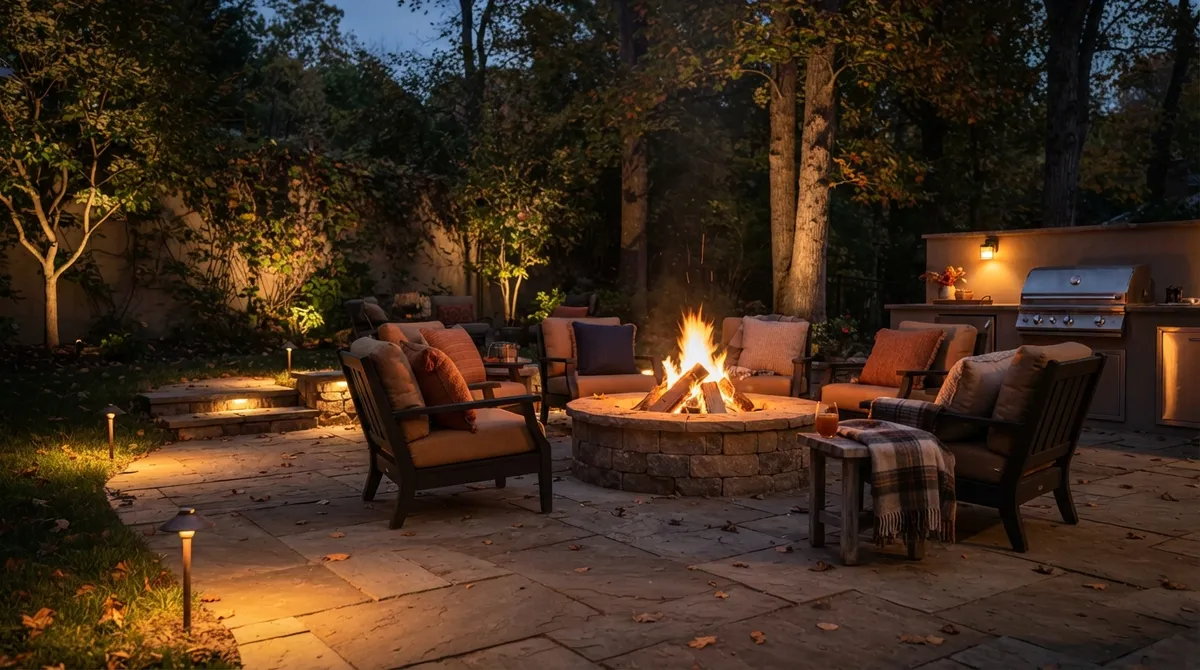
Many people jump straight to picking stone colors. But the first question should always be about how you’ll use the space. Will you gather weekly with family? Host big parties? Cook s’mores? Or just want a pretty focal point?
Your answer shapes the size, the seating, and even the fuel type. A cozy spot for two needs a very different plan than a gathering area for twelve.
Questions to ask:
- How many people will usually sit around this fire pit?
- Will we cook over it, or just enjoy the warmth?
- Do we want a quiet nook or a party hub?
Mistake 2: Choosing the Spot by Convenience Alone
The flattest corner of the yard isn’t always the best place for a fire. You need to think about nearby buildings, fences, decks, tree branches, eaves, and even your neighbor’s property line. Wind direction matters too, since smoke should drift away from your home and guests.
A smart landscaper will walk your yard with you and point out hidden risks. That walk-through is worth its weight in gold.
Mistake 3: Guessing at Safe Distances
This one is big. The National Fire Protection Association (NFPA) recommends keeping a fire pit at least 10 feet from anything that can burn. That includes fences, sheds, dry brush, and your house siding.
But here’s the catch: your town may require more. Some places that follow NFPA 1 require outdoor fires to sit 50 feet from structures. Rules vary a lot by community, so always ask your landscaper how they confirm local requirements.
Mistake 4: Forgetting to Check Local Rules and Permits
Some suburbs allow wood fires. Others only allow gas. Some limit the hours you can burn. Many require permits for built-in installations.
Questions to ask:
- Who checks local fire, zoning, and building rules, you or me?
- Do I need a permit for this design?
- Are there HOA rules I should review first?
If you live in an HOA community, check those guidelines early. It saves a lot of headaches.
Mistakes About Fuel and Safety
Mistake 5: Not Comparing Fuel Options Honestly
Wood, natural gas, and propane each have trade-offs. There’s no single winner, only the best fit for you.
| Fuel Type | Pros | Cons | Best For |
|---|---|---|---|
| Wood | Classic crackle, smell, and feel | Smoke, ash, ongoing cleanup, burn-day limits | Traditionalists with open space |
| Natural Gas | Easy on/off, low smoke, steady supply | Needs a gas line and licensed work | Frequent use and low maintenance |
| Propane | No gas line needed, flexible placement | Tank refills and storage | Simple installs and smaller spaces |
Ask your landscaper to explain the cost, the setup work, and the daily experience of each one.
Mistake 6: Ignoring Smoke and Air Quality
If you love a wood fire, you’ll want to burn responsibly. The U.S. Environmental Protection Agency recommends dry, seasoned firewood with about 20% moisture content for cleaner burning. The EPA also advises skipping fires on days with air quality alerts, and some towns ban wood burning on those days.
You can learn more in the EPA’s guide to backyard recreational fires. Ask your landscaper how a wood-burning design might affect you and your neighbors.
Mistake 7: Overlooking Gas Line and Utility Questions
A gas fire pit needs more than a pretty basin. It may need a trench, a licensed gas fitter, a shutoff valve, and sometimes extra approvals. You also want to know where underground utilities run before anyone starts digging.
Questions to ask:
- Will you call to mark underground utilities before digging?
- Who handles the gas hookup and inspection?
- Where will the shutoff valve be located?
Mistake 8: Skipping Safety Features
A safe fire pit is designed with safety in mind from day one. That means a stable, level, noncombustible base, a spark screen for wood fires, and easy-to-reach controls for gas models.
Don’t forget kids and guests. Plan clear walking paths, good lighting, and enough space so no one trips near the fire. Think about older family members and anyone with mobility needs, too.
Mistakes About Design and Construction
Mistake 9: Picking Size and Shape Without Thinking About Seating
A fire pit that’s too big can feel overwhelming. One that’s too small can feel lonely. The seating distance matters just as much. Chairs placed too close get uncomfortably hot, while chairs placed too far away lose the cozy feeling.
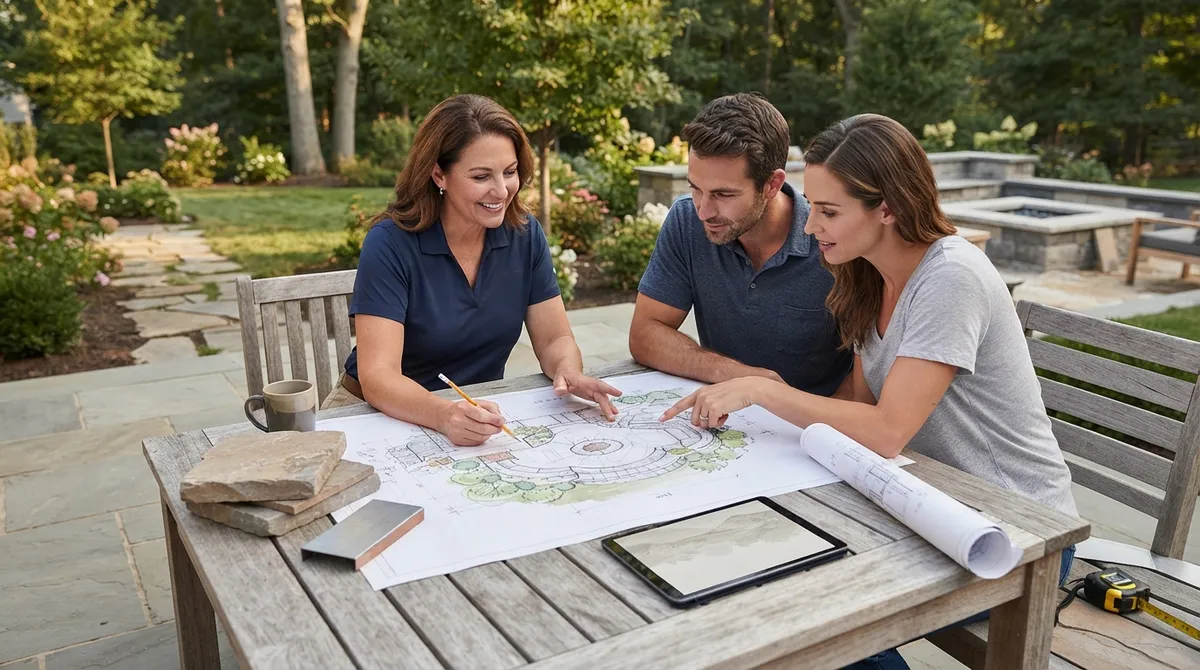
Ask your landscaper to show you a layout sketch with seating built in. Built-in benches, boulders, or movable chairs all create different moods.
Mistake 10: Not Asking About Materials and Construction Details
This is where quality hides. Ask what’s going inside the pit, not just what you see outside.
- Is there a fire-rated liner or insert?
- How will the pit drain after rain and snowmelt?
- What base material goes underneath?
- Is the pit built-in or portable?
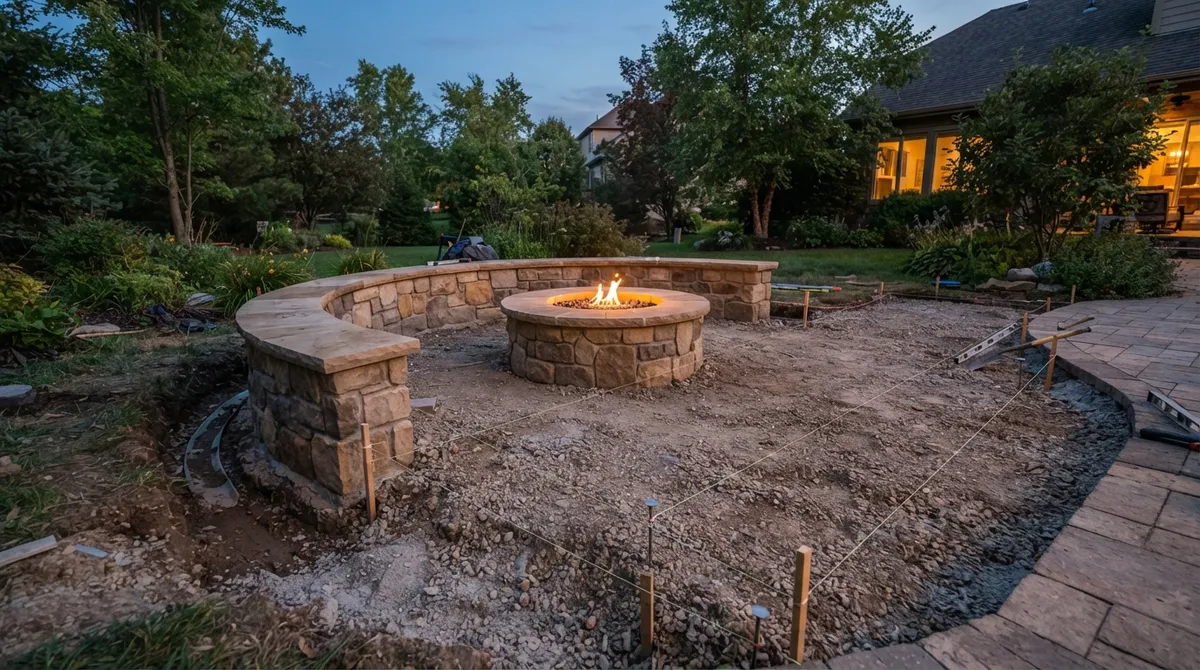
Chicago’s freeze-thaw cycles can crack poorly built features. Proper base prep and drainage make a huge difference. You can see what well-built outdoor features look like in our project gallery.
Mistake 11: Forgetting the Surrounding Patio and Surface
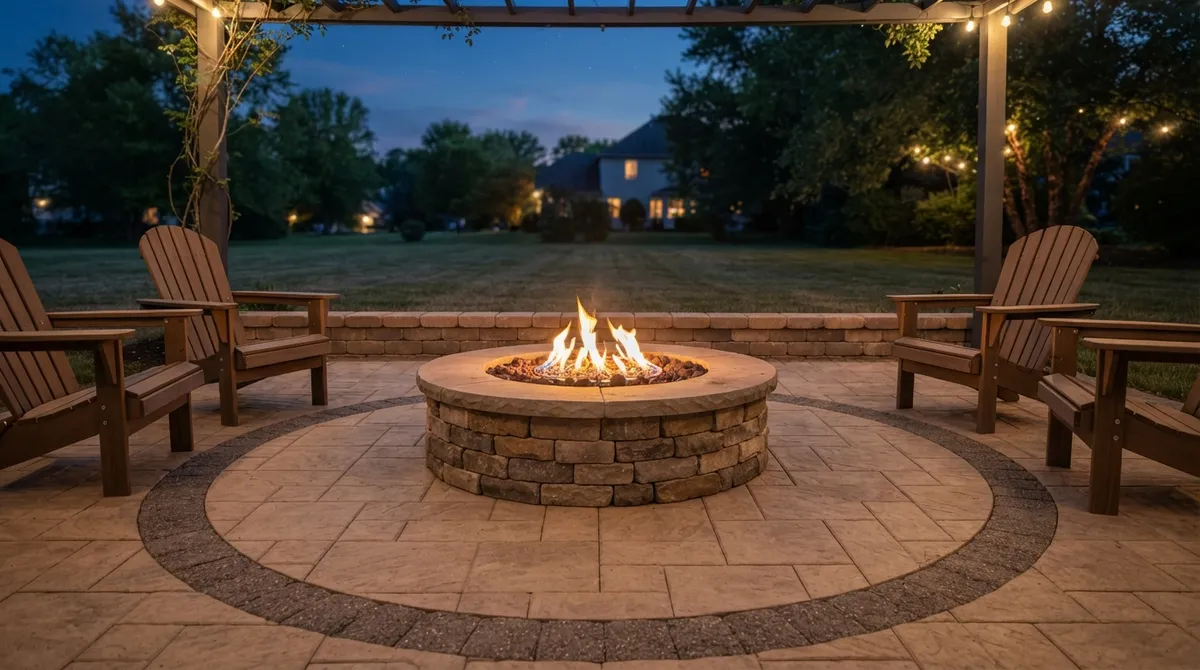
The pit is only part of the picture. What’s around it matters just as much. A fire pit should sit on a stable, level, noncombustible surface. Pavers are a popular choice because they look great and handle our climate well. If you’re planning a full gathering area, check out these fire pit paver patio ideas for inspiration.
Ask whether the patio, any retaining features, and the fire pit are quoted together or separately.
Mistakes About Budget, Scope, and Timing
Mistake 12: Not Discussing Budget Up Front
Money talk can feel awkward, but it’s one of the kindest things you can do for yourself and your landscaper. According to a 2026 landscaping-industry source citing Angi, professional fire pit installation commonly runs from about $200 to $3,000, with more complex projects costing more. Your final number depends on materials, fuel connections, and site work.
Be honest about your comfort zone. A good designer will offer options at different price points and show you where your money has the biggest impact.
Mistake 13: Accepting a Vague Quote
A single lump-sum number hides a lot. Ask for an itemized scope that separates each part of the job.
A strong quote should list:
- The fire pit itself, including liner and materials
- The patio or surrounding surface
- Fuel connection or gas line work
- Excavation, grading, and drainage
- Seating, lighting, and landscaping changes
- Permits, inspections, and who handles them
Itemized quotes make it easy to compare options and avoid mystery charges. Our design and build process is built around this kind of clarity.
Mistake 14: Ignoring Schedule and Site Access
Can the crew get equipment into your backyard? Is there a narrow gate or a steep slope? How long will the project take, and what happens if the weather turns? These details affect both timing and price.
Chicago weather can shorten the building season, so ask about the best time to start and when you can realistically use your new space.
Mistake 15: Forgetting About Long-Term Maintenance
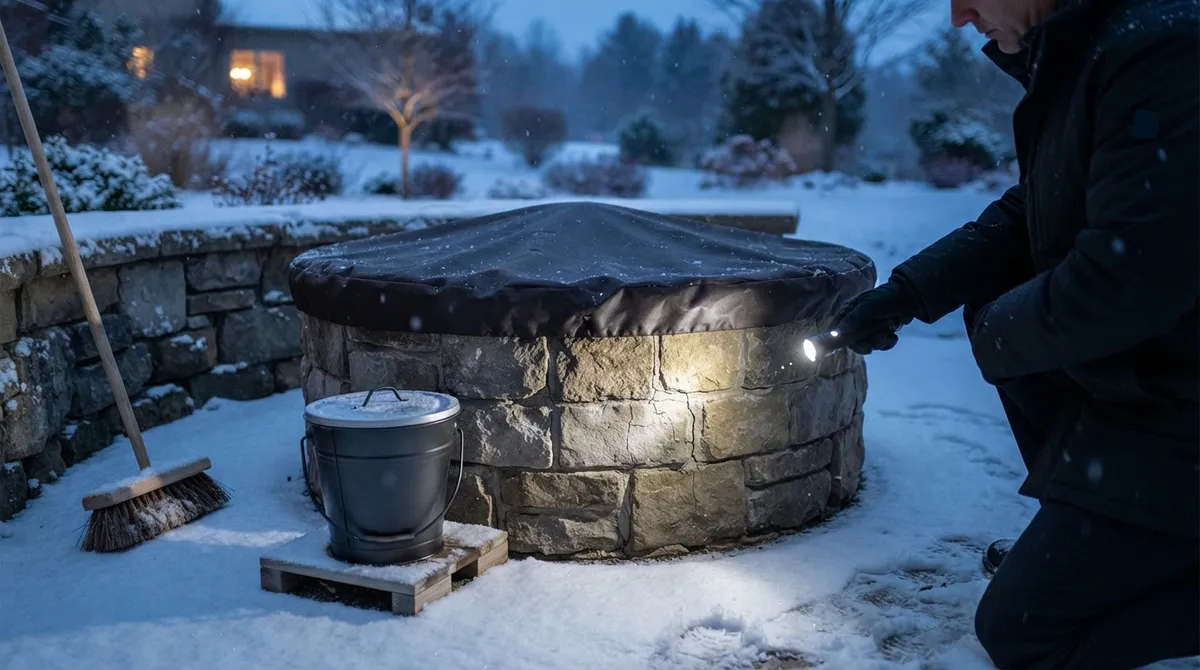
A fire pit is a long-term feature, so ask what ongoing care looks like. Wood pits need ash cleanout. Gas pits may need seasonal inspection and covering. Stone and pavers may need occasional cleaning or sealing.
Questions to ask:
- What maintenance should I plan on each season?
- How should I winterize the fire pit?
- Do you offer follow-up support if something needs adjusting?
Your Quick-Reference Question Checklist
Print this list and bring it to your consultation. It covers the big topics in one handy spot.
- Purpose: How will we use the space, and for how many people?
- Location: What’s nearby that could burn or block airflow?
- Rules: What local permits, setbacks, and HOA rules apply?
- Fuel: Wood, natural gas, or propane, and why?
- Safety: What clearances, controls, and screens are included?
- Design: What size, shape, seating, and lighting fit our yard?
- Construction: What base, liner, and drainage will be used?
- Budget: What is included, and what could add cost?
- Timeline: When can work start, and how long will it take?
- Care: What upkeep does this design need?
Tips for Different Types of Properties
Not every outdoor space is the same, so your questions might shift a little depending on where you live or work.
- Suburban homeowners: Ask about HOA approval, privacy from neighbors, and how the fire pit ties into your patio and plantings.
- Urban condo owners: Rooftop and small-space fires often face strict rules. Ask about tabletop gas options and building approvals before you design anything.
- Commercial property managers and business owners: Ask about liability, insurance, guest safety, and hours of use. A fire feature can boost ambiance, but it needs a solid safety plan.
- New home builders: Ask about including gas stub-outs and patio prep during construction so the fire pit can be added later without tearing things up.
For more ideas on what’s possible, take a peek at these 12 fire pits that transform backyards in 2026. You may also want to read about hardscaping mistakes to avoid to make sure your whole project stays on track.
How to Choose the Right Pro for the Job
The questions you ask are important. So is the person answering them. Look for a team that listens first, explains clearly, and doesn’t rush you. Good landscapers welcome questions and never make you feel silly for asking.
Check for industry credentials, too. Groups like Landscape Illinois support professionalism in our field, and an ICPI certified installer brings proven paver knowledge to your project. Learn more about our team and the experience we bring to each job.
Ready to Start the Conversation?
A fire pit should bring your family closer, not give you something to worry about. With the right fire pit design consultation questions, you can sidestep the most common mistakes and create a space that’s safe, beautiful, and made for you. Remember to confirm local rules, compare fuel options, ask for an itemized quote, and think about how you’ll really use the space.
We’d love to help you plan your dream gathering spot. With over two decades of experience across Chicagoland, Serenity Landscape Group is here to guide you from the first sketch to the first glowing evening. Get a free estimate today, or call us at (630) 359-5139 to start your fire pit conversation. Your cozy backyard evenings are closer than you think!
FAQs
Q: What questions should I ask a landscaper before installing a fire pit?
A: Start with how you’ll use the fire pit, then ask about placement, local permits, fuel choice, safety clearances, materials, and an itemized quote. It also helps to ask who handles inspections and what maintenance looks like. A good landscaper will love these questions!
Q: How far should a fire pit be from a house, fence, or tree?
A: NFPA guidance recommends at least 10 feet from anything that can burn, but your local code may require more. Some areas that follow NFPA 1 ask for 50 feet from structures. Always confirm the exact distance with your local fire or building office.
Q: Should I choose a wood-burning, natural gas, or propane fire pit?
A: Wood gives you that classic crackle but creates smoke and ash. Natural gas and propane are easier to use and cleaner, though gas may need a gas line and licensed work. Think about how often you’ll use it and how much upkeep you want.
Q: How much does a professionally installed fire pit cost?
A: A 2026 industry source citing Angi reports that professional installation commonly ranges from about $200 to $3,000, with complex projects costing more. Your price depends on materials, fuel connections, and site work. An itemized quote helps you see exactly where your money goes.
Q: Do I need a permit to install or use a backyard fire pit?
A: It depends on where you live. Many towns have rules about permits, fuel type, burn hours, and setbacks, and gas installations may need extra approvals. Ask your landscaper to help confirm local requirements before work begins.