Key Takeaways
-
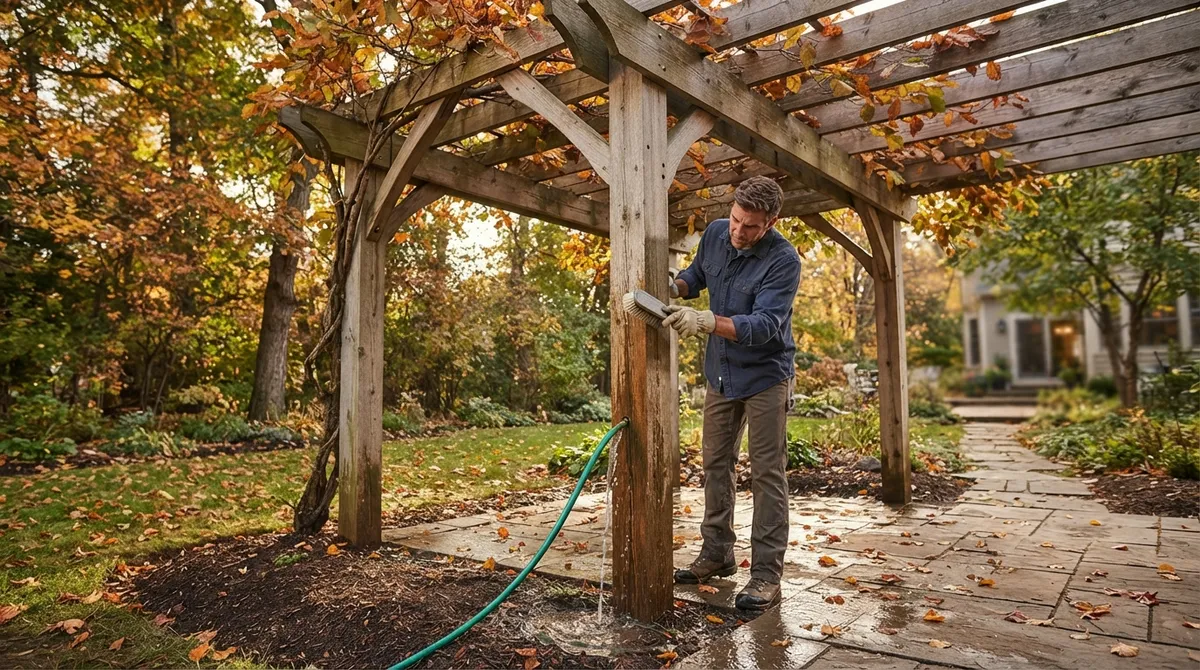
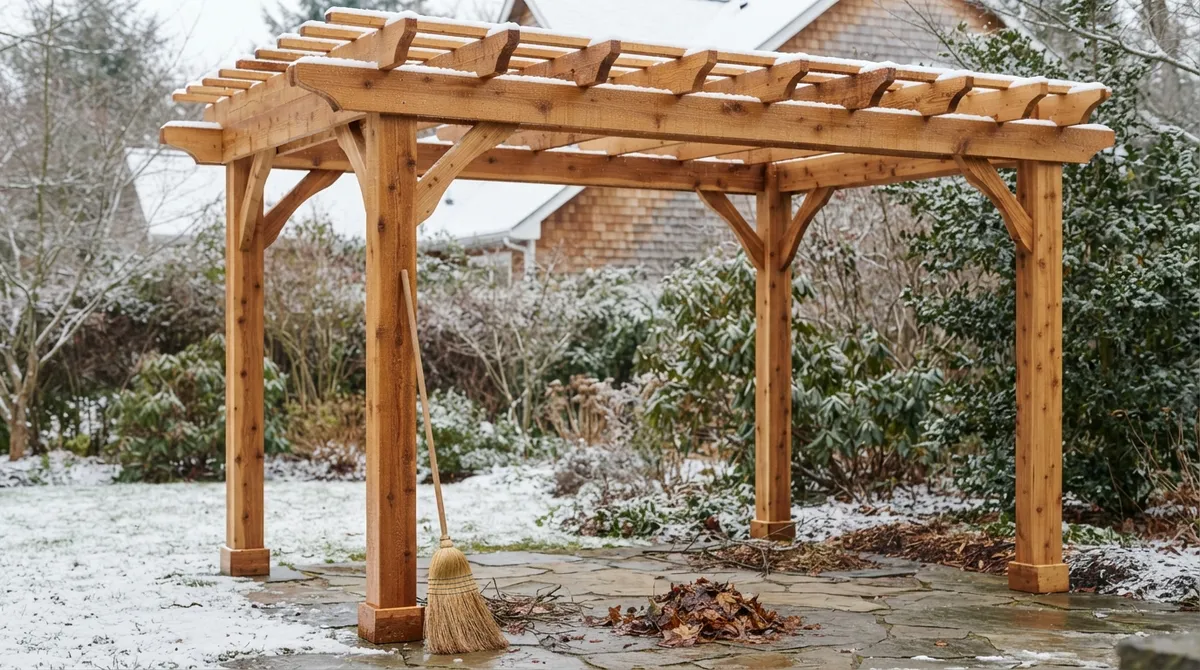
Clear leaves, pine needles, and debris from beam tops and joints in fall, since trapped moisture is the main cause of wood decay over winter.
-
Perform the water-bead test: sprinkle water on the wood, and if it soaks in instead of beading up, the finish is wearing thin and needs attention.
-
Never assume a fixed snow depth is safe; pergola capacity depends on design, wood condition, roof type, and wet or drifting snow, so check specs or consult a professional.
-
Stay on the ground when removing snow, using a soft-bristle broom or roof rake, and avoid metal shovels or chipping ice, which can split wood and scratch the finish.
-
Take down fabric shade sails and removable canopies before winter unless the manufacturer rates them for snow, as they add unexpected load to the structure.
-
Use deicers near the pergola only if both the product and pergola makers approve, and prefer sand or traction aids to protect wood and nearby plants.
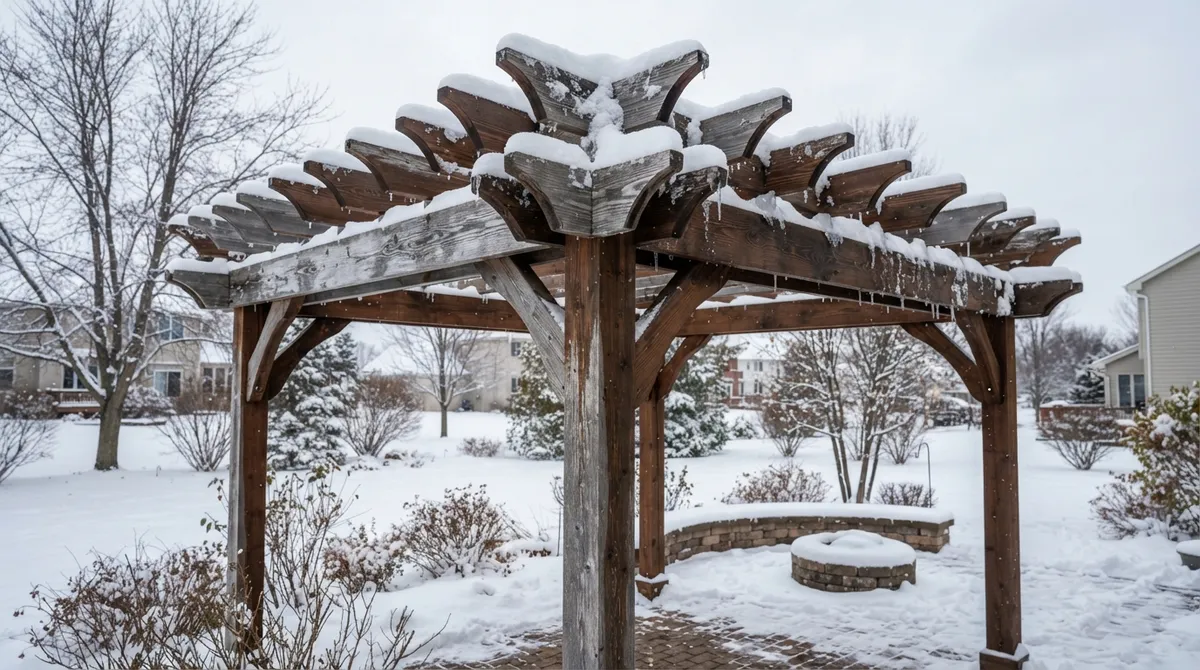
Picture this: it’s a quiet January morning in Chicagoland. Fresh snow is stacked along the beams of your pergola, and the sun is just coming up. It looks like a postcard. But underneath all that charm, your wood is quietly dealing with moisture, freezing temperatures, and a lot of weight.
Good news: a little planning goes a long way. With smart wood pergola winter care, you can keep your structure strong, safe, and good-looking for many seasons. You don’t need to be a pro to get started, and you don’t need a huge budget either.
In this friendly guide, we’ll walk you through exactly what to do before, during, and after winter. We’ll cover cleaning, inspections, finish checks, snow tips, and more. Whether you own a suburban backyard retreat, a city rooftop space, or a patio at your business, these steps will help. Grab a warm drink, and let’s get your pergola ready for the cold.
Why Wood Pergola Winter Care Matters in Chicagoland
Wood is a natural material. It soaks up water and lets it go again. In our region, that cycle happens over and over as temperatures swing above and below freezing. Water that gets into small cracks can freeze, expand, and make those cracks bigger.
Trapped moisture is the real troublemaker. Wet leaves, standing water, and soggy soil at the posts can all invite decay. Add heavy snow and ice, and a small problem can turn into a big repair.
The goal of wood pergola winter care is simple:
- Keep water from sitting on or around the wood
- Catch small problems before snow arrives
- Manage snow without hurting the wood or yourself
- Check everything again once spring comes
Think of it like getting a cozy coat ready for a long season. A few easy steps now save you stress later.
How to Prepare Your Wood Pergola for Winter
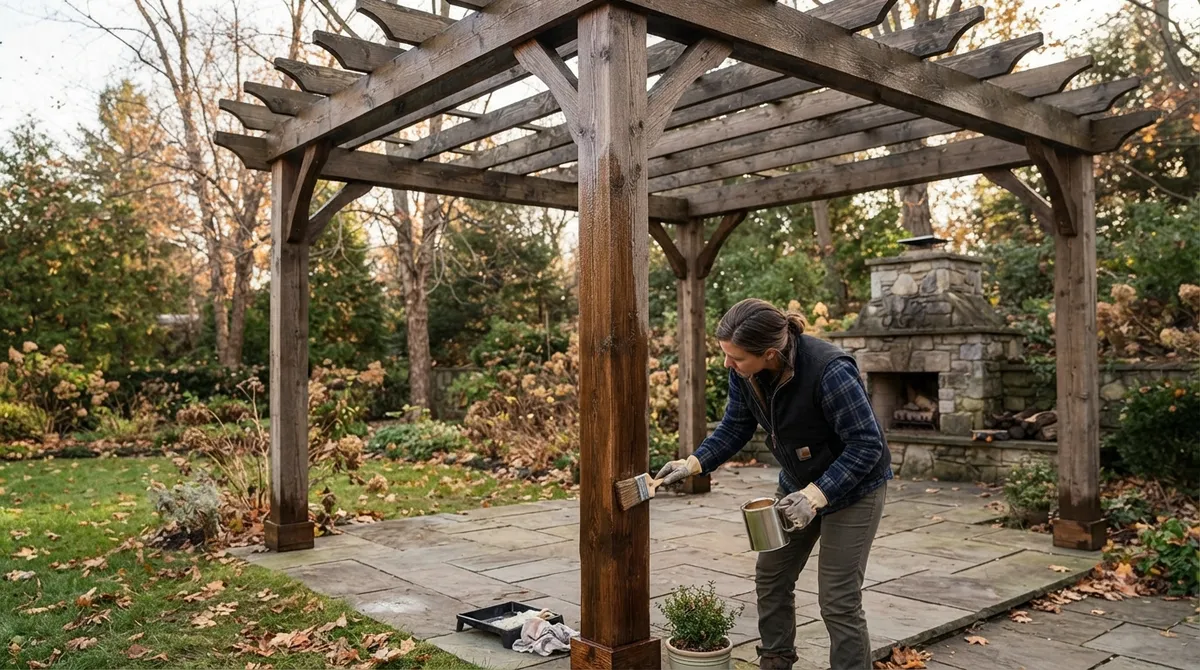
The best time to start is in fall, before the first real snow. Here’s an easy step-by-step plan you can follow in a weekend or two.
- Clear off the debris. Remove leaves, pine needles, twigs, and dirt from the tops of beams, rafters, and joints. This stuff holds moisture against the wood like a wet sponge.
- Clean the surface gently. Use a soft brush and a mild cleaner that is safe for wood. Follow the product label. Skip harsh scrubbing, which can scuff the finish.
- Check the drainage. Look at the ground around each post. Water should flow away from the footings, not toward them.
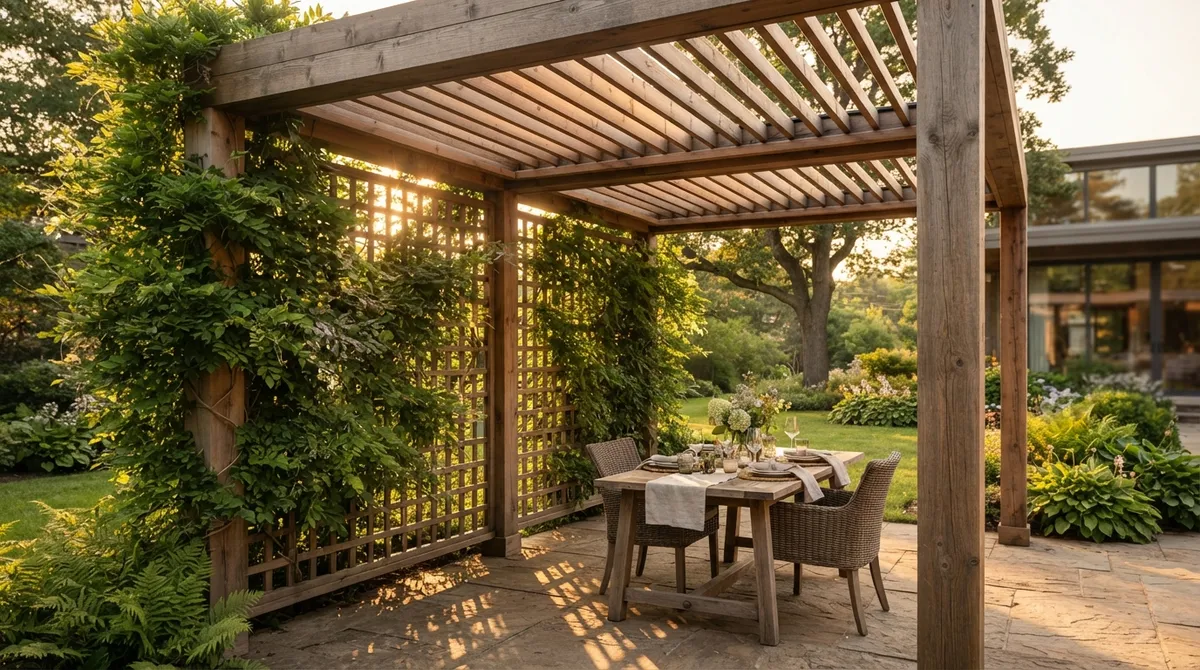
- Trim back nearby plants. Climbing vines and close branches trap damp air against the wood. Give your pergola some breathing room.
- Move or store loose items. Cushions, planters, and hanging decor can hold water or add weight. Tuck them away for the season.
- Plan for your fabric. We’ll cover shade sails and canopies in a moment.
If your pergola is part of a larger outdoor living space, this is a great time to look at everything together. Our team often sees pergolas paired with patios, walkways, and fire features. For a bit of fall prep inspiration, you might enjoy our guide on fall cleaning steps for pergola beams and posts.
Inspect the Structure Before Snow Arrives
A quick walk-around can tell you a lot. Take your time and look at your pergola from every side. Bring a flashlight if the light is dim.
What to Look For
Check these spots carefully:
- Cracked, split, or soft wood (soft spots can mean decay)
- Loose bolts, brackets, or screws
- Posts that wobble or seem to have moved
- Finish that is peeling, flaking, or worn thin
- Water pooling around the base of the posts
- Gaps where beams meet posts
Small surface checks in the wood are common and often harmless. But deep cracks, rot, or movement at the posts deserve a closer look. If anything seems off, call a qualified professional to assess it. Structural problems are not a do-it-yourself job, and fixing them before snow arrives is much safer.
A Quick Winter Prep Checklist
| Area to Check | What You Want to See | When to Call a Pro |
|---|---|---|
| Beams and rafters | Clean, dry, no deep cracks | Sagging, deep splits, or soft spots |
| Posts and footings | Solid, straight, drained well | Wobbling, leaning, or pooling water |
| Hardware | Tight bolts and brackets | Rust damage or loose connections |
| Finish | Even coat, water beads up | Large peeling areas or bare wood |
| Surrounding area | Clear, sloped away from posts | Standing water or washed-out soil |
Doing this check every fall takes maybe thirty minutes. It’s a small habit with a big payoff.
Check Your Wood Finish Before Winter
The finish on your pergola is its first line of defense against water. Over time, sun and weather wear it down. Here’s a simple test: sprinkle a little water on the wood. If it beads up, your protection is still working. If it soaks right in, the finish may be wearing thin.
Should You Seal or Stain Before Winter?
It depends. Only recoat if your wood actually needs it, and only if the weather allows. Most finishes need dry wood and mild temperatures to cure well. Applying a finish in cold, damp conditions can lead to poor results.
Here are a few friendly rules of thumb:
- Read the label on your finish product and follow it closely
- Check the wood manufacturer’s care guidance, too
- Make sure the wood is clean and fully dry first
- Skip the job if the forecast doesn’t meet the product’s temperature needs
Some general maintenance guides suggest refreshing finish every one to three years. That’s a loose range, not a rule. Your climate, wood type, and product all matter. If you miss the fall window, don’t stress. Plan a spring refresh instead.
Understanding Snow Loads on a Wood Pergola
Here’s where many homeowners ask the big question: how much snow can a wood pergola hold? The honest answer is that it varies a lot. There is no magic number of inches that works for every pergola.
Snow capacity depends on several things:
- The design and size of the structure
- The type and condition of the wood
- How the roof or top is built (open slats versus a solid cover)
- Local snow load requirements
- How wet and heavy the snow is, and whether it drifts
Wet, heavy snow weighs far more than light, fluffy snow. Drifting can also pile weight in one spot. So a generic rule like “remove snow at six inches” isn’t a safe guide for every pergola. Instead, check your pergola’s design documents, or ask a qualified professional about its limits.
An open-slat pergola often sheds snow more easily than one with a solid or paneled top. If you added a cover or panels, check the manufacturer’s instructions for snow ratings. When in doubt, ask. It’s always better to get a quick answer than to guess.
How to Safely Remove Snow From a Pergola
Sometimes snow piles up and you’d like to lighten the load. If removal is appropriate for your structure, safety comes first. Here’s a gentle approach.
- Stay on the ground. Never climb onto your pergola. Wood can be slick, and climbing adds weight and risk.
- Use soft tools. A soft-bristle broom or a suitable roof rake works well. Avoid metal shovels and sharp tools that can gouge the wood or scratch the finish.
- Brush lightly. Gently sweep snow off from a safe position. Work slowly and don’t force it.
- Skip the ice chipping. Hitting stuck ice can split the wood and damage the finish. Let the sun and warmer days do that work.
- Watch your footing. Snow and ice around the base can be slippery. Wear good boots.
If you can’t remove snow safely, that’s okay. Call a professional. Your safety matters more than a tidy pergola.
What to Do With Shade Sails, Canopies, and Covers
Fabric shade sails and removable canopies are wonderful in summer. In winter, they can catch snow and ice, adding stress to your pergola. Many are not rated to handle that kind of load.
Here’s what we suggest:
- Take down fabric sails and removable canopies before winter unless the maker says they’re snow-rated
- Clean them gently and let them dry fully before folding
- Store them in a dry spot, away from pests and moisture
- Check instructions for fixed covers, panels, and add-ons
Taking them down also helps the fabric last longer. It’s a small chore that protects both your canopy and your pergola.
Protect the Post Bases From Water and Ice
The base of each post is one of the most vulnerable spots. Water that collects here can seep into the wood and cause decay over time. Freeze-thaw cycles make things worse.
To keep your posts happy:
- Keep nearby drainage paths clear of leaves and debris
- Make sure the ground slopes away from the posts
- Don’t let snowmelt or roof runoff collect at the base
- Avoid piling snow against the posts when you clear nearby paths
If your yard tends to hold water, grading and drainage fixes may help. A landscaping pro can look at how water moves across your property and suggest solutions. For a deeper look at related ideas, see our post on dry well installation to stop yard flooding.
Can You Use Salt or Ice Melt Near a Wood Pergola?
This one trips up many folks. Walkways and patios near your pergola may need ice control, but some deicing products can harm wood, finishes, and nearby plants. Salt can also wick into wood and cause trouble over time.
Here’s the safe approach:
- Only use a deicer near the pergola if both the product maker and the pergola maker say it’s suitable
- Keep products away from post bases whenever you can
- Use sand or traction aids on slippery spots instead
- Sweep up any extra product so it doesn’t wash toward the wood
If your pergola sits over pavers or stone, check the care needs of those surfaces as well. The ICPI Certified Installer program is a helpful resource for hardscape care standards. And if you’re wondering about the paver side of your yard, take a peek at our paver services for ideas that pair well with a pergola.
Wood Pergola Winter Care for Different Property Types
Every property is a little different. Here’s how winter care might look for you.
Suburban Homeowners
Backyard pergolas often sit near trees, lawns, and patios. Falling leaves and branches are the big concern. Clear them early, check drainage, and keep an eye on HOA guidelines if you plan any exterior changes.
Urban Condo Owners
Rooftop and small-space pergolas face strong wind and sun exposure. Make sure planters and furniture are secured or stored. Check any building rules before making changes, and ask about weight limits on your rooftop.
Commercial Property Managers and Small Business Owners
Pergolas at restaurants, shops, and offices are used by guests, so safety matters even more. Schedule a pre-winter inspection, keep walkways clear, and document any changes. Our commercial maintenance team can help you build a seasonal plan.
New Home Builders
If you build or sell homes, a pergola with a clear care guide is a real selling point. Give buyers simple winter care tips so they can enjoy their space with confidence from day one.
After Winter: A Spring Check-Up
Once the snow melts and the ground thaws, give your pergola a fresh look. This is your chance to catch anything winter left behind.
Here’s a simple spring routine:
- Walk around and look for new cracks, loose hardware, or changes in the wood
- Check the finish for peeling, fading, or bare spots
- Look for rot or soft areas, especially near the post bases
- Check that the posts and footings haven’t shifted
- Clear away any winter debris and clean the surface
- Plan a finish refresh if needed, once the weather suits the product
A landscaping professional can document any changes, fix drainage and plant issues, and refer you to a qualified contractor for structural repairs. Working with someone who knows the local climate makes the whole process easier. You can also learn more about the types of outdoor structures we build on our pergolas and pavilions page, or browse our gallery of our work for ideas.
For more tips from industry experts, the folks at Landscape Illinois share helpful resources for property owners across the state.
Common Winter Mistakes to Avoid
Even careful homeowners slip up now and then. Here are a few to dodge:
- Leaving wet leaves and debris on the beams all winter
- Climbing onto the structure to clear snow
- Using metal tools or hard ice-chipping
- Leaving fabric canopies up when they aren’t snow-rated
- Ignoring small cracks or loose hardware until spring
- Using the wrong deicer near the wood
Avoid these, and you’re already ahead of the game. Remember, a little care now beats a big repair later.
Wrap-Up: Keep Your Pergola Cozy and Strong
Winter doesn’t have to be hard on your pergola. With a little fall prep, a smart eye during the cold months, and a spring check-up, your wood structure can stay beautiful for years. The key ideas are simple: keep moisture away, check the structure, handle snow gently, and don’t take risks.
At Serenity Landscape Group, we’ve spent over two decades helping Chicagoland homes and businesses enjoy outdoor spaces in every season. If you’d like a hand with inspections, drainage, or planning your next outdoor project, we’d love to help. Get a Free Estimate today, or call us at (630) 359-5139 to chat with our friendly team.
FAQs
Q: How do you prepare a wood pergola for winter?
A: Start in fall by clearing leaves and debris from the beams and joints, then check that water drains away from the posts. Look over the wood, hardware, and finish for any damage, and remove or store fabric canopies. A little prep now helps prevent trapped moisture and freeze-thaw trouble later.
Q: How much snow can a wood pergola hold?
A: There’s no single safe number, because it depends on your pergola’s design, wood condition, top style, and local snow loads. Wet, heavy snow and drifting can add a lot of weight fast. Check your pergola’s specs or ask a qualified professional rather than relying on a generic inches-of-snow rule.
Q: How should I safely remove snow from a pergola?
A: Stay on the ground and use a soft broom or a suitable roof rake to gently brush snow away. Skip metal tools and forceful ice chipping, since they can damage the wood and finish. If you can’t do it safely, it’s best to call a professional.
Q: Can I use salt or ice melt around a wood pergola?
A: Only use deicing products near the pergola if both the product maker and the pergola maker confirm they’re safe for wood. Salt can seep into the wood and harm the finish over time. Sand or other traction aids are often a gentler choice for slippery spots.
Q: Should I take down my pergola canopy or shade sail for winter?
A: In most cases, yes, unless the manufacturer says it’s rated for snow and ice. Fabric sails and removable canopies can collect snow and add stress to your pergola. Clean them, dry them fully, and store them somewhere dry until spring.