Key Takeaways
-
Fully-permeable turf backing drains up to 100 times faster than standard hole-punched backing, making it essential for pet areas and high-traffic zones in heavy-rain climates like Chicago.
-
A proper slope built into the ground during installation is critical—without it, water pools in low spots even if the turf backing drains well, so professional grading during setup is essential.
-
Turf drainage systems consist of three key layers: turf backing (perforated or fully-permeable), infill material, and an aggregate base of crushed rock that absorbs and redirects water toward drainage points.
-
Minimum effective drainage rate is 30 inches per hour for standard systems, but premium systems like Smart Flow drain at 900 inches per hour—critical for pet hygiene and preventing odor and bacterial growth.
-
Common preventable problems include improper infill levels, unlevel base material, and clogged backing perforations; professional installation and regular light maintenance like brushing and rinsing extend system life to 15-20 years.
-
French drains—perforated pipes in gravel-filled trenches—should be added for properties with heavy rainfall or complex terrain where surface slope alone cannot handle water volume.
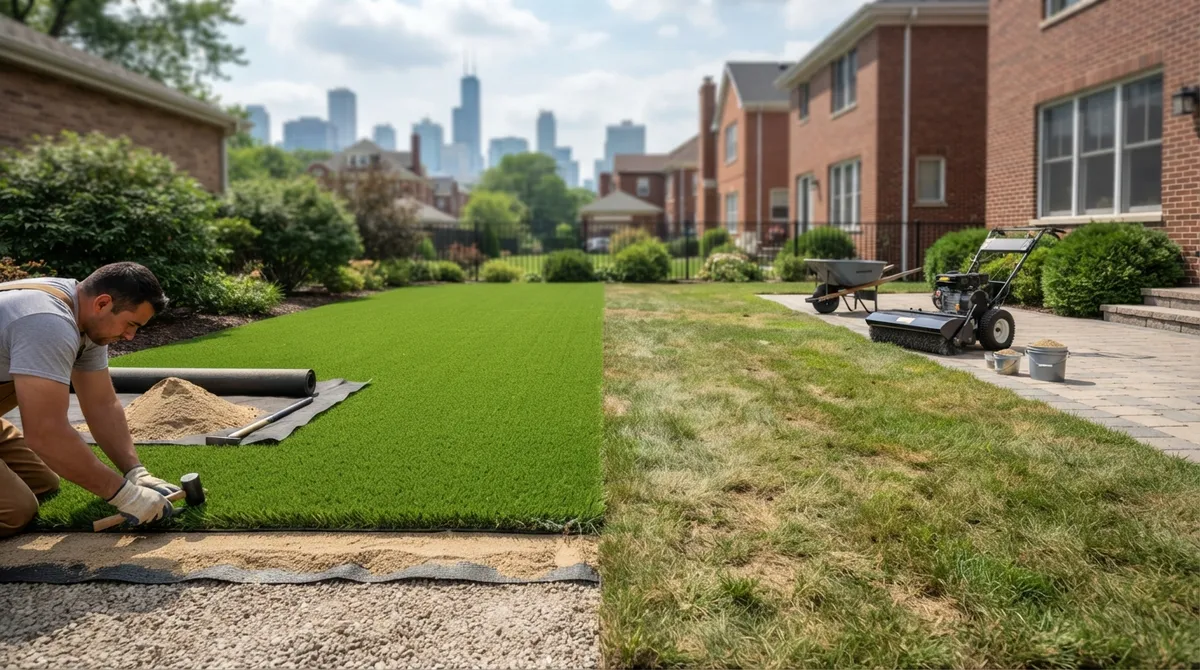
Ever wonder why some lawns turn into muddy swamps after a good rain while others stay clean and dry within minutes? The answer often comes down to one thing: a well-designed turf drainage system. Whether you have artificial turf installation or are planning one, understanding how drainage works helps you make smarter decisions for your outdoor space.
In Chicago’s climate, proper drainage isn’t a luxury — it’s a necessity. Heavy spring rains, summer storms, and even snowmelt can overwhelm a yard that isn’t built to handle water flow. A smart turf drainage system keeps your lawn usable year-round, protects your landscape investment, and prevents the headaches that come with standing water.
Let’s break down exactly how these systems work, what makes them effective, and why getting the installation right matters so much.
What Is a Turf Drainage System?
A turf drainage system is a multi-layered setup designed to move water quickly and efficiently away from your lawn surface. Instead of letting rainwater pool on top of the turf, the system channels it downward and outward. This keeps the surface dry, clean, and ready to use — even after heavy rain.
These systems are especially important with synthetic grass installations. Unlike natural soil that absorbs water slowly, artificial turf relies entirely on its built-in drainage design to manage water. A poorly drained turf area can develop odor, mold, and surface damage. A well-drained one stays fresh and functional for years.
The Main Layers of a Turf Drainage System
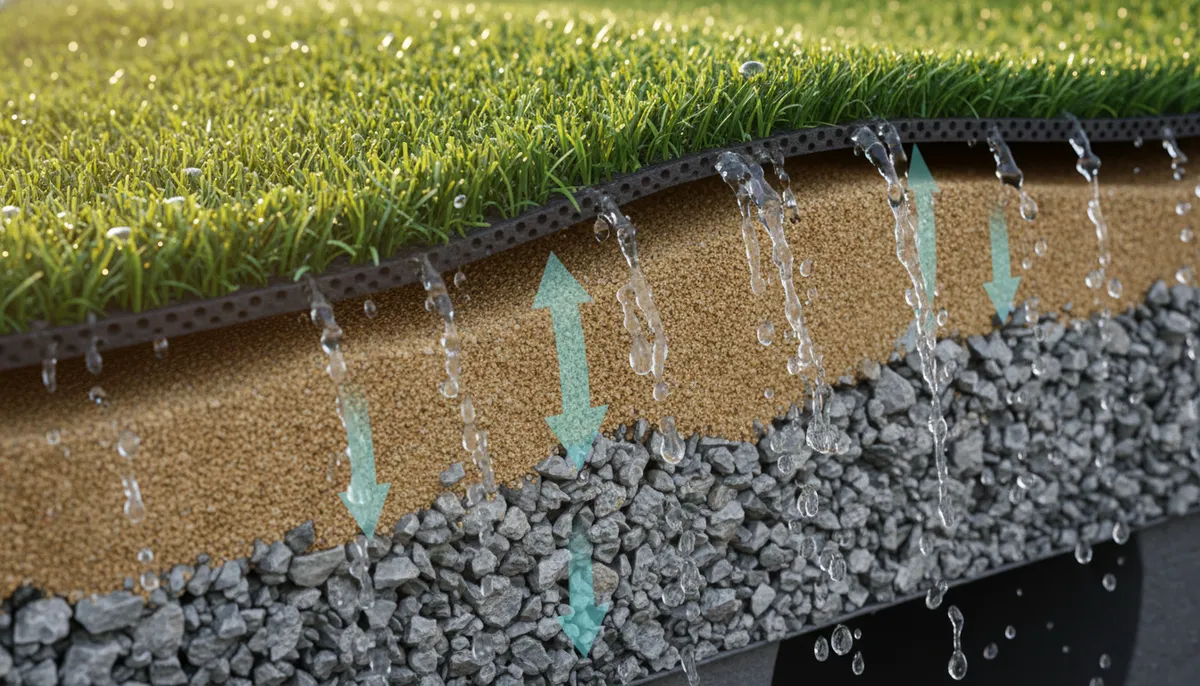
Think of turf drainage like a layered sandwich. Each layer plays a specific role in moving water from the surface to a safe exit point. Here’s how each layer works:
Layer 1: The Turf Fibers and Infill
Water first hits the turf blades and infill material. The infill — often crumb rubber, sand, or organic material — sits between the turf fibers. It allows water to trickle downward rather than sitting on the surface. Choosing the right infill type for your artificial grass directly affects how well this first layer performs.
Layer 2: The Turf Backing
Beneath the fibers is the turf backing. This is where drainage technology really makes a difference. There are two main types:
- Hole-punched (perforated) backing: Features small holes spaced roughly 4 to 6 inches apart. Water passes through these openings into the base below.
- Fully-permeable backing: Allows water to drain across the entire surface area, not just through specific holes. This design drains significantly faster.
Advanced permeable systems like K9Grass Flow-Through™ can drain up to 100 times faster than standard hole-punched turf. For high-traffic areas or pet zones, that speed makes a real difference. You can learn more about why synthetic grass drains better than natural lawns to see how these technologies compare.
Layer 3: The Aggregate Base
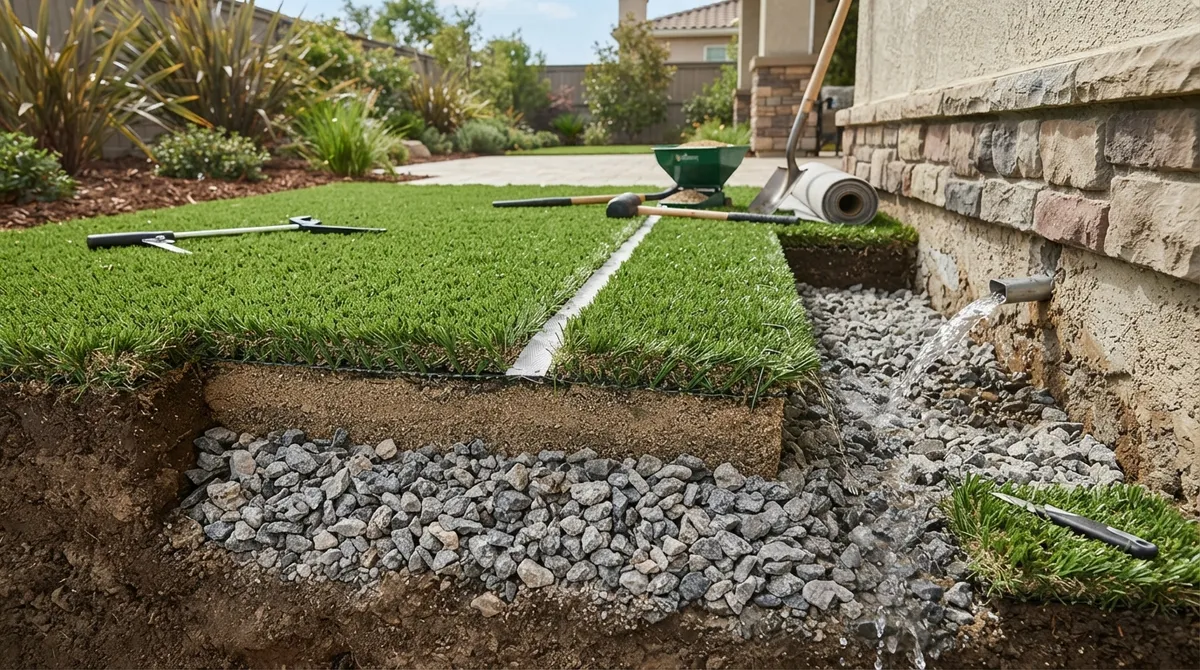
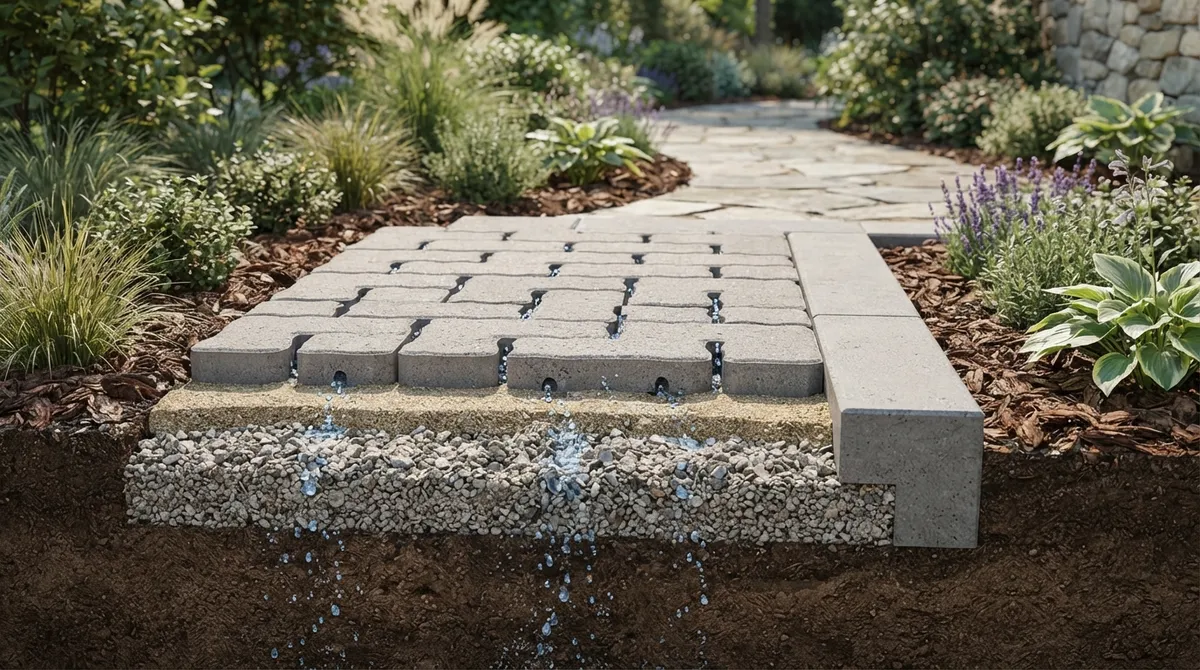
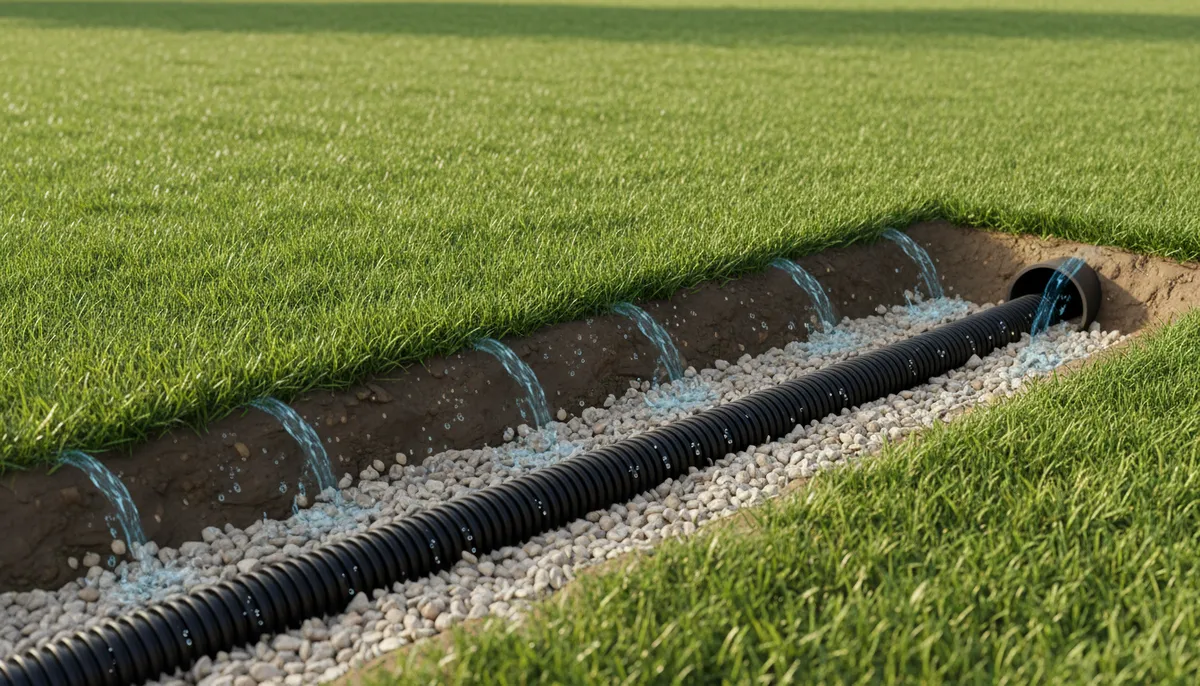
Beneath the backing sits a crushed rock or gravel base. This layer does two important jobs. First, it absorbs water that passes through the turf backing. Second, it channels that water sideways toward an exit point — whether that’s a drain, a slope edge, or a pipe system. According to testing data, when 12 liters of water hit 0.73 square feet of synthetic turf, about 2 liters are absorbed by the base while the rest flows through efficiently.
Choosing the right base materials is critical. Check out these 7 best base materials for turf installation in 2026 to understand your options.
How Water Actually Moves Through the System
Here’s a simple step-by-step look at the journey water takes through a well-designed turf drainage system:
- Rain hits the surface: Water lands on the turf blades and infill material.
- Water filters through infill: The infill allows water to pass downward quickly without pooling on top.
- Backing channels water down: Whether through holes or a fully-permeable design, the backing directs water into the base layer below.
- Aggregate base absorbs and redirects: Crushed rock spreads the water laterally and holds it temporarily while directing it toward drainage points.
- Slope or pipe carries water away: Gravity (via a built-in slope) or a pipe system moves water to a storm drain, French drain, or designated drainage area.
This five-step process happens in seconds with a properly installed system. Smart Turf’s Smart Flow system, for example, drains at an impressive 900 inches per hour. Even standard systems should drain at a minimum of 30 inches per hour to be considered effective.
The Role of Slope in Turf Drainage
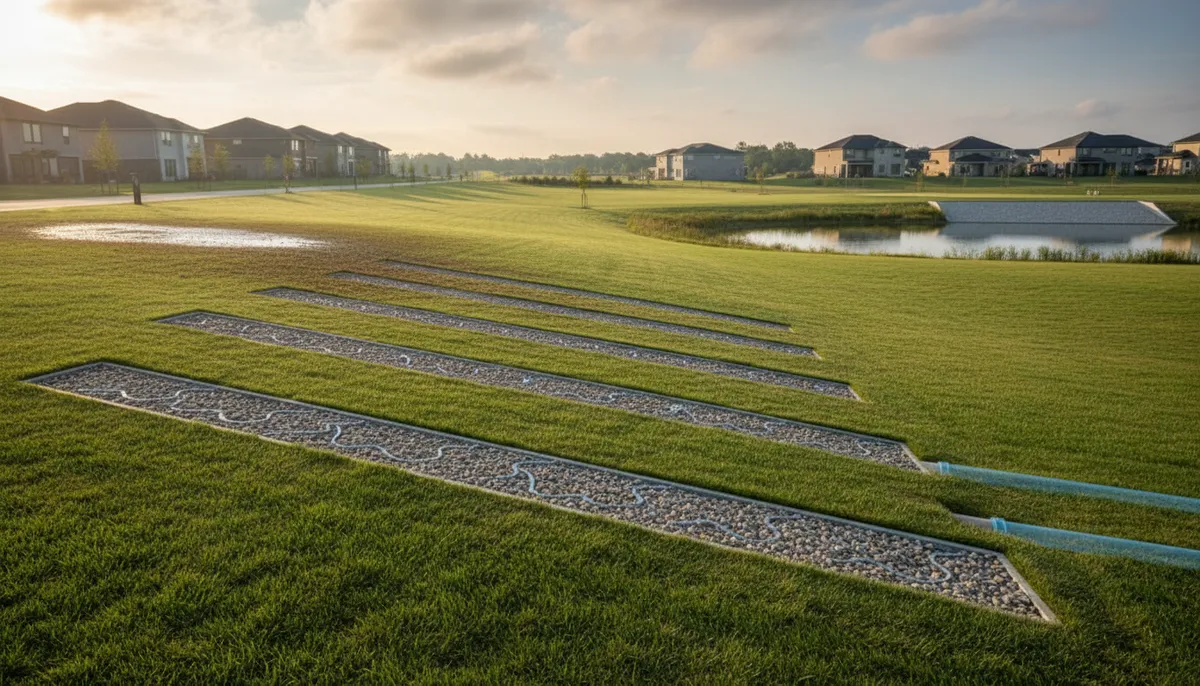
One of the most overlooked parts of turf drainage is the slope. Even if a yard looks completely flat, a slight grade is built in during installation. This slope uses gravity to push water in a specific direction — usually toward a drain or the edge of the property.
Without a proper slope, water has nowhere to go. It collects in low spots and creates puddles even when the turf backing itself drains well. That’s why professional installation matters so much. Experienced landscapers know how to create the right grade during ground prep so drainage works perfectly from day one.
If you’re curious about the 5 key stages of the artificial turf installation process, you’ll see that proper grading is always one of the first and most important steps.
Types of Drainage Systems Used in Turf Landscaping
Not every yard uses the same drainage approach. Here’s a breakdown of the most common systems and when each one is best suited:
| Drainage Type | How It Works | Best For |
|---|---|---|
| Perforated Backing | Water drains through small holes in turf backing | General residential lawns, low-to-moderate rainfall |
| Fully-Permeable Backing | Water drains across the entire backing surface | Pet areas, high-traffic zones, heavy rain regions |
| Aggregate Base System | Crushed gravel base absorbs and disperses water | All installations as a foundational layer |
| French Drain System | Perforated pipes in gravel trenches redirect water | High-rain sites, complex slopes, large installations |
| Surface Slope Design | Built-in grade moves water via gravity | All installations as a passive drainage boost |
French Drains: A Deeper Look
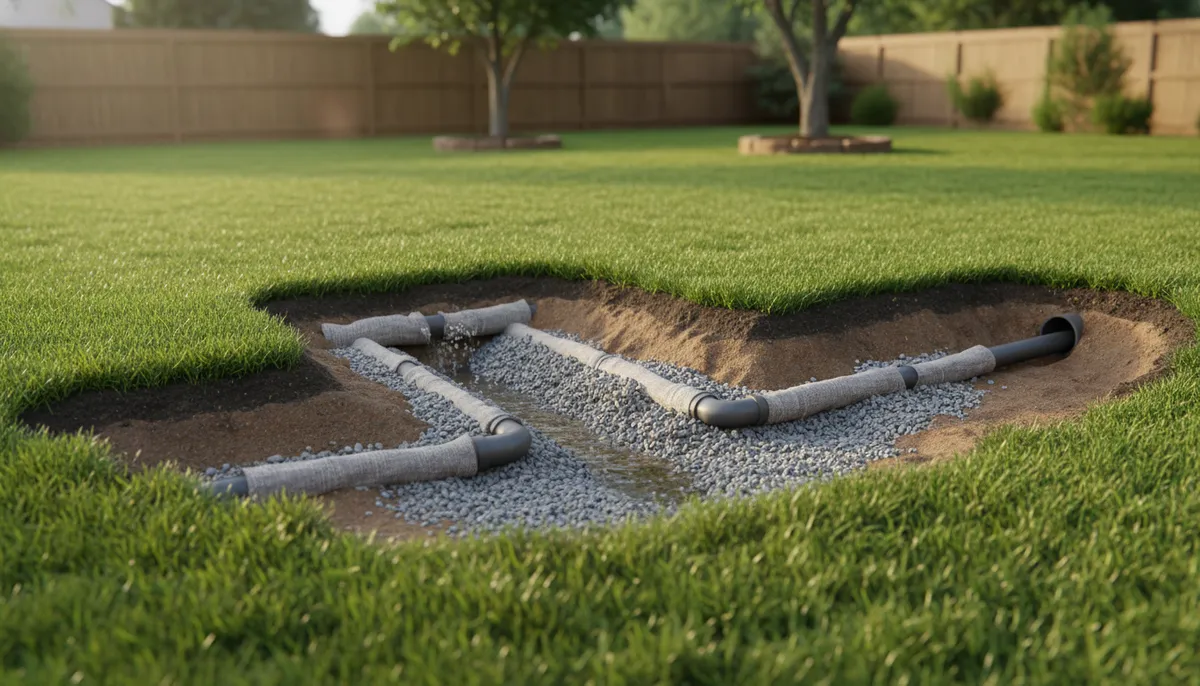
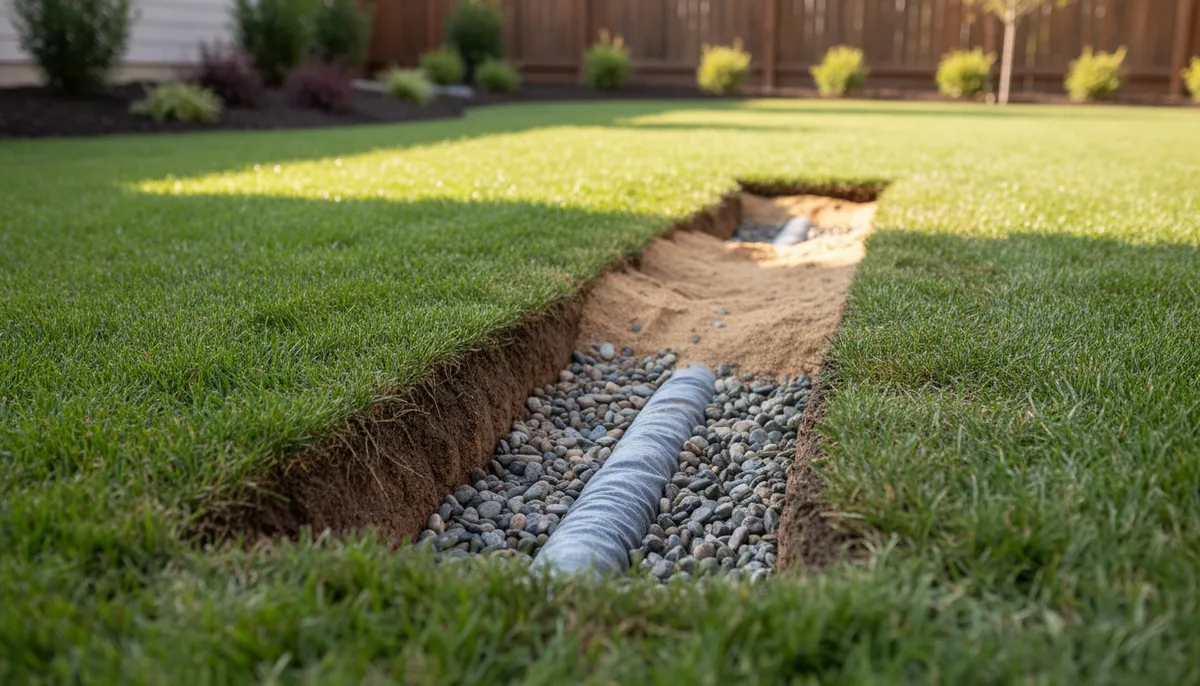
For properties that deal with heavy rainfall or complex terrain, French drains are often added to the turf drainage system. A French drain consists of a perforated pipe laid inside a gravel-filled trench. Water enters the pipe through small openings, travels along the pipe, and exits at a storm drain or a designated absorption area in the landscape.
French drains are popular on commercial properties and larger residential installations. They’re especially useful when surface slope alone isn’t enough to handle water volume. Landscape Illinois, a trusted industry resource, highlights proper drainage planning as one of the key factors in long-term landscape performance.
Drainage Performance: How Fast Is Fast Enough?
When evaluating turf drainage, drainage rate matters a lot. Here’s a quick comparison of what different systems can handle:
| System Type | Drainage Rate | Notes |
|---|---|---|
| Standard perforated backing | 30+ inches per hour | Minimum acceptable rate for general use |
| Premium flow-through backing | Up to 900 inches per hour | Ideal for pet areas, heavy use zones |
| K9Grass Flow-Through™ | Up to 100x faster than standard | Best-in-class for dog runs and pet turf |
| High-performance field systems | ~5x faster than conventional turf | 40%+ total drainage area on the carpet |
These rates matter in real life. During a Chicago summer downpour, you want your turf to recover fast. A system that drains at 30 inches per hour handles typical rain just fine. But pet owners or families with high-traffic yards may want to invest in faster drainage technology. Check out easy-clean pet turf solutions to see how drainage ties directly into pet yard hygiene.
Common Drainage Problems and How to Avoid Them
Even great systems can run into issues if installation is rushed or corners are cut. Here are the most common turf drainage problems and how to prevent them:
- Improper infill levels: Too little infill leaves gaps that slow water movement. Always use the recommended infill depth for your specific turf product.
- Unlevel base: If the aggregate base isn’t graded correctly, water collects in low spots. Professional grading during installation prevents this entirely.
- Compacted base material: Over time, base layers can compact and lose permeability. Using the right base materials from the start reduces this risk.
- Clogged backing perforations: Dirt, debris, and fine particles can block drainage holes. Regular light brushing and rinsing keeps them clear.
- Missing slope design: Relying on the base alone without a slope leads to water sitting on the surface after heavy rain.
Avoiding these artificial turf installation mistakes from the start saves you a lot of frustration down the road. Many drainage problems are completely preventable with proper planning and professional installation.
Why Drainage Matters for Specific Applications
Different types of outdoor spaces have different drainage demands. Here’s how turf drainage systems are tailored to specific uses:
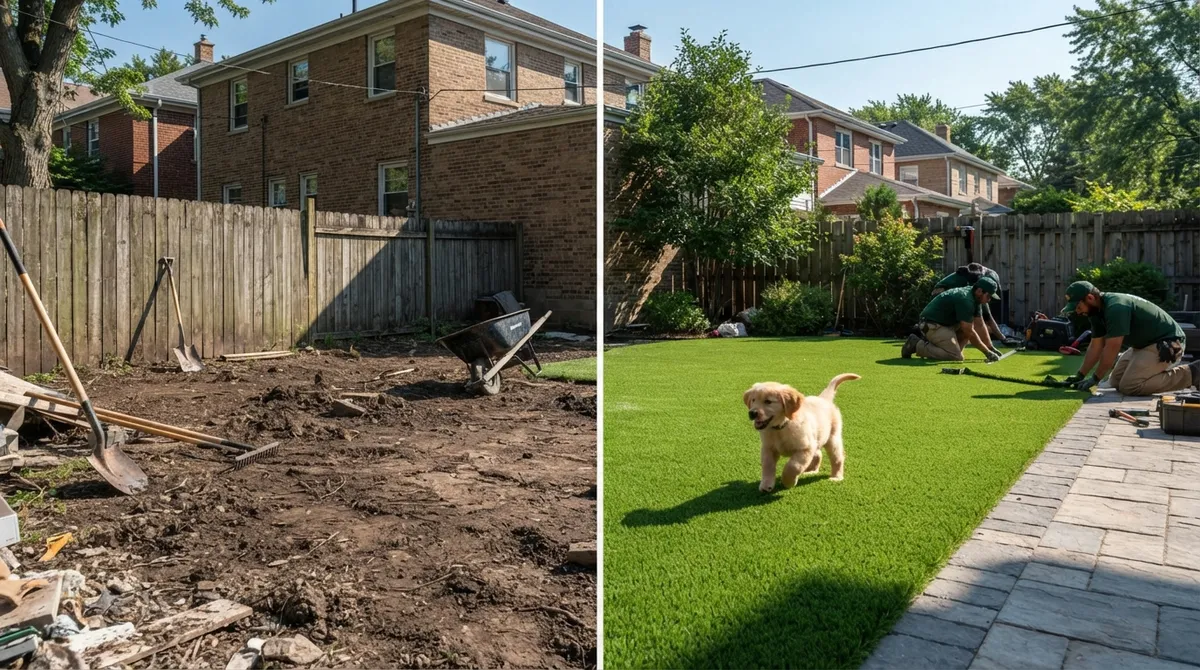
- Residential backyards: Families need a lawn that’s usable after rain. Fast drainage means kids can play on turf within minutes of a storm — no muddy shoes, no wet grass.
- Pet areas and dog runs: Drainage is critical for hygiene. Standing water mixed with pet waste creates odor and bacteria. A fast-draining system flushes waste quickly and keeps the area clean. Learn more about cleaning artificial turf from pet waste.
- Commercial properties: Office parks and retail spaces need outdoor areas that look great all the time — even after rain. Poor drainage can mean soggy paths, muddy entrances, and unhappy visitors.
- Rooftop and small-space installations: Urban properties with rooftop turf need drainage systems that work without access to soil. Specialized drainage layers and outlet pipes handle water removal on elevated surfaces. See how rooftop artificial turf works in Chicago.
What Makes a Turf Drainage System Last
A good drainage system should last as long as the turf itself — typically 15 to 20 years with proper care. Here are the key factors that extend the life of your drainage system:
- Using high-quality aggregate base materials from the start
- Installing a proper slope during ground preparation
- Choosing turf with the right backing type for your specific use
- Performing regular light maintenance like rinsing and brushing
- Addressing minor drainage issues quickly before they worsen
The team at Serenity Landscape Group has spent over 20 years perfecting turf installation techniques in the greater Chicago area. We know how Chicago’s heavy rains and freeze-thaw cycles affect drainage systems, and we design every installation to handle those local conditions with ease. You can explore our gallery of our work to see how proper drainage supports beautiful, long-lasting outdoor spaces.
For further guidance on industry best practices, the ICPI Certified Installer program and resources like the EPA’s green infrastructure guidance offer valuable insight into sustainable drainage design that professionals rely on.
Ready to Transform Your Outdoor Space?
Understanding how turf drainage systems work gives you the confidence to invest in synthetic turf knowing it will perform beautifully in any weather. From the turf backing to the aggregate base to the slope design, every layer plays a role in keeping your outdoor space dry, clean, and enjoyable all year long.
Whether you’re a homeowner in the Chicago suburbs, a condo owner with a rooftop space, or a commercial property manager looking to upgrade your outdoor areas, the right drainage system makes all the difference. Explore more about how to choose artificial turf for your backyard and start planning your ideal outdoor space today.
Ready to get started? Request your free estimate from our team and let’s design a turf drainage solution that keeps your outdoor space looking its best — rain or shine.
FAQs
Q: What are the main components of an artificial turf drainage system?
A: Great question! A turf drainage system has three main layers working together: the turf backing (perforated or fully-permeable), the infill material between the turf blades, and the aggregate base made of crushed rock or gravel. Together, these layers move water from the surface down and away efficiently.
Q: How much water can artificial turf drain per hour?
A: Standard perforated turf backing drains at least 30 inches of water per hour, which handles most typical rain events just fine. Premium systems like Smart Turf’s Smart Flow technology can drain up to 900 inches per hour — perfect for pet areas or high-rainfall regions like Chicago.
Q: What is the difference between hole-punched and fully-permeable turf backing?
A: Hole-punched backing has small perforations spaced about 4 to 6 inches apart, allowing water to drain through those specific points. Fully-permeable backing allows water to pass through the entire surface area, making it dramatically faster — sometimes up to 100 times faster — and a better choice for pet areas or high-traffic spaces.
Q: Why is slope important in a turf drainage system?
A: Even a small built-in slope during installation uses gravity to push water in a controlled direction, preventing it from pooling in low spots. Without a proper grade, water can collect on the surface even if the turf backing itself drains well — so slope design is just as important as the drainage materials.
Q: Is turf drainage suitable for pet areas and heavy Chicago rains?
A: Absolutely! Turf drainage is actually one of the best solutions for pet areas because fast-draining systems flush away waste quickly, keeping surfaces hygienic and odor-free. For Chicago’s heavy rains, choosing a fully-permeable backing combined with a solid aggregate base and proper slope ensures your yard recovers quickly after even the biggest storms.