Key Takeaways
-
Snow load, wind uplift, freeze-thaw cycles, frost heave, and moisture/salt all stress a pavilion, so the whole system (roof, framing, connections, anchors, footings) must work together rather than relying on an 'all-weather' label.
-
Don't rely on generic catalog load ratings; confirm snow, wind, and frost requirements for your specific site with your local building department or a qualified design professional.
-
Freeze-thaw damage is largely a water problem: grade the ground away from posts and footings, avoid water-trapping details, and add drainage where the yard stays wet.
-
Foundations matter greatly: have a contractor or engineer verify footing depth against local frost depth and soil type, since clay soils common in Chicagoland can heave, and size anchors to resist wind uplift.
-
Metal roofs shed snow in sudden slides, so use snow guards or a designated snow-storage zone and keep walkways, seating, and doors clear of the drip and slide area.
-
Choose materials by use and upkeep: wood suits warm, repairable designs needing finish refreshes; protected steel suits long spans but needs coating touch-ups; aluminum is low-maintenance but must be engineered for snow loads.
Picture a snowy January morning in the Chicago suburbs. Your backyard pavilion sits under a fresh blanket of white, and you’re sipping coffee by the window, feeling pretty good about your choices. Then the thaw comes. Then the freeze. Then another thaw. If your pavilion wasn’t built for that rollercoaster, you’ll know it by spring.
Picking the right pavilion materials for cold climates is about more than choosing a pretty frame. Snow weight, icy winds, freeze-thaw cycles, and soggy soil all test your structure every winter. The good news? Wood, protected steel, aluminum, and metal roofing can all work well when they’re chosen and detailed the right way.
In this friendly guide, we’ll walk through each material, what makes foundations so important, and how to keep water from causing trouble. Whether you own a suburban home, manage a commercial property, or run a small business with a patio, you’ll leave with a clear plan and smart questions to ask your builder.
Why Cold Climates Are Tough on Pavilions
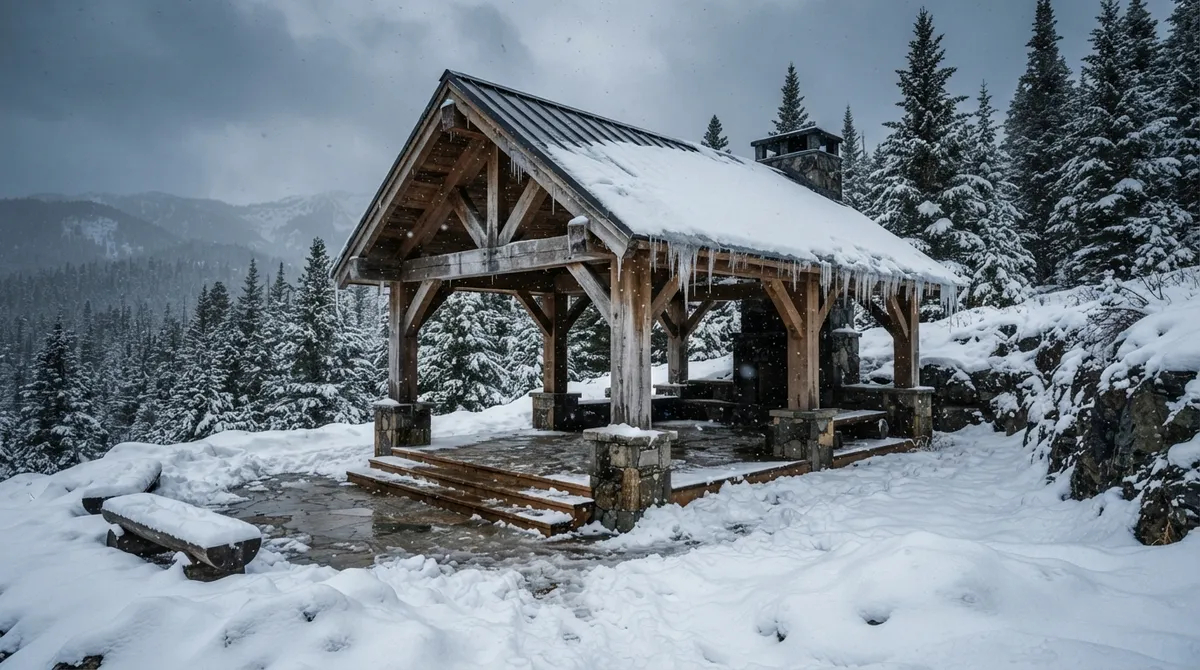
Cold weather doesn’t attack a pavilion in just one way. It comes at it from several angles at once, and each one matters.
- Snow load: Wet, heavy snow can weigh far more than you’d guess, and it sits on the roof for weeks.
- Wind and uplift: Winter winds can push on the roof and try to lift the whole structure.
- Freeze-thaw cycles: Water seeps into tiny gaps, freezes, expands, and slowly pries things apart.
- Frost heave: Frozen soil can push footings upward and shift posts out of alignment.
- Moisture and de-icing salts: Damp conditions and salt spray speed up rot and corrosion.
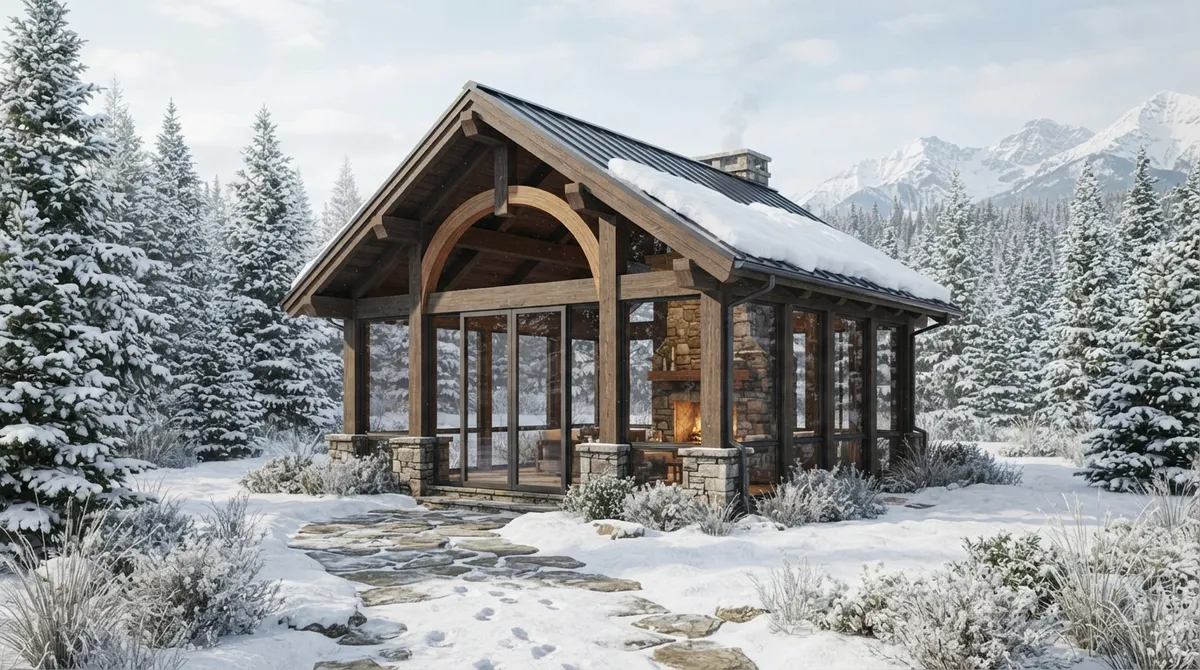
Here’s the big takeaway: for a permanent pavilion, the strength of the whole system matters more than any “all-weather” label on a product. The roof, framing, connections, and anchors all need to work together for your local conditions.
Start With Local Loads, Not Guesswork
Before you fall in love with a material, find out what your site actually demands. No single snow-load number or roof pitch works everywhere. Required design loads depend on your location, local building code, roof shape, exposure to wind, and other factors.
That means you shouldn’t trust a generic pounds-per-square-foot rating from a catalog and assume you’re covered. Instead, ask your local building department or a qualified design professional for the values that apply to your property.
This is where working with an experienced landscape team really helps. At Serenity Landscape Group, our pergola and pavilion services start with understanding your site, so the structure and the surrounding landscape are planned together from day one.
Wood Pavilions: Warm Looks and Easy Repairs
Wood is a classic for a reason. It blends beautifully with gardens, stone, and plantings, and it’s easy to repair if something gets damaged. For many Chicago-area homeowners, a wood pavilion feels like a natural part of the yard.
What Works Well in Winter
The right lumber makes a big difference. Look for naturally durable species or lumber that’s been properly preservative-treated for the way it will be used. Then focus on smart details that help the wood shed water instead of holding it.
- Keep wood off the soil using metal post bases or proper footing connections.
- Slope top surfaces so water runs off instead of pooling.
- Seal or finish end grain, where moisture sneaks in fastest.
- Leave small gaps for air flow so wood can dry out between storms.
What to Watch For
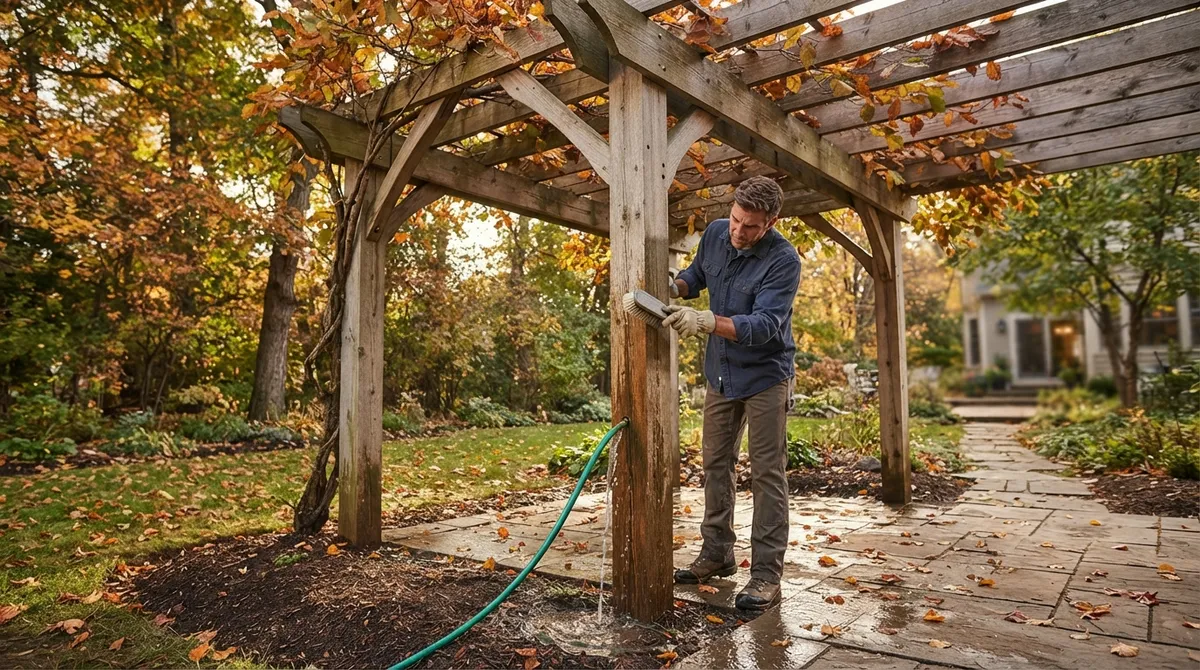
Wood needs a little love. Plan on periodic inspections and refreshing the finish when it starts to wear. Moisture can lead to decay and movement over time, so catching small issues early keeps them small. If you want to extend its life even more, our guide on how to protect your wood pergola this winter has easy tips you can use right away.
Steel Frames: Strength for Longer Spans
If you dream of a wide, open pavilion with fewer posts, steel can be a great fit. It’s strong, which means it can span longer distances while still carrying heavy snow.
The catch is corrosion. Exposed steel needs solid protection, such as galvanizing or a compatible coating system. Winter moisture and road or walkway salts can be rough on bare metal.
Here’s what to keep an eye on:
- Cut edges, where the protective coating may be thin or missing.
- Welded or bolted joints, where water likes to sit.
- Scratches or chips in the finish that expose bare steel.
- Base plates near the ground, where splashing and salt collect.
A quick walk-around each fall and spring, touching up any damaged spots, goes a long way. Steel is a terrific option for commercial properties that need big, open covered areas with low day-to-day upkeep.
Aluminum Frames: Rust-Free and Low Maintenance
Aluminum doesn’t rust, which makes it popular for people who want low maintenance. It’s lighter than steel and often comes with durable factory finishes that hold up well to wet weather.
But here’s an important point: lightweight doesn’t mean it can ignore snow. The aluminum sections and their connections still need to be engineered for the loads your site requires. A pretty kit isn’t the same as a snow-rated structure unless the documentation says so.
Aluminum can be a smart pick for condo rooftops and small commercial patios where weight and upkeep are big concerns. Just confirm the design loads in writing before you buy.
Metal Roofing: A Smart Choice When Done as a System
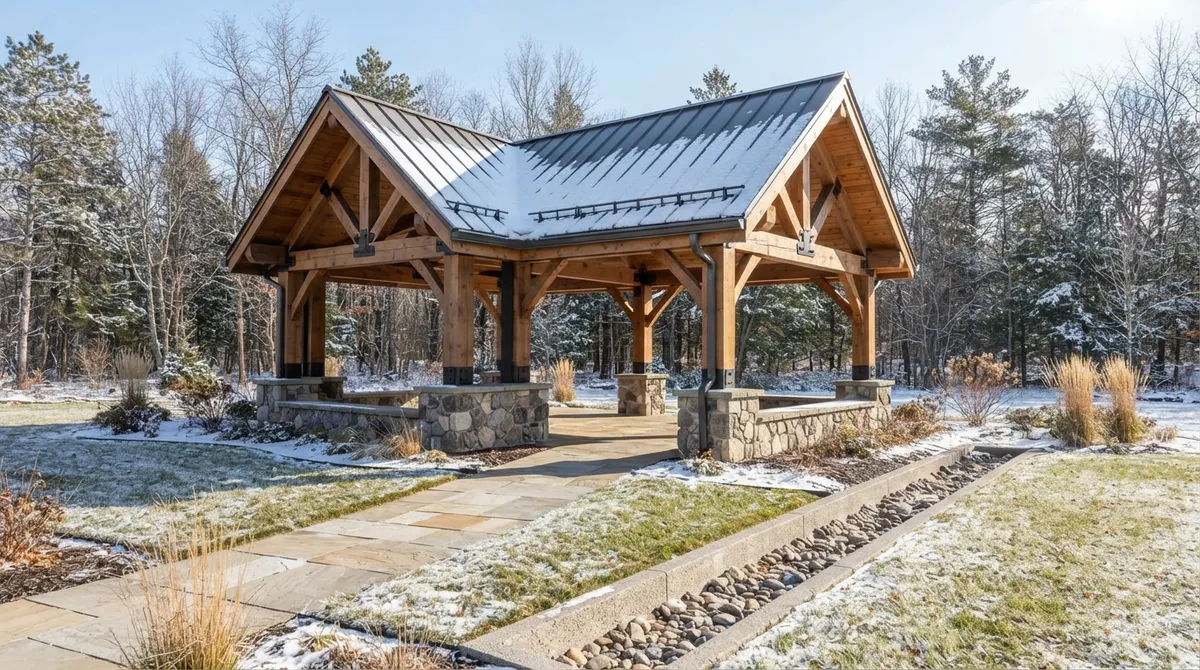
Metal roofing is durable and helps snow slide off, which many people love. But a great roof is more than the metal panels. Pitch, seams, underlayment, flashing, and fasteners all need to work together as one complete system.
The Snow-Shedding Surprise
Here’s something people often forget. When snow slides off a metal roof, it can come down all at once. That’s a real hazard if people walk, sit, or park beneath the edge.
Plan for this early with one of these approaches:
- Install snow guards to hold snow in place and let it melt gradually.
- Create a controlled snow-storage area where sliding snow can land safely.
- Keep walkways, seating, and doors away from the roof’s drip and slide zones.
This is where landscape planning and structural design meet. Your plant beds, paths, and patio layout should all respect where that snow is going to go.
Material Comparison at a Glance
| Material | Best Strengths | Main Watch-Outs | Maintenance Level |
|---|---|---|---|
| Wood (durable or treated) | Natural look, easy to repair | Moisture, decay, movement | Moderate: regular inspection and finish upkeep |
| Protected Steel | High strength, longer spans | Corrosion at edges and joints | Low to moderate: inspect and touch up coatings |
| Aluminum | Rust-resistant, lightweight | Needs engineering for loads and connections | Low |
| Metal Roofing | Durable, sheds snow | Snow slide hazards, system detailing | Low: check seams, flashing, and fasteners |
Notice there’s no single winner. The best pavilion materials for cold climates depend on your site, your budget, the look you want, and how much upkeep you’re happy to do.
Foundations: The Hidden Hero Under Your Pavilion
You could pick the finest materials in the world, but if the footings fail, the whole pavilion suffers. Cold climates bring frost heave, where freezing soil pushes upward on anything buried in it.
Footings are commonly designed with reference to your local frost depth, but the right answer can vary by town and by site. That’s why a contractor or engineer should confirm it for you instead of relying on a universal number.
A good foundation plan considers:
- Frost depth and soil type: Clay soils common around Chicagoland hold water and can heave more.
- Drainage: Water that can’t escape makes frost problems worse.
- Wind uplift: Anchors must resist the roof lifting, not just support its weight.
- Connections: Posts, brackets, and anchors must be sized to carry loads down to the footing.
If your pavilion sits on a paved surface, the base beneath matters too. A properly built paver patio can double as a stable, good-looking floor. Take a peek at our guide on integrating a pergola with a paver patio for ideas that work for pavilions as well.
Water Management: The Secret to Freeze-Thaw Durability
Here’s a fun fact that surprises many homeowners: freeze-thaw damage is often more about water than about the material. Keep water away, and almost any well-chosen material lasts longer.
Smart Steps Around Your Pavilion
- Grade the ground so water flows away from posts and footings.
- Avoid water traps in your details, such as flat ledges or open pockets where water collects.
- Use compatible flashing and sealants around joints and roof penetrations.
- Add drainage where the yard tends to stay wet, such as gravel trenches or French drains.
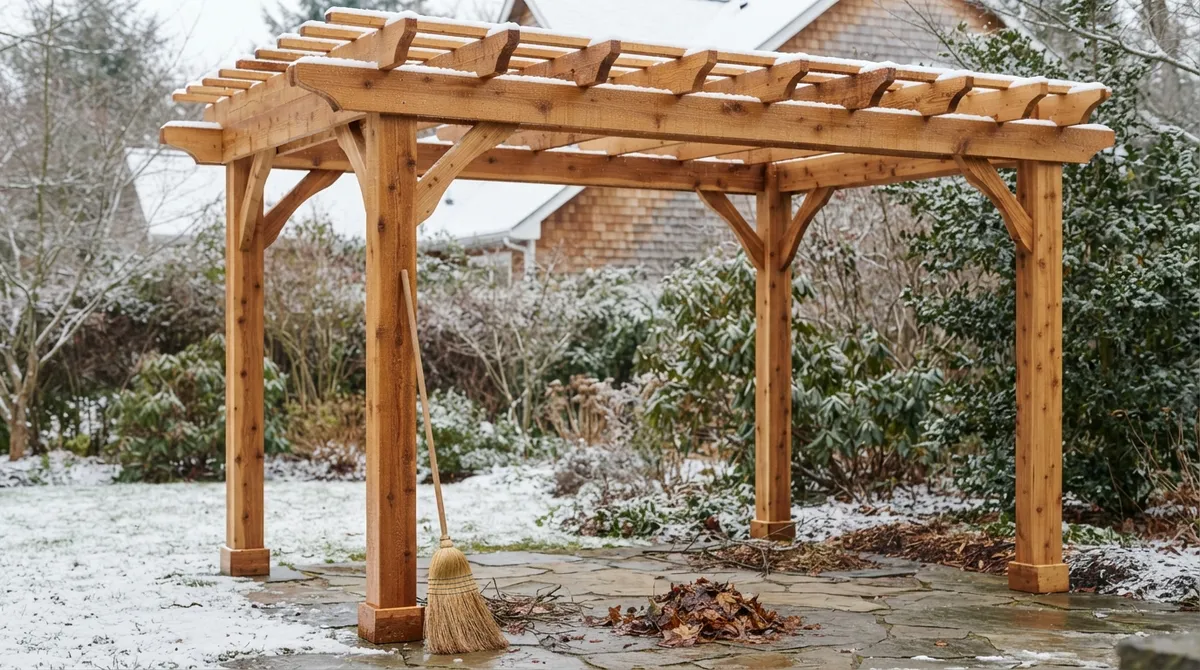
- Clear debris from gutters, roof edges, and post bases each fall.
Landscape design plays a big role here. Plants, grading, and hardscape choices all affect how water moves around your structure. If you want a quick checkup before winter hits, try our pavilion roof inspection steps before snowfall.
What About Temporary or Seasonal Pavilions?
Fabric canopies and lightweight kits are tempting. They’re affordable and quick to set up. But they’re usually not meant to hold a pile of snow.
If you choose a temporary structure, follow the manufacturer’s winter-use instructions exactly. That often means removing the fabric cover before snow arrives. Please don’t treat a temporary product like a permanent, snow-rated structure unless the documentation clearly says it is.
For year-round enjoyment in Chicago winters, a permanent pavilion designed for local loads is usually the safer and happier choice.
Matching Materials to Your Property
Different properties have different needs, and that’s perfectly okay. Here’s how we often think about it:
- Suburban homeowners: Wood or wood-look framing with a metal or shingled roof often matches the home and satisfies HOA expectations.
- Urban condo owners: Lightweight, low-maintenance aluminum may suit rooftops, as long as weight limits and municipal rules are checked first.
- Commercial property managers: Protected steel and metal roofing can offer durable, low-upkeep shelter for gathering spaces.
- New home builders: Consistent, code-ready designs help deliver turnkey outdoor features buyers love.
- Small business owners: A pavilion paired with lighting and seasonal planting can make a restaurant or shop patio feel inviting longer into the year.
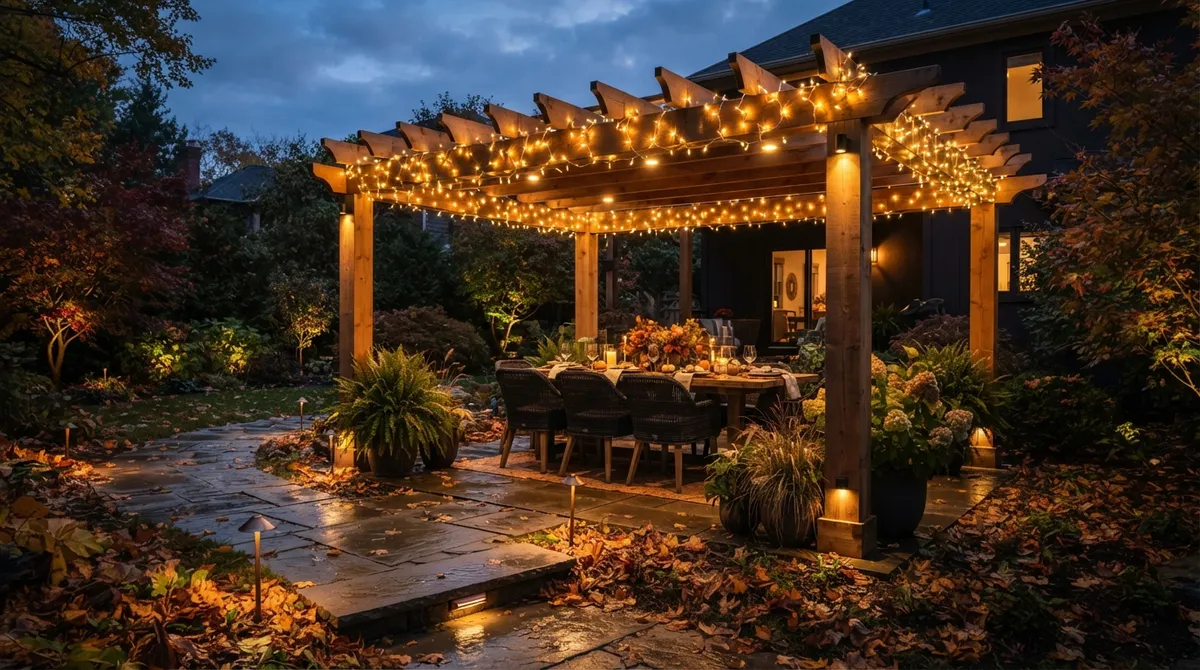
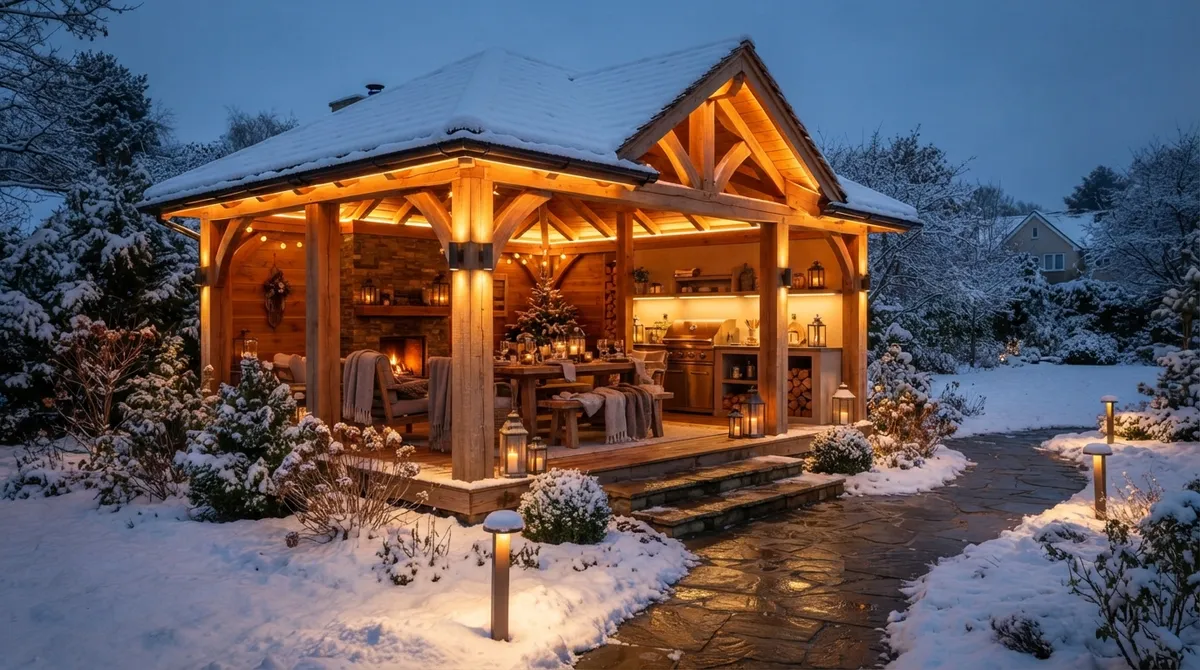
Speaking of ambiance, don’t forget lighting. A warm glow turns a snowy pavilion into a cozy retreat. Our tips on lighting a pavilion for cozy winter evenings can spark ideas.
Check Codes and Warranties Before You Build
Before any digging starts, take care of the paperwork side. Check your local permit and building-code requirements. Confirm that your chosen product has documented design loads, clear installation details, and warranty conditions you understand.
It’s also smart to consult trusted industry resources. Landscape Illinois offers helpful information about landscaping in our region, and the ICPI Certified Installer program is a great place to learn about quality hardscape installation. For the structural side of a permanent pavilion, bring in a qualified builder or structural professional.
A landscape services provider can then coordinate the rest: site layout, drainage, access, planting, and snow-storage planning, all working hand in hand with the structural design.
A Simple Planning Checklist
Ready to get started? Here’s an easy path to follow:
- Decide how you’ll use the pavilion in winter: just looking at it, or actually gathering under it.
- Confirm local snow, wind, and frost requirements with your building department.
- Choose a frame material that fits your style, span, and upkeep comfort.
- Select a roof system and plan for snow shedding.
- Design the foundation for frost, soil, drainage, and uplift.
- Plan grading, planting, and paths to guide water and snow safely away.
- Verify permits, product documentation, and warranty terms.
- Schedule seasonal inspections so small issues never become big ones.
Bringing It All Together
The best pavilion materials for cold climates aren’t about one magic product. They’re about matching the full system to your site: strong framing, a smart roof, solid footings, and clever water management. Wood brings warmth, steel brings strength, aluminum brings easy care, and metal roofing brings durability, as long as each is detailed properly and maintained with care.
With over two decades of experience across the greater Chicago area, our team at Serenity Landscape Group loves helping people turn their outdoor spaces into places they can enjoy in every season. When you’re ready to plan a pavilion built for real Midwest winters, get a free estimate or call us at (630) 359-5139. We’d be thrilled to help you dream it up, design it well, and enjoy it for years to come.
FAQs
Q: What is the best material for a pavilion in a cold, snowy climate?
A: There isn’t one best choice for every yard. Wood, protected steel, aluminum, and metal roofing can all work when they’re engineered for your local snow and wind loads and detailed to shed water. The framing, roof, connections, and footings matter just as much as the material itself.
Q: Does a pavilion need footings below the frost line?
A: Footings are commonly designed with reference to local frost depth, which helps prevent frost heave from shifting your posts. The right depth can vary by town and soil, so have a contractor or engineer verify it for your site instead of using a universal number.
Q: Are metal roofs safe for pavilions where people walk underneath?
A: Metal roofs can be a great, durable choice, but snow can slide off them all at once. Snow guards or a planned snow-storage area help keep walkways, seating, and doors safe below the roof edge.
Q: Can a fabric pavilion or gazebo stay up all winter?
A: Usually not. Fabric canopies and lightweight kits often can’t handle accumulated snow, so follow the manufacturer’s winter instructions, which may include removing the cover. Don’t treat a temporary product as a permanent snow-rated structure without clear documentation.
Q: How do I prevent frost heave, rot, and corrosion around my pavilion?
A: Water control is the secret. Grade the ground to drain away from posts and footings, avoid details that trap water, and use compatible flashing and sealants. Add regular inspections, and touch up finishes or coatings before small problems grow.