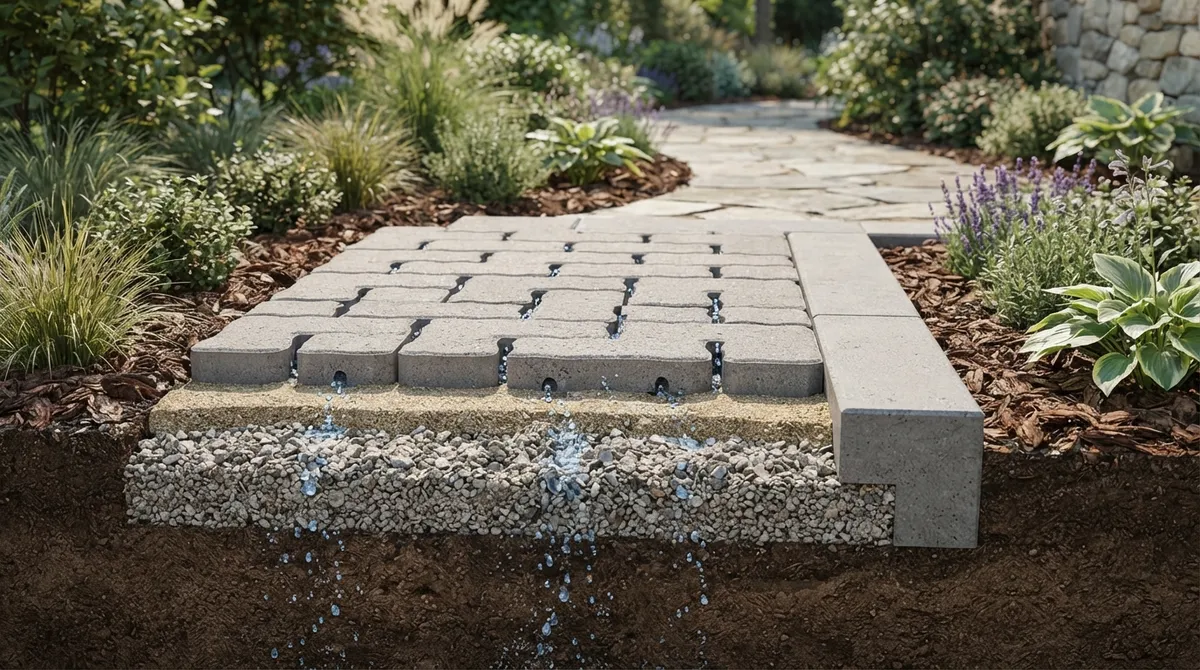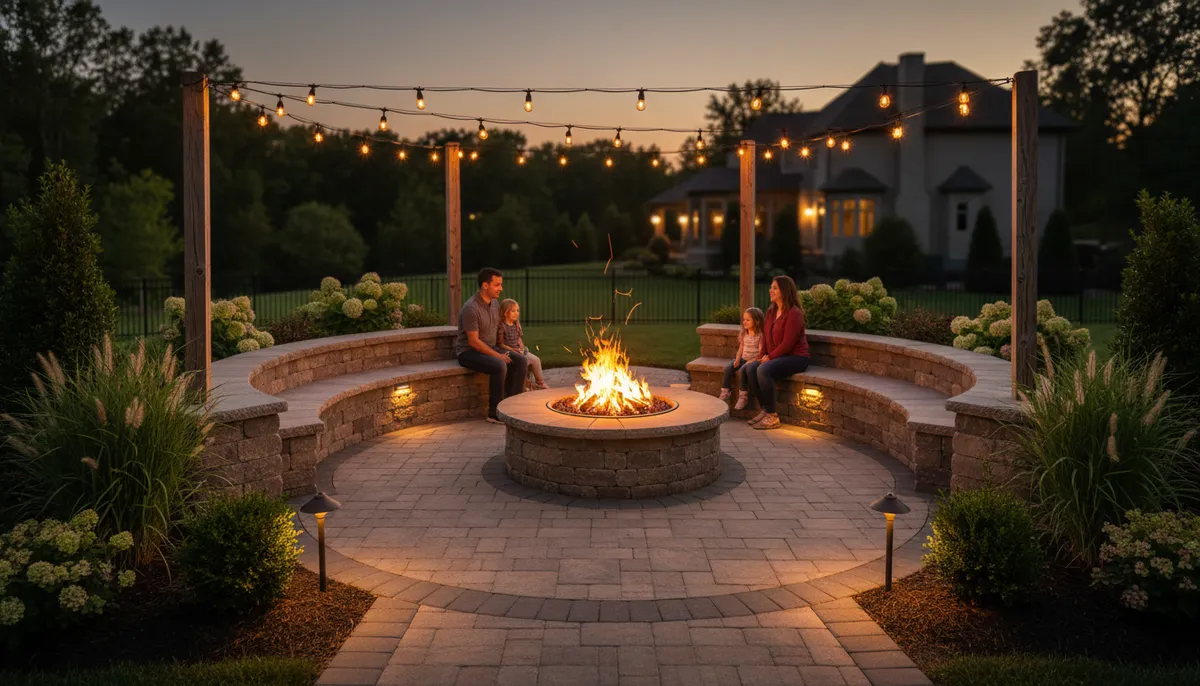
Key Takeaways
-
Install a fire pit paver patio that complements your home’s exterior style and creates a natural gathering point for family and friends.
-
Choose between circular or rectangular designs based on your yard’s layout and specific entertainment needs.
-
Consider integrating built-in seating walls for permanent, low-maintenance gathering spaces around the fire pit.
-
Select paver materials that offer durability, aesthetic appeal, and weather resistance for long-term outdoor enjoyment.
-
Plan for strategic outdoor lighting to extend the usability of your patio and create enchanting evening ambiances.
Picture this: a cool evening under the stars, the gentle crackle of flames, and the warmth of a fire pit bringing everyone together on your beautifully crafted paver patio. If you’ve been dreaming of creating that perfect outdoor gathering space, you’re in the right place. Fire pit paver patios have become the heart of modern outdoor living, combining style, function, and year-round enjoyment in ways that transform ordinary backyards into extraordinary retreats.
Whether you’re hosting summer barbecues or cozying up with blankets on crisp fall nights, a well-designed fire pit paver patio extends your living space beyond four walls. In 2026, homeowners throughout the Chicago area are discovering that these outdoor features not only add tremendous value to their properties but also become their favorite spots to relax and entertain. Let’s explore thirteen inspiring ideas that will help you create the fire pit paver patio of your dreams.
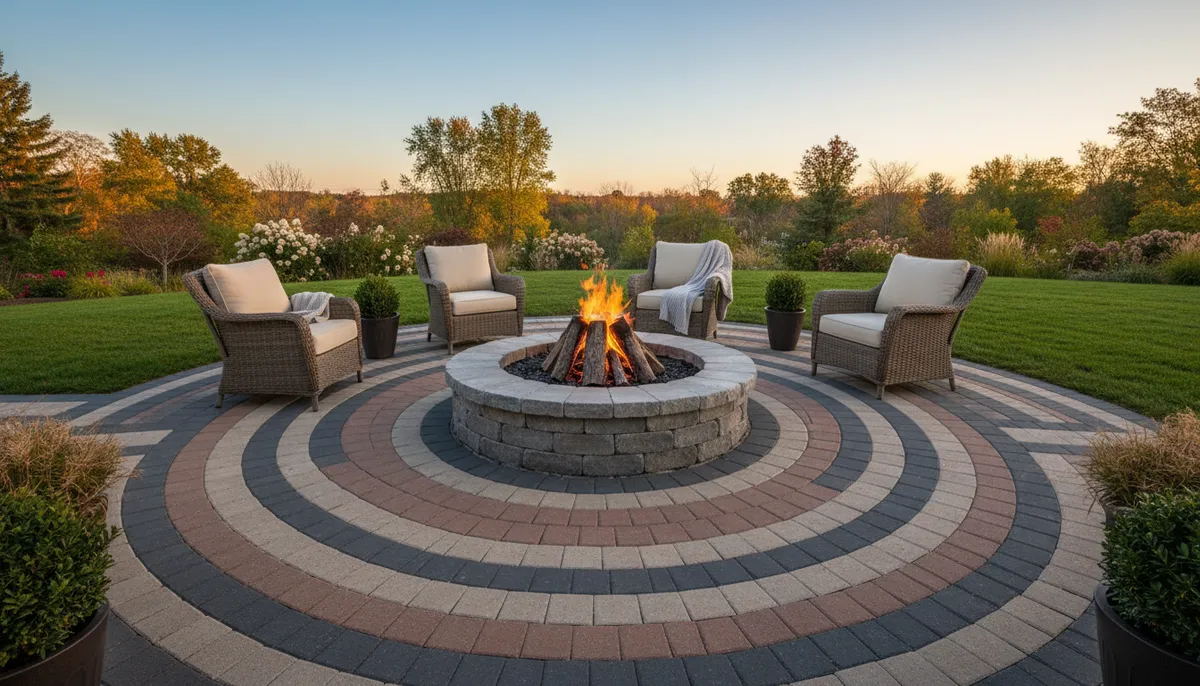
1. Classic Circular Fire Pit with Radial Paver Pattern
There’s something timeless about a circular fire pit surrounded by pavers arranged in a radial pattern that draws the eye inward. This design creates a natural gathering point where everyone feels equally included in the conversation. The circular shape works beautifully with most backyard layouts and offers flexibility in seating arrangements, whether you choose built-in benches or movable chairs.
When you select quality pavers for this design, consider colors that complement your home’s exterior. Warm earth tones like tan, brown, and rust create a cozy atmosphere, while cooler grays and blues offer a more contemporary feel. The radial pattern adds visual interest and helps define the fire pit as the focal point of your outdoor space.
This approach typically works well for patios ranging from 300 to 400 square feet, giving you plenty of room for seating while maintaining an intimate feel. The circular design also helps with drainage, as you can create a slight slope away from the center to prevent water pooling around your fire pit.
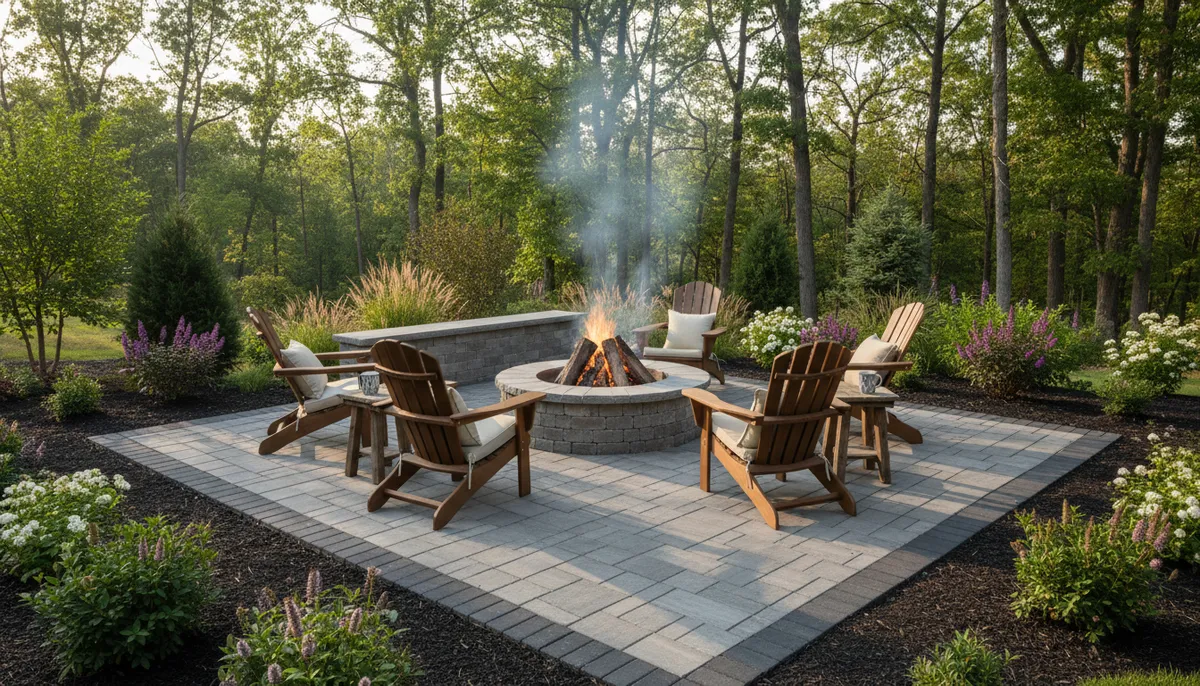
2. Rectangular Paver Patio with Corner Fire Pit
If you love clean lines and defined spaces, a rectangular paver patio with a corner fire pit might be your perfect match. This layout maximizes usable space and creates distinct zones for different activities. You can place the fire pit in one corner while reserving the rest of the patio for dining, grilling, or simply lounging.
The rectangular design works exceptionally well for narrow or elongated yards where a circular pattern might feel cramped. By positioning the fire pit in a corner, you open up the center of the patio for easy movement and furniture placement. This configuration also allows you to add features like a pergola or pavilion over the dining area while keeping the fire pit open to the sky.
Many homeowners choose contrasting paver colors or patterns to visually separate the fire pit zone from the rest of the patio. This creates visual interest and helps guests naturally understand how to use the space. The rectangular shape also makes it easier to integrate with existing landscape features or property lines.
3. Sunken Fire Pit Design for Intimate Gatherings
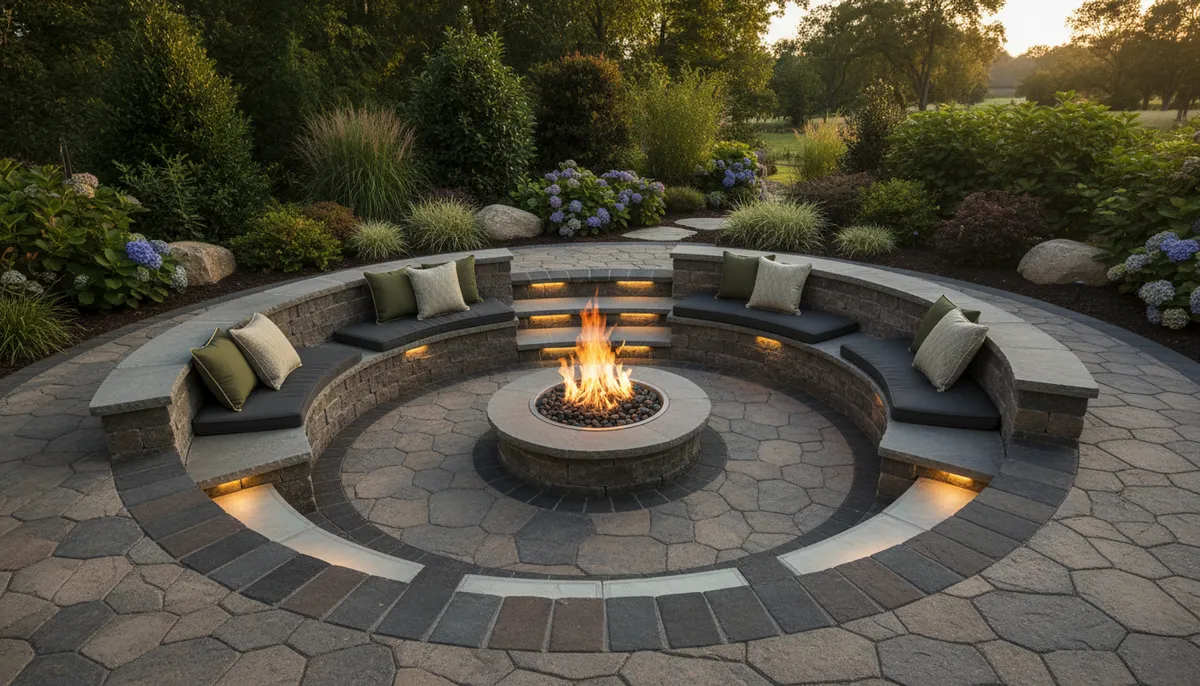
Want to create a truly unique outdoor experience? A sunken fire pit design takes your paver patio to the next level by lowering the seating area several inches below the main patio surface. This architectural approach makes the fire feel integrated into the landscape rather than simply placed on top of it, and it creates an incredibly cozy, intimate atmosphere.
The sunken design offers practical benefits too. By dropping the seating level, you naturally reduce wind exposure, keeping your fire burning more steadily and your guests more comfortable. The lowered position also provides built-in seating options with paver or stone steps that double as benches, eliminating the need for additional furniture.
This design trend has grown significantly in popularity throughout 2026, as homeowners discover that sunken fire pits feel more like destination spaces within their yards. The vertical dimension adds architectural interest and makes even modest-sized patios feel more substantial and thoughtfully designed. Just keep in mind that sunken designs require careful drainage planning to prevent water accumulation.
4. Multi-Level Paver Patio with Elevated Fire Pit Area
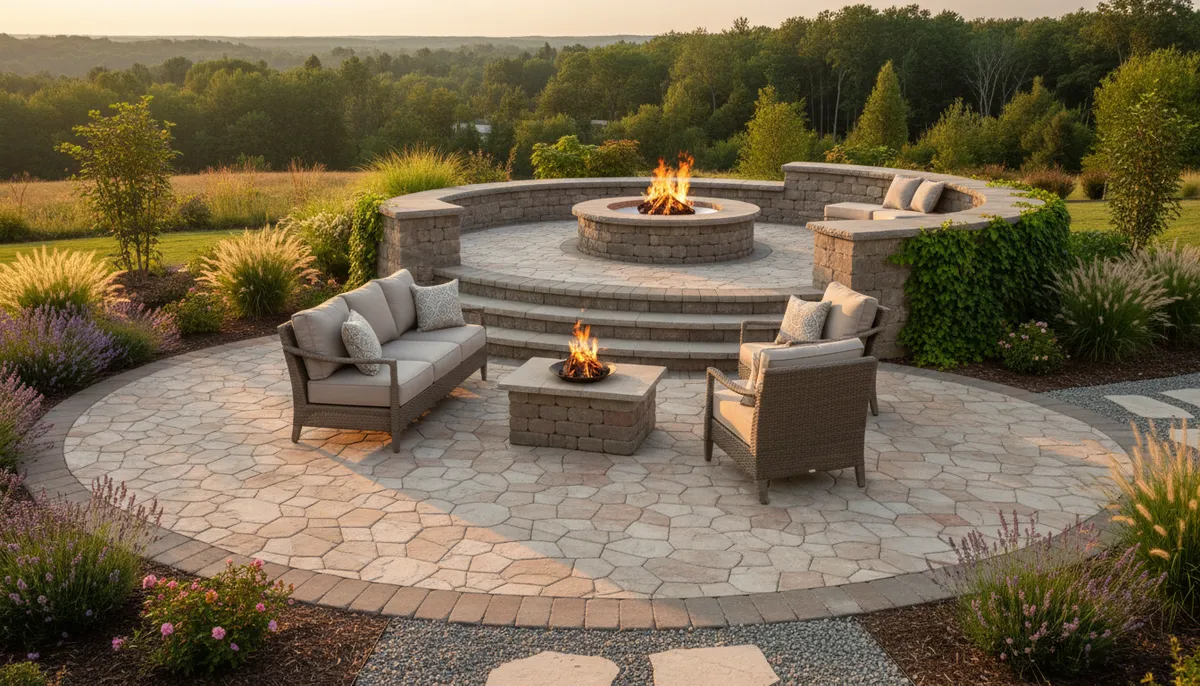
On the flip side of sunken designs, elevated fire pit areas create drama and dimension in flat yards. A multi-level paver patio uses different heights to define spaces and add visual interest, with the fire pit positioned on a raised platform that becomes a natural focal point visible from throughout your yard.
This approach works particularly well on sloped properties where you can work with the natural terrain. The elevation changes create natural transitions between different activity zones—perhaps a lower dining area, a mid-level lounging space, and an upper fire pit retreat. Each level feels like its own room while maintaining a connected flow.
Building retaining walls between levels using matching or complementary materials ties everything together beautifully. Our team at Serenity Landscape Group often designs these multi-level spaces to maximize both functionality and aesthetic appeal, ensuring each level serves a purpose while contributing to the overall design harmony.
5. Stone-on-Stone Construction with Natural Materials
For those who appreciate organic beauty, a stone-on-stone approach using natural materials creates an elegant, timeless fire pit paver patio. This design philosophy embraces the natural variations in stone—limestone, travertine, bluestone, or flagstone—to create a space that feels like it’s always been part of your landscape.
Natural stone pavers offer unique textures and color variations that synthetic materials simply can’t replicate. Each stone tells its own story with distinctive veining, mineral deposits, and surface character. When you pair a natural stone fire pit with matching patio pavers, you create a cohesive look that feels sophisticated yet unpretentious.
This design trend has dominated outdoor living spaces in 2026, particularly among homeowners who value authenticity and durability. Natural stone weathers beautifully, developing a patina over time that adds character rather than detracting from appearance. While the initial investment may be higher than concrete pavers, many find the longevity and timeless appeal worth every penny.
6. Built-In Seating Walls Around Fire Pit
Why add separate furniture when you can integrate seating directly into your fire pit paver patio design? Built-in seating walls, typically constructed at 24 inches tall, provide comfortable, permanent seating that never needs to be moved, stored, or replaced. This approach maximizes your usable patio space while creating a defined gathering area.
Seating walls can be constructed using the same pavers as your patio surface or contrasting materials for visual interest. Many homeowners add cushions or outdoor pillows for extra comfort, creating a cozy conversation pit around the fire. The walls also serve as convenient surfaces for setting drinks, plates, or s’more ingredients during gatherings.
From a practical standpoint, built-in seating eliminates the ongoing expense of replacing outdoor furniture and removes the hassle of seasonal storage. The permanent nature also means you’ll never worry about chairs blowing around during storms or fading in the sun. This investment in your patio infrastructure pays dividends for years to come.
7. Large-Scale Paver Patio with Multiple Entertaining Zones
If you love to entertain and have the space to work with, consider a large-scale paver patio design that incorporates multiple entertaining zones around your fire pit. These expansive designs, often 445 square feet or larger, create distinct areas for cooking, dining, lounging, and gathering around the fire—all within one cohesive outdoor living space.
The key to success with large patios is creating clear definition between zones while maintaining visual flow. You might use different paver patterns or colors to subtly mark transitions, or incorporate planters and low walls as natural dividers. The fire pit typically anchors one end of the space, drawing people naturally toward the warmth and ambiance.
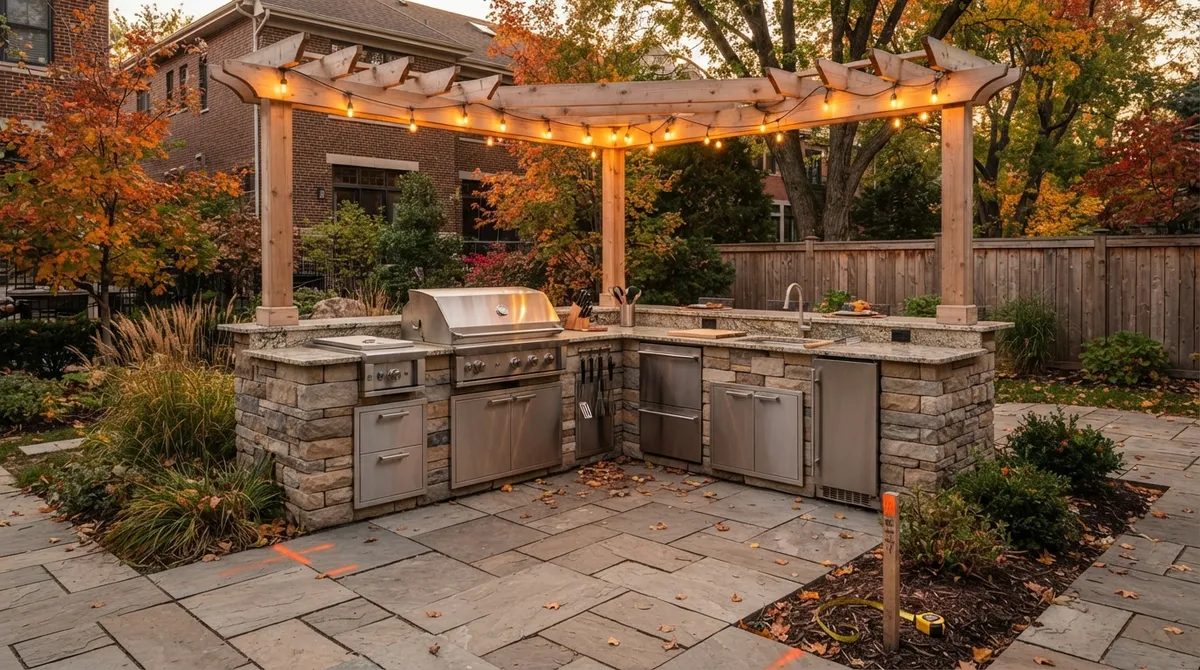
These comprehensive designs often include features like outdoor kitchens, bar areas, and covered structures that extend usability throughout the seasons. When professionally designed and installed, a large-scale paver patio becomes the equivalent of adding an entire outdoor room to your home, complete with all the amenities you need for comfortable outdoor living.
8. Rustic Brick Paver Fire Pit Patio
Nothing says classic outdoor charm quite like brick pavers arranged in traditional patterns around a cozy fire pit. Brick brings warmth, texture, and timeless appeal that complements both historic and contemporary homes. The natural red, brown, and orange tones create an inviting atmosphere that feels instantly comfortable.
Brick pavers offer excellent durability and weather resistance, making them ideal for Chicago area climates where temperature fluctuations can challenge outdoor materials. The individual bricks also allow for creative patterns—herringbone, basket weave, running bond—that add character and sophistication to your design without overwhelming the space.
A rustic brick paver patio paired with a matching or stone fire pit creates a cottage-garden feel or farmhouse aesthetic that many homeowners love. This approach works particularly well when you want your outdoor space to feel like it’s been there for generations, even if you’re installing it fresh in 2026. The low-maintenance nature of brick means your patio will continue looking great with minimal effort.
9. Contemporary Concrete Paver Design with Clean Lines
For those who prefer modern aesthetics, contemporary concrete pavers offer sleek sophistication with clean lines and minimalist appeal. Today’s concrete pavers come in large formats, smooth finishes, and subtle color palettes that create an urban, gallery-like atmosphere in your outdoor space.
The beauty of contemporary concrete paver designs lies in their simplicity and geometric precision. Large-format pavers in shades of gray, charcoal, or even white create expansive surfaces with minimal grout lines, making your patio feel more spacious. When paired with a modern fire pit featuring steel or concrete construction, the overall effect is striking and sophisticated.
This style works especially well for modern or contemporary homes where you want the outdoor aesthetic to mirror the architectural language of your house. The neutral palette also provides a perfect canvas for colorful furniture, plantings, and accessories that can easily change with trends or seasons. Plus, concrete pavers offer excellent durability and low maintenance—two qualities that never go out of style.
10. Integrated Lighting for Evening Ambiance
Your fire pit paver patio shouldn’t disappear when the sun goes down. Integrated outdoor lighting transforms your space into an enchanting evening retreat, extending usability and enhancing safety. Strategic lighting placement highlights architectural features, illuminates pathways, and creates layers of ambiance that complement your fire pit’s glow.
Consider multiple lighting types for maximum impact: uplights to showcase plantings or architectural elements, downlights from pergola beams or trees, pathway lights embedded between pavers, and accent lights within seating walls or planters. This layered approach creates depth and dimension while ensuring safe navigation throughout your patio area.
In 2026, smart lighting systems have become increasingly popular, allowing you to control brightness, color, and timing from your phone. You can create different lighting scenes for various occasions—bright and functional for dinner parties, soft and romantic for quiet evenings, or colorful and festive for celebrations. The combination of fire pit warmth and thoughtful lighting creates magical outdoor experiences.
11. Paver Patio with Gas Fire Pit for Convenience
While wood-burning fire pits offer traditional charm, gas fire pits provide convenience and control that many busy homeowners appreciate. A paver patio designed around a gas fire pit eliminates the need for firewood storage, simplifies lighting and extinguishing, and allows precise flame control at the turn of a dial.
Gas fire pits come in numerous styles, from traditional round designs to contemporary linear formats. They can be built-in using matching pavers and stone or installed as freestanding units. The consistent, clean-burning flame creates reliable warmth without smoke, sparks, or ash—making them ideal for covered patios or areas close to your home.
Many homeowners choose gas fire pits for their year-round reliability and instant-on convenience. There’s no waiting for kindling to catch or tending the fire throughout the evening. You simply turn it on when guests arrive and off when the party ends. For those seeking the ultimate in outdoor entertaining ease, gas fire pits paired with quality paver patios deliver unmatched performance.
12. Wood-Burning Fire Pit for Traditional Experience
On the other hand, some outdoor enthusiasts wouldn’t trade the crackling sounds and woodsmoke aroma of a traditional wood-burning fire pit for anything. If you’re among them, designing your paver patio around a wood-burning fire pit creates an authentic camping-style experience right in your backyard.
Wood-burning fire pits require thoughtful planning for firewood storage, ash disposal, and safety clearances. Your paver patio should include adequate space around the fire pit—typically at least 10-15 feet in diameter—to accommodate flying sparks and provide comfortable seating distances. Many designs incorporate a dedicated firewood storage area or built-in wood box as both a practical and decorative element.
The sensory experience of a wood-burning fire pit is unmatched: the sound of crackling wood, the dancing flames, the warmth that penetrates deeper than gas heat, and yes, even the slight smokiness that clings to your clothes and reminds you of the evening long after it ends. For many, these traditional elements are precisely what makes outdoor gatherings special and memorable.
13. Seasonal Extension with Fire Pit Paver Patios
One of the greatest benefits of investing in a fire pit paver patio is the dramatic extension of your outdoor living season. In the Chicago area, where winters can be harsh and springs arrive late, a well-designed fire pit allows you to enjoy your outdoor space from early spring through late fall—and even on milder winter days.
The combination of radiant heat from the fire and the thermal mass of your pavers creates a surprisingly comfortable microclimate even when temperatures drop. Many homeowners discover they use their fire pit paver patios more frequently than expected, making it the most-loved feature of their landscape. Fall evenings become particularly special, with the fire’s warmth offsetting cool breezes while you enjoy the changing leaves.
To maximize seasonal extension, consider adding wind-blocking elements like plantings, walls, or screens that protect your fire pit area without completely enclosing it. Outdoor heaters can supplement your fire pit’s warmth on particularly cold evenings. With thoughtful design, your paver patio becomes a four-season destination rather than a summer-only amenity.
Design Considerations for Your Fire Pit Paver Patio
When planning your fire pit paver patio project, several important considerations will guide your design decisions and ensure long-term satisfaction. First, think about size and scale. While a 300-square-foot patio might suffice for intimate gatherings, you’ll want 400-500 square feet or more if you regularly entertain larger groups or want distinct activity zones.
Material selection significantly impacts both aesthetics and performance. Natural stone offers timeless beauty but typically comes at a premium price. Concrete pavers provide excellent durability and design flexibility at more accessible price points. Brick creates classic charm with outstanding longevity. Consider your home’s architectural style, your budget, and your maintenance preferences when making material choices.
Safety should never be an afterthought. Ensure adequate clearances from structures, overhanging trees, and combustible materials. Check local building codes and HOA requirements, as many jurisdictions have specific regulations regarding fire pit placement and construction. Proper drainage planning prevents water pooling and ice formation, protecting both your investment and your safety.
Professional Installation vs. DIY Approaches
While some homeowners tackle simple paver patio projects themselves, fire pit installations require specialized knowledge and skills. Professional installation ensures proper base preparation, drainage management, and structural integrity—factors that directly impact your patio’s longevity and safety. Experienced contractors also navigate permitting requirements and building codes on your behalf.
The team at Serenity Landscape Group brings over two decades of experience to every fire pit paver patio project, combining technical expertise with creative design vision. We handle everything from initial concepts through final installation, ensuring your project not only meets but exceeds expectations. Our comprehensive approach addresses drainage, grading, material selection, and long-term performance.
Professional installation also provides peace of mind through proper insurance coverage and warranties. Should any issues arise, you have recourse through established business relationships rather than being solely responsible for troubleshooting and repairs. For most homeowners, the investment in professional services pays dividends through superior results and lasting satisfaction.
Maintenance and Long-Term Care
One of the wonderful aspects of paver patios is their relatively low maintenance requirements. Regular sweeping removes debris that could stain pavers or encourage weed growth. Occasional power washing restores original color and removes accumulated dirt. Joint sand should be replenished every few years to maintain paver stability and prevent shifting.
Your fire pit requires specific maintenance depending on its fuel type. Wood-burning pits need regular ash removal and occasional deep cleaning to prevent buildup. Gas fire pits require annual inspection of connections, burners, and ignition systems to ensure safe operation. Both types benefit from protective covers when not in use, extending their lifespan and maintaining appearance.
Sealing your pavers every few years protects against stains, enhances color, and makes ongoing maintenance easier. Quality sealers repel water, oil, and other substances while allowing the pavers to breathe. This preventive maintenance preserves your investment and keeps your fire pit paver patio looking fresh and inviting season after season.
Creating Your Perfect Outdoor Retreat
A fire pit paver patio represents more than a landscaping project—it’s an investment in your quality of life, your property value, and countless future memories. Whether you envision intimate family gatherings, large-scale entertaining, or simply a peaceful retreat where you can unwind after busy days, the right design transforms your backyard into the outdoor living space you’ve always wanted.
The thirteen ideas we’ve explored showcase the incredible versatility of fire pit paver patio designs, from traditional brick layouts to contemporary concrete installations, from intimate sunken fire pits to expansive multi-zone entertaining areas. Your perfect design will reflect your personal style, accommodate your specific needs, and work harmoniously with your property’s unique characteristics.
As you plan your fire pit paver patio, remember that professional guidance makes an enormous difference in both the design process and final results. Experienced landscape professionals help you avoid costly mistakes, maximize your budget, and create a space that performs beautifully for decades to come.
Ready to transform your backyard into the outdoor retreat you’ve been dreaming about? We’d love to help you create a stunning fire pit paver patio that becomes your favorite gathering place. Request your free estimate today and let’s start designing an outdoor space you’ll love for years to come. Your perfect fire pit paver patio is closer than you think, and we’re here to make your vision a reality.
FAQs
Q: How much does a fire pit paver patio typically cost?
A: The cost varies based on size, materials, and complexity, but most fire pit paver patios range from $8,000 to $25,000 or more. Simple designs using concrete pavers on 300-square-foot spaces start around $8,000-12,000, while large custom installations with natural stone, built-in seating, and premium features can exceed $25,000. Getting a professional estimate helps you understand costs specific to your project vision and property.
Q: Can I add a fire pit to my existing paver patio?
A: Yes, in many cases you can add a fire pit to an existing paver patio! The key considerations are ensuring adequate clearance from structures and combustible materials, verifying the patio base can support the fire pit’s weight, and checking local codes. A professional can assess your existing patio and recommend the best fire pit type and placement for safe, beautiful integration.
Q: What size should my fire pit paver patio be?
A: For comfortable entertaining, most fire pit paver patios range from 300 to 500 square feet. Smaller intimate spaces work well at 300-350 square feet, while larger entertaining areas benefit from 400-500 square feet or more. The ideal size depends on how many people you typically host, whether you want separate activity zones, and your available yard space. A good rule is allowing at least 10-15 feet diameter around the fire pit itself.
Q: Should I choose a gas or wood-burning fire pit?
A: Both options have benefits! Gas fire pits offer convenience, clean burning, instant on-off control, and no wood storage needs—perfect for frequent use and easy entertaining. Wood-burning fire pits provide traditional ambiance, crackling sounds, authentic campfire experience, and don’t require gas lines. Your choice depends on whether you prioritize convenience or traditional experience, plus local regulations and personal preferences.
Q: How long does it take to install a fire pit paver patio?
A: Most fire pit paver patio installations take 5-10 days from start to finish, though complex projects may take longer. The timeline includes site preparation, base installation, paver laying, fire pit construction, and finishing touches. Weather, site accessibility, and design complexity all influence scheduling. Professional installers provide accurate timelines during the planning phase and work efficiently to complete your project with minimal disruption.