Key Takeaways
-
Choose zeolite (Zeofill) for pet areas as it absorbs ammonia from urine and stays effective for up to five years, keeping odors controlled naturally while running cooler than rubber alternatives.
-
Apply infill at 2-3 pounds per square foot; a 50-pound bag covers 15-25 square feet depending on pile height, with annual top-ups needed to maintain blade uprightness and drainage in high-traffic zones.
-
Use coated silica sand or zeolite for households with children and pets to gain antimicrobial protection and odor control, which plain silica sand lacks despite being more affordable.
-
Select coconut fiber, cork, or walnut shell infills for eco-conscious projects as they are biodegradable, naturally cool surfaces, and resist mold without chemical additives.
-
Blend 70% silica sand with 30% crumb rubber for multi-use residential and commercial spaces to balance drainage stability with cushioning and resilience for versatile performance.
-
Upgrade to EPDM rubber over crumb rubber for playgrounds and children’s areas since it’s manufactured (not recycled tire material) and offers excellent shock absorption with cleaner production processes.
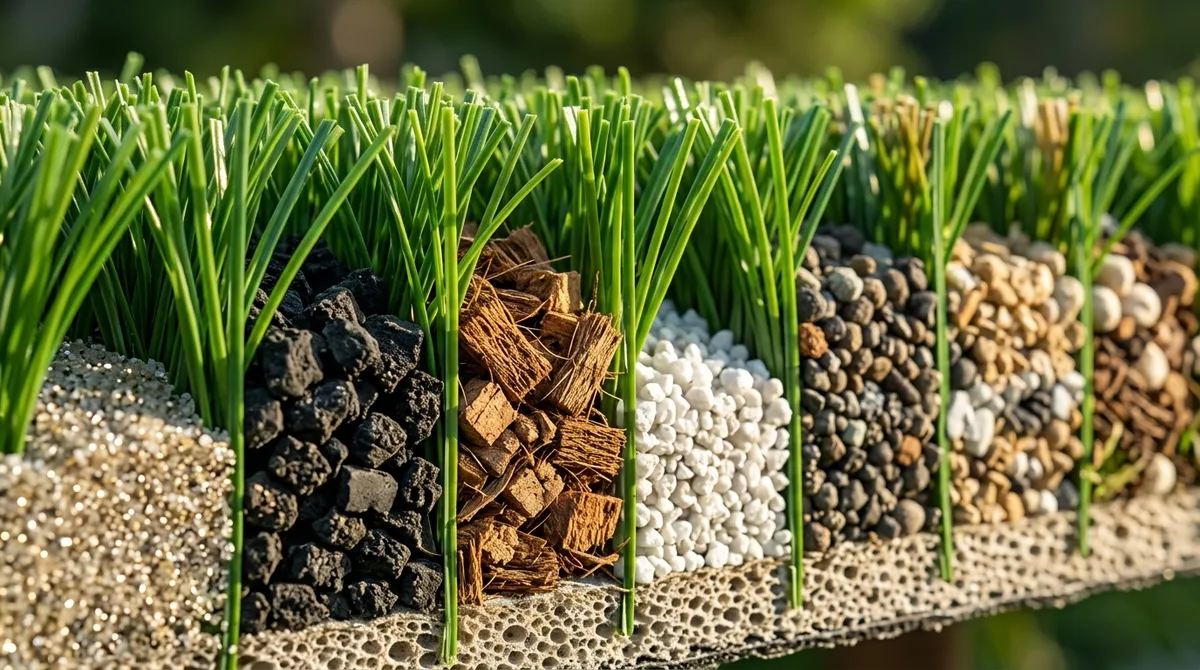
If you’ve been thinking about artificial grass for your yard, patio, or commercial property, you’ve probably done some research on turf styles, pile heights, and colors. But here’s something that often gets overlooked: the infill. Infill is the material placed between artificial grass blades, and it plays a huge role in how your turf looks, feels, and performs over time. The right infill keeps blades upright, improves drainage, adds stability, and provides cushioning underfoot. The wrong choice? It can lead to flat, smelly, or overheated turf that disappoints. Whether you’re a Chicago-area homeowner, a commercial property manager, or a developer finishing out a new build, understanding the different infill types for artificial grass will help you make a smart, lasting investment. Let’s walk through nine of the best options available in 2026.
Why Infill Matters in Artificial Turf Installation
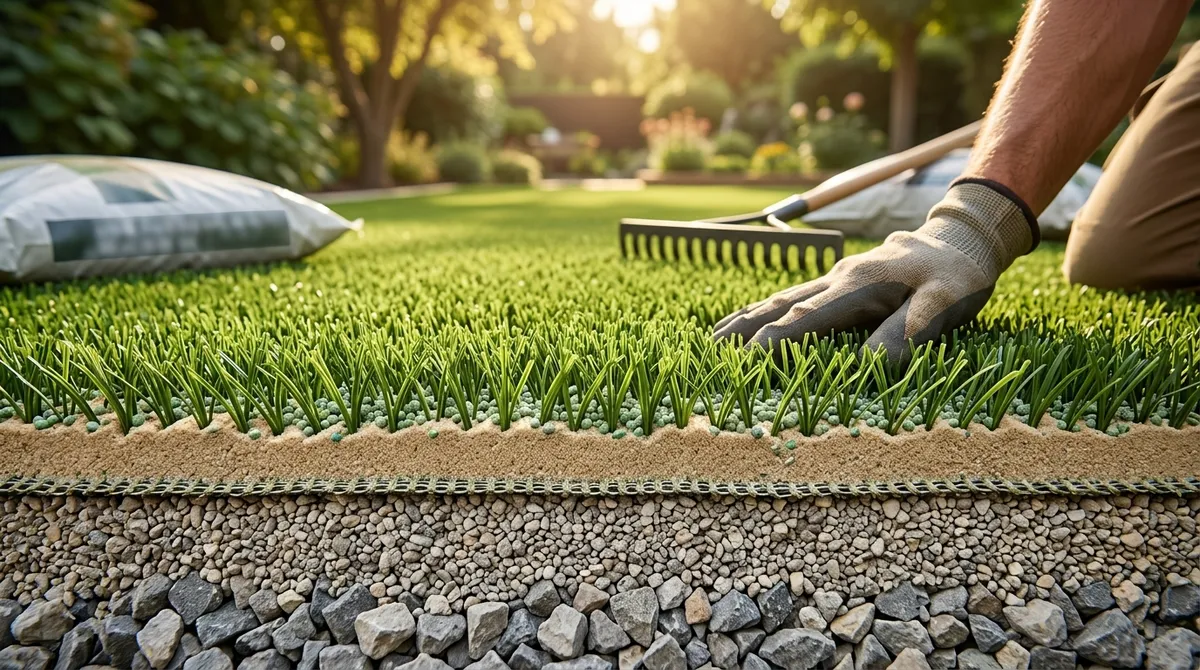
Infill isn’t just filler — it’s the foundation of a great artificial grass system. Think of it like the subsoil beneath a natural lawn. Without it, your turf would shift, flatten, and drain poorly. A proper infill layer adds weight for stability, keeps the turf blades standing tall, cushions foot traffic, and helps water flow through quickly. For our clients across the greater Chicago area, artificial turf installation always includes a carefully chosen infill plan tailored to how the space will be used.
Standard infill application rates run between 2 to 3 pounds per square foot for most installations. A 50-pound bag typically covers 15 to 25 square feet depending on turf height and use. Choosing the right type — or the right blend — makes all the difference in long-term performance.
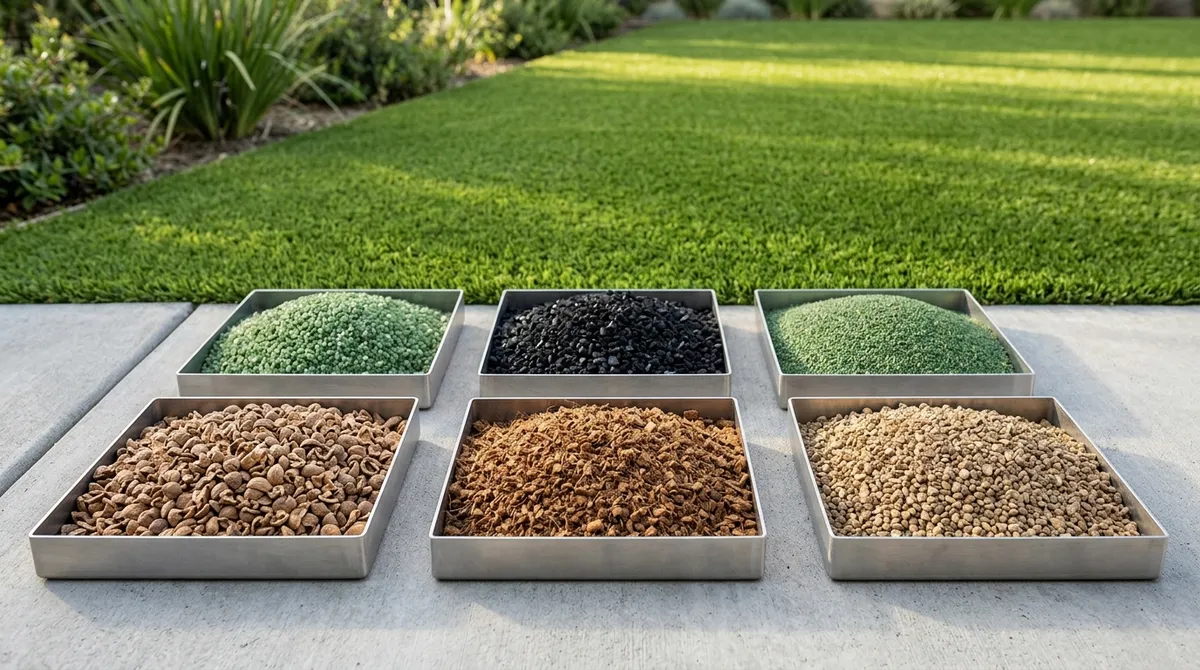
Quick Comparison: Infill Types at a Glance
| Infill Type | Best Use | Key Benefit | Heat Level |
|---|---|---|---|
| Silica Sand | Residential lawns | Affordable, stable | Moderate |
| Coated Sand (Envirofill) | Families, pets | Antimicrobial protection | Moderate |
| Zeolite (Zeofill) | Pet areas | Odor absorption | Low |
| Crumb Rubber | Sports fields | Shock absorption | High |
| EPDM Rubber | Playgrounds | Safe, colorful cushion | High |
| Coconut Fiber (Geofill) | Eco lawns | Natural, cooling | Low |
| Cork | Sustainable installs | Biodegradable, soft | Low |
| Walnut Shell | Organic landscapes | Natural cooling | Low |
| Sand + Rubber Blend | Multi-use areas | Balanced performance | Moderate |
1. Silica Sand — The Reliable Classic
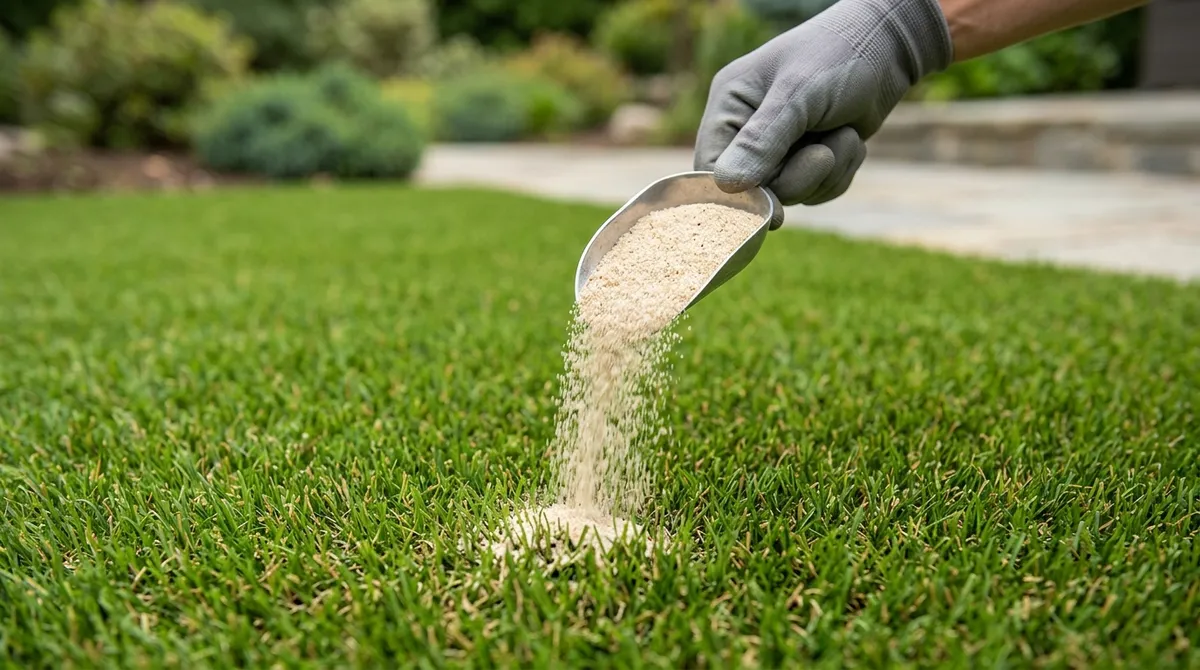
Silica sand is the most common and affordable infill option available. It’s kiln-dried and rounded, which allows water to drain quickly and keeps turf blades supported. For suburban homeowners installing a residential lawn, silica sand is often the go-to starting point. It’s widely available and easy to work with during installation.
Here’s what makes silica sand a popular choice:
- Budget-friendly and widely available
- Excellent drainage properties
- Keeps blades standing upright
- Works well for general residential use
- Easy to install and top up over time
The main drawback is that plain silica sand offers no antimicrobial protection and can hold heat in direct sun. If you have kids or pets, you may want to upgrade to a coated option.
2. Coated Silica Sand — Upgraded Protection
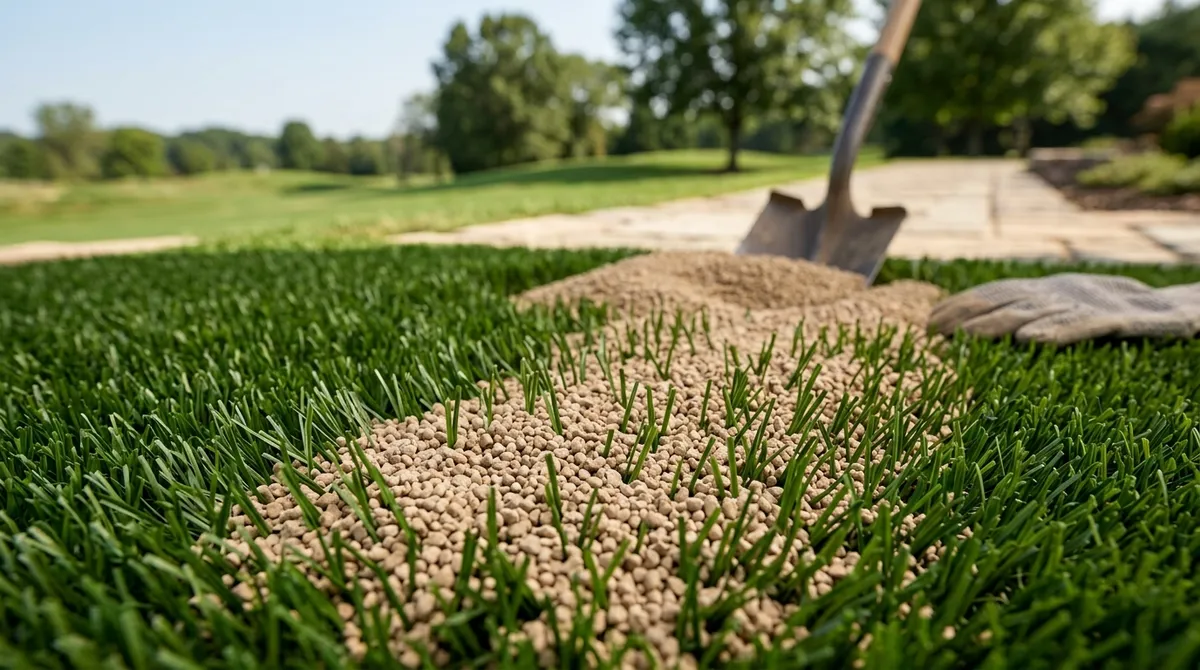
Coated silica sand products (like Envirofill, Durafill, or acrylic-coated varieties) take the classic formula and add a layer of antimicrobial protection. This helps prevent bacteria, mold, and odors from developing in your turf over time. It’s a popular upgrade for families with children or pet owners who want a cleaner surface.
Coated sand infill is especially smart for:
- Households with young children
- Pet-friendly turf areas
- High-traffic residential lawns
- Areas prone to moisture or humidity
The cost is slightly higher than plain silica sand, but the added hygiene benefits make it well worth it for most families.
3. Zeolite (Zeofill) — The Pet Owner’s Best Friend
Zeolite is a natural volcanic mineral with an incredible ability to absorb ammonia — the primary source of odor from pet urine. If you have dogs and are planning a dedicated pet zone in your yard, zeolite infill (often sold as Zeofill) is one of the best investments you can make. It stays effective for up to five years in pet applications.
Zeolite also tends to stay cooler than rubber-based infills, which is a nice bonus for paw-friendly comfort. It’s a natural material, so it fits well with eco-conscious landscaping goals too. You can explore more pet-friendly and sustainable outdoor design ideas through our softscapes services.
4. Crumb Rubber — The Sports Field Standard
Crumb rubber infill is made from recycled tires and has long been the go-to for sports fields, putting greens, and high-traffic recreational areas. It provides excellent shock absorption and elasticity, which helps reduce injuries during athletic activities. A common formula is a blend of 70% silica sand and 30% crumb rubber for balanced support.
For commercial property managers or small business owners who need durable, resilient turf in high-traffic zones, crumb rubber delivers. That said, it does retain heat on hot summer days and has been the subject of some ongoing safety research. Always ask your installer about current material certifications and guidelines from organizations like Landscape Illinois.
5. EPDM Rubber — Playground-Safe Cushioning
EPDM (ethylene propylene diene monomer) rubber infill is a premium alternative to crumb rubber. It’s manufactured rubber (not recycled), which means it’s free from the concerns sometimes associated with recycled tire material. It also comes in a variety of colors and is commonly used in playground turf installations.
Key advantages of EPDM rubber include:
- Excellent shock absorption for playground safety
- Available in multiple colors for design variety
- Cleaner manufacturing process than crumb rubber
- Long-lasting elasticity under heavy use
The tradeoff is price — EPDM is one of the more expensive infill options. But for a commercial or residential play area, the safety benefits are hard to argue with.
6. Coconut Fiber (Geofill) — Eco-Friendly and Cooling
Coconut fiber infill, often marketed as Geofill, is one of the most exciting organic options available in 2026. Made from natural coconut husks, it provides a cooling effect, resists mold naturally, and breaks down safely at end of life. For homeowners and developers prioritizing sustainable landscaping, this is a standout choice.
Coconut fiber infill works especially well when you want:
- A cooler surface temperature underfoot
- An eco-friendly, biodegradable material
- Natural mold resistance without chemical additives
- A soft, comfortable feel for barefoot walking
The organic material may require occasional top-ups as it compacts over time, but many homeowners find it worth it for the sustainability benefits and barefoot-friendly comfort.
7. Cork — The Sustainable Softscaping Star
Cork infill is harvested from cork oak tree bark — a renewable and biodegradable resource. It’s lightweight, naturally antimicrobial, and provides a comfortable cushion underfoot. Cork infill stays cool in summer heat, which is a genuine selling point for Chicago-area homeowners dealing with sunny yards and rooftop spaces.
Urban condo owners with rooftop turf installations especially love cork because it’s lightweight (reducing load on rooftop structures), eco-friendly, and low-maintenance. If you’re curious about how full outdoor transformations come together, check out our gallery of our work to see examples of what’s possible.
8. Walnut Shell — Natural and Durable
Crushed walnut shells are another organic infill option gaining popularity for sustainable artificial grass installations. The shells are ground into small granules that provide good drainage, a natural look, and a cooler surface temperature. They’re also resistant to mold and compaction.
Walnut shell infill is a great fit for homeowners or small business owners who want their artificial turf to feel as natural as possible. It pairs well with organic landscape designs and lush planting schemes. Want to see how artificial turf complements other landscape elements? Our landscape design guide walks through integrating turf into a cohesive outdoor plan.
9. Sand and Rubber Blend — The Best of Both Worlds
For many residential and commercial applications, a blended infill of silica sand and crumb rubber offers the most balanced performance. The sand provides stability and drainage, while the rubber adds cushioning and resilience. This combination is often recommended for multi-use areas where both comfort and durability matter.
A typical blend uses:
- A base layer of kiln-dried silica sand for drainage and stability
- A top layer of rubber granules for cushion and blade support
- A 70/30 sand-to-rubber ratio as the most common starting point
This approach gives you a versatile, cost-effective infill solution that works across lawn areas, dog runs, patios, and light recreational spaces. For guidance on meeting installation standards, resources like the ICPI Certified Installer network can point you toward professionals who follow best practices.
How to Choose the Right Infill for Your Space
Picking the right infill comes down to three key questions. Ask yourself:
- Who uses this space? — Kids and pets need antimicrobial or odor-fighting infill. Athletes need shock-absorbing rubber blends.
- What’s your climate like? — In Chicago’s summers, cooling infills like cork or coconut fiber can make your turf noticeably more comfortable.
- What are your sustainability goals? — Eco-conscious homeowners and developers may prefer organic options like coconut fiber, cork, or walnut shell.
At Serenity Landscape Group, we guide every client through this decision as part of our turf installation process. We consider the specific use case, traffic level, aesthetic goals, and budget to recommend the infill that will perform best for years to come. You can learn more about how we approach every project on our design and installation process page.
Infill Application: What to Expect
Once the right infill is selected, here’s the general process for getting it applied correctly:
- Lay and secure the artificial turf over a compacted base
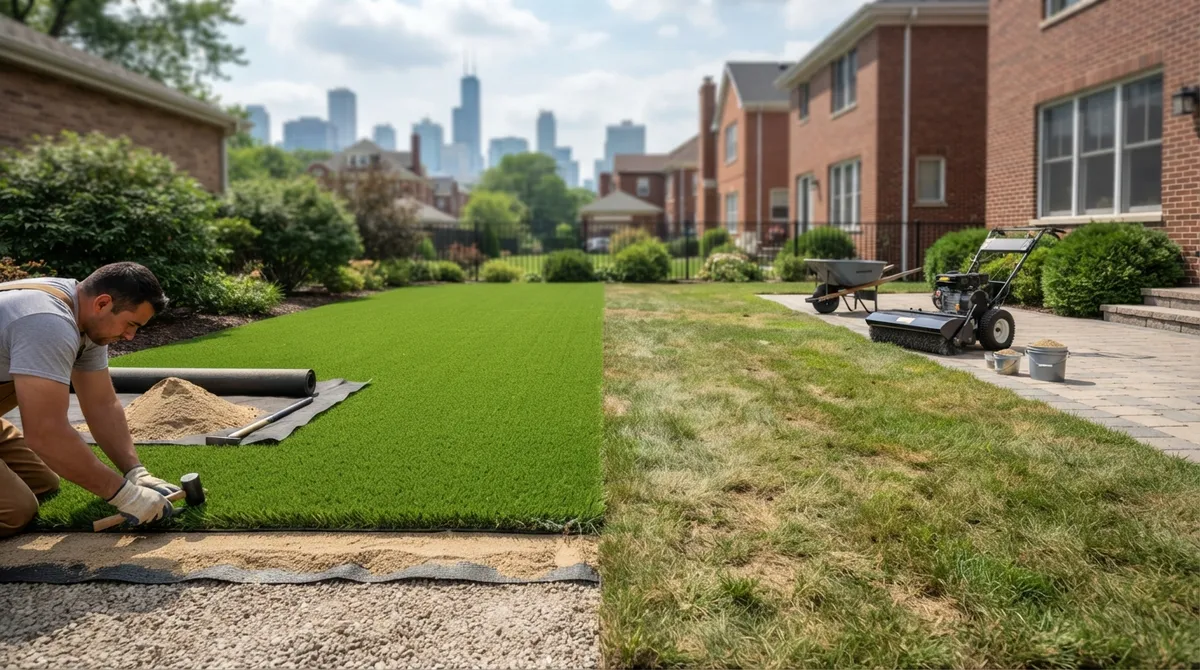
- Spread infill evenly using a drop spreader or power broom
- Work infill into the turf fibers with a stiff-bristle brush or mechanical groomer
- Check coverage rates — typically 2 to 3 pounds per square foot
- Top up infill annually or as needed, especially in high-traffic zones
Infill may settle or compact over time, so a periodic top-up keeps your turf looking and performing its best. Many of our clients in the Chicago suburbs combine their turf areas with beautiful complementary features like pavers, fire pits, and landscape lighting to create fully finished outdoor living spaces.
Wrapping It All Up
Choosing the right infill type for your artificial grass isn’t complicated once you know what to look for. From the affordability of silica sand to the pet-friendly power of zeolite, and from the eco-benefits of coconut fiber to the bounce of EPDM rubber, there’s a perfect infill match for every yard, rooftop, or commercial space. The key is matching the material to the use — and having an experienced team guide you through the installation.
If you’re ready to explore artificial turf for your Chicago-area property, we’d love to help you find the right solution from the ground up. Request your free estimate today and let’s create an outdoor space you’ll enjoy for years to come.
FAQs
Q: What is the best infill for pet areas in artificial grass?
A: Zeolite (often sold as Zeofill) is a top pick for pet areas because it absorbs ammonia from pet urine and keeps odors under control naturally. It stays effective for up to five years and runs cooler than rubber-based options — great for your pup’s paws! Coated silica sand with antimicrobial properties is another solid choice for pet-friendly turf zones.
Q: How much infill do I need for my artificial turf installation?
A: Most artificial grass installations call for 2 to 3 pounds of infill per square foot. A standard 50-pound bag will cover roughly 15 to 25 square feet depending on the pile height of your turf and how heavily the area will be used. Your installer will calculate the exact amount needed based on your specific project.
Q: Are there eco-friendly infill options for sustainable landscaping?
A: Absolutely — and there are some great ones! Coconut fiber (Geofill), cork, and crushed walnut shells are all natural, biodegradable infill materials that keep surfaces cooler and resist mold without chemical additives. They’re perfect for homeowners and developers who prioritize green, sustainable outdoor spaces.
Q: How often should artificial grass infill be topped up?
A: Generally, you’ll want to check your infill levels once a year and top up as needed. High-traffic areas like dog runs, sports zones, or heavily used patios may need more frequent attention. Keeping infill at the right depth helps your turf blades stay upright and your surface stay comfortable and well-drained.
Q: Is crumb rubber infill safe for playgrounds?
A: Crumb rubber is widely used for its excellent shock absorption on sports fields and play areas, but some ongoing research has raised questions about its long-term safety. For playground-specific installations, many landscaping professionals now recommend EPDM rubber as a cleaner, manufactured alternative. Always ask your installer about current certifications and safety data before choosing a rubber infill for a children’s area.