Key Takeaways
-
Drainage is the single most critical factor in retaining wall performance; without proper drainage including gravel backfill, landscape fabric, perforated drain pipes, and weep holes, water builds up behind the wall causing hydrostatic pressure that leads to cracking, leaning, or complete failure.
-
Commercial concrete block retaining walls over 4-6 feet typically require permits and structural engineering review; unpermitted walls create liability issues and may need costly removal and rebuilding, so confirm local requirements early with your contractor.
-
Segmental and precast concrete block systems offer the best combination of performance, appearance, and cost-effectiveness for most Chicago-area commercial projects compared to poured concrete or veneered options.
-
Plan annual spring inspections after freeze-thaw cycles, clear drainage outlets, remove aggressive vegetation and tree roots, and address base erosion promptly to maintain wall stability and avoid costly structural problems over decades of service.
-
Integrating retaining walls with pavers, plantings, lighting, and seating areas creates a cohesive hardscape design that increases usable space, improves curb appeal, and enhances overall property functionality and asset value.
-
Conduct a thorough site assessment before planning, evaluating slope angle, soil type, drainage patterns, nearby utilities, intended use, and local codes to determine proper wall height, placement, reinforcement needs, and block system selection.
If your commercial property has a slope, uneven terrain, or erosion issues, you already know how frustrating it can be. Water runs where it shouldn’t. Soil shifts. Usable space feels limited. The good news? Commercial concrete block retaining walls are one of the most effective solutions available to property owners and managers in the greater Chicago area. They hold back soil, manage drainage, and transform sloped or constrained sites into clean, functional, and attractive outdoor spaces. Whether you manage an office campus, apartment complex, retail center, or restaurant, a well-planned retaining wall can completely change how your property looks and performs. This guide walks you through everything you need to know — from planning and material selection to drainage, permits, and long-term care — so you can move forward with confidence.
What Is a Commercial Concrete Block Retaining Wall?
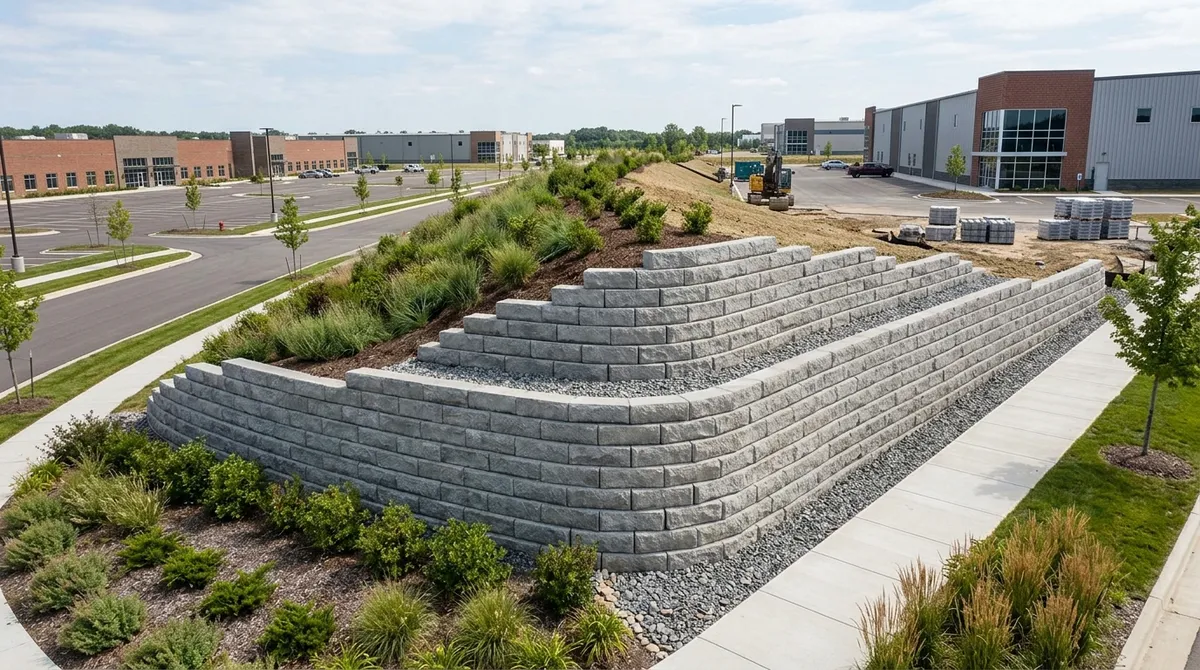
A commercial concrete block retaining wall is a hardscape structure built to hold back soil and manage grade changes on a property. Unlike a simple garden border, these walls are engineered to handle significant lateral pressure from soil, water, and sometimes vehicle loads. They are a standard part of professional commercial landscaping services and are commonly installed on sloped sites that need grading support, erosion control, or additional usable surface area.
Concrete block is a popular material choice because it is durable, versatile, and available in a wide range of styles. You can find block systems that look natural and earthy or clean and modern, depending on your property’s aesthetic. According to industry professionals at ICPI Certified Installer, segmental concrete block walls are among the most widely used systems in commercial hardscaping because of their adaptability and long service life.

Step 1: Assess Your Site and Define Your Goals
Before any block is placed, you need a clear picture of what your site needs. Start by walking the property and identifying problem areas. Is soil washing away? Is a slope making a parking area or walkway unsafe? Are there areas where you want to add terraced plantings or a seating area? Defining your goals early keeps the project focused and on budget.
Here are the key site factors to evaluate before planning your wall:
- Slope angle and height difference from top to bottom
- Soil type and stability (clay-heavy soils in the Chicago area need extra drainage attention)
- Existing drainage patterns and water flow directions
- Nearby structures, utilities, and paved surfaces
- Intended use of the retained area (parking, planting, seating, walkways)
- Local municipal codes and permit requirements
This assessment helps your landscaping contractor determine wall height, placement, reinforcement needs, and the right block system for the job. For more background on how these structures function, visit what a retaining wall is and whether you need one.
Step 2: Understand Wall Height and Engineering Requirements
Wall height is one of the most important factors in commercial retaining wall planning. Taller walls hold more soil weight and face greater hydrostatic pressure, which means they require more careful engineering. Many smaller landscaping projects stay under four feet, but commercial sites often need walls that go higher depending on the grade change involved.
Here is a general breakdown of wall height categories and what they typically involve:
| Wall Height | Typical Requirements | Common Use Cases |
|---|---|---|
| Under 4 feet | Standard block installation, basic drainage | Garden borders, minor grade changes, planters |
| 4 to 6 feet | Engineered backfill, geogrid reinforcement often needed | Parking lot edges, terraced areas, slope stabilization |
| Over 6 feet | Structural engineering review, permits likely required | Large commercial grading, multi-tier walls, steep slopes |
Always confirm local requirements with your contractor. In Illinois, many municipalities require permits for walls above a certain height or near structures. Landscape Illinois is a helpful resource for understanding state-level guidelines for commercial hardscaping projects.
You can also learn more about how earth retention systems work on commercial properties to better understand engineering expectations.
Step 3: Choose the Right Concrete Block System
Not all concrete block systems are the same. The right choice depends on your wall height, load requirements, site aesthetics, and budget. Here are the most common options used in commercial landscaping:
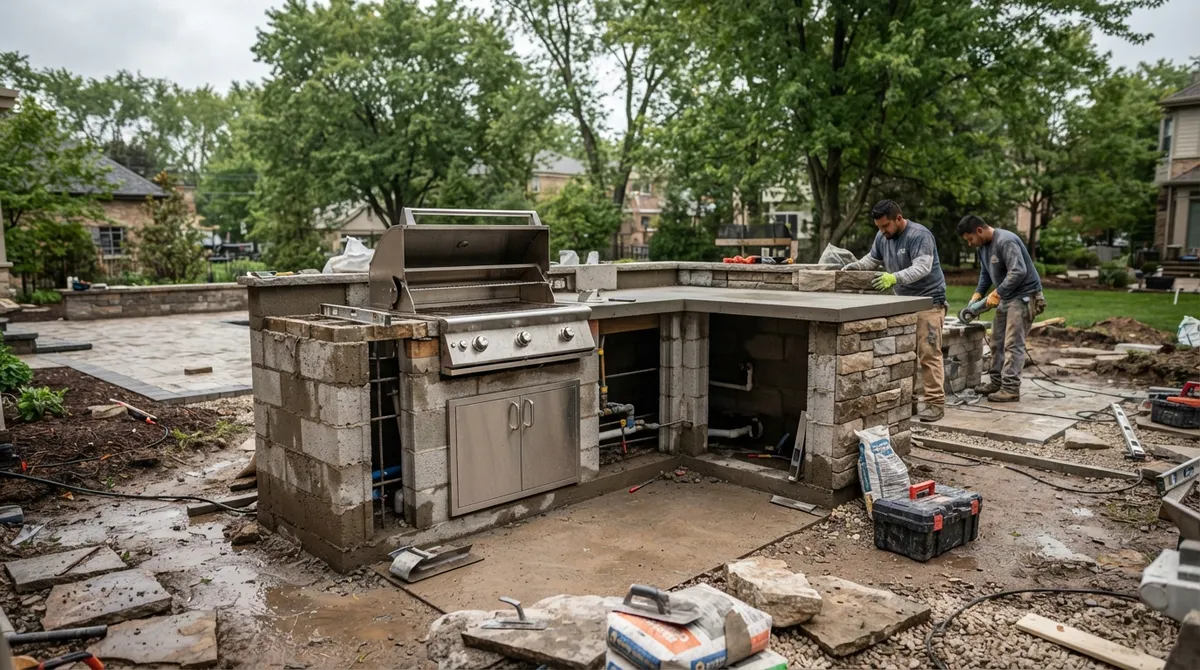
- Segmental retaining wall blocks: Interlocking concrete units that stack without mortar. They are flexible, drain well, and come in many textures and colors. Great for most commercial applications. Learn more about segmental retaining wall installation.
- Precast modular blocks: Factory-made units in standard sizes. They install quickly and offer consistent quality. Ideal for larger commercial projects. See why precast modular block walls are a great fit for many sites.
- Veneered concrete block: A structural block core finished with stone or brick veneer. Offers a high-end appearance for plazas, entrances, and client-facing areas.
- Poured concrete walls: Best for very tall or heavily loaded walls where maximum strength is the top priority. Less flexible in appearance but structurally superior.
For most commercial concrete block retaining wall projects in the Chicago metro area, segmental and precast block systems offer the best combination of performance, appearance, and cost-effectiveness.
Step 4: Plan Your Drainage System
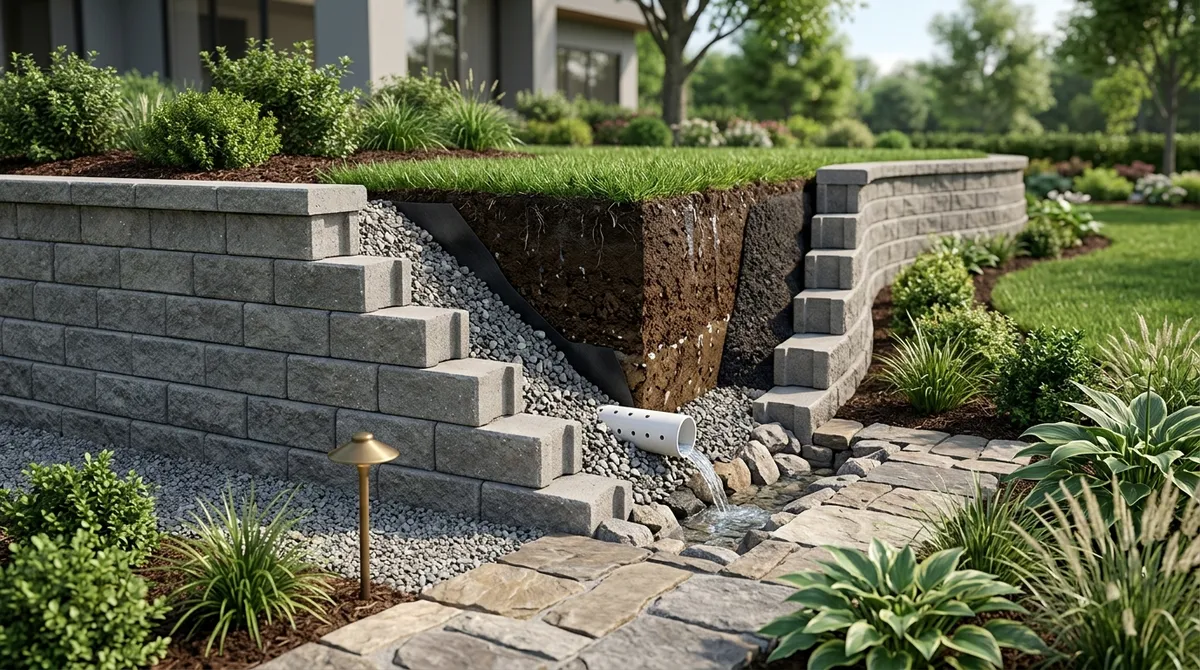
Drainage is the single most important factor in retaining wall performance. Without proper drainage, water builds up behind the wall and creates hydrostatic pressure. That pressure pushes on the wall from behind and can cause cracking, leaning, or full failure over time. Especially in the Chicago area, where freeze-thaw cycles put additional stress on structures, drainage cannot be an afterthought.
A well-designed drainage plan for commercial concrete block retaining walls typically includes:
- Gravel backfill directly behind the wall to allow water to move freely
- Landscape fabric to separate gravel from surrounding soil and prevent clogging
- Perforated drain pipe (French drain) at the base of the wall to carry water away
- Weep holes or gaps in the block face to release minor pressure
- Surface grading that directs water away from the top of the wall
If your site has significant water flow or stormwater concerns, it is worth reviewing how retaining walls compare to drainage systems for commercial stormwater management to choose the right combined approach.
Step 5: Integrate the Wall Into Your Broader Landscape Design
One of the best things about commercial concrete block retaining walls is how well they work alongside other landscape features. A wall does not have to stand alone. When designed as part of a cohesive hardscape plan, it can anchor an entire outdoor environment and make the property feel polished and intentional.
Here are some popular ways to integrate retaining walls with other site features:
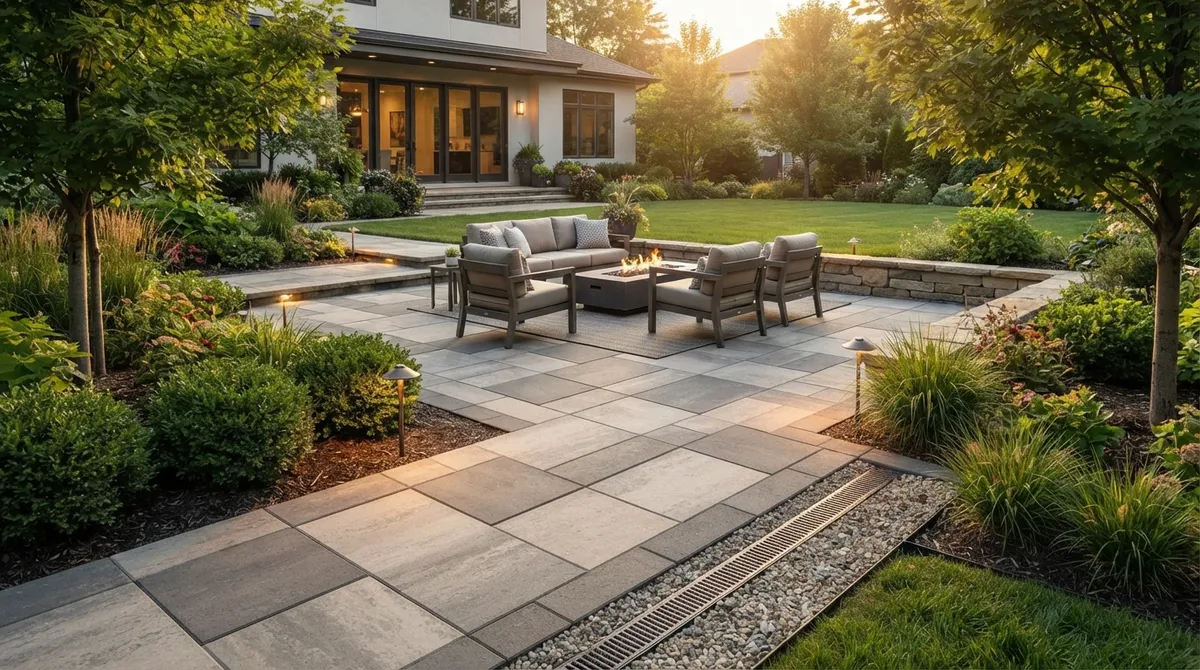
- Pair with commercial pavers to create level plazas, walkways, or patio areas on retained ground
- Add softscape plantings along the top and base of the wall for color and texture
- Incorporate landscape lighting to highlight the wall and improve after-dark safety
- Use the retained flat area for outdoor seating, a fire pit space, or a covered gathering area
- Build matching seating walls along the top edge for a functional, finished look
At Serenity Landscape Group, we often design commercial retaining walls as the foundation of a larger hardscape project. When a wall anchors the space, everything else — pavers, plantings, lighting, seating — comes together naturally. You can see examples of this integrated approach in our gallery of completed work.
Step 6: Understand Permits and Engineering Sign-Off
Commercial retaining walls that exceed a certain height or are located near structures, utilities, or public rights-of-way typically require permits and engineering review. This is not something to skip. Unpermitted walls can create liability issues and may need to be removed and rebuilt at significant cost.
- Contact your local municipality early to ask about height limits and permit requirements for retaining walls.
- Hire a licensed landscaping contractor who has experience navigating commercial permitting in your area.
- Request engineering documentation for any wall over four to six feet or any wall that will support surcharge loads like parked vehicles or heavy foot traffic.
A qualified contractor will handle much of this process on your behalf. If you want to understand what working with a professional looks like from start to finish, check out our project process overview.
Step 7: Plan for Long-Term Maintenance
One of the great advantages of commercial concrete block retaining walls is their low maintenance requirements. When built correctly with proper drainage and quality materials, these walls can last for decades with minimal upkeep.
Here is a simple maintenance checklist to keep your wall performing well year after year:
- Annual inspection: Walk the wall each spring after the freeze-thaw season to look for cracking, shifting, or leaning. Catch small issues before they grow.
- Clear drainage outlets: Check weep holes and drain pipe outlets to make sure they are not clogged with debris or sediment.
- Control vegetation: Remove any tree roots or aggressive plants growing into or behind the wall, as roots can shift block over time.
- Address erosion at the base: If you notice soil washing out from under or around the wall base, regrade and add groundcover or edging to stabilize the area.
- Professional review every few years: For large or heavily loaded commercial walls, have a landscape professional assess the structure periodically to confirm stability.
For broader guidance on avoiding costly problems with commercial hardscaping, our article on hardscaping mistakes to avoid is a great place to start. You can also explore how slope stabilization benefits your commercial property long-term.
What Does a Commercial Concrete Block Retaining Wall Cost?
Cost is always a key consideration for commercial property managers and business owners. While exact pricing depends on wall size, height, materials, drainage requirements, and site conditions, understanding the general cost drivers helps you budget more accurately.
| Cost Factor | Impact on Price |
|---|---|
| Wall height and length | Larger walls require more materials and labor |
| Block type and finish | Premium textures and veneers increase material costs |
| Drainage system complexity | Extensive drainage adds to excavation and material costs |
| Geogrid reinforcement | Required for taller walls; adds material and installation cost |
| Permits and engineering | Taller or more complex walls may require fees and professional review |
| Site access and conditions | Difficult access or unstable soil increases excavation costs |
The best way to get an accurate number is to have a professional assess your site. Reach out to schedule a free estimate and get a clear picture of what your project will involve before committing to a budget.
Why Commercial Properties Invest in Block Retaining Walls
Commercial concrete block retaining walls are not just functional — they deliver real business value. Property managers, developers, and small business owners across Chicagoland invest in them for several compelling reasons:
- Increased usable space: Turning a sloped, unusable area into flat ground for parking, seating, or landscaping directly increases the property’s functional footprint.
- Improved curb appeal: A clean, well-designed retaining wall signals professionalism and elevates the overall appearance of your property. Learn how curb appeal landscaping transforms property value.
- Erosion and liability control: Unstable slopes create safety hazards and long-term maintenance headaches. A retaining wall eliminates both.
- Stormwater management: Properly designed walls reduce runoff and protect surrounding areas from water damage.
- Long-term ROI: With minimal maintenance needs and a lifespan measured in decades, commercial retaining walls are a smart, lasting investment.
For more ideas on how hardscaping investments can transform commercial properties, explore 7 ways commercial landscaping boosts your business in 2026.
Ready to Transform Your Commercial Property?
Planning and installing commercial concrete block retaining walls is a process that rewards careful thought, the right materials, and experienced craftsmanship. From site assessment and drainage design to block selection and long-term care, every step matters. When done right, a retaining wall does not just solve a problem — it elevates your entire property.
With over two decades of experience serving commercial and residential clients throughout the greater Chicago area, Serenity Landscape Group has the expertise to design and build retaining walls that are both beautiful and built to last. We invite you to explore how we approach every project by visiting our about page and seeing the care we bring to every client relationship.
Ready to get started? Request your free estimate today and let our team help you create a landscape that works as hard as it looks good. You can also call us directly at (630) 359-5139 to speak with a member of our team right away.
FAQs
Q: What is a commercial concrete block retaining wall?
A: A commercial concrete block retaining wall is an engineered hardscape structure that holds back soil, manages slope changes, and creates usable flat areas on commercial properties. It is commonly built using segmental or precast concrete block systems and is designed to handle significant soil pressure, water drainage, and sometimes vehicle loads. These walls are a staple of professional commercial landscaping projects and serve both structural and aesthetic purposes.
Q: Do commercial retaining walls need permits or engineering?
A: Yes, in many cases they do — and that is actually a good thing! Walls over a certain height (often four to six feet, depending on your municipality) typically require permits and may need a licensed engineer to review the design. Your landscaping contractor should be familiar with local requirements and can guide you through the permitting process so everything is done safely and by the book.
Q: How tall can a commercial concrete block retaining wall be?
A: There is no single universal height limit — it depends on the block system, engineering, site conditions, and local codes. Smaller walls under four feet are fairly straightforward, while taller walls require geogrid reinforcement, engineered drainage plans, and often a permit. Many commercial sites have walls that exceed six feet when properly engineered, so do not let height concerns stop you from exploring what is possible for your property!
Q: What drainage is needed behind a retaining wall?
A: Good drainage is absolutely essential to wall performance and longevity. A well-built commercial retaining wall should include gravel backfill, landscape fabric, a perforated drain pipe at the base, and properly placed weep holes. Without these elements, water pressure builds up behind the wall and can cause cracking or failure over time — especially during Chicago’s tough freeze-thaw cycles.
Q: How long do commercial concrete block retaining walls last?
A: When built correctly with quality materials and proper drainage, commercial concrete block retaining walls can last 30 to 50 years or more with minimal maintenance. The key is getting the installation right from the start — proper base preparation, drainage, and block selection make a huge difference in long-term performance. Annual inspections and occasional minor repairs keep your wall looking great for decades.