Key Takeaways
-
LED fixtures are now the standard for landscape lighting due to superior energy efficiency and longer lifespan, but system quality depends on fixture type, driver compatibility, and professional installation.
-
Layer multiple lighting techniques (path lighting, uplighting, downlighting, grazing) rather than uniform brightness across your yard to create depth and highlight architectural features effectively.
-
Professional low-voltage systems (12V) are safer and simpler than line-voltage options, but still require correct load calculations, proper cable sizing, and local code compliance to avoid flickering or tripped breakers.
-
Typical landscape lighting costs range from $80-$300 per installed fixture, with a 10-20 light residential project averaging $800-$6,000 depending on design complexity and site conditions.
-
Follow DarkSky principles to reduce light pollution: use warmer color temperatures (2200K), aim fixtures precisely to avoid glare and neighbor spillover, and install timers or motion sensors to minimize runtime.
-
Plan for plant growth, drainage patterns, and maintenance access during design to ensure your lighting investment remains functional and attractive as your landscape evolves over years.
Picture this: it’s dusk in your Chicago suburb, and your neighbors are strolling by while your front walkway glows with soft, warm light. Your favorite tree looks like it belongs in a magazine. That’s the magic of good landscape lighting, and honestly, it’s one of the most rewarding upgrades you can make to your outdoor space. Whether you’re a homeowner in Naperville, a condo owner with a small rooftop patio, or a property manager overseeing a busy retail center, the right lighting plan changes everything after sunset.
Landscape lighting isn’t just about flipping a switch and hoping for the best. It’s a thoughtful blend of design, safety, and a little bit of nighttime showmanship. Done well, it highlights your best features, keeps pathways safe, and adds real value to your property. Done poorly, it can create glare, waste energy, or annoy your neighbors with light spilling where it shouldn’t.
In this guide, we’ll walk you through everything you need to know to plan landscape lighting that actually works for your space, your budget, and your lifestyle. Let’s get your outdoor space glowing the right way.
What Is Landscape Lighting, Exactly?
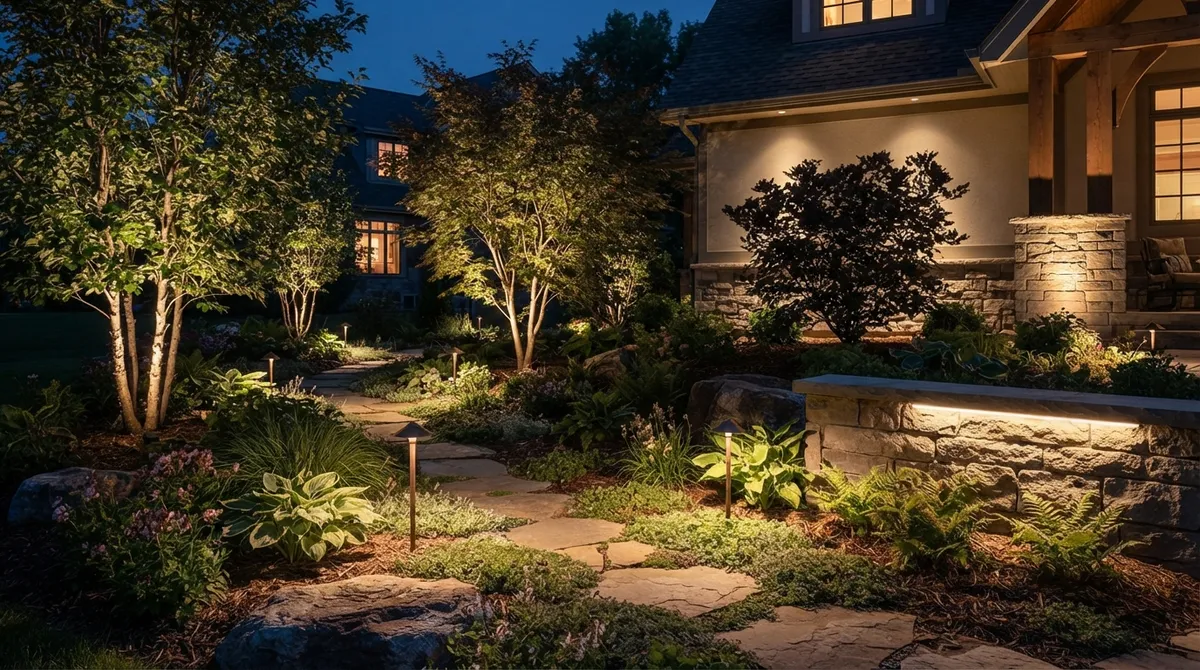
Landscape lighting is the planned use of outdoor fixtures to light up the features and spaces you use most. Think paths, steps, patios, gardens, trees, walls, and entrances. A good landscape lighting project isn’t random. It combines smart design, careful fixture selection, professional installation, precise aiming, and ongoing upkeep.
The goal is simple: make your outdoor space safer and more beautiful at night. But the execution takes real skill. That’s why so many homeowners and business owners turn to professionals who understand how light behaves outdoors, how to avoid harsh glare, and how to make a yard feel inviting rather than overexposed.
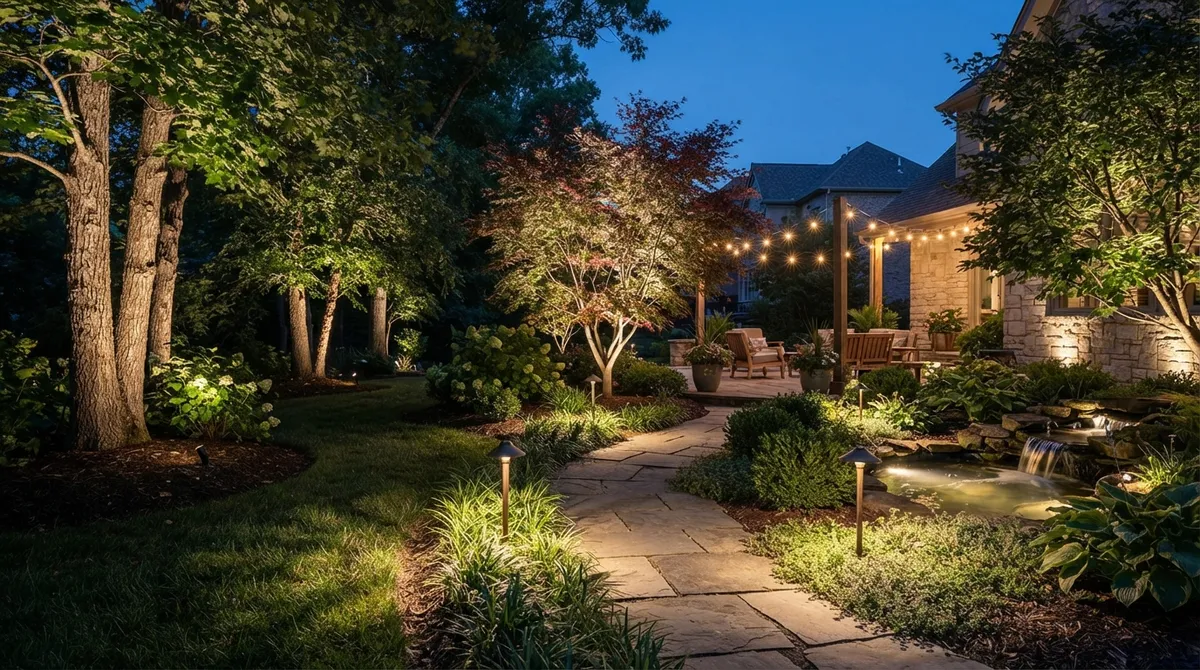
Popular Landscape Lighting Techniques You Should Know
There are several tried-and-true techniques that professional designers use to create depth and drama in outdoor spaces. You don’t need all of them, but knowing your options helps you have a smarter conversation with your installer.
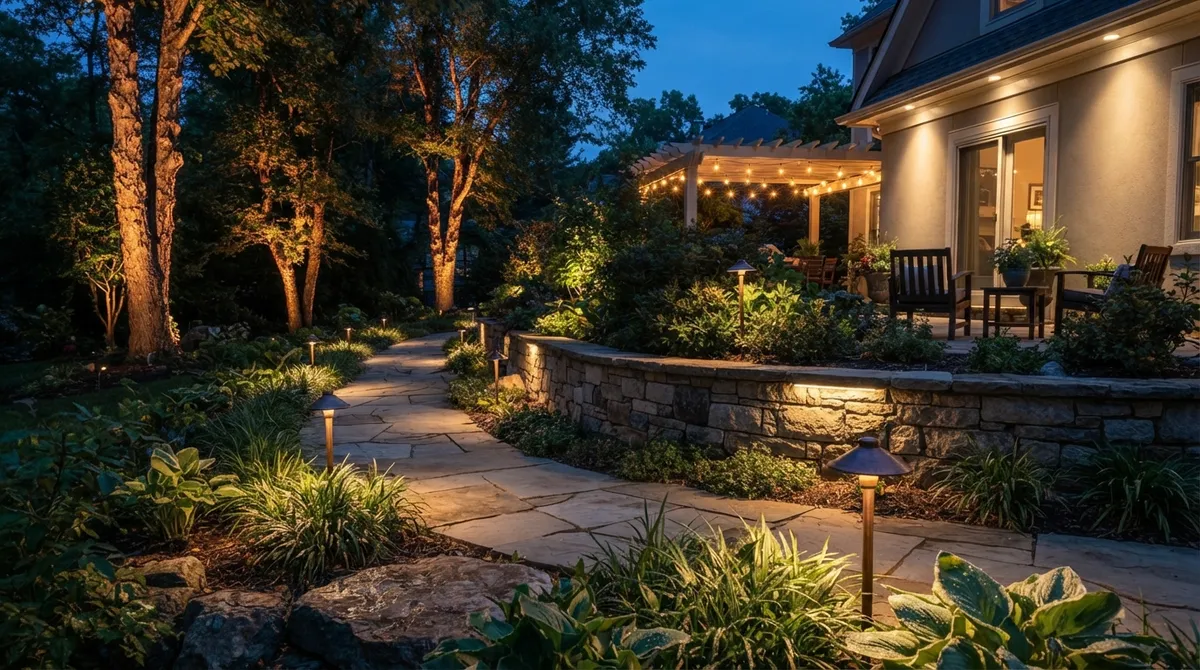
- Path lighting: Low fixtures along walkways guide foot traffic and prevent trips and falls.
- Downlighting: Lights mounted high in trees or on structures cast a soft, moonlight-like glow downward.
- Uplighting: Fixtures placed at the base of trees, statues, or architectural features shine light upward to create drama.
- Grazing: Light is aimed at a steep angle across textured surfaces like stone walls or brick, revealing depth and texture.
- Step and hardscape lighting: Small fixtures built into steps, patios, or retaining walls improve safety and highlight your hardscape investment.
A well-designed plan usually layers a few of these techniques together rather than blasting your whole yard with uniform brightness. Less really can be more when it’s done thoughtfully. If you’ve already invested in beautiful pavers or a stunning retaining wall, lighting is what makes that hardscaping shine after dark.
Low-Voltage vs. Line-Voltage Systems
Most residential landscape lighting today uses low-voltage systems, typically running at 12 volts. These systems use a transformer to step down your home’s regular electrical current, making them generally simpler and safer to install than line-voltage systems.
That said, “simpler” doesn’t mean “no expertise required.” Correct load calculations, proper cable sizing, secure connections, and compliance with local electrical codes all matter. A poorly wired system can lead to flickering lights, tripped breakers, or worse. This is one area where hiring a professional pays off, especially for larger properties or commercial sites.
Why LED Fixtures Are the Go-To Choice
LED fixtures have become the standard for landscape lighting, and for good reason. They use less energy, last much longer than older halogen bulbs, and come in a range of color temperatures to match your style. However, performance still depends on fixture quality, whether the driver and transformer are compatible, and how well the system was installed in the first place.
If you’re comparing options, ask your installer about warranties and whether components can be serviced or replaced individually. A quality system should last for years with minimal fuss.
How Much Does Landscape Lighting Cost?
Cost is usually one of the first questions homeowners and business owners ask, and that’s completely fair. Landscape lighting costs vary quite a bit depending on the number of fixtures, wiring needs, site conditions, and design complexity.
| Cost Factor | Typical Range | Notes |
|---|---|---|
| Per fixture (installed) | $80 – $300 | Varies by fixture type and labor |
| Low-voltage fixture (installed) | $90 – $150 | Common for residential path and accent lighting |
| 10-20 light project | $800 – $6,000 | Depends on design scope and site access |
| Full professional installation | $1,000 – $7,500 | Average around $4,000 for most homes |
These figures come from published 2025 consumer cost data and are meant as general guidance, not guaranteed quotes. Your actual cost will depend on your property’s size, existing wiring, and the design you choose. If you want an accurate number for your specific yard or commercial property, it’s always best to get a free estimate tailored to your space.
How to Design Landscape Lighting Without Overdoing It
Here’s the thing: more light isn’t always better. In fact, too much light can wash out your yard’s natural beauty and create glare that bothers you, your family, or your neighbors. A smart design plan considers several key factors.
- Think about nighttime sightlines. Walk your property after dark and notice where your eyes naturally go. That’s often where lighting matters most.
- Avoid glare and light spill. Fixtures should be aimed and shielded so light lands where you want it, not in someone’s eyes or onto a neighbor’s property.
- Plan for plant growth. Trees and shrubs grow. Your lighting plan should account for how foliage will change over the next few years.
- Consider drainage and irrigation. Cable routes need to avoid sprinkler lines and low spots where water collects.
- Leave room for maintenance access. You’ll want to reach fixtures easily for cleaning, aiming adjustments, and bulb replacement.
This is exactly the kind of detail that separates a DIY string of solar lights from a professional lighting design. Our team at Serenity Landscape Group builds these considerations into every lighting and sound project, so your investment looks great now and years down the road.
Being a Good Neighbor: Reducing Light Pollution
It might surprise you, but there are actual guidelines for responsible outdoor lighting. The International Dark-Sky Association, often referred to as DarkSky, outlines five simple principles that make a huge difference.
- Use light only when it’s useful.
- Target it carefully so it only hits what you want to light.
- Keep brightness levels no higher than necessary.
- Control when lights turn on and off using timers or sensors.
- Choose warmer-colored light whenever possible.
Following these principles from DarkSky’s outdoor lighting guidelines not only keeps your neighbors happy, it also saves you money on energy and reduces unnecessary wear on your fixtures. For color temperature, DarkSky recommends warmer options, ideally around 2200 Kelvin, to limit harsh blue-toned light. Timers, dimmers, and motion sensors are simple additions that cut down on how long lights run each night.
Landscape Lighting for Different Property Types
Every property has different lighting needs, and that’s part of what makes this work so interesting. Here’s how landscape lighting typically plays out across different situations.
Suburban Homes
For homeowners in Chicago suburbs, landscape lighting often focuses on curb appeal, safety along walkways and driveways, and highlighting outdoor living areas like patios or fire pits. Many HOAs also have specific standards for exterior lighting, so it helps to work with a team that understands local requirements.
Urban Condos and Rooftops
City dwellers with smaller outdoor spaces need lighting that’s compact, low-maintenance, and compliant with building or municipal codes. Rooftop patios benefit from subtle accent lighting that creates ambiance without overwhelming a small footprint.
Commercial Properties
Office buildings and retail centers need lighting that boosts curb appeal, guides visitors safely, and supports evening business hours. Well-lit entrances and walkways also reduce liability concerns for property managers. Pairing lighting with sustainable landscaping and commercial lawn maintenance creates a polished, professional look that draws in customers.
Restaurants and Local Shops
Small business owners often use lighting to create a warm, inviting atmosphere for evening customers. Pedestrian-friendly path lights and softly lit seasonal plantings can make a huge difference in foot traffic and ambiance.
Maintaining Your Landscape Lighting System
Once your system is installed, a little regular care keeps it looking and working its best. Here’s a simple maintenance routine to follow.
- Clean fixture lenses regularly to remove dirt, dust, and grime buildup.
- Check aiming angles a few times a year, especially after storms or landscaping work.
- Inspect cables and connections for wear or damage, particularly after any digging near your yard.
- Trim back plants and branches that may be blocking light beams.
- Replace failed bulbs or components promptly to keep your system looking its best.
A little maintenance goes a long way toward protecting your investment. Many property owners choose to bundle lighting checks with seasonal landscaping visits for convenience.
Choosing the Right Landscape Lighting Partner
Not every lighting installer has the design eye or technical know-how to get this right. Look for a team with real experience in outdoor electrical work, a strong design portfolio, and knowledge of local codes. Membership or certification with organizations like Landscape Illinois or credentials from groups such as the ICPI Certified Installer program are good signs you’re working with true professionals.
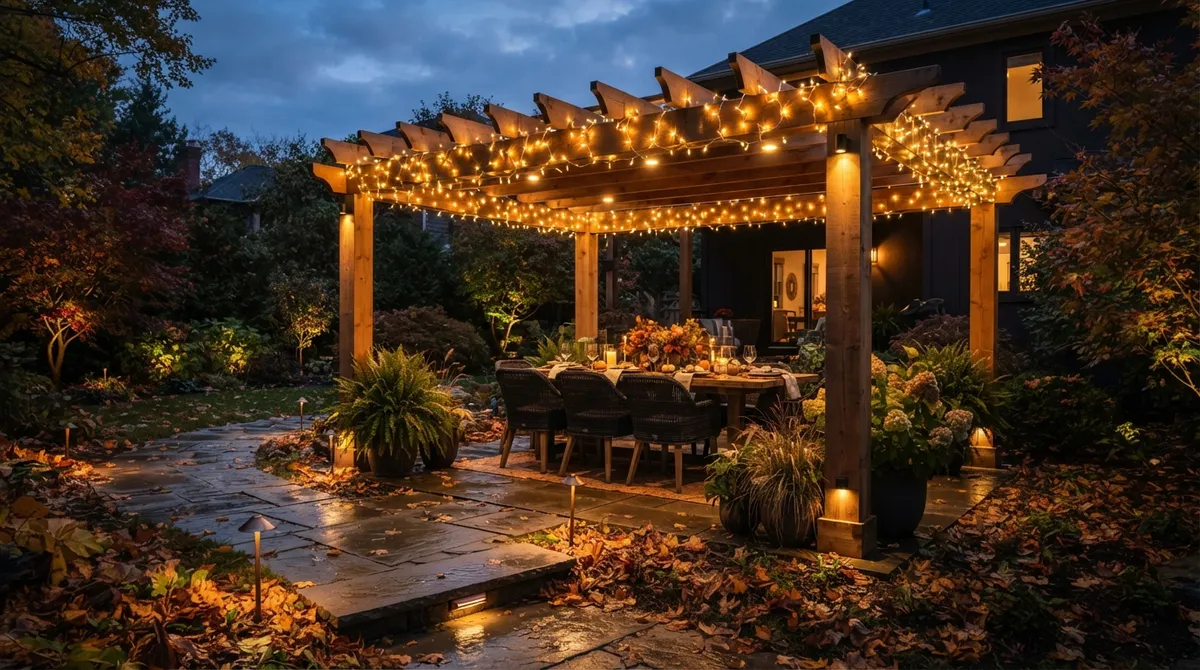
At Serenity Landscape Group, we’ve spent over two decades helping homeowners and businesses across the Chicago area bring their outdoor spaces to life, day and night. Our approach combines thoughtful design with dependable installation, whether you’re adding lighting to a new pergola, a freshly built patio, or an entirely new landscape design. You can see examples of our completed projects in our gallery of our work, and learn more about how we approach every project in our process page.
Bringing It All Together
Landscape lighting is one of those upgrades that pays off in more ways than one. It boosts safety, adds beauty, extends how much you enjoy your outdoor space, and can even increase property value. Whether you’re lighting a quiet backyard patio or a busy commercial entrance, the right plan makes all the difference between a space that feels finished and one that feels like an afterthought.
If you’re ready to see your property glow the right way, our team would love to help. We combine two decades of hands-on experience with a genuine passion for creating outdoor spaces people love to spend time in, day or night. Reach out today to get a free estimate for your landscape lighting project, or feel free to call us at (630) 359-5139 to chat with our team about your vision. We can’t wait to help you create a space you’ll love coming home to every single evening.
FAQs
Q: What is landscape lighting, and what does a professional installation include?
A: Landscape lighting is the planned use of outdoor fixtures to light up paths, trees, patios, and entrances for beauty and safety. A professional installation typically includes design, fixture selection, wiring, aiming, and ongoing maintenance so everything works smoothly for years to come.
Q: How much does landscape lighting installation cost per fixture or for a whole yard?
A: Most installed fixtures run about $80 to $300 each, with low-voltage lighting often landing between $90 and $150 per fixture. A full yard project with 10 to 20 lights typically costs between $800 and $6,000, though every property is a little different.
Q: Is low-voltage landscape lighting safe, and does it need an electrician?
A: Low-voltage systems are generally considered safer and simpler than line-voltage setups, but they still require correct wiring, load calculations, and code compliance. We always recommend working with an experienced installer to make sure everything is done safely and correctly.
Q: Are LED landscape lights more energy-efficient than halogen lights?
A: Yes, LED fixtures use significantly less energy and last much longer than older halogen bulbs. They also come in a variety of color temperatures, giving you more flexibility to match your home’s style.
Q: How do you design landscape lighting without causing glare or light pollution?
A: Good design means aiming and shielding fixtures so light lands only where it’s needed, avoiding harsh glare or spill onto neighboring yards. Following simple principles, like using warmer light and adding timers or motion sensors, keeps things looking beautiful without lighting up the whole block.