Key Takeaways
-
Natural sod costs $1-$6 per square foot installed, while artificial turf runs $5-$20 per square foot, making sod significantly cheaper upfront but artificial turf more cost-effective long-term due to zero watering and maintenance needs.
-
Installing sod on bare soil costs $1-$2.50 per square foot, but removing an existing lawn and replacing it costs $2-$4.50 per square foot, so new construction projects are considerably less expensive than lawn replacement.
-
Removal, site prep, grading, and drainage work often comprise a major portion of total turf installation costs and can equal nearly as much as the turf material itself, so always request itemized quotes.
-
Newly installed sod requires consistent watering for 2-4 weeks to establish roots properly, while artificial turf requires zero maintenance and saves on water bills over time, making it ideal for busy homeowners and high-traffic commercial areas.
-
Always specify whether you want natural sod or synthetic artificial turf when requesting quotes, as these are completely different products with vastly different pricing, and get local estimates rather than relying on national averages.
-
Request detailed, itemized quotes that break down material costs, labor, removal fees, soil prep, delivery, edging, and warranty terms, as local soil conditions and labor rates significantly affect final pricing across different areas.
Curious about the real price for turf installation this year? You’re definitely not alone. Whether you’re a suburban homeowner dreaming of a lush new lawn, a condo owner with a tiny rooftop patch, or a property manager juggling budgets for a whole commercial site, turf pricing can feel like a mystery wrapped in a riddle. The good news? It doesn’t have to be confusing. Once you understand the basics, you’ll be able to compare quotes like a pro and choose the right option for your space and budget.
Here at Serenity Landscape Group, we’ve spent over two decades helping Chicago-area homeowners and businesses figure out exactly this question. So grab a cup of coffee, and let’s walk through 14 facts that will make you feel confident and informed before you get your first quote.
1. “Turf” Can Mean Two Very Different Things
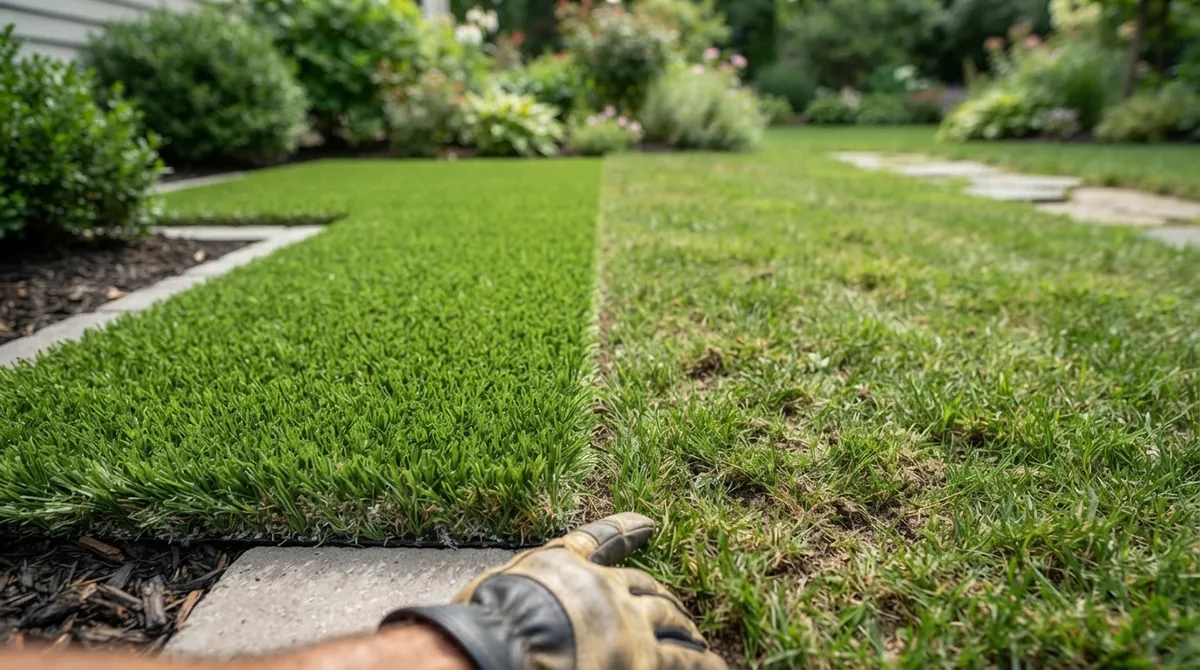
Before anything else, let’s clear up a common mix-up. “Turf installation” could mean natural grass sod, or it could mean synthetic artificial turf. These are two completely different products with very different price tags.
When you’re requesting quotes, always be clear about which one you want. A good contractor will ask you this right away, but it’s smart to specify it yourself so you get an accurate estimate from the start.
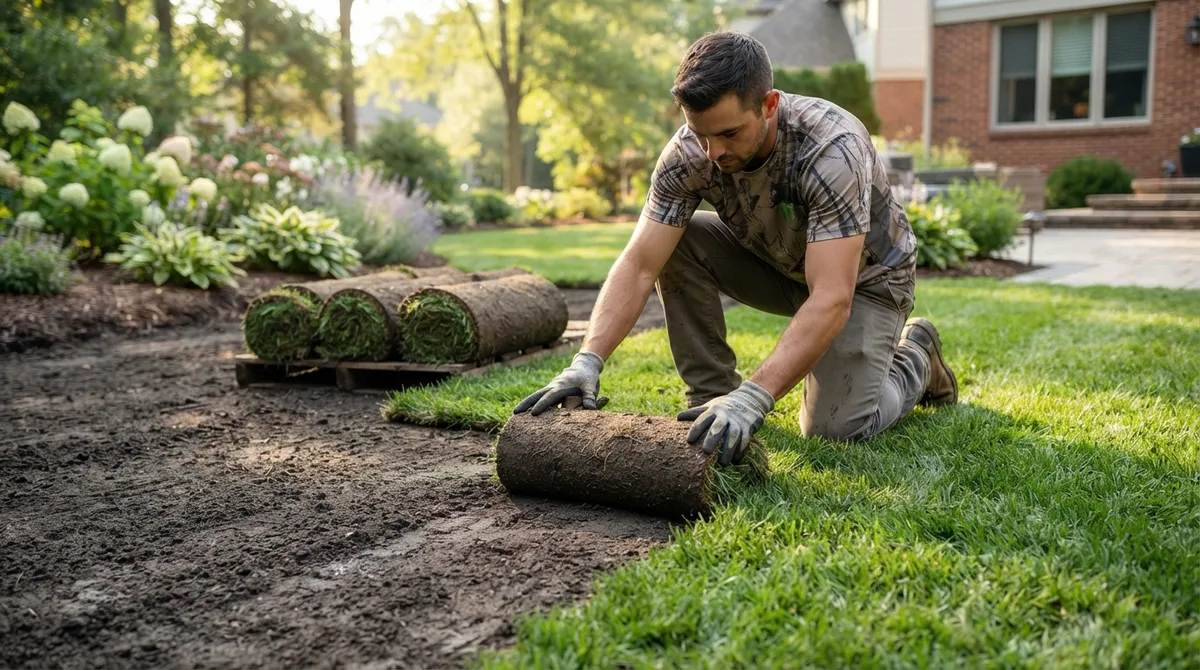
2. Natural Sod Costs Roughly $1 to $6 Per Square Foot Installed
According to recent HomeAdvisor and Angi cost guides, professionally installed natural sod typically runs between $1 and $6 per square foot. Most straightforward residential projects land toward the lower end of that range.
Your final price depends on things like your location, the size of your yard, and the type of grass you choose. Chicago-area soil and weather conditions can also play a role, which is why local estimates matter more than national averages.
3. Sod Material Alone Averages About 60 Cents Per Square Foot
If you’re just curious about the raw material cost, sod itself typically runs $0.35 to $1 per square foot, averaging around $0.60, based on a 2026 HomeAdvisor cost guide. Labor, delivery, and site prep make up the rest of your total bill.
A standard roll of sod covers about 10 square feet, according to the University of Maryland Extension. That means a modest 1,000-square-foot yard could need around 100 rolls of sod just for the grass itself.
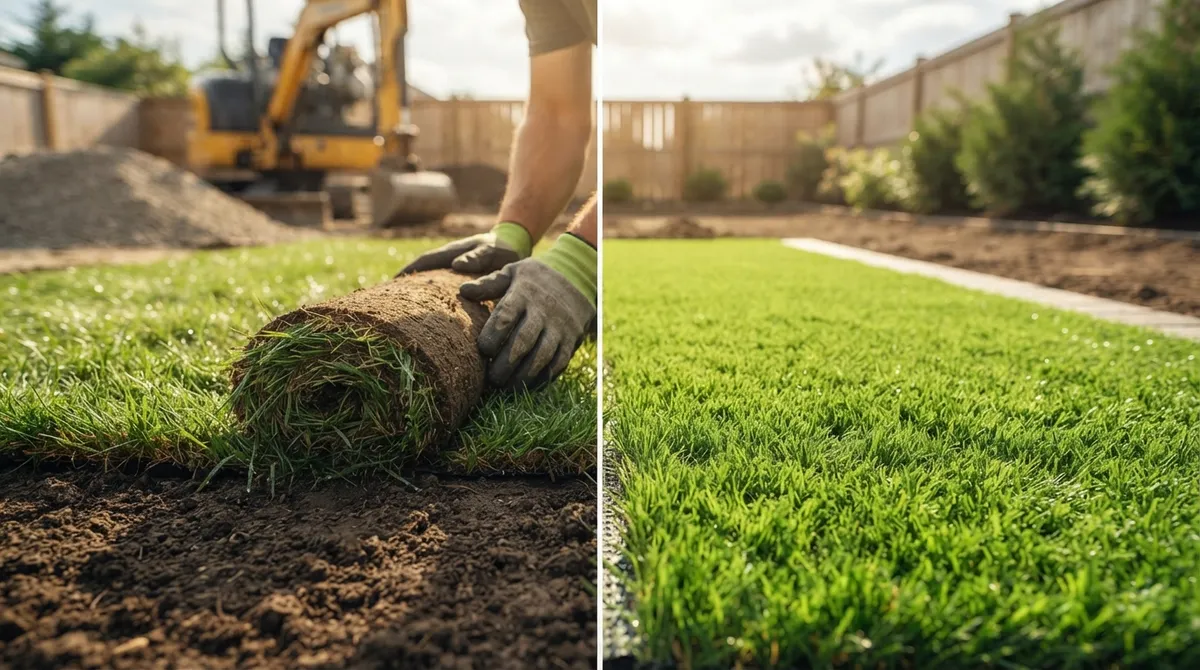
4. New Bare Soil Is Cheaper Than Replacing an Old Lawn
Here’s a fact that surprises a lot of homeowners. Installing sod on freshly prepared, bare soil is generally less expensive than tearing out an existing lawn first.
Cost guides estimate about $1 to $2.50 per square foot for new construction sites with bare soil. Removing an old lawn and replacing it with fresh sod typically runs $2 to $4.50 per square foot, since it involves extra labor and disposal.
5. Artificial Turf Runs Much Higher Upfront: $5 to $20 Per Square Foot
If you’re leaning toward synthetic grass, expect a bigger upfront investment. Recent guides put installed artificial turf anywhere from $5 to $20 per square foot, depending on quality and project complexity.
One 2025 estimate from Ergeon placed many U.S. projects between $6.50 and $15 per square foot, with a national average near $10.75. That’s a wide range, which is exactly why getting a personalized quote matters so much.
6. A 500-Square-Foot Yard Could Cost Around $5,375 for Artificial Turf
Let’s do some quick math using that $10.75 per square foot average. A 500-square-foot artificial turf project would land around $5,375 before any project-specific extras like drainage or edging.
For a 1,000-square-foot space, you’d roughly double that to around $10,750. These numbers are just starting points, though. Your actual quote could be higher or lower depending on your yard’s specific needs.
Quick Cost Comparison Table
| Turf Type | Price Per Square Foot | 500 Sq Ft Estimate | 1,000 Sq Ft Estimate |
|---|---|---|---|
| Natural Sod (bare soil) | $1 – $2.50 | $500 – $1,250 | $1,000 – $2,500 |
| Natural Sod (removal + replace) | $2 – $4.50 | $1,000 – $2,250 | $2,000 – $4,500 |
| Artificial Turf | $5 – $20 | $2,500 – $10,000 | $5,000 – $20,000 |
7. Many Factors Push Your Price Up or Down
Turf pricing isn’t just a flat rate. Several factors can shift your total cost significantly, and knowing them ahead of time helps you budget realistically.
- Type and quality of turf or sod chosen for your project
- Total square footage of your installation area
- Removal and disposal of your existing lawn or landscaping
- Grading and drainage work needed before installation
- Soil preparation and amendments for healthy root growth
- Access for equipment, especially in tight urban lots or rooftops
- Edging materials and infill choices for synthetic turf
- Amount of cutting required around curves, trees, or obstacles
If you’re working with a rooftop or small condo space, access alone can add real cost. Our rooftop terrace turf design guide covers this in more detail.
8. Removal and Site Prep Often Make Up a Big Chunk of the Bill
Many homeowners are surprised that removing the old lawn can cost nearly as much as the new turf itself. Grading, adding proper drainage, and prepping soil all take time and skilled labor.
This is especially true for commercial properties dealing with compacted soil or drainage issues. Property managers should always ask for an itemized breakdown so they know exactly what they’re paying for.
9. Sod Needs Careful Watering to Root Properly
Once your new sod goes down, the real work begins for you as the homeowner. According to the University of Maryland Extension, sod roots typically establish within 2 to 3 weeks with proper watering.
Penn State Extension notes that rooting can take up to 4 weeks depending on your site conditions and the weather. During this window, consistent watering is essential, so plan your schedule accordingly before installation day arrives.
10. Artificial Turf Skips the Watering Headache Entirely
One major appeal of synthetic turf is that it needs zero watering once installed. For busy families, small business owners, and commercial property managers, this can mean serious savings on water bills over time.
It also means no muddy patches, no bare spots from foot traffic, and a consistently green look all year. Many of our clients love this benefit, especially for high-traffic areas like restaurant patios or office courtyards.
11. Is Sod or Artificial Turf Cheaper Overall?
Sod wins on upfront price, no question. But artificial turf can pay off over time since it skips ongoing costs like mowing, fertilizing, and reseeding.
Here’s a simple way to think about it:
- If you want the lowest possible upfront cost, natural sod is usually cheaper.
- If you want to save on long-term maintenance and water bills, artificial turf often wins over several years.
- If your space gets heavy foot traffic or has shade issues, synthetic turf may perform better and last longer.
- If you love the natural feel and smell of real grass, sod might be worth the extra upkeep.
Many homeowners find our landscaping vs hardscaping guide helpful for weighing these bigger-picture decisions.
12. New Construction Builders Should Budget Turf Into the Whole Project
If you’re a builder or developer working on new homes in Aurora or nearby suburbs, turf installation is just one piece of a bigger outdoor puzzle. Buyers increasingly expect finished, turnkey landscapes that include softscapes, pavers, and even lighting.
Bundling turf installation with other services like pavers or lighting and sound often streamlines your project timeline and can improve overall pricing efficiency.
13. Commercial Properties Have Unique Cost Considerations
Office parks, retail centers, and municipal spaces often face different turf challenges than residential yards. Stormwater management, heavy foot traffic, and strict maintenance budgets all factor into the equation.
Many commercial property managers are turning to synthetic turf specifically because it holds up better under constant use and requires far less ongoing labor. Our high-traffic commercial turf solutions page dives deeper into this topic, and organizations like Landscape Illinois offer great regional resources too.
14. Always Get an Itemized, Local Quote Before Committing
National price ranges are helpful for setting expectations, but they’re not a guarantee of what you’ll pay. Local soil conditions, labor rates, and permit requirements all vary across the Chicago metro area.
When comparing quotes, ask contractors to break down these specifics:
- Cost of materials versus labor
- Old lawn removal and disposal fees
- Soil amendments and grading work
- Delivery charges for sod or turf rolls
- Edging and infill costs for synthetic turf
- Cleanup after installation
- Warranty terms or establishment guarantees
A properly certified contractor, such as an ICPI Certified Installer, can also give you added peace of mind about workmanship quality. Confirming the measured square footage upfront helps avoid surprise charges later too.
Ready to Get Your Personalized Turf Quote?
Understanding the price for turf installation is the first step toward a beautiful, functional outdoor space you’ll actually enjoy. Whether you’re picturing a lush new lawn for your suburban backyard or a low-maintenance synthetic solution for your commercial property, the right information helps you plan with confidence.
At Serenity Landscape Group, we’ve spent over 20 years helping Chicago-area homeowners and businesses turn their outdoor visions into reality. Browse our gallery of our work to see real transformations, or check out our artificial turf installation services to learn more about what’s possible for your space. When you’re ready to see real numbers for your unique project, get a free estimate from our friendly team, or simply call us at (630) 359-5139. We’d love to help you create the outdoor space you’ve been dreaming about.
FAQs
Q: How much does it cost to install sod per square foot?
A: Great question! Professionally installed natural sod typically runs $1 to $6 per square foot, according to recent cost guides. Your final price depends on your yard size, grass type, and local labor rates, so it’s always best to get a personalized quote.
Q: How much does artificial turf installation cost per square foot?
A: Artificial turf usually costs more upfront, running roughly $5 to $20 per square foot installed. A 2025 industry estimate placed the national average around $10.75 per square foot, though your actual price will depend on turf quality and site preparation needs.
Q: Is it cheaper to install sod or artificial grass?
A: Sod almost always wins on upfront cost, making it the budget-friendly choice at installation time. That said, artificial turf can save you money over the years since it skips mowing, watering, and reseeding expenses.
Q: Does turf installation include removing the old lawn and preparing the soil?
A: It depends on your contractor and quote, so always ask! Removing an existing lawn and prepping the soil often costs extra, and can push your total price higher than a fresh installation on bare soil.
Q: How long does newly installed sod take to root, and how much watering does it need?
A: Newly installed sod typically roots in 2 to 3 weeks, according to the University of Maryland Extension, though Penn State Extension notes it can take up to 4 weeks depending on conditions. During this time, consistent watering is essential to help those roots settle in properly.