Key Takeaways
-
Conduct a structural load assessment with an engineer before installation—synthetic turf, drainage panels, and base materials add significant weight that older Chicago buildings may not support.
-
Proper drainage is critical to prevent rooftop turf failure; use drainage panels, layered base systems, or permeable underlayment to channel water away and protect your roof membrane from moisture damage.
-
Select lightweight, rooftop-specific turf products with permeable backing and ASTM E108 Class A fire ratings designed for elevated surfaces, not standard ground-level turf options.
-
Use non-penetrating installation methods and protective underlayment to safeguard your roof’s waterproofing membrane—this is non-negotiable for avoiding costly water damage.
-
Verify local permit requirements before starting; commercial properties almost always need permits, and residential condo owners must check with building management and Chicago’s Department of Buildings.
-
Combine turf with complementary elements like pergolas for shade, pavers for hardscaping, and shock pads for comfort—this layered design approach creates dynamic, multi-use rooftop spaces.
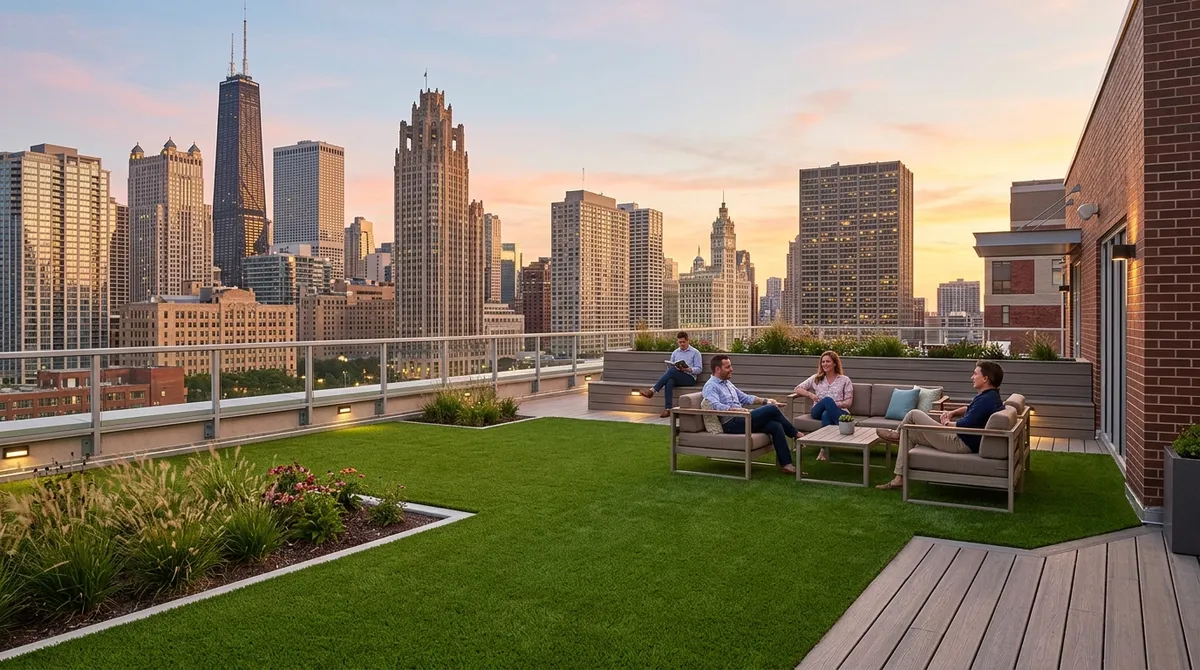
If you’ve got a rooftop deck, terrace, or balcony in the Chicago area, you’re sitting on a goldmine of untapped outdoor living potential. Chicago rooftop turf installation is one of the hottest landscaping trends in 2026, and for good reason. Synthetic turf transforms bare, concrete rooftops into lush, inviting green spaces that look amazing and stay low-maintenance year-round. Whether you’re a condo owner craving a private urban oasis, a commercial property manager looking to boost curb appeal, or a homeowner wanting to squeeze every inch of value from your property, rooftop turf is a smart move. But getting it right takes planning. From drainage to fire ratings to heat management, there’s a lot to consider before you roll out that first strip of green. Let’s walk through 12 essential tips to help your Chicago rooftop turf installation go smoothly and look stunning for years to come.
Why Rooftop Turf Is Booming in Chicago
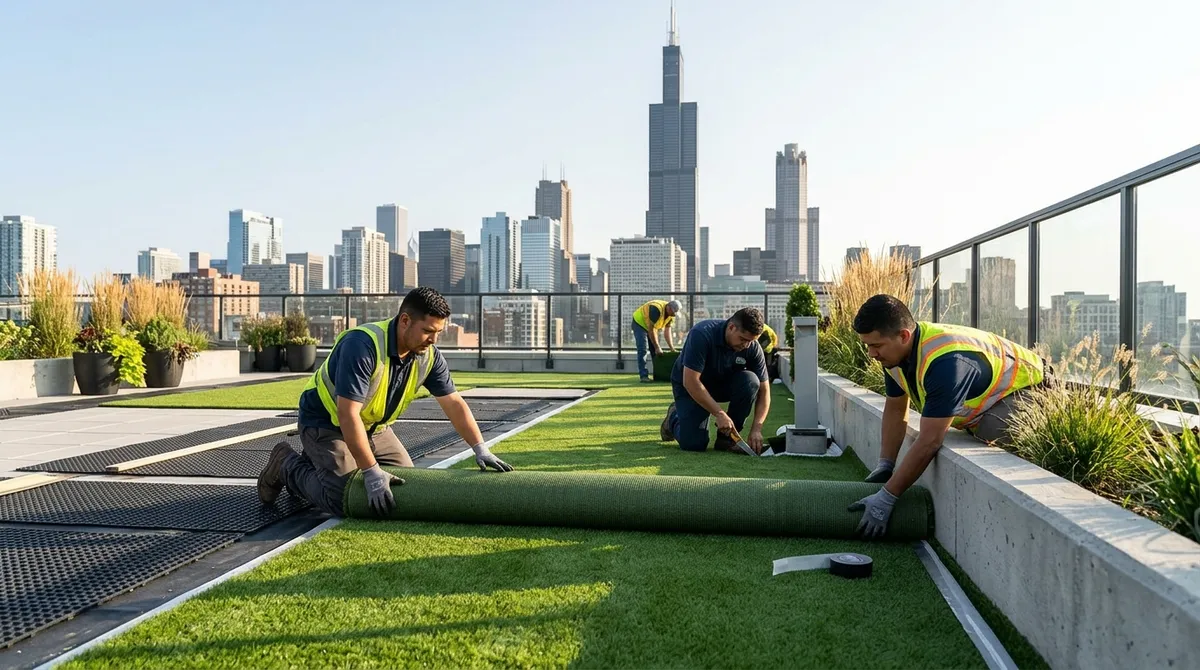
Chicago’s harsh winters and blazing summers make natural grass nearly impossible to maintain on an elevated surface. Synthetic turf solves that problem beautifully. It stays green through frigid temperatures, doesn’t need mowing or watering, and bounces back after heavy snow. Learn more about why rooftop artificial turf is a smart choice in Chicago for both residential and commercial spaces. The city’s growing rooftop living culture makes this upgrade incredibly appealing, and landscaping companies across Chicagoland are seeing more rooftop projects than ever before.
12 Must-Know Tips for a Successful Installation
1. Start with a Structural Load Assessment
Before anything else, confirm your rooftop can handle the additional weight. Synthetic turf systems, drainage panels, and base materials all add load to the structure. Work with a structural engineer or your building manager to get a weight capacity figure before you start planning your layout. This step is non-negotiable, especially for older Chicago buildings.
2. Choose Lightweight, Rooftop-Specific Turf Products
Not all synthetic turf is created equal. Rooftop installations require lightweight, permeable backing systems designed specifically for elevated surfaces. These products protect your waterproofing membrane while still delivering a natural-looking finish. Some systems even use bio-based materials, with certain turf backings replacing up to 60% of petroleum-based polyol with renewable soybeans — a win for sustainability-minded property owners. Check out our guide on how to choose the right artificial turf to understand what features matter most.
3. Prioritize Proper Drainage Above Everything
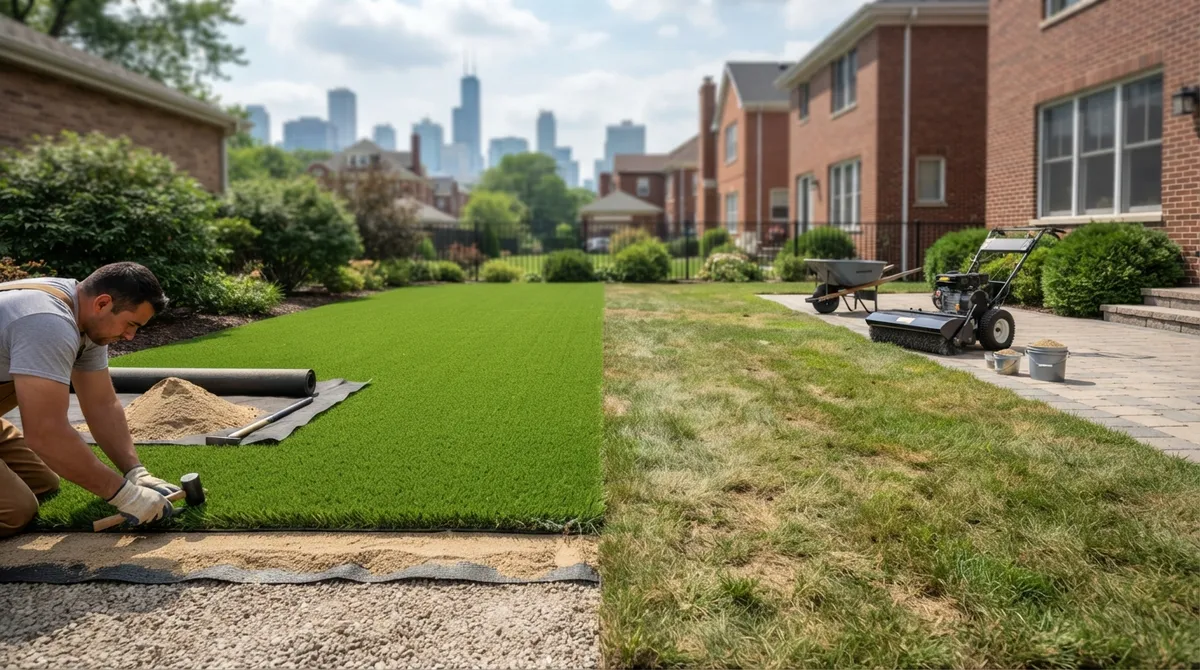
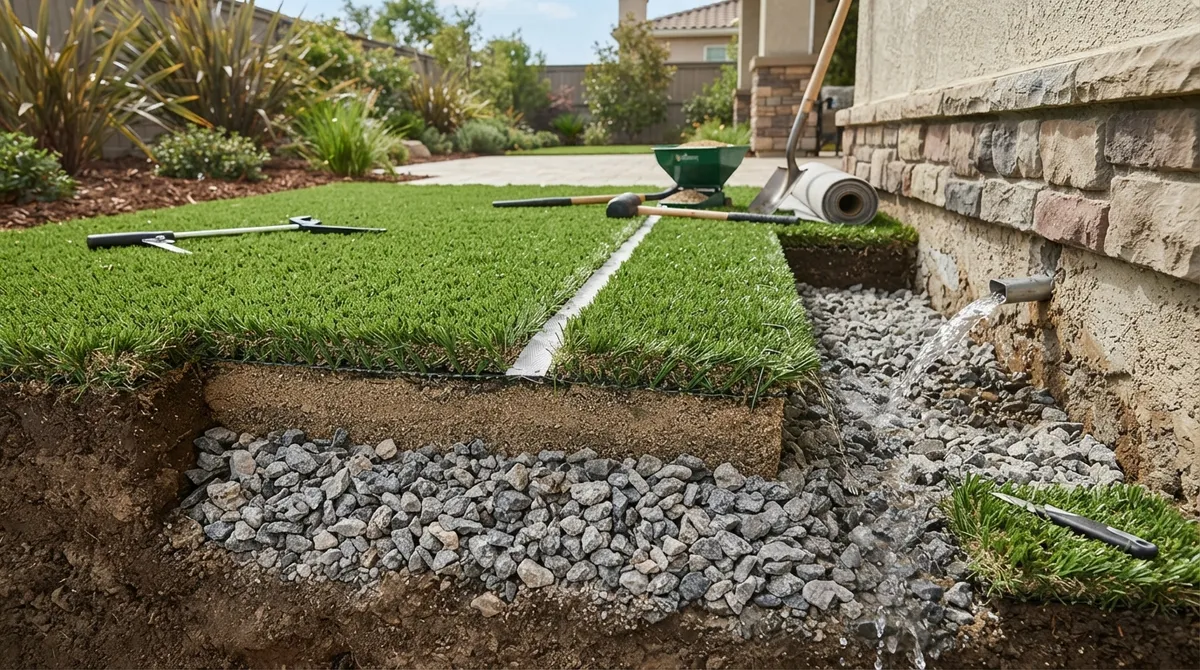
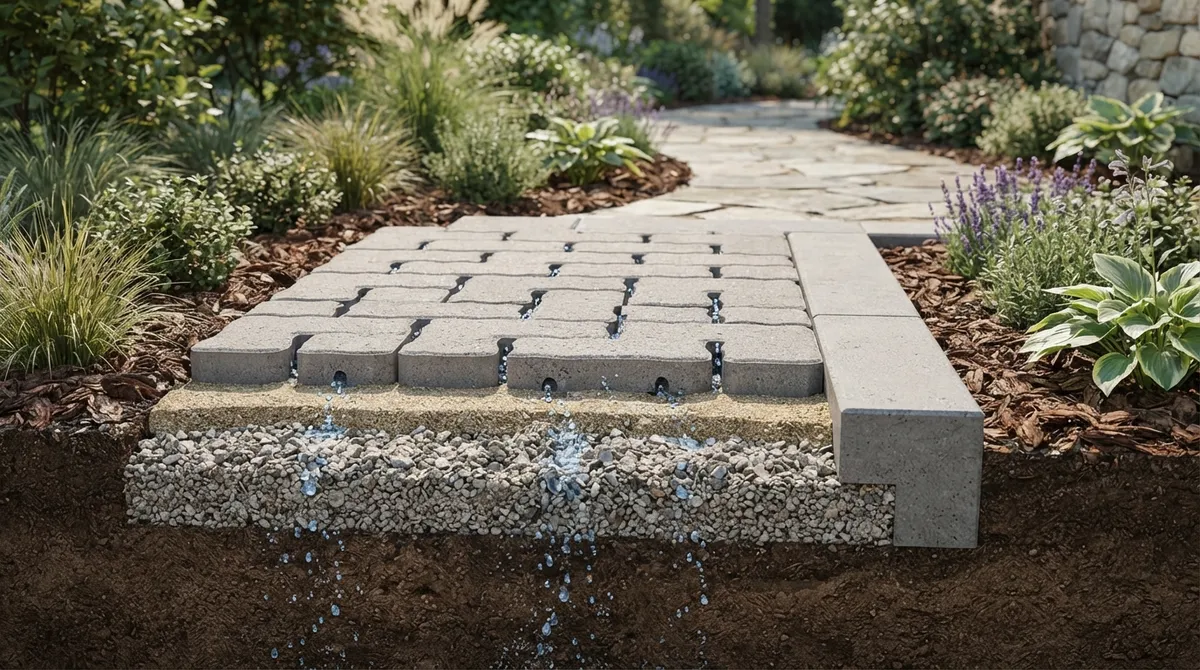
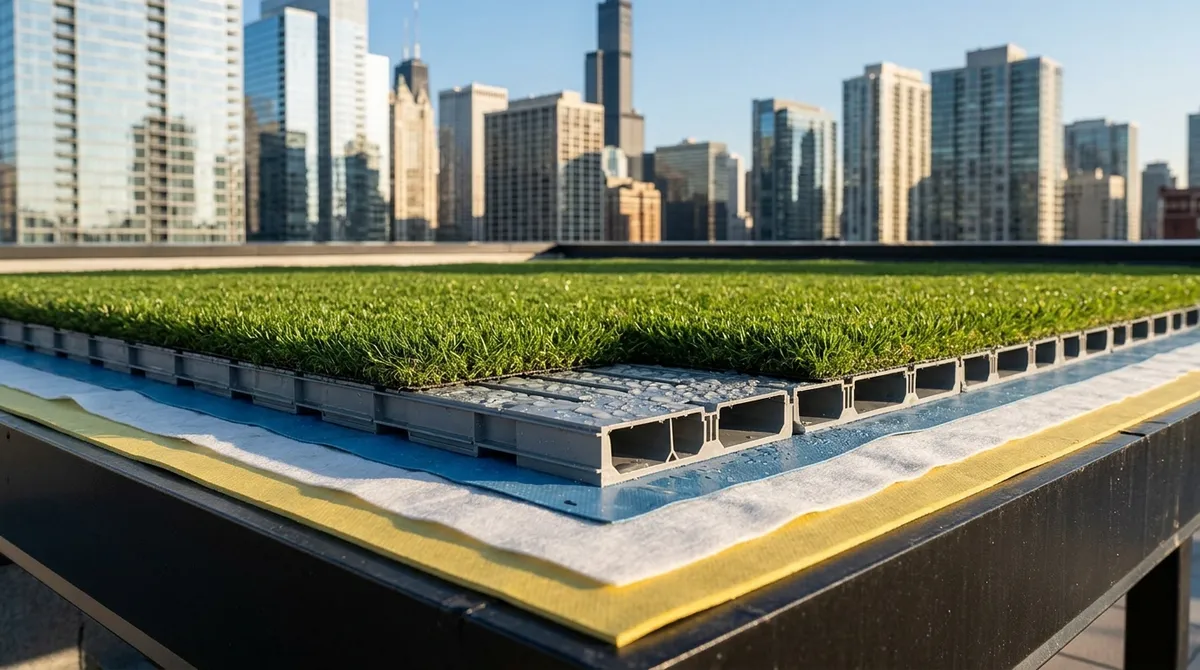
On a rooftop, water has nowhere to go except where you plan for it to go. Unlike ground-level installations where water absorbs into the soil, rooftop turf needs a carefully designed drainage layer. Installers typically use drainage panels, layered base systems, or permeable underlayment to channel water away from the turf and protect your roof membrane from moisture damage. Read more about how synthetic grass drains better than natural lawns and why that matters on rooftops. Poor drainage is the number one cause of rooftop turf failure, so don’t skip this step.
4. Protect Your Roof Membrane at All Costs
Your roof’s waterproofing membrane is the barrier between your building and expensive water damage. Rooftop turf installers use protective underlayment and non-penetrating installation methods to avoid puncturing or compromising this layer. Always work with a professional who understands rooftop-specific installation protocols. The Landscape Illinois association is a great resource to find qualified professionals who follow industry-safe practices.
5. Verify Fire Ratings for Commercial and Residential Use
Fire safety is a serious consideration for elevated installations. Many rooftop turf products used in Chicago carry an ASTM E108 Class A fire rating, which is the highest rating available for roofing materials. If you’re managing a commercial building or multi-unit residential property, confirm that the turf product you select meets Chicago’s building codes and local fire safety requirements before purchasing.
6. Plan for Summer Heat Management
Synthetic turf can get hot in direct summer sunlight, and on a rooftop with no shade cover, this effect is magnified. The good news is that several rooftop-specific turf products include heat-reduction technology and low-glare blade designs to improve comfort. Some products marketed for rooftop use claim heat reduction of almost 20% compared to standard turf options. Learn more about how artificial turf heat reduction technology works so you can make an informed product choice. Adding shade elements like a pergola or pavilion can also dramatically reduce surface temperatures.
7. Add Shade Structures to Maximize Comfort
Speaking of shade — pairing your rooftop turf with a pergola or pavilion takes the space from functional to fabulous. A well-placed shade structure makes the area usable even on the hottest Chicago summer days. Explore ideas in our guide to stunning pergola designs for 2026 for inspiration on what works beautifully alongside turf installations. Shade also helps protect pets and children who spend time on the rooftop surface.
8. Combine Turf with Complementary Hardscaping Elements
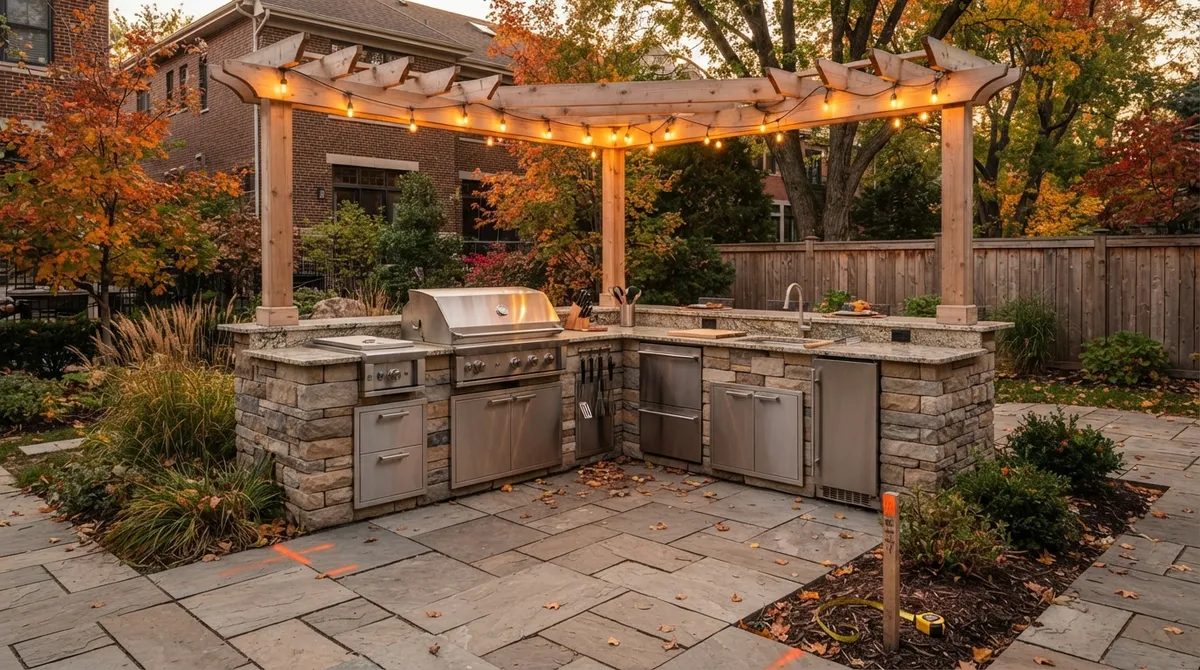
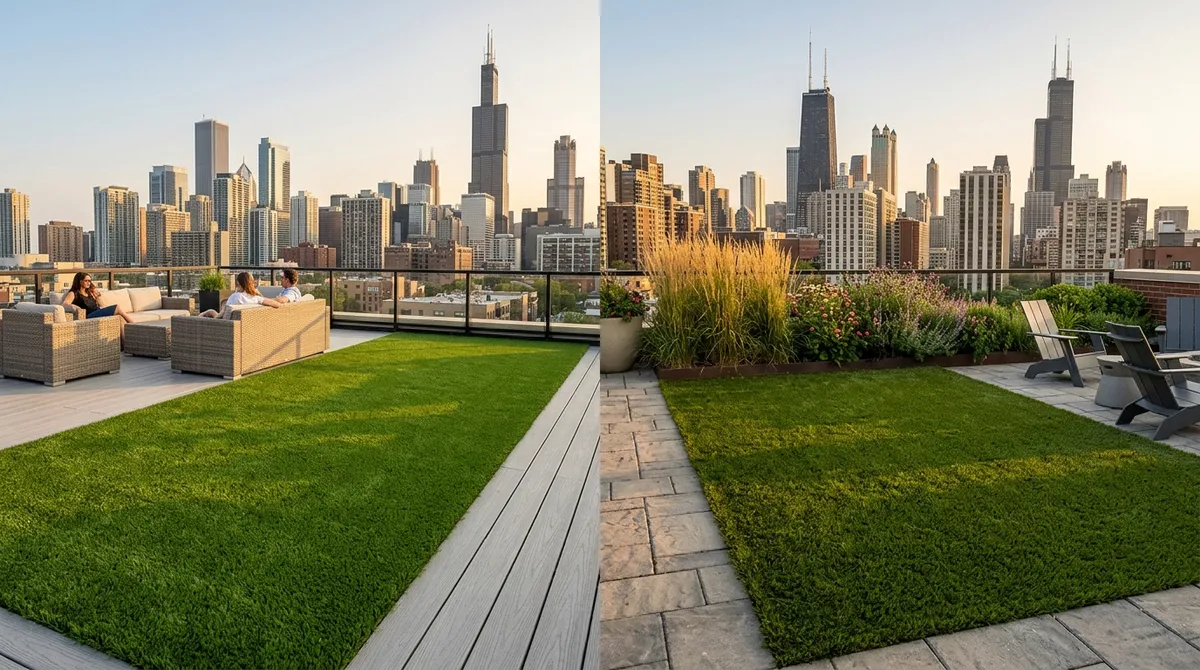
The best rooftop outdoor spaces don’t use turf alone. Combining your synthetic lawn with pavers, tile, planters, or seating areas creates a dynamic, multi-use space. Think of the turf as the soft centerpiece, with hardscaping elements framing it and creating defined zones for dining, lounging, and entertaining. This layered approach is how professional landscapers design truly spectacular rooftop retreats.
9. Use Shock Pads for Comfort and Protection
Shock pads sit beneath the turf layer and serve two purposes: they add underfoot comfort and they provide a buffer between the turf backing and the roof surface. For rooftop spaces used by families with children, pets, or guests who spend time sitting or lying on the turf, a shock pad is a worthwhile investment. It also adds a layer of protection for the roof below. Explore the best base materials for turf installation in 2026 to understand your options.
10. Understand Chicago’s Permit Requirements
Depending on your building type and rooftop modification scope, you may need permits before starting your Chicago rooftop turf installation. Commercial properties almost always require permits for structural or surface modifications. Residential condo owners should check with their building management and the City of Chicago’s Department of Buildings. Working with an experienced landscaping contractor helps you navigate this process without delays. The ICPI Certified Installer network can also help connect you with professionals who understand local compliance requirements.
11. Plan for Winter and Snow Removal
One of the biggest advantages of Chicago rooftop turf installation is how well synthetic grass handles winter. It stays green, doesn’t freeze and die like natural grass, and bounces back easily after snow loads. However, you’ll want to use soft-bristle tools or let snow melt naturally rather than using metal shovels that could damage the turf fibers. Read more about how artificial turf handles heavy snow like a pro so your space stays beautiful all winter long.
12. Work with an Experienced Local Landscaping Professional
Rooftop turf installation is more specialized than a standard backyard project. The drainage planning, membrane protection, fire rating verification, and load calculations all require professional expertise. At Serenity Landscape Group, our team has the hands-on experience to handle rooftop projects from initial design through final installation. We’ve helped homeowners, condo owners, and commercial property managers across the greater Chicago area create rooftop spaces they absolutely love. Our artificial turf installation service is designed to get you the best possible result with the least amount of hassle.
Rooftop Turf Installation Comparison: Key Factors at a Glance
Here’s a quick comparison of the most important considerations for rooftop turf installations in Chicago:
| Factor | What to Look For | Why It Matters |
|---|---|---|
| Turf Product Type | Lightweight, rooftop-specific backing | Reduces load and protects membrane |
| Drainage System | Permeable panels or layered system | Prevents water damage to roof |
| Fire Rating | ASTM E108 Class A rated product | Required for safety and code compliance |
| Heat Management | Heat-reduction blades or infill | Improves summer comfort on rooftop |
| Installation Method | Non-penetrating, membrane-safe approach | Protects waterproofing layer |
| Shock Pad | Added cushioning underlayer | Comfort and additional roof protection |
What Does Rooftop Turf Installation Cost in Chicago?
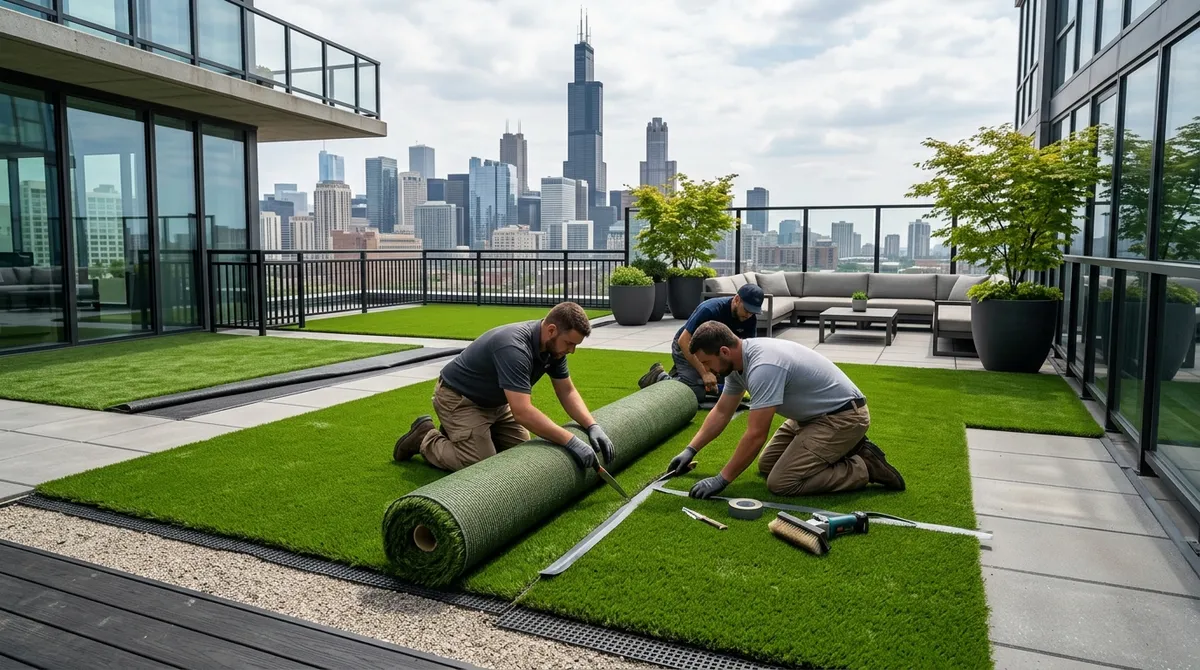
Rooftop turf projects vary in cost depending on size, accessibility, drainage complexity, and the turf product selected. Rooftop installations are generally priced higher than standard ground-level projects because of the specialized drainage work, protective underlayment, and additional planning required. Most residential rooftop projects are completed within one to three days depending on square footage and access logistics.
Here are the typical cost factors you’ll encounter:
- Turf product quality and pile height — premium rooftop-specific turf costs more but performs better long-term
- Drainage system complexity — more elaborate drainage panels add to the overall project cost
- Shock pad inclusion — optional but recommended for comfort-focused spaces
- Rooftop access difficulty — hard-to-access rooftops may require additional labor time
- Combined hardscaping elements — adding pavers, planters, or pergolas increases the total investment
- Square footage of the installation area — larger areas naturally cost more but often have a lower per-square-foot rate
For a personalized estimate based on your specific rooftop, reach out to our team directly. You can also explore our installation process to understand exactly what’s involved from start to finish.
Rooftop Turf Benefits for Different Property Types
Chicago rooftop turf installation isn’t a one-size-fits-all solution — it serves different needs depending on who you are and how you use the space. Here’s a quick breakdown:
- Urban condo owners: Create a private green retreat above the city without irrigation, mowing, or complex maintenance. It’s low-effort outdoor living at its best. Explore ideas for rooftop terrace turf design to get inspired.
- Commercial property managers: Rooftop turf adds visual appeal, creates employee relaxation spaces, and demonstrates environmental commitment to tenants. Learn more about why turf is a smart choice for corporate campus landscaping.
- Restaurant and hospitality businesses: A turf rooftop patio becomes an instant draw for guests, extending dining and lounge areas in a way that feels warm and inviting. Avoid common mistakes with our guide on restaurant patio artificial grass mistakes to avoid.
Common Mistakes to Avoid with Rooftop Turf
Even well-intentioned rooftop projects can go sideways without proper planning. Here are the top mistakes to steer clear of:
- Skipping the structural assessment — always verify load capacity before purchasing any materials
- Using standard ground-level turf products — these are not designed for rooftop drainage or membrane protection
- Ignoring local permit requirements — non-permitted work can lead to costly fines and forced removal
- Forgetting about heat management — a Chicago rooftop in July can be intense without proper planning
- DIY installation without professional guidance — rooftop projects carry risks that make professional installation genuinely worthwhile
For a deeper look at installation pitfalls, check out our article on artificial turf installation mistakes to avoid in Chicago. And if you’re weighing whether professional installation is worth it, our guide on why to choose professional turf installation over DIY lays it out clearly.
How Long Does Rooftop Turf Last in Chicago?
Quality synthetic turf installed correctly on a Chicago rooftop can last 15 to 20 years with proper care. Chicago’s climate — including freeze-thaw cycles, heavy snow, and summer UV exposure — is tough, but modern rooftop turf products are engineered to handle it. Regular light maintenance like brushing the fibers and rinsing the surface keeps it looking fresh. Read more about artificial turf lifespan in Chicago and what you can do to extend it.
Ready to Transform Your Chicago Rooftop?
Chicago rooftop turf installation is one of the most exciting and rewarding landscaping upgrades you can make in 2026. Whether you’re dreaming of a sleek urban retreat, a vibrant commercial gathering space, or a family-friendly rooftop play area, the right professional team can make it happen beautifully and safely. Take a look at our gallery of our work to see how we’ve transformed outdoor spaces across Chicagoland, and explore our artificial turf installation service page for full details on what we offer.
When you’re ready to take the next step, we’d love to chat. Request your free estimate today and let Serenity Landscape Group help you create the rooftop space you’ve always imagined — lush, green, and built to last through every Chicago season.
FAQs
Q: How much does rooftop turf installation cost in Chicago?
A: Costs vary based on square footage, drainage complexity, turf product quality, and whether you add complementary elements like pavers or pergolas. Rooftop projects are typically priced higher than ground-level installations due to specialized drainage work and membrane protection. The best way to get an accurate number is to request a free estimate from a local rooftop turf professional.
Q: Will rooftop turf damage my roof membrane?
A: Not when it’s installed correctly! Professional installers use non-penetrating methods and protective underlayment specifically designed to safeguard your roof’s waterproofing layer. The key is working with an experienced installer who understands the difference between ground-level and rooftop installation protocols — so please don’t DIY this one!
Q: What type of turf is best for a Chicago rooftop deck?
A: Look for lightweight, rooftop-specific synthetic turf with a permeable backing system designed for elevated surfaces. Products with heat-reduction technology and an ASTM E108 Class A fire rating are ideal for Chicago rooftops. A local landscaping professional can recommend the right product based on your specific rooftop conditions and how you plan to use the space.
Q: Is rooftop synthetic turf safe in Chicago winters and snow?
A: Absolutely — it’s actually one of the biggest advantages! Synthetic turf stays green through freezing temperatures and bounces back beautifully after snow loads. Just use soft-bristle brushes for snow removal instead of metal shovels to protect the turf fibers, and your rooftop green space will look great all year long.
Q: Do you need permits for rooftop turf installation in Chicago?
A: It depends on the scope of your project and your property type. Commercial properties almost always require permits for structural or surface modifications, and condo owners should check with building management and the City of Chicago’s Department of Buildings. A knowledgeable local installer will help you understand what permits apply to your specific situation.