Key Takeaways
-
Professional synthetic turf installation requires multi-step site preparation including proper base compaction, grading, and drainage systems—shortcuts here lead to pooling water, odors, and premature turf failure.
-
High-quality synthetic turf lasts 15-20+ years when professionally installed, paying for itself within a few years through eliminated water bills, mowing services, and fertilizer costs.
-
Pet-friendly turf with antimicrobial infill and superior drainage is specifically designed for households with dogs, providing odor resistance and easy cleanup compared to standard landscape turf.
-
Invisible seam work is a hallmark of professional installation; poor seaming in high-traffic zones becomes visible and splits over time, making expert installation critical.
-
Synthetic turf versatility extends beyond lawns to rooftop terraces, shaded areas, putting greens, and commercial spaces, with different turf types optimized for specific applications.
-
Routine maintenance is minimal—occasional rinsing, brushing with a stiff-bristle broom, debris removal, and annual seam inspections keep synthetic turf looking fresh for years.
Imagine stepping outside to a lush, green lawn every single day — no mowing, no watering, no muddy patches. That’s exactly what professional synthetic turf installation can deliver. Whether you’re a homeowner tired of wrestling with Chicago’s unpredictable weather or a commercial property manager looking for a low-maintenance solution, artificial turf has become one of the most popular landscaping upgrades in 2026. And honestly, it’s easy to see why.
The secret isn’t just the turf itself — it’s the quality of the installation. A properly installed artificial lawn looks natural, drains beautifully, and lasts for years. A poorly installed one? Not so much. That’s why understanding what goes into professional synthetic turf installation is so important before you commit. Let’s walk through everything you need to know, from site prep to finished product.
What Is Professional Synthetic Turf Installation?
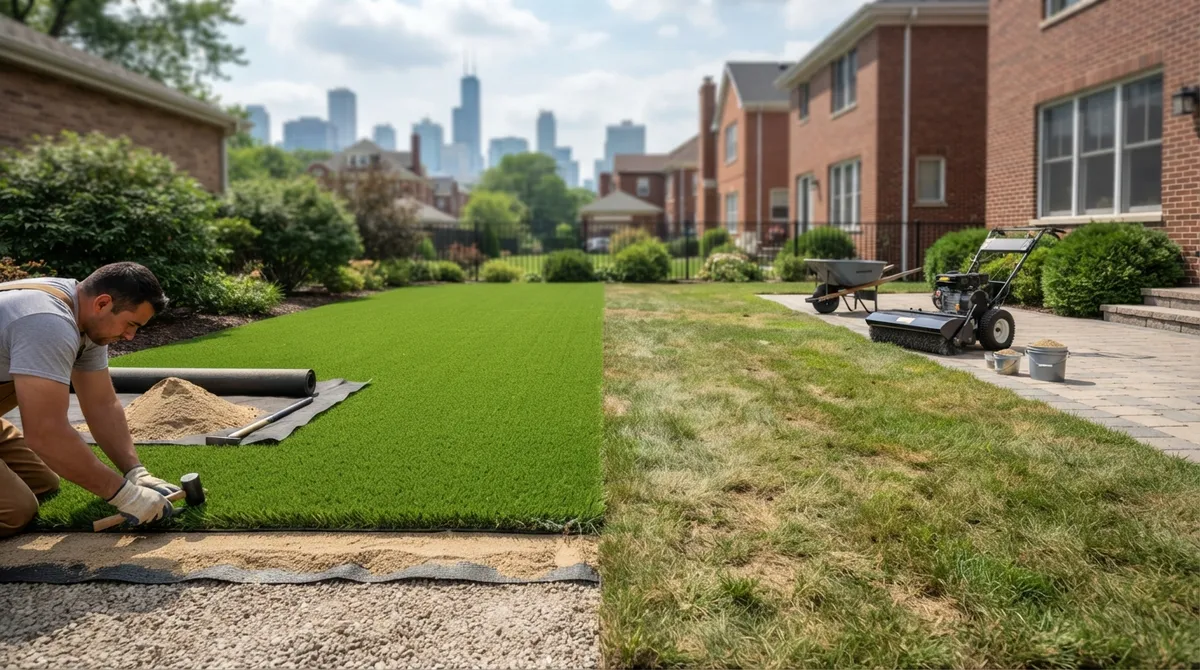
Synthetic turf installation is far more than rolling out a green carpet and calling it a day. It’s a multi-step landscaping process that requires planning, skill, and the right materials. When done by an experienced team, the result is a surface that looks and feels surprisingly natural — and performs far better than real grass in many situations.
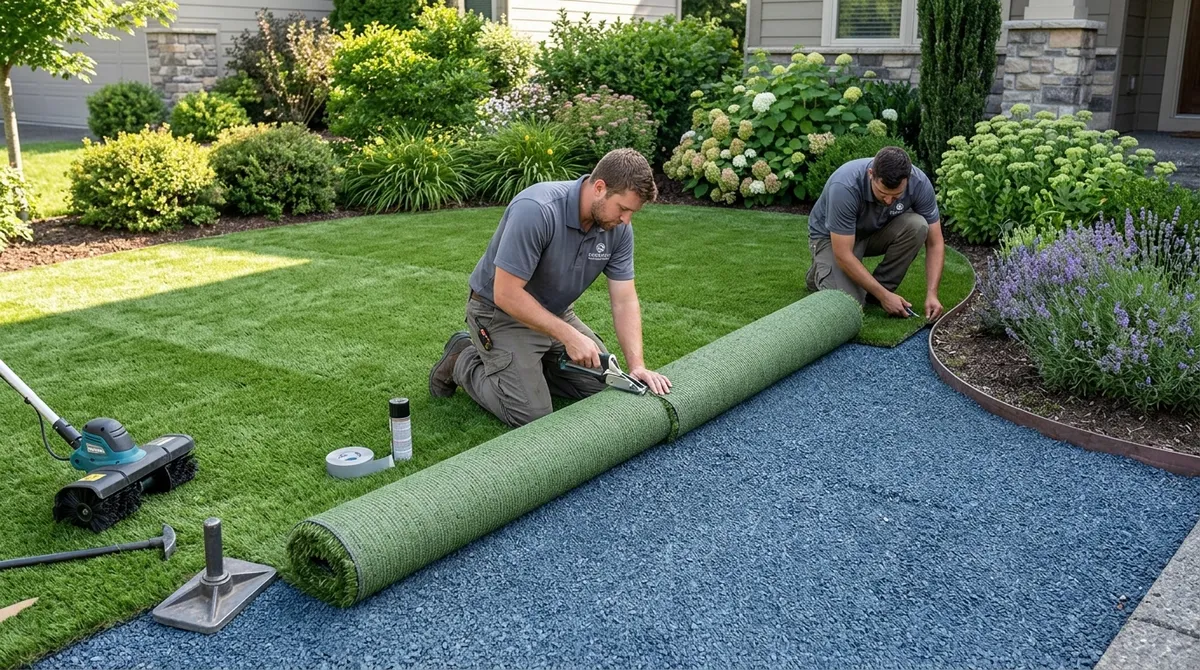
Professional installation covers everything from removing your existing lawn to applying the finishing infill layer. Here’s what the process typically looks like:
- Site Assessment and Design: A professional evaluates your space, checks for drainage issues, and maps out the installation plan.
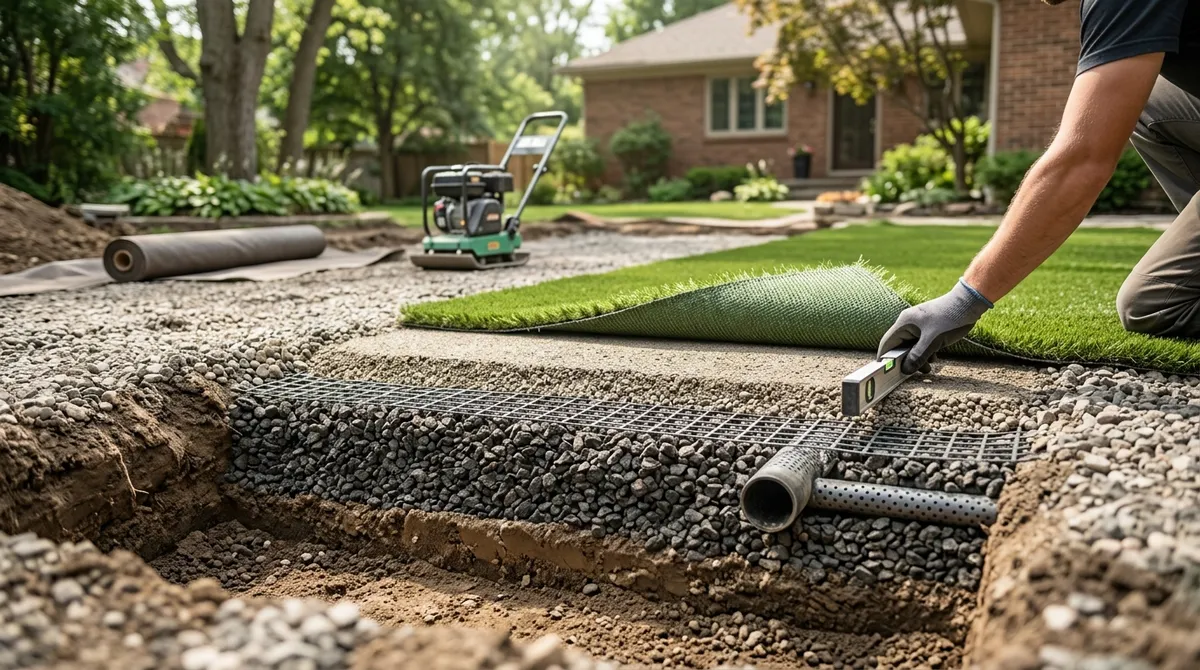
- Excavation and Grading: Existing grass, soil, or debris is removed. The ground is then graded to create a smooth, even surface that promotes proper water flow.
- Base Preparation: A compacted aggregate base — usually crushed rock or decomposed granite — is laid down. This is the foundation of everything.
- Weed Barrier Installation: A permeable fabric layer is placed to prevent weeds from pushing through the turf over time.
- Turf Laying and Seaming: The artificial grass is cut to fit your space, laid carefully, and seamed where panels meet. Good seam work is invisible. Bad seam work is very obvious.
- Infill Application: A layer of infill material — like silica sand, crumb rubber, or pet-friendly alternatives — is spread across the turf and brushed in to support the blades and add cushioning.
- Edging and Cleanup: Borders are secured, edges are trimmed, and the site is cleaned up to reveal your finished lawn.
Want to dive deeper into the process? Check out the 5 key stages of the artificial turf installation process for a detailed breakdown.
Why the Base and Drainage Matter So Much
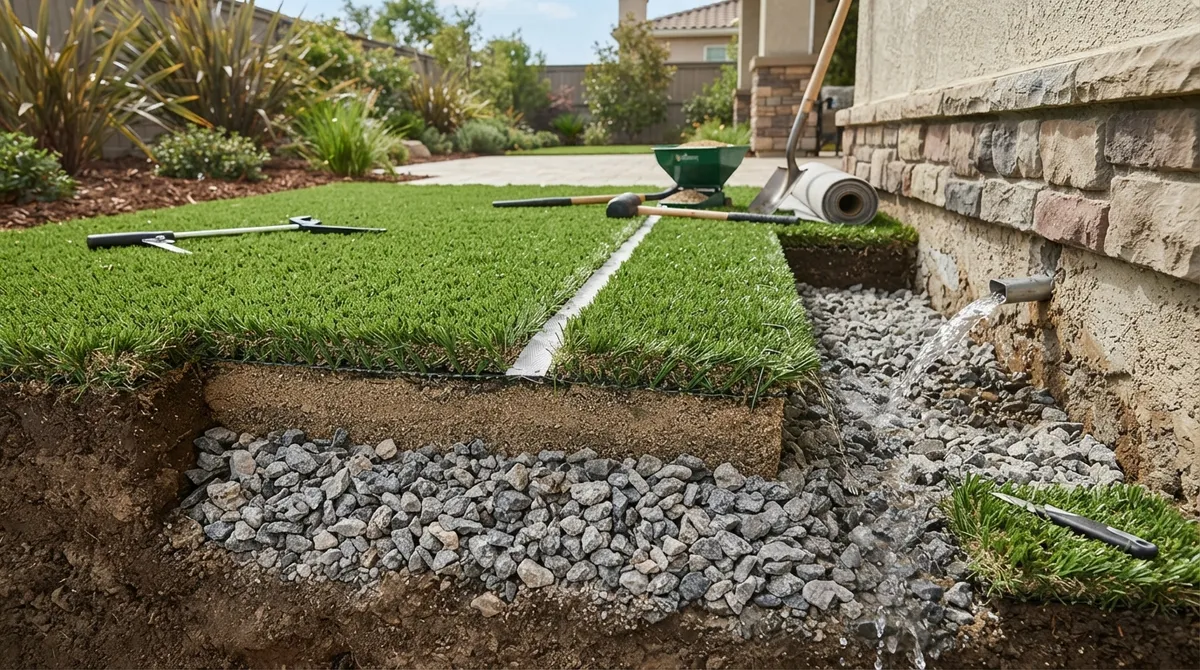
Here’s a truth that every experienced installer knows: the turf you see is only as good as what’s underneath it. The base and drainage system are the real heroes of a long-lasting synthetic lawn.
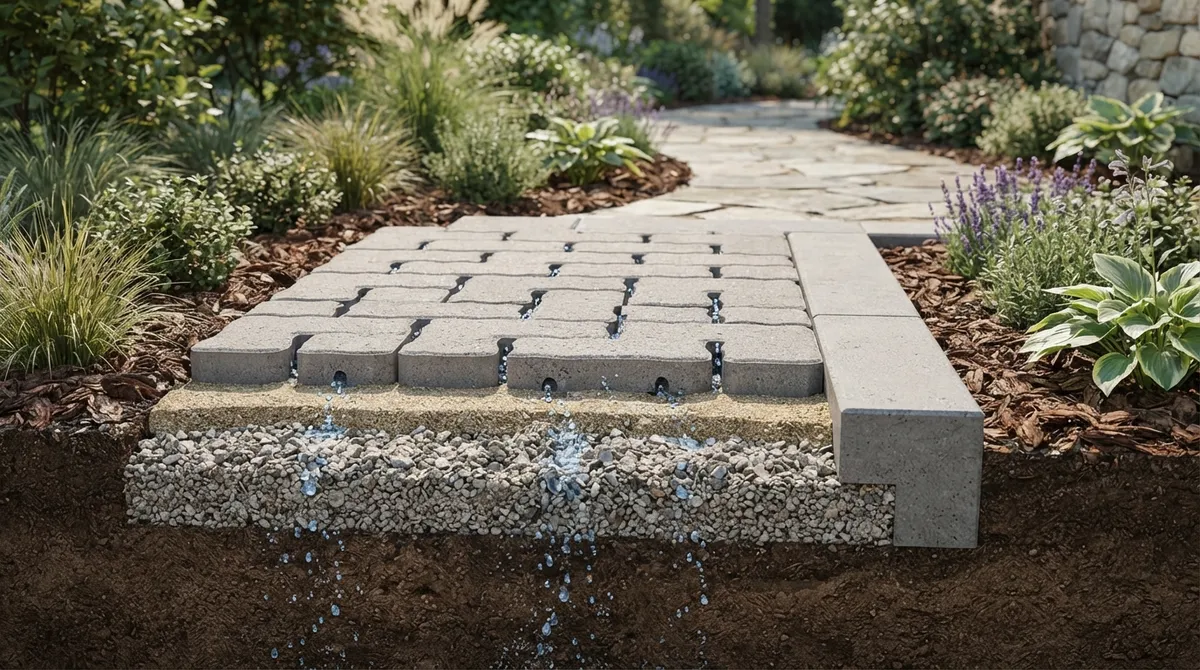
In the greater Chicago area, we deal with heavy rain, snowmelt, and freeze-thaw cycles. Without a properly graded base and drainage system, water can pool on your turf, leading to soggy spots, odors (especially in pet areas), and even surface damage over time. A well-engineered base prevents all of that.
- A compacted crushed rock base promotes water drainage naturally
- Proper grading directs water away from your home’s foundation
- Good drainage prevents standing water that can create odors
- Solid base preparation prevents the turf from shifting or wrinkling over time
Curious about how water moves through your artificial lawn? Learn why synthetic grass drains better than natural lawns and what that means for your yard long-term.
Popular Applications for Synthetic Turf in Landscaping
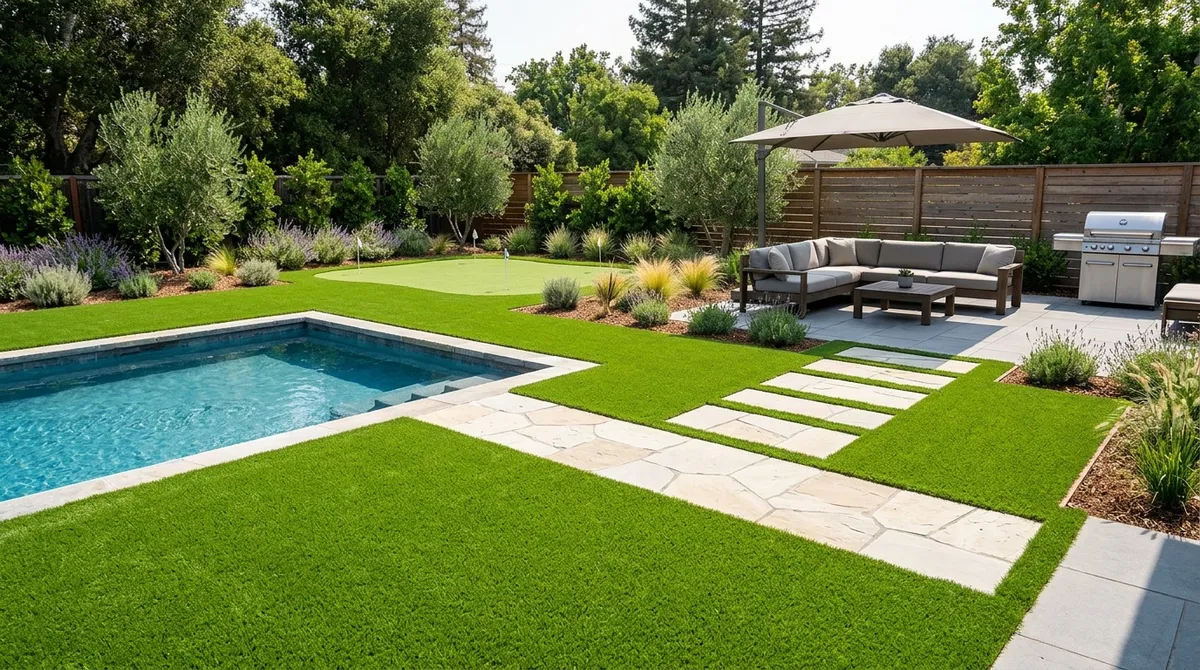
One of the best things about artificial grass is how versatile it is. It’s not just for front lawns anymore. In 2026, homeowners and property managers across Chicagoland are using synthetic turf in some really creative ways.
Residential Uses
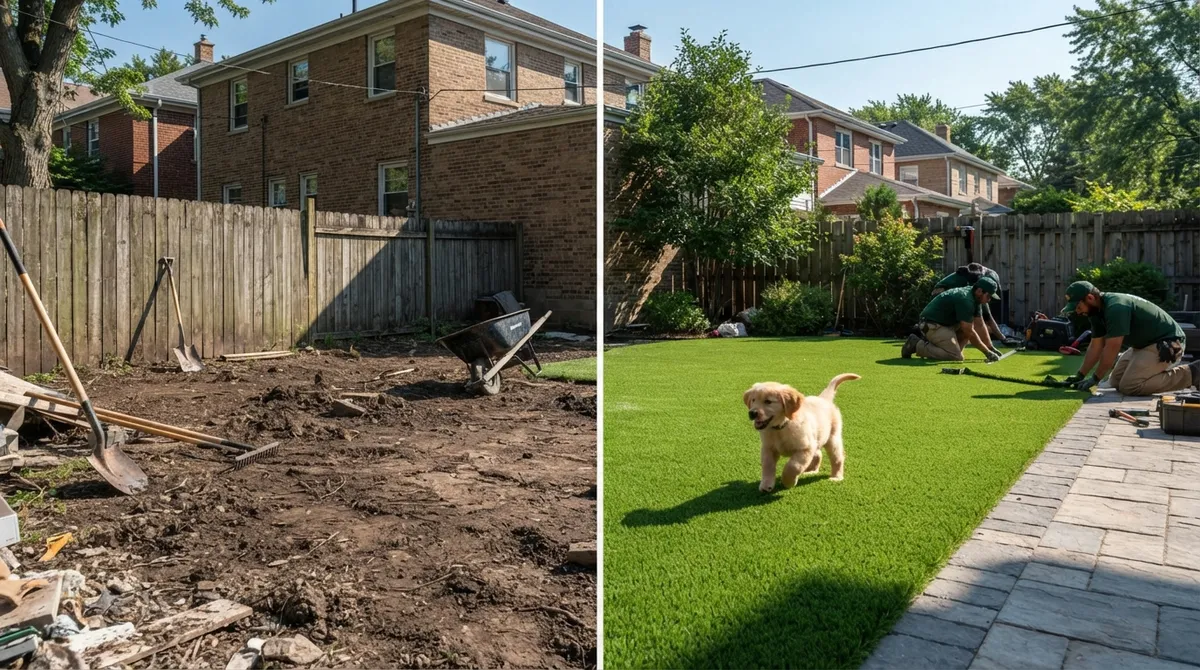
- Backyard lawns: Perfect for families who want a green, usable space year-round
- Pet runs and dog areas: Durable, easy to clean, and odor-resistant with the right infill
- Putting greens: A dream for golf lovers — right in your own backyard
- Side yards and shaded areas: Natural grass struggles in shade; synthetic turf thrives
- Rooftop terraces: Urban condo owners are transforming rooftop spaces with turf
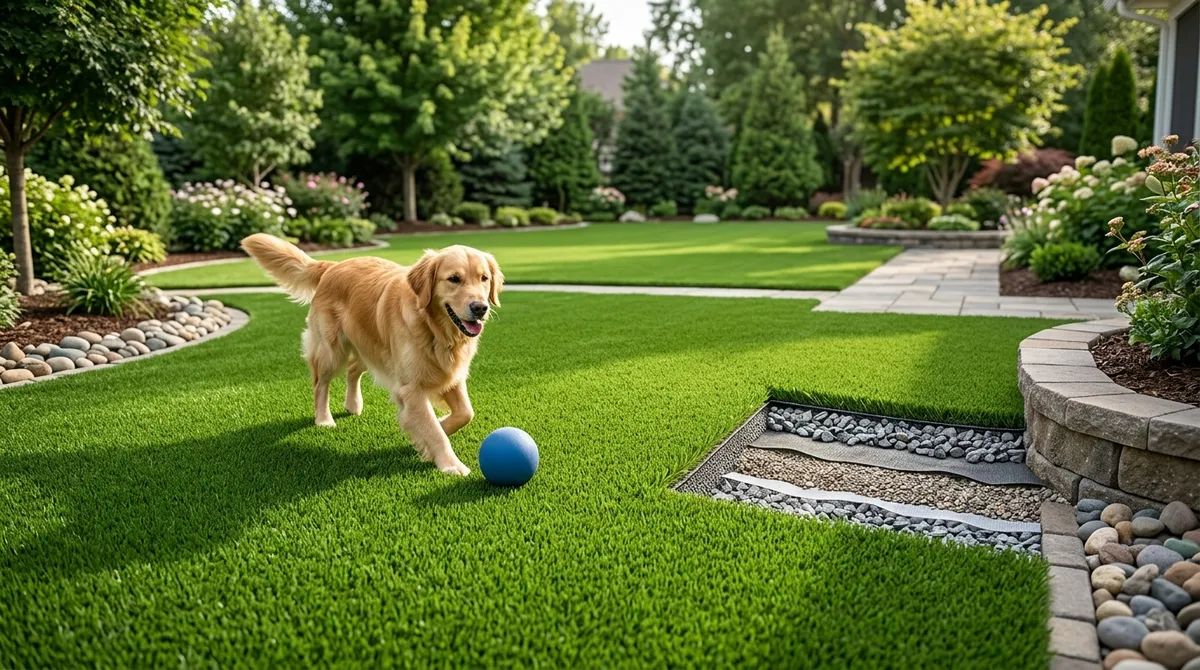
If you have dogs, you’ll love what pet-friendly turf can do for your yard. Easy-clean pet turf is specifically designed for households with furry family members, using antimicrobial infill and strong drainage to keep things fresh.
Commercial Uses
- Office building grounds: Low-maintenance curb appeal that impresses clients
- Restaurant patios: A warm, inviting outdoor dining atmosphere
- Retail storefronts: Branded, polished landscaping without ongoing lawn care costs
- Playgrounds and daycares: Safe, cushioned, and durable surfaces for kids
- Corporate campuses: Biophilic design that boosts employee well-being
Commercial property managers often find that commercial artificial turf pays for itself quickly in reduced maintenance costs. No more weekly mowing contracts, no irrigation bills, and no brown patches to worry about during dry spells.
Synthetic Turf Options: How to Choose the Right Product
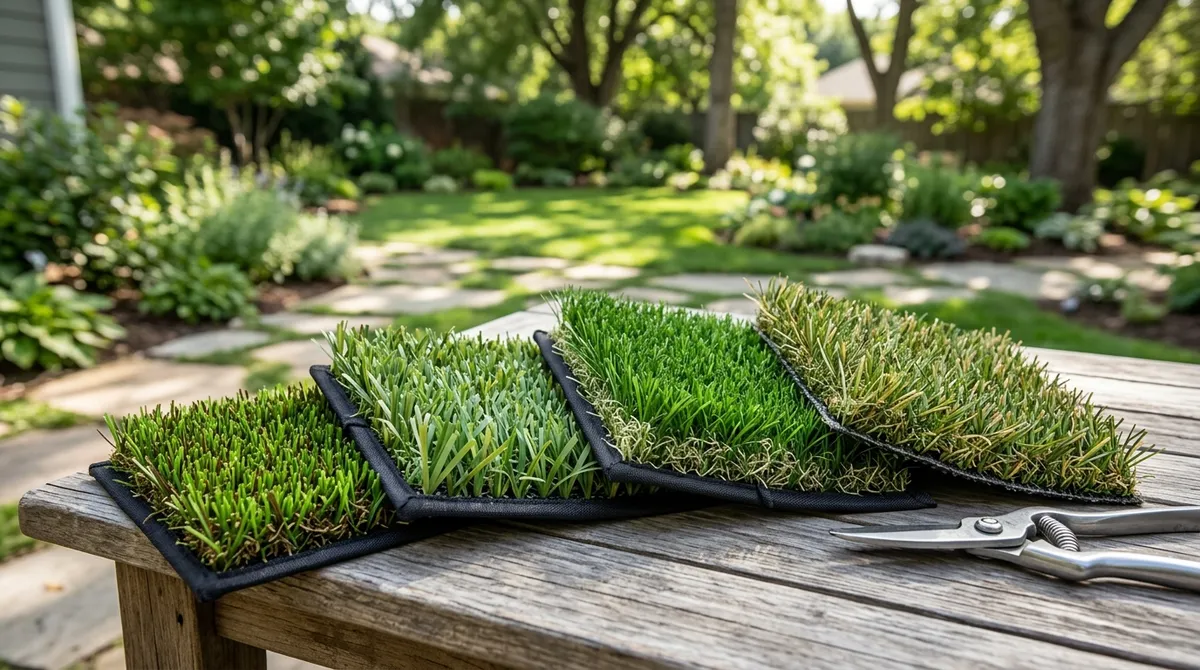
Not all artificial turf is created equal. The right product depends on your specific use case, foot traffic levels, and personal preferences. Here’s a quick comparison to help you think it through:
| Turf Type | Best For | Key Feature |
|---|---|---|
| Landscape Turf | Front and back lawns | Realistic appearance, soft feel |
| Pet Turf | Dog runs, pet areas | Antimicrobial infill, superior drainage |
| Putting Green Turf | Backyard golf greens | Tight nap, consistent ball roll |
| Playground Turf | Kids’ play areas, daycares | Cushioned, impact-absorbing |
| High-Traffic Turf | Commercial spaces, event areas | Durable fibers, heavy-duty backing |
| Shade-Tolerant Turf | Under trees, covered areas | UV-stable, color-consistent |
Not sure which type is right for your yard? This guide on choosing artificial turf for your backyard walks you through the decision step by step.
What Does Synthetic Turf Installation Cost?
Cost is usually one of the first questions people ask — and understandably so. Synthetic turf installation involves both materials and labor, and pricing can vary depending on several factors.
Here’s what typically affects your total investment:
- Size of the area: Larger spaces require more turf and labor
- Turf quality and type: Premium products cost more upfront but last longer
- Site conditions: Sloped yards, poor drainage, or rocky soil adds complexity
- Removal of existing landscaping: Stripping out old grass or hardscape adds time and cost
- Infill type: Specialty infills like pet-safe or cooling options cost more than standard sand
While the upfront cost of synthetic turf installation is higher than sodding a lawn, most property owners see a return on investment within a few years through eliminated water bills, lawn care services, and fertilizer costs. These 14 cost-benefit facts comparing artificial turf to real grass make the financial picture very clear.
How Long Does Synthetic Turf Last?
With proper installation and minimal maintenance, high-quality synthetic turf can last 15 to 20 years or more. That’s a long time of enjoying a beautiful, green space without the weekly lawn care routine. The key factors affecting lifespan include installation quality, turf product quality, foot traffic levels, and how well you maintain it over the years.
In Chicago’s climate — with its hot summers, heavy snow, and freeze-thaw cycles — durability matters a lot. Well-installed artificial turf handles all of it gracefully. Learn more about artificial turf lifespan in Chicago to set realistic expectations for your investment.
Maintenance: Much Less Than You Think
One of the biggest selling points of synthetic turf is how little ongoing care it needs. Compared to natural grass, it’s practically effortless. Here’s what a simple maintenance routine looks like:
- Rinse occasionally: A quick rinse with a garden hose removes dust and light debris, especially in pet areas.
- Brush the blades: Use a stiff-bristle broom or power brush to keep fibers standing upright and looking fresh.
- Remove debris: Leaves, twigs, and organic material should be cleared regularly to prevent mold buildup.
- Spot clean as needed: Address pet waste, spills, or stains promptly with water or a mild enzyme cleaner.
- Inspect for damage: Check seams and edges annually to catch any minor issues before they become bigger ones.
For a full routine, check out these 7 artificial turf maintenance tips that keep it looking new. It’s really not a lot of work — and that’s kind of the whole point.
Why Professional Installation Makes All the Difference
It might be tempting to consider a DIY approach. We get it. But professional synthetic turf installation is genuinely worth the investment. Here’s why:
- Professionals have the equipment to grade and compact the base correctly
- Expert seam work means invisible joins that don’t split or bubble over time
- Proper edging and anchoring prevents shifting and wrinkling
- Experienced installers know how to handle slopes, curved areas, and drainage challenges
- A professional job typically comes with warranties on both materials and workmanship
The Landscape Illinois association supports high standards for professional landscape installation across the state — and choosing a qualified installer is one of the best ways to protect your investment. At Serenity Landscape Group, our team brings over 20 years of experience to every turf installation project. We handle everything from the initial site evaluation to the final brush of infill — and we love the results as much as you do.
If you want to understand exactly why professional installation outperforms DIY, this article comparing professional vs. DIY turf installation lays it all out clearly.
Common Mistakes to Avoid With Synthetic Turf Installation
Whether you’re a homeowner or a property manager, knowing what can go wrong helps you ask the right questions when hiring an installer. The ICPI Certified Installer program emphasizes proper planning and base preparation as the foundation of any quality outdoor surface installation — and the same principle applies to turf.
Watch out for these common pitfalls:
- Skipping proper base compaction: Leads to an uneven surface that shifts over time
- Poor seam placement: Seams in high-traffic zones wear out faster and become visible
- Inadequate drainage planning: Results in pooling water, especially in flat yards
- Wrong turf for the application: Using landscape turf in a pet area, for example, leads to odor issues
- Ignoring edge anchoring: Edges that aren’t properly secured lift and fray over time
Avoid these issues by working with an experienced team. You can also review 7 artificial turf installation mistakes to avoid in Chicago before your project begins.
Pairing Synthetic Turf With Other Landscaping Features
Synthetic turf doesn’t have to stand alone. In fact, it looks best when it’s part of a thoughtfully designed outdoor space. At Serenity Landscape Group, we often pair turf installations with complementary features that elevate the entire landscape.
Some popular pairings include:
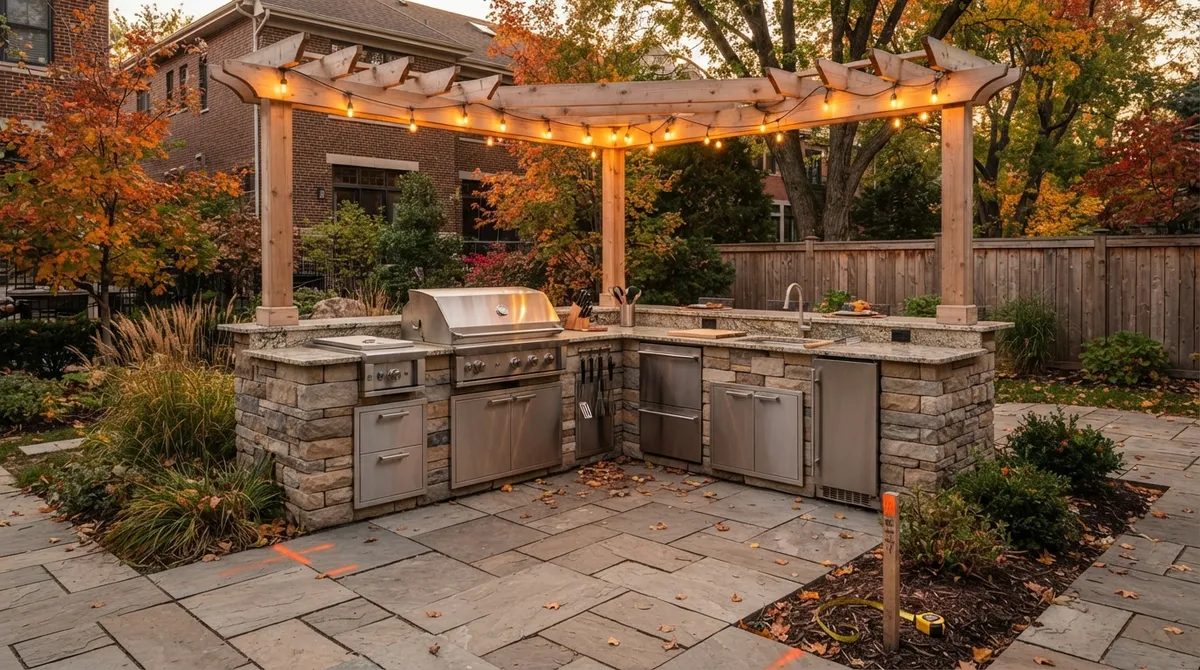
- Pavers for pathways, patios, and borders that frame the turf beautifully
- Retaining walls to create level turf zones on sloped properties
- Landscape lighting to showcase your lawn at night and create ambiance
- Fire pits for a cozy gathering area surrounded by lush green turf
- Softscapes like garden beds and shrubs that add color and texture around the turf
The right combination of features creates an outdoor space that’s genuinely beautiful to look at and enjoyable to spend time in. Browse our gallery of our work for inspiration on how turf pairs with other landscaping elements.
Is Synthetic Turf Right for You?
Synthetic turf installation is a smart investment for a wide range of properties. If you’re tired of maintaining a natural lawn, dealing with brown patches, or watching water bills climb during summer, it’s worth a serious look. It’s equally powerful for commercial spaces that need to impress visitors and clients without the ongoing cost of traditional landscaping.
The key is making sure it’s done right — with proper drainage, quality materials, and expert installation. Still on the fence? Read more about whether artificial turf is worth it for your yard before making your final call. And if you’re ready to explore your options with a team that’s been transforming Chicago-area outdoor spaces for over two decades, we’d love to hear from you.
Ready to get started? Request your free estimate today and let’s talk about what synthetic turf installation could do for your property. You can also call us directly at (630) 359-5139 — we’re always happy to chat about your outdoor vision and help you take the next step toward a lawn you’ll truly love.
FAQs
Q: How much does synthetic turf installation cost per square foot?
A: The cost of synthetic turf installation varies based on turf type, site conditions, and labor — but most residential projects fall somewhere between $10 and $20 per square foot installed. It’s a bigger upfront investment than sod, but you quickly recover that cost by eliminating water bills, mowing services, and fertilizer expenses. We always recommend getting a personalized quote based on your specific space.
Q: How long does synthetic turf last in a landscaped yard?
A: High-quality synthetic turf that’s professionally installed can last anywhere from 15 to 20 years or more. The key factors are the quality of the product, how the base was prepared, and how much foot traffic the area receives. A little routine maintenance — like occasional rinsing and brushing — goes a long way toward extending its life.
Q: Is synthetic turf a good option for yards with pets?
A: Absolutely — and it’s actually one of the most popular reasons homeowners choose synthetic turf! Pet-friendly turf products are designed with antimicrobial infill and superior drainage to keep odors at bay and make cleanup easy. Your dogs get a soft, clean surface to play on, and you get a yard that doesn’t turn into a muddy mess. It’s a win-win.
Q: Do you need a drainage system under synthetic turf?
A: Yes — proper drainage is one of the most important parts of a quality synthetic turf installation. Without it, water can pool on the surface, especially after heavy rain. A well-prepared compacted base and permeable backing allow water to drain quickly and naturally, keeping your turf fresh and functional through Chicago’s rainy seasons and snowmelt.
Q: Can synthetic turf be installed on rooftops, patios, or slopes?
A: Yes, and it works wonderfully in all of these settings! Rooftop terraces, concrete patios, and sloped yards are all great candidates for synthetic turf installation when done by an experienced team. Proper anchoring, edging, and drainage planning are essential for non-standard surfaces, so working with a professional installer is especially important for these applications.