Key Takeaways
-
Professional artificial lawn installation costs $5-$20 per square foot in Chicago depending on turf quality and site conditions, with quality residential installations typically ranging $10-$15 per square foot.
-
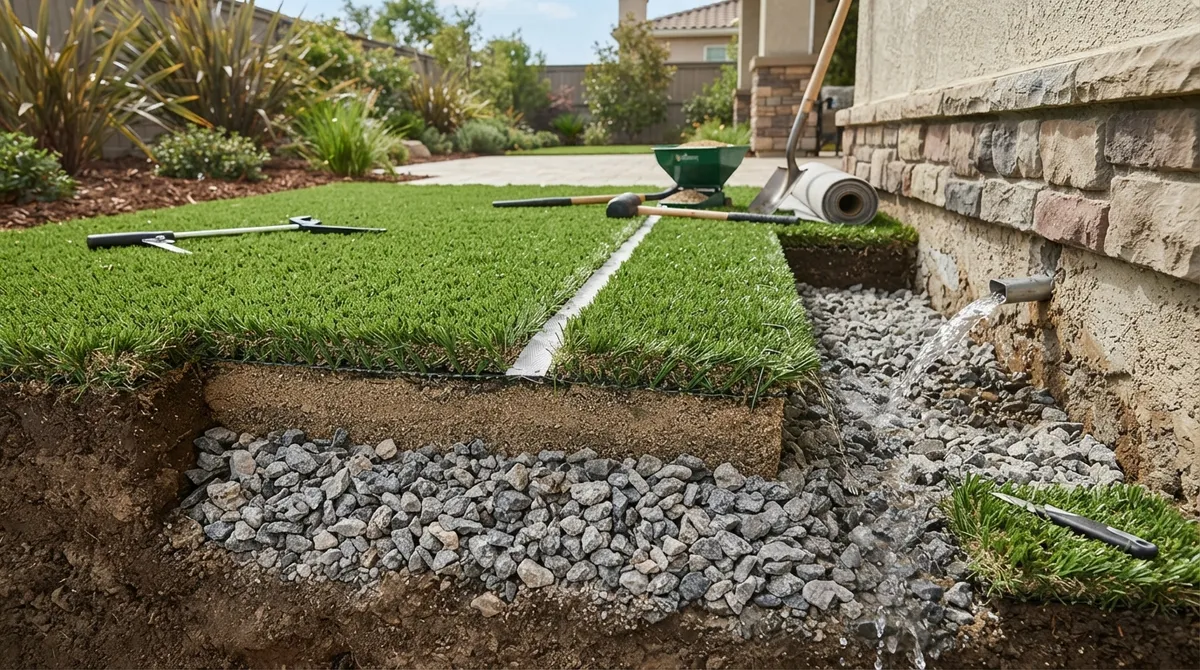
Proper base layer preparation with compacted aggregate is critical for drainage and surface stability; skipping this step leads to pooling water, wrinkles, and shortened turf lifespan.
-
Modern synthetic turf lasts 8-25 years with proper installation and maintenance, eliminating water bills and weekly mowing while staying green year-round through Chicago’s harsh winters.
-
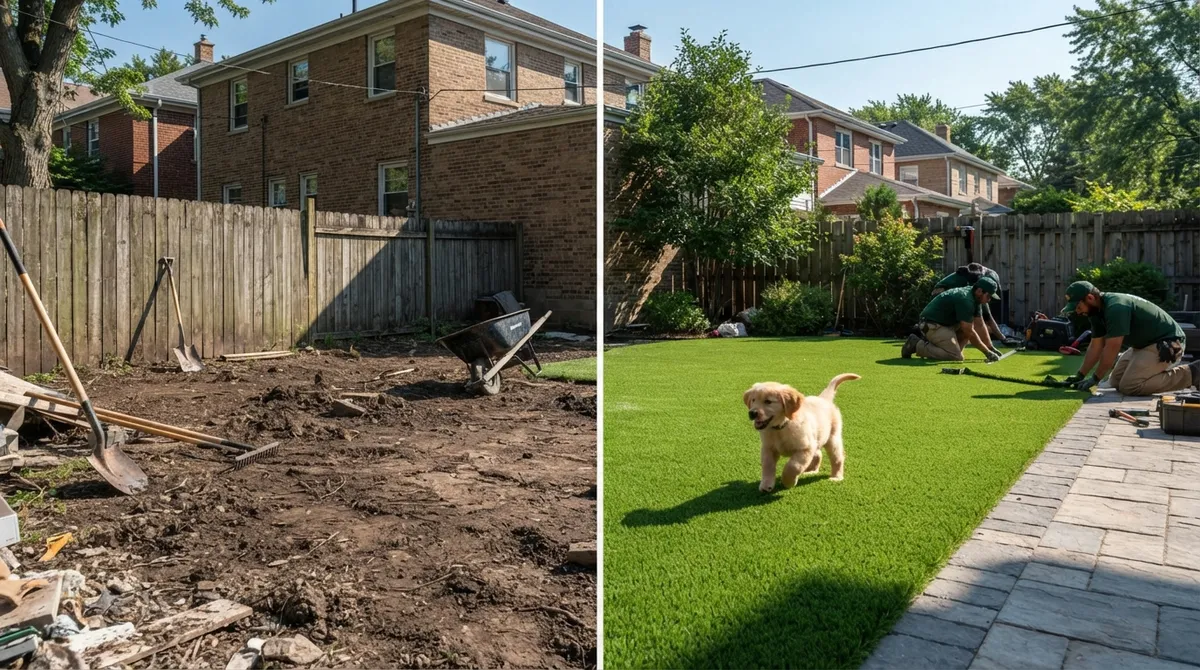
Pet-friendly artificial turf with enhanced drainage eliminates mud and odors; simply remove solid waste promptly and rinse occasionally to keep the surface fresh.
-
Quality installation involves seven key stages: site assessment, sod removal, base preparation, weed barrier installation, turf cutting/seaming, infill application, and final grooming—professional installers handle these correctly.
-
Check local municipality and HOA requirements before installation, as permits may be needed if project affects stormwater drainage, involves significant grading, or violates community guidelines.
Is your Chicago-area yard more mud patch than green paradise? You’re not alone. Many homeowners and property managers across the suburbs struggle with patchy grass, soggy soil, and the endless chore of lawn upkeep. That’s exactly why artificial lawn installation has become one of the most popular landscaping upgrades in 2026. Synthetic grass looks lush year-round, holds up through harsh Midwest winters, and dramatically cuts the time and money you spend on lawn care. Whether you have a small backyard, a sprawling commercial property, or a rooftop terrace, there’s a turf solution designed just for you. In this guide, we’ll walk you through everything you need to know — from how the installation process works to what it costs and whether it’s the right fit for your outdoor space.
What Is Artificial Lawn Installation?
Artificial lawn installation is a professional landscaping service that replaces your natural grass with high-quality synthetic turf. The finished product looks and feels remarkably close to real grass, but without the watering, mowing, or fertilizing. It’s a smart solution for homeowners, businesses, schools, and commercial properties that want a beautiful, functional outdoor surface that holds up in all kinds of conditions.
Today’s turf products are nothing like the scratchy carpets of the past. Modern synthetic grass comes in a wide range of pile heights, fiber types, and colors. You can find turf designed for pet-friendly yards, high-traffic play areas, decorative lawns, and even custom backyard putting greens. The right product depends on how you plan to use your space.
How the Installation Process Works
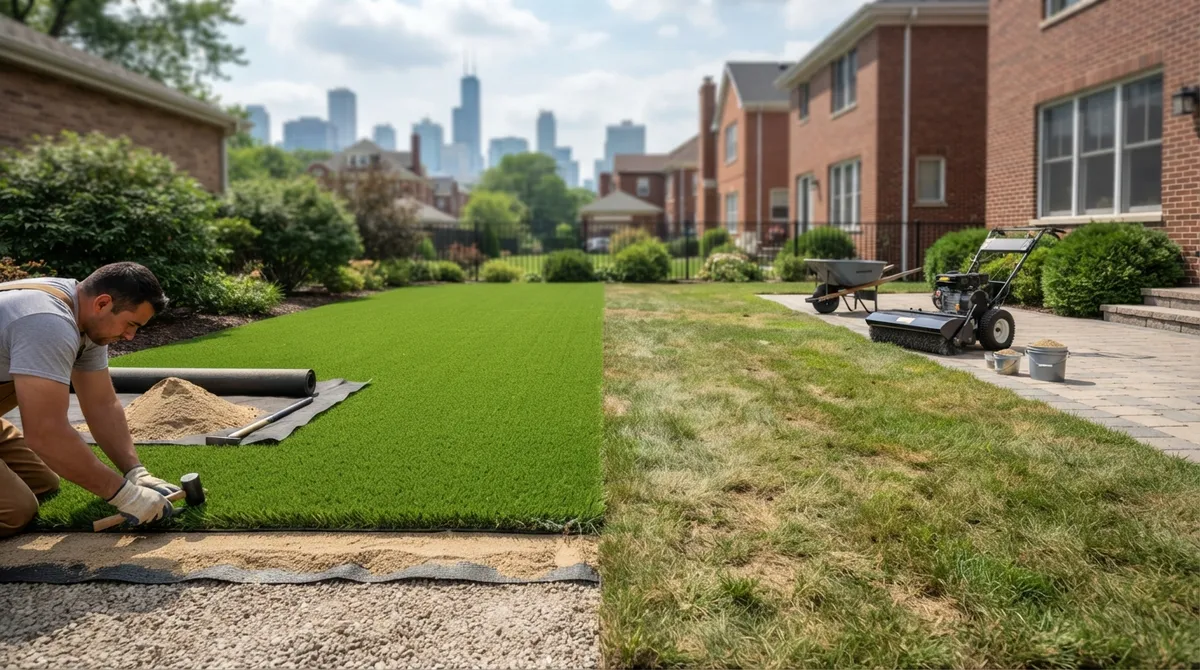
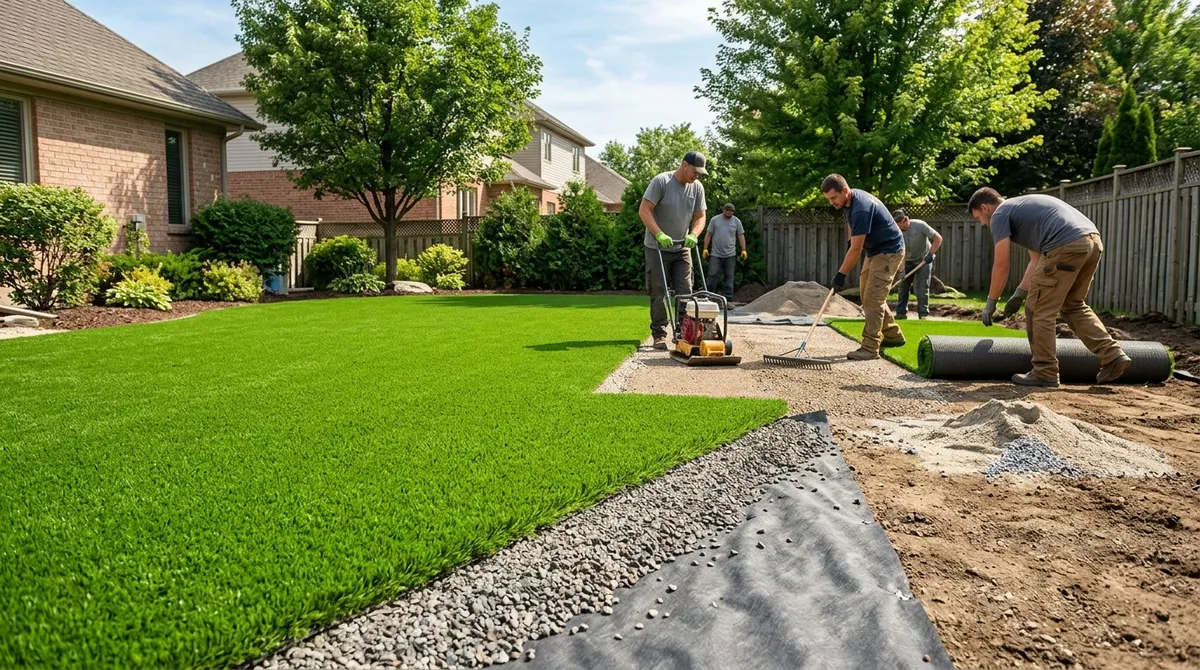
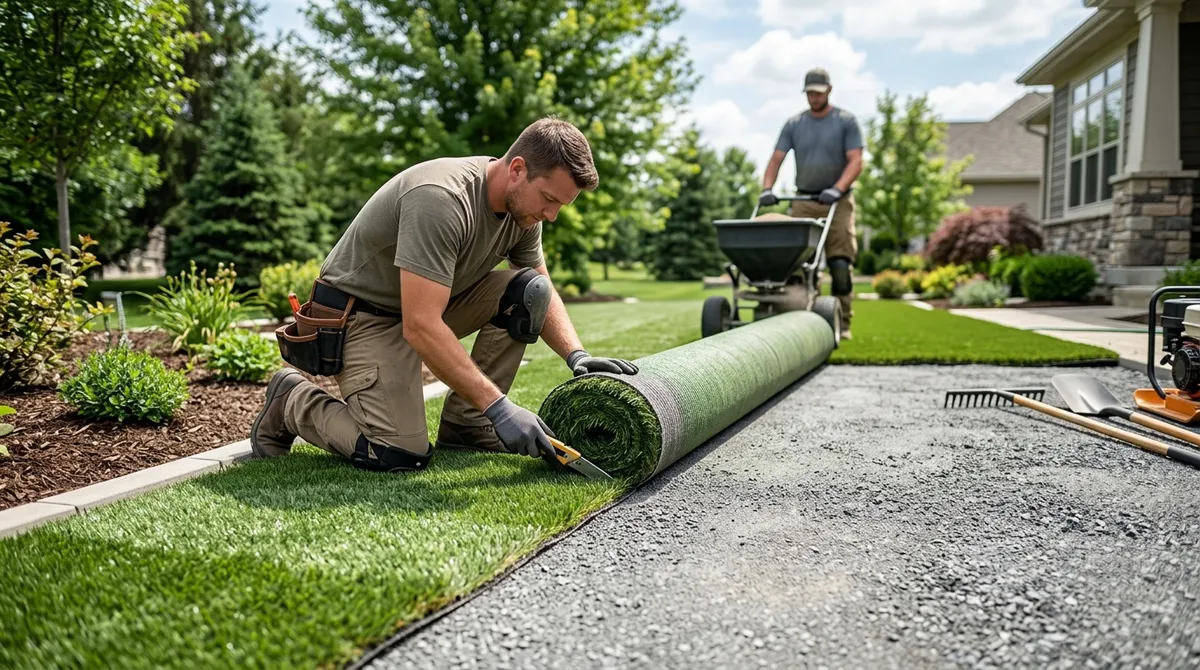
A professional artificial lawn installation involves several carefully planned steps. Skipping any one of them can lead to poor drainage, wrinkles, or a shorter lifespan. Here’s what a quality installation looks like from start to finish. You can also explore the 5 key stages of the artificial turf installation process in more detail.
- Site Assessment and Planning: A professional crew evaluates your yard’s slope, drainage patterns, and soil conditions before any work begins. This step sets the foundation for everything else.
- Sod and Vegetation Removal: Existing grass, weeds, and organic material are removed down to the soil. This prevents future weed growth and creates a clean base.
- Base Layer Preparation: A compacted aggregate base — typically crushed rock or decomposed granite — is graded and leveled. This layer is critical for proper drainage and a smooth surface.
- Weed Barrier Installation: A permeable fabric is laid over the base to block weed growth while still allowing water to pass through freely.
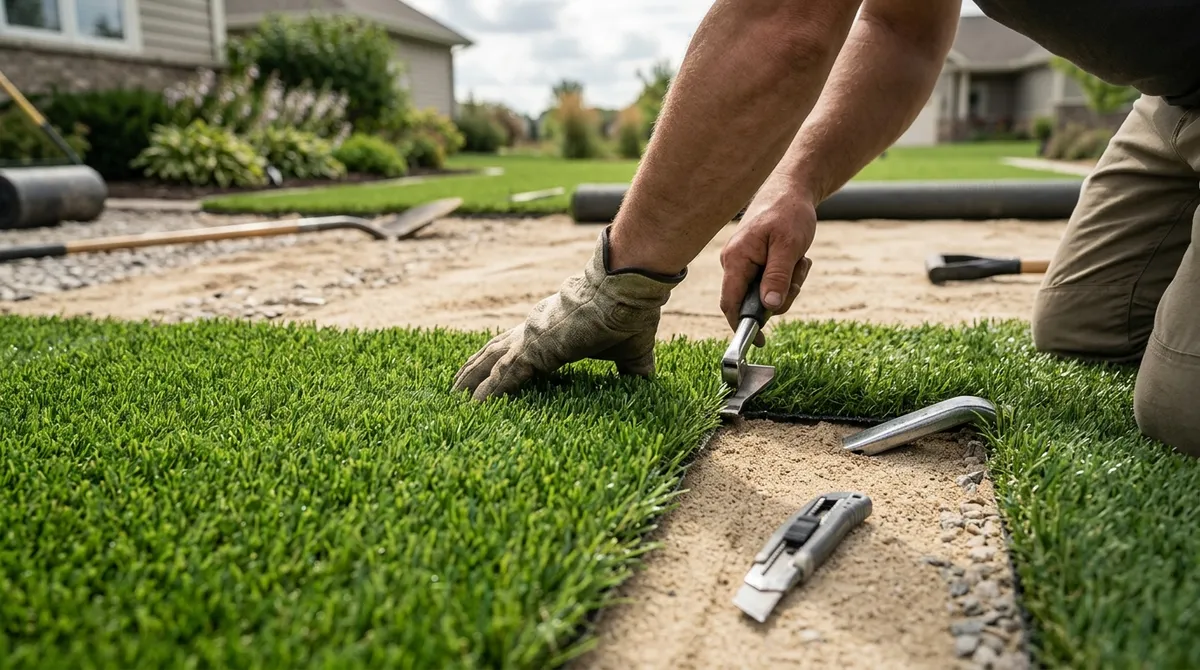
- Turf Cutting and Seaming: The synthetic turf is cut to fit your space precisely. Seams are carefully joined so they’re nearly invisible.
- Infill Application: Sand, crumb rubber, or other infill materials are spread across the turf surface. Infill helps blades stand upright and adds cushion underfoot.
- Final Grooming and Inspection: The crew brushes the turf fibers upright and does a final walkthrough to make sure everything looks perfect.
Want to make sure you don’t run into common pitfalls? Check out these artificial turf installation mistakes to avoid in Chicago before your project begins.
Where Artificial Lawn Installation Works Best
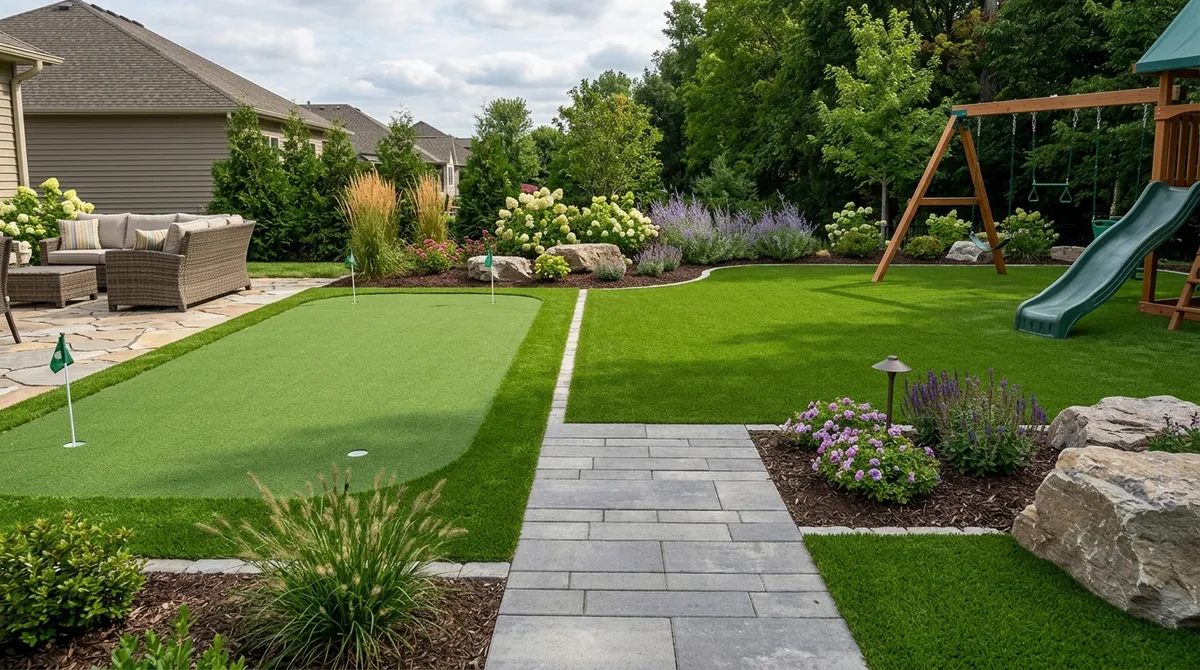
One of the best things about synthetic grass is how versatile it is. It works beautifully in spaces where natural grass struggles or simply isn’t practical. Here are some of the most popular applications:
- Residential front and back yards — Perfect for families who want a tidy, green lawn without the weekend yard work
- Pet areas and dog runs — Specially designed pet turf drains easily and resists odors (learn more about pet turf installation in Chicago)
- Children’s play areas — Soft, shock-absorbent turf creates a safe and clean surface for kids to play
- Commercial properties and office parks — Low-maintenance turf keeps business exteriors looking polished year-round
- Rooftop terraces and balconies — Lightweight turf systems transform urban outdoor spaces (explore rooftop terrace turf design ideas)
- Putting greens and sports areas — Custom turf installations bring athletic performance surfaces to your backyard
- Shaded areas — Natural grass rarely survives heavy shade, but synthetic grass stays green regardless of sunlight
If you’re dealing with a yard that gets little sun, synthetic grass for shaded areas could be the perfect solution.
Artificial Lawn Installation Cost Breakdown
Cost is one of the first questions most people ask, and it’s a fair one. Artificial lawn installation is an investment, but it pays off over time through reduced water bills, no lawn care expenses, and a longer-lasting outdoor surface.
| Project Type | Estimated Cost Per Sq. Ft. | Key Cost Factors |
|---|---|---|
| Basic Residential Lawn | $5 – $10 | Entry-level turf, flat terrain, minimal drainage work |
| Quality Residential Installation | $10 – $15 | Premium turf, proper base prep, infill, weed barrier |
| Pet-Friendly or Play Area | $12 – $18 | Specialized turf, enhanced drainage systems |
| Complex or Sloped Sites | $15 – $20+ | Grading work, retaining elements, custom seaming |
| Commercial Properties | $10 – $20 | Large-scale installation, heavy-traffic turf grades |
These figures reflect industry estimates from landscaping service providers in 2025–2026. Your actual cost will depend on your site conditions, turf grade, and project scope. The best way to get an accurate number is to request a free project estimate from a qualified professional.
For a deeper look at the long-term value, check out these cost-benefit facts comparing artificial turf vs. real grass. You might be surprised how quickly synthetic turf pays for itself.
Choosing the Right Turf Product
Not all synthetic grass is created equal. Turf products vary widely in quality, and choosing the right one makes a big difference in how your lawn looks and performs over the years. Here’s what to look for:
- Pile height: Taller blades (1.5 to 2 inches) look more natural; shorter blades work better for putting greens or high-traffic zones
- Fiber type: Polyethylene fibers are soft and natural-looking; nylon is the most durable option for heavy use
- Backing quality: A strong, permeable backing supports proper drainage and long-term blade stability
- UV resistance: Look for turf rated for outdoor UV exposure to prevent fading in direct sunlight
- Infill compatibility: Some turf systems require specific infill materials to perform as intended
Most professional-grade turf products are marketed with expected lifespans of 8 to 20 years, with premium systems sometimes reaching 15 to 25 years. Proper installation and basic maintenance are key to reaching those numbers. Explore 9 infill types for artificial grass to find the best fit for your project.
Artificial Turf in the Chicago Climate
Chicago’s climate throws a lot at outdoor surfaces — hot, humid summers, heavy snowfall, freeze-thaw cycles, and everything in between. The good news is that quality artificial turf handles all of it remarkably well. Unlike natural grass, synthetic turf doesn’t die off in winter or turn brown during dry spells.
In fact, many Chicago homeowners choose artificial lawn installation specifically because it stays green and presentable year-round, no matter what the weather brings. Learn how artificial turf handles heavy snow and why it often outperforms natural grass in Midwest winters. The Landscape Illinois professional association also recognizes the growing demand for low-maintenance landscape solutions across the state.
Is a Permit Required for Artificial Lawn Installation?
This is a great question, and the answer depends on where you live. In most residential settings, a simple lawn replacement doesn’t require a permit. However, certain situations may trigger local requirements:
- If your installation affects stormwater drainage or directs runoff toward neighboring properties or streets
- If your project involves significant grading, retaining walls, or changes to hardscape areas
- If your HOA has specific rules about synthetic turf materials, colors, or installation methods
Always check with your local municipality and HOA before starting your project. A reputable landscaping contractor will help you navigate permit requirements and ensure your installation is fully compliant.
Artificial Lawn vs. Natural Grass: A Quick Comparison
Still on the fence? Here’s a side-by-side look at how artificial lawn installation stacks up against maintaining a natural grass lawn.
| Feature | Artificial Lawn | Natural Grass |
|---|---|---|
| Watering Required | None (occasional rinse) | Regular irrigation needed |
| Mowing | Never | Weekly during growing season |
| Fertilizing | Not needed | Seasonal applications required |
| Year-Round Appearance | Always green | Seasonal browning common |
| Pet and Kid Friendly | Yes, with proper turf | Yes, but muddy and patchy |
| Upfront Cost | Higher initial investment | Lower initial cost |
| Long-Term Maintenance Cost | Very low | Ongoing and accumulates over time |
| Lifespan | 8–25 years | Continuous replanting/reseeding |
For a more detailed breakdown, read artificial turf vs. natural grass: who wins Midwest winters. And if you’re still wondering whether the investment makes sense for your specific situation, this article on whether artificial turf is worth it lays it all out clearly.
Maintenance Tips for Your Artificial Lawn
One of the biggest selling points of artificial lawn installation is how little upkeep it needs compared to natural grass. That said, a little regular care goes a long way toward keeping your turf looking its best for years. Here are the key maintenance tasks to stay on top of:
- Brush the fibers regularly — Use a stiff-bristle broom or power broom to keep blades standing upright, especially in high-traffic areas
- Rinse the surface occasionally — A light spray from a garden hose removes dust, pollen, and light debris
- Remove debris promptly — Leaves, twigs, and other organic matter should be cleared off to prevent mold and odors
- Address pet waste quickly — Solid waste should be removed immediately; liquids drain through but periodic rinsing keeps things fresh (see our guide on cleaning artificial turf from pet waste)
- Check for weeds along edges — Though rare, weeds can occasionally sprout at the perimeter; spot treatment keeps them in check
- Inspect seams and edges annually — A quick check each year helps catch any lifting or shifting before it becomes a bigger issue
For a full maintenance checklist, explore these artificial turf maintenance tips that keep it looking new. Good ongoing care is also what helps you maximize your artificial turf lifespan in Illinois.
Why Work With a Professional Installer
DIY turf kits are available, but professional installation makes a significant difference in the long-term quality of your lawn. A skilled crew ensures the base is properly compacted, drainage is correctly engineered, and seams are seamless. These details matter — a poorly installed lawn can develop wrinkles, drainage problems, or uneven surfaces within just a few years.
At Serenity Landscape Group, we bring over two decades of experience to every project in the greater Chicago area. Our team handles everything from the initial site assessment to the final grooming, so you can enjoy a stunning result without the stress. We follow industry best practices recognized by organizations like the ICPI Certified Installer network, ensuring your project is built to last. Find out more about why professional turf installation beats DIY every time.
We also pair artificial lawn installations with complementary outdoor features like paver patios, fire pits, and landscape lighting to create a complete, cohesive outdoor living space. When everything works together, your yard becomes something truly special. You can browse our gallery of our work to see real examples of what’s possible. For even more inspiration, check out 11 ways to transform your outdoor spaces in 2026.
According to the Landscape Illinois industry association, demand for low-maintenance landscape solutions like synthetic turf continues to grow across Illinois as homeowners and businesses look for smarter, more sustainable outdoor investments.
Ready to Transform Your Outdoor Space?
Artificial lawn installation is one of the smartest landscaping investments you can make in 2026 — especially in a climate like Chicago’s. You get a beautiful, green, functional outdoor surface that holds up through every season, requires minimal upkeep, and adds real value to your property. Whether you’re a homeowner tired of fighting a patchy lawn, a commercial property manager looking for a low-maintenance upgrade, or a business owner wanting to boost curb appeal, synthetic turf delivers results you’ll love for years to come.
Ready to get started? Request your free estimate from Serenity Landscape Group today, or feel free to call us directly at (630) 359-5139 to talk through your project with one of our friendly landscaping specialists. We’d love to help you create an outdoor space you’ll never want to leave.
FAQs
Q: How much does artificial lawn installation cost per square foot in Chicago?
A: Great question! Most professional artificial lawn installations in the Chicago area range from about $5 to $20 per square foot, depending on the quality of turf, site conditions, and how much base preparation is needed. Quality residential installations with proper base prep typically start around $10 to $12 per square foot — a worthwhile investment when you consider the long-term savings on water and lawn care.
Q: How long does artificial grass last in a residential yard?
A: Most professional-grade turf products are built to last between 8 and 20 years, with premium systems sometimes reaching 15 to 25 years. The key to hitting those higher numbers is proper installation and a little regular maintenance — brushing the fibers, rinsing occasionally, and keeping the surface clear of debris goes a long way!
Q: Does artificial turf require a special drainage system or base?
A: Absolutely — and this is one of the most important parts of the whole process! A properly compacted aggregate base is essential for keeping your turf flat, stable, and draining correctly. Without it, you can end up with pooling water or an uneven surface. That’s why working with an experienced professional installer really pays off — they’ll engineer the drainage right from the start.
Q: Is artificial lawn installation a good choice for pets and dogs?
A: Yes, it’s actually one of the most popular reasons homeowners choose synthetic turf! Pet-friendly turf is designed with enhanced drainage to handle liquid waste, and it’s easy to clean — no more muddy paw prints tracked through the house. Just remove solid waste promptly and give the surface a rinse now and then, and it stays fresh and odor-free.
Q: Do I need a permit for artificial turf installation in my city or suburb?
A: In most cases, a simple residential lawn replacement doesn’t require a permit — but there are exceptions. If your project involves significant grading, drainage changes, or you live in an HOA community with specific rules about synthetic surfaces, you may need approval before you begin. A reputable landscaping contractor will help you check local requirements so your project stays hassle-free from start to finish.