Key Takeaways
-
Modern artificial turf heat reduction technology can lower surface temperatures by 30–50°F, making synthetic lawns safe for children and pets by reducing burn risk and paw pad injuries.
-
HydroChill and T°Cool evaporative cooling infills are the most effective options, achieving temperature reductions of 35–50°F and lasting several days after a single watering activation.
-
Switching to heat-reducing artificial turf saves $5,000–$8,000 annually in lawn maintenance costs and reduces water consumption by up to 70%, with ROI achieved in 3–4 years.
-
T°Cool bio-based infill and HydroChill are both free from heavy metals and toxic chemicals, making them safe for families and pets while T°Cool’s antimicrobial properties prevent odor buildup.
-
Combining cooling infill technology with shade structures, misting systems, and strategic plantings creates a synergistic cooling effect that maximizes comfort in outdoor spaces.
-
Cool-blade fiber technology built into turf reflects heat passively without water activation, providing a baseline cooling solution suitable for any installation with minimal maintenance requirements.
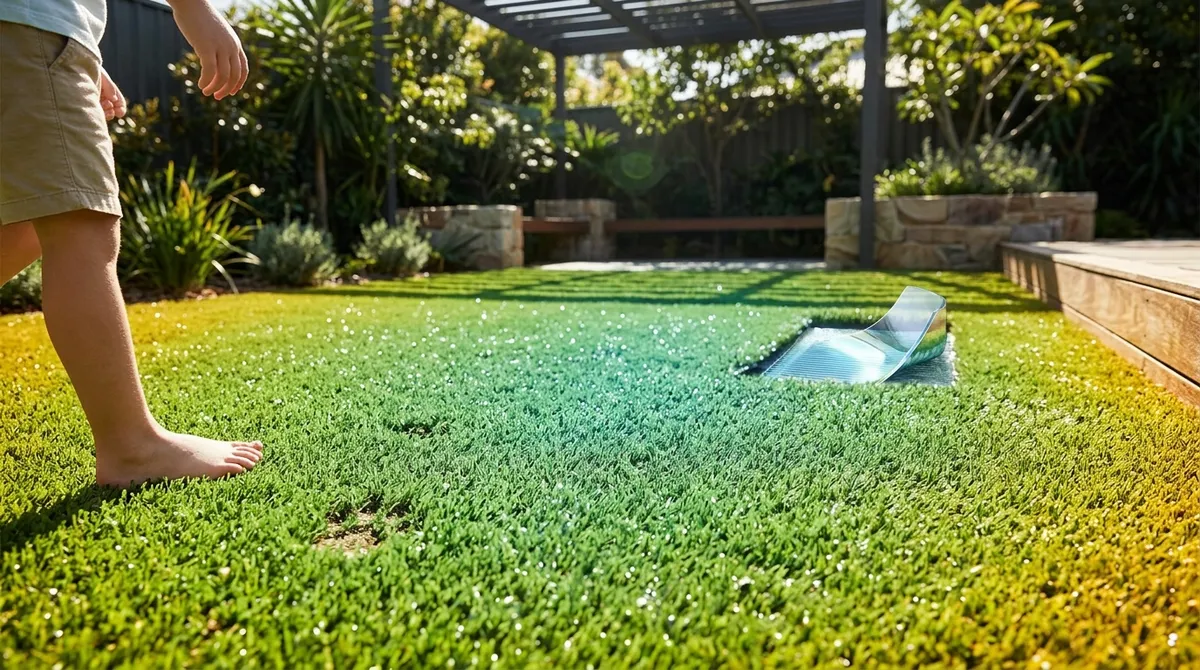
If you’ve ever stepped barefoot onto artificial turf on a hot summer day, you know exactly how uncomfortable — and even dangerous — it can get. Standard synthetic grass can heat up to a scorching 150–180°F under direct sunlight. That’s hot enough to cause burns! But here’s the good news: artificial turf heat reduction technology has come a long way, and today’s solutions make synthetic lawns genuinely comfortable, safe, and family-friendly even in peak summer heat.
Whether you’re a homeowner in the Chicago suburbs, a commercial property manager, or a small business owner looking to boost curb appeal, understanding how these cooling technologies work can help you make a smarter investment. Let’s dive into the science, the products, and the real-world benefits — all in plain, simple terms.
Why Does Artificial Turf Get So Hot?
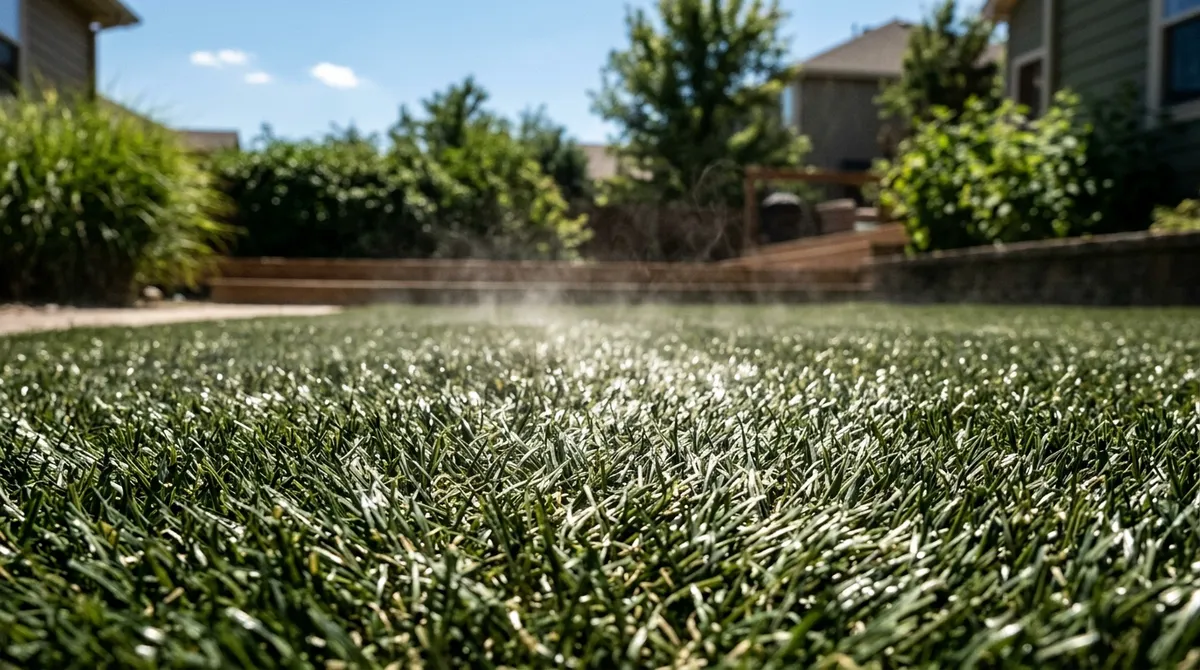
Natural grass stays cool through a process called evapotranspiration. Essentially, the grass releases moisture, which cools the surface — much like how sweating cools your skin. Synthetic turf doesn’t do that naturally, so it absorbs and traps heat from the sun instead.
On a typical summer afternoon, standard synthetic fields can run 35–55°F hotter than natural grass. That gap makes a huge difference when kids or pets are playing outside. According to industry data shared by Landscape Illinois, heat-related surface discomfort is one of the top concerns homeowners raise when considering artificial turf installation.
The good news? Modern artificial turf heat reduction technology can close that gap significantly — sometimes by as much as 50°F.
Top Artificial Turf Cooling Technologies Explained
There are several innovative approaches used today to keep synthetic turf surfaces cooler. Here’s a friendly breakdown of the most popular options available for residential and commercial landscaping projects.
1. HydroChill Evaporative Cooling Infill
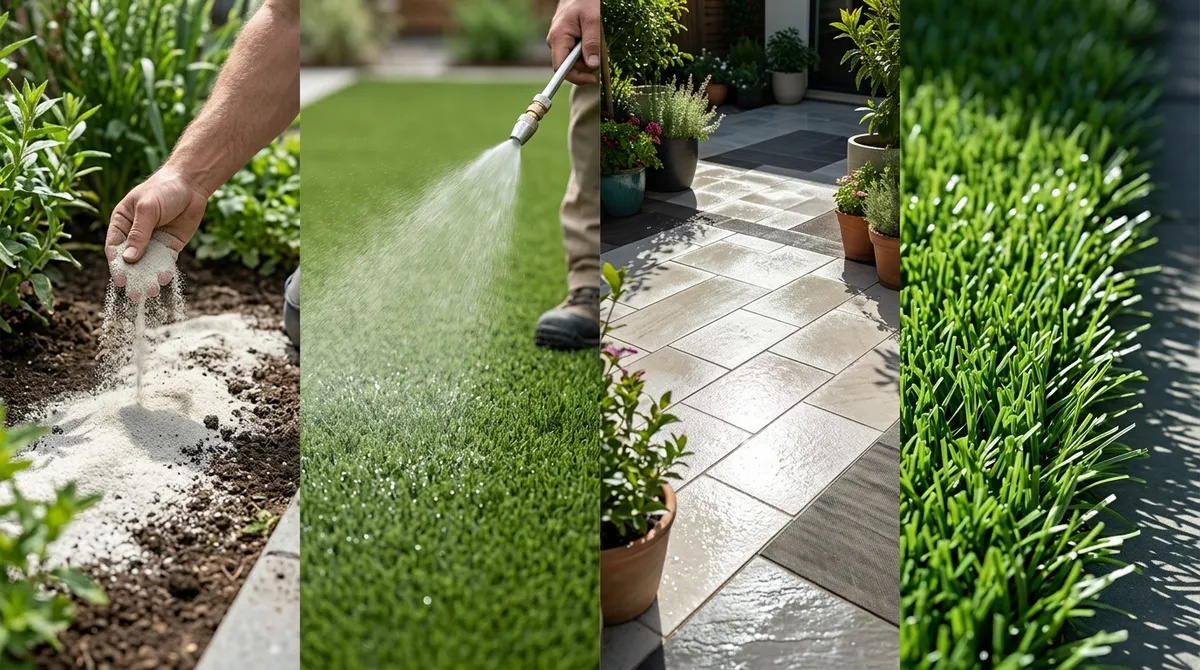
HydroChill is one of the most well-known infill solutions on the market. It uses a specially pre-coated sand infill that absorbs moisture — from rain, irrigation, or a quick rinse — and then releases it slowly through evaporation. This mimics exactly how natural grass cools itself.
- Achieves surface temperature reductions of 30–50°F
- Cooling effects last for several days after a single watering
- Works seamlessly within existing turf systems
- Safe for children and pets
- Reduces the urban heat island effect in dense neighborhoods
This technology is a great fit for suburban homeowners and commercial property managers who want a low-fuss, long-lasting cooling solution for their artificial turf installation.
2. T°Cool Bio-Based Infill
T°Cool takes a slightly different approach. It uses a bio-based, antimicrobial infill material that leverages evaporative cooling without any heavy metals or harmful chemicals. This makes it an eco-friendly choice that’s gentle on the environment and on your lawn’s users.
- Reduces surface temperatures by 35–50°F
- Free from heavy metals — safe for kids, pets, and the planet
- Antimicrobial properties keep the turf fresher longer
- Actively reduces urban heat island effects
- Minimizes the risk of turf burns during summer play
For urban condo owners or small business owners in Chicago who are mindful of environmental impact, T°Cool is a standout option that pairs comfort with sustainability.
3. TigerCool Technology
TigerCool is an integrated cooling system built directly into the turf product itself, rather than relying solely on infill. It’s incorporated into specific turf lines designed for intense heat environments and delivers consistent, reliable cooling performance.
- Keeps surfaces 15–20°F cooler than traditional alternatives during peak sun hours
- Sustained performance throughout the hottest parts of the day
- Integrated into durable turf products designed for long-term use
- Ideal for high-traffic commercial or residential areas
4. Cool-Blade Technology
Cool-blade technology is built directly into the turf fibers themselves. Instead of absorbing sunlight, these specially engineered blades are designed to dissipate solar rays, reflecting heat away from the surface rather than trapping it.
- Keeps synthetic turf cooler than standard turf, concrete, or rock
- No additional infill or maintenance required
- Works passively — no water or activation needed
- Great baseline option for any installation
Comparing the Top Cooling Technologies at a Glance
Choosing the right cooling solution can feel overwhelming. Here’s a simple comparison to help you weigh your options:
| Technology | Temperature Reduction | Activation Required | Best For |
|---|---|---|---|
| HydroChill Infill | 30–50°F | Water (rain or rinse) | Residential lawns, family yards |
| T°Cool Infill | 35–50°F | Water (evaporative) | Eco-conscious residential & commercial |
| TigerCool | 15–20°F | None (integrated) | High-traffic commercial spaces |
| Cool-Blade Technology | Varies (passive) | None (built-in) | Any installation as a base layer |
Additional Ways to Keep Your Turf Cooler
Cooling infill and advanced fibers are powerful tools, but they work even better when combined with a few smart landscaping strategies. Here are some extra ways to bring down the heat on your synthetic lawn:
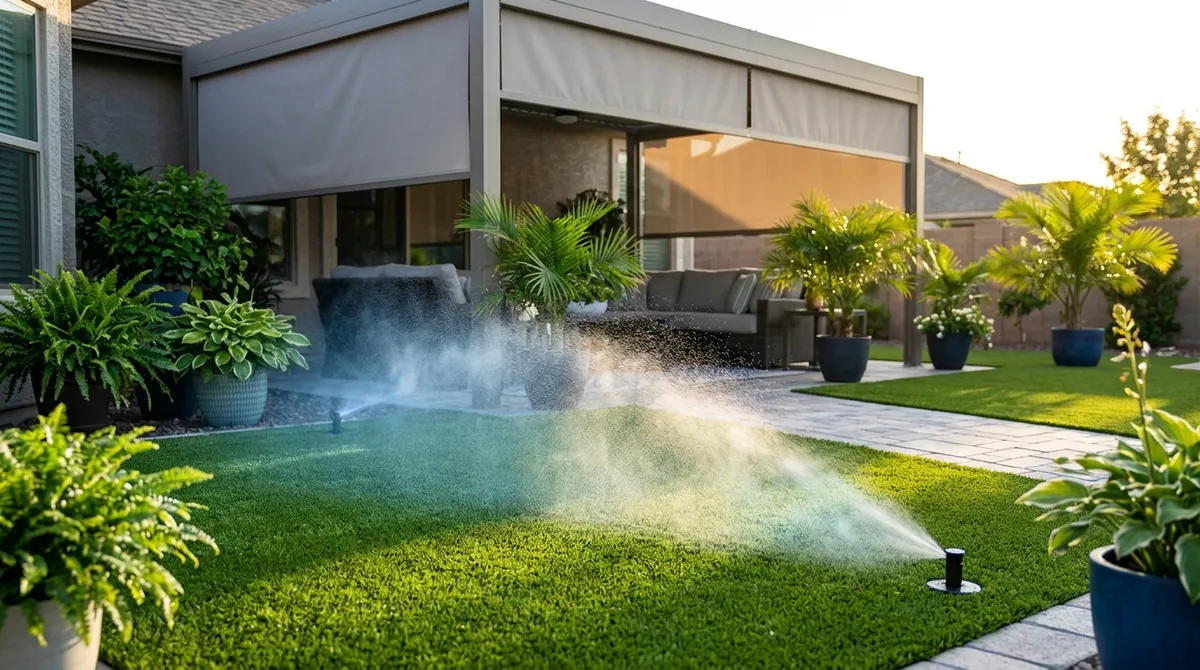
- Add shade structures — A well-placed pergola or pavilion can dramatically reduce direct sun exposure. Check out some inspiring pergola designs to transform your outdoor space for ideas that complement your turf beautifully.
- Install misting systems — Low-cost misting fans or permanent misting lines can supplement evaporative cooling, especially during the hottest afternoon hours.
- Rinse periodically — A quick spray with the garden hose activates HydroChill and T°Cool infill and can drop surface temps almost immediately.
- Choose shorter blade heights — Shorter turf blades heat up less than taller ones, making them a smart choice for sun-drenched areas.
- Pair with surrounding softscapes — Strategic plantings and greenery around your turf can create a naturally cooler microclimate. Explore softscape services to see how plants can complement your turf zone.
The Real Cost Savings Behind Heat Reduction Technology
Beyond comfort and safety, there’s a compelling financial case for investing in artificial turf with built-in cooling technology. Let’s look at the numbers:
- Water savings — Cooling-equipped synthetic turf reduces water consumption by up to 70% compared to natural grass irrigation needs.
- Maintenance savings — No mowing, fertilizing, or seasonal overseeding means homeowners and businesses can save $5,000–$8,000 annually in lawn care costs.
- Return on investment — Most artificial turf installations with cooling technology pay for themselves within just 3–4 years, making it a smart long-term investment.
For commercial property managers overseeing office parks or retail centers in the Chicago area, these savings can add up to a significant budget improvement year over year. Pair that with reduced need for commercial lawn maintenance visits, and the value proposition becomes very clear.
Is Heat-Reducing Turf Safe for Pets and Children?
This is one of the most common questions we hear, and the answer is a reassuring yes — when the right technology is used. Both HydroChill and T°Cool are free from heavy metals and toxic chemicals. They’re designed specifically for environments where kids run barefoot and dogs roll around without a care in the world.
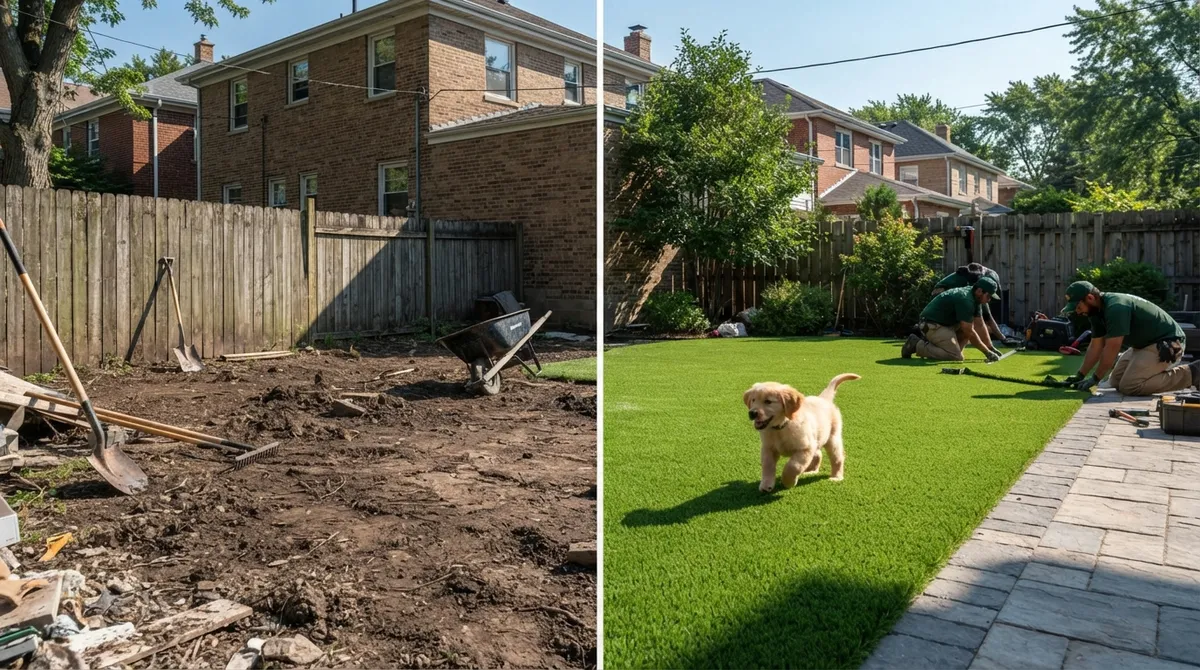
The antimicrobial properties of T°Cool also help prevent odors and bacteria buildup, which is a bonus for pet owners. And when surface temperatures are brought down by 30–50°F, the risk of contact burns or paw pad injuries drops dramatically. That peace of mind is priceless for any family.
How Artificial Turf Cooling Fits Into a Full Landscape Design
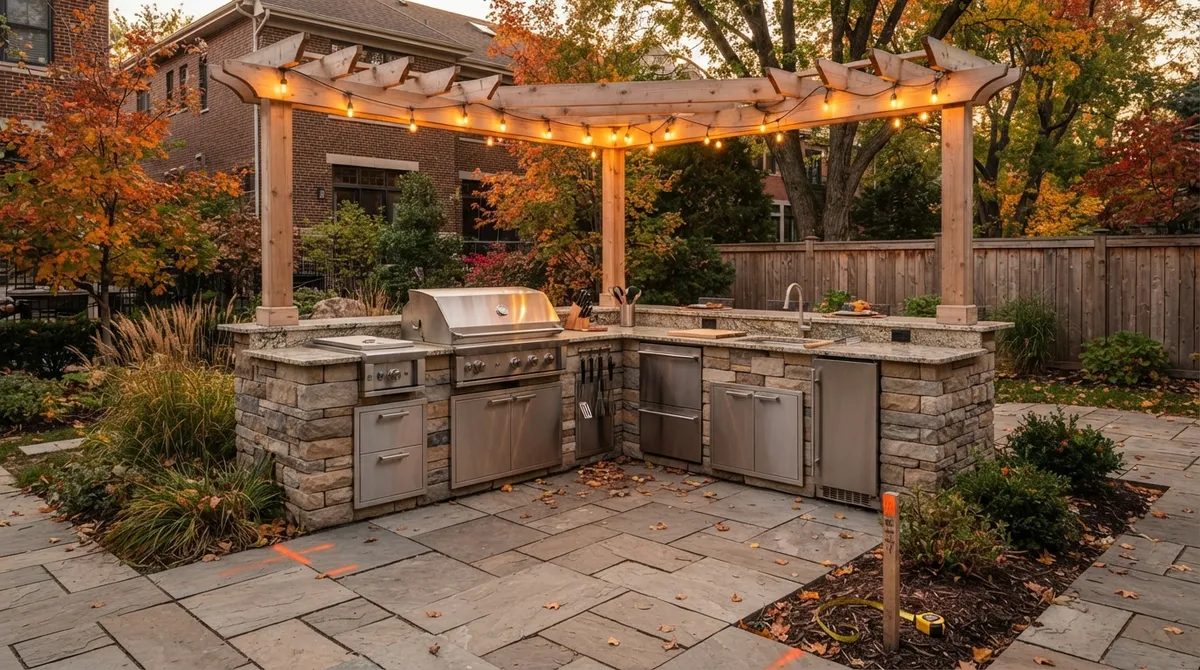
Artificial turf with heat reduction technology doesn’t have to stand alone. In fact, it works beautifully as part of a thoughtfully designed outdoor space. Imagine a backyard where lush synthetic grass surrounds an elegant fire pit, with natural stone pavers creating a seamless pathway from your back door to a shaded seating area under a pergola.
At Serenity Landscape Group, we’ve been helping Chicago-area homeowners and businesses create outdoor spaces like this for over two decades. We understand how to weave cooling turf into a complete landscape design that’s both beautiful and functional. Whether you’re designing a rooftop space for a condo, a backyard retreat in the suburbs, or a welcoming entrance for your business, every element — including your turf — should work together.
Want to see what’s possible? Browse our gallery of our work for real-world examples of landscape transformations across the Chicago area.
Steps to Get Cooling Turf Installed on Your Property
Getting started with heat-reducing artificial turf is simpler than you might think. Here’s a general overview of the installation process:
- Consultation and site assessment — A landscape professional evaluates your space, sun exposure, and usage needs to recommend the best cooling technology.
- Turf and infill selection — You choose the turf product and cooling infill system (HydroChill, T°Cool, TigerCool, or cool-blade) that fits your goals and budget.
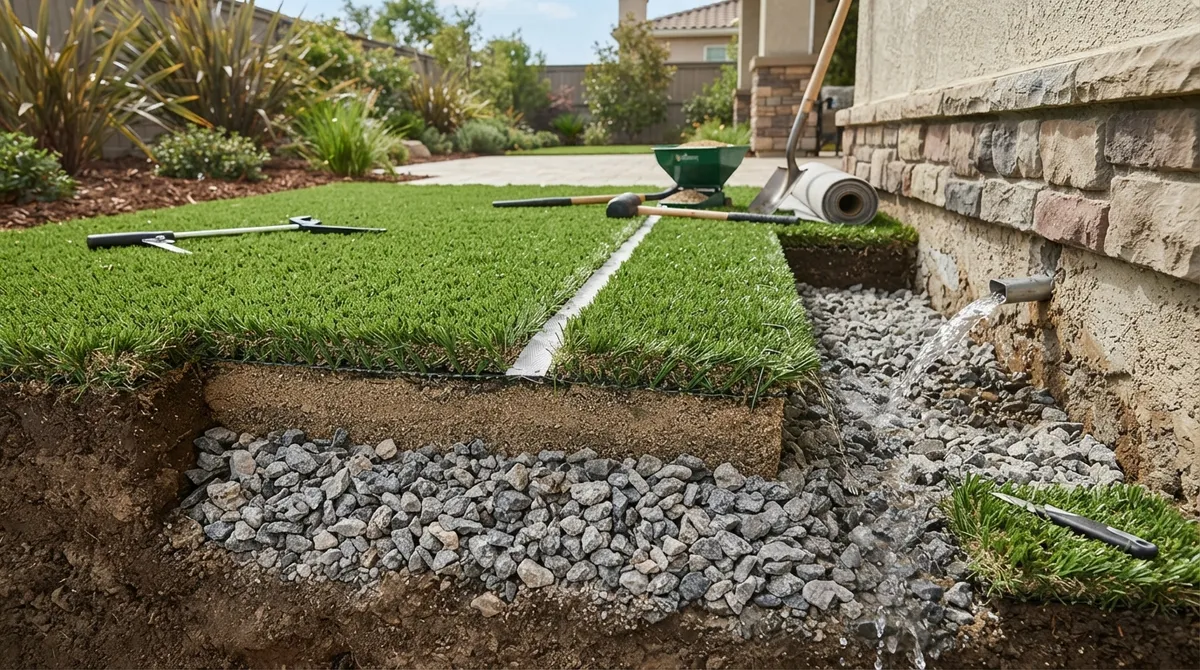
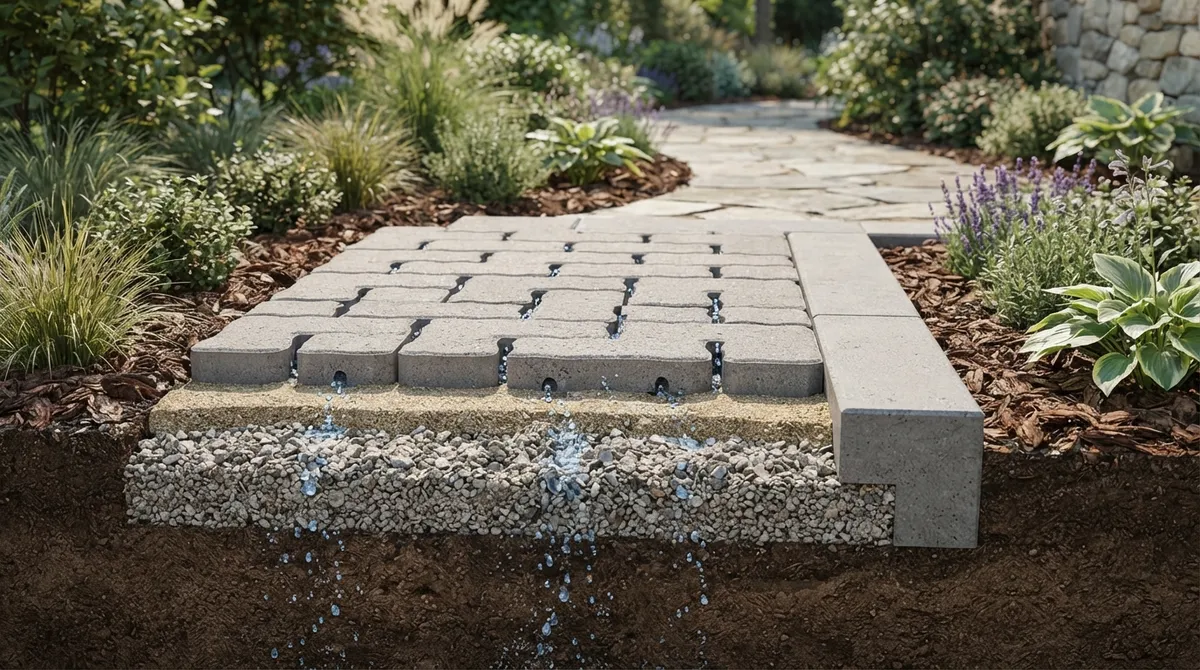
- Site preparation — The existing surface is removed, graded, and prepared with a proper base layer for drainage and stability.
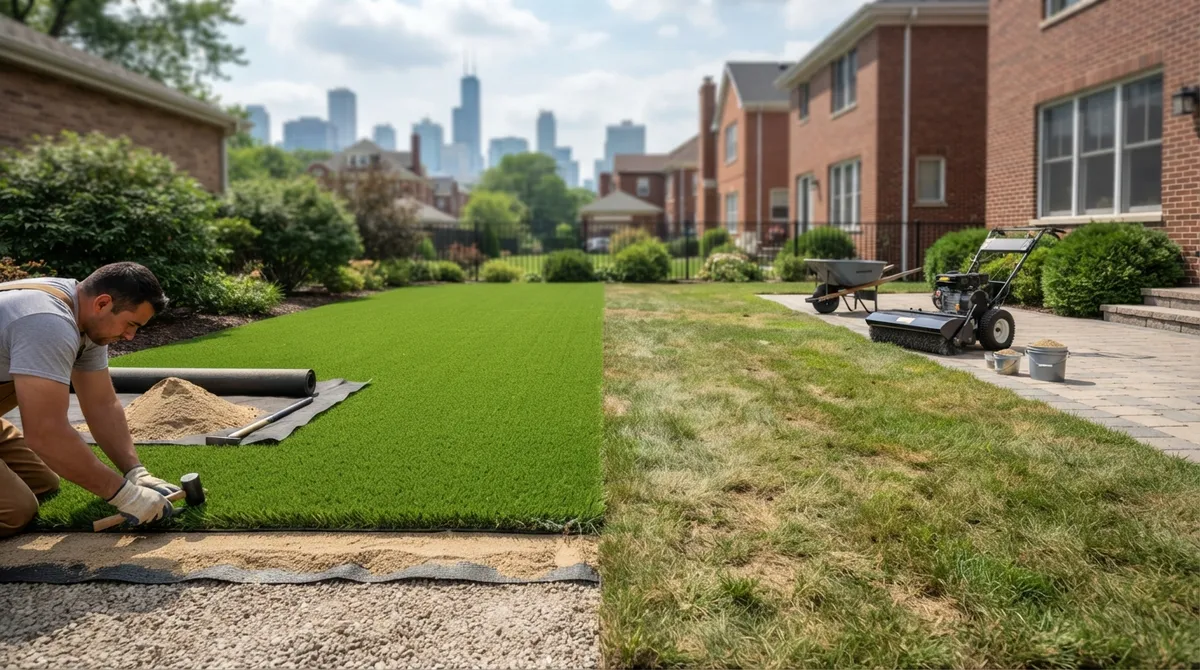
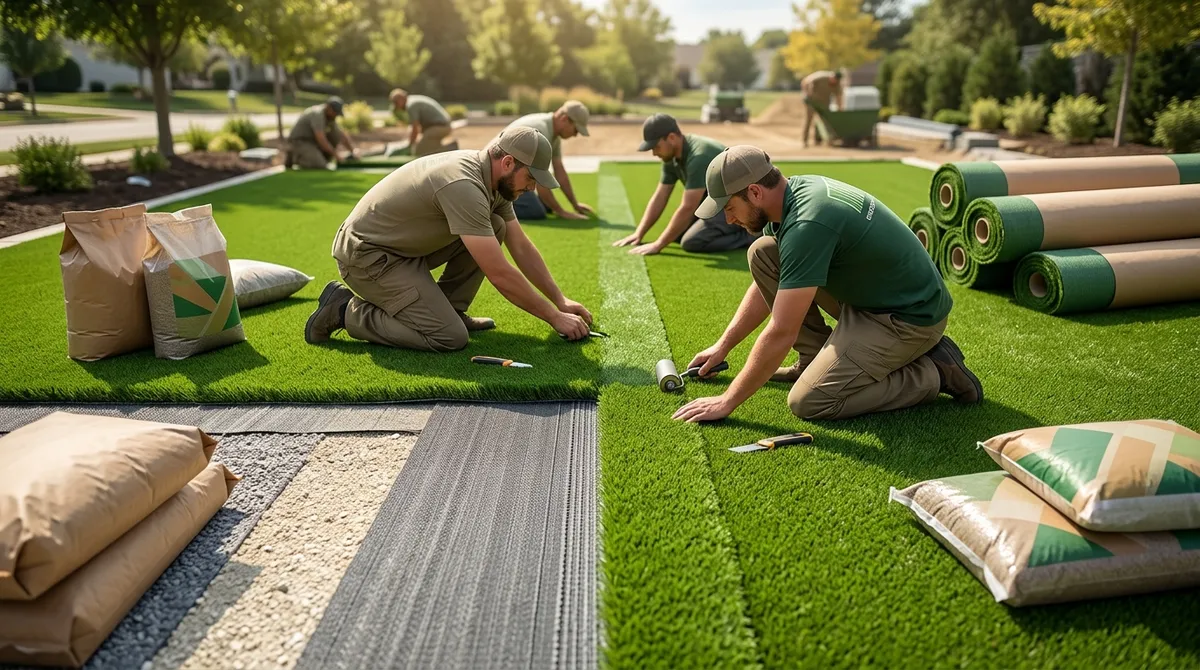
- Turf installation — The synthetic turf is measured, cut, and secured to the prepared surface with precision.
- Infill application — Cooling infill is evenly distributed throughout the turf blades to the manufacturer’s recommended depth.
- Final inspection and activation — The installation is inspected, and the cooling infill is activated with an initial watering to kick off the evaporative process.
You can learn more about what to expect by visiting our landscaping process page, where we walk you through how we handle every project from concept to completion.
For industry standards and best practices in synthetic turf installation, the ICPI Certified Installer program outlines the professional benchmarks that qualified installers follow to ensure quality, safety, and longevity.
Making a Smart Choice for Chicago’s Climate
Chicago summers may not be as intense as those in the Southwest, but the city still sees plenty of hot, sunny days that can push standard turf surfaces to uncomfortable temperatures. Artificial turf heat reduction technology ensures that your investment stays usable, safe, and beautiful all season long — not just in spring and fall.
Whether you’re a new home builder in Aurora looking to install turnkey landscaping that wow buyers, or a restaurant owner in the suburbs wanting a comfortable outdoor patio, heat-reducing synthetic turf is a smart, modern solution. It’s low maintenance, water-efficient, and designed to last for years with minimal upkeep.
Ready to Upgrade Your Outdoor Space?
Artificial turf heat reduction technology is no longer a luxury — it’s a practical upgrade that makes your outdoor space more enjoyable, safer, and more cost-effective. From evaporative cooling infills like HydroChill and T°Cool, to integrated systems like TigerCool and cool-blade fibers, there’s a solution for every property and every budget.
The team at Serenity Landscape Group is here to help you explore your options and design an outdoor space you’ll love. Don’t let the heat keep you inside this summer. Request your free estimate today and take the first step toward a cooler, greener, more beautiful outdoor space — or give us a ring and call us at (630) 359-5139 to chat with one of our friendly landscape experts.
FAQs
Q: How does HydroChill cooling technology work in artificial turf?
A: HydroChill uses a specially coated sand infill that soaks up water — from rain or a simple rinse — and releases it slowly through evaporation, just like natural grass does. This process can drop surface temperatures by 30–50°F, and the cooling effect can last for several days after a single watering. It’s a wonderfully low-effort way to make your synthetic lawn much more comfortable!
Q: Is artificial turf with heat reduction technology safe for pets and kids?
A: Absolutely! Leading cooling infill systems like HydroChill and T°Cool are free from heavy metals and harmful chemicals, making them safe for children and pets to play on. T°Cool even has antimicrobial properties that help keep the turf fresh and odor-free — which is a big win for pet owners especially.
Q: How much money can I save by switching to heat-reducing artificial turf?
A: The savings are really impressive! Homeowners and businesses can save $5,000–$8,000 per year in lawn maintenance costs, plus reduce water usage by up to 70%. Most installations pay for themselves within just 3–4 years, making it a smart long-term investment for your property.
Q: Can I add cooling infill to my existing artificial turf?
A: In many cases, yes! Cooling infills like HydroChill and T°Cool can be added to existing synthetic turf installations without a full replacement. It’s best to have a professional landscaper assess your current setup to determine the best approach and ensure proper, even distribution of the infill.
Q: What is the most effective artificial turf cooling technology available in 2026?
A: The best option really depends on your specific needs, but evaporative infill systems like T°Cool and HydroChill consistently deliver the highest temperature reductions — up to 50°F — making them top performers for residential and commercial lawns. For high-traffic commercial spaces, integrated options like TigerCool offer reliable, sustained cooling throughout the hottest parts of the day.